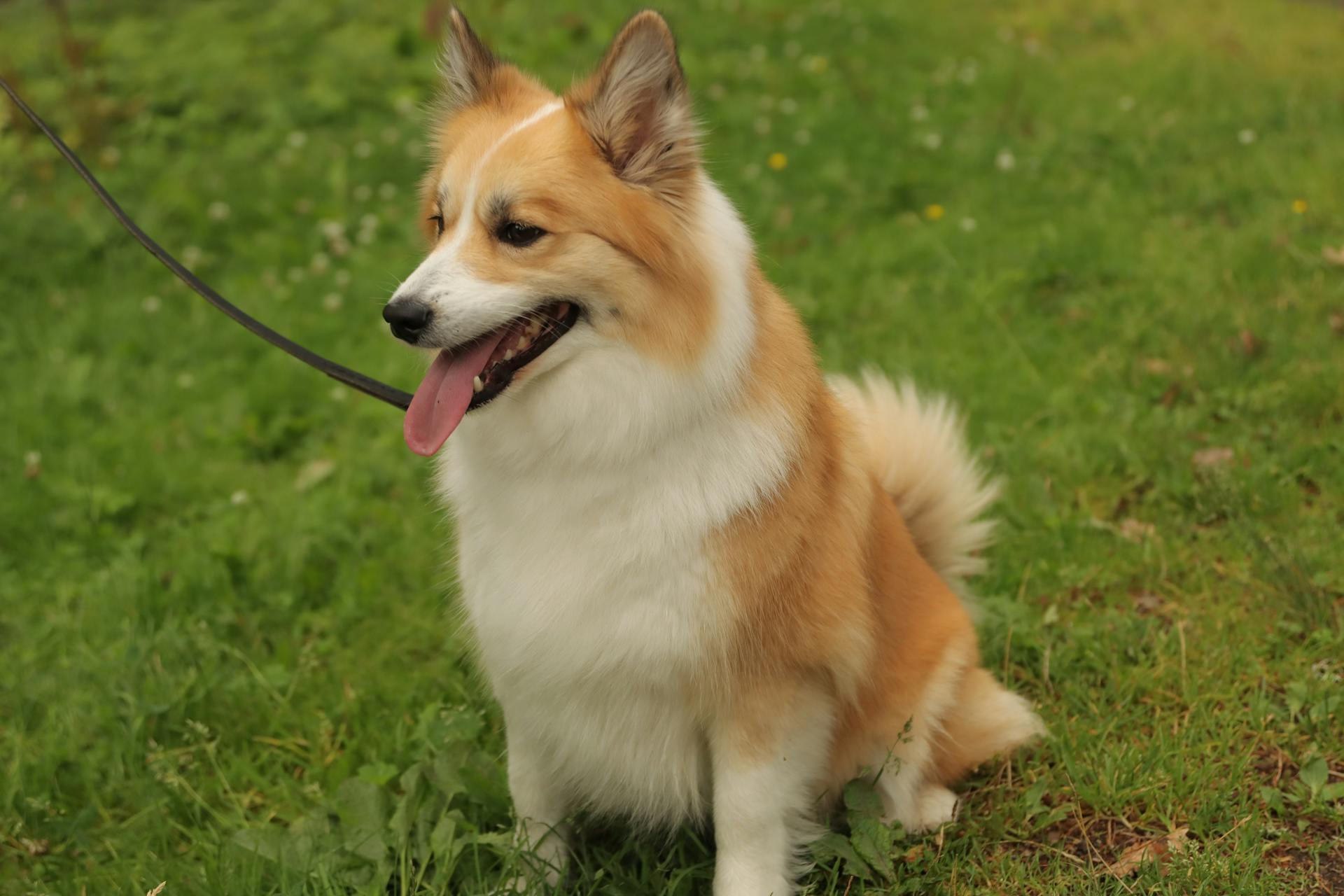
The Pembroke Welsh Corgi is a beloved breed for many reasons, but it's essential to consider their unique needs and characteristics before deciding to bring one home.
They were originally bred to herd cattle and horses, which means they have a strong herding instinct and may try to chase small animals.
Their intelligence and loyalty make them great companions, but they can be wary of strangers and may require time to warm up to new people.
Pembroke Welsh Corgis typically weigh between 25-38 pounds and stand between 10-12 inches tall at the shoulder.
Appearance
The Pembroke Welsh Corgi has erect ears that are in proportion to the equilateral triangle of the head. These ears should be firm, medium in size, and tapered slightly to a rounded point.
Their head should be "fox-like" in shape and appearance. This distinctive shape is one of the breed's most recognizable features.
Pembroke Welsh Corgis differ from the Cardigan Welsh Corgi by being shorter in length, having smaller ears, and being slightly straighter of leg. This physical difference is a key way to tell the two breeds apart.
A different take: Bull Terrier Head Shape
The Pembroke Welsh Corgi has somewhat lighter markings on each side of the withers caused by changes in the thickness, length, and direction of hair growth. These markings add to the breed's unique and attractive appearance.
Being a double-coated dog, the Pembroke Welsh Corgi sheds heavily all year around, with peaks in the spring and autumn. Regular brushing can help manage this shedding and keep their coat looking its best.
Their coat is naturally water- and dirt repellent, making it easy to maintain and clean. However, some Pembroke Welsh Corgis may require more frequent grooming depending on their individual coat type.
Personality
The Pembroke Welsh Corgi's personality is truly one-of-a-kind. They're devoted and affectionate to their owners, making them wonderful companions.
Their loyalty knows no bounds, and they can become quite disinterested in strangers. This means they'll often form strong bonds with their family members, but may take time to warm up to new people.
Pembroke Welsh Corgis are generally obedient and active, which makes them a great fit for families who love to stay on the go. They're also surprisingly bold and outgoing, making them excellent watchdogs.
However, their herding ancestry can sometimes get the better of them, and they might try to herd groups of people, especially children, together. This can be a bit of a challenge, but with proper training and socialization, they can learn to control this instinct.
Here's a quick rundown of their personality traits:
Overall, the Pembroke Welsh Corgi is a loving and loyal breed that thrives on attention and interaction. With proper care and training, they can become a beloved member of your family.
Health
Pembroke Welsh Corgis are a "true dwarf" breed, meaning their stature and build can lead to certain non-inherited health conditions. This is due to their achondroplastic nature.
They are prone to obesity due to their robust appetite, characteristic of herding group breeds. This can be managed with regular exercise and a balanced diet.
Genetic testing is available for Pembroke Welsh Corgis to avoid genetic issues and enhance the genetic health pool. Common health concerns include hip dysplasia, degenerative myelopathy, and inherited eye problems such as progressive retinal atrophy.
Worth a look: Welsh Corgi
Size
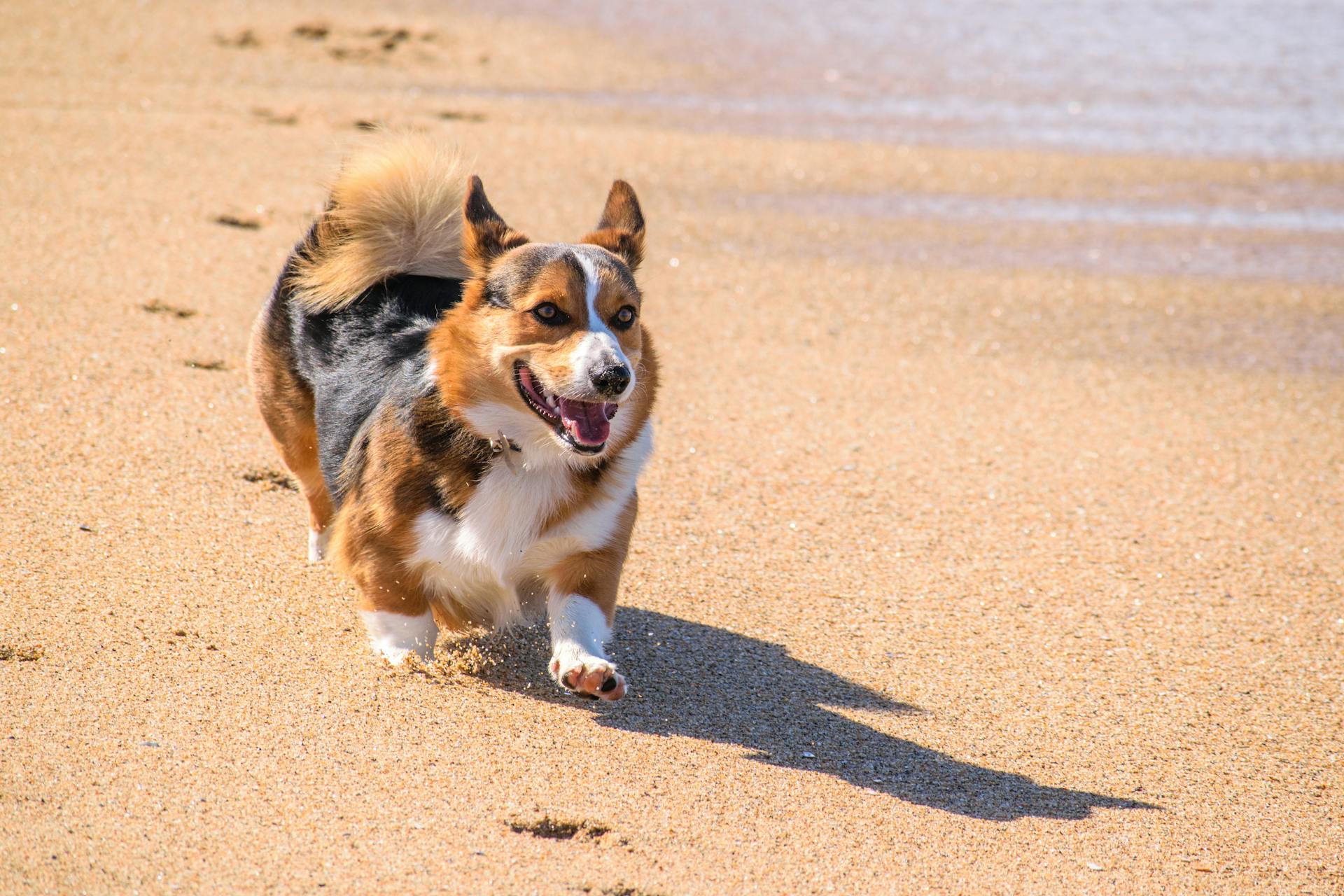
When it comes to the size of a Pembroke Welsh Corgi, it's a relatively small breed.
They can grow to be between 10 and 12 inches tall at the shoulders.
Standing at such a compact height, they weigh no more than 30 pounds.
Common Health Problems
Pembroke Welsh Corgis are generally a healthy breed, but like all breeds, they can be prone to certain health issues. These issues can be genetic or caused by their unique physiology.
One of the most common health problems in Pembrokes is hip dysplasia, an orthopedic condition that affects the development of the hip joint. Symptoms include hip pain, limping, and exercise intolerance.
Genetic testing is available to help identify potential health issues in Pembrokes, including inherited eye problems like progressive retinal atrophy. This condition eventually leads to blindness.
Pembrokes are also prone to obesity due to their robust appetite, characteristic of herding group breeds. This can lead to a range of health problems, including back strain and fractures.
Intriguing read: Hip Dysplasia Bernese Mountain Dog

Here are some common health issues to be aware of in Pembrokes:
- Hip dysplasia: hip pain, limping, unusual gait, and exercise intolerance
- Eye issues: cataracts, glaucoma, retinal dysplasia, and progressive retinal atrophy (PRA)
- Degenerative myelopathy: wobbling, inability to walk, easily falling over, and swaying while standing
- Back issues: intervertebral disc disease (IVDD) and back strain or fractures
- Von Willebrand disease: excessive bleeding
Regular veterinary check-ups and a healthy lifestyle can help prevent or manage these health issues in your Pembroke Welsh Corgi.
History and Origins
The Pembroke Welsh Corgi has a rich history that spans over 900 years, dating back to AD 1107.
The breed's origins are shrouded in mystery, with some experts believing that the breed's ancestors were brought to Wales by Flemish weavers, while others think they may have descended from Swedish Vallhund.
Pembrokes were initially developed in Wales as herding, companion, and/or guard dogs, and were used to drive small, feisty hill cattle over long distances.
In 1934, the English Kennel Club and the American Kennel Club officially recognized the Pembroke and Cardigan Welsh Corgis as separate breeds.
Queen Elizabeth II has been a long-time fan of the breed, receiving her first Pembroke Welsh Corgi from her father in 1933, and currently has a pack of them lounging around Buckingham Palace.
Pembrokes were initially shown in the US in 1936 and have since gained popularity as family pets, ranking 20th in American Kennel Club registrations as of 2015.
Suggestion: American Kennel Club Lancashire Heeler
Care and Feeding
Pembroke Welsh Corgis are surprisingly fast and athletic, requiring plenty of exercise each day to stay happy and healthy. They make great pets for active families.
To keep your Pembroke in top shape, make sure to provide at least two meals a day, with the amount depending on their size, activity level, age, and other factors. On average, they might eat up to 2 cups of food per day, split into at least two feedings.
It's essential to monitor your Pembroke's weight and discuss it with your veterinarian to prevent obesity, which can shorten their life and lead to other health conditions.
Nutrition and Feeding
Feeding your Pembroke Welsh Corgi twice a day is essential to maintain a healthy weight, as they tend to over-indulge if given the chance.
The recommended daily amount of food varies depending on your dog's size, age, build, metabolism, and activity level, so it's crucial to measure their food and feed them accordingly.
Discover more: Best Food for Border Collies
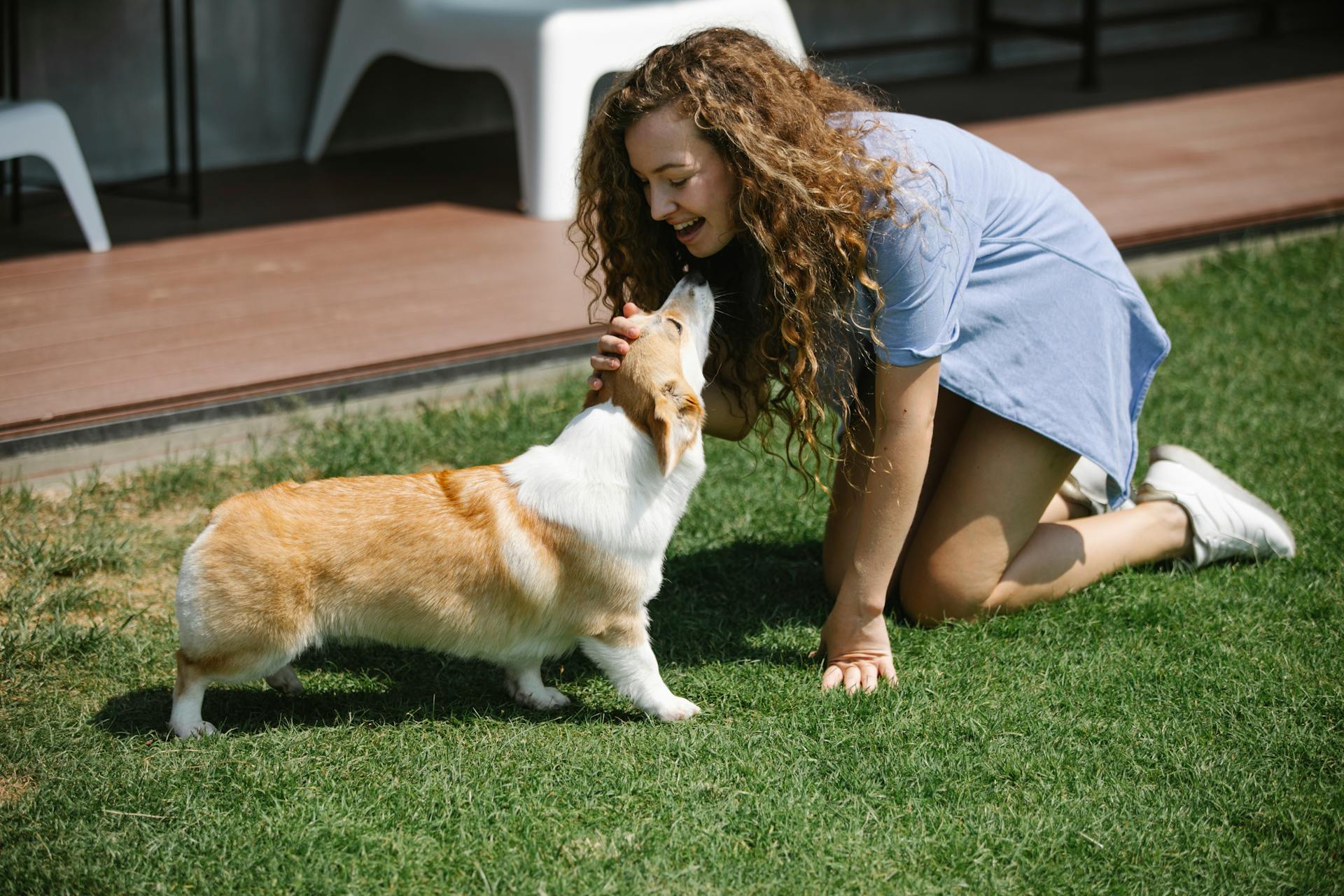
Pembroke Welsh Corgis like to eat, so it's easy to overfeed them, but you can prevent this by dividing their daily ration into two meals.
To determine if your dog is overweight, perform the eye test and the hands-on test: look down at them and see if you can spot a waist, and then place your hands on their back to feel their ribs without having to press hard.
A constant supply of fresh water is essential for your dog's diet, and regular body condition scores will help you keep them in ideal shape.
Feeding your Pembroke according to the feeding guidelines of their particular food is crucial, and it's best not to leave food out for free-feeding throughout the day.
On average, Pembroke Welsh Corgis might eat up to 2 cups of food per day, split into at least two feedings, but this can vary depending on their individual needs.
Monitoring your dog's weight and discussing it with your veterinarian is essential to ensure they stay healthy, and you can also discuss nutritional supplements with your vet if needed.
You might enjoy: Breeds of Dogs in a Dog's Purpose
Care and Feeding

Pembroke Welsh Corgis need plenty of exercise each day to stay happy and healthy. They're bred to be herding dogs, so they require a lot of physical activity to keep them satisfied.
They can adapt to living in apartments as long as they get the physical stimulation they need. However, they shouldn't be expected to hop up or down from high furniture due to their short legs and long backs.
Their coats are weather-resistant, making them suitable for most climates. They're very people-oriented, so they need to be part of the family at all times, not left alone in the backyard.
Pembroke Welsh Corgis require at least one hour of exercise per day, ideally more. If you don't have a yard for them to herd, consider activities like Treiball or sheep ball.
They excel at herding and most dog sports due to their intelligence and hard work. With regular exercise, they can make great pets and loving companions.
You might enjoy: How Much Exercise Do Border Collies Need
Rescue Groups
If you're considering bringing a Pembroke Welsh Corgi into your life, there's a good chance you might be able to find one in need of a loving home through a rescue group.
Pembroke Welsh Corgis are often purchased without proper understanding of the responsibilities involved in owning one. It's a good idea to start your search with "Corgi rescues near me" rather than "Corgi puppies for sale near me."
There are many rescue groups dedicated to finding forever homes for Pembrokes, but they can be hard to find if you don't know where to look. If you don't see a rescue group listed for your area, contact the national breed club or a local breed club and they can point you in the right direction.
Here are a few examples of rescue groups you can consider:
- Lakeshore Pembroke Welsh Corgi Rescue
Grooming
The Pembroke Welsh Corgi's coat is relatively low maintenance, but it does require some regular grooming to keep it in good condition.
Their coat is waterproof and straight, with a dense undercoat that needs to be brushed to remove loose and dead hairs.
Brushing their coat once or twice a week is sufficient, unless they're shedding heavily, in which case daily brushing may be necessary.
Bathing them can help control shedding, and it's also essential to trim their nails regularly to prevent tears and foot problems.
Daily or at least weekly brushing of their teeth is also crucial to keep their teeth and gums healthy.
Worth a look: Dogo Argentino Teeth
Ownership and Lifestyle
The Pembroke Welsh Corgi is best suited for homes with suitable jobs in mind for the dog, as their busy minds must be kept fulfilled.
They thrive in child-free homes or with older children, as their instinct to move, herd, and ankle-nip can be strong.
If you're considering bringing a Pembroke Welsh Corgi into your family, be prepared to provide regular exercise to keep their bodies active.
Ideal Owner

If you're considering bringing a Pembroke Corgi into your family, it's essential to understand their needs and personality traits.
Pembroke Corgis thrive in homes where they have a purpose, so you should have a suitable job in mind for your Corgi, such as a farm-dog role.
They require regular exercise to keep their bodies and minds fulfilled, which is often best suited for homes without young children.
Children
Pembroke Welsh Corgis are remarkable with children, but they can nip at their feet or ankles due to their herding instincts.
They're eager learners, though, and can be trained out of this behavior at a young age. This makes them a great breed for families with kids.
You should always supervise interactions between dogs and young children to prevent biting or ear or tail pulling. It's also essential to teach children how to approach and touch dogs gently.
Never leave a dog unsupervised with a child, no matter how friendly the dog is. This will help prevent any potential conflicts.
Pembroke Welsh Corgis are usually good with other pets in the household, so long as they've been socialized with them.
Pros and Cons
The Pembroke Welsh Corgi is a wonderful breed, but like any dog, it has its pros and cons. One of the biggest advantages is its rich breed history and royal association.
They're also great with families, making them a popular choice for many dog owners.
Here are some key points to consider:
Overall, the Pembroke Welsh Corgi is a loyal and loving companion, but it's essential to be aware of its potential health issues and high energy needs.
Pros
Pembroke Welsh Corgis have a rich breed history and royal association, which is pretty cool. They're also known for being good family pets.
These dogs are intelligent and hard-working, which makes them a joy to be around. They're always up for a challenge and will keep you on your toes.
One of the best things about Pembroke Welsh Corgis is their high affection level - they love people and love to be loved in return. They're also very loyal and will stick by your side.
Here are some key characteristics of Pembroke Welsh Corgis at a glance:
Overall, Pembroke Welsh Corgis are a wonderful breed that make great companions for active families.
Cons of Corgis
Corgis can be a handful when it comes to grooming. They shed daily, which means you'll need to brush them regularly to prevent hair from getting all over your home.
Their short stature can also lead to back problems, especially if they're not given regular exercise and a balanced diet.
If you're not careful, your Corgi can easily become overweight, which is a serious health issue.
Here are some common cons of owning a Corgi:
- Daily shedding
- Potential for back problems
- Can easily become overweight
Where to Get One
If you're set on bringing a Pembroke Welsh Corgi into your home, be prepared for a hefty price tag - a purebred Pembroke Welsh Corgi from a reputable breeder can cost anywhere from $1,000 to $2,000 or more.
These dogs are highly sought after, which is why they can be tough to find and adopt from a shelter. However, there are reputable breeders located around the country who can help you find the perfect pup.
If you're looking to adopt, finding a local breeder is a great place to start. You can also contact a national organization that specializes in rescuing Pembroke Welsh Corgis.
To get started, check out the Pembroke Welsh Corgi Club of America - they have a wealth of information on regional clubs, rescue and adoption, and breeder contacts.
Here are some resources to help you locate a Pembroke Welsh Corgi breeder or rescue:
- The Pembroke Welsh Corgi Club of America is a great resource to start with.
- Rescue groups can be found in many states, and some regional rescue organizations cover large areas and can help you locate a pet.
Frequently Asked Questions
Are Welsh Corgis good house dogs?
Welsh Corgis are adaptable family dogs that thrive in both city and country homes, making them a great fit for families with or without kids. They're perfect for households looking for a loyal and flexible companion.
How much does a Pembroke Welsh Corgi cost?
A Pembroke Welsh Corgi typically costs between $1,000 and $2,000, depending on its pedigree and breeder.
Are Corgis high maintenance?
Corgis are considered low-maintenance house dogs, but they do require regular grooming to care for their thick double coat.
Why not to get a Pembroke Welsh Corgi?
If you're looking for a low-maintenance pet, a Pembroke Welsh Corgi may not be the best fit due to their strong will and potential pushiness around other animals. They require consistent training and socialization to thrive as a well-behaved companion.
Are Pembroke corgis good dogs?
Pembroke Welsh Corgis are friendly, athletic, and affectionate dogs that make great companions. They are a popular herding breed known for their outgoing and adaptable nature.
Featured Images: pexels.com