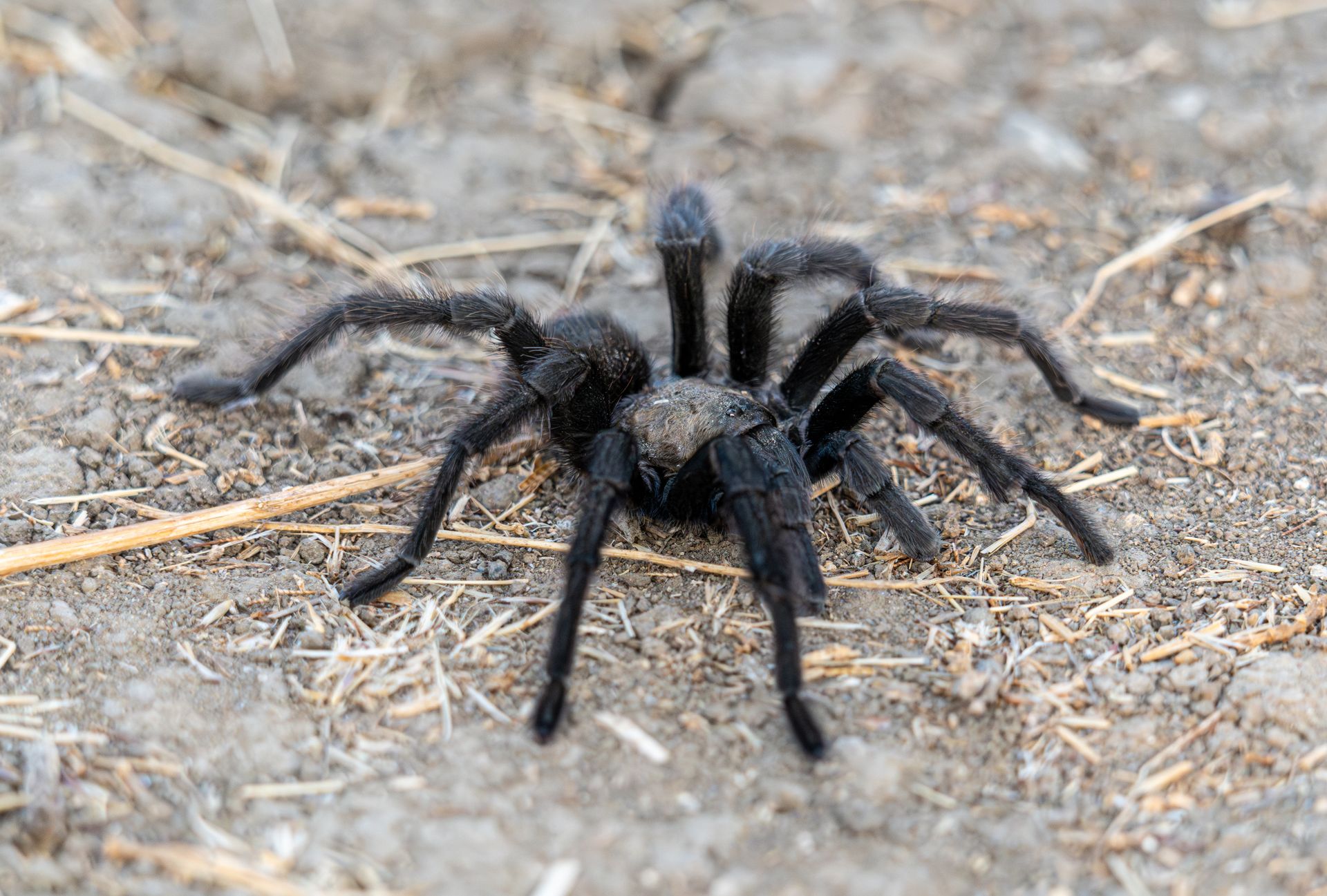
The Desert Blonde Tarantula is a relatively docile species, making it a great choice for beginners.
They can live up to 20 years in captivity, which is a significant commitment, but with proper care, you can enjoy their gentle company for decades.
These tarantulas are nocturnal, so they'll be most active at night, and they'll spend most of their time hiding in their enclosures during the day.
They're native to the southwestern United States and Mexico, where they inhabit dry, rocky areas.
Tarantula Basics
Desert blonde tarantulas, also known as Aphonopelma chalcodes, are a species of terrestrial burrowing tarantulas known for their muted colors and unique physical features.
They have 8 legs, 2 pedipalps, and 8 eyes, making them a fascinating creature to observe.
Their common name stems from their sandy blonde hairs, which are a distinctive feature of this species.
Aphonopelma chalcodes belong to the family Theraphosidae and are known by a variety of names like Arizona desert blond, Mexican blond tarantula, desert blond tarantula, or even the Western desert tarantula.
You might like: Blond Dogs Breeds
They are ground-dwelling spiders that are active and fascinating to watch, and can provide hours of entertainment.
In captivity, Aphonopelma chalcodes can live for up to 25 years, with females living longer than males, who typically live 5-8 years.
Their ideal temperature range is between 70-85 degrees Fahrenheit, with a humidity level that thrives in a dry climate.
To create a suitable habitat for your desert blonde tarantula, you'll need a large, horizontally oriented enclosure with plenty of substrate to burrow, a hide or retreat, and a water dish.
Here's a brief summary of the essential needs of your desert blonde tarantula:
- Substrate: Several inches of coconut fiber, peat moss, or other soil and kept damp.
- Decor: A hide or retreat, and enough room to burrow.
- Humidity: A dry climate.
- Ventilation: A tank with ventilation at the top.
- Water: A small, shallow water dish.
With the right care and attention, your desert blonde tarantula can thrive and become a beloved pet.
Aphonopelma Chalcodes
The Desert Blonde Tarantula, also known as Aphonopelma chalcodes, is a species of tarantula that's native to the southwestern United States, particularly Arizona, California, and New Mexico.
They're known for their "blonde" hairs, with females typically being a uniform tan color, while males have black legs, a copper-colored cephalothorax, and a reddish abdomen.
Aphonopelma chalcodes tarantulas are slow-moving and have a reputation for being calm and docile, making them an excellent choice for beginners.
In the wild, they thrive in dry climates, and in captivity, they require a similar environment, with a temperature range of 75-80 degrees Fahrenheit.
These tarantulas are reclusive and nocturnal, spending most of their time hiding in their burrows, under rocks, or in abandoned holes during the day.
Their burrowing behavior is essential, as they need several inches of substrate, such as coconut fiber or peat moss, to dig and hide.
Adults can live up to 25 years, while males typically live 5-8 years, passing soon after sexual maturity.
Here's a brief care guide for Aphonopelma chalcodes tarantulas:
- Substrate: Several inches of coconut fiber, peat moss, or other soil kept damp.
- Decor: A large, horizontally oriented enclosure with enough room to burrow but not climb.
- Humidity: Dry climate.
- Ventilation: A tank with ventilation at the top, several small holes at the top of the enclosure.
- Water: A small, shallow water dish always present.
Habitat and Range
Desert blonde tarantulas can be found within the deserts of Arizona, New Mexico, Southern California, and Mexico.
They inhabit the arid regions of southern Arizona and northern Mexico, particularly in the Sonoran Desert.
Recommended read: Female Arizona Blonde Tarantula
In their natural habitat, they construct opportunistic burrows in soft, well-draining soil to escape the intense sun and extreme temperature fluctuations.
Replicating these conditions is crucial in captivity, so an enclosure with ample, deep substrate that supports natural burrowing and minimizes the risk of falls is essential.
They are well suited to living in variable weather conditions with little water.
These spiders can be found in dry habitats with a high daytime temperature and a significant drop in temperature at night.
They make their homes in tunnels or shallow burrows that can be between a few and several inches deep, which protects them during periods of extreme heat or dryness.
During times when food is scarce, they tend to stay in their burrows, usually emerging late at night.
Care and Housing
The Desert Blonde Tarantula's habitat is crucial to its survival. They thrive in a dry climate, so a terrarium or paludarium with a secure lid and plenty of ventilation is essential.
For the substrate, you'll want to use several inches of coconut fiber, peat moss, or other soil that's kept damp. This will allow your tarantula to burrow freely.
A shallow water dish should always be present, but don't worry about misting as they don't need it. The ideal pH range for water is 7-7.5 and the hardness should be kept at 2-3 dH.
To provide a comfortable environment, you'll also want to include a hide or somewhere for your tarantula to retreat. This can be as simple as a small rock or a piece of bark.
Here's a quick rundown of the ideal environment for your Desert Blonde Tarantula:
- Substrate: Several inches of coconut fiber, peat moss, or other soil, kept damp.
- Decor: A hide or somewhere to retreat, such as a small rock or piece of bark.
- Humidity: Dry climate.
- Ventilation: A tank with ventilation at the top, with several small holes.
- Water: A small, shallow water dish, with pH 7-7.5 and hardness 2-3 dH.
Temperature-wise, they'll do fine in a range of 70-85 degrees Fahrenheit, with 75-80 degrees being ideal.
Terrestrial Housing Setup
To create a suitable habitat for your Desert Blonde Tarantula, you'll want to set up a terrestrial housing setup with a secure lid and plenty of ventilation.
A paludarium or terrarium is an ideal choice, providing a natural environment that mimics the tarantula's natural habitat.
The substrate should be suitable for the tarantula's burrowing habits, and a mix of sand, soil, and peat moss can work well.
Monitoring humidity levels is crucial, so ensure your setup allows for proper airflow and moisture retention.
The ideal pH range for water is 7-7.5, and the hardness should be kept at 2-3 dH to maintain a healthy environment.
By providing a comfortable and safe habitat, you'll be well on your way to creating a happy and healthy home for your Desert Blonde Tarantula.
Egg Sac Handling
Egg sac handling is an optional but crucial step in the care of your spiderlings. If you choose to pull the egg sac after 30-45 days, you can use artificial incubation to ensure the spiderlings develop properly.
Maintaining the right temperature and humidity levels is essential for egg sac development. To encourage growth, keep the temperature between 72-78°F (22-25°C) and humidity levels between 55-65%.
The female will guard the egg sac, which usually contains 200-800 eggs. The spiderlings will emerge as 1st instar after 8-10 weeks, and then molt into 2nd instar within 3-4 weeks.
If you decide to leave the egg sac with the mother, you can expect the spiderlings to emerge after 8-10 weeks.
Behavior and Breeding
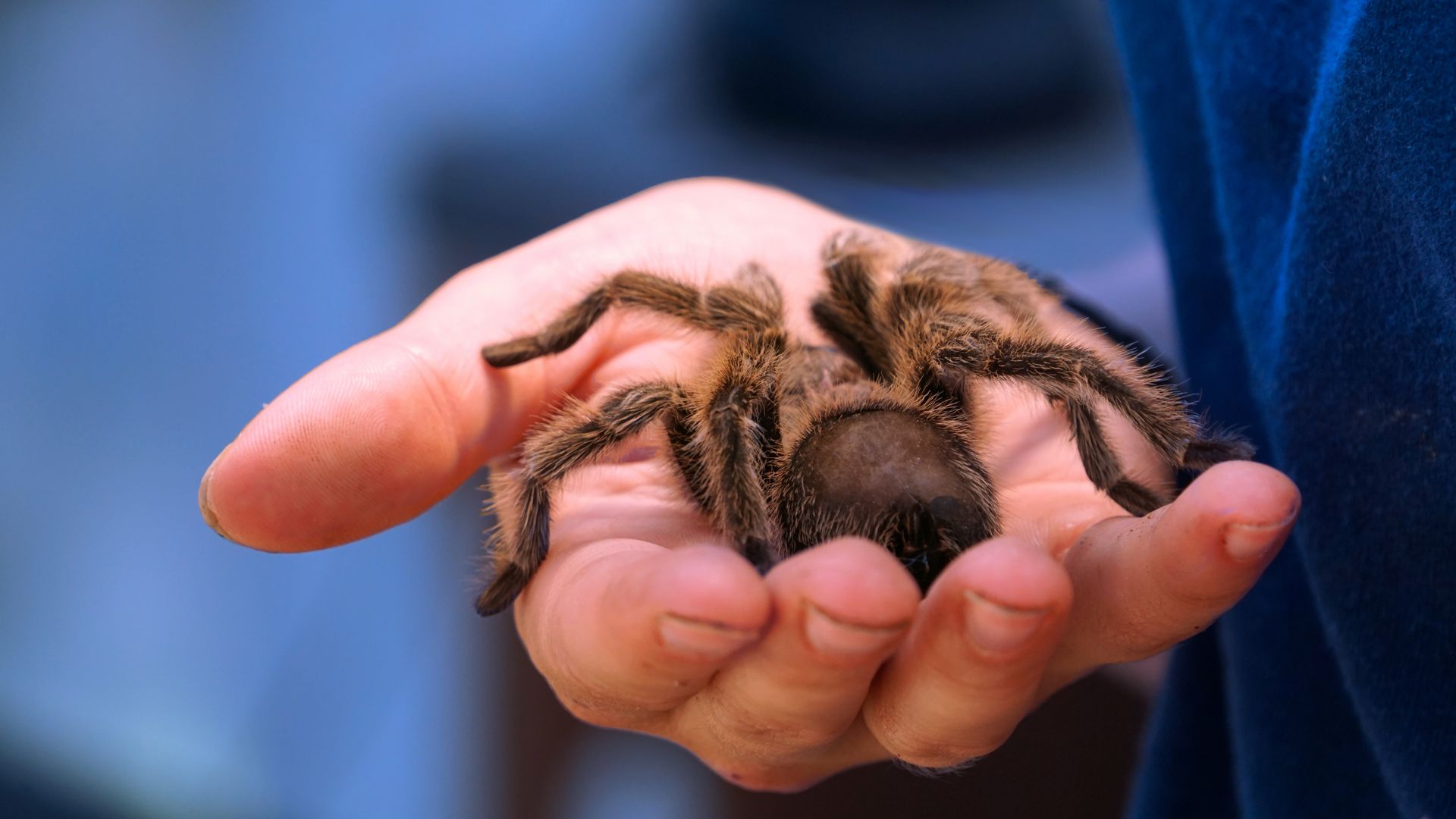
Desert Blonde Tarantulas are generally gentle and docile, making them a great choice for beginners. They rarely bite humans or other animals, but it's essential to understand that they can be skittish and startled when touched.
In the wild, Desert Blonde Tarantulas are solitary creatures and can become aggressive if they feel threatened. This is why it's not recommended to house them together, as they are territorial and may fight.
To breed Desert Blonde Tarantulas, you'll need to replicate their natural seasonal breeding cycle in captivity. This includes introducing a cooling period before pairing and exposing them to cooler temperatures for several months to trigger consistent egg sac production.
Male Desert Blonde Tarantulas will use vibrations to attract a mate, creating rhythmic pulsations in the ground. Once they've located each other, the courtship process begins, and the male permanently binds himself to the female through palpal conjugation.
After copulation, the female will lay up to 100 eggs in a silk reproductive chamber and fight for the right to guard over them. Once the eggs hatch, the young tarantulas must fend for themselves and find shelter in the wild.
Here are some key considerations when breeding Desert Blonde Tarantulas:
- Female aggression: Supervise pairings carefully, as females can attack males after mating.
- Long maturation time: This species requires patience, as they grow slowly and may take years to mature.
- Seasonal breeding cues: Introduce a cooling period before pairing and expose them to cooler temperatures to trigger egg sac production.
- Male lifespan: Males typically don't live longer than a year after maturing, so prioritize breeding attempts soon after their ultimate molt.
- Winter diapause required for egg sac production: Expose them to cooler temperatures for several months to mimic their natural seasonal cycle.
- Spring feeding and humidity increase: Feed females heavily and increase humidity as temperatures rise in the spring to simulate natural conditions.
- Long timeline from pairing to egg sac: The entire process typically takes around six months, requiring patience and seasonal adjustments.
Remember, breeding Desert Blonde Tarantulas requires patience and attention to detail, but with proper conditions, they can produce healthy egg sacs with hundreds of spiderlings.
Challenges and Considerations
Breeding desert blonde tarantulas, also known as Aphonopelma chalcodes, requires patience and attention to detail. One key challenge is the potential for female aggression after mating, so it's essential to supervise the pair.
Female aggression is a real concern, as they can attack the male after mating. To avoid this, make sure to keep a close eye on the pair.
Expand your knowledge: Arizona Blonde Tarantula Male vs Female
Long maturation times are another consideration, as these tarantulas grow slowly. This means you'll need to be patient and plan ahead for breeding projects.
A male's lifespan is relatively short, typically not exceeding a year after maturation. This means you should prioritize breeding attempts soon after they reach adulthood.
A unique aspect of Aphonopelma species is their requirement for a winter diapause to trigger consistent egg sac production. This involves exposing them to cooler temperatures for several months to mimic their natural seasonal cycle.
To encourage egg sac production, increase humidity and feeding in the spring as temperatures rise. This simulates natural conditions and can help trigger egg sac production in gravid females.
The entire process from pairing to egg sac production typically takes around six months. This long timeline requires patience and careful planning to ensure success.
Final Thoughts
The Desert Blonde Tarantula is a slow grower, but good things take time. They can thrive for decades with proper care.
This species is a great choice for beginners because they tend to be calm and steady, making them one of the few tarantulas that won't immediately yeet itself off your hand the moment you move.
They have a rugged desert resilience and are a timeless favorite that deserves a spot in every collection.
If you're looking for a low-maintenance, long-lived, and beginner-friendly species, the Desert Blonde Tarantula is it. They have a perfect balance of beauty, hardiness, and personality.
Their golden blonde setae make them a stunning sight to behold, and they can live longer than some marriages, making them a great long-term companion.
Arizona Tarantula Care
The Arizona Tarantula Care section is a crucial part of keeping your Desert Blonde Tarantula happy and healthy. A suitable terrarium with a secure lid and plenty of ventilation is essential, and the ideal pH range for water is 7-7.5.
You'll also want to monitor humidity levels, provide a suitable terrarium substrate, and hiding space for retreat. Coconut fiber, peat moss, or other soil are good options for the substrate, and it should be kept damp.
To ensure your tarantula is getting enough to eat, you can offer a variety of insects such as crickets, roaches, and mealworms. A small sling might eat half of a cricket, while an adult might eat several large 1” crickets. It's also essential to avoid feeding your tarantula live insects from outside, as they can be harmful.
Here is a summary of the ideal environment and diet for your Arizona Blonde Tarantula:
- Temperature: 75-80°F (24-27°C)
- Humidity: Dry climate
- Substrate: Coconut fiber, peat moss, or other soil kept damp
- Decor: A large, horizontally oriented enclosure with hiding spaces and ventilation
- Water: A small, shallow water dish present at all times
- Diet: Insects such as crickets, roaches, and mealworms
Final Thoughts
The Arizona Blonde Tarantula is a true gem of the hobby. It's a low-maintenance, long-lived, and beginner-friendly species that embodies everything great about tarantulas.
They're a slow grower, but with proper care, they can thrive for decades. This species is a tough, desert-dwelling legend that can live longer than some marriages.
The Arizona Blonde is one of the few tarantulas that won't immediately yeet itself off your hand the moment you move. They tend to be calm and steady, making them perfect for keepers who want to handle them from time to time.
One of the best things about this species is its stunning appearance, with golden blonde setae that are truly breathtaking. If you're planning to set up an epic enclosure for your Arizona Blonde, be sure to check out the enclosure build video for expert tips and recommendations.
With the right care and attention, the Arizona Blonde Tarantula can be a timeless favorite in every collection. It's a species that deserves a spot in every collection, and with proper care, it will reward you with years of joy and fascination.
Arizona Tarantula (Aphonopelma Chalcodes) Care Guide
The Arizona Tarantula is a hardy and easy-to-care-for species, making it perfect for beginners. They are native to the southwestern states, especially Arizona, California, and New Mexico.
These tarantulas thrive in a dry climate and can be kept in a terrarium with a secure lid and plenty of ventilation. The ideal temperature range is between 70-85 degrees Fahrenheit, with a humidity level that should be kept low.
A suitable substrate for your Arizona Tarantula is coconut fiber, peat moss, or other soil that is kept damp. They need lots of substrate to burrow, so make sure to provide enough space for them to dig.
A shallow water dish should always be present, but no misting is required. The ideal pH range for water is 7-7.5, and the hardness should be kept at 2-3 dH.
Here are some essential tips for providing the best care for your Arizona Tarantula:
- Substrate: Several inches of coconut fiber, peat moss, or other soil and kept damp.
- Decor: A large, horizontally oriented enclosure with a hide or somewhere to retreat.
- Humidity: A dry climate.
- Ventilation: A tank with ventilation at the top, several small holes at the top of the enclosure will be fine.
- Water: A small, shallow water dish.
When it comes to feeding your Arizona Tarantula, they are carnivores and feed on insects like crickets, roaches, and mealworms. You should offer larger or smaller prey depending on the size of the tarantula. It's essential to avoid feeding them live insects from outside, as they can be harmful.
Tarantula Care and Diet
The Desert Blonde Tarantula is a popular pet due to its calm and docile nature.
To provide the best care for your Desert Blonde Tarantula, it's essential to understand its natural environment and replicate it in a terrarium or paludarium with a secure lid and plenty of ventilation.
The ideal pH range for water is 7-7.5, and the hardness should be kept at 2-3 dH.
A suitable terrarium substrate is crucial, and options like coconut fiber, peat moss, or other soil work well, kept damp.
The Desert Blonde Tarantula thrives in a dry climate, so it's essential to maintain the right humidity levels.
You'll want to provide your tarantula with a shallow water dish and a hiding place for retreat.
In terms of diet, crickets, roaches, and mealworms are all suitable food options, and you can also offer waxworms, silks, Phoenix Worms, Dubia roaches, and migratory locusts.
It's essential to avoid feeding your tarantula live insects from outside, as they can be harmful.
A small sling might eat half of a cricket, while an adult might eat several large 1” crickets.
Here is a summary of the ideal enclosure setup for your Arizona Blonde Tarantula:
- Substrate: Several inches of coconut fiber, peat moss, or other soil and kept damp.
- Decor: A large, horizontally oriented enclosure with enough room to burrow but not climb.
- Humidity: Dry climate.
- Ventilation: Several small holes at the top of the enclosure.
- Water: A small, shallow water dish.
Tankmates and Education
For a Desert Blonde Tarantula, suitable tankmates are essential to creating a harmonious habitat.
Millipedes, isopods, springtails, and snails are great options as they tend to be more docile and less likely to cause injury.
These animals are also great at cleaning up food scraps, keeping the habitat clean and free of pests or diseases.
They have similar care requirements, making them easy to care for alongside your tarantula.
Tarantula Tankmates
Choosing the right tankmates for your tarantula is crucial for a harmonious and healthy environment. Suitable tankmates for Desert Blonde Tarantulas are millipedes, isopods, springtails, and snails.
These animals are more docile and less likely to cause injury to A. Chalcodes, the Desert Blonde Tarantula species.
They also clean up food scraps, which helps keep the habitat clean and free of pests or diseases.
It's essential to select tankmates with similar care requirements to ensure a balanced and thriving ecosystem.
Tankmates that are not regarded as potential predators should be prioritized to avoid any conflicts or stress on the tarantula.
Care + Education
Providing the best care for your tarantula is crucial for its well-being. Tarantulas need a safe and comfortable habitat, so make sure to provide a suitable terrarium substrate, like coconut fiber or peat moss, and keep it damp.
Monitoring humidity levels is also essential, as this species thrives in a dry climate. You'll want to ensure proper ventilation in the enclosure, with a tank that has ventilation at the top and several small holes.
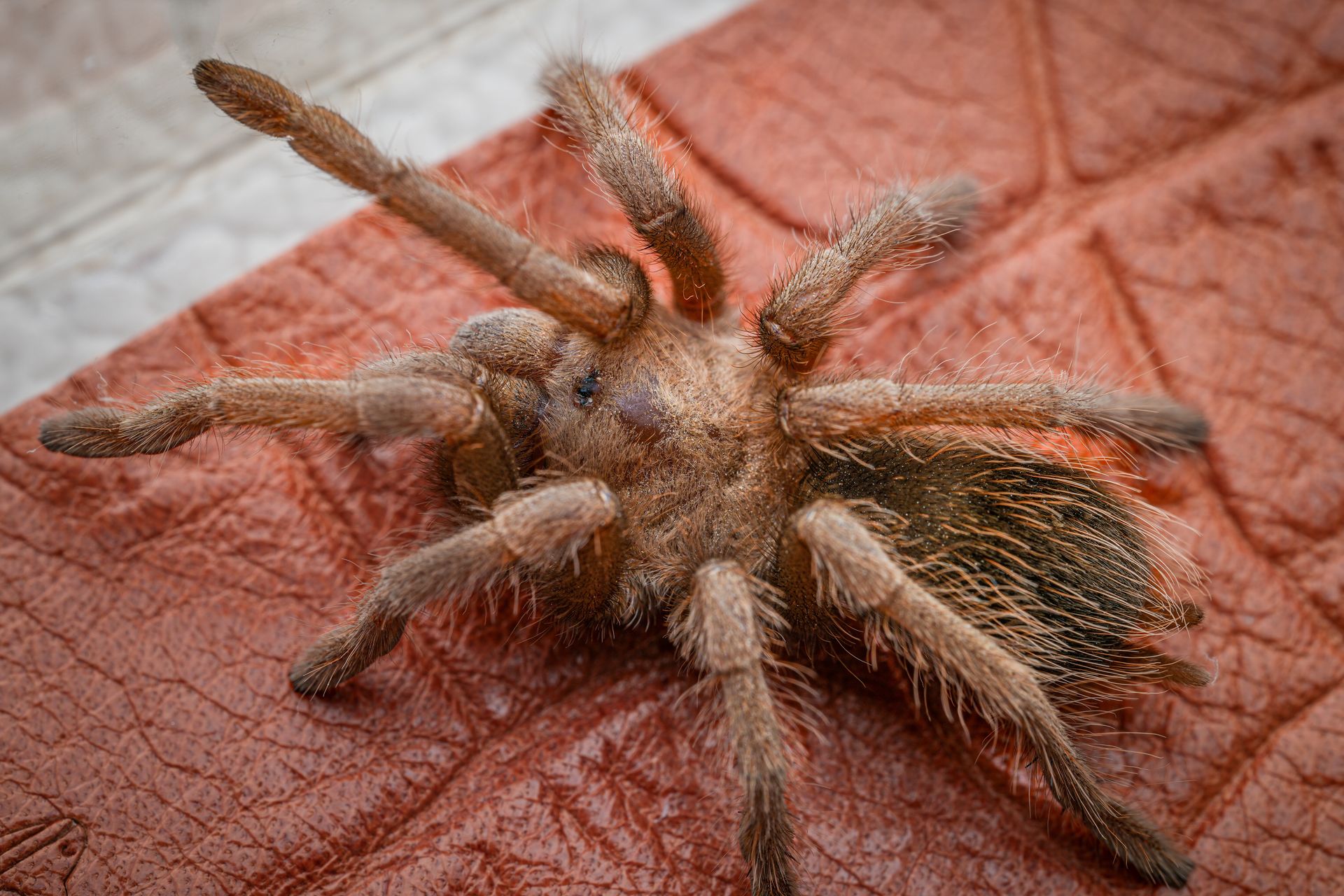
Aphonopelma chalcodes tarantulas are known for their "blonde" hairs, and they come in a range of colors, from tan to copper and reddish hues. They're generally calm and docile, but can be defensive and skittish when threatened.
To provide a natural vivarium, consider using a paludarium or terrarium with a secure lid and plenty of ventilation. This will help create a comfortable environment for your tarantula.
Here's a quick rundown of the ideal conditions for Aphonopelma chalcodes tarantulas:
- Substrate: Coconut fiber or peat moss, kept damp
- Decor: A large, horizontally oriented enclosure with a hide or retreat
- Humidity: Dry climate
- Ventilation: Tank with ventilation at the top and several small holes
- Water: A small, shallow water dish
The ideal temperature for these tarantulas is between 70-85 degrees Fahrenheit, with a pH range of 7-7.5 and hardness of 2-3 dH.
Frequently Asked Questions
Is the desert blonde tarantula poisonous?
No, the desert blonde tarantula's venom is not highly dangerous to humans and is comparable to a bee sting in terms of severity.
Featured Images: pexels.com