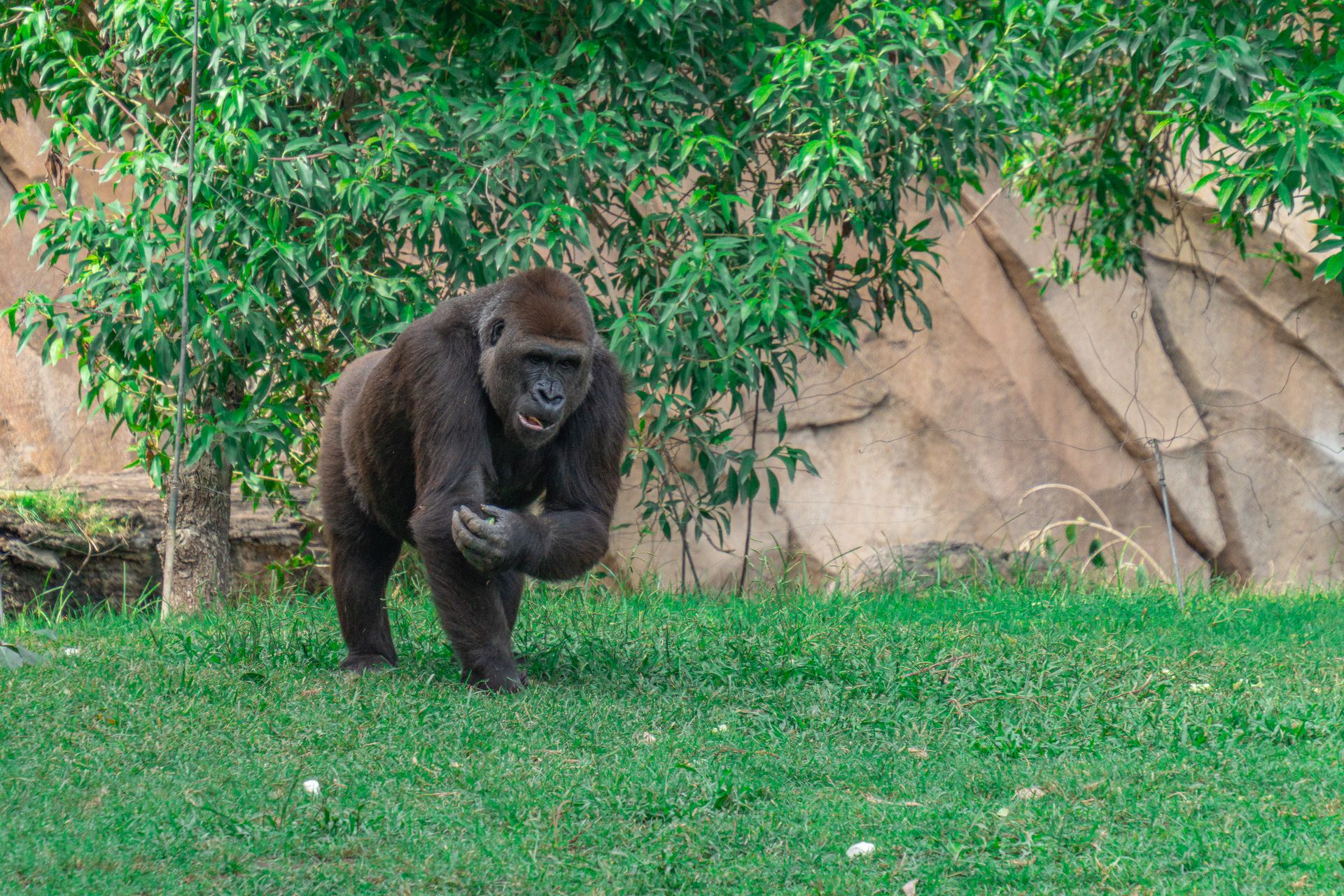
The Cross River gorilla is one of the rarest and most endangered primates in the world, with only around 200 individuals remaining in the wild.
Its population is fragmented into small groups, making conservation efforts even more challenging.
Habitat loss and fragmentation due to agriculture, logging, and urbanization are major threats to the Cross River gorilla's survival.
The gorillas' habitat is also vulnerable to climate change, which can alter the availability of food and water.
Conservation efforts are underway to protect the Cross River gorilla and its habitat, including the creation of protected areas and the development of sustainable land-use practices.
These efforts aim to reduce human-gorilla conflict and promote coexistence between humans and gorillas.
Cross River Gorilla Facts
The Cross River gorilla is the world's rarest great ape, with a population of only around 250-300 individuals.
They live deep in the mountainous rainforest of Cameroon and Nigeria, where they inhabit bamboo thickets and the vast Cross River.

Cross River gorillas are noticeably smaller than their western lowland gorilla cousins, with males reaching a height of 175 cm (5 ft 9 in) and weighing up to 200 kg (440 lb).
Females are slightly smaller, with a height of 140 cm (4 ft 7 in) and a weight of 100 kg (220 lb).
Their diet is greatly influenced by the season, and they prefer fruit, but will eat vegetation, liana, and tree bark during the dry season.
Cross River gorillas help disperse seeds in their droppings throughout the forests when eating fruit, and their diet shift to vegetation and bark helps prune the rainforest and make room for new seedlings to grow.
Groups of Cross River gorillas comprise one dominant male, several females, and their offspring.
Little is known about their reproduction, but most biologists agree that the gestation period is similar to other gorillas, between 8.5 – 9 months.
There are only 11 groups of Cross River gorillas known to exist today, due to habitat loss and human encroachment.
Conserving their habitat is the best way to protect Cross River gorillas, by safeguarding the current rainforest and replanting areas that have been degraded by deforestation.
Recommended read: Endangered Animals in Brazil Rainforest
Scientific Information
The Cross River gorilla is a critically endangered species with a population estimated to be between 200-300 individuals in the wild. They inhabit the Cross River region on the border of Nigeria and Cameroon.
Their physical characteristics include a smaller skull size, smaller jaw, and a height of 4 to 5 ½ feet, with males weighing up to 440lbs. Females are slightly smaller, with a height of 140 cm (4 ft 7 in) and a weight of 100 kg (220 lb).
Here is a breakdown of the Cross River gorilla's classification:
- Kingdom: Animalia
- Phylum: Chordata
- Clade: Synapsida
- Class: Mammalia
- Order: Primates
- Suborder: Haplorhini
- Family: Hominidae
- Genus: Gorilla
- Species: G. gorilla
- Subspecies: G. g. diehli
Their diet consists mainly of fruit, but they will eat vegetation, liana, and tree bark during the dry season. This helps disperse seeds and prune the rainforest, making room for new seedlings to grow.
Rarest Great Ape: Lowland Gorilla
The Cross River lowland gorilla is a rare and elusive creature, found in the mountainous rainforests of Cameroon and Nigeria.
They are the most secluded of all gorilla species, with a population of only around 250-300 individuals.
Cross River lowland gorillas are known to be smaller than their western lowland gorilla cousins, with males reaching a height of 175 cm (5 ft 9 in) and weighing up to 200 kg (440 lb).
Females are slightly smaller, with a height of 140 cm (4 ft 7 in) and a weight of 100 kg (220 lb).
Their diet consists mainly of fruit, but as the dry season creates scarcity, they will eat vegetation, liana, and tree bark.
Cross River lowland gorillas play a crucial role in their ecosystem, helping to disperse seeds and prune the rainforest to make room for new seedlings to grow.
Groups of Cross River gorillas typically consist of one dominant male, several females, and their offspring.
Research suggests that only 11 groups of Cross River gorillas are known to exist today, making them even more vulnerable to habitat loss and inbreeding.
Conserving their habitat is the best way to protect Cross River lowland gorillas, by safeguarding the current rainforest and replanting areas that have been degraded by deforestation.
Scientific Classification
The Cross River Gorilla's scientific classification is a fascinating topic. Here's a breakdown of its place in the animal kingdom:
The Cross River Gorilla belongs to the Kingdom Animalia. This is the broadest category that includes all animals.
In the Phylum Chordata, the Cross River Gorilla is classified alongside other animals with a notochord, a flexible rod-like structure that provides support during embryonic development.
The Clade Synapsida is a group of animals that includes the Cross River Gorilla and other mammals. This clade is characterized by a single opening in the skull for the ear and eye sockets.
The Cross River Gorilla is a member of the Class Mammalia, which includes all warm-blooded animals that produce milk for their young.
Within the Class Mammalia, the Cross River Gorilla is classified as a Primate, a group of animals that includes lemurs, lorises, tarsiers, monkeys, and apes.
Here's a summary of the Cross River Gorilla's scientific classification:
- Kingdom: Animalia
- Phylum: Chordata
- Clade: Synapsida
- Class: Mammalia
- Order: Primates
- Suborder: Haplorhini
- Family: Hominidae
- Genus: Gorilla
- Species: G. gorilla
- Subspecies: G. g. diehli
Population and Conservation

The Cross River Gorilla population has seen a drastic decline over the past 16 years, with an estimated 633 individuals disappearing from the wild.
In the year 2000, there were approximately 923 individuals in the wild, but today the number stands at just 290.
This decline is mainly due to illegal hunting, which still threatens the animals' future to this day.
Partners Unite to Save Last Gorillas
The critically endangered mountain gorillas are a prime example of the need for collaborative conservation efforts.
In the Virunga Mountains, conservationists from the Dian Fossey Gorilla Fund International and the World Wildlife Fund are working together to protect the remaining 1,004 mountain gorillas.
Their joint efforts include monitoring gorilla populations, providing habitat protection, and educating local communities about the importance of conservation.
The collaboration has led to a significant increase in the mountain gorilla population, with a 25% growth rate between 2010 and 2012.
By working together, conservationists can pool their resources and expertise to create a more effective and sustainable conservation plan.
In the case of the mountain gorillas, this has meant providing support to local governments to strengthen laws and enforcement against poaching and habitat destruction.
Estimated Population Figures 2000-2016
The estimated Cross River Gorilla population has seen a drastic decline over the past 16 years. The population figure in the year 2000 was estimated to be 923 individuals.
Between 2000 and 2016, the population dropped significantly, with an estimated 633 individuals disappearing from the wild. This decline is mainly attributed to illegal hunting.
The current population figure stands at around 290 individuals, a far cry from the estimated 923 individuals in the year 2000. This drastic decline has raised concerns for the future of the Cross River Gorilla population.
Frequently Asked Questions
What is the rarest gorilla in the world?
The Cross River gorilla is the rarest great ape in the world, with a population of only around 250-300 individuals. This critically endangered species is found in the Cross River region of Nigeria and Cameroon.
Featured Images: pexels.com