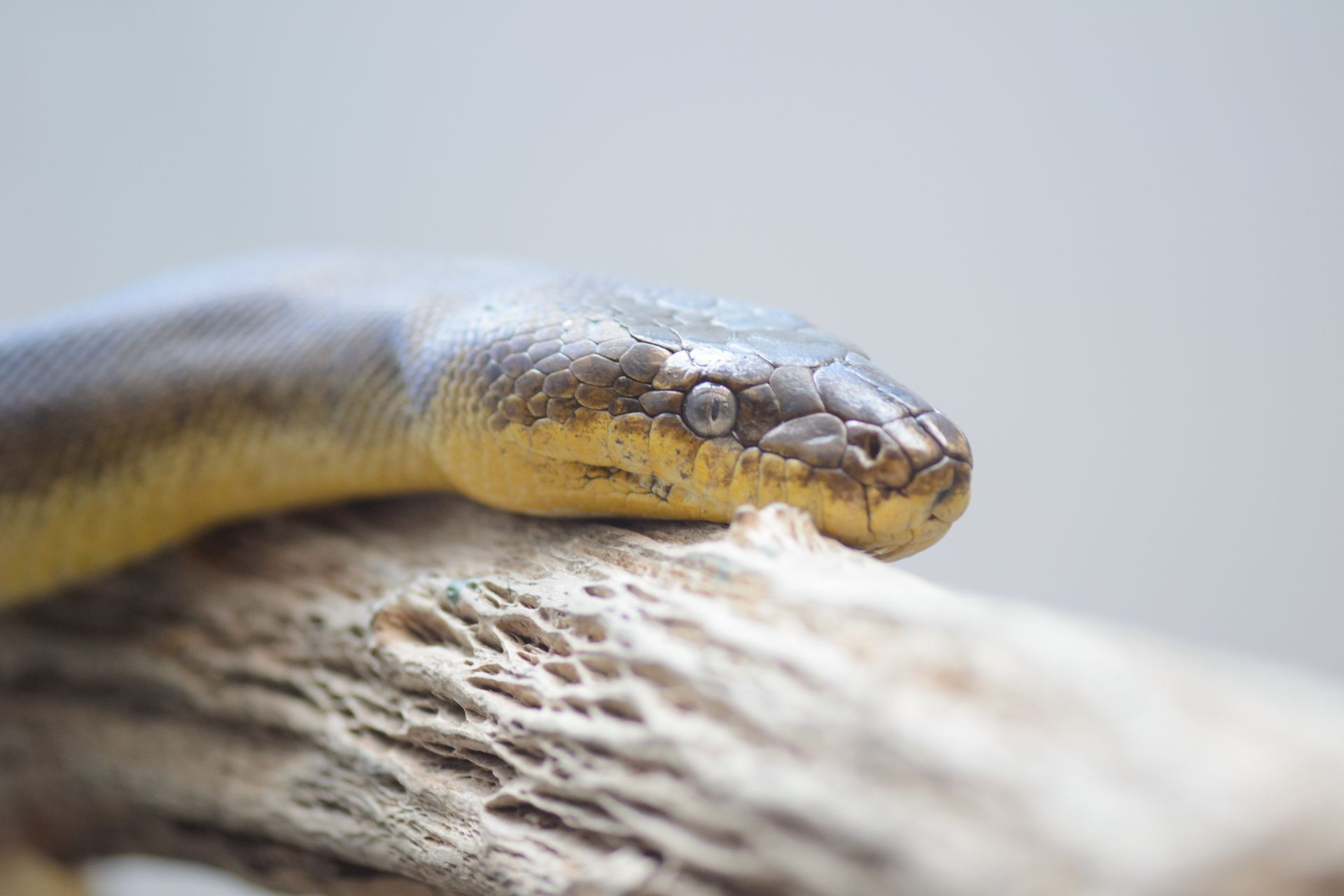
The coastal taipan, Oxyuranus scutellatus, is a venomous snake found in the coastal regions of northern Australia.
They inhabit a variety of habitats, including beaches, dunes, and rocky outcrops.
Their diet consists mainly of small mammals, such as rodents and bats.
Coastal taipans are solitary animals and only come together during mating season.
Here's an interesting read: Coastal Tailed Frog
Taxonomy and Description
The coastal taipan, Oxyuranus scutellatus, is a species of venomous snake found in Australia and New Guinea. It's the second-longest venomous snake in Australia, after the king brown snake.
In 1867, German naturalist Wilhelm Peters first described the coastal taipan as Pseudechis scutellatus from material collected in Rockhampton, Queensland. The species was later reclassified as Oxyuranus scutellatus in 1933 by Australian zoologist Donald Thomson.
Adult coastal taipans typically reach sexual maturity at around 1.2 meters in total length. They can grow up to 2.9 meters in length, with a maximum recorded weight of 6.5 kilograms.
Here's a comparison of the coastal taipan's size to other similar species:
The coastal taipan's head and neck are narrower than those of other brown snakes, and it has a lighter face and snout.
Taxonomy
The coastal taipan has a long and complex history of taxonomy. It was first described by Wilhelm Peters in 1867 as Pseudechis scutellatus from material collected in Rockhampton, Queensland.
Peters' description was later revised by Charles Walter De Vis in 1911, who described Pseudechis wilesmithii from the Walsh River in north Queensland. However, this description was not widely accepted.
In 1922, William McLennan collected two snakes near Coen in far north Queensland, which he sent to the Australian Museum in Sydney. These snakes were later described by Roy Kinghorn in 1923 as Oxyuranus maclennani, a new genus that was distinct from all other elapid snakes due to its unique palatine bone.
Kinghorn noted that the coastal taipan was the second largest venomous snake in the world, with fangs that were 3/4 inch long. However, this description was later disputed by Donald Thomson in 1933, who concluded that Pseudechis scutellatus and Oxyuranus maclennani were the same species.
The coastal taipan was eventually renamed Oxyuranus scutellatus, with Peters' specific epithet taking priority. This name has been widely accepted since then.
See what others are reading: Deadliest Snakes in North America
Description
The coastal taipan is a large and impressive snake species. It's the second-longest venomous snake in Australia after the king brown snake, with adult specimens typically reaching 1.2 m (3.9 ft) in total length.
These snakes can grow significantly larger, with more mature specimens reaching lengths of 1.5 to 2.0 m (4.9 to 6.6 ft). In fact, the longest recorded total length for a coastal taipan was 2.9 m (9.5 ft), and it weighed 6.5 kg (14 lb).
A specimen of average size, around 2.0 m (6.6 ft) in total length, can weigh around 3.0 kg (6.6 lb). This size and weight can vary, but it gives you an idea of just how big these snakes can get.
The coastal taipan's size and weight are impressive, but what's even more remarkable is its growth rate. Juvenile coastal taipans grow at an astonishing rate of around 6.7 cm (2.6 in) per month. This rapid growth helps them reach a length of 1 meter (3.3 ft) within their first year.
A different take: Coastal Carpet Python Size
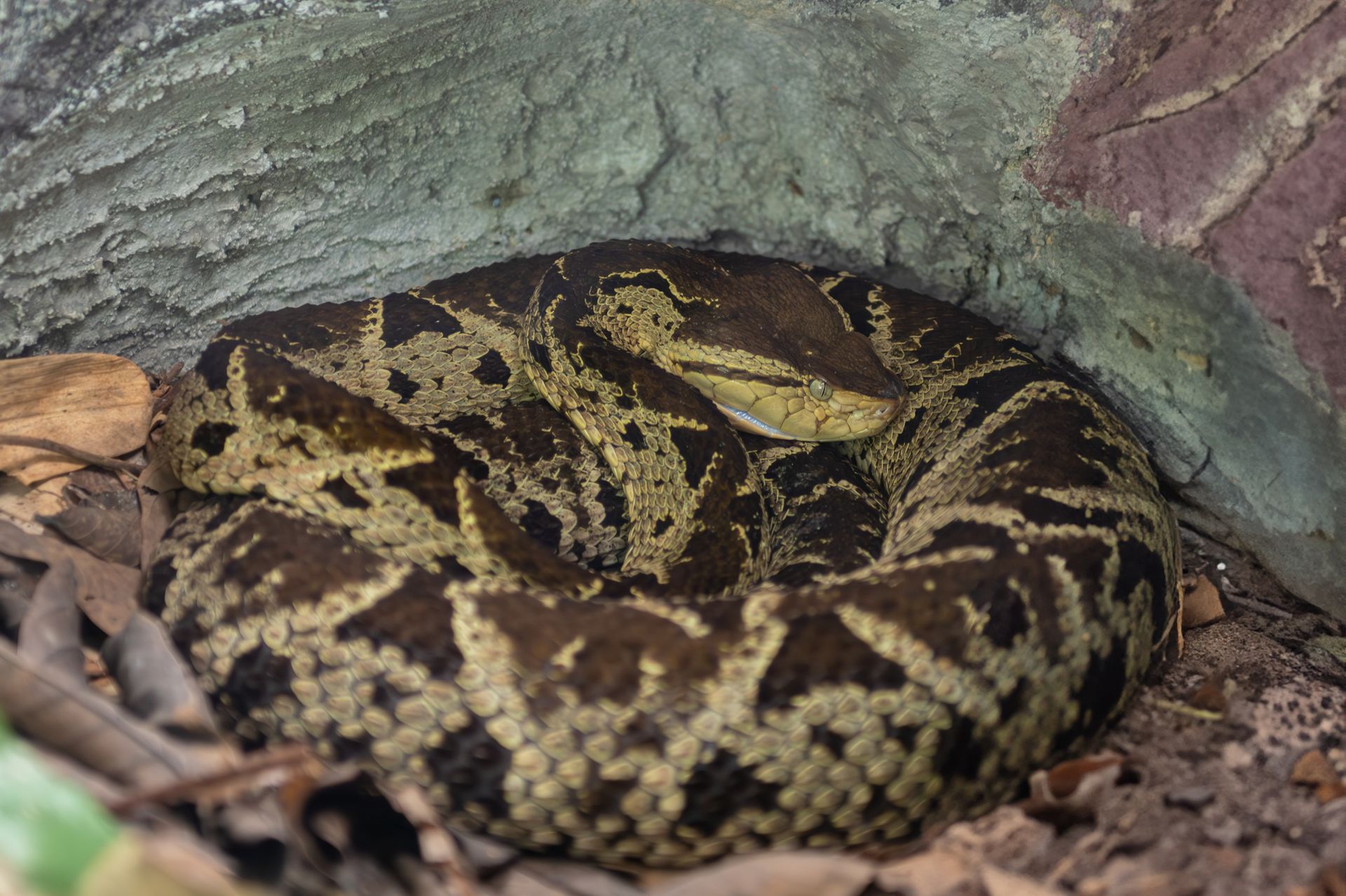
Here's a rough breakdown of the coastal taipan's size and growth:
- Average length: 2.0 m (6.6 ft)
- Average weight: 3.0 kg (6.6 lb)
- Growth rate: 6.7 cm (2.6 in) per month
- Length at 1 year: 1 meter (3.3 ft)
This information should give you a better understanding of the coastal taipan's size and growth patterns.
Habitat and Distribution
The coastal taipan is found in warm, wet, temperate to tropical coastal regions of northern and eastern Australia. Its range extends from north-western Western Australia to the Northern Territory, across Cape York Peninsula, and south through eastern Queensland into northern New South Wales.
In particular, the coastal taipan inhabits areas where the maximum winter temperature is above 20 °C (68 °F). You can find them in monsoon forests, wet and dry sclerophyll forests, woodlands, and even sugarcane fields, where they thrive on the abundant rodent population.
Coastal taipans have adapted well to human-modified environments, such as grazing paddocks and disused rubbish tips. They often shelter in abandoned animal burrows, hollow logs, and piles of vegetation and litter.
In Far North Queensland’s Cape York Peninsula, coastal taipans are usually found in open woodland areas and thickets of introduced lantana.
Additional reading: Coastal Carpet Python
Behavior and Adaptation
The coastal taipan is primarily diurnal, being mostly active in the early to mid-morning period.
In hot weather conditions, they may become nocturnal, showing their adaptability to different environments.
Coastal taipans change colour with the seasons, becoming a bright coppery colour in summer and a dull brown in winter.
This colour change helps the snake to warm up quickly during the cooler months and avoid overheating in the warmer months.
Juvenile snakes do not undergo this seasonal change, which is a notable difference from adults.
Coastal taipans are generally shy and prefer to avoid confrontation with humans.
They are extremely nervous and alert snakes, and any movement near them will almost certainly result in an attack.
The taipan will quietly flee if given the opportunity, but when surprised or cornered, it will ferociously defend itself.
When threatened, a coastal taipan will adopt a loose striking stance, raising its head and forebody while inflating and compressing its body laterally.
It may also spread the back of its jaws to give its head a broader, more intimidating appearance.
The coastal taipan's muscular lightweight body allows it to hurl itself forwards or sideways and reach high off the ground.
The attack is so fast that a person may be bitten several times before realising the snake is present.
Reproduction and Lifespan
The coastal taipan's breeding season takes place between August and December. During this time, females lay a clutch of 7 to 20 eggs.
The eggs take anywhere from 60 to 80 days to hatch, resulting in newly hatched snakes that are between 30 to 34 cm (12 to 13 in) in length.
Young coastal taipans grow quickly, averaging 6.7 cm (2.6 in) in length each month. This rapid growth allows them to reach a length of 1.0 m (3.3 ft) within a year.
Male coastal taipans typically reach sexual maturity when they are around 80 cm in length, which they usually achieve by the age of 16 months.
Identification and Comparison
The coastal taipan is a medium to large snake with a robust build and a deep, rectangular-shaped head that's distinct from its slender neck.
Its body colour can vary from yellowish to dark brown or almost black, with a seasonal change in colour, becoming darker in winter and lighter in summer. The head is noticeably paler than the body, especially in juveniles.
The coastal taipan has a unique characteristic: its head is always pale, even as it ages. Its eyes are large with an intense orange-brown iris and round pupil.
Here are some key differences between the coastal taipan and the eastern brown snake:
Identification
The Coastal Taipan is a medium to large snake with a robust build. Its deep, rectangular-shaped head is distinct from the slender neck.
Body colour can vary, ranging from yellowish to dark brown or almost black. This species undergoes a seasonal change in colour, with individuals becoming darker in winter and lighter in summer.
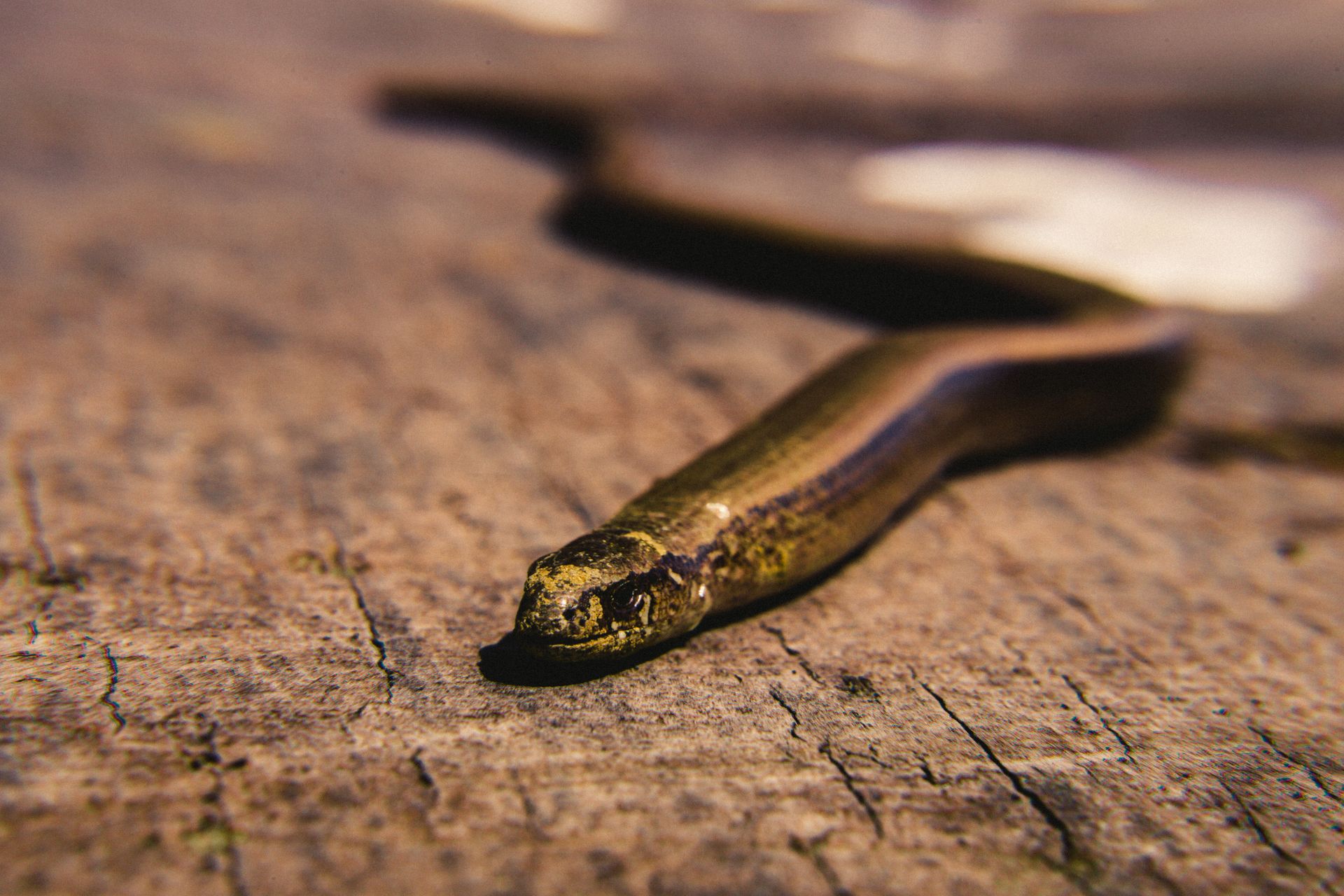
The head is noticeably paler than the body, especially in juveniles. This paleness will remain even as the body darkens with age.
The ventral surface is yellowish to cream with scattered orange blotches. This distinctive pattern can help with identification.
The Coastal Taipan has a unique scale pattern, with midbody scales in 21 or 23 rows. This can be a helpful characteristic for distinguishing it from other species.
On average, the Coastal Taipan grows to around 2m in total length. Males tend to grow slightly larger than females.
Comparison to Snakes
The coastal taipan is often compared to other snakes, and understanding these comparisons can help with identification. The coastal taipan has a long, narrow head with an angular brow.
The facial coloration of the coastal taipan is lighter on the face and snout compared to the rest of its body. This is a key distinction from the eastern brown snake, which typically has a face and snout that are the same color or darker than its body.
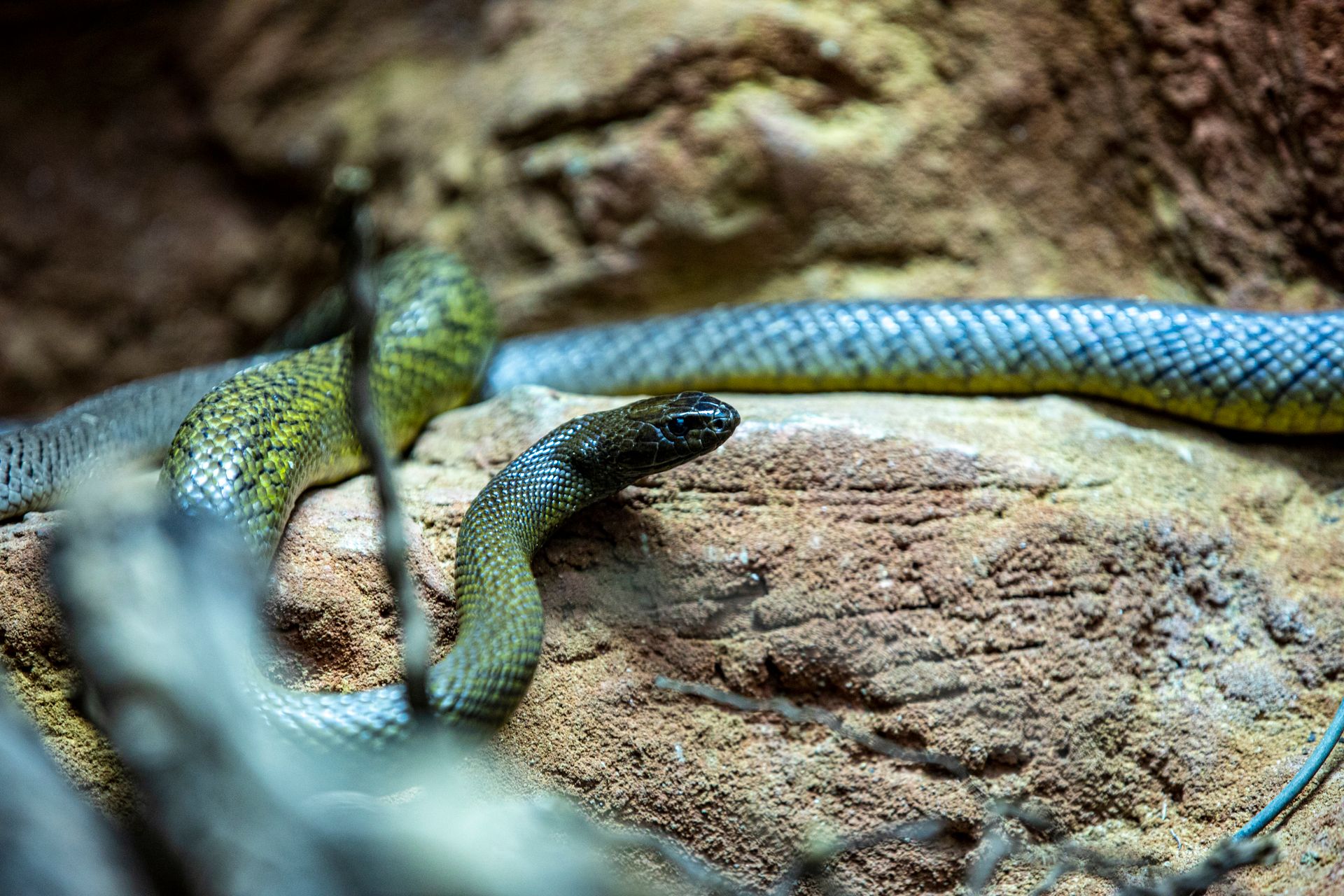
In terms of venom toxicity, the coastal taipan is considered slightly less venomous than the eastern brown snake. This doesn't mean it's not highly venomous, but rather that it's slightly less potent.
The coastal taipan is also larger than the inland taipan, with an average adult length of around 2 meters compared to the inland taipan's average of 1.8 meters. This is a notable difference, especially when considering the two species' habitats.
Here's a quick comparison of the coastal taipan and the eastern brown snake:
The coastal taipan's temperament is also worth noting, as it's known to be more aggressive when threatened compared to the relatively placid inland taipan. This is something to keep in mind when interacting with these snakes in the wild.
Specimen in Collection
When examining a specimen in our collection, we can view microCT scans of a Coastal Taipan (Oxyuranus scutellatus) from the Australian Museum Herpetology Collection (specimen AM R.47468).
These scans provide a detailed look at the specimen's anatomy, allowing for a more accurate identification and comparison with other specimens.
Figure 2
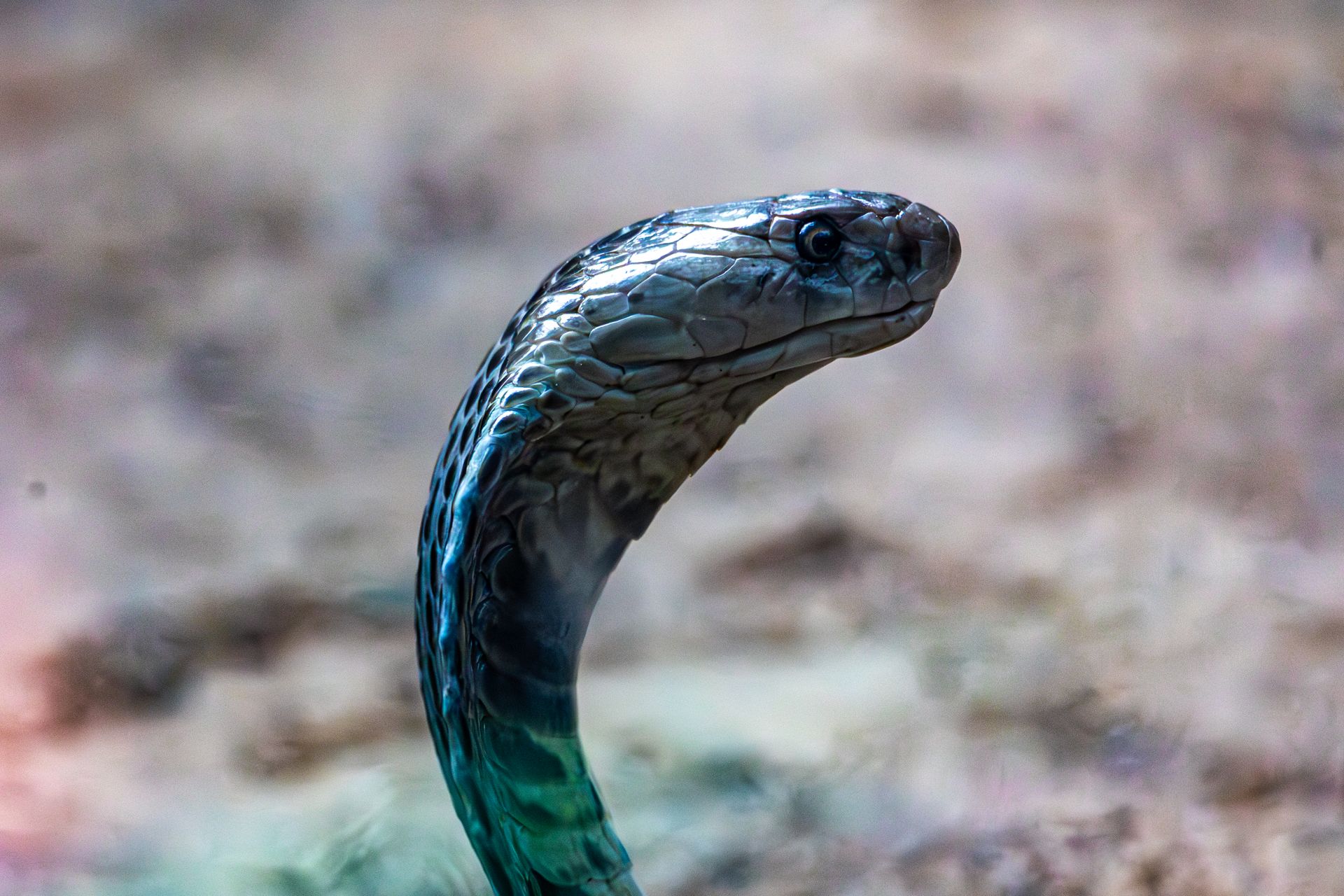
Figure 2 shows a key difference in the identification process between species A and species B. Species A is identified through a combination of morphological and molecular characteristics.
Species A's unique shape and size of its petals can be seen in Figure 1, which is a crucial factor in its identification. The molecular characteristics of species A are also distinct from species B.
Species B, on the other hand, is identified primarily through molecular characteristics, as seen in Figure 3. This is because its morphological characteristics are less distinct from those of species A.
The comparison between species A and species B highlights the importance of considering multiple characteristics in the identification process.
Venom and Lethality
The coastal taipan is considered the third-most venomous terrestrial snake in the world, behind only the inland taipan and eastern brown snake. Its venom is primarily neurotoxic and coagulopathic, affecting the nervous system and blood clotting ability.
A single milking of a coastal taipan can yield up to 400 mg of venom, although the average is around 120 mg. The subcutaneous LD50 value is 0.106 mg/kg, and the estimated lethal dose for humans is a mere 3 mg.
The venom injected by a coastal taipan can cause a range of serious symptoms, including headaches, nausea/vomiting, collapse, convulsions, paralysis, internal bleeding, myolysis, and kidney damage. This can happen rapidly, making prompt medical attention essential.
The coastal taipan's venom is so potent that a bite was nearly always fatal before the introduction of specific antivenom in 1956.
Discover more: Western Diamondback Rattlesnake Venom
Survival and Conservation
The Coastal taipan is a species of least concern, but it's still facing some threats. Habitat loss due to land development is one of the main concerns.
Natural predators of the Coastal taipan include birds of prey and goannas, but few predators would take on a large adult. However, they are still killed on sight.
The Coastal taipan has a few parasites, including nematodes, which are round worms.
Surviving a Bite
Surviving a bite from a coastal taipan is possible with prompt medical care.
A coastal taipan bite can be fatal, but antivenom and proper medical care can significantly improve the chances of survival.
The neurotoxic effects of a coastal taipan bite may be irreversible once established, which is why seeking medical attention immediately is crucial.
Severe cases may require intubation due to respiratory paralysis, a serious complication that can arise from a coastal taipan bite.
Between 2005 and 2015, bites from coastal taipans accounted for 4% of identified snakebite victims in Australia.
At least one recorded death occurred between 2000 and 2016 due to a coastal taipan bite.
Conservation Status
The Coastal taipan is a species of least concern, but it's not entirely out of the woods. It's not currently facing any major threats and is not in danger of extinction.
Natural enemies of newly hatched and immature snakes, including birds of prey and goannas, play a role in controlling their populations.
Although few predators would take on a large adult Coastal Taipan, they are still routinely killed on sight. This highlights the respect and caution that's necessary when dealing with this species.
The only parasites known to the Coastal taipan are nematodes, also known as round worms.
Habitat loss due to land development and the impact of introduced predators are some of the threats facing this species.
Australia's Deadliest Snake
The coastal taipan is a highly venomous snake native to northern and eastern Australia, as well as the island of New Guinea.
Its potent venom makes it a snake to be reckoned with, and it's known for its aggressive temperament when threatened.
This snake has earned a reputation as one of the most dangerous snakes in Australia, and it's not hard to see why.
Found in coastal regions, the coastal taipan is a force to be respected, especially if you're planning a trip to these areas.
Curious to learn more? Check out: Snakes of Australia
Featured Images: pexels.com