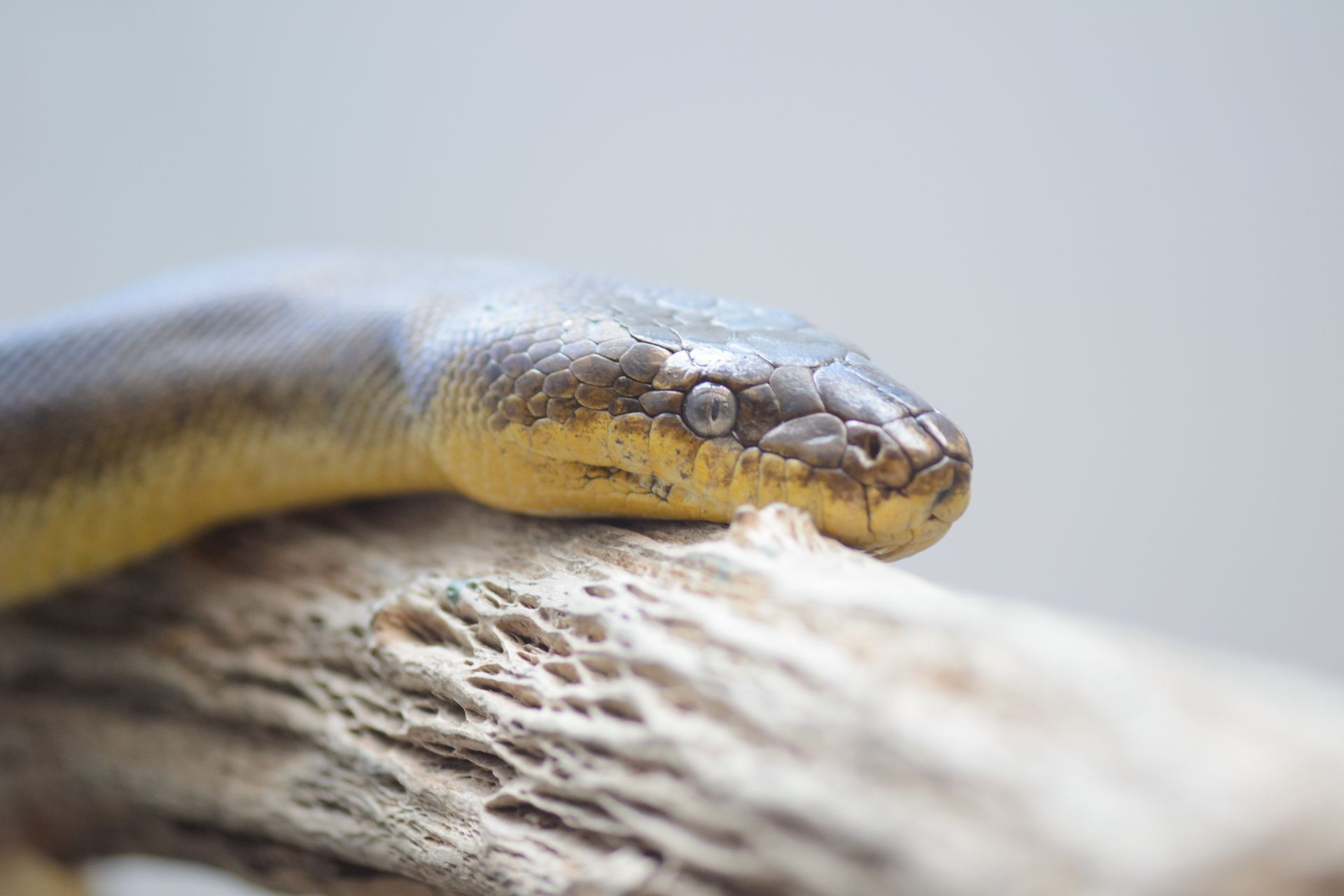
The coastal carpet python is a unique and fascinating species, native to the eastern coast of Australia. They are a type of non-venomous snake that thrives in the country's warm and humid climate.
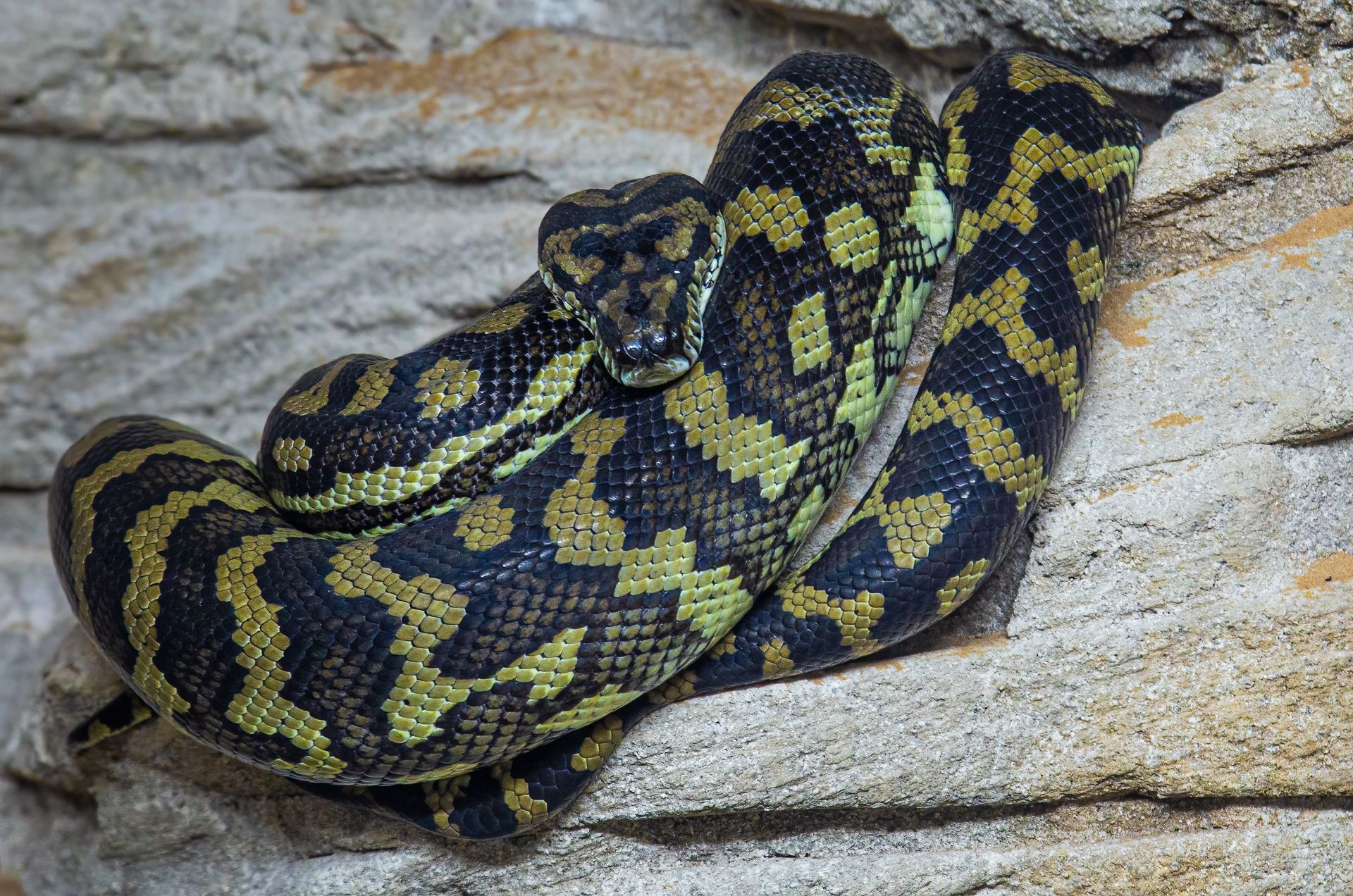
These snakes are known for their distinctive carpet-like pattern, which helps them blend in with their surroundings. They are generally brown or tan in color, with a textured appearance that resembles a carpet.
Coastal carpet pythons are found in a variety of habitats, including rainforests, woodlands, and coastal areas. They are excellent climbers and have been known to venture into trees in search of food or shelter.
In the wild, coastal carpet pythons feed on small mammals, birds, and reptiles, making them opportunistic hunters.
Expand your knowledge: Coastal Carpet Python Size
General Information
The Coastal Carpet Python is a widespread species found in eastern Queensland and north-eastern New South Wales. They can be encountered in a variety of habitats, including rainforest, eucalypt forest, heathland, pasture, and even urban areas.
These snakes are excellent climbers and prefer arboreal living conditions, often residing in trees and even on the roofs of houses in suburban areas. This is a common sight in well-settled neighborhoods.
Their wild diet consists of a wide variety of mammals and birds, making them an ambush predator. They are skilled hunters and can thrive in different environments.
The Coastal Carpet Python is the largest subspecies in the Morelia genus, growing up to 2.7-3.0 meters in length. They have a distinctive appearance, with olive brown to tan coloring on top and cream-colored bellies.
Housing and Environment
Coastal Carpet Pythons can thrive in a variety of environments, including rainforests, woodlands, and even urban areas.
They are adept climbers and can often be found in trees, where they hunt birds and small mammals.
These pythons are known to adapt to human-altered landscapes and can coexist with humans, feeding on rodents and occasionally taking shelter in gardens or buildings.
Python Enclosures
Coastal Carpet Pythons can thrive in a variety of environments, including human-altered landscapes like suburban areas.
These pythons are adept climbers and often live in trees, where they hunt birds and small mammals.
To replicate their natural habitat, a python enclosure should have vertical space for climbing and a temperature range of around 75-85°F (24-29°C).
Coastal Carpet Pythons are known to coexist with humans in suburban areas, feeding on rodents and occasionally taking shelter in gardens or buildings.
A secure, escape-proof enclosure is essential to prevent the python from escaping or getting injured.
They are generally docile but can display defensive behaviors if threatened, such as hissing or coiling.
The enclosure should also provide adequate ventilation and a hiding place or two to help the python feel secure.
Additional reading: Coastal Taipan Oxyuranus Scutellatus
Live Location
The Coastal Carpet Python is a versatile creature that can thrive in various environments across its native range in Australia.
It's found along the eastern coast, specifically in Queensland and New South Wales.
The python prefers habitats like rainforests, woodlands, savannas, and even urban areas.
In these environments, the temperature is warm and humid, with moderate seasonal variations.
In Queensland, you'll find rainforests with high humidity and dense vegetation.
In contrast, New South Wales has woodlands with scattered trees and moderate rainfall.
Interestingly, the python is adaptable to human environments, making it common in suburban backyards.
Here's a breakdown of the python's habitats by region:
Diet and Health
The Coastal Carpet Python is a carnivorous predator, which means it primarily feeds on meat. Its diet consists of small mammals, birds, and reptiles.
To keep your Coastal Carpet Python healthy and thriving, it's essential to provide it with a balanced diet. In captivity, its feeding habits are relatively straightforward to manage with proper planning.
A Coastal Carpet Python can live up to 30 years in captivity when provided with proper care. This is a significant commitment, so make sure you're prepared to provide a stable and nurturing environment for your pet.
Here are some key feeding tips to keep in mind:
- Feeding frequency varies depending on the python's age and size.
Diet and Feeding
When managing the diet of your Coastal Carpet Python, it's essential to know what to feed them and how often. The Coastal Carpet Python is a carnivorous predator, which means they primarily feed on meat.
In the wild, their natural diet consists of small mammals, birds, and reptiles. This is what they would typically hunt and eat in their natural habitat.
Feeding frequency is also crucial, and it varies depending on the snake's age and size. For example, younger snakes need to eat more frequently than adults.
To manage their feeding habits in captivity, it's helpful to plan ahead. Here are some tips for feeding your Coastal Carpet Python:
- Natural Diet: Small mammals, birds, and reptiles.
- Feeding Frequency:
- Captive Feeding Tips:
Health and Lifespan
To ensure the health and well-being of your Coastal Carpet Python, it's essential to understand its lifespan. The Coastal Carpet Python can live 20-30 years in captivity when provided with proper care.
Creating an optimal environment is key to maintaining your python's health. This involves monitoring its condition regularly.
Regular monitoring of your python's condition will help you catch any potential health issues early on.
A unique perspective: Coastal Tailed Frog
Behavior and Temperament
The Coastal Carpet Python is known for its calm demeanor and adaptability. Understanding its behavior can enhance your experience as a keeper.
They are nocturnal, with peak activity during the evening and night. This means they're most active when it's dark, so be prepared for some late-night encounters.
Defensive behavior is typically non-aggressive, but they may hiss or strike when threatened. It's essential to respect their boundaries and not provoke them.
With consistent handling and proper care, the Coastal Carpet Python can become a docile and manageable pet. I've found that regular interaction helps them trust humans and enjoy handling.
Here's a list of some of the other python species that share similar characteristics:
- Amethystine Python
- Ball Python
- Black-Headed Python
- Boelens Python
- Borneo Blood Python
- Burmese Python
- Burrowing Python
- Centralian Python
- Childrens Python
- Coastal Carpet Python
- Diamond Python
- Green Tree Python
- Indian Python
- Inland Carpet Python
- Jungle Carpet Python
- Macklots Python
- Malaysian Blood Python
- Olive Python
- Pygmy Python
- Reticulated Python
- Ringed Python
- Rock Python
- Rough Scaled Python
- Spotted Python
- Sumatran Blood Python
- Timor Python
- White Lipped Python
Carpet pythons can be nippy as hatchlings, but most grow into docile adults. However, care must be taken when feeding, as they have a strong "feeding response" that can be mistaken for aggression.
Care and Handling
Handling a Coastal Carpet Python requires knowledge, patience, and consistency.
To thrive in captivity, this snake needs proper care, which includes meeting its specific needs.
With consistent handling, the Coastal Carpet Python can become a rewarding pet, providing years of enjoyment for its keeper.
Handling and Caring

Handling a Coastal Carpet Python requires patience and consistency, as they can be sensitive to handling.
They thrive in captivity with proper care, making them a rewarding pet.
Knowledge about their specific needs is essential to their well-being.
Meeting their needs can provide years of enjoyment for their keeper.
Why ReptiChip
ReptiChip is made with love and care by people who are passionate about coastal carpet pythons, which is why it's a great choice for pet owners like you.
Our product line is designed to meet the specific needs of coastal carpet pythons, with options like BabiChip, RediChip, TropicalBase, MicroChip, and ReptiEarth to choose from.
Not convinced that ReptiChip is the right choice for your pet?
Reproduction and Breeding
The Coastal Carpet Python is an oviparous species, which means it lays eggs after mating. This process requires attention to environmental conditions and careful monitoring.
Mating typically occurs during the cooler months of the year, making it essential to provide a suitable environment for breeding.
A clutch of eggs can range from 10 to 30 eggs, making it a significant investment for breeders.
Incubation periods last around 60-70 days at a temperature of 86°F-88°F.
Breeding Coastal Carpet Pythons in captivity requires patience and dedication, but with proper care, it can be a rewarding experience for experienced breeders.
Featured Images: pexels.com