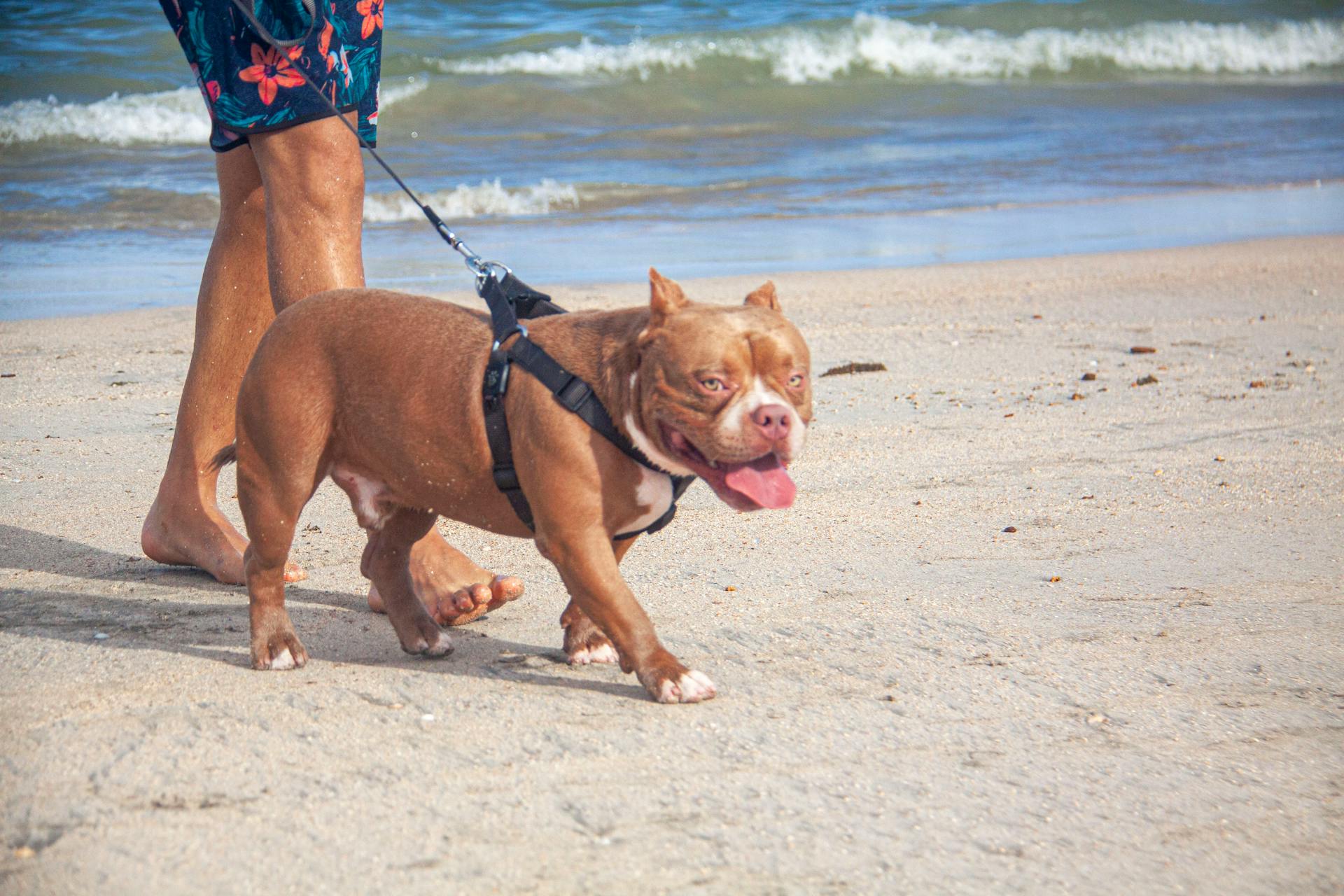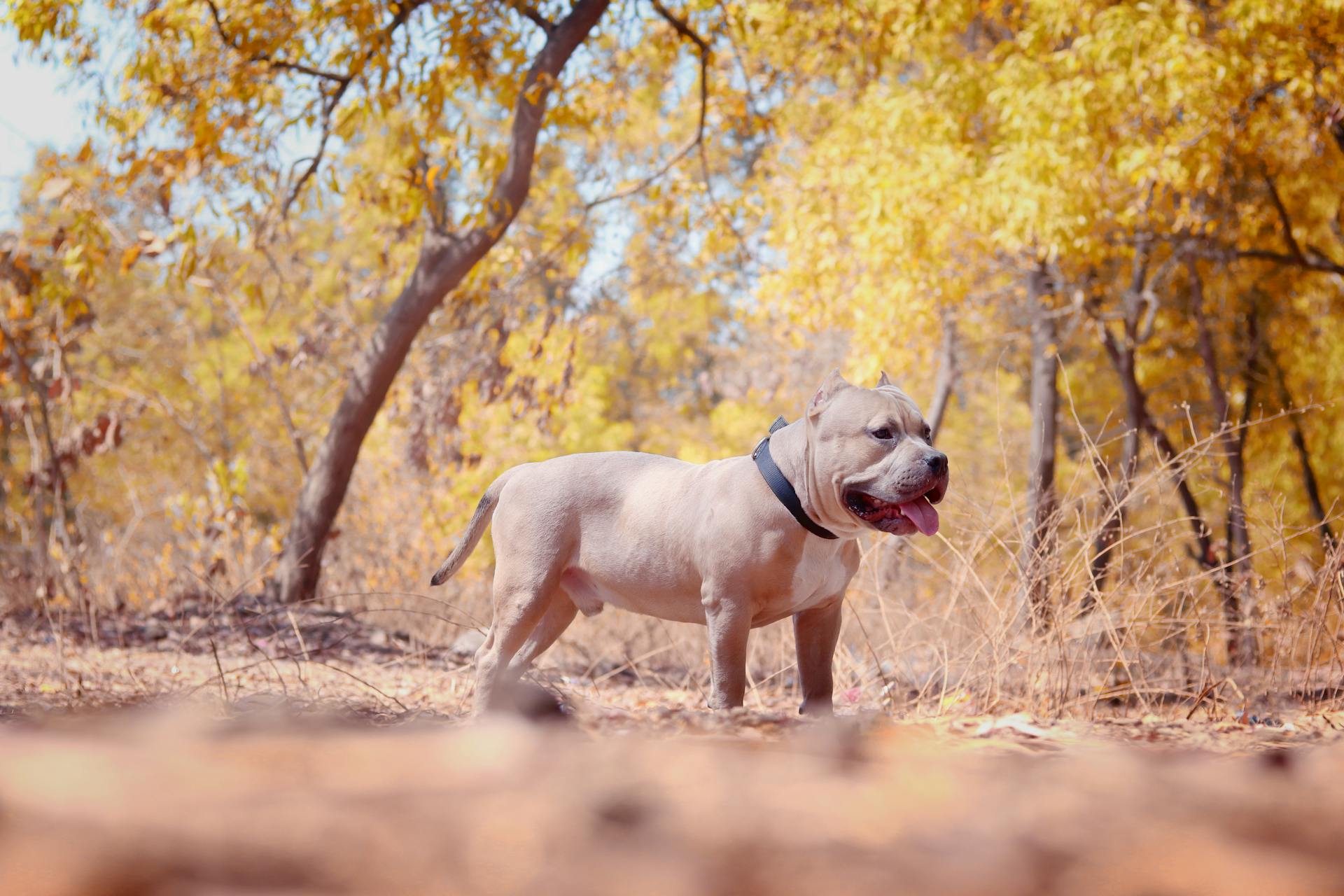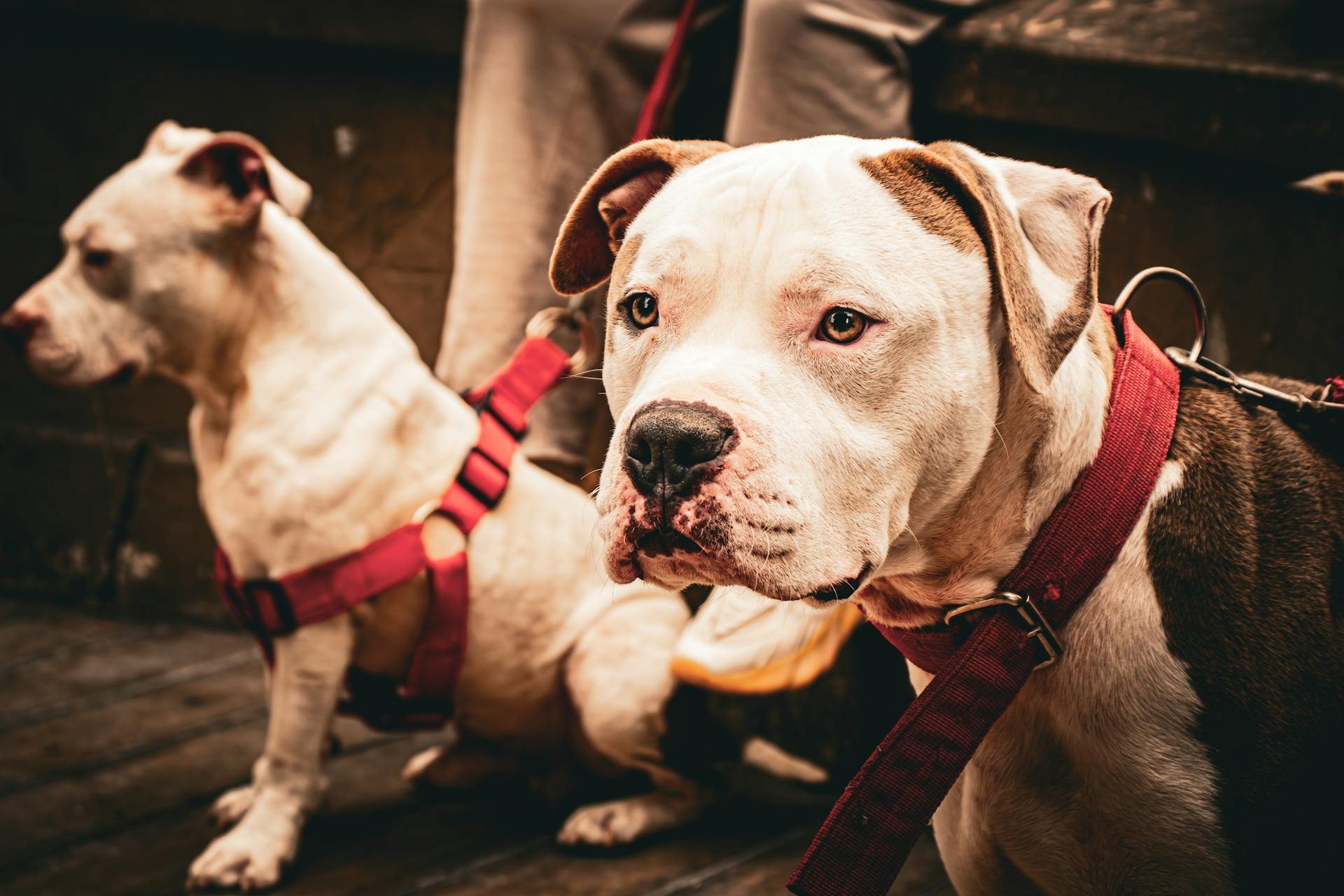
The Classic American Bulldog is a beloved breed that's perfect for families and active owners. They were originally bred for guarding and farm work, but today they're cherished for their gentle and affectionate nature.
The American Bulldog's history dates back to the 18th century, when they were developed from the English Bulldog. This breed has undergone significant changes over the years, but their loyal and protective instincts remain.
One of the most distinctive features of the Classic American Bulldog is their sturdy build and muscular physique. On average, they weigh between 70-120 pounds and stand between 17-20 inches tall at the shoulder.
Their short, easy-to-maintain coats come in a variety of colors, including brindle, fawn, and white. Regular grooming is essential to prevent skin issues and keep their coat healthy.
Curious to learn more? Check out: Standard American Bully Classic
Temperament and Personality
The classic American Bulldog is a lovable powerhouse, combining strength and loyalty with a goofy streak that makes them endlessly entertaining.
These dogs are fiercely loyal and protective, often acting as the family bodyguard. They're affectionate and loving with their humans, showering them with slobbery kisses, but they tend to be suspicious of strangers, so early socialisation is essential.
With an enthusiastic, energetic nature, American Bulldogs need plenty of exercise and mental stimulation to prevent boredom kicking in. Expect lots of mischief such as chewing, digging, or attempting to escape from the garden if they don't get enough physical and mental activity.
Their bounciness can be too much for some, especially young children or the elderly, as they can easily cause accidental harm. Consistent training is also a must, as while they're smart cookies, they can be strong-willed and will try to establish themselves as top dog if given the opportunity.
Here are some key personality traits of the classic American Bulldog:
- Loyal and affectionate
- Protective of family
- Highly energetic
- Playful and bouncy
- Outgoing and friendly
- Can be dominant and strong-willed
- Needs a confident owner
- Watchful and alert
- Great guardians
- Intelligent and quick to learn
- Adventurous and loves the outdoors
- Needs lots of exercise and mental stimulation
- Can be suspicious of strangers
- Wary of unfamiliar dogs
- Some may have a strong prey drive
- Doesn’t like being left alone
Types of American Bulldogs
There are two main types of American Bulldogs: the Johnson type and the Scott type. The Johnson type is often referred to as the 'Classic' or 'Bully' line.
The Johnson type is larger, beefier, and stockier, with a more pronounced underbite and a boxy head. This type was bred for guarding, making them powerhouse protectors.
Most American Bulldogs are now a hybrid between the Johnson and Scott types, resulting in varying appearances between dogs.
Consider reading: American Bulldog Puppies Johnson Breed
Types of
There are two main types of American Bulldog: the Johnson type and the Scott type.
The Johnson type is often referred to as the 'Classic' or 'Bully' line. It's larger, beefier, and stockier than the Scott type, with a more pronounced underbite and a boxy head.
This type was bred for guarding, making them powerhouse protectors. They're naturally loyal and protective, traits that make them excellent companions for active owners.
The Scott type, on the other hand, is sleeker and more agile, with a longer muzzle and lighter build. They're well-suited for herding and agility tasks, shining in these areas with ease.
Most American Bulldogs now are a hybrid between the Johnson and Scott lines, resulting in varied appearances.
Here's an interesting read: Type of Herding Dog Crossword Clue
Variations
American Bulldogs come in a variety of sizes, including Toy, Miniature, and Standard.
The Toy American Bulldog typically weighs between 20-40 pounds and stands 10-14 inches tall.
They are often considered a great option for families with smaller living spaces.
A unique perspective: Dogs Breeds That Start with B
The Miniature American Bulldog weighs between 40-60 pounds and stands 14-16 inches tall.
This size variation is often preferred by families with children who want a smaller but still energetic companion.
The Standard American Bulldog is the largest of the three, weighing between 70-120 pounds and standing 17-20 inches tall.
Their larger size requires more space and exercise, making them best suited for families with larger yards.
Care and Maintenance
American Bulldogs have a short, smooth coat that's easy to maintain, but they do shed moderately throughout the year. Regular grooming is necessary to keep their coat looking its best.
They need a brush once a week to remove dead hairs and promote extra shine. Their muzzle wrinkles and skin folds require daily cleaning with a soft, damp cloth to prevent bacterial growth and skin infections.
Nail trimming should be done every month, and it's essential to learn how to do it properly or let a professional take care of it. American Bulldogs are prone to dental disease, so regular dental hygiene is crucial.
For your interest: Crusty Scabs English Bulldog Skin Bumps
Owner's Guide
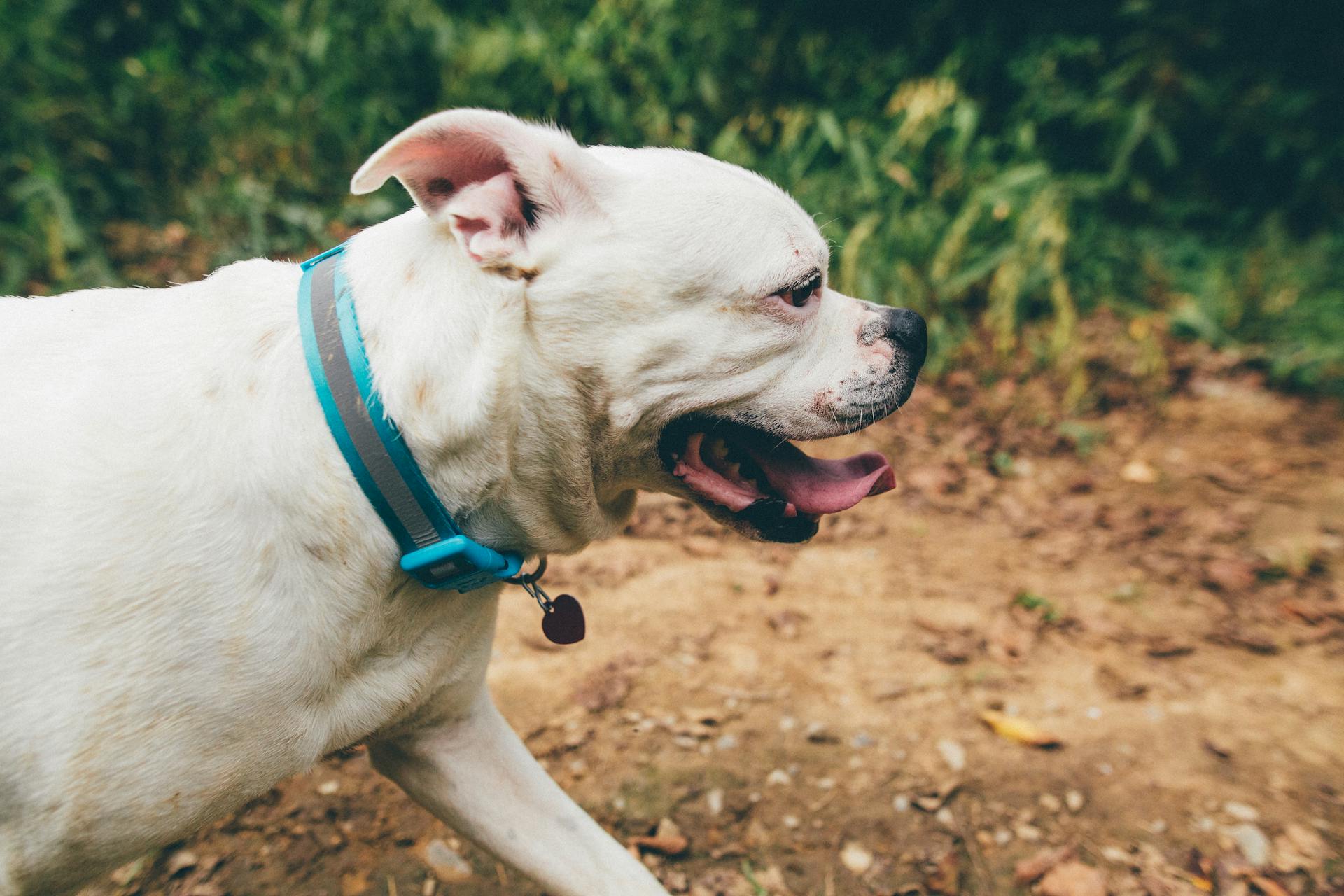
American Bulldogs need 1-2 hours of exercise each day, mixing energetic walks, off-lead running, and interactive games to keep them happy and healthy.
Exercise is key to preventing destructive behaviour in these lovable goofballs, so make sure to provide plenty of physical and mental stimulation.
They love strength-building activities like tug-of-war, agility training, and weight pulling, and make ideal exercise buddies for joggers and hikers.
A sturdy harness and lead are essential for walks, especially if your American Bulldog spots something exciting to chase.
Their adventurous side needs to be safely contained during zoomies, so a Fort Knox level fencing in your back garden is a must.
These intelligent dogs also need plenty of mental stimulation to keep their sharp minds engaged, so puzzle toys and games of hide-and-seek with their favourite treats are a great idea.
As they age, their exercise needs will change, so make sure to adjust their physical activity accordingly.
Related reading: Lead Dog Citra Solo
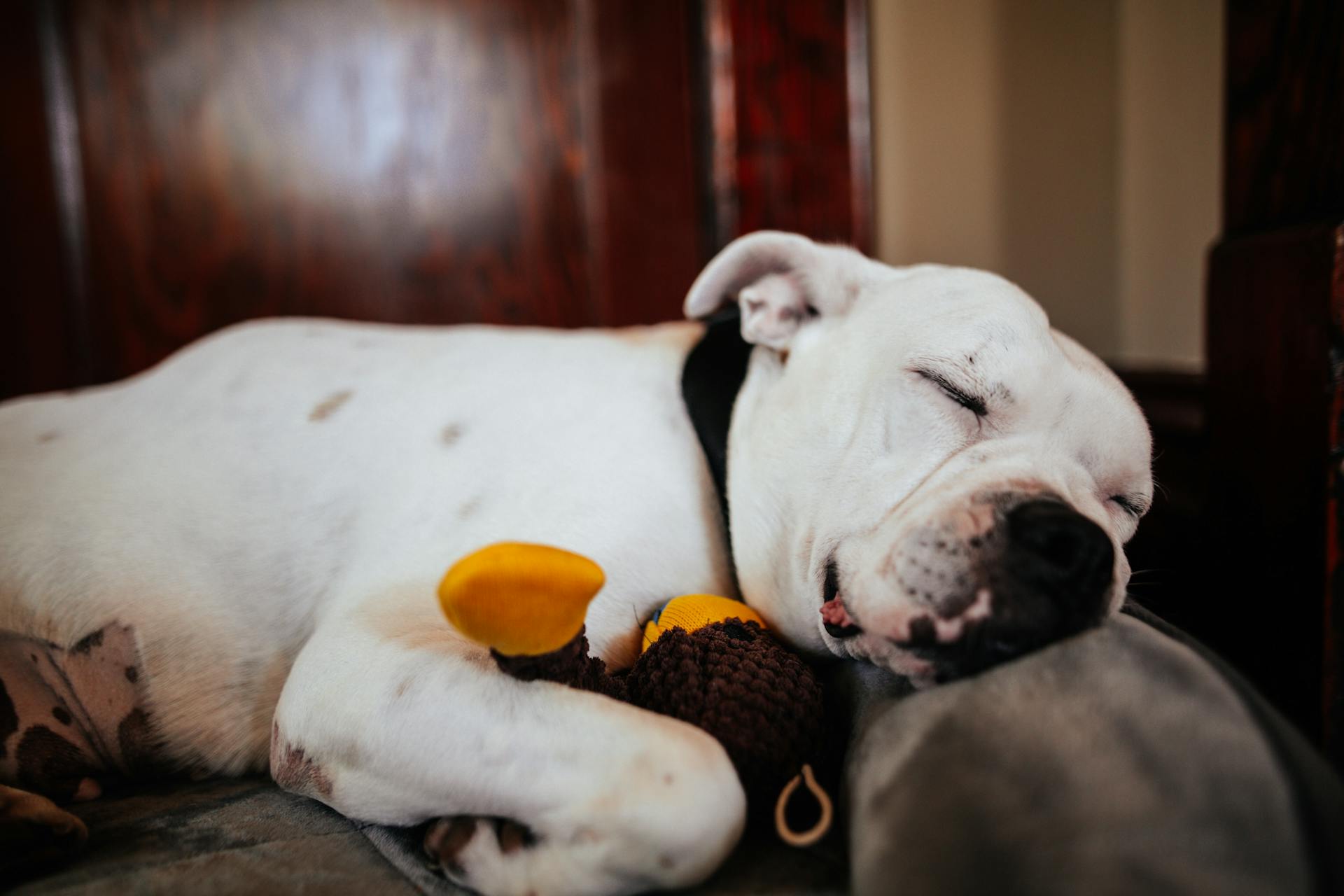
Puppies should have low-impact movements, such as hiding toys in the garden or giving them puzzle toys to work out, to reduce the likelihood of joint or bone damage.
Adult American Bulldogs love a game of fetch and tug-of-war, as well as nose work and agility exercises to use their energy.
Walks for adult American Bulldogs should be for a total of one to two hours per day, split between two or three separate outings.
It's essential to base exercise on your dog's mobility and comfort levels, especially if they're unwell or senior.
Teaching them the 'off' command and rewarding them when all four paws are kept firmly on the floor will help prevent jumping up at people to say hello.
You might like: Two Doberman Pinschers
Grooming Frequency
American Bulldogs have a short, smooth coat that's easy to maintain, but they do shed moderately throughout the year.
Brush their coats once a week using a bristle brush to remove dead hairs and promote extra shine.
Nail trimming should be done regularly, ideally every month if they don't wear them down naturally.
It's essential to check their ears for signs of infection and clean regularly to keep their skin healthy and infection-free.
Here's a quick rundown of their grooming needs:
- Brush their coat once a week
- Trim their nails every month
- Check and clean their ears regularly
- Bathe when necessary, but not too often
- Don't forget their teeth and gums!
American Bulldogs are prone to dental disease, so good dental hygiene is crucial. Healthy dog treats can help keep their teeth clean and promote a healthy mouth and jaw.
You might enjoy: Healthiest Bulldog Breeds
Diet and Nutrition
A balanced diet is essential for an American Bulldog's overall health and well-being. You want to ensure your furry friend is getting the right amount of nutrients to thrive.
Feeding your American Bulldog twice a day is a good rule of thumb, as they need plenty of protein to fuel their activities. A healthy diet will make it easier for your dog to maintain a good weight, reducing the risk of issues like hip dysplasia and elbow dysplasia.
American Bulldogs can be prone to conditions worsened by inflammation and intolerances, such as itchy skin. Avoiding foods that cause inflammation can help prevent these issues.
A good quality dog food should contain beneficial ingredients and avoid unnecessary fillers like grains, gluten, or additives. This will ensure your American Bulldog gets the right amount of nutrition at every stage of their life.
The amount of food your American Bulldog needs depends on various factors, including their age, size, weight, energy levels, and whether they've been neutered or spayed. You can use a handy feeding calculator to determine the right amount of food for your dog.
A healthy diet is crucial for supporting your American Bulldog's growth and development, especially during puppyhood. As they reach adulthood, proper nutrition remains vital to maintain their great health.
Recommended read: Best Dog Food for Rhodesian Ridgeback
Health and Wellness
American Bulldogs are a beloved breed, but they do come with some health concerns. Hip Dysplasia is a genetic condition that can lead to arthritis and mobility issues, so it's essential to get a puppy from a reputable breeder who discloses the parents' hip scores.
Regular exercise is crucial for American Bulldogs, but over-exercising puppies can exacerbate joint issues. Puppies should never be over-exercised while they're still developing. A healthy adult American Bulldog weighs 27–54 kg, and maintaining a healthy weight can help prevent joint issues.
Monitor your dog's skin and coat, as Mange and Ichthyosis can cause itchy, irritable skin and hair loss. Medicated baths and oral medications can help manage these conditions. Consider adding a daily care supplement like Bionic Biotic or feeding hypoallergenic dog food to help soothe itchy skin.
Allergies can be triggered by food or environmental factors, causing itchy skin and digestive issues. If your dog is excessively scratching, rubbing their face, licking their paws, vomiting, or having bouts of diarrhea, they may be suffering from an allergy.
Cataracts are a hereditary condition that can develop as early as six months old, but it's treatable through surgery. Hypothyroidism causes the thyroid gland to stop producing thyroid hormones, leading to weight gain, lack of energy, skin and ear infections, dry skin, and thinning of the fur. Dogs usually develop symptoms when they're middle-aged, but it can be managed successfully with lifelong medication.
See what others are reading: American Bulldog Skin Problems
To keep your American Bulldog healthy, follow these preventative tips:
• Feed a balanced diet with high-protein dog food and consider adding natural supplements like Salmon Oil.
• Protect their joints with Joint Care Dry Food or Joint Supplements.
• Monitor their weight to prevent joint issues.
• Protect their skin and coat with daily care supplements or hypoallergenic dog food.
• Exercise regularly to burn off energy and prevent boredom.
• Stay out of the heat to prevent overheating.
• Regular check-ups with a vet can help identify potential health issues early on.
For more insights, see: Easy Breeds of Dogs to Take Care of
Size and Appearance
The classic American Bulldog is a powerful breed, known for its athletic build and short coat. It's a large dog, with males typically larger and more muscular than females.
Their body is just slightly longer than tall, with a large and broad head and a wide muzzle. Ears are small to medium in size, high set, and may be drop, semi-prick, rose, or cropped.
American Bulldogs usually weigh between 60 to 120 pounds and stand approximately 20 to 28 inches tall. They're a large dog with a very muscular build.
Their coat comes in all shades of brindle, and varying degrees of red, brown, white, fawn, tan, and piebald. They're a versatile breed, with two main types: the Johnson type and the Scott type.
Here's a rough guide to the typical height ranges for American Bulldogs at different ages:
The Johnson type is larger, beefier, and stockier, with a more pronounced underbite and a boxy head. The Scott type is sleeker and more agile, with a longer muzzle and lighter build.
If this caught your attention, see: Lassie Movie What Type of Dog
Cost of Ownership
The cost of owning a classic American Bulldog can be a significant investment. You can expect to pay between $1,000 to $5,000 for a puppy from a reputable breeder.
Their short coats require minimal grooming, saving you time and money on regular grooming sessions. They do shed, however, so be prepared for some regular vacuuming.
For more insights, see: Dog Breeds That Don't Need Grooming
American Bulldogs are a relatively healthy breed, but they can be prone to certain health issues, such as hip dysplasia and skin infections. Regular veterinary check-ups and proper care can help prevent or manage these conditions.
Their energy level is moderate, requiring daily exercise to stay happy and healthy. A 30-minute walk or playtime should suffice, but they do need some physical activity to keep them in shape.
Overall, the cost of owning a classic American Bulldog can range from $1,500 to $7,000 per year, including food, veterinary care, and supplies.
History of the Breed
The American Bulldog breed has a rich history that spans centuries. Originally from England, they were bred for their strength, tenacity, and protective nature, making them the ultimate all-purpose farmhands.
Their ancestors, the Old English Bulldogs, were used for bull-baiting and fighting, a blood sport that was abolished in England in 1835. This dark past is a reminder of the breed's resilience and adaptability.
Consider reading: New England Bulldog Breed
In the 17th and 18th centuries, English immigrants brought these tough dogs to America, where they excelled as farm guardians, helping to control the feral pig population. They were a valuable asset to early American settlers.
American Bulldogs weren't considered a breed, but rather a type, with different types existing in various regions and having different names. Their numbers fell dangerously low during World War II, but thanks to dedicated breeders, John D. Johnson and Alan Scott, they survived extinction.
The breed was refined into the American Bulldog we know today, with Johnson and Scott's efforts resulting in two distinct types: the Johnson American Bulldog and the Scott type. The Johnson type has heavier bones, wider chests, and boxier heads, resembling the English Bulldog.
The Scott type, on the other hand, is smaller and more athletic, with a narrower head and muzzle. Both types were eventually mixed to produce a hybrid type, showcasing the breed's versatility.
Today, all modern American Bulldogs can have their roots traced back to four strains from the Alabama and Georgia area: the Williamson, Scott, Bailey, or Johnson.
You might enjoy: Different Breeds of Shih Tzu
General Information
The classic American Bulldog is a breed that's steeped in history. They originated in the Southern United States in the 18th century.
These dogs were originally bred for their strength and tenacity, making them perfect for tasks like guarding and herding. They're known for their broad chests and muscular build.
One of the defining characteristics of the classic American Bulldog is their short, easy-to-maintain coat. They come in a variety of colors, including brindle, fawn, and white.
Classic American Bulldogs are often described as loyal and affectionate companions. They thrive on human interaction and can become destructive if left alone for too long.
With proper training and socialization, classic American Bulldogs can make great family pets. They're generally good with children and other pets, but early exposure is key.
Classic American Bulldogs typically weigh between 70-120 pounds and stand between 17-20 inches tall at the shoulder.
Related reading: Do Corgis Make Good Pets
Frequently Asked Questions
What is the difference between standard and classic American Bulldogs?
The main difference between Standard and Classic American Bulldogs lies in their jaw structure, with Classics having a slightly more pronounced undershot and Standards preferring a tighter, more moderate undershot. Understanding these differences is crucial for breeders and owners to ensure the health and well-being of their American Bulldogs.
Featured Images: pexels.com