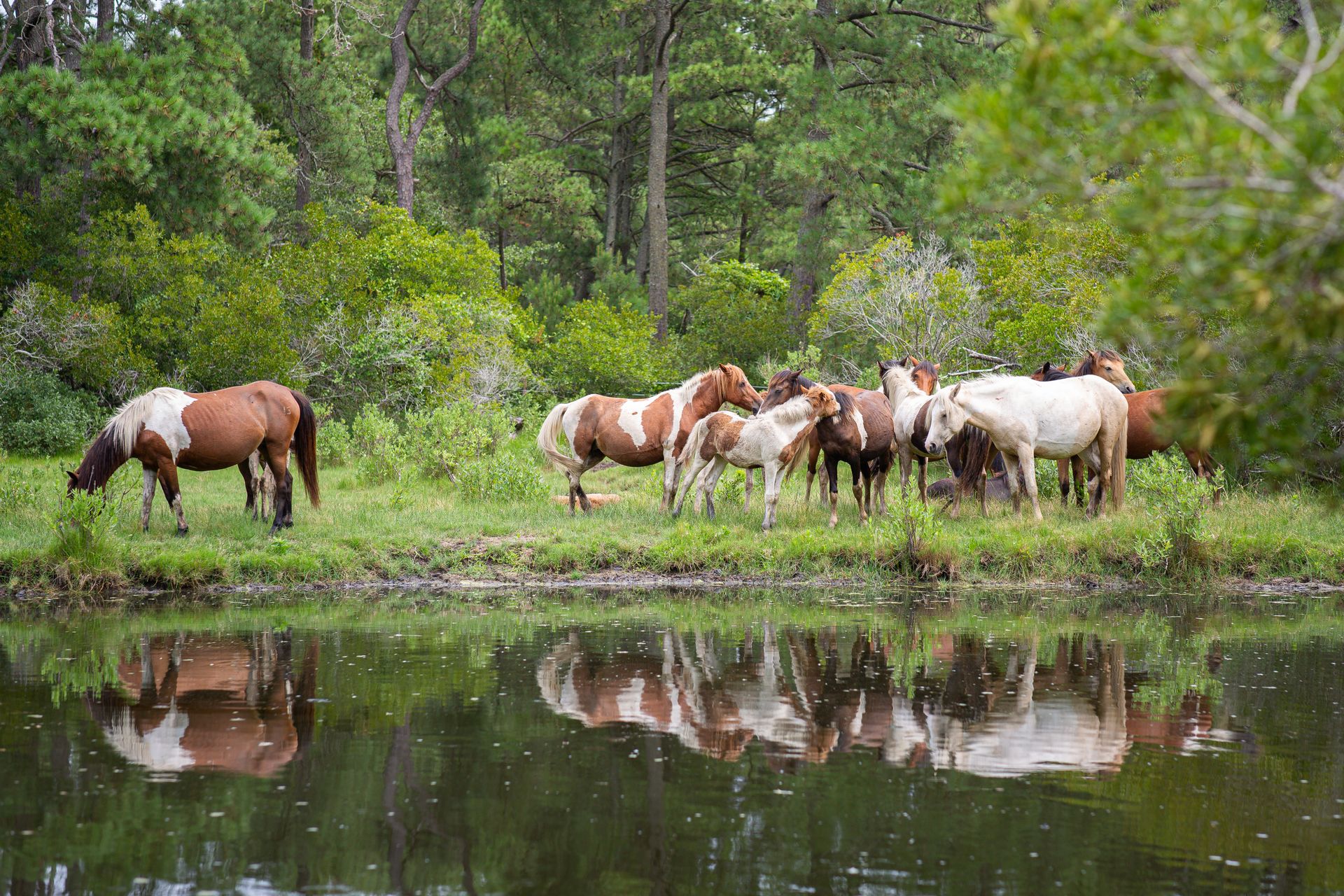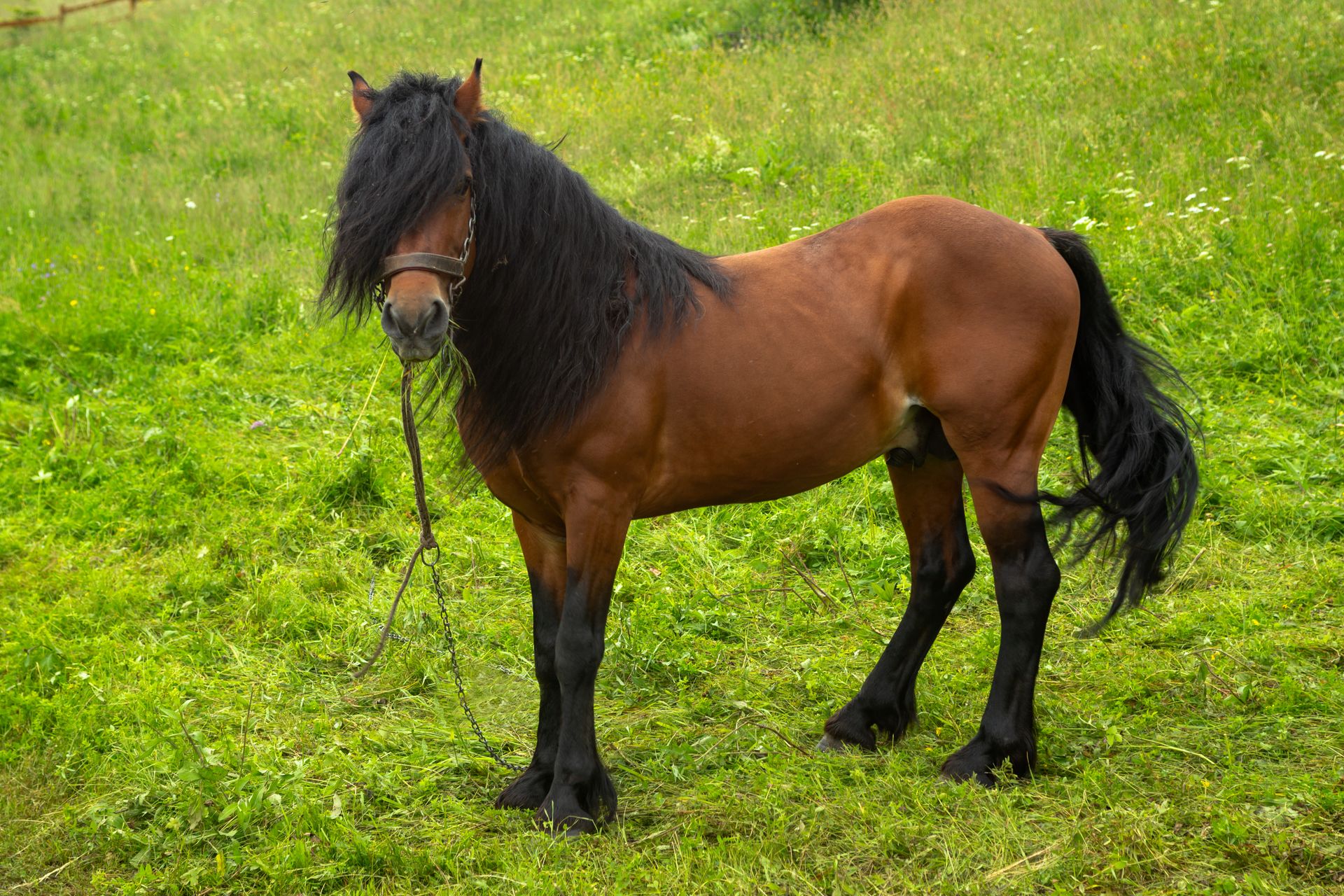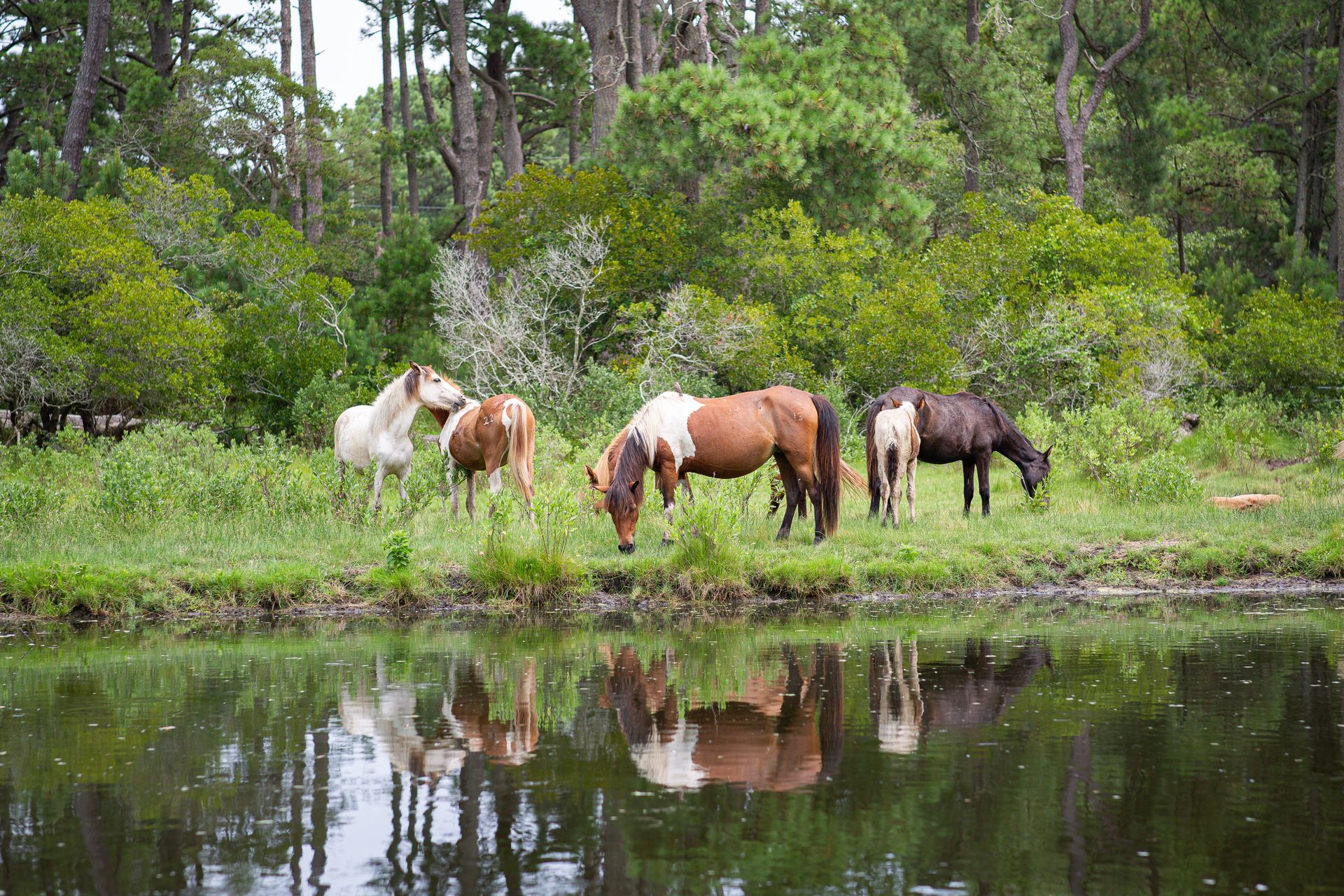
They're relatively small in size, typically standing between 12 and 14 hands high, making them a delight to ride and handle. Their compact size also means they're well-suited for navigating the rugged terrain of Assateague Island, where they've made their home for generations.
One of the most interesting things about the Chincoteague Pony is their remarkable ability to thrive in a harsh environment. They're incredibly resilient and can survive on minimal food and water, making them well-adapted to the island's limited resources.
Origins
The Chincoteague pony's origins are a fascinating topic. The breed is believed to have descended from the survivors of shipwrecked Spanish Galleons, specifically the La Galga, which sank near Assateague in 1750.
One study found strong genetic links between Chincoteague ponies and 16th-century horse remains from former Spanish Colonies in the Caribbean. This suggests the breed shares ancestry with Iberian horses brought to the Western Hemisphere from Spain.
Broaden your view: Spanish Colonial Horse
Colonial settlers pastured livestock on Assateague in the late 1600s to avoid taxes and fencing laws. This practice was common on Atlantic barrier islands along the entire coast of Colonial America.
The development of beach towns led to declines in some horse populations, but Assateague Island remained preserved as a protected National Seashore.
Breed Characteristics
The Chincoteague Pony's coloring is a result of their geographic isolation and coastal habitat, which led to adaptations that initiated the breed standard. They come in a variety of colors, including Bay, Chestnut, Black, Buckskin, Palomino, Smoky Black, Cremello, and Tobiano.
Here are some of the key colors associated with the Chincoteague Pony breed:
- Bay
- Chestnut
- Black
- Buckskin
- Palomino
- Smoky Black
- Cremello
- Tobiano
The Chincoteague Pony's height is typically between 12.0 and 13.2 hands high, making them a sturdy and compact breed.
Breed Characteristics
The Chincoteague Pony is a unique breed with a rich history. They were initially developed as a feral landrace, with their geographic isolation and coastal habitat leading to adaptations that initiated the breed standard.
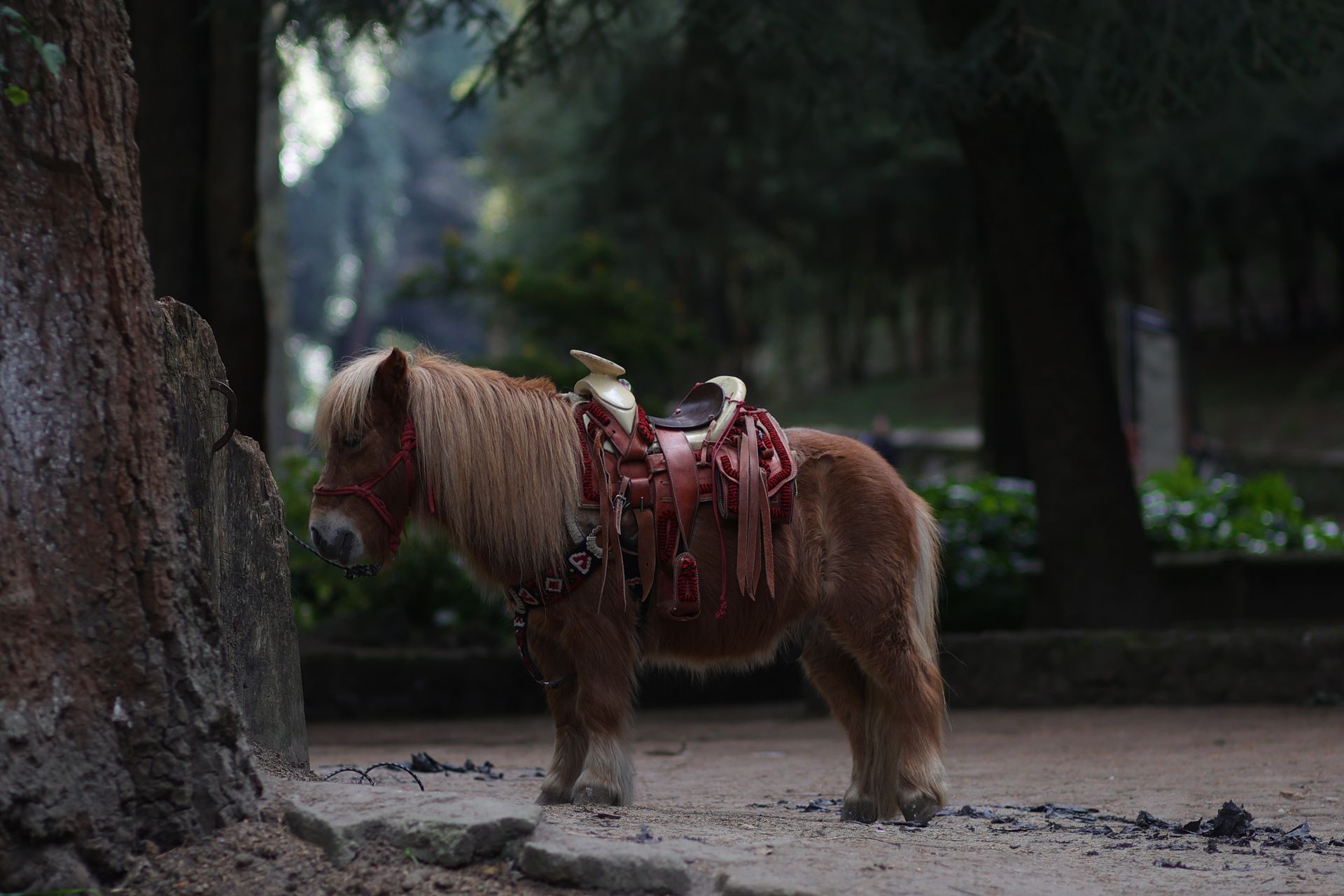
Their colors are quite diverse, and they can be bay, chestnut, black, buckskin, palomino, smoky black, cremello, or tobiano. These colors are also commonly seen in other breeds, but the Chincoteague Pony's combination of colors is truly distinctive.
In terms of size, Chincoteague Ponies are relatively small, measuring between 12.0 and 13.2 hands high. This makes them perfect for pleasure riding and driving, and they can even be used as sports ponies in hunting.
Their physical characteristics are also noteworthy, with stocky bodies, short legs, and thick manes. Their heads are small yet refined, and their eyes are widely-spaced, giving them a gentle and intelligent appearance.
Here are some of the colors you can expect to see in a Chincoteague Pony:
- Bay
- Chestnut
- Black
- Buckskin
- Palomino
- Smoky Black
- Cremello
- Tobiano
Temperament
The temperament of the Chincoteague Pony is truly one of its most endearing qualities.
Most Chincoteague Ponies are friendly, curious, and willing, making them a joy to be around.
These ponies have the intelligence and independence required to survive in feral herds, but most owners find they transition well to domestic life with appropriate training.
Chincoteague ponies are commonly found in jumping disciplines, low-level dressage, and equitation classes, showcasing their athletic abilities.
But most of all, they are beloved family ponies, cherished for their gentle nature and affectionate personalities.
See what others are reading: Miniature Horses vs Ponies
Physical Characteristics
The Chincoteague Ponies are a unique and fascinating breed, and their physical characteristics are just as interesting. They are stocky ponies with short legs and thick manes.
Their heads are small yet refined, and their eyes are widely-spaced, giving them a gentle and alert expression. They have light fetlock feathering, which adds to their overall appearance.
Chincoteague Ponies typically stand between 12 to 13 hands high, although some can grow taller to reach horse height. Their stocky builds are well-suited to their island habitat, where they need to be resilient to harsh weather conditions.
Their legs and hooves are strong, which is essential for navigating the marsh grasses and rough terrain of their home. They also grow thick winter coats and bushy manes and tails, which help to keep them warm and protected during the cold months.
While their head shape can vary based on ancestry, most Chincoteague Ponies have large, well-spaced eyes. Traditional conformation traits include short necks, prominent withers, sloped croups, and middle to low-set tails.
Here are the recognized colors of the Chincoteague Ponies:
- Bay
- Chestnut
- Black
- Buckskin
- Palomino
- Smoky Black
- Cremello
- Tobiano
Health and Care

Chincoteague ponies are a hardy and healthy breed, known for their ability to thrive in challenging conditions. They can live long lives as companion animals with appropriate care.
Routine veterinary checkups during the spring and fall roundups are crucial to monitor the health of feral and domestic Chincoteague ponies. This ensures any potential health issues are caught early.
Feral ponies get their hooves trimmed twice a year during the roundups, while domestic Chincoteague ponies require more frequent farrier care to maintain hoof balance. Most domestic ponies have strong hooves and can be maintained barefoot without shoes.
Domesticated Chincoteague ponies need a preventative wellness program including routine vaccinations, deworming assessments, and dental exams. This helps prevent health issues and ensures their physical health and mental well-being.
A forage-based feeding program that mimics their natural diet is the best way to support the health of your domesticated Chincoteague pony. This ensures they get the sustenance they need to thrive.
For your interest: What Are Feral Horses
Here are some supplements that can support your Chincoteague pony's health:
- W-3 Oil: supports joint health, coat quality, and normal regulation of inflammation
- MSM: supports healthy connective tissues and joint health
- Optimum Digestive Health: maintains a balanced hindgut microbiome and supports digestive function
- Natural Vitamin E: supports healthy muscle function and post-exercise care
Long periods of stall confinement and isolation can increase stress and contribute to stereotypic behaviors in domestic Chincoteague ponies. Providing plenty of turnout and social interaction is essential to their well-being.
Breed Information
The Chincoteague Pony is a unique breed with a rich history. They initially developed as a feral landrace on Assateague Island.
Records of the Chincoteague Pony date back to at least the early 1630s. This breed has been around for centuries, with some people believing that the wild ponies of Assateague Island are descended from horses brought to the island by early settlers.
The Chincoteague Pony's geographic isolation and coastal habitat led to adaptations that initiated the breed standard. They have developed a range of colors, including Bay, Chestnut, Black, Buckskin, Palomino, Smoky Black, Cremello, and Tobiano.
The breed's height is typically between 12.0 and 13.2 hands high. This makes them a great size for pleasure riding and driving.
Here are the colors you can expect to find in a Chincoteague Pony:
- Bay
- Chestnut
- Black
- Buckskin
- Palomino
- Smoky Black
- Cremello
- Tobiano
On the Virginia side of Assateague Island, around 70 foals are born each spring. This is a testament to the breed's ability to thrive in a feral environment.
Frequently Asked Questions
Why do they swim the chincoteague ponies?
The Chincoteague ponies are swum to help manage their population and protect the sensitive ecosystem of Assateague Island. This annual tradition maintains a balance between the ponies and the island's delicate environment.
Can you pet the chincoteague ponies?
No, it's not recommended to pet the chincoteague ponies as they are wild animals. Park Rangers advise against feeding or petting them to ensure their safety and well-being.
Where is the best place to see the Chincoteague ponies in the wild?
The best place to see the Chincoteague ponies in the wild is at the pull-off on Beach Road, across from Black Duck Marsh Pool, where the southern herd is often spotted.
Where are the Chincoteague Ponies now?
The Chincoteague Ponies are currently divided into two herds, one on the Virginia side and one on the Maryland side of Assateague Island, separated by a state line fence.
Featured Images: pexels.com