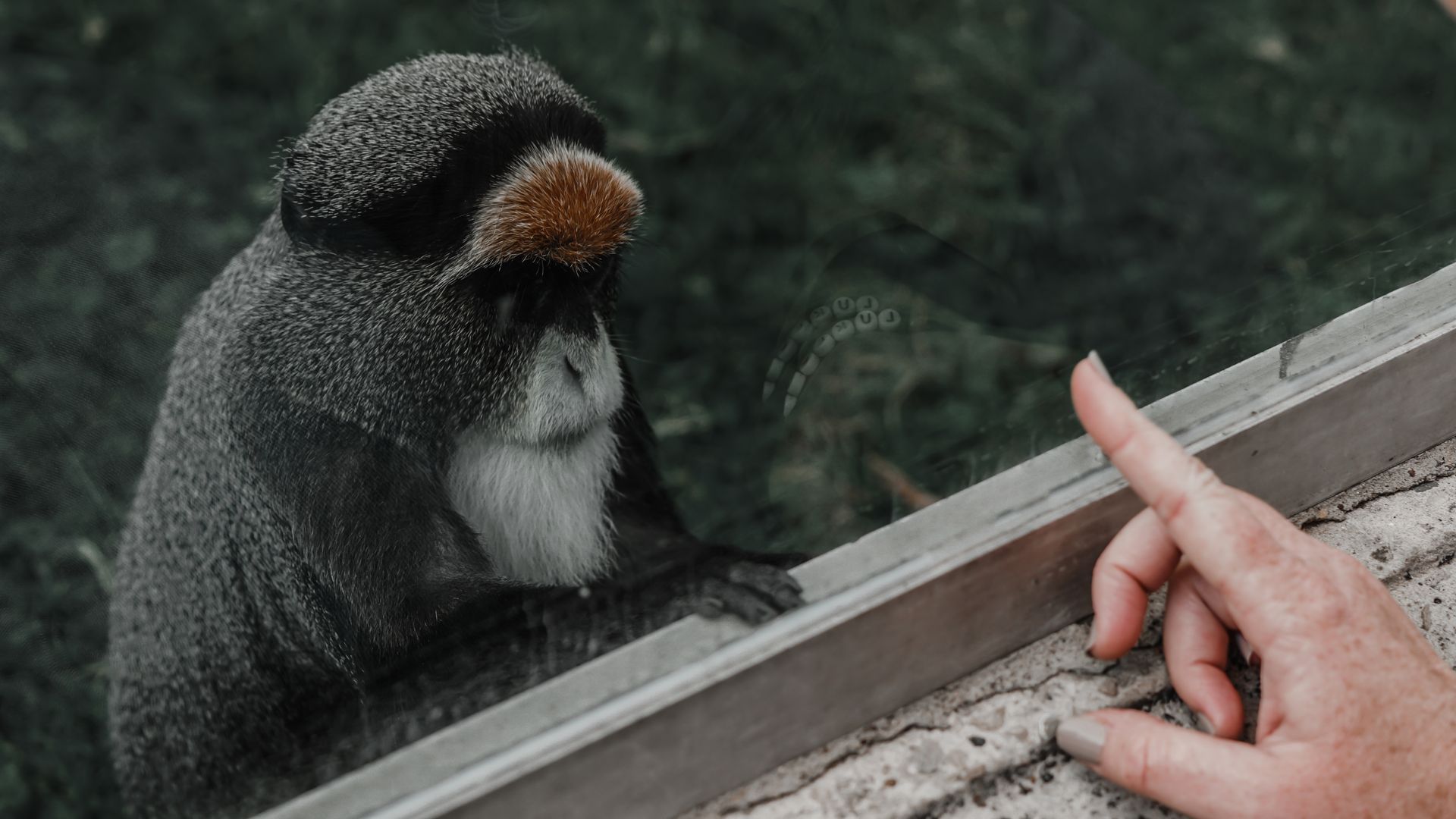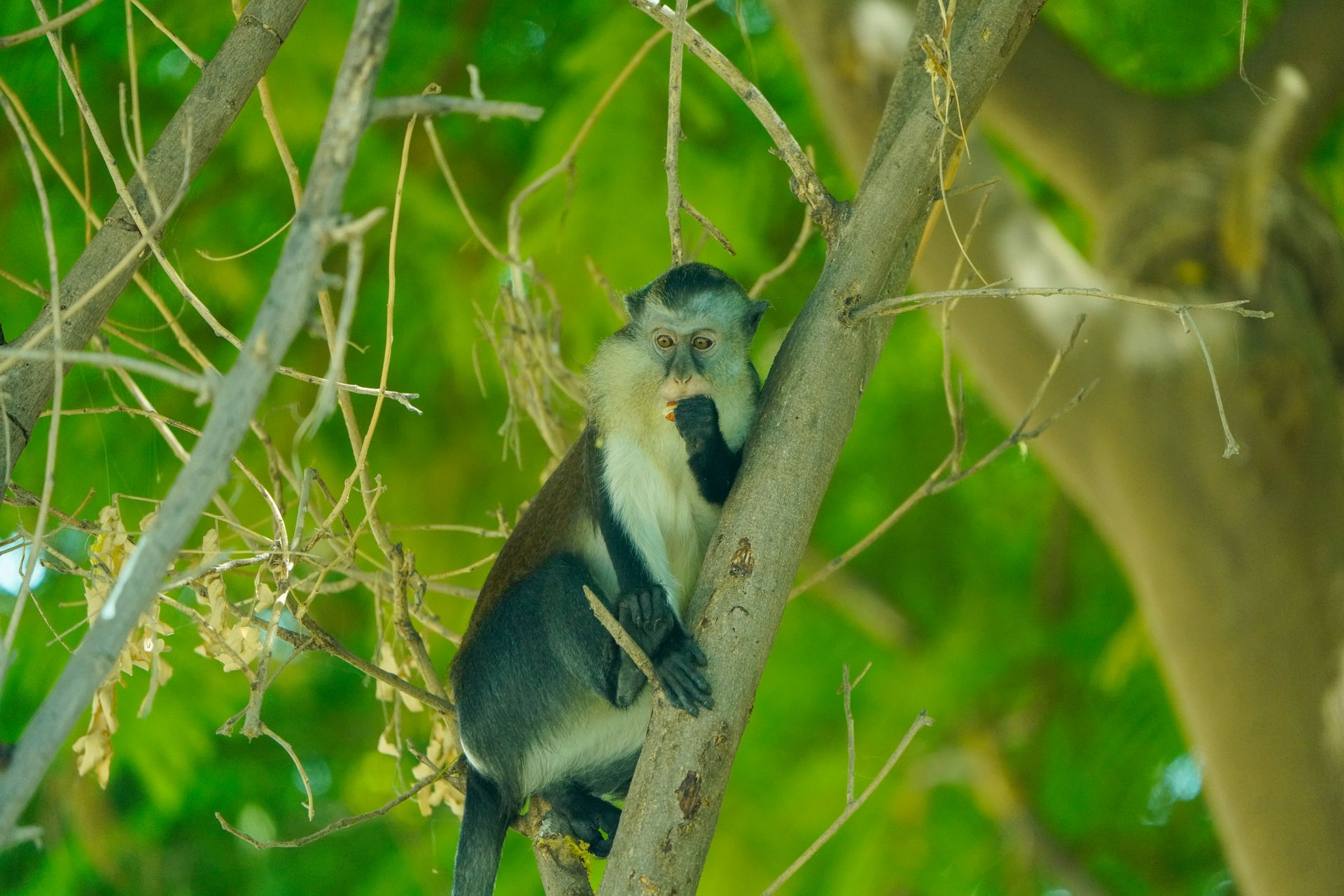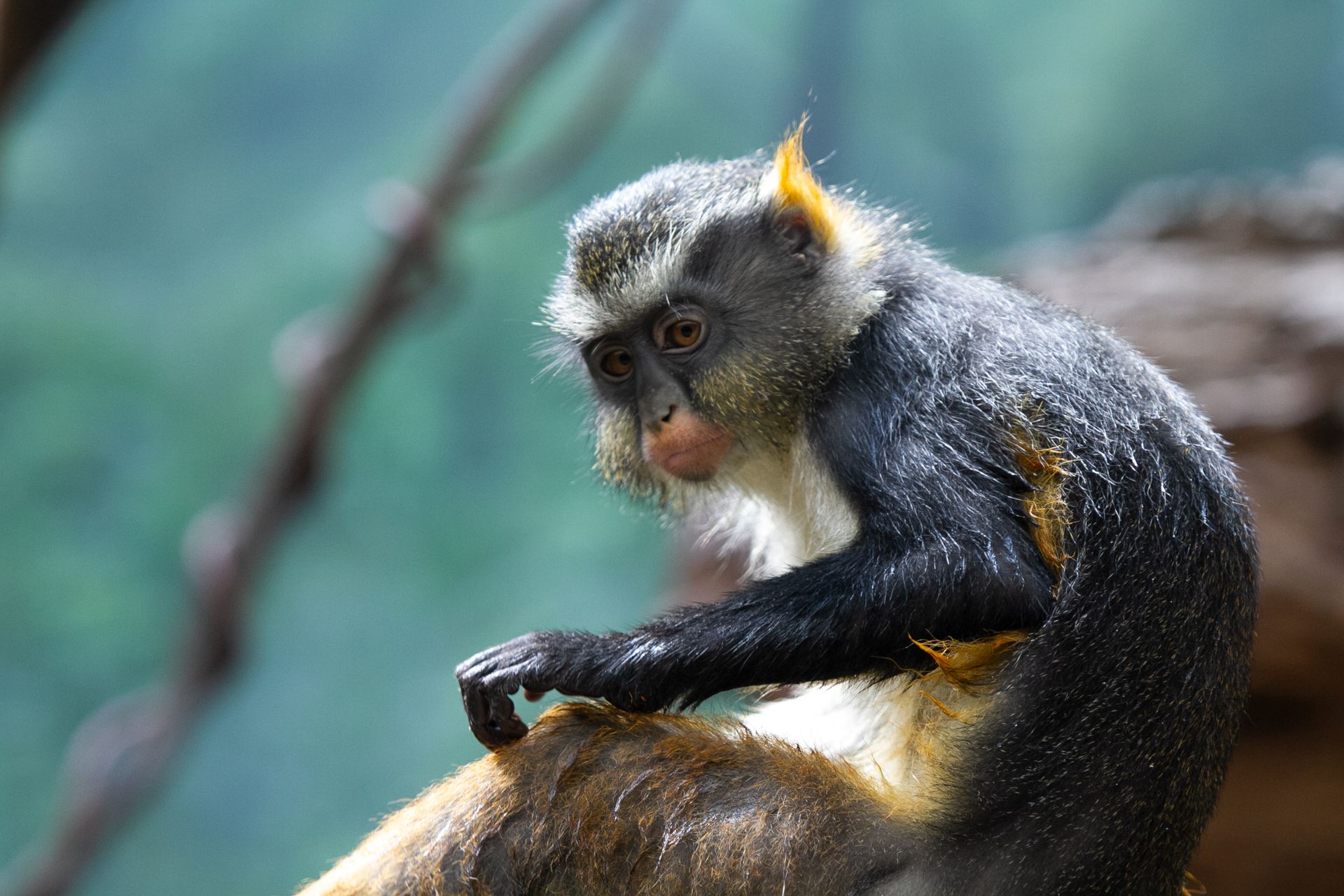
The Cercopithecus Mitis is a fascinating primate species. It belongs to the Cercopithecidae family.
This species is also known as the Blue Monkey.
Cercopithecus Mitis is primarily found in the tropical rainforests of central Africa.
Recommended read: Cercopithecus Neglectus
Physical Characteristics
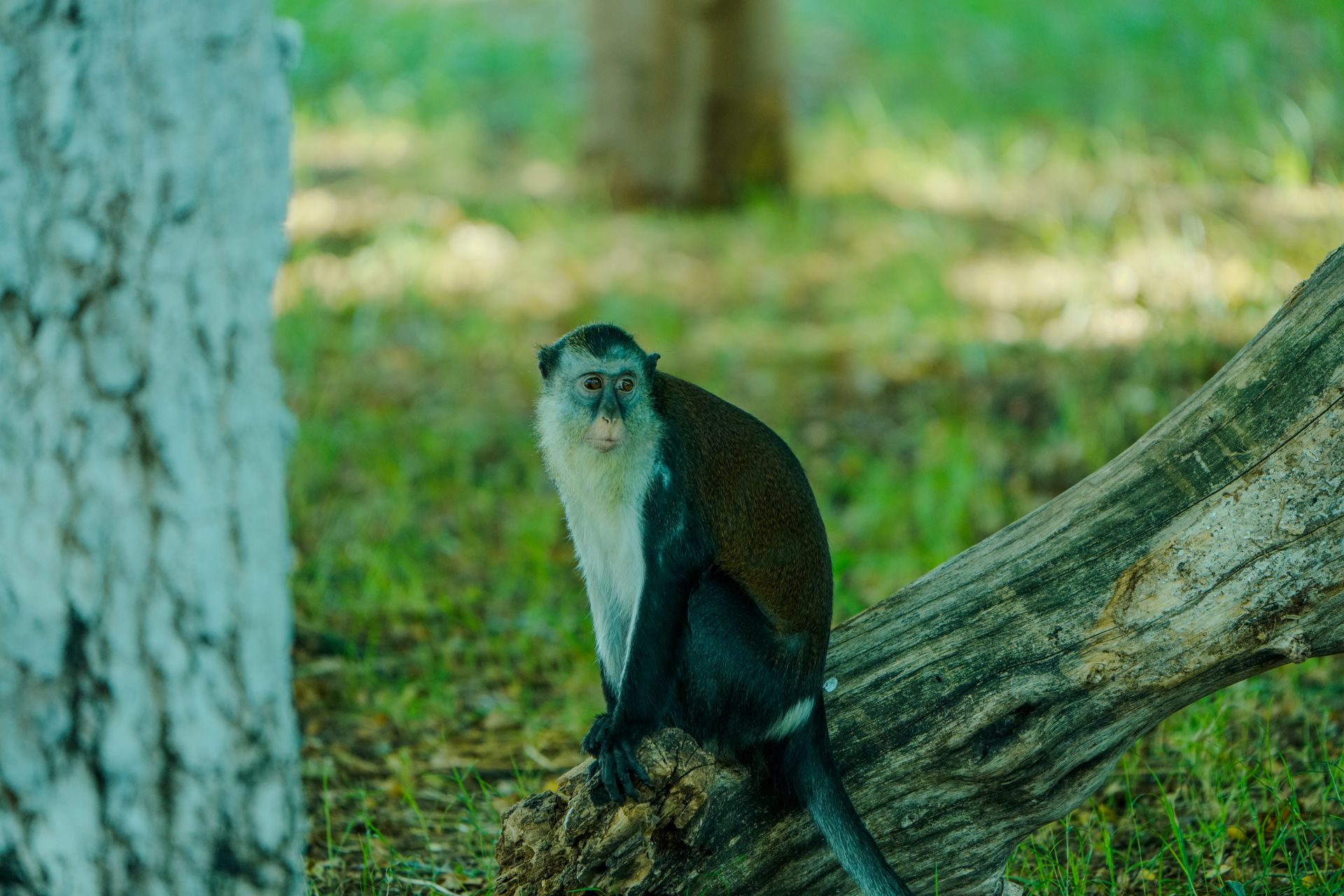
The blue monkey is a fascinating creature, and its physical characteristics are quite unique. Cercopithecus mitis, also known as the diademed monkey, has a nearly naked face that's usually dark in color, although it can occasionally appear blue.
They are small in size, ranging in weight from 4 to 6 kg, and are arboreal, meaning they spend most of their time in trees. Males are larger than females, and they have well-developed musculature on their face.
The blue monkey's face is also notable for its prominent row of forward-pointing white fur just above its brow line, earning it the name "diademed monkey." This distinctive feature is a key identifier of the species.
Male blue monkeys have white whiskers, which are well developed, and their canines are slightly larger than those of females. The nostrils are close together and face downward, and they have cheek pouches to carry food while foraging.
Here's a comparison of the average weights of male and female blue monkeys:
The upper parts of the blue monkey's body are gray, and their limbs are darker in appearance. Some young blue monkeys have indistinct russet-colored rump patches, but these are not seen in adults.
Distribution and Habitat
Cercopithecus mitis can be found in a variety of habitats, including rainforests, forests, and scrub forests. This species is very dependent on humid, shaded areas with abundant water and tall trees that provide both food and shelter.
In sub-Saharan Africa, specifically south of 30 degrees north, Cercopithecus mitis lives in a range of terrestrial biomes. They are adaptable and can thrive in different types of forests across Africa.
Cercopithecus mitis is primarily found in central, eastern, and southern Africa, with a notable presence in the Congo basin. This species is also found in Madagascar.
The species requires large forest ranges and seems to have a difficult time in small forest fragments that have been separated by deforestation. This highlights the importance of preserving large areas of forest habitat for the survival of Cercopithecus mitis.
Some of the specific countries where Cercopithecus mitis can be found include Ethiopia, Kenya, Malawi, Mozambique, Rwanda, The Democratic Republic of the Congo, Burundi, Eswatini, Somalia, Tanzania, Uganda, South Sudan, Zambia, Zimbabwe, and South Africa.
On a similar theme: Cercopithecus Ascanius
Behavior and Social Structure
Cercopithecus mitis, also known as the blue monkey, is a fascinating species with unique behavior and social structure. They live in female-philopatric social systems, where females stay in their natal groups while males disperse once they reach adulthood.
Males play a crucial role in the social dynamics of blue monkeys, as they challenge the dominant male of another family to take over leadership and secure a place to live, socialization, and food supplies. This behavior is essential for the young males to become successful and independent.
In terms of communication, blue monkeys use a variety of channels, including visual, tactile, acoustic, and chemical signals. They also engage in grooming, which helps solidify social bonds and is an important physical activity in their daily lives.
Social Structure
In the wild, blue monkeys live in female-philopatric social systems where females stay in their natal groups, while males disperse once they reach adulthood. This unique social structure gives rise to matrilinear societies.
Female blue monkeys often form close bonds with each other, and their social groups usually consist of one male with several females and infants. This setup is quite different from what I've observed in other primate species.
Males, on the other hand, tend to leave their natal group once they reach adulthood, and they may wander on their own for a while before joining another group. This behavior is likely a result of the strong competition for dominance and resources within the group.
Blue monkey groups are typically led by a dominant male, but occasionally, solitary males are observed, which are probably transient, having left their natal group in search of a new group.
Here's a breakdown of the social structure of the Cercopithecidae family, which includes the blue monkey:
This social structure is quite fascinating, and it's a great example of how different primate species have evolved unique ways of living together.
Predation
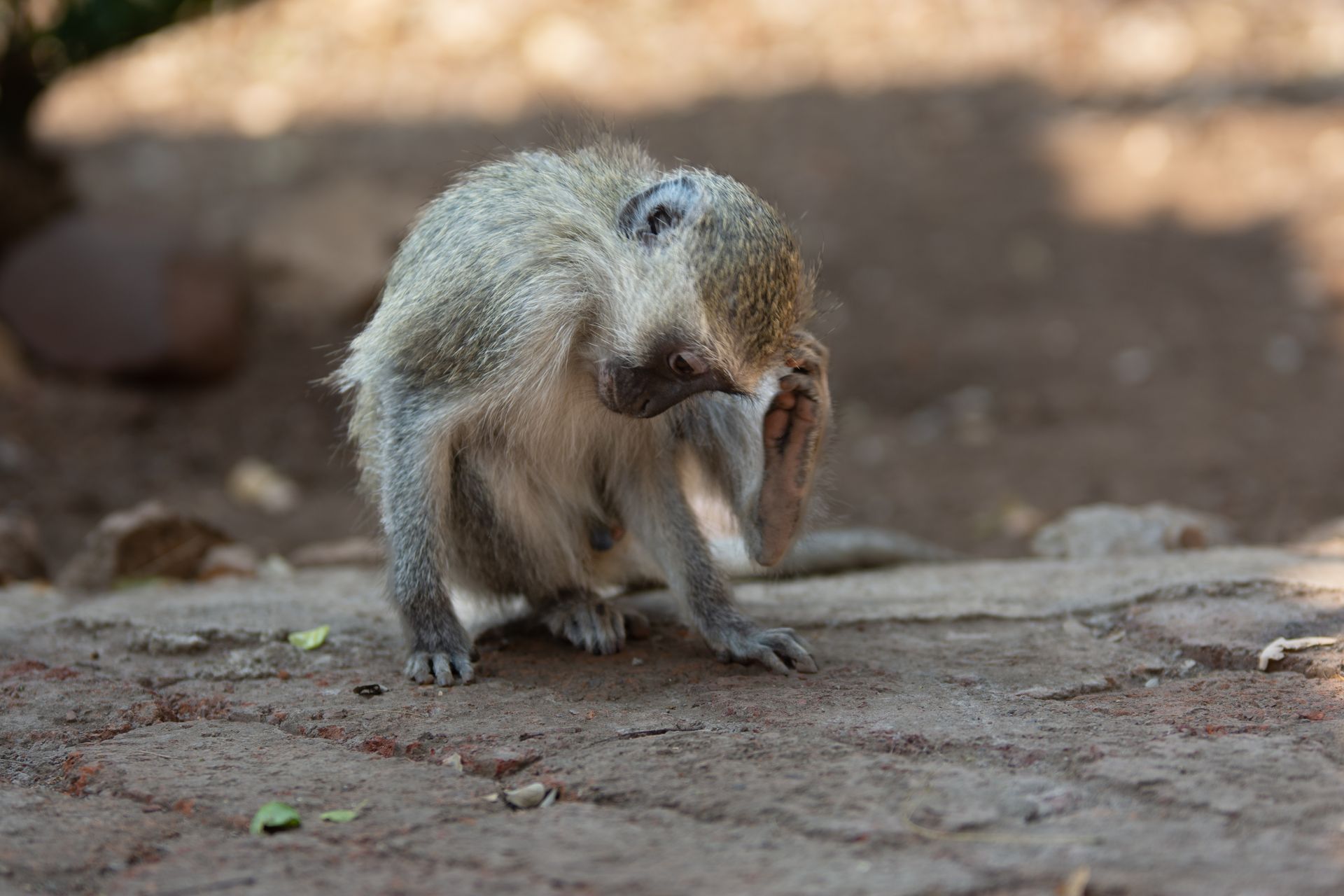
Predation is a significant threat to the survival of blue monkeys. Leopards are a major predator of C. mitis, as they are for other forest dwelling monkeys.
Other potential predators include snakes and birds of prey, which are known to inhabit the same forest biomes as blue monkeys.
In Uganda, blue monkeys are hunted for their meat, making them vulnerable to human predation as well.
Diet and Reproduction
Blue monkeys, like the cercopithecus mitis, have a fascinating reproductive system. They have a polygynous mating system, where females solicit copulation from multiple males using body language.
Females present their hindquarters to a male to indicate readiness to copulate, and during copulation, they pout, looking over their shoulder at the male. This unique behavior is a clear indication of their reproductive strategy.
Breeding occurs throughout the year, and the gestation period lasts around 5 months. The female gives birth to a single offspring, which is relatively well-developed at birth, with open eyes and the ability to grasp its mother and support its own weight.
Here's a quick rundown of their reproductive features:
- Iteroparous: They can breed multiple times in their lifetime.
- Year-round breeding: They breed throughout the year.
- Gonochoric/Gonochoristic/Dioecious: The sexes are separate, with males and females having different reproductive organs.
- Viviparous: They give birth to live young.
Diet
Blue monkeys primarily eat fruits, which make up 50% of their diet. Fruits are their main source of energy and nutrients.
They also consume insects, which provide protein for their bodies. Insects are a crucial component of their diet.
Leaves and twigs are another essential part of their diet, as they offer fiber and other nutrients. Blue monkeys tend to focus on a few species of plants, rather than eating a wide variety of them.
This means their population density is often dependent on the richness and diversity of plant species in their environment.
For your interest: Squirrel Monkey Species Common Characteristics
Reproduction
Blue monkeys have a unique mating system that's worth exploring. They're polygynous, which means males mate with multiple females.
In fact, promiscuous mating has even been observed in these clever creatures. Females use body language to solicit copulation from males, presenting their hindquarters to indicate they're ready to mate.
During copulation, females often pout and look over their shoulder at the male. It's a fascinating display of behavior, and it's not hard to imagine why scientists are so interested in studying it.
The gestation period for blue monkeys lasts a remarkable 5 months. This is a relatively long time for a primate of their size, and it's a testament to their unique biology.
Female blue monkeys give birth to a single offspring, which is relatively well-developed at birth. In fact, the young have open eyes and can even grasp their mother's fur and support their own weight.
Here's a breakdown of the key reproductive features of blue monkeys:
- Year-round breeding
- Iteroparous (meaning females can breed multiple times)
- Viviparous (meaning the young develop inside the mother's womb)
- Gonochoric (meaning males and females are separate)
- Sexual (meaning reproduction involves the exchange of genetic material)
- Fertilization occurs internally
Females provide their young with milk for about six months, and allomaternal care is also observed amongst the female troop members. This means that other females in the group will often help care for the young, providing additional support and nurturing.
Conservation and Threats
Habitat destruction is a significant threat to blue monkeys, including cercopithecus mitis, as it leads to the clearing of rain forests where they live.
The region in which cercopithecus mitis is naturally found is the tropical region, which is characterized by rainforests with closed canopies and abundant epiphytes and climbing plants.
Cercopithecus mitis is also threatened by being destroyed for eating cultivated crops or destroying exotic trees, as mentioned in the conservation status section.
The tropical region where cercopithecus mitis lives experiences precipitation that is typically not limiting, but may be somewhat seasonal.
As a result of habitat loss and other threats, cercopithecus mitis is considered to be one of the species that is threatened, and is often categorized as vulnerable or endangered in the IUCN Red List of Threatened Animals.
The fact that cercopithecus mitis lives in trees is a key aspect of its behavior and ecology, and is a characteristic that is shared with other arboreal animals.
Cercopithecus mitis is an example of an animal that is iteroparous, meaning that it produces offspring in more than one group and across multiple seasons.
In the wild, cercopithecus mitis gives birth to relatively well-developed young, which is a characteristic of viviparous reproduction.
The social behavior of cercopithecus mitis includes forming social groups and establishing a ranking system or pecking order among members, which affects access to resources and mates.
This social behavior is an important aspect of the ecology and behavior of cercopithecus mitis, and is a key factor in its conservation status.
Classification and History
Cercopithecus mitis has several recognized subspecies, each with its unique characteristics and geographical distribution.
Boutourlini's blue monkey, one of the subspecies, is found in Western Ethiopia. The Elgon blue monkey is another subspecies, found in a different region.
Several subspecies have been considered valid by some authorities, while others are not recognized by all. Here is a list of the recognized subspecies:
- Cercopithecus mitis boutourlinii – Boutourlini's blue monkey
- Cercopithecus mitis elgonis – Elgon blue monkey
- Cercopithecus mitis heymansi – Lomami River blue monkey
- Cercopithecus mitis kolbi – Kolb's monkey
- Cercopithecus mitis mitis – Pluto monkey
- Cercopithecus mitis moloneyi – Moloney's blue monkey
- Cercopithecus mitis opitsthosticus
- Cercopithecus mitis schoutedeni – Schouteden's blue monkey
- Cercopithecus mitis stuhlmanni – Stuhlmann's blue monkey
Wolf, 1822
So, let's talk about the classification of the Blue monkey. It was first described by Wolf in 1822, which is a pretty important piece of information.
Wolf's description of the Blue monkey was a significant milestone in the history of primatology. Unfortunately, I don't have personal experience with primatology, but I can tell you that it's a fascinating field.
The Blue monkey is classified as Cercopithecus mitis, and it's a member of the Cercopithecidae family. This family includes Old World monkeys, which are found in Africa and Asia.
Here are some of the subspecies of the Blue monkey that are recognized:
- Cercopithecus mitis boutourlinii – Boutourlini's blue monkey, found in Western Ethiopia
- Cercopithecus mitis elgonis – Elgon blue monkey
- Cercopithecus mitis heymansi – Lomami River blue monkey, found in Congo
- Cercopithecus mitis kolbi – Kolb's monkey, found in Kenya
- Cercopithecus mitis mitis – Pluto monkey, found in Angola
- Cercopithecus mitis moloneyi – Moloney's blue monkey
- Cercopithecus mitis opitsthosticus
- Cercopithecus mitis schoutedeni – Schouteden's blue monkey, found in Congo
- Cercopithecus mitis stuhlmanni – Stuhlmann's blue monkey
It's worth noting that some of these subspecies have been considered full species by some authorities, and the classification of the Blue monkey is still a matter of debate.
Explore Related Subjects
If you're interested in learning more about primates, there are several related subjects to explore. Ethology, the study of animal behavior, is a fascinating field that can provide insights into the social structures and habits of primates.
Herbivory, the practice of eating plants, is a common trait among many primate species, including the Blue Monkey and the Rhesus Macaque.
Marine Mammals, on the other hand, are not typically associated with primates, but they do share some similarities in their social behaviors.
Primatology, the study of primates, is a specialized field that has led to many breakthroughs in our understanding of these fascinating creatures.
Some notable primate species include the Zebra Finch, which is known for its distinctive black and white stripes, and the Rhesus Macaque, a species that has been extensively studied in the field of ethology.
Here are some related primate species mentioned in the article:
- Rhesus Macaque
- Zebra Finch
- Blue Monkey
General Information
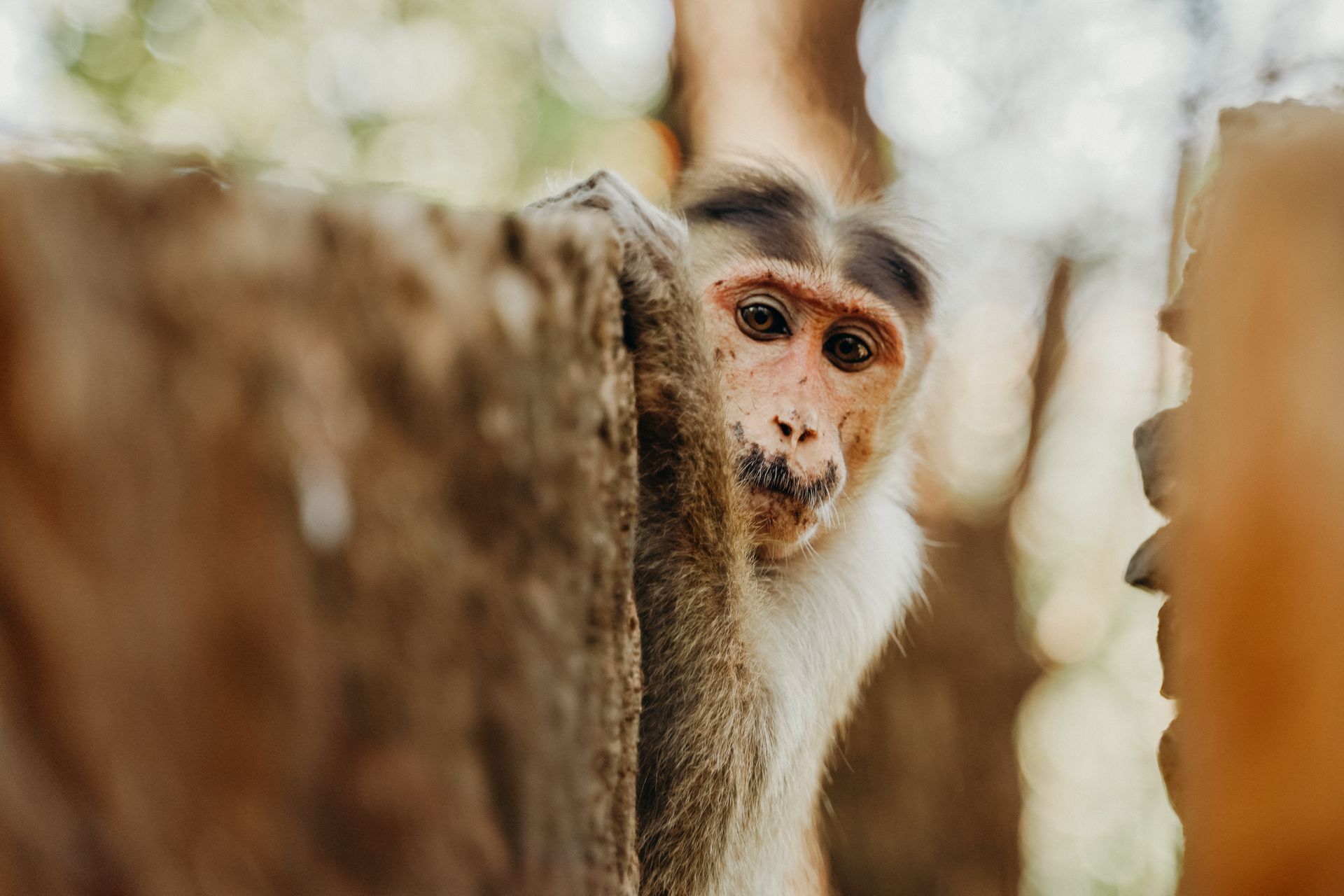
The cercopithecus mitis is a species of Old World monkey that's native to Africa. They inhabit a wide range of habitats, from tropical rainforests to savannas and grasslands.
Their diet consists mainly of fruits, leaves, and seeds. They also occasionally eat insects and small animals.
Cercopithecus mitis are known to be diurnal, meaning they're active during the day. They spend most of their time foraging for food and resting in trees.
These monkeys are highly social creatures, often living in large groups of up to several hundred individuals.
Frequently Asked Questions
Are blue monkeys aggressive?
Blue monkeys are known for their aggressive behavior, particularly among females who fiercely defend their territories from other groups. This territorial aggression is a key aspect of their social structure
Featured Images: pexels.com