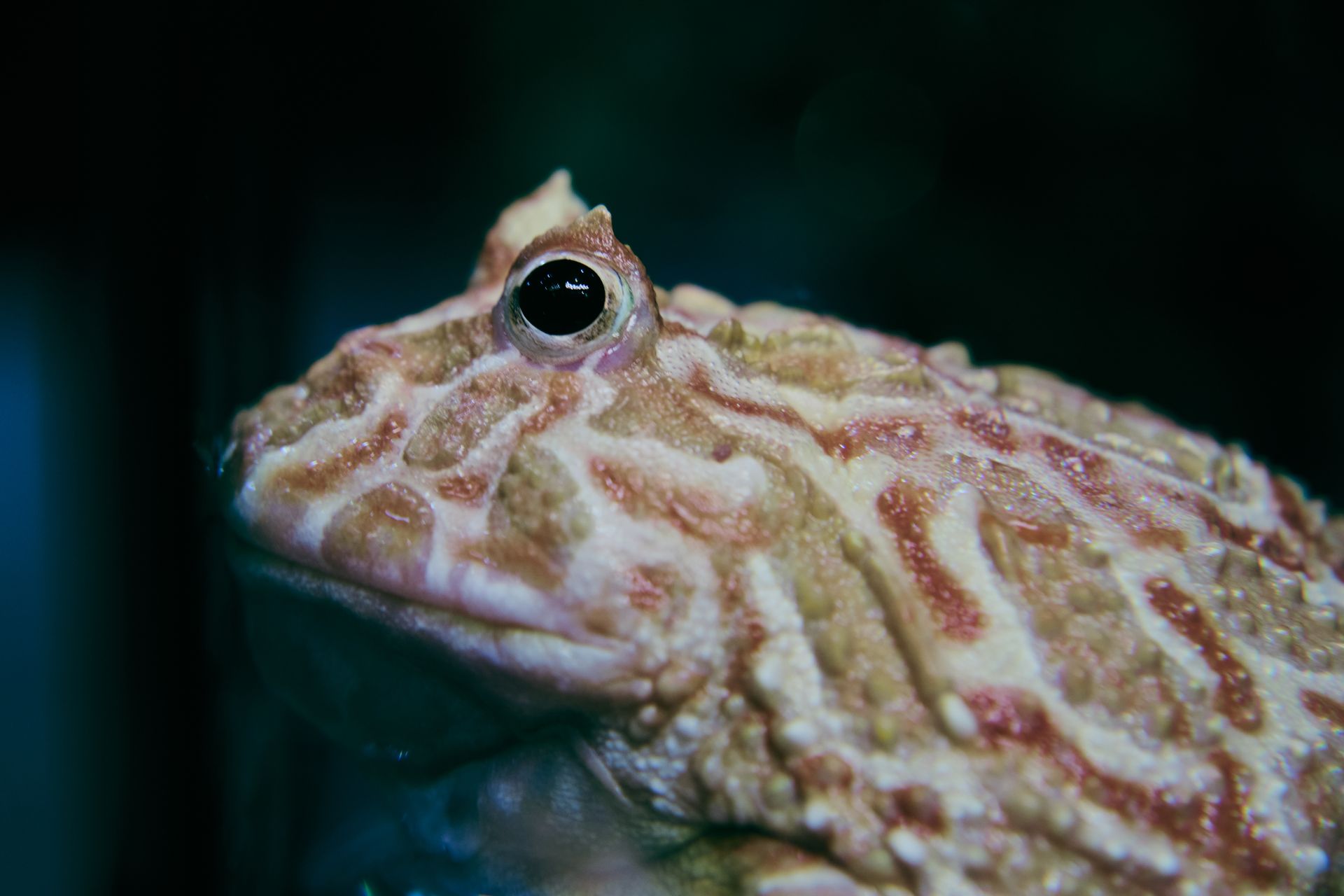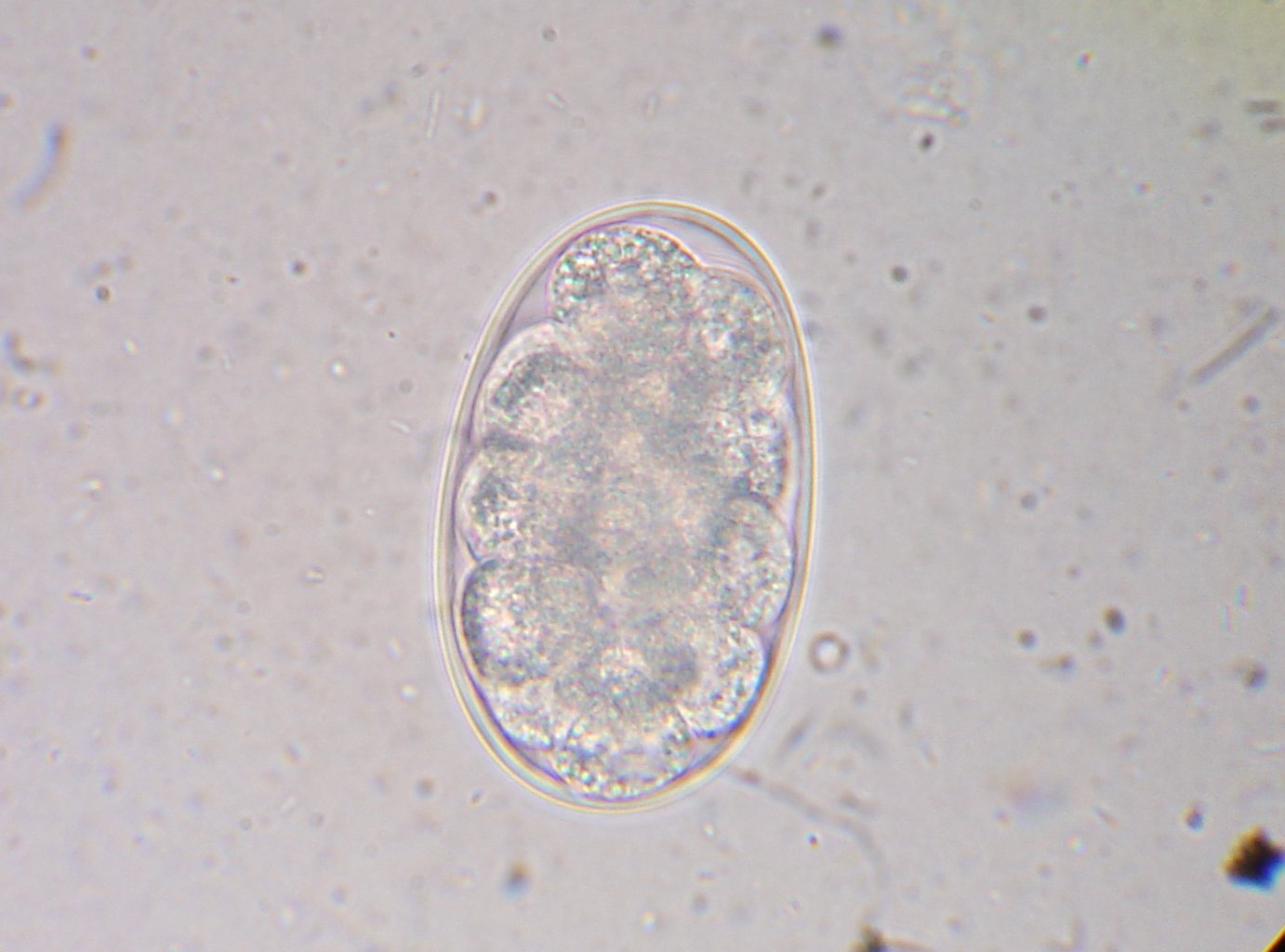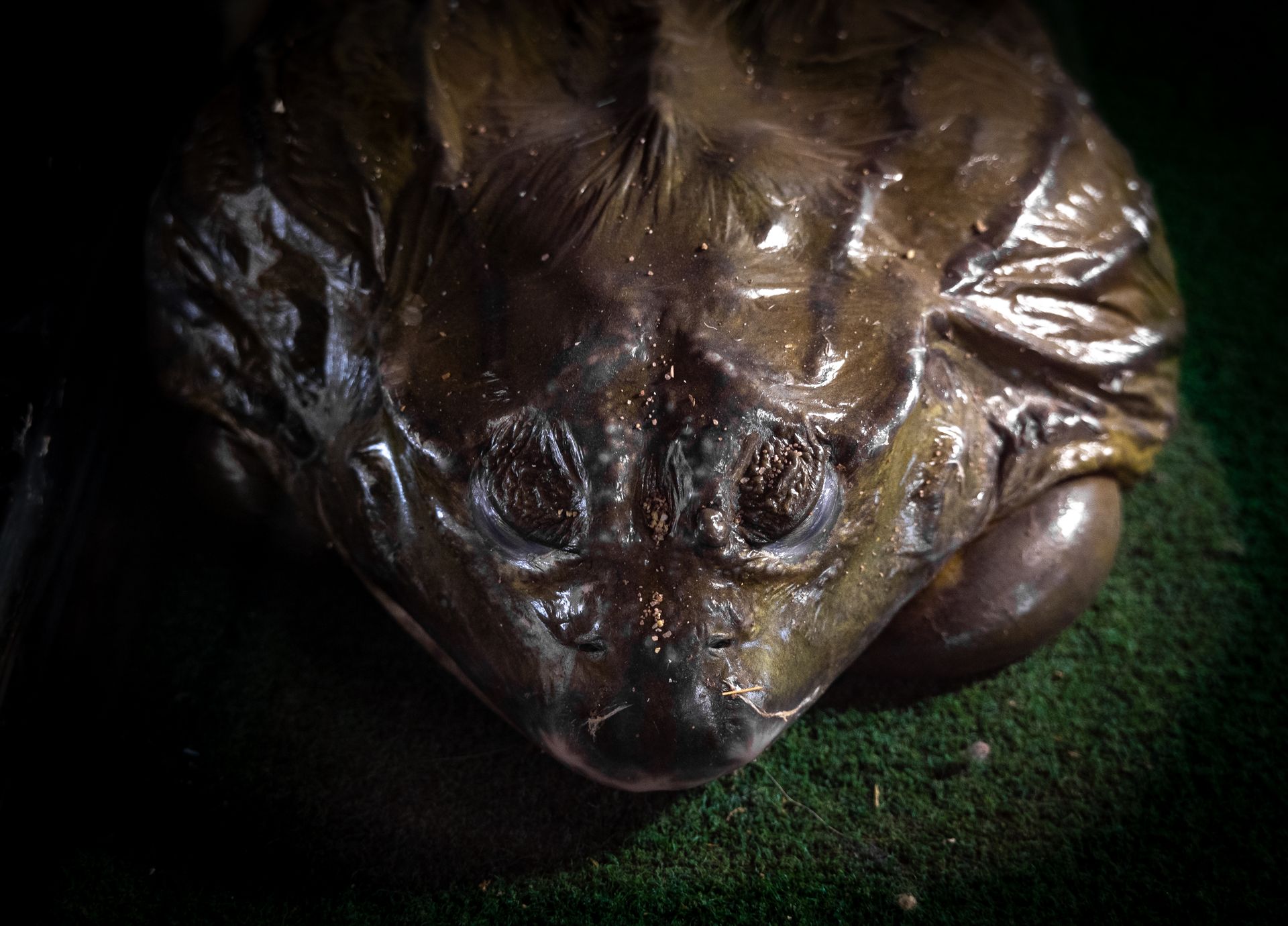
Let's take a closer look at the Ceratophrys species. There are over 20 different species of Ceratophrys, ranging in size, color, and pattern.
The Argentine Horned Frog, Ceratophrys ornata, is one of the most popular species kept as pets.
Ceratophrys species are native to South America, specifically in countries such as Argentina, Brazil, and Uruguay.
These frogs are known to live for around 5-7 years in captivity, but some species can live up to 10 years.
A different take: Ceratophrys Cornuta
Captive Care
Captive Care is relatively easy, making Ceratophrys a great first amphibian for beginners. They're a hardy species, so illness is unlikely.
Be cautious of their predatory tendencies, as they'll eat anything that moves, including other Ceratophrys. They should be kept singularly.
Ceratophrys can be aggressive, so be careful where you put your fingers, as they might mistake your hand for food. They have a very powerful jaw and grip, which can be painful.
If you're bitten by your Ceratophrys, don't pull your hand away from the bite, as this can damage the frog's jaw. Holding the frog under running water should encourage it to let go, and a simple antiseptic should be applied to the bitten area.
Intriguing read: Surinam Horned Frog
Feeding
Juvenile Ceratophrys, like horned frogs, need to be fed daily, with calcium and vitamin D3 supplements added to the meal 2 to 3 times a week.
They'll eat small earthworms, pinkie mice, crickets, and waxworms. It's essential to provide a varied diet to ensure they get all the nutrients they need.
Adult Ceratophrys can handle larger prey items like earthworms, locusts, crickets, and cockroaches. I've found that they also enjoy mealworms, fuzzie mice, and even feeder fish.
It's recommended to supplement adult Ceratophrys at least once a week to ensure they're getting all the necessary vitamins and minerals.
Environmental Conditions
To keep your Ceratophrys happy and healthy, you'll want to create a comfortable environment that meets their specific needs. The ideal temperature range is between 24-28°C (75-82°F), so make sure to use an under tank heat mat with a thermostat to maintain this temperature gradient.
You should only cover about a third to a half of the wall or floor space with the heat mat to allow your Ceratophrys to thermo-regulate. It's also essential to have a thermometer on either end of the terrarium to ensure the temperature is within the desired range.
Lightly misting the terrarium daily with de-chlorinated water in a spray bottle will help maintain the right humidity level for your Ceratophrys. The substrate should remain damp but not waterlogged between mistings.
A Hide for Your Horned Frog
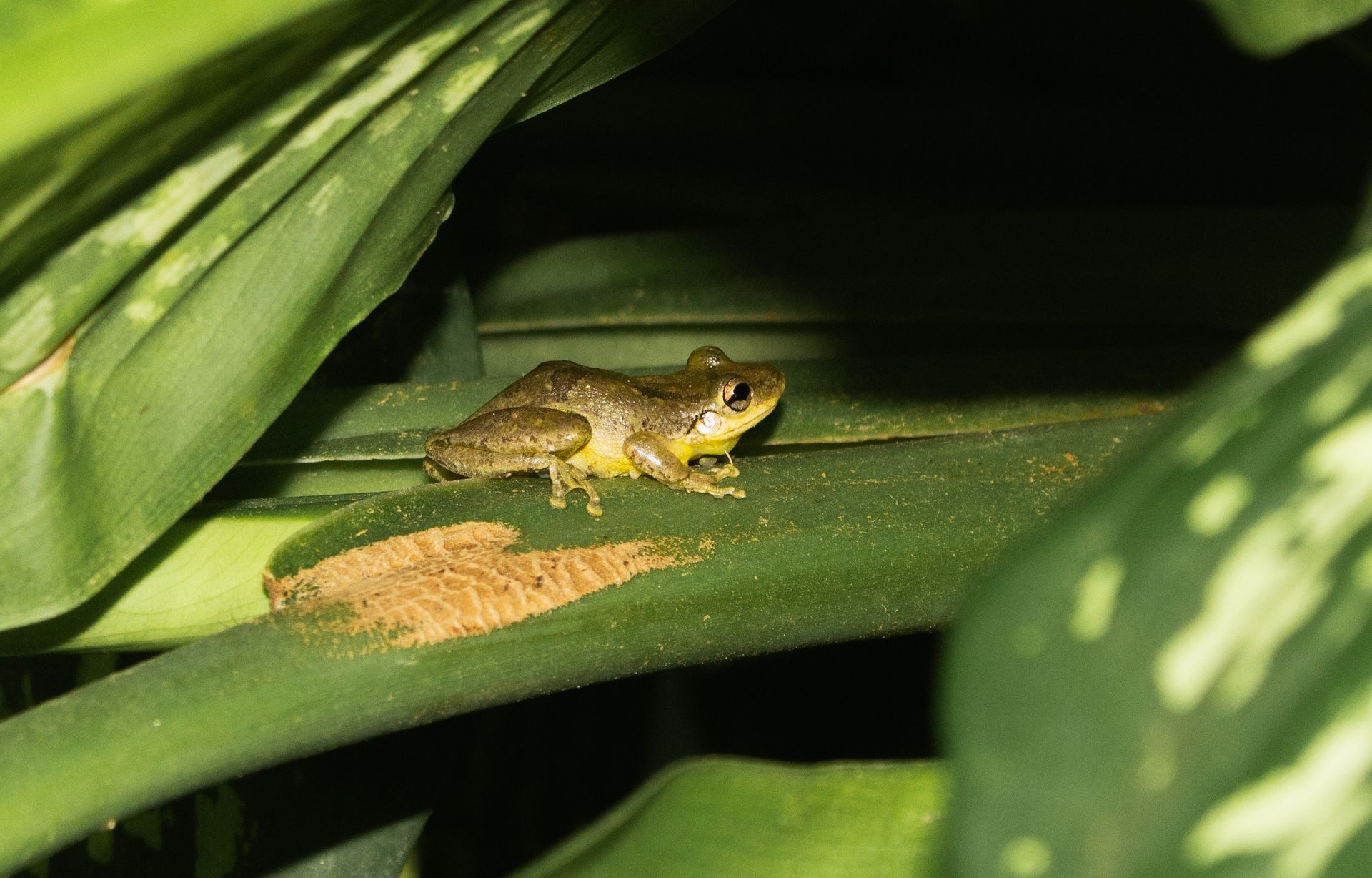
Horned Frogs need a place to hide to feel secure.
Make sure the substrate is deep enough for your Horned Frog to burrow under.
Live plants can be used, but expect them to be easily uprooted by your Horned Frog's burrowing habits.
To prevent stress, provide a hiding spot that allows your Horned Frog to feel safe and hidden.
The substrate's depth is crucial, so choose a substrate that's at least deep enough for your Horned Frog to bury itself.
See what others are reading: Paedophryne Amauensis Frog
Heat
The ideal temperature for your Horned Frog is a temperature gradient of 24-28°C (75-82°F).
To achieve this, use an under tank heat mat with an appropriate thermostat. This is a safer option than heat lamps, which can cause dehydrating effects.
A third to half of the tank's wall or floor space should be covered by the heat mat to allow your Horned Frog to thermo-regulate.
It's essential to have a small thermometer on either end of the terrarium to check the temperature. One end should be around 24°C and the other around 28°C.
On a similar theme: Argentine Horned Frog
Humidity
Humidity is a crucial aspect of your Horned Frog's environment. All species of Horned Frogs require some humidity, with Ornate Horned Frogs needing relatively higher humidity than Cranwell's Horned Frogs.
To maintain the right humidity level, lightly misting the terrarium daily with de-chlorinated water in a spray bottle should suffice. This helps to keep the humidity at the right level for your Horned Frog.
Between mistings, the substrate should remain damp, but not waterlogged.
Related reading: Frogs of Peru
Handling and Interaction
Handling your Ceratophrys should be avoided if at all possible. They don't appreciate being handled and may become stressed or aggressive.
Their delicate, absorbent skin can be harmed by the oils and salts on our skin. Wearing latex gloves or washing your hands beforehand is a good idea if handling is unavoidable.
Ceratophrys can give a nasty bite, so be extra careful when placing your hands and fingers near their mouth during handling.
It's best to observe your Ceratophrys from a safe distance to minimize stress and prevent harm.
Species and Lifespan
The Ceratophrys frog, also known as the horned frog, can live up to 15 years in captivity with proper care. This is significantly longer than their average lifespan of 1 to 4 years in the wild.
Their lifespan can vary depending on factors such as diet and care, but a well-cared-for horned frog can live for 25 to 30 years with regular aestivation. Aestivation is a period of dormancy that allows the frog to conserve energy and survive in harsh conditions.
Here are some species of Ceratophrys frogs and their average lifespans:
Species
Let's take a look at some fascinating facts about the species of horned frogs. Ceratophrys aurita, also known as the Brazilian horned frog, is found in Brazil.
The Brazilian horned frog is just one of many species of horned frogs. In fact, there are several species found in different parts of South America. Here are some of the different species:
These species of horned frogs can be found in different parts of South America, from Brazil to Ecuador.
Lifespan
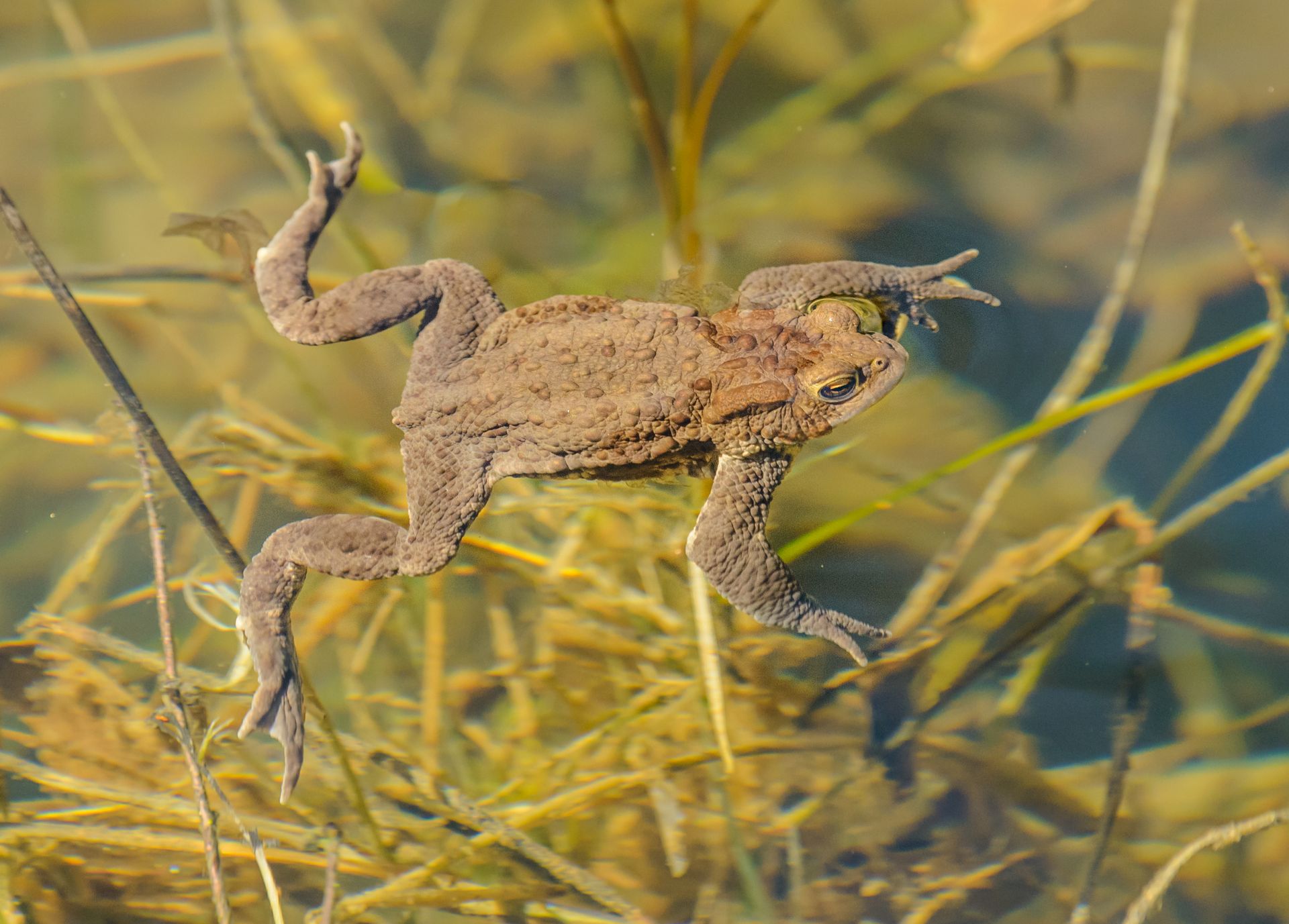
Horned frogs can live up to 25 to 30 years if they experience regular aestivation and are in top health.
Well-cared-for horned frogs can live more than 15 years, making them a long-term pet commitment.
In contrast, Ceratophrys frogs in the wild typically live between 1 and 4 years, while those in captivity can live up to 15 years with proper care.
A Pacman frog owner who provides a roomy home, balanced diet, and regular health checks can expect their frog to live closer to 15 years.
The lifespan of Ceratophrys frogs in captivity is significantly longer than in the wild, highlighting the importance of proper care and nutrition.
Amazonian Horned Frog
The Amazonian Horned Frog is a fascinating species, and I'm excited to share some interesting facts about it.
These frogs are found in freshwater marshes and pools throughout the Amazon rainforest, where they've adapted to their environment with remarkable camouflage skills, resembling leaf stems in the wild.
In the wild, Amazonian Horned Frogs are aggressive, voracious predators that ambush their prey from the mud or leaf litter, striking with lightning speed to swallow their victims whole.
Their massive heads and ravenous behavior have earned them the nickname "Pac Man Frogs", a fitting moniker given their insatiable appetite.
Males come in a variety of colors, ranging from dark green to lime, while females are generally larger and have a brownish color.
In captivity, Amazonian Horned Frogs can live up to 25 to 30 years if they experience regular aestivation, a process that requires careful temperature and humidity control to simulate their natural dormant period.
If you're considering keeping an Amazonian Horned Frog as a pet, be aware that they have extremely sensitive skin that can be damaged by contact with human skin, so it's essential to handle them with care.
In the wild, Amazonian Horned Frogs can be found in the rainforests of Peru, where they've been observed by researchers who've marveled at their impressive camouflage abilities.
Despite their fearsome reputation, Amazonian Horned Frogs have a special place in the hearts of many amphibian enthusiasts, who appreciate their unique appearance and fascinating behavior.
In captivity, Amazonian Horned Frogs require a low to mid-level UVB lighting and a temperature gradient of 22 to 28°C to thrive, making them a rewarding but challenging pet to care for.
General Information
Horned Frogs, also known as Ceratophrys, are fascinating creatures.
They can live up to 10 years with proper care, but generally average around 6-7 years.
These frogs are relatively large, with some species growing up to 13-15cm (5-6 inches) in length.
Females tend to grow larger than males in both species, making them a unique and interesting pet to care for.
In the wild, Horned Frogs can be found in various countries in South America, including Argentina, Brazil, and Uruguay.
Things to Consider Before Buying an Amphibian
Before buying an amphibian, consider who will look after your new pet if you're away. This is crucial because amphibians require regular care and attention.
You'll also need to think about obtaining its food easily from your local pet shop. Many pet shops carry live insects, which are a staple in an amphibian's diet.
Feeding live insects can be a bit of a challenge, so it's essential to consider whether you're comfortable with this task. Some people find it a bit off-putting, while others enjoy the experience.
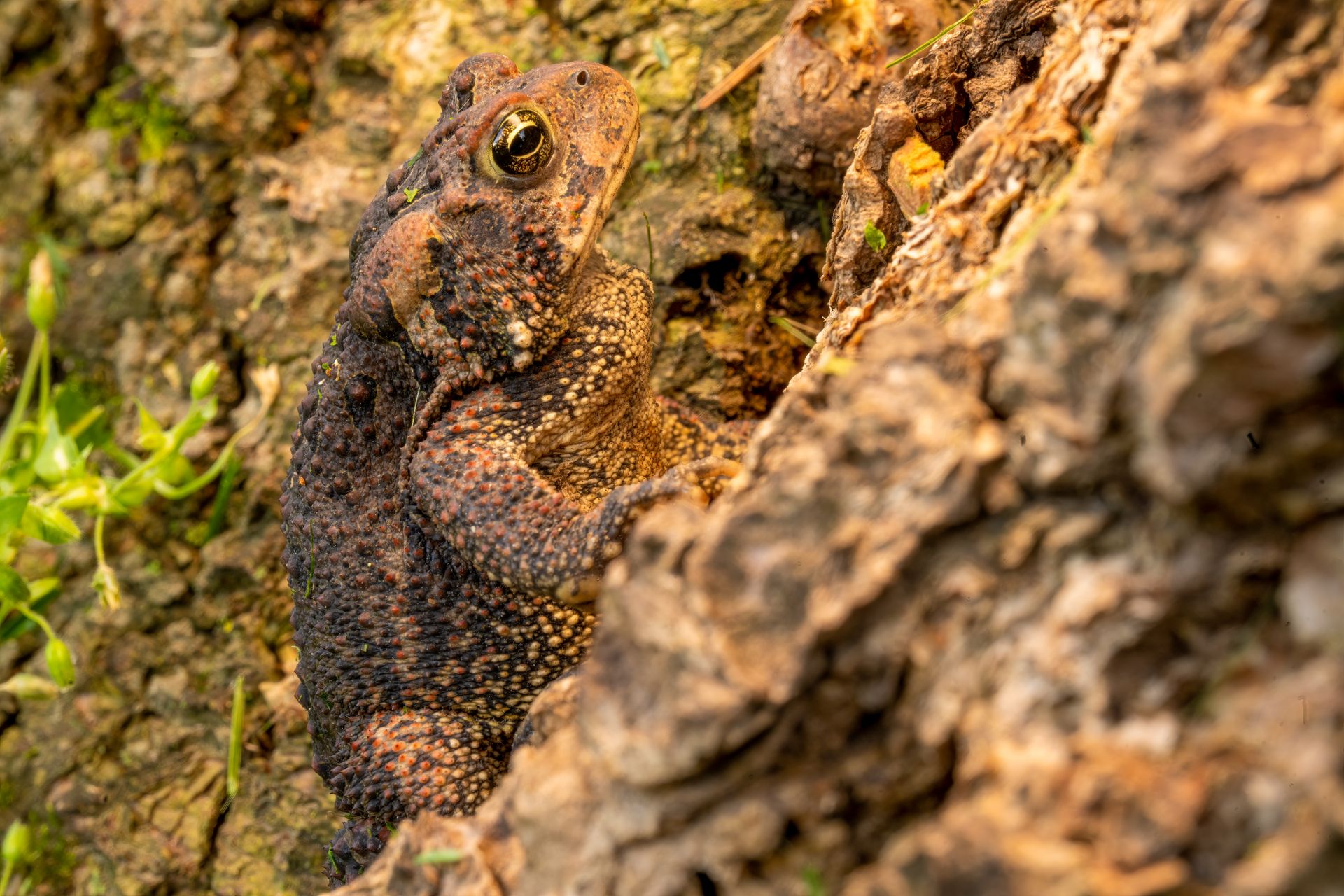
Having live food in the house can also be a concern for some people. If you're worried about the mess or the thought of live insects crawling around, you may want to reconsider.
It's also a good idea to check with the rest of your family to see if they're happy to live with an amphibian. Some people may not be comfortable with the idea of having a pet that requires a terrarium and live food.
Description
Horned frogs are quite unique, with their fleshy horn-like upper lids above their eyes. These distinctive features are a key part of their identification.
They have relatively large mouths that seem disproportionate to their bodies compared to their legs and front arms. This might be a bit surprising, but it's just one of the many interesting characteristics of these frogs.
Ornate Horned Frogs tend to be a medium to dark green or yellow color with red and black patches in their patterning. Cranwell’s Horned Frogs, on the other hand, start out as a bright green color but can change as they grow into various combinations of brown, beige, green, orange, and yellow.
Some individuals can even appear in an albino form. This is a fascinating aspect of these frogs' biology.
In terms of size, Ornate Horned Frogs tend to grow larger than Cranwell’s Horned Frogs, with Ornates reaching up to 13-15cm (5-6 inches), while Cranwell’s average at about 10-13cm (4-5 inches).
Species Fact File
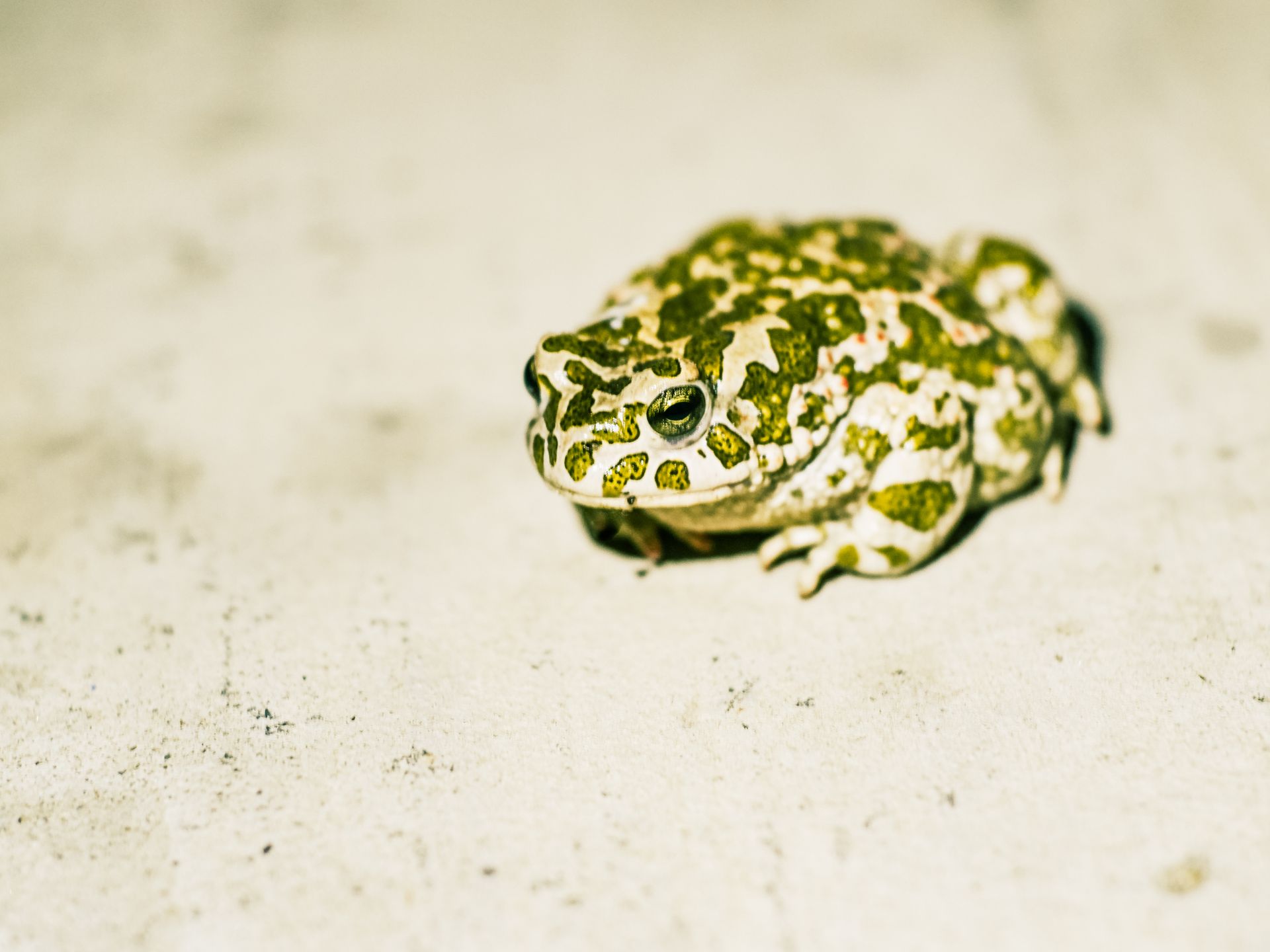
Horned Frogs can live up to 10 years with proper care. They are known to be relatively long-lived animals.
Horned Frogs are native to South America, specifically in countries like Argentina, Brazil, and Uruguay. This region provides a diverse range of habitats for them to thrive in.
Ornate Horned Frogs are found in rainforest areas, while Cranwell's Horned Frogs are native to drier, sub-tropical grasslands. This difference in habitat is crucial for their survival.
The lifespan of Horned Frogs can vary depending on the species, with some living up to 5-6 years in captivity. This is a relatively long lifespan for an amphibian.
Here's a list of some of the Horned Frog species mentioned in the article:
- Brazilian horned frog or Wied's frog (Ceratophrys aurita)
- Colombian horned frog (Ceratophrys calcarata)
- Surinam horned frog (Ceratophrys cornuta)
- Cranwell's horned frog (Ceratophrys cranwelli)
- Joazeiro horned frog (Ceratophrys joazeirensis)
- Argentine horned frog (Ceratophrys ornata)
- Stolzmann's horned frog (Ceratophrys stolzmanni)
- Ecuador horned frog (Ceratophrys testudo)
Horned Frogs can grow a cocoon of skin around themselves in cool temperatures to help keep moisture in while they hibernate. This is called Estivation.
Frequently Asked Questions
What frog has the strongest bite force?
The South American horned frog (Ceratophrys) has the strongest bite force among all frog species, capable of capturing and swallowing prey up to its own body size. Its powerful jaws produce an extremely forceful bite, making it a formidable predator.
Can you keep a Pacman frog as a pet?
Yes, Pacman frogs can make interesting and relatively low-maintenance pets. They are a great option for those looking for a unique and easy-to-care-for pet.
Featured Images: pexels.com