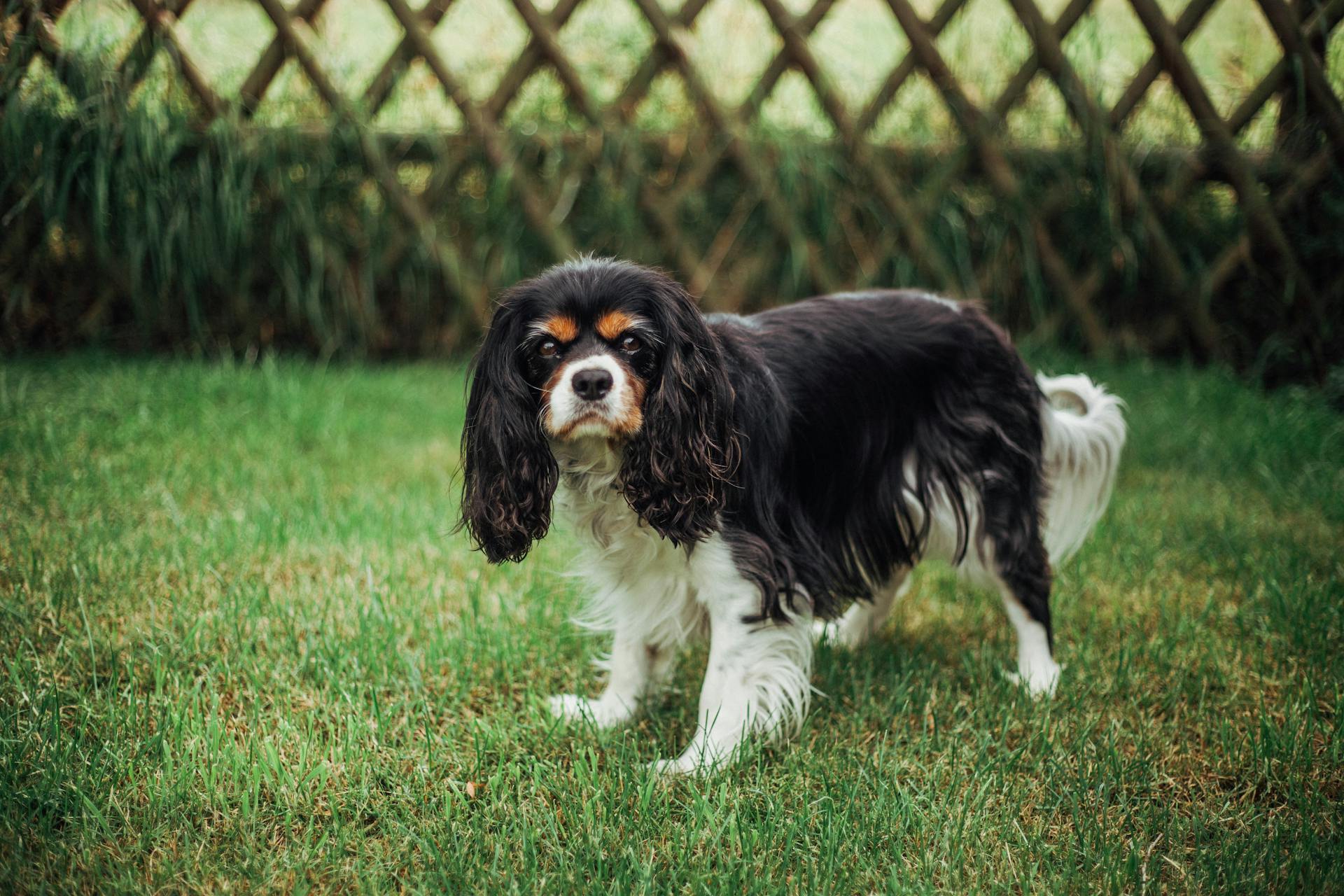
The Cavalier King Charles Spaniel is a beloved breed known for its gentle and affectionate nature. They originated in the UK in the 16th century as a companion dog for royalty.
Their small size, typically weighing between 10-18 pounds, makes them a popular choice for families and apartment dwellers. They are relatively low-maintenance in terms of exercise, requiring daily walks but not excessive physical activity.
One of the most distinctive features of the Cavalier King Charles Spaniel is its coat, which requires regular grooming to prevent matting and tangling. Regular brushing can help prevent these issues.
Their friendly and outgoing personalities make them a great addition to many families, but they do require early socialization to prevent behavioral problems.
Physical Characteristics
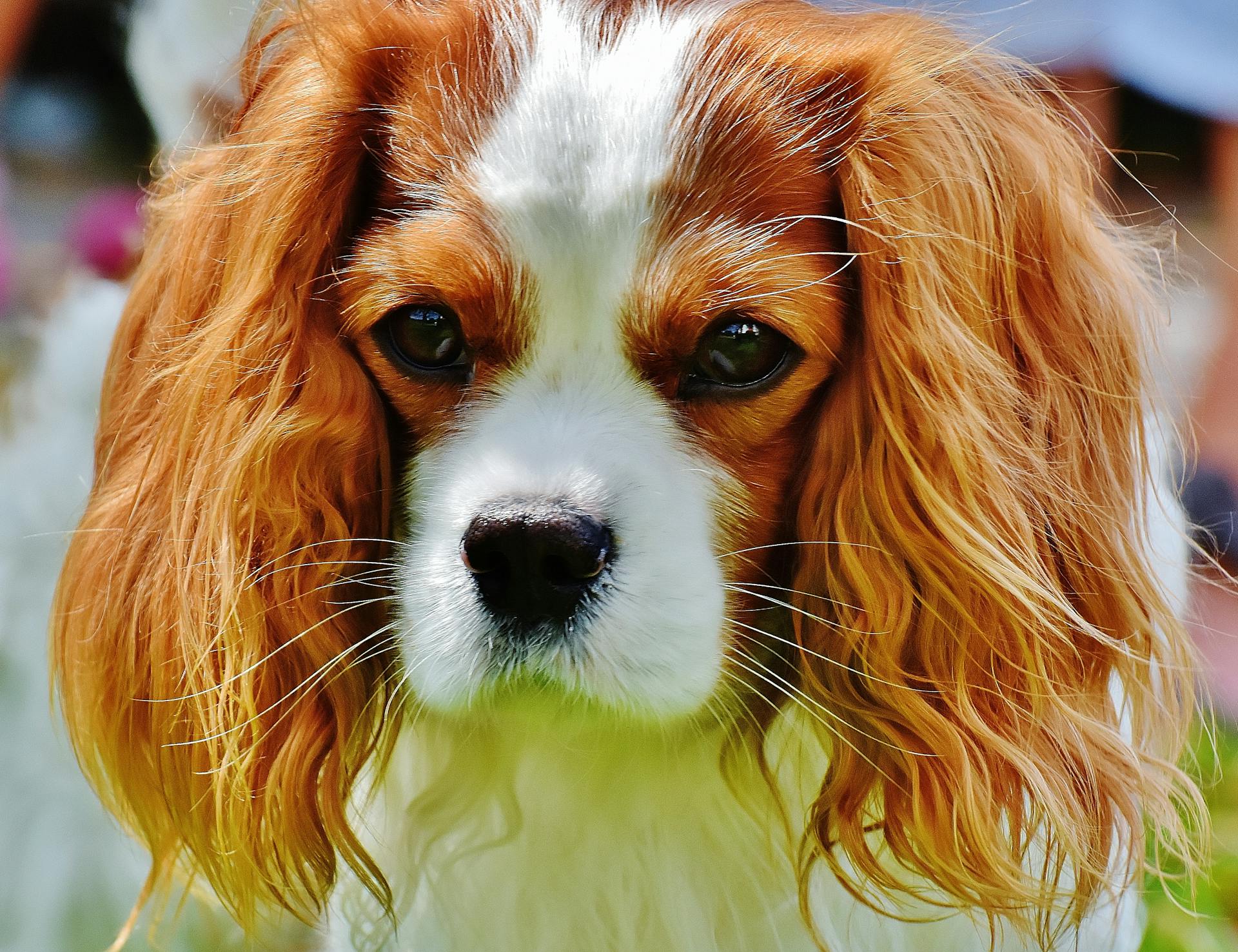
The Cavalier King Charles Spaniel's physical characteristics are truly unique and endearing. Their skull is almost flat between the ears, which gives them a sweet and gentle appearance.
Their muzzle is well tapered, and their nostrils are black and well developed, without any flesh marks. This is a desirable trait, as it adds to their overall charm.
Their face is well filled below the eyes, and their lips are well developed but not pendulous. This means they have a nice, rounded face without any loose lips.
Their neck is moderate in length, without any throatiness, and is slightly arched at the crest. It sets smoothly into their nicely sloping shoulders, creating a harmonious line from head to body.
Their shoulders should slope back with moderate angulation, which gives them a gentle and refined appearance.
General Appearance
The general appearance of this breed is quite striking. They are active, graceful, and well-balanced, with a gentle expression.
Their eyes are large and dark, with a round shape that's not too prominent. They are spaced well apart, which adds to their overall balance.
The face is well-filled below the eyes, giving them a soft and endearing look.
Expand your knowledge: Cavalier King Charles Spaniel Eye Problems
Neck
The neck is a moderate length, without a throatiness that's noticeable.
A slightly arched shape at the crest is a defining feature of a well-proportioned neck.
It sets smoothly into nicely sloping shoulders, creating a smooth and cohesive line from head to body.
Forequarters
The forequarters of a dog are an essential part of their physical characteristics.
The shoulders should slope back with moderate angulation. This is a crucial aspect of a dog's overall structure.
Movement and Build
The Cavalier King Charles Spaniel is a breed that's built for elegance and movement. They have a free-moving gait that's full of drive from behind.
Their forelegs and hindlegs move in perfect parallel when viewed from both in front and behind, creating a smooth and harmonious motion. This unique characteristic is a hallmark of the breed's athleticism and agility.
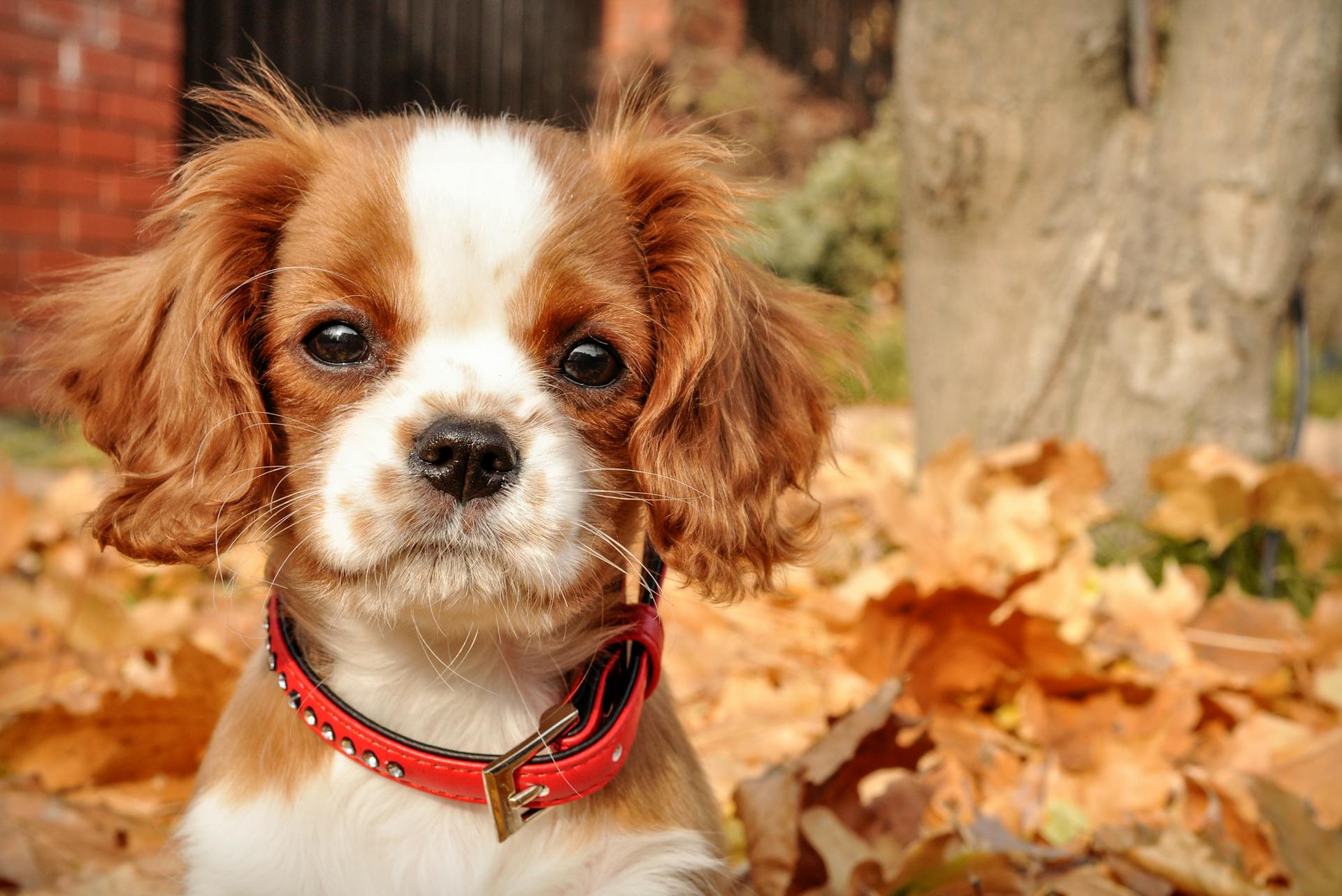
One of the breed's most distinctive features is its rich chestnut markings on a pearly white ground, which are evenly divided on the head, leaving room for the lozenge mark or spot between the ears.
Body
The body of a dog is a crucial aspect of its overall build. The breed we're discussing has a short-coupled body.
The ribs are well-sprung, but not barreled, which means they're not too curved in. This is a distinctive feature of the breed's body.
The chest is moderately deep, leaving ample room for the heart. This is important for the dog's overall health and well-being.
The back is level, which is a key characteristic of the breed's build. This helps the dog move efficiently and maintain its balance.
The body is slightly less at the flank than at the last rib, but it doesn't have a tucked-up appearance. This is a subtle but important detail that can affect the dog's movement and overall appearance.
Gait/Movement
The Blenheim's gait is truly a sight to behold - free-moving and elegant in action, with plenty of drive from behind. This breed moves with a fluid motion that's a joy to watch.
Their forelegs and hindlegs move parallel when viewed from in front and behind, creating a smooth and coordinated stride. This even movement is a hallmark of the breed's athletic ability.
The Blenheim's chestnut markings are a beautiful sight, rich and well broken up on a pearly white ground. These markings are evenly divided on the head, leaving room between the ears for a unique characteristic of the breed - the lozenge mark or spot.
Intriguing read: Blenheim Cavalier King Charles Spaniel
Breed Standards and History
The Cavalier King Charles Spaniel's rich historical background has shaped its cultural importance and directly influenced the establishment of breed standards by kennel clubs and organizations.
The Kennel Club (UK) recognizes the breed's historical context and has incorporated this heritage into the specific guidelines outlined for the breed.
The breed's historical significance has contributed to its recognition and appreciation by enthusiasts, with the American Kennel Club (AKC) acknowledging its importance as an integral part of the breed's identity.
The AKC's emphasis on historical context ensures that the breed's distinct characteristics, appearance, and temperament are preserved and upheld to maintain the breed's legacy and significance.
The breed's historical context is deeply intertwined with the establishment of breed standards, playing a crucial role in maintaining the breed's authenticity and recognition within the dog breeding community.
The Cavalier King Charles Spaniel's unique features and temperament have been shaped by its association with British nobility, making it a cherished companion to royalty.
Explore further: American Kennel Club German Shepherd
Temperament and Distinctive Features
The Cavalier King Charles Spaniel is an active, graceful, and well-balanced dog, with characteristics that include being sporting, affectionate, and fearless.
Its sporting nature makes it a great companion for families and individuals who want an adaptable and friendly dog.
The breed's ideal height is between 12 to 13 inches at the withers, and its weight should be between 13 and 18 pounds.
Acceptable colors for the breed include Blenheim, Tricolor, Ruby, and Black-and-Tan, adding to the distinctiveness of the breed.
The breed's temperament is defined by its affectionate demeanor and fearlessness, making it a popular choice as a beloved companion and sporting dog.
Its unique combination of athleticism and gentle attentiveness makes it a wonderful companion for people of all ages.
Expand your knowledge: Cavalier King Charles Spaniel Temperament Affectionate
Frequently Asked Questions
What are the negatives of a Cavalier King Charles Spaniel?
Cavalier King Charles Spaniels can be prone to health issues such as heart problems and joint issues, including Mitral Valve Disease and hip dysplasia. These potential health concerns are essential to consider when deciding to bring one of these lovable dogs into your family
Is a Cavalier high maintenance?
A Cavalier's needs are moderate, requiring regular grooming and daily exercise to stay healthy and happy. They are not high-maintenance, but do need some attention to prevent certain health issues.
Featured Images: pexels.com