Butterfly fancy goldfish are a popular choice for aquarium enthusiasts due to their striking appearance and relatively low maintenance care.
These fish can grow up to 6 inches in length and live for around 10-15 years with proper care.
To create a healthy environment for your butterfly fancy goldfish, it's essential to provide a spacious tank with a minimum capacity of 20 gallons.
This will give them plenty of room to swim and thrive, as they are active swimmers and can become stressed if confined to small spaces.
A well-planned tank layout with plenty of hiding places and plants will also help to reduce stress and promote a sense of security for your fish.
Regular water changes and a balanced diet will also play a crucial role in maintaining the health and well-being of your butterfly fancy goldfish.
Readers also liked: Fancy Goldfish Care
What is a Butterfly Fancy Goldfish?
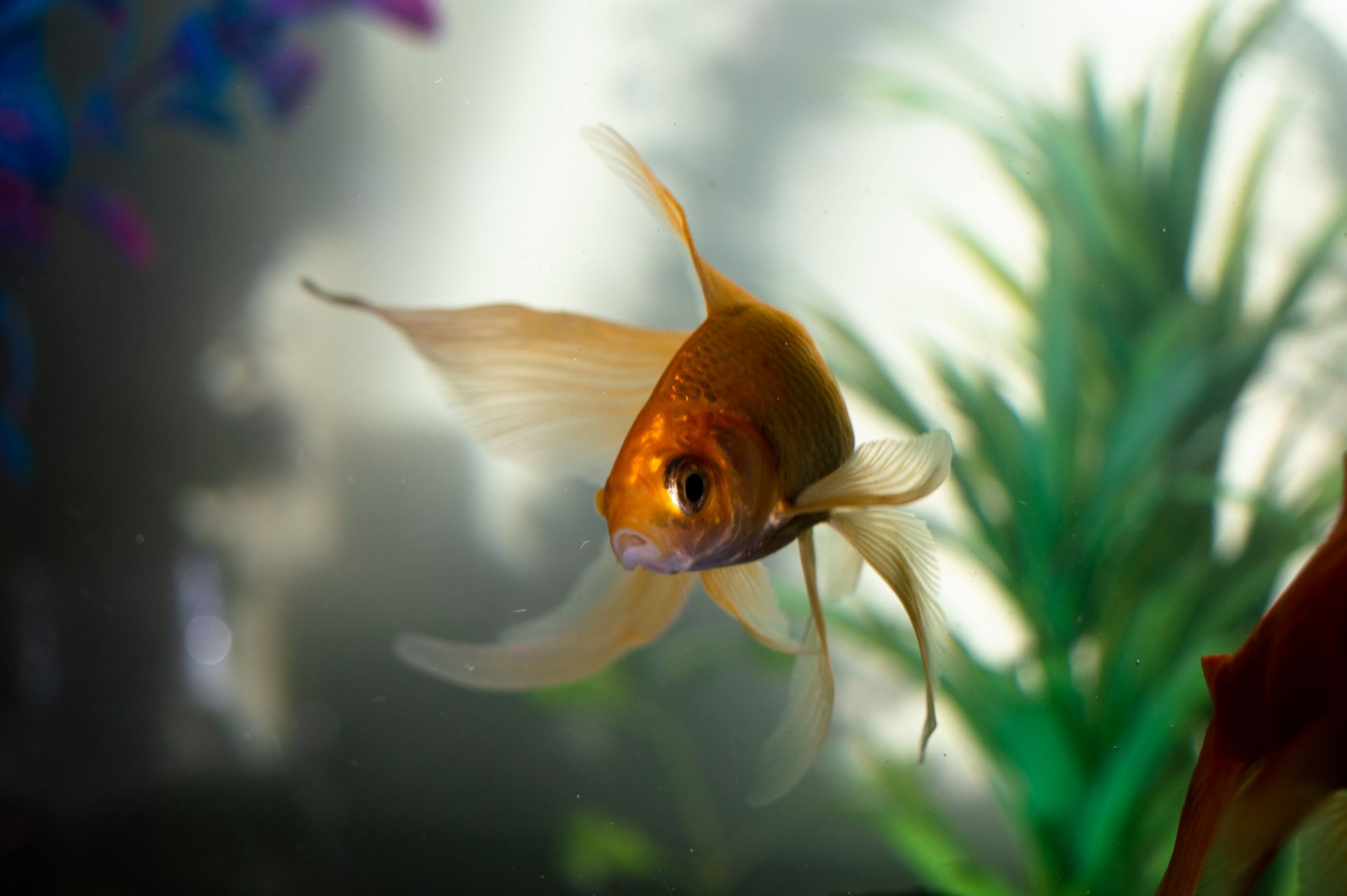
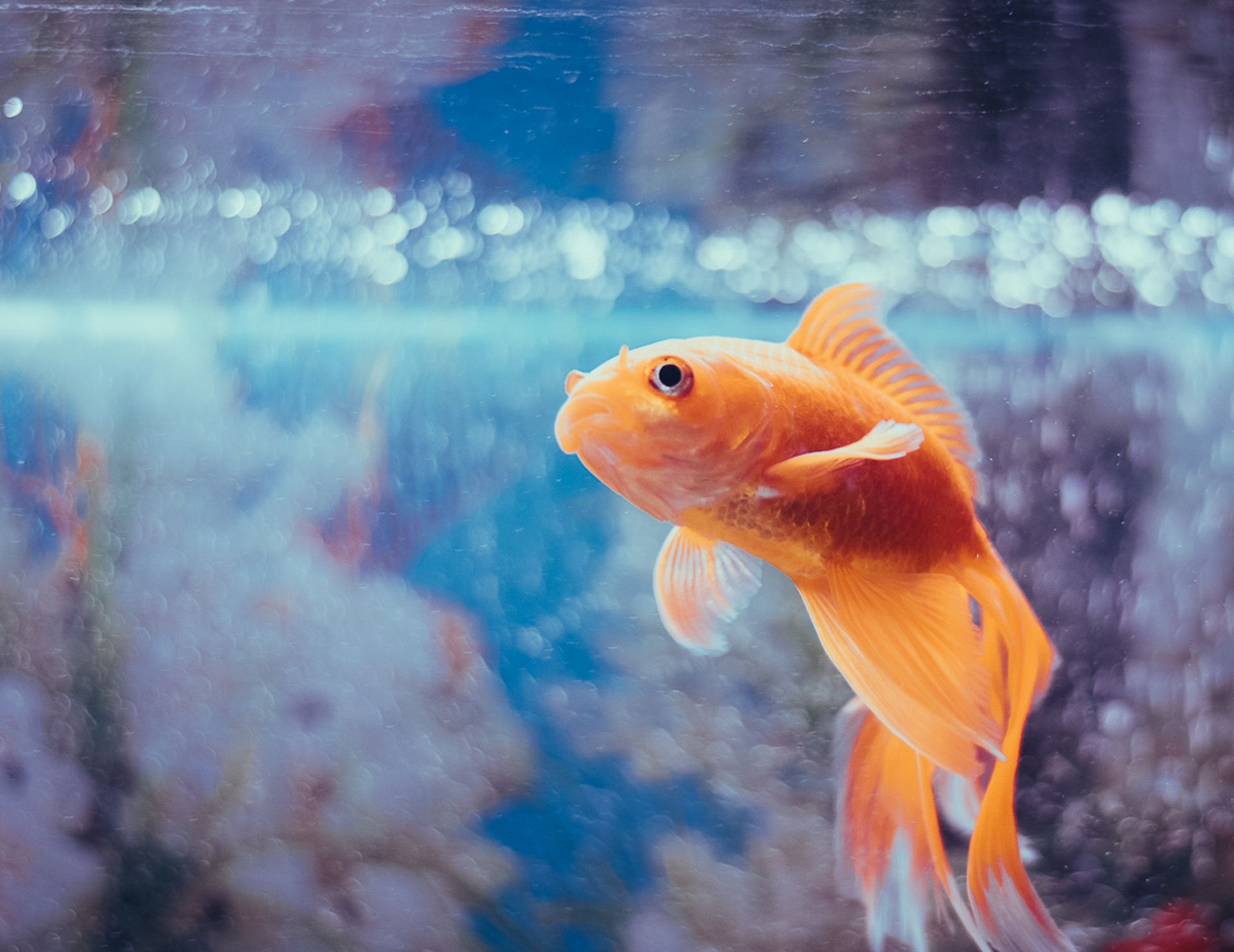
The Butterfly Tail Goldfish is a stunning breed of Fancy goldfish that's been developed to be admired from above. Its broad-lobed tail spreads out to resemble a butterfly's wings, making it a beautiful sight to behold.
Explore further: Fancy Tail Goldfish Lifespan
They come in a variety of colors and patterns, so you're sure to find one that suits your taste. I've seen them in shades of orange, white, and even bi-colored.
These fish are social creatures and enjoy being kept in groups of other Fancy goldfish. In fact, they thrive in the company of others, making them a great choice for a community tank.
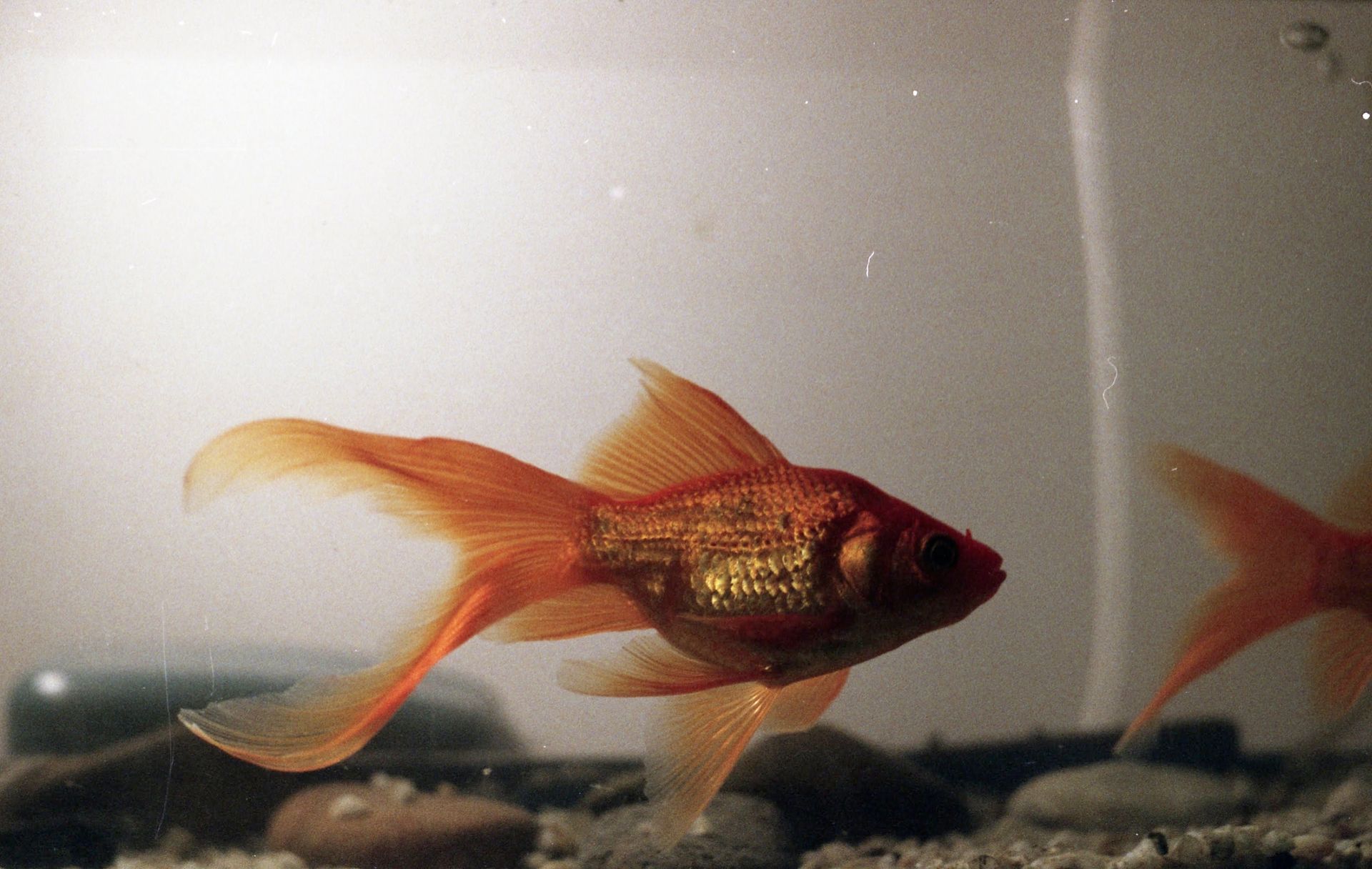
Their body is stocky and deep, with the characteristic egg shape of all Fancy goldfish types. This unique shape is one of the defining features of this breed.
The Butterfly Tail goldfish has a tall dorsal fin that's usually carried upright, and sometimes, the fish has a hump behind its head, rather like a Ryukin goldfish. This distinctive feature adds to their charm and makes them all the more interesting to observe.
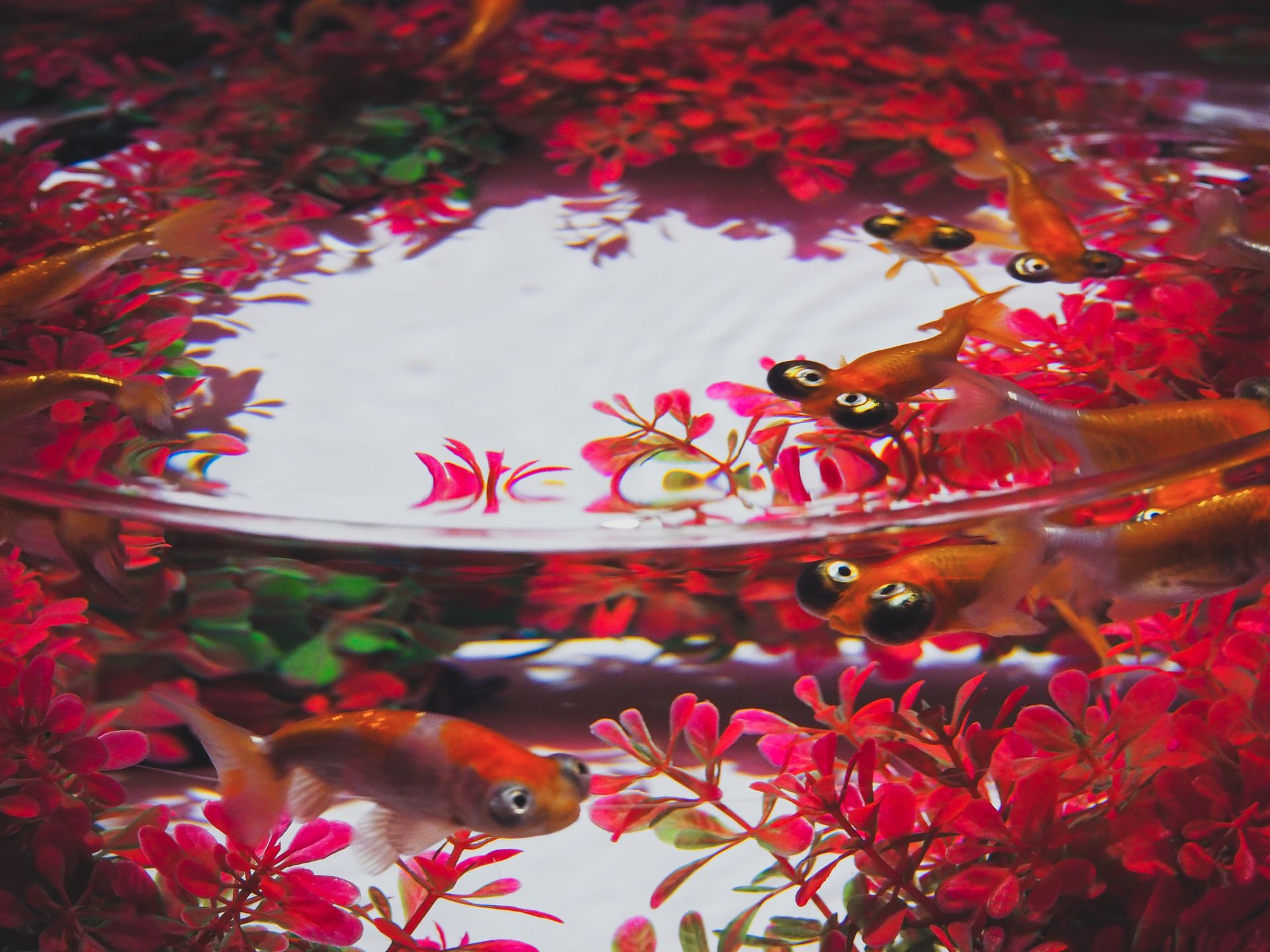
There are also some variations of the Butterfly Tail goldfish, including the Butterfly Telescope goldfish and the Butterfly Moor goldfish, which have strange, protruding eyes.
Care and Maintenance
Traditional goldfish bowls are not suitable for goldfish, as they don't provide adequate swimming space and the surface area is too small for efficient gaseous exchange.
To keep your butterfly fancy goldfish healthy, you'll need a tank with a heavily filtered system. Butterfly goldfish produce a high amount of waste, which increases the bioload of their tank, so a filtration system is absolutely necessary.
A consistent temperature of 65°F to 72°F (18°C to 22°C) is ideal for butterfly fancy goldfish. Fluctuations in temperature can stress and compromise their immune systems.
Here's a quick rundown of the tank maintenance you should perform regularly:
- Perform regular partial water changes (25-30% weekly) to remove accumulated waste and replenish essential minerals.
- Vacuum the substrate to remove debris.
- Perform filter maintenance as the manufacturer recommends.
Remember to establish a consistent feeding schedule and avoid overfeeding, as butterfly fancy goldfish have small stomachs and should be fed in small amounts several times a day.
Worth a look: Small Goldfish Breeds
Care Guide
When choosing a home for your Butterfly Tail or Butterfly Telescope Goldfish, consider the space they need to thrive. A bowl is not suitable for goldfish, as it doesn't provide enough swimming space or efficient gaseous exchange.

To ensure your goldfish stay healthy, feed them two or three small meals a day. Give them only what they'll eat in two or three minutes to avoid overfeeding.
Maintaining optimal water quality is crucial for your goldfish's health and longevity. Perform regular partial water changes (25-30% weekly) to remove accumulated waste and replenish essential minerals.
Keep an eye on your goldfish's temperature, as they thrive in a range of 65°F to 72°F (18°C to 22°C). Consistent temperatures will help prevent stress and immune system compromise.
To keep your goldfish's environment healthy, vacuum the substrate regularly to remove debris. Also, perform filter maintenance as the manufacturer recommends.
Minimize handling of your goldfish, as their delicate fins and protruding eyes make them susceptible to injury. If you need to transfer them, use a soft, smooth net or container.
Here's a quick rundown of the key care points to remember:
- Feed 2-3 small meals a day, only what they can consume in 2-3 minutes.
- Perform partial water changes (25-30% weekly) to maintain optimal water quality.
- Keep the temperature between 65°F to 72°F (18°C to 22°C).
- Vacuum the substrate regularly and perform filter maintenance.
- Minimize handling and use a soft, smooth net or container for transfers.
Water Parameters
To keep your Butterfly Tail goldfish happy and healthy, it's essential to get their water parameters just right.
Water temperature should be between 65 and 72 Fahrenheit.
A pH level between 6.0 and 8.0 is also crucial for their well-being.
Water hardness needs to be between 5 and 19 dGH.
Zero ammonia and nitrite levels are a must, and ideally nitrate levels should be below 20ppm.
Curious to learn more? Check out: Water Dogs Fish
Aquarium Filtration
Butterfly goldfish require a heavily filtered tank because they produce a high amount of waste.
This increases the bioload of their tank, making a filtration system absolutely necessary.
A good filtration system will help keep the water clean and clear, which is essential for the health and well-being of your goldfish.
Regular water changes are also crucial to maintaining a healthy environment for your goldfish, but a strong filtration system can help reduce the frequency of these changes.
The right filtration system can make a big difference in the life of your goldfish, so choose one that's reliable and easy to maintain.
Housing and Environment
A mature Butterfly goldfish requires a standard rectangular tank of at least 75L, but the ideal tank size can vary depending on the size of the fish and how many you plan to stock.
You'll want to start with a tank of at least 20 to 30 gallons or larger, and add 10 gallons for each additional goldfish you keep. This will help prevent stunted growth and ensure the fish thrive.
A larger tank with greater water volume dissipates fish waste more efficiently, keeping the environment safe for the fish. This is especially important because fish waste can quickly pollute the water in a small tank.
A deep tank is not ideal for Butterfly Tail goldfish, as it makes it difficult for them to reach the surface to feed. This can cause stress and compromise their immune system.
A long, rectangular-shaped tank provides ample swimming space and makes it easier for the fish to get to the surface. This is a better choice than a deep tank, as it also provides plenty of surface area for efficient gaseous exchange and good oxygen levels.
A lid on the tank is also a good idea, even though Butterfly Tail goldfish can't jump out. It helps keep dust and foreign objects out of the water and prevents evaporation.
Broaden your view: How Good Is a Goldfish Memory
Best Aquarium Size
Choosing the right aquarium size for your Butterfly Tail goldfish is crucial for their health and well-being. A mature Butterfly goldfish requires a standard rectangular tank of at least 75L.
You can start with a nano tank for a small goldfish, but a bigger tank is always better for the health of your fish. Starting with a large setup means you won't need to worry about taking the whole tank down and upsizing it in the future.
A tank of at least 20 to 30 gallons or larger is recommended for a single Butterfly Tail goldfish. You'll also need to add an additional 10 gallons to your aquarium size for each additional goldfish you keep.
In a small tank, fish waste quickly pollutes the water, leaving the fish vulnerable to ammonia and nitrate poisoning. A larger tank with greater water volume dissipates the fish waste more efficiently, keeping the environment safe for the fish.
A long, rectangular-shaped tank provides the fish with ample swimming space and makes it much easier for them to get to the surface. This is especially important for Butterfly Tail goldfish, which are oxygen-hungry fish that need adequate dissolved oxygen in the water.
Does a Lid Need?
A lid is not strictly necessary for a Butterfly Tail goldfish tank, but it's a good idea to choose a tank with a cover slide or lid.
A lid helps to keep dust and foreign objects out of the water.
It's also worth noting that a lid can help prevent evaporation, which is especially important in areas with low humidity.
This can help maintain a stable water environment for your goldfish.
Socialization and Compatibility
Butterfly Tail goldfish can live with tropical fish, but you should provide plenty of dense planting and hardscape where they can hide if they feel threatened.
Fancy goldfish of all varieties can live together harmoniously, and there are many types to choose from.
Some suitable tank mates for Butterfly Tail goldfish include Tamasaba, Ryukin, Ranchu, Pearlscale, Oranda, Lionhead, Lionchu, Dragon Eye, Celestial Eye, Butterfly Telescope, and Veiltail.
Freshwater snails of all varieties do fine with goldfish. However, small shrimp will most likely be eaten by the fish and are best avoided.
Here are some unsuitable tank mates to avoid: tiny fish, shrimp species, and fish that are known to be fin nippers, as they will probably damage your Butterfly Tails' extravagant fins.
Check this out: Black Moor Goldfish Tank Mates
Size and Lifespan
Butterfly Tail Fancy goldfish can live for a pretty long time - between 10 and 15 years, with some living up to 20 years if they're well taken care of.
These fish can grow quite a bit, reaching an average length of 5 to 8 inches.
You'll want to make sure you have a tank that's large enough to give them room to thrive, as a small tank can lead to stunted growth and other problems.
What Size Are?
Butterfly Tail goldfish grow to an average of between 5 and 8 inches in length. This is a significant size range, so it's essential to choose a tank that can accommodate their adult size.
The tank should be at least 20 to 30 gallons or larger to ensure your fish have enough space to thrive. Starting with a large tank means you won't need to worry about upgrading later.
You'll also need to consider the fact that Butterfly Tail goldfish grow quickly, doubling in length in just a few weeks. This rapid growth means you'll want to choose a tank that's even larger than you initially think.
A larger tank will help to dissipate fish waste more efficiently, keeping the environment safe for your fish. It's also essential to remember that you'll need to add an additional 10 gallons to your aquarium size for each additional goldfish you keep.
It's not uncommon for small tanks to become overwhelmed by fish waste, leading to ammonia and nitrate poisoning. This can be a serious issue, so it's crucial to choose a tank that's large enough to support your fish.
In fact, a mature Butterfly goldfish requires a standard rectangular tank of at least 75L. This is a significant size, but it's essential for the health and well-being of your fish.
Lifespan
Butterfly Tail Fancy goldfish can live for up to 20 years with proper care and nutrition.
In general, these fish live for between ten and 15 years.
A high-quality, varied diet is crucial for maximizing their lifespan.
If this caught your attention, see: How Long Do Goldfish Live in a Pond
Telescope Types and Colors
The Telescope Types and Colors of Butterfly Fancy Goldfish are truly remarkable. They offer a stunning range of varieties and colors, each with its own unique charm.
The Black Moor Butterfly Telescope is a striking variety, characterized by its deep black coloration and distinctive protruding eyes. This velvety black hue provides a striking contrast against the delicate fins, creating a truly mesmerizing sight.
The Calico Butterfly Telescope Goldfish is a true showstopper, featuring a stunning combination of white, orange, and black patches. Each fish's pattern is unique, making it truly one-of-a-kind.
The Oranda Butterfly Telescope is a unique fusion of two distinct varieties, combining the protruding eyes and flowing fins of the Butterfly Telescope with the distinctive hood-like growth on the head of the Oranda.
The Panda Butterfly Telescope Goldfish sports a striking black-and-white coloration reminiscent of the beloved giant pandas. This variety is highly sought after for its captivating contrast and rarity.
The Chocolate Butterfly Telescope Goldfish exhibits a rich, velvety brown hue that is both elegant and captivating.
Some popular Telescope types include:
- Black Moor Butterfly Telescope
- Calico Butterfly Telescope
- Oranda Butterfly Telescope
- Panda Butterfly Telescope
- Chocolate Butterfly Telescope
Origins and Types
Goldfish are thought to come from China, specifically from a wild Prussian carp species kept in ponds and raised as a food fish during the early 1700s.
Early fish keepers noticed a few bright orange specimens among the carp and kept them as ornamental pond fish. They were bred and crossbred, eventually producing different forms, and by the 1800s and early 1900s, goldfish were being traded across Japan, Europe, and the US.
The Butterfly Tail Fancy goldfish specifically appeared in the hobby in the early 1980s and quickly gained popularity as show fish.
Description
The Butterfly Telescope Goldfish is a stunning variety, and one of the reasons it's so popular is its incredible range of colors and patterns. From the classic orange hues to the striking calico patterns, these fish offer a kaleidoscope of visual delights.
The Black Moor Butterfly Telescope is a standout variety, characterized by its deep black coloration and distinctive protruding eyes. This striking contrast against the delicate fins creates a truly mesmerizing sight.
The Calico Butterfly Telescope Goldfish is a true showstopper, featuring a stunning combination of white, orange, and black patches. Each fish's pattern is unique, making it truly one-of-a-kind.
Broaden your view: Calico Fancy Goldfish
If you're considering keeping a Butterfly Telescope Goldfish, you'll want to make sure you have a suitable tank or bowl. These fish are best viewed from above, so a tank or bowl with a clear view from the top is ideal.
Here are some popular varieties of the Butterfly Telescope Goldfish:
- Black Moor Butterfly Telescope
- Calico Butterfly Telescope
- Oranda Butterfly Telescope
- Panda Butterfly Telescope
- Chocolate Butterfly Telescope
The Oranda Butterfly Telescope is a unique fusion of two distinct varieties, combining the protruding eyes and flowing fins of the Butterfly Telescope with the distinctive hood-like growth on the head of the Oranda.
A different take: Fancy Oranda Goldfish
Origins of the
Goldfish originated in China, where they were first bred from a wild Prussian carp species.
The early fish keepers noticed a few bright orange specimens among the carp and kept them as ornamental pond fish.
These orange fish were bred and crossbred, eventually producing different forms of goldfish.
By the 1800s and early 1900s, goldfish were being traded across Japan, Europe, and the US.
Butterfly Tail Fancy goldfish emerged in the hobby in the early 1980s and quickly gained popularity as show fish.
Featured Images: pexels.com