The Burrowing Owl is a fascinating bird species found in Florida. They are a member of the owl family, but unlike other owls, they are active during the day.
Their habitat consists of open grasslands and prairies, which are perfect for their burrowing habits. In Florida, you can find them in areas like the Florida Keys and the Everglades.
One of the most distinctive features of the Burrowing Owl is its unique breeding behavior. They nest in underground burrows, often taking over abandoned rabbit holes.
These birds are known to be monogamous, with pairs forming during the breeding season and staying together for several years.
A different take: Burrowing Owl Florida Protected
Florida Burrowing Owl Facts
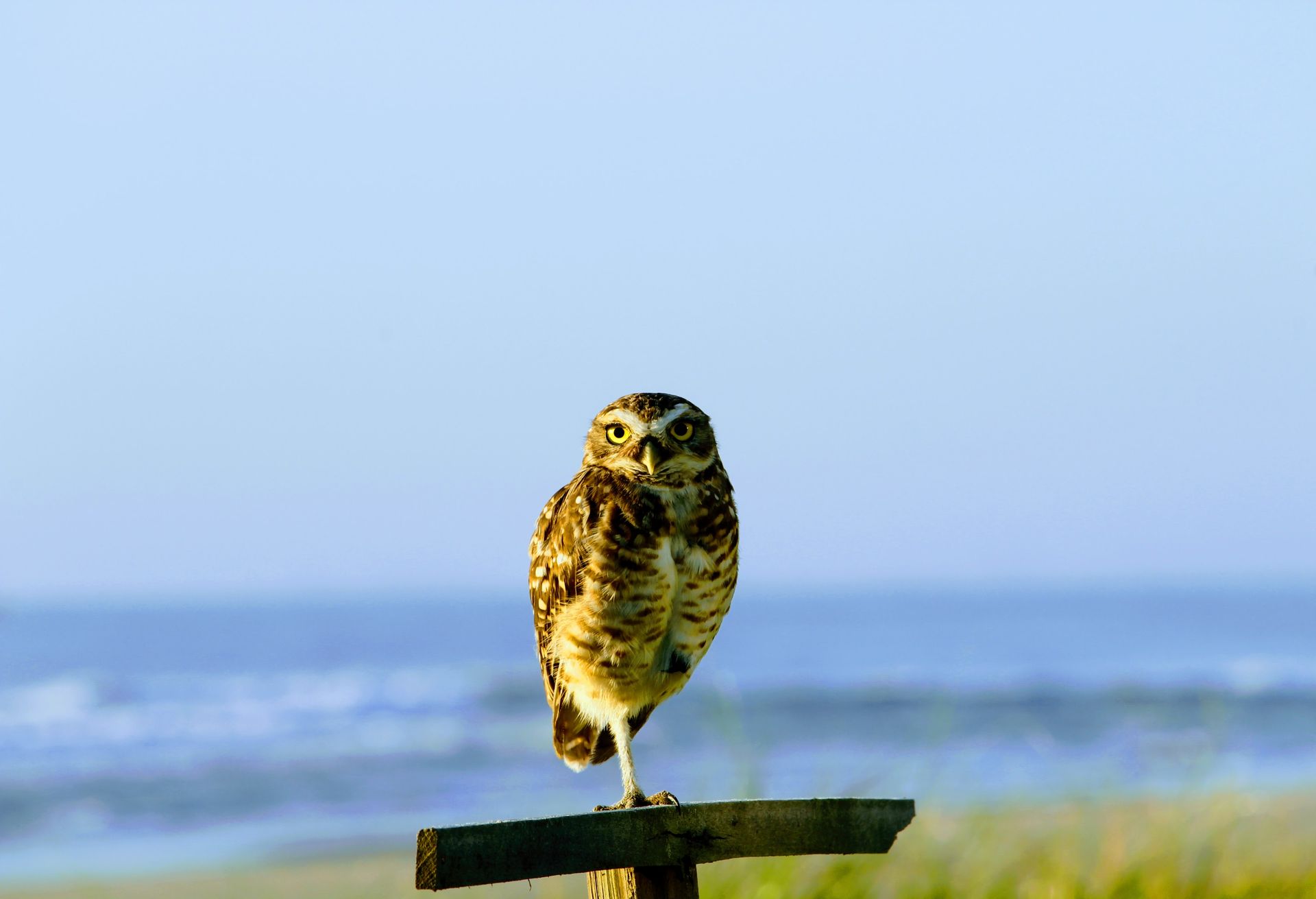
The Florida Burrowing Owl is a fascinating bird species. They stand between 7.5 – 10 inches tall, making them a short, stocky bird.
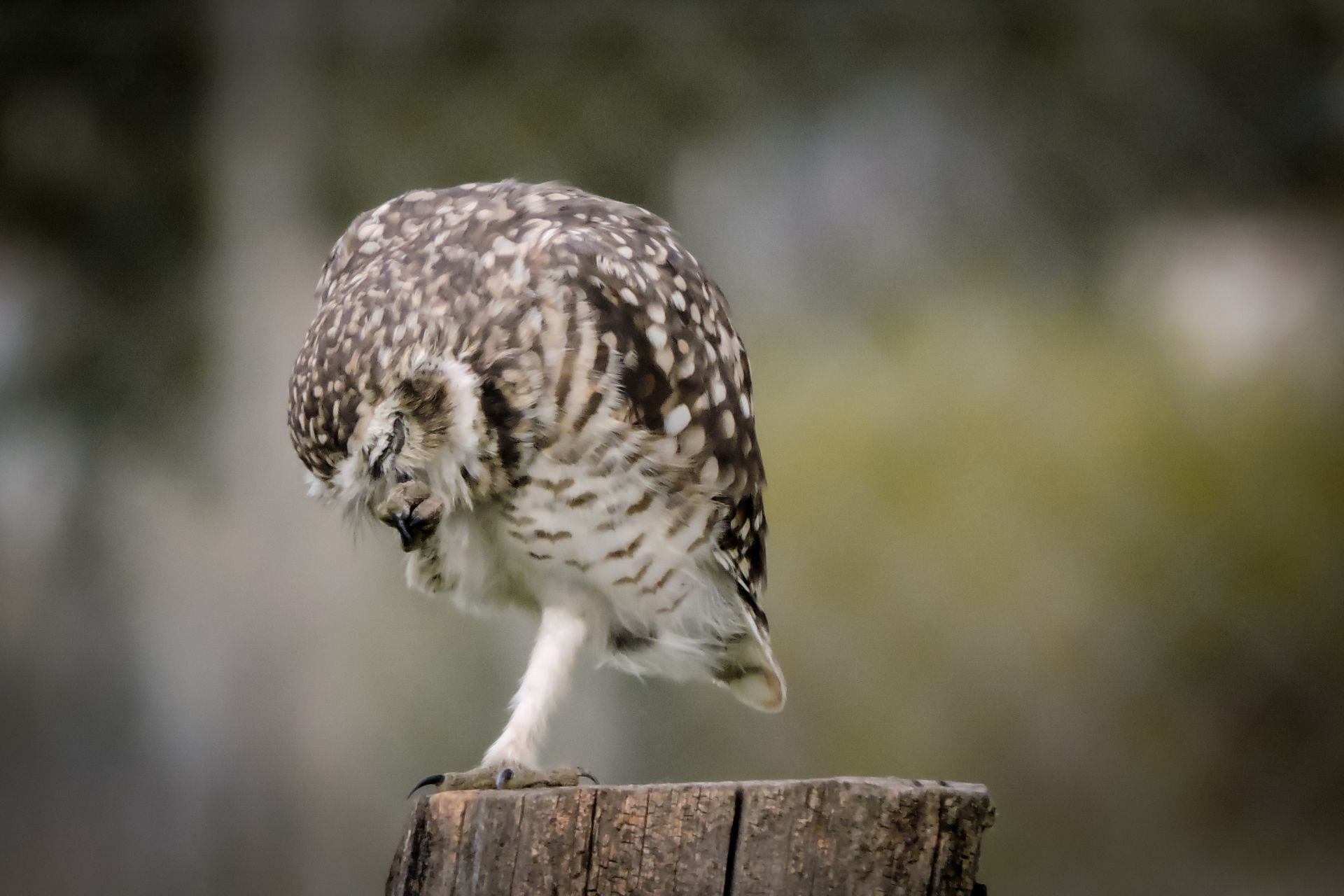
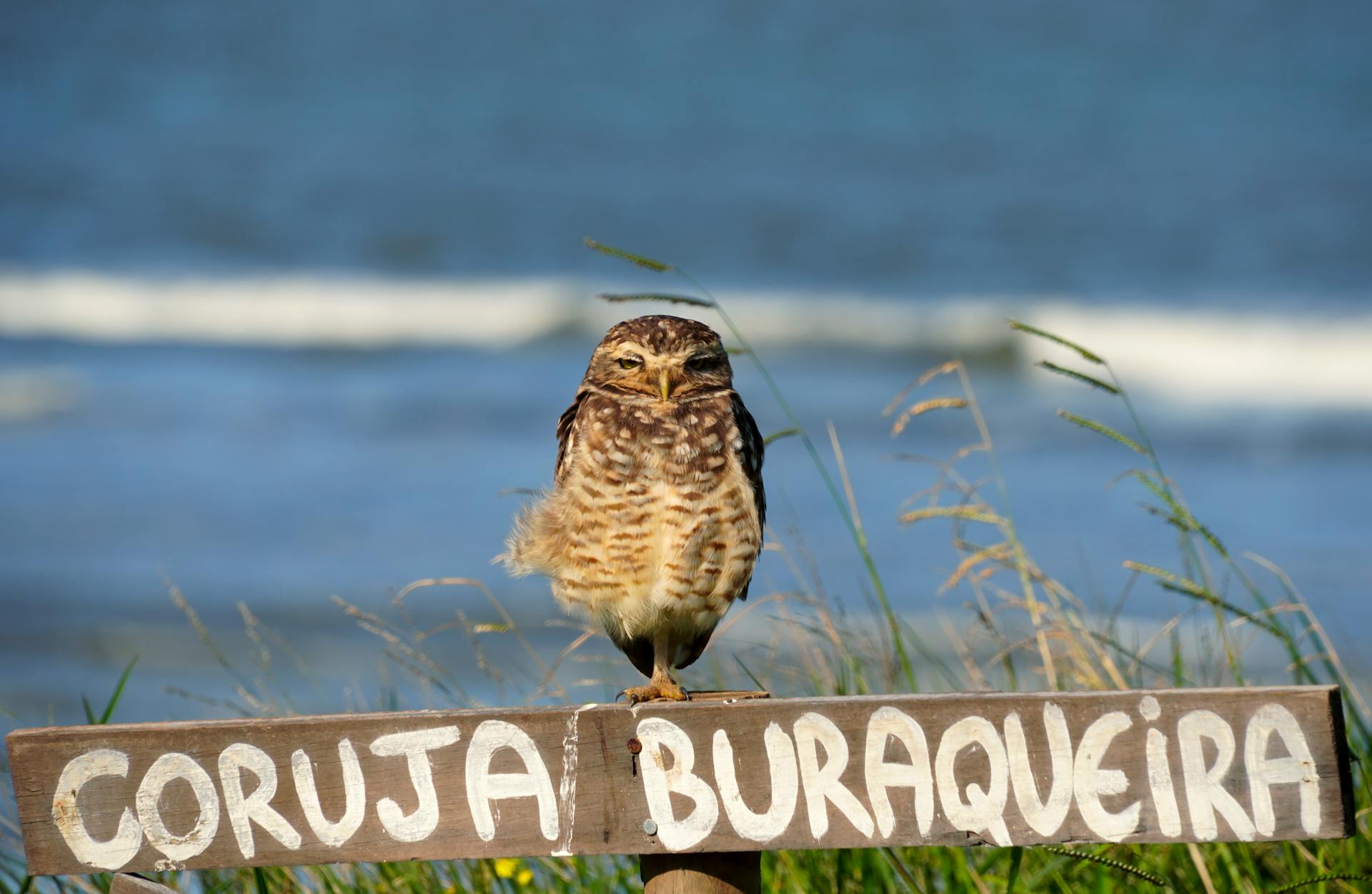
Their legs are quite long, which is a notable feature. They have smooth, rounded heads with no ear tufts, and their eyes are a striking yellow, sometimes green or flecked with black.
Expand your knowledge: Florida Beach Bird Identification
One of the most distinctive features of the Florida Burrowing Owl is their bold white unibrow and white chinstrap. Their plumage is also quite striking, with brown birds mottled with white spots on their upper parts.
Their breast is spotted, grading to stripes across their belly. They live in open habitats with sparse vegetation, where they spend most of their time on the ground or on low perches.
They are active during the day, as well as at dusk and dawn, making them a bit easier to spot. The Florida Burrowing Owl is also known to nest and live underground in burrows they dig themselves.
Here are some key physical characteristics of the Florida Burrowing Owl:
- 7.5 – 10 inches tall
- Long bare legs
- Smooth rounded head, NO ear tufts
- Big yellow eyes, sometimes green or flecked with black
- Brown birds mottled with white spots on the upper parts
- Spotted breast grading to stripes across the belly
- Bold white unibrow and white chinstrap
Conservation and Management
The Florida burrowing owl is classified as State Threatened by the Florida Fish and Wildlife Conservation Commission.
Taking, possessing, or selling burrowing owls, their nests, or eggs is prohibited without a permit. This includes burrowing owls, eggs, and young, which are also protected by the federal Migratory Bird Treaty Act.
Readers also liked: Mexican Burrowing Caecilian
Fines and penalties for harming or killing burrowing owls can start at $100-$500 and go as high as a $5,000 fine and five years in prison, depending on the severity of the crime.
In 2016, the owls were labeled as a "threatened species" due to dwindling populations statewide, mostly caused by development and habitat loss.
Here's an interesting read: Do Owls Attack Dogs
Habitat
Burrowing owls inhabit open prairies in Florida that have very little understory (floor) vegetation. These areas include golf courses, airports, pastures, agriculture fields, and vacant lots.
The drainage of wetlands, although detrimental to many organisms, increases the areas of habitat for the burrowing owl. This is a crucial factor in their ability to thrive in these environments.
Burrowing owls can be found in the Bahamas, which is an extension of their range in Florida.
Conservation and Management
The Florida burrowing owl is classified as State Threatened by the Florida Fish and Wildlife Conservation Commission. This means that taking, possessing, or selling burrowing owls, their nests (i.e., burrows), or eggs is prohibited without a permit.
In 2016, the owls were upgraded from a "species of special concern" to a threatened species, offering more protections for the birds. The reason for this change was due to dwindling owl populations statewide, mainly caused by development and habitat loss.
Taking or destroying burrowing owl nests or eggs without a permit can result in fines and penalties starting at $100-$500 and up to 60 days in jail. In some cases, the fine can go as high as $5,000 and include five years in prison.
The city of Cape Coral has approved a new ordinance that lets city police officers enforce the state statute protecting the owls, making it easier to respond to violations. This ordinance aims to speed up response times for violations.
Burrowing owls, eggs, and young are also protected by the federal Migratory Bird Treaty Act, which adds an extra layer of protection for these birds.
More Than Anywhere Else
In Cape Coral, Florida, you'll find more burrowing owls than anywhere else in the state, with over 2,800 counted in a 2017 census. This is one of the largest populations of burrowing owls in the world.
The owls were drawn to Cape Coral in the 1950s by the wide-open, flat land left behind by developers. They love vacant lots, golf courses, and other open spots where they can keep an eye out for predators.
Burrowing owls prefer treeless areas, which helps them stay safe from cats, hawks, and eagles. This is why you'll often find them on vacant lots and golf courses.
In contrast, Central Florida used to have a huge population of burrowing owls, but they left as the area was developed into malls, golf courses, and neighborhoods.
Viewing and Appreciation
To spot a burrowing owl in Florida, look for its distinctive white face and chest, which can be a thrilling experience for nature enthusiasts.
Burrowing owls are active during the day, so try to catch them in action, usually between 5 am and 9 am.
Their habit of perching on fence posts or short trees makes them easy to spot, and their soft hooting calls can be a giveaway of their presence.
Viewing Etiquette
Cape Coral is fortunate to have the largest population of Florida burrowing owls in the world, and it's wonderful to view these fascinating birds up close. However, we need to resist the temptation of loving them to death.
Nesting season officially runs from February 15th through July 10th, so it's essential to be extra cautious during this time. The presence of too many people can adversely affect the well-being of the owls.
If you notice the owls bobbing their heads, you're already too close. Bobbing their heads is not a way of saying hello, they're getting nervous and want you to back away.
Maintain a minimum distance of 33 feet when viewing burrowing owls and taking pictures. This will help prevent the cumulative effect of too many people, too close, for too long, which could be devastating to the young owls.
Informational brochures are available at City Hall, the Cape Coral Historical Museum, local veterinary offices, and the Cape Coral Library.
Celebrate
The Burrowing Owl Festival is a must-attend event for wildlife enthusiasts. It's been happening for 17 years, celebrating Cape Coral's favorite bird with a wide range of activities.
The festival takes place at Rotary Park, located at 5505 Rose Garden Road, southeast Cape Coral. Admission is a suggested donation of $5, making it an affordable and fun outing for the whole family.
You can expect exhibits, demonstrations, live animals, speakers, vendors, kids' activities, and more at the festival. It's a great opportunity to learn about and appreciate these amazing birds.
The event is organized by the Cape Coral Friends of Wildlife, a volunteer group dedicated to preserving and enhancing the habitats of protected wildlife species, including burrowing owls.
Interesting Facts and Records
The burrowing owl in Florida is a unique and fascinating bird. They can be found in a variety of habitats, including grasslands, savannas, and even urban areas.
These owls are known for their distinctive calls, which sound like a loud, whistling "hoo-hoo." They're also expert hunters, using their sharp talons and powerful beaks to catch a wide range of prey, from insects to small mammals.
The burrowing owl's burrows can be quite extensive, with some reaching depths of up to 20 feet and having multiple entrances and exits. They're also very social birds, often living in close proximity to other owls and even other species of birds.
In Florida, burrowing owls are listed as a species of special concern due to habitat loss and fragmentation. This means that conservation efforts are necessary to protect their habitats and ensure the long-term survival of the species.
The burrowing owl's wingspan can reach up to 24 inches, allowing them to fly quickly and efficiently in search of food and shelter.
Cape Coral and Local Significance
The burrowing owl is more than just a bird species in Cape Coral, it's the city's official bird.
City leaders made the burrowing owl official in September 2005.
Councilwoman Dolores Bertolini was instrumental in drafting the resolution that made it official.
She highlighted the owls' uniqueness to the city.
Burrowing owls are featured prominently on the City of Cape Coral's website.
This is part of the city's efforts to draw more people to the area and increase tourism with wildlife lovers and others.
On a similar theme: Florida Wading Bird Identification
Frequently Asked Questions
What are the 4 locations where burrowing owls are currently found?
Burrowing owls are found in South America, northern Mexico, Florida, and the southwest United States. These locations provide a year-round habitat for these birds.
What to do if a burrowing owl is in your yard?
Leave a burrowing owl alone if it's alert and in a safe environment, as it may be waiting for parental care. Check on it later to see if it's receiving care from its parents
Are burrowing owls rare to see?
Yes, burrowing owls are considered rare in our region, with their population declining over the years. They were once common in Santa Clara County, but now sightings are less frequent.
Featured Images: pexels.com