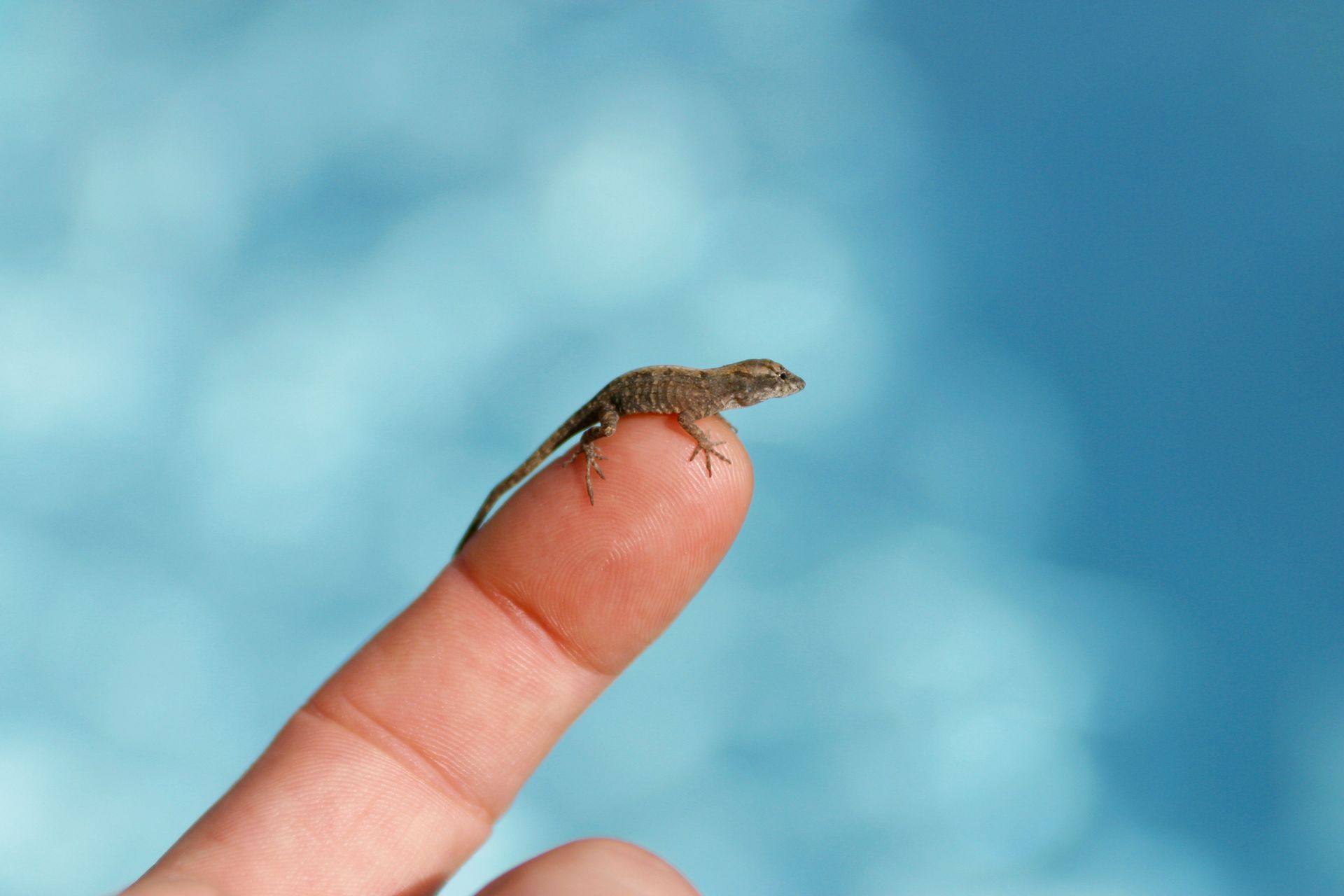
Brookesia is a genus of tiny chameleons found only in Madagascar. They are one of the smallest known species of lizards in the world.
These incredible creatures have been discovered in recent years, with several new species being identified. The most recent discovery was in 2012, when a team of scientists found a new species of Brookesia in the rainforests of northern Madagascar.
Brookesia species are known for their remarkable ability to change color, which helps them blend in with their surroundings. They have specialized cells in their skin called chromatophores that allow them to change color in a matter of seconds.
Species
The Brookesia genus is home to an impressive 32 species of leaf chameleons. These species are recognized as being valid.
The Brookesia genus includes species such as the Antakarana Leaf Chameleon, the Bekolosy Leaf Chameleon, and the Blank's Leaf Chameleon. Each of these species has a unique name and was first described by a specific researcher.
Check this out: Malagasy Giant Chameleon
Some of the species in the Brookesia genus are found in specific regions, such as the Antsingy Leaf Chameleon, which is found in the Antsingy region. Others, like the Northern Leaf Chameleon, are found in more general areas.
Here is a list of some of the species found in the Brookesia genus:
- Brookesia antakarana
- Brookesia bekolosy
- Brookesia betschi
- Brookesia bonsi
- Brookesia brunoi
- Brookesia brygooi
- Brookesia confidens
- Brookesia decaryi
- Brookesia dentata
- Brookesia desperata
- Brookesia ebenaui
- Brookesia exarmata
- Brookesia griveaudi
- Brookesia karchei
- Brookesia lambertoni
- Brookesia lineata
- Brookesia micra
- Brookesia minima
- Brookesia nana
- Brookesia nofy
- Brookesia perarmata
- Brookesia peyrierasi
- Brookesia ramanantsoai
- Brookesia stumpffi
- Brookesia superciliaris
- Brookesia tedi
- Brookesia therezieni
- Brookesia thieli
- Brookesia tristis
- Brookesia tuberculata
- Brookesia vadoni
- Brookesia valerieae
These species have been recognized as valid through various research and studies.
Physical Characteristics
Brookesia chameleons have compact bodies, which is a notable difference from other chameleon species.
Their tails are often short and stubby, earning them the nickname "stump-tailed".
Their bodies are designed to blend into the forest floor, with brown, mottled, or leaf-like patterns that help them camouflage.
They don't rely on dramatic color shifts like some other chameleons, but instead use their natural patterning to stay hidden.
Physical Characteristics
Brookesia chameleons have compact bodies, often with short, stubby tails that earn them the nickname "stump-tailed".
Their bodies are adapted for blending into the forest floor, with brown, mottled, or leaf-like patterns that help them camouflage.
These chameleons retain some classic chameleon features, such as independently moving eyes.
However, their camouflage relies more on their natural patterning than dramatic color shifts.
Brookesia chameleons can change color slightly, but it's not as dramatic as some other chameleon species.
Feeding Behavior
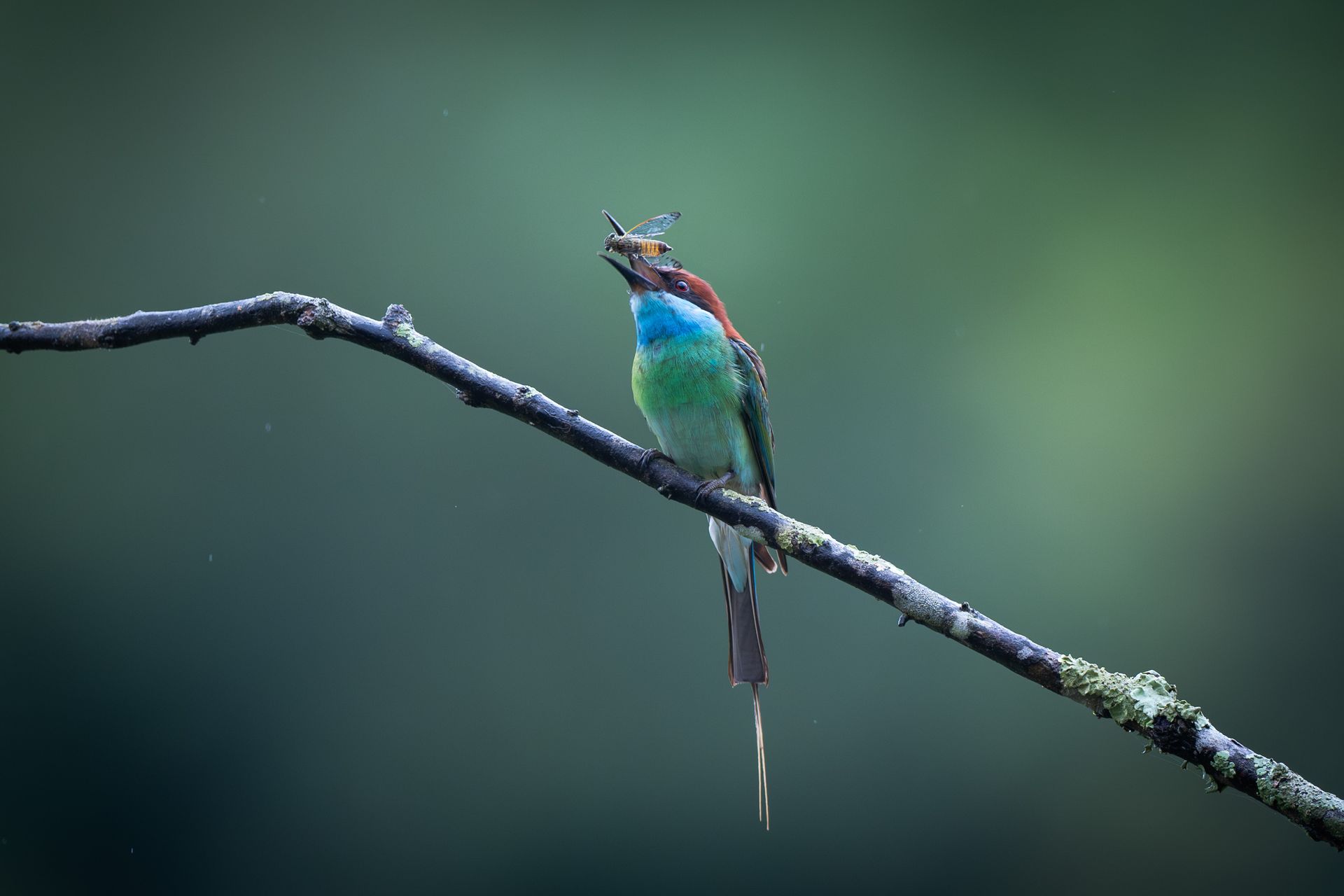
These small chameleons primarily feed on tiny invertebrates, including insects, spiders, and other small arthropods. They are stealthy hunters that rely on patience to capture their prey.
Brookesia species have small but effective tongues that they use to snatch insects from the leaf litter. This unique feeding behavior allows them to thrive in their environments.
Some Brookesia species, like the Armored Chameleon and the Horned Leaf Chameleon, have specific feeding habits. The Armored Chameleon feeds on tiny invertebrates, while the Horned Leaf Chameleon has a unique horn-like structure that may aid in its feeding behavior.
The Brookesia species that have been studied have shown remarkable adaptability in their feeding habits. They can be found in a variety of environments, from forests to deserts.
Here are some examples of Brookesia species and their common names:
B Minima
The hemipenes of B. minima are a notable feature, especially when considering specimen ZSM 1709/2004 and ZSM 990/2003.
In these two specimens, the hemipenis is a large globular structure, measuring 3.9 mm in diameter.
Distribution and Habitat
The brown leaf chameleon can be found in eastern Madagascar, including the island of Nosy Boraha. It's a pretty specific range, but it's where this amazing creature calls home.
These chameleons love the floor of evergreen primary forest, and they'll often climb up to 1.5 meters high in the forest canopy. They seem to prefer closed-canopy forest, where the trees are dense and provide plenty of hiding spots.
The brown leaf chameleon can tolerate elevations of over 1,250 meters above sea level, which is impressive considering the rugged terrain of Madagascar.
Conservation
The Brookesia chameleons are listed on CITES Appendix II, except for B. perarmata, which is on Appendix I and considered endangered.
Conservation efforts are crucial to protect these tiny reptiles, as their habitats are threatened by deforestation, agriculture, and human encroachment.
A special permit is required to import Brookesia species from Madagascar, and no permit is typically issued for B. perarmata due to its endangered status.
Preserving the natural habitats of Brookesia chameleons is essential to maintain the delicate ecological balance in which they play a role.
New Species
The genus Brookesia has seen the addition of several new species in recent years.
Brookesia nana, also known as the Nano-chameleon, was discovered in 2021.
It's a small species, but don't let its size fool you - it's still a fascinating creature.
There are a few other new species to note.
Brookesia nofy was discovered in 2024.
Materials and Methods
The newly discovered species of Brookesia were found in single, mostly karstic, localities in extreme northern Madagascar. These localities include Ankarana, Forêt d'Ambre, Nosy Hara, and Montagne des Français.
Molecular phylogenetic analyses were conducted using one mitochondrial and two nuclear genes. These genes were used to study the relationships among the species in the B. minima group.
The species in the B. minima group have very deep genetic divergences, ranging from 18-32% in the ND2 gene. This suggests that they have been evolving separately for a long time.
The species in this group also have clear differences in hemipenis structure. This is a key characteristic that distinguishes them from one another.
Conclusion
The Brookesia species is a remarkable example of miniaturization and microendemism.
These chameleons represent striking cases of adapting to their environment, with some species reaching a maximum snout-vent length in males of just 16 mm.
The newly described Brookesia micra is among the smallest amniote vertebrates in the world, with a total length in both sexes of less than 30 mm.
This species may represent an extreme case of island dwarfism due to its distribution being limited to a very small islet.
Frequently Asked Questions
What is the lifespan of a Brookesia?
Brookesia's lifespan is at least three years. This tiny gecko's life expectancy is relatively short, but fascinating nonetheless.
What does Brookesia eat?
Brookesia nana primarily feeds on mites and springtails, which it hunts in leaf litter. This unique diet allows it to thrive in its tiny size.
How big is a Brookesia chameleon?
The Brookesia chameleon is a tiny species, measuring less than 30 mm in total body length. Males are particularly small, reaching a maximum snout-vent length of just 16 mm.
Featured Images: pexels.com