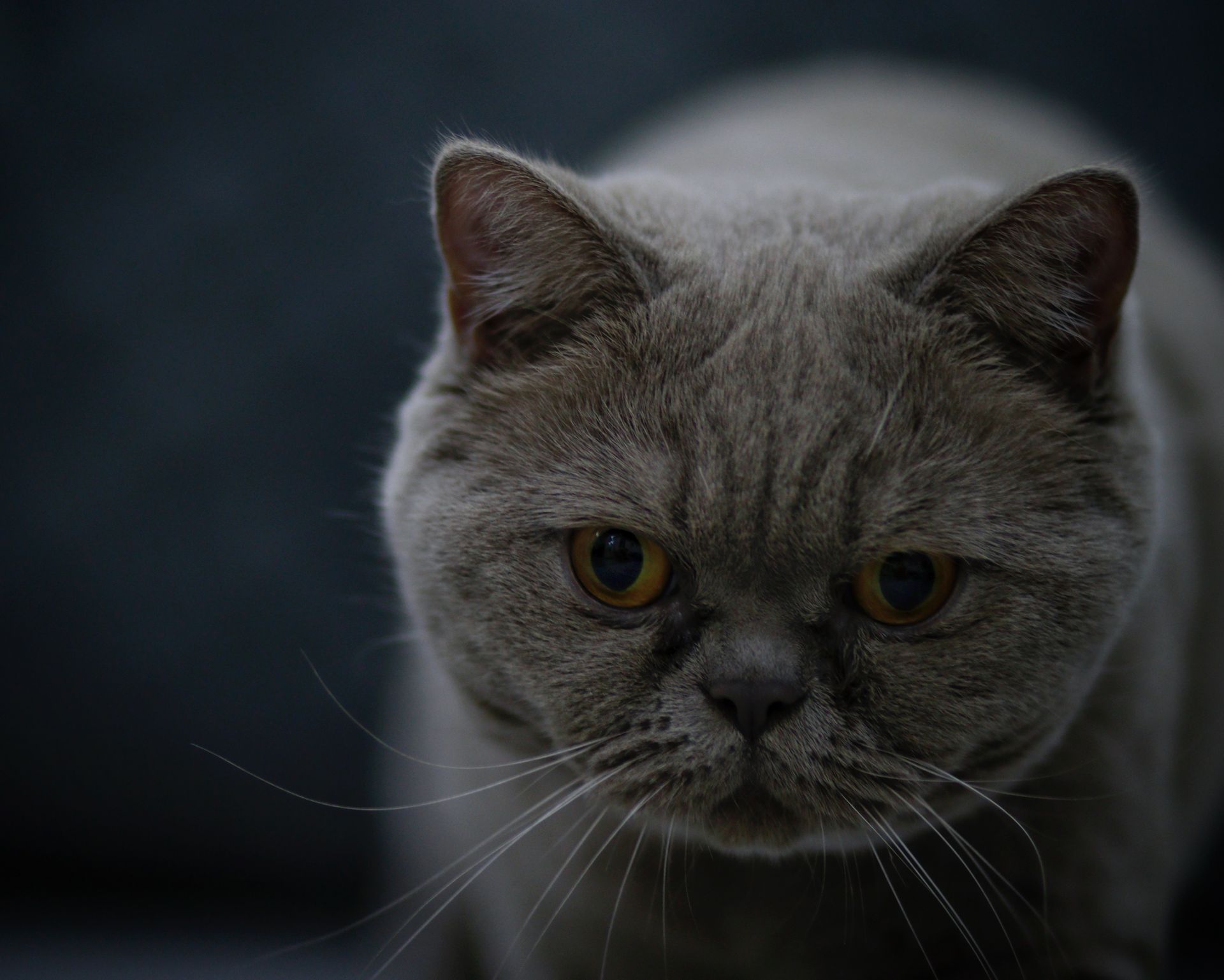
The British Shorthair is a sturdy and compact cat breed that's perfect for families and first-time cat owners. They have a broad face, short nose, and large, wide-set ears.
Their short, dense coat comes in a wide range of colors and patterns, including solid, bi-color, and tabby. This makes them a great choice for people who want a cat that's both unique and easy to care for.
British Shorthairs are known for being calm and laid-back, making them a great fit for busy households or families with young children.
Appearance and Coat
The British Shorthair is a sturdy-looking cat with a broad chest and strong legs.
Their heads are relatively large and rounded, with a short muzzle and broad cheeks that are particularly noticeable in mature males. Males tend to develop prominent jowls as they mature.
Their eyes are large and round, with a deep copper orange color in British Blues and varying colors depending on the coat. Their ears are broad and widely set.
British Shorthairs are slow to mature, reaching full physical development at around three years of age. This is unusual compared to most cat breeds.
Males typically weigh between 9-17 pounds, while females weigh between 7-12 pounds.
The British Shorthair's coat is one of its defining features, being very dense and plush in texture. The coat has a firm, "crisp" pile that breaks noticeably over the cat's body as it moves.
The breed comes in many different colors and patterns, including black, blue, white, red, cream, silver, golden, and cinnamon. They can also have tortoiseshell, tabby, and bi-color patterns.
Here are some of the accepted colors and patterns for the British Shorthair breed:
- Tabby patterns: Classic Tabby, Mackerel Tabby, Spotted & Ticked Tabby
- Non-tabby patterns: Tortoiseshell, Bi-Colour, Van patterns Bi-Colour & White, Smoke, Tipped & Colourpointed
Their coats can also come in a range of colors, including copper, blue, and gold. The British Shorthair's unique coat is one of its most recognizable characteristics.
Grooming and Care
Their short coat needs only minimal grooming, so you can brush them about once a week using a soft slicker brush.
Regular nail care is also essential, trim the nails every two to three weeks to keep them healthy.
Weekly ear checks are necessary, and if you see a little debris, use a pet-ear cleaner and cotton balls to clean the ears.
British Shorthairs are playful well into adulthood, but they're not hyper or excessively active, so they can get plenty of exercise by exploring the house and playing with you a few times a day.
Engage your British Shorthair with feather wands, toy mice, and any other favorite toys to keep them entertained.
Make sure your cat has plenty of things to climb and perch upon like cat trees, cat-friendly bookshelves, and kitty condos.
Cats can also get exercise and enrichment through scratching, so set up several acceptable scratching places in the house, including vertical and horizontal scratchers.
You might like: Why Are My Cats so Staticy?
Health and Diet
British Shorthairs are generally a healthy breed, with a life expectancy of over 12 years. Eighty-two percent of them live to 10 years or more, and 54% live to 12.5 years or more.
However, like all breeds, they can be prone to certain health issues. Hypertrophic cardiomyopathy (HCM) is a problem in the breed, affecting 20.4% of males and 2.1% of females. Males are also at higher risk of being equivocal, with 6.4% affected.
Polycystic kidney disease (PKD) is another health issue that can affect British Shorthairs. To maintain a healthy weight and prevent related health issues, it's essential to feed your adult British Shorthair measured meals twice a day, and not leave food out all day.
If this caught your attention, see: British Shorthair Cat Health Issues
Health
The British Shorthair is a relatively long-lived breed, with a median lifespan of over 12.5 years according to Swedish insurance data.
Eighty-two percent of British Shorthairs live to 10 years or more, and 54% live to 12.5 years or more.
Hypertrophic cardiomyopathy (HCM) is a concern in the breed, with 20.4% of males and 2.1% of females found to have the condition in a Danish study.
Polycystic kidney disease (PKD) is also a risk, although the exact prevalence is not specified.
On the bright side, British Shorthairs are less likely to develop diabetes mellitus, with only 0.24% of the breed diagnosed with the condition compared to 0.58% of non-pedigree cats.
Discover more: Best Cat Breed for Mouse Hunting
Diet and Nutrition
British shorthairs are a sturdy breed, but they should be kept lean and healthy to prevent weight-related issues like diabetes and heart disease.
Feeding them measured meals twice a day is a good way to maintain a healthy weight, and this can be adjusted to three times a day for young kittens.
Don't leave food out all day, as this can lead to overeating and weight gain.
Your veterinarian can provide advice on the best food for your cat, taking into account their individual needs and health status.
A fresh viewpoint: American Shorthair Cat Weight
Adopting and Owning
If you're considering adopting a British Shorthair cat, you'll want to know where to find them. You can check the Cat Fanciers Association and the International Cat Association websites for active breeders, or attend a local cat show to meet breeders and see cats in person.
To ensure you're prepared for a new furry family member, it's essential to understand the breed's needs. British Shorthairs are slow to mature, both physically and mentally, and they may not reach their full size and weight until between 3 and 5 years old.
They are generally calm and laidback, affectionate but not needy, and get along well with children and other pets. However, they do have some specific requirements, such as having two litter boxes, using ceramic or steel dishes, and providing a dedicated sleeping place.
Here are some key things to remember when adopting a British Shorthair:
- Calm and laidback
- Affectionate but not needy
- Gets along well with children and other pets
- Short coat sheds moderately
- Doesn’t love being held or carried
- Shouldn’t be left alone many hours a day
Tips for First-Time Owners
As a first-time owner, it's essential to understand the needs and characteristics of your new furry friend. British Shorthairs are generally friendly, especially with humans, but may not be the best fit for young children who might not understand cat behavior and boundaries.
To ensure a smooth transition, it's crucial to provide a suitable environment for your cat. This includes having at least two litter boxes, with each one being at least 50% longer and wider than your adult cat. Ceramic or steel dishes are recommended over plastic, as they can withstand scratching and prevent bacterial growth.
Your British Shorthair will also appreciate a dedicated sleeping place that's rewashable and large. They sleep a lot, so make sure to provide a comfortable spot for them to rest.
Scratching is essential for the breed, supporting the health of muscles, joints, and claws. Without a specific location for scratching toys, your cat may resort to scratching your furniture. Consider purchasing a horizontal scratching mat to redirect their scratching behavior.
Here are some key requirements to keep in mind:
- At least two litter boxes, each 50% longer and wider than your adult cat
- Ceramic or steel dishes for food and water
- A dedicated, rewashable sleeping place
- A horizontal scratching mat for redirecting scratching behavior
By understanding and meeting these needs, you'll be well on your way to creating a happy and healthy home for your British Shorthair.
Calm Temperament
British Shorthairs are known for their calm and easy-going temperament, which makes them a perfect fit for busy households. They don't require repeated stimulus or attention, as they're usually self-sufficient.
This laid-back disposition is iconic of the breed, and they spend most of their time lounging in their own space. They're not as demanding as some other breeds, which is a relief for many cat owners.
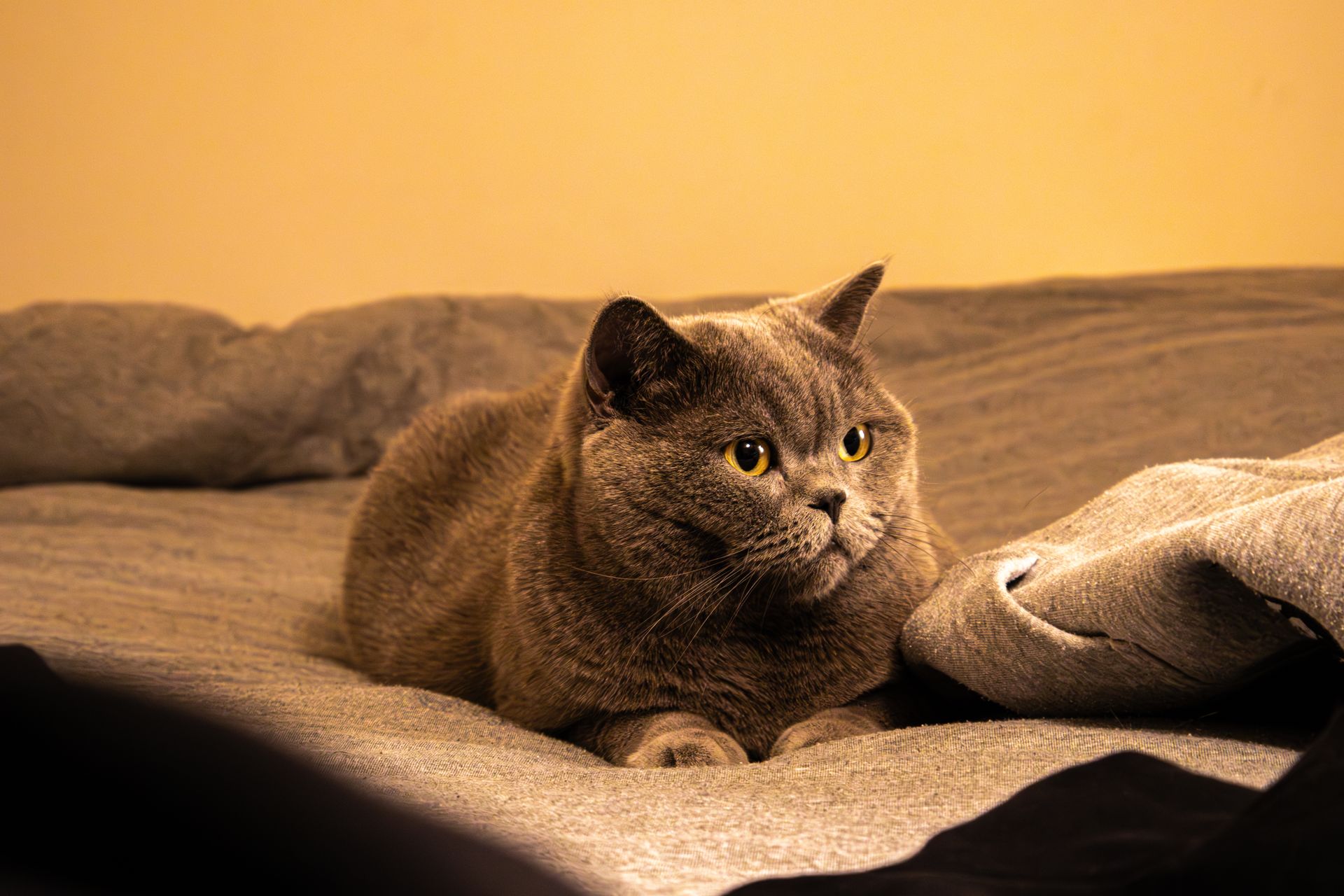
Their socialized nature means they appreciate their owners' companionship, but they're not clingy. They're happy to entertain themselves, which makes them a great choice for owners who have limited time to devote to their pets.
British Shorthairs are one of the most calm cat breeds, and their amiable disposition makes them a joy to be around. They're reserved and tranquil, but not as talkative as some owners might wish.
Show and Characteristics
The British Shorthair breed debuted in the first organized cat show arranged by Harrison Weir at London's Crystal Palace in 1871. This marked the beginning of their popularity in cat shows.
In fact, British Shorthairs remained the premiere pedigree at cat shows up until 1895, a testament to their enduring appeal. As of 2023, they rank as the 6th most popular cat breed in the United States.
Here are the key characteristics of the British Shorthair breed:
British Shorthairs are known for their sturdy and muscular torso, complemented by medium to short legs, finished with round medium to large feet.
Shows
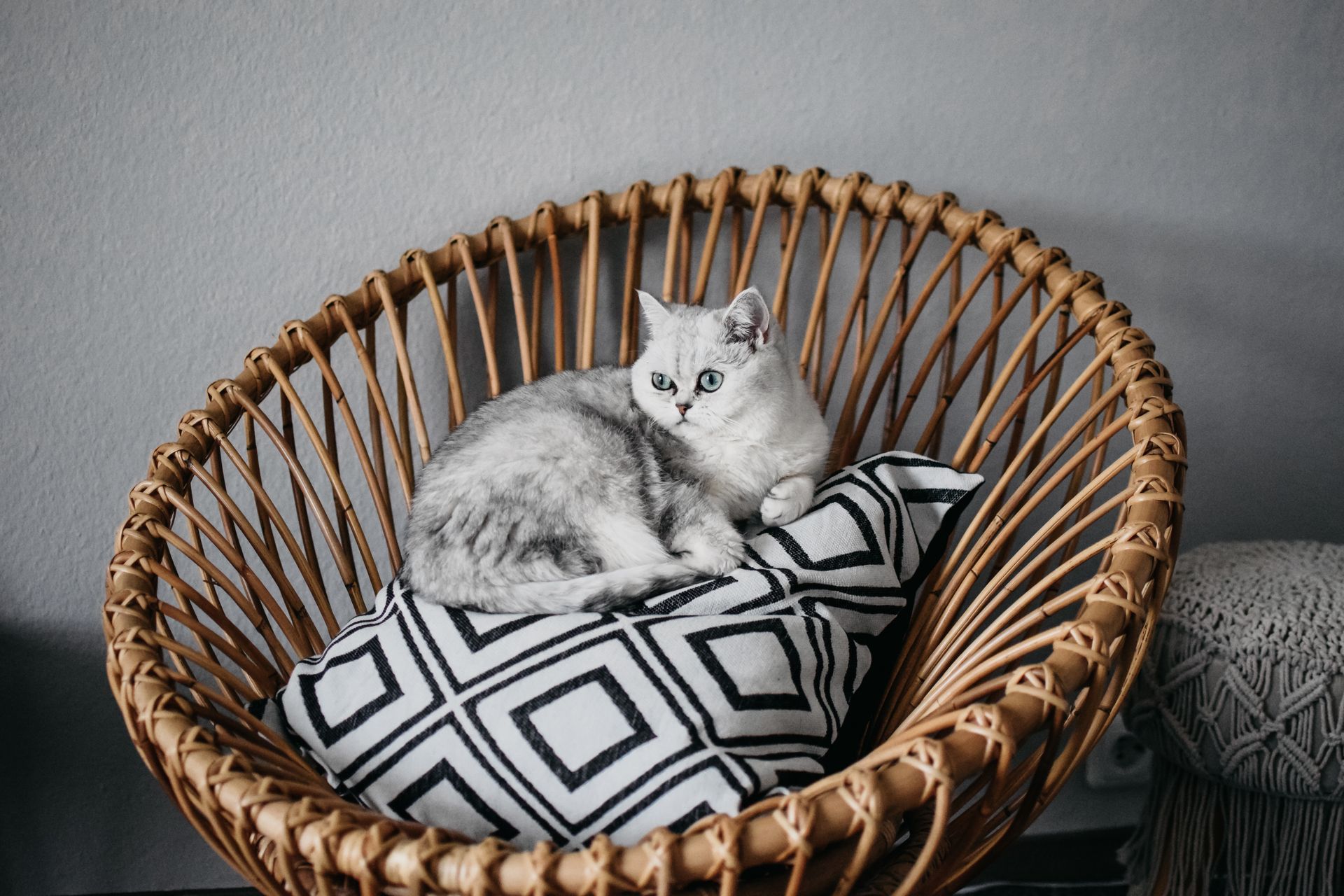
The British Shorthair has a fascinating history in cat shows. First introduced to Britain by the Romans, the breed made its debut in the first organized cat show arranged by Harrison Weir at London's Crystal Palace in 1871.
The British Shorthair breed was one of the premiere pedigrees at cat shows until 1895. British Shorthairs remained a crowd favorite, with their popularity increasing after the Crystal Palace show.
In the late 19th century to early 20th century, certain British Shorthairs earned notoriety or decorated titles in Cat Competitions. The British Shorthair's publicity from 19th and 20th century cat shows helped them become one of the most popular pet cat breeds today.
As of 2023, the British Shorthair ranks as the 6th most popular cat breed in the United States. The breed's popularity can be attributed to its exposure in cat shows and competitions.
In cat shows, British Shorthairs are judged on their physical qualities, with a focus on their circular head shape, muzzle, and cheeks. Small to medium ears are desired, with large, round, leveled eyes.
Broaden your view: Popular Cat Types
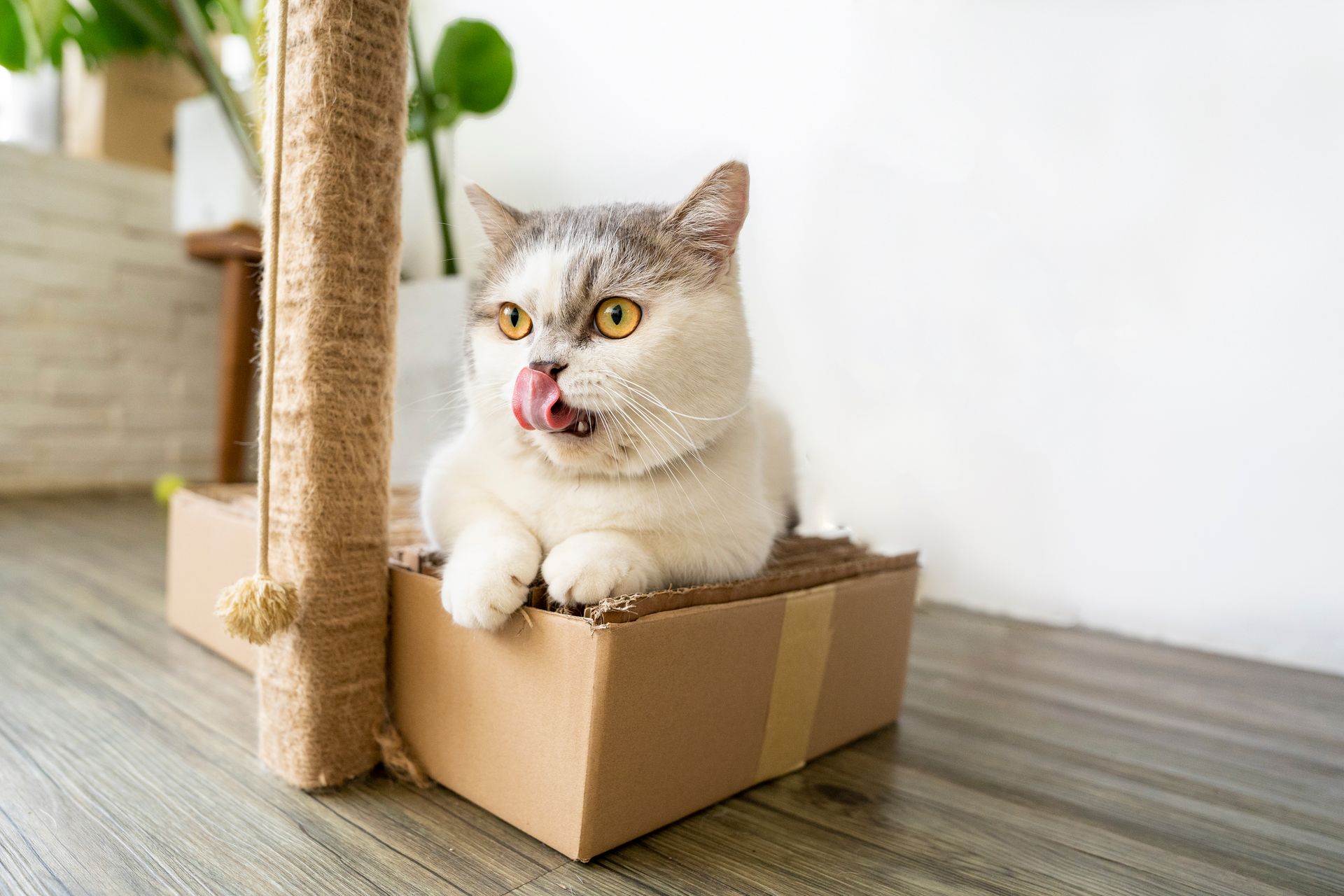
Eye shape is more important than colour in British Shorthairs. The muzzle and chin shape should complement the circular face, with a short profile and nose.
The neck should give the illusion of the cat having no neck, blending in with the cheeks. The body of the cat should have a sturdy and muscular torso, complemented by medium to short legs.
The tail should be thick at the base and taper to a rounded tip, totaling about two thirds of the body length. The cat should have substantial bone and a firm, sturdy musculature.
No preference is stated for the cat's coat colour, but it should be straight, dense, and even in length.
You might enjoy: Why Are There No Cats in the Bible?
Characteristics of the
The British shorthair is a wonderful breed that makes a great addition to any family. They're not massive, but some males can weigh as much as 17 pounds, while females usually top off at 12 pounds or less.
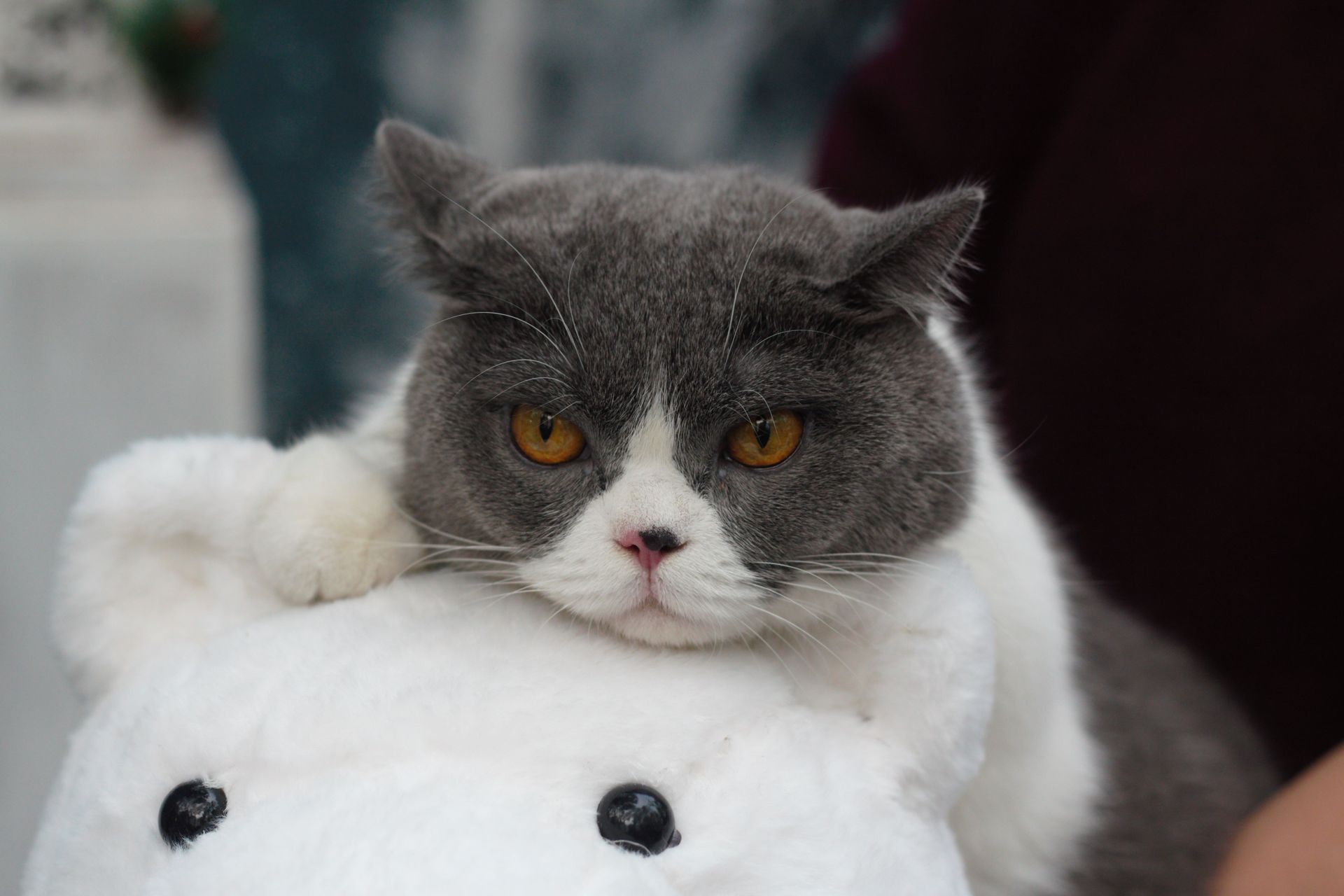
They're known for their easy-going personality, which makes them a great fit for families with kids. In fact, they're highly kid-friendly and get along well with other animals in the house.
One of the best things about British shorthairs is that they're active without being hyper. They're not high-maintenance when it comes to exercise, requiring only a medium amount of activity to stay happy and healthy.
If you're looking for a cat that's quiet and won't disturb you, the British shorthair is a great choice. They tend to be low-vocalizers, which is perfect for apartment dwellers or those who prefer a peaceful home.
Here are some key characteristics of the British shorthair breed:
General Information
The British Shorthair is possibly the oldest cat breed in Great Britain, with a history dating back to street cats that were refined and standardized by breeders.
They were first exhibited at England's first organized cat show in 1871, where they were known as the British Blue due to the prevalence of blue (gray) coats in the breed.
Readers also liked: Russian Blue Cat vs British Shorthair
The breed was first brought to the United States in the early 1900s, but it wasn't until 1980 that it was formally recognized by the Cat Fanciers Association.
British Shorthairs are known for their "blue" (grey) coats, but they come in a variety of colors and patterns.
They have a warm and lovable personality combined with an independent nature, making them a top choice for many families.
This breed is robust and resilient, with a physique that gained popularity as plush coat cats on fields and ships over the ages.
They prefer to show their love in a subtle way and will like engaging with you, but they will also find a way to amuse themselves if you are not present or don't have time to play.
Your British Shorthair won't do anything inappropriate, so don't worry; they are family-friendly cats.
The breed is the right fit for families with children because of their dependability and disposition for proper kitten behavior development.
Frequently Asked Questions
How much does a British Shorthair cost?
A British Shorthair typically costs between $700 and $3,000, depending on the breeder and location. This price range reflects the breed's desirable traits, including a calm temperament and beautiful plush coat.
Is a British Shorthair cat a good pet?
Yes, British Shorthairs make excellent family pets due to their friendly and calm nature. They're adaptable to various living situations and make great companions for cat lovers of all ages.
Do British Shorthair cats shed much?
British Shorthairs shed moderately, with a weekly brushing usually sufficient, but may require more frequent brushing during spring and fall. Regular grooming also includes brushing their teeth and checking their ears weekly.
Featured Images: pexels.com