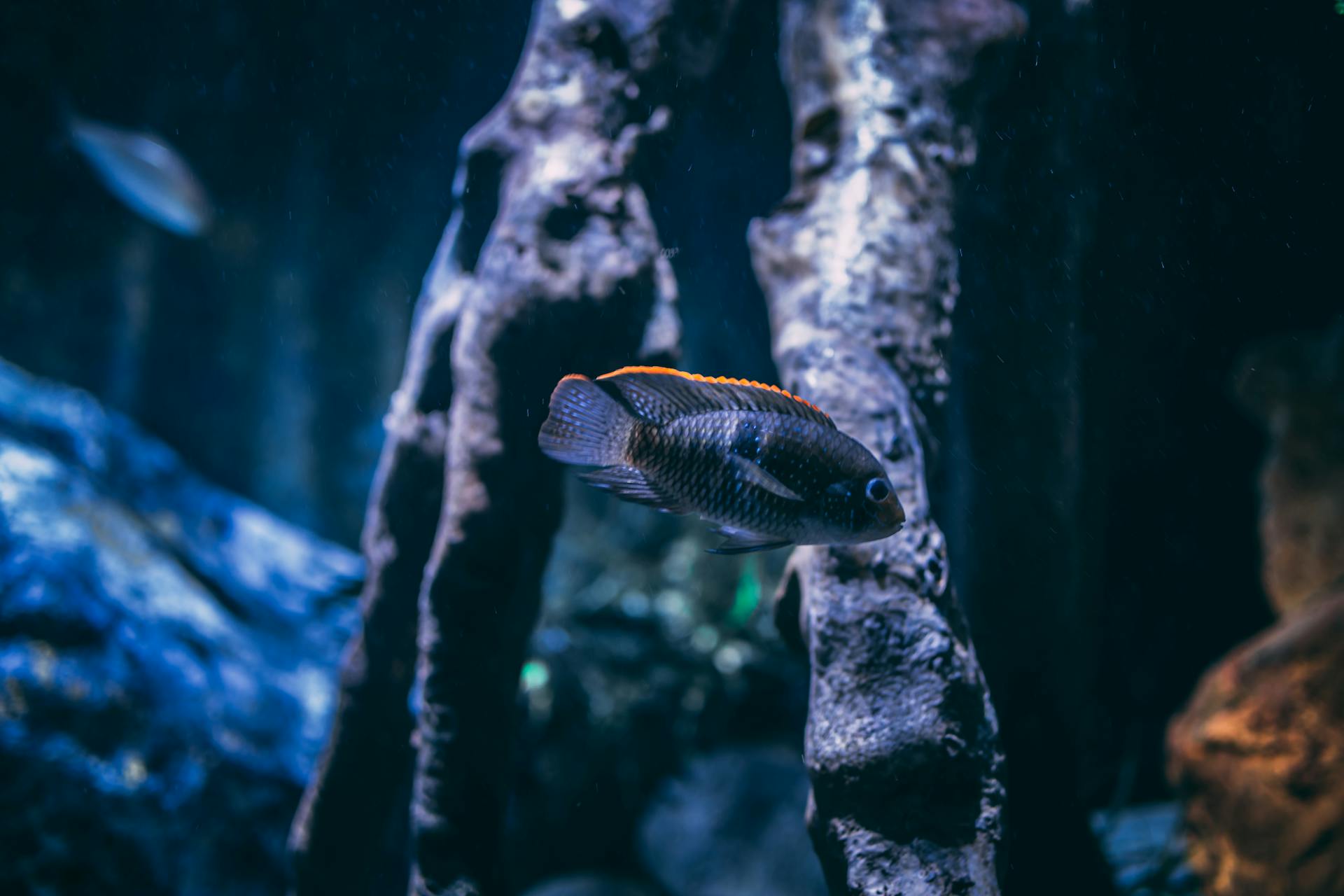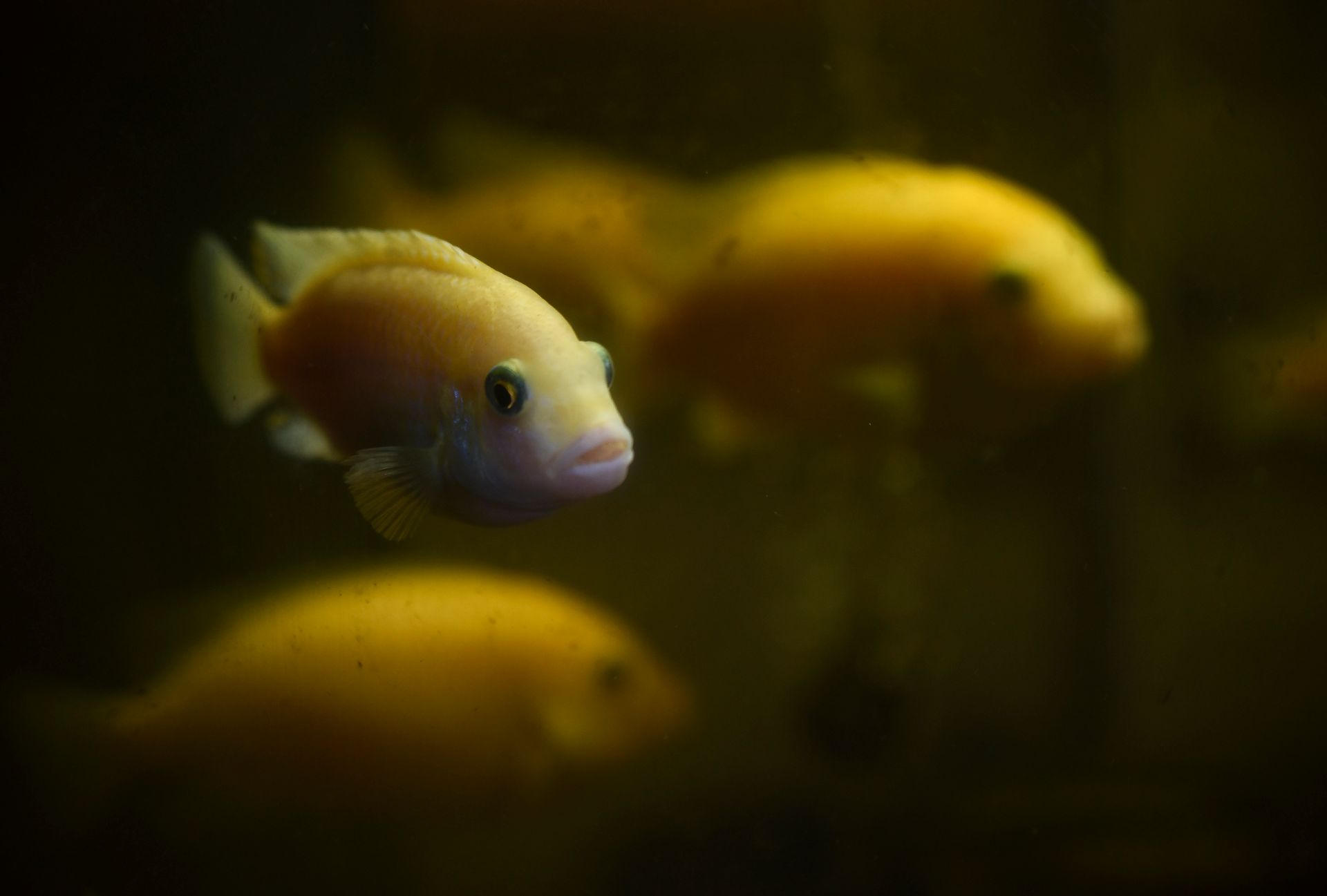
To care for a Blood Parrot Cichlid, you'll need to provide a spacious tank with plenty of hiding places and visual barriers. This will help reduce stress and aggression.
A 55-gallon tank is the minimum recommended size for these fish, and it's essential to include plenty of plants and decorations to create a sense of security and comfort.
Blood Parrot Cichlids are sensitive to water quality, so regular water changes are crucial to maintaining a healthy environment. Aim for a 10-15% water change every week.
A balanced diet is also essential for these fish, and they require a mix of high-quality commercial pellets and live or frozen foods to stay healthy.
Take a look at this: Celestial Pearl Danio Tank Size
A unique perspective: Green Hair Algae Eaters
Size and Growth
Blood parrot cichlids are often sold at just two or three inches, which can catch beginner fishkeepers off guard.
They will grow a lot larger as they mature and usually reach 6 or 7 inches in length. Regular blood parrots usually max out around 8 inches.
These hybrid fish are relatively slow growers, giving you plenty of time to upgrade their aquarium if necessary.
Aquarium Setup
To set up a tank for your blood parrot cichlids, you'll need some basic hardware like a heater, filter, and lighting. A minimum tank size of 55 gallons is recommended for a single cichlid.
You'll also need to cycle your tank before introducing your first fish. This process helps establish a healthy balance of bacteria in the tank.
A good filter is essential for keeping the water clean, especially since blood parrots are messy eaters. You can opt for a high-capacity filter to ensure efficient cleaning.
A heater is necessary to maintain a consistent water temperature suitable for your blood parrots. You can use an adjustable heater to keep the temperature between 76-80°F.
Here's a quick checklist for setting up your tank:
- Tank size: 55 gallons minimum with an additional 20 gallons per extra fish
- Filtration: High-capacity filtration for efficient cleaning
- Heater: Adjustable heater to maintain consistent water temperature
- Lighting: Compact fluorescent lamps are sufficient
Remember to include caves, plants, and other decorations to provide hiding spots for your fish. This will help them feel more secure and adapt better to their environment.
Water Parameters
Blood parrot cichlids are pretty adaptable when it comes to water parameters, but they still require some specific conditions to thrive.
They're tropical fish, so they need warm water temperatures, with a preferred range of 80°F. You can keep them as low as 75°F, but 80°F is ideal.
Blood parrots can do great in soft or hard water, and they're comfortable in pH levels between 6.5 and 7.5.
You'll want to keep ammonia and nitrite levels at zero, as these can be toxic to your fish. Regular water changes will help keep these levels in check.
Here's a quick rundown of the water parameters you'll want to focus on:
By keeping these parameters in check, you'll be well on your way to creating a happy and healthy environment for your blood parrot cichlids.
Diet and Feeding
Blood parrot cichlids are omnivores, which means they need a varied diet that includes both protein and vegetables. This is crucial for their health and well-being, and a well-balanced diet will keep them vibrantly colored and increase their longevity.
Start with a dry, sinking cichlid pellet as the main staple of their diet. Blood parrots won't feed near the surface, so a sinking pellet is essential. You can also supplement their diet with a wide variety of foods, such as brine shrimp, blood worms, daphnia, peas, spinach, cucumber, strawberry, and crabsticks.
It's essential to feed them high-protein foods 2-3 times per week, but not too often, as this can increase the risk of disease in your tank. If you want to give them feeder fish, avoid goldfish and limit the number of times you do this.
Feed your blood parrots twice a day, and give them as much food as they can eat in a few minutes. This will help prevent overfeeding, which can lead to water pollution and health issues.
Some blood parrots may struggle to catch food due to their genetic deformity, so you may need to provide extra assistance when feeding multiple fish at once. Also, be prepared for them to be messy eaters, as they have a mouth deformity that makes it hard for them to eat neatly.
Here is a list of some foods you can give to your blood parrot cichlids:
- Brine Shrimp
- Blood Worms
- Daphnia
- Peas
- Spinach
- Cucumber
- Strawberry
- Crabsticks
Remember to remove any uneaten food to prevent waste from building up and negatively impacting the water quality.
Health and Behavior
Blood parrot cichlids are prone to health issues due to their genetic defects and deformities. These issues can be minimized by providing proper care and maintaining a clean environment.
To prevent Swim Bladder Disease, feed your blood parrot a well-balanced diet and maintain proper water quality. This will help them swim normally and maintain their balance.
Malnutrition is a common issue in blood parrots due to their beak-shaped mouths, which make it difficult to eat. Providing food specifically designed for blood parrots or crushing their food to make it easier to consume can help prevent malnutrition.
Regular observation and maintenance of optimal water quality can help prevent fungal and bacterial infections in blood parrots. These infections can be caused by their unnatural deformities.
To ensure early detection and treatment of health problems, routinely check your fish for any unusual marks, spots, or change in behavior. Familiarize yourself with the symptoms of common fish diseases, such as Ich, fin rot, and parasites, and be ready to act if necessary.
Here are some common signs of health problems in blood parrots:
- Unusual marks or spots
- Change in behavior
- Difficulty swimming or maintaining balance
- Fin rot or parasites
Behavior and Temperament
Blood Parrot Cichlids are generally peaceful fish, and they tend to hide and rest periodically throughout the day. They love to school with other Blood Parrot Cichlids in the middle of the water column.
Interestingly, these fish can be found sifting through the substrate for food when they're not resting. Females are more timid than males, so it's essential to watch out for this if you do get a mated pair.
Their beautiful colors will brighten up your tank, and they're compatible with other larger peaceful fish. They can even recognize their owners and will come to the front of the tank to greet you.
If you're considering breeding Blood Parrot Cichlids, keep in mind that they'll dance around each other when they're ready to mate. The ideal temperature for their mating tank is the same as their normal tank temperature, which is 76-80°F.
Readers also liked: Chinese Fighting Fish Lifespan
Health Problems
Blood parrot cichlids are prone to a range of health issues due to their genetic defects and deformities.
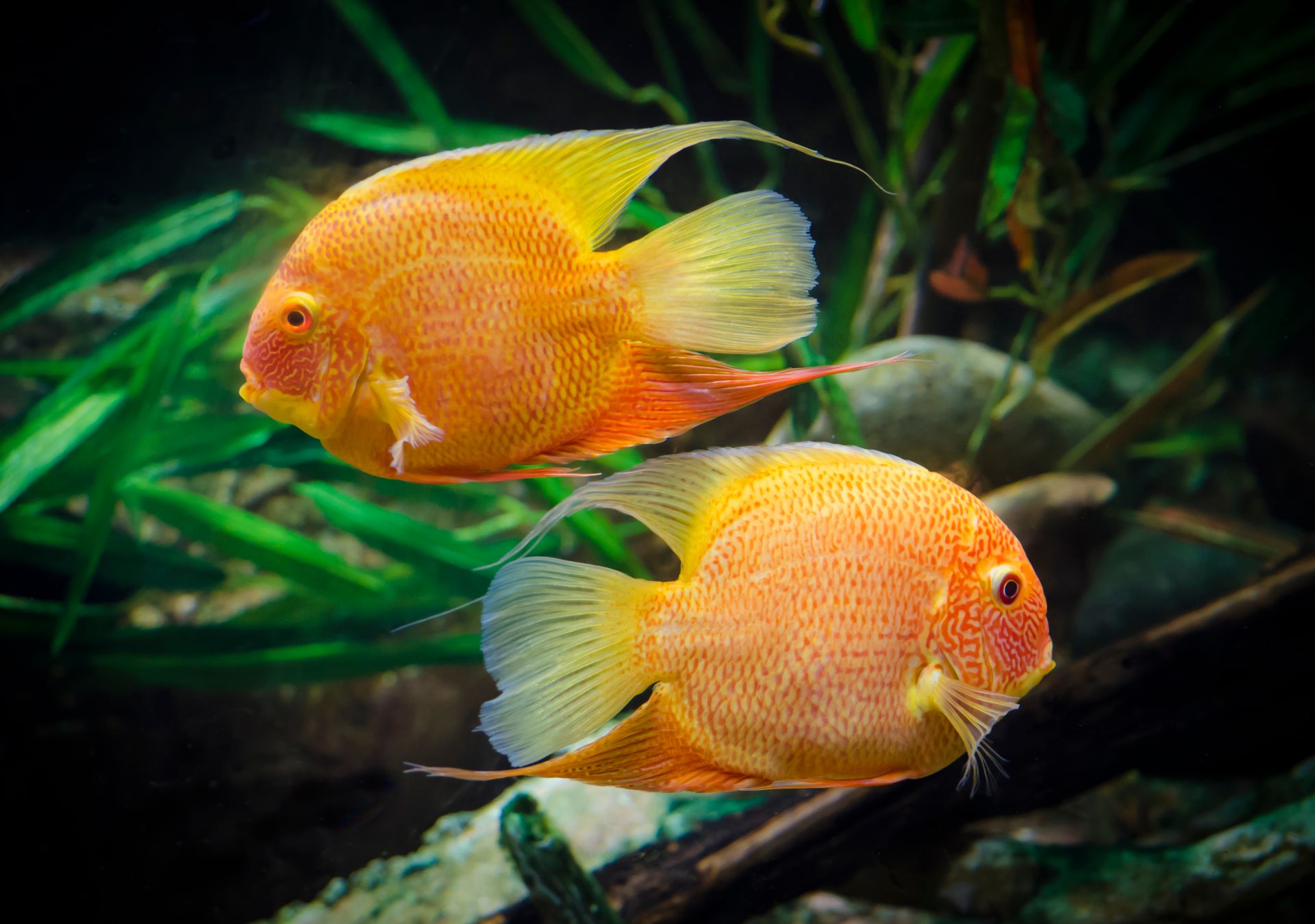
Swim bladder disease can cause your blood parrot to swim awkwardly or have difficulty maintaining its balance, so it's essential to feed them a well-balanced diet and maintain proper water quality.
Malnutrition is another common problem, as their beak-shaped mouths make it difficult to eat, so make sure to provide food specifically designed for blood parrots, or crush their food to make it easier to consume.
Fungal and bacterial infections are also a risk due to their unnatural deformities, so maintain optimal water quality and observe your fish regularly for any signs of disease.
Regular checks can help you detect health issues early, such as unusual marks, spots, or changes in behavior.
Some common signs of disease in blood parrots include Ich, fin rot, and parasites, so familiarize yourself with the symptoms and be ready to act if necessary.
To reduce the risk of health issues, maintain a clean and stress-free environment by following proper care guidelines.
Here are some common health problems to look out for in your blood parrot cichlid:
- Swim bladder disease
- Malnutrition
- Fungal and bacterial infections
- Ich
- Fin rot
- Parasites
Care and Maintenance
Blood Parrots love caves, so be sure to include some in their aquarium environment. Slate or Lava rock caves are a great choice for a natural look, but you can also use clay terra cotta pots and PVC pipe as affordable alternatives.
A consistent care schedule is essential to keep your blood parrot cichlid healthy and happy. By following a regular routine, you'll help your colorful companion thrive in their aquarium environment.
Here's a weekly care routine to keep in mind:
- Water testing: Check the water parameters in your aquarium at least once a week, making sure the ammonia and nitrite levels are zero and the nitrate levels are below 40 ppm.
- Partial water change: Perform a 25% water change weekly to maintain water quality and prevent a buildup of harmful substances.
Advice and Information
Blood Parrot Cichlids need a lot of caves to feel secure. Caves made from slate or lava rock look great, but you can also use clay terra cotta pots and PVC pipes as cheap alternatives.
Regular water testing is crucial to keep your aquarium healthy. Check the water parameters at least once a week to ensure ammonia and nitrite levels are zero and nitrate levels are below 40 ppm.
Discover more: Australian Water Dragon Care
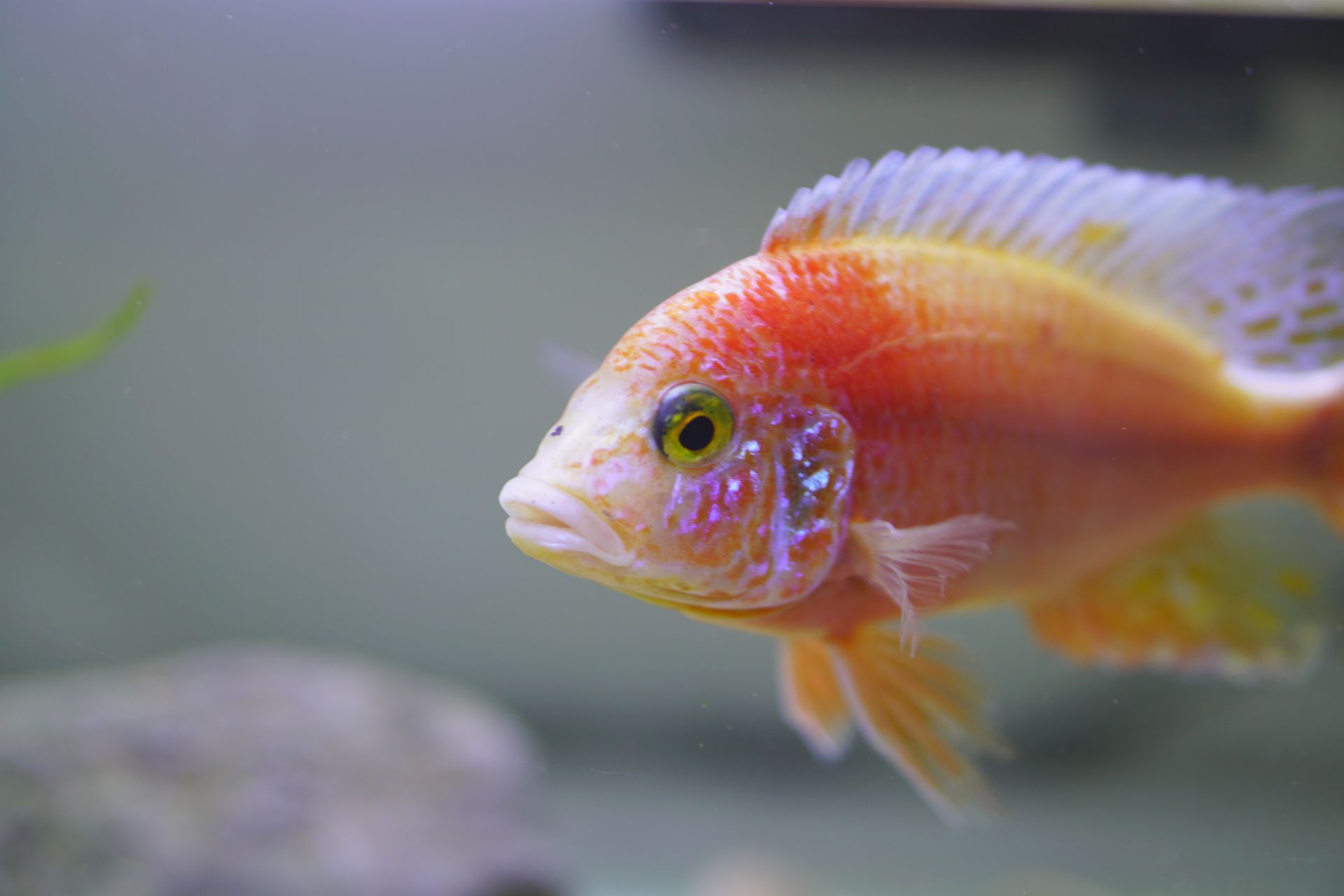
A consistent care schedule is essential to keep your Blood Parrot Cichlid happy and healthy. By following a regular routine, you'll help your colorful companion thrive in their aquarium environment.
Here's a quick rundown of the daily, weekly, and monthly care tasks you should perform:
Don't forget to observe your Blood Parrot Cichlid daily for any signs of illness, stress, or injury. Taking a moment to check on your pet can make a big difference in their overall wellbeing.
Aquatic Plants
Blood parrot cichlids can thrive in a planted tank, but it's essential to choose the right type of plants. Live plants can help maintain great water quality and make the tank more natural and attractive.
Some blood parrots will tear up plants, while others won't touch them. This means you'll need to observe your individual fish to see how they interact with plants.
Most blood parrots have weak mouths, so they can't do too much damage to plants. This is a plus for aquarists who want to keep live plants in their tank.
Broaden your view: Freshwater Aquarium Plants List with Pictures
Epiphytes like Java ferns and anubias are safe bets for a planted tank with blood parrots. These plants can be secured to sturdy hardscape to prevent them from being uprooted.
Floating plants like red root floater, Salvinia, and hornwort are great options for a blood parrot tank. They don't root themselves in the substrate and can add a natural touch to the tank.
Worth a look: Black Moor Goldfish Tank Size
Breeding and Mates
Breeding Blood Parrot Cichlids can be a challenging task, especially for beginners. Male Blood Parrot cichlids are generally sterile, making it difficult to breed them in the home aquarium.
Female Blood Parrot cichlids, on the other hand, are often fertile and can breed with other cichlid species. However, males will often eat the eggs when they begin to develop fungi.
To increase your chances of successful breeding, provide ample hiding spaces and flat surfaces for the female to lay her eggs on. The ideal breeding tank should have a temperature of around 82°F (28°C) and a pH between 6.5 and 7.5.
A different take: How to Care for Female Dog after Spay
Here are some good tank mates for Blood Parrot Cichlids:
- Other Blood Parrot Cichlids (they thrive in same-species tanks)
- Peaceful, larger fish (such as Discus or Angelfish)
- Other cichlids (such as Convicts or Severums)
Avoid small fish that will be mistaken for food, such as Neon Tetras, Guppies, and Platys. Also, avoid aggressive fish like Oscars and Rainbow Sharks.
Consider reading: How to Take Care of a Chinese Fighting Fish
Breeding
Breeding Blood Parrot Cichlids can be a challenging and delicate process. Males are generally sterile, making it difficult to breed them in the home aquarium.
Pairs will form and may even lay eggs, but they are usually infertile and rarely hatch. Female Blood Parrot Cichlids, on the other hand, are often fertile and can breed with other cichlid species.
Sexing Blood Parrot Cichlids is tricky, but males generally have longer and more pointed fins. Females can lay eggs on a hard, flat surface, such as a rock or a plant, or dig a hole in a soft substrate to lay their eggs.
To increase the chances of successful breeding, it's essential to provide optimal water conditions, including a pH between 6.5 and 7.4. Here are some specific water parameters to aim for:
- pH: 6.5-7.4
Females will become rounder and lay their eggs after a successful mating dance. The male will then fertilize the eggs, and the pair will guard and care for their eggs instinctively. Most of the time, the eggs will become white with fungus due to a lack of offspring development.
If you do get some offspring, maintain the health of your fry with daily 25% water changes and feed them baby brine shrimp during the first few weeks before upgrading them to a fine fry food when they start to grow.
Mates
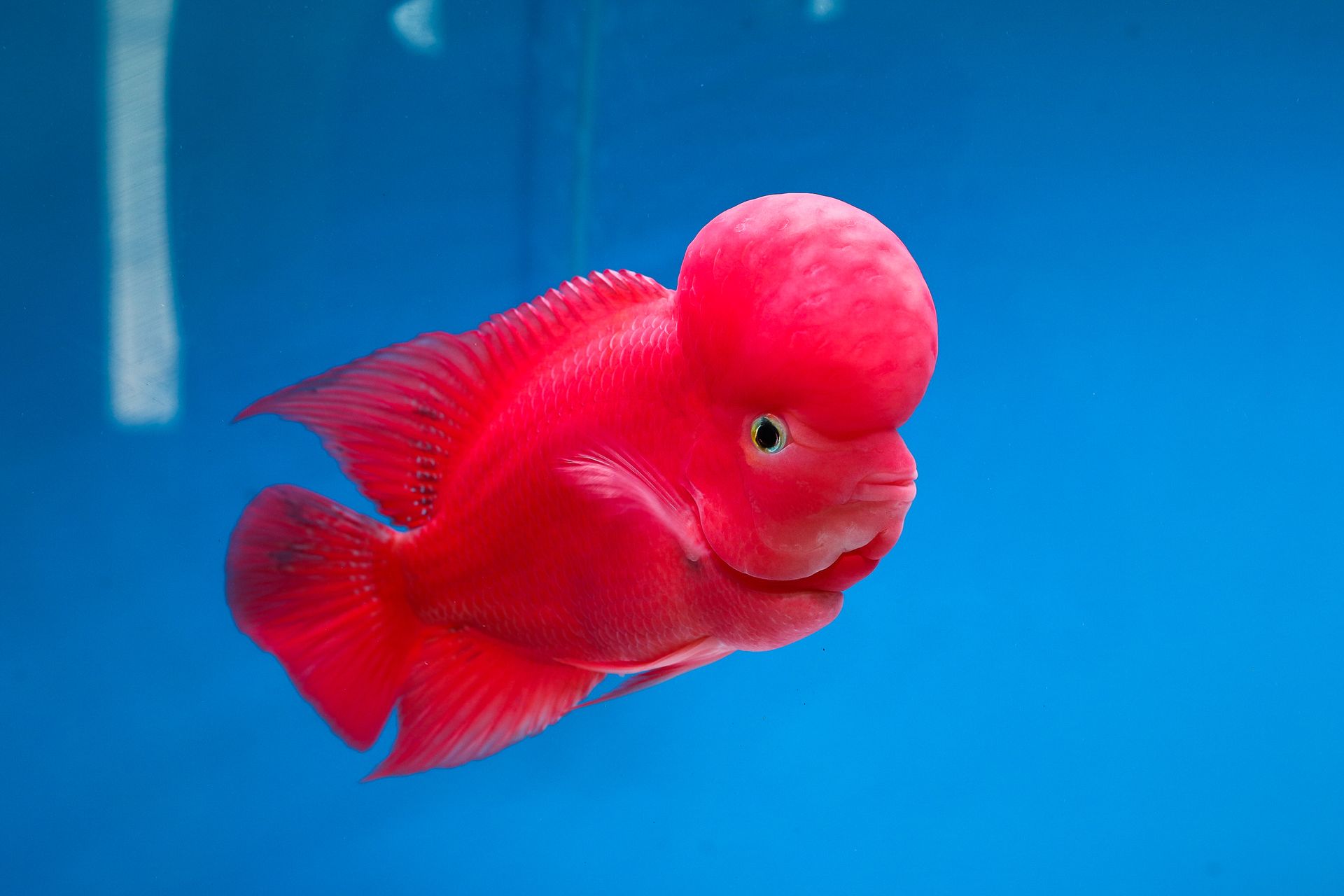
Choosing the right tank mates for your blood parrot cichlids is crucial for maintaining a healthy and peaceful environment. Blood parrots are generally safe with other fish, but some modern breeds with larger mouths can be aggressive.
It's best to keep blood parrots with other cichlids, as they can get along great with their own kind. Some good tank mate species include blue acara, severum, green terror cichlid, and oscars. However, you should avoid very small fish because your blood parrot will try to swallow them.
Here are some potential tank mates that you can try:
- Larger gouramis
- Large tetras
- Barbs
- Clown loaches
- Silver dollars
- Plecos
Remember to provide enough space for your fish to swim and hide, as blood parrots can be active swimmers. It's also essential to quarantine new tank mates before adding them to your aquarium to prevent the transmission of diseases and parasites.
Frequently Asked Questions
How big of a tank does a Blood Parrot Cichlid need?
A Blood Parrot Cichlid requires a minimum tank size of 42 gallons, with an additional 10 gallons for each additional fish
Will blood parrots eat other fish?
Blood Parrot Cichlids are known to be opportunistic eaters and may view smaller tank mates as food, so it's essential to choose compatible tank mates carefully. They do best with non-aggressive, peaceful fish of similar or larger size.
Featured Images: pexels.com