Australia is home to a diverse range of bird species, with over 800 different types found across the country.
The Kookaburra, for example, is one of Australia's most iconic birds, known for its distinctive laugh-like call and large size.
These birds are highly social creatures, often living in large groups and forming strong bonds with each other.
The Kookaburra is also a skilled hunter, feeding on a variety of small animals and insects to survive.
Some of Australia's native birds, such as the Budgerigar, are known for their bright plumage and distinctive songs.
The Budgerigar is a small parrot that is native to the arid regions of central Australia.
These birds are highly adaptable, able to thrive in a variety of different environments and conditions.
On a similar theme: Does Australia Have Crocodiles
Australian Birds
Australian birds are incredibly diverse, with over 800 species calling the country home. These birds can be found in a wide range of habitats, from the coastal regions to the deserts and forests.
The Wedge-Tailed Eagle, one of Australia's largest birds of prey, is a majestic sight to behold. Reaching lengths of up to 1.3 meters, these eagles have a distinctive long, diamond-shaped tail and dark brown plumage with red-brown hackles on their neck.
Some of the most iconic Australian birds include the Tawny Frogmouth, the Laughing Kookaburra, and the Emu. The Tawny Frogmouth is a large bird with a silver-grey plumage and yellow eyes, while the Laughing Kookaburra is known for its distinctive laugh-like call. The Emu, on the other hand, is the largest native bird in Australia, growing up to 2 meters tall.
Here is a list of some of the main bird orders found in Australia:
- Accipitriformes (Hawks, Eagles, Kites, and Allies)
- Anseriformes (Waterfowl)
- Casuariiformes (Cassowaries and Emus)
- Coraciiformes (Kingfishers, Bee-eaters, Rollers and Allies)
- Galliformes (Landfowl)
- Passeriformes (Perching Birds)
- Psittaciformes (Parrots)
- Suliformes (Gannets, Cormorants, and Allies)
These are just a few examples of the many fascinating bird species found in Australia. Each of these birds has its own unique characteristics and habits, and there is much to learn and discover about our feathered friends.
Australian Birds
Australian birds are incredibly diverse, with over 800 species calling the continent home. The Paradise Parrot, for example, was a small parrot that once lived in Australia's grasslands and savannas, measuring around 23-25 centimeters in length.
The Paradise Parrot was a striking bird with bright green plumage and a distinctive call that was described as a high-pitched, metallic chattering sound. Unfortunately, the species became extinct in the early 20th century due to a combination of factors, including habitat destruction and introduced predators.
Some birds in Australia have lived on the continent for a very long time, and are linked to an ancient supercontinent called Gondwana. Examples of these birds include the huge, flightless emus and cassowaries.
The Wedge-Tailed Eagle is one of the native birds of Australia, with a scientific name of Aquila audax. This bird is known for its impressive wingspan and scavenging habits.
The Tawny Frogmouth is a nocturnal bird that inhabits tropical and subtropical habitats in Indonesia, Solomon Islands, Papua New Guinea, and Australia. It feeds on invertebrates and kills its prey by hitting it against the branch.
Worth a look: Dogo Argentino Australia
The Superb Lyrebird is a unique bird with an elaborate tail that takes seven years to develop fully. The male bird can mimic various sounds, with males being louder and singing more often than females.
Here's a list of some of the native birds of Australia:
- Wedge-Tailed Eagle (Aquila audax)
- Tawny Frogmouth (Podargus strigoides)
- Forest Kingfisher (Todiramphus macleayii)
- Superb Lyrebird (Menura novaehollandiae)
- Laughing Kookaburra (Dacelo novaeguineae)
- Mistletoebird (Dicaeum hirundinaceum)
- Barking Owl (Ninox connivens)
- Noisy Friarbird (Philemon corniculatus)
- Plumed Whistling Duck (Dendrocygna eytoni)
- Eastern Yellow Robin (Eopsaltria australis)
- White-Faced Heron (Egretta novaehollandiae)
- Cattle Egret (Bubulcus ibis)
- Australian Magpie (Cracticus tibicen)
- Black Kite (Milvus migrans)
- Rainbow Bee-Eater (Merops ornatus)
- Australian King Parrot (Alisterus scapularis)
- Apostlebird (Struthidea cinerea)
- Australian Brush Turkey (Alectura lathami)
- Emu (Dromaius novaehollandiae)
- Red-Tailed Tropicbird (Phaethon rubricauda)
- Crested Pigeon (Ocyphaps lophotes)
- Cave Swiftlet (Collocalia linchi)
- Wilson's Storm Petrel (Oceanites oceanicus)
- Antipodean Albatross (Diomedea antipodensis)
- Masked Booby (Sula dactylatra)
- Little Pied Cormorant (Microcarbo melanoleucos)
- Australian Pelican (Pelecanus conspicillatus)
- Zebra Finch (Taeniopygia guttata)
- Bassian Thrush (Zoothera lunulata)
- Malleefowl (Leipoa ocellata)
Wedge Tailed Eagle
The Wedge Tailed Eagle is the largest bird of prey in Australia, with a wingspan of over 2 meters and weighing up to 5 kg.
This impressive bird is a specialist scavenger, soaring to great heights using thermal air currents and relying on its keen eyesight to search for prey.
Wedge Tailed Eagles are known to feed on terrestrial mammals, reptiles, and other birds, with younger birds feeding on carrion during winter.
Interestingly, these birds love to feed on carcasses in groups of up to a dozen birds and may even snatch food from other animals.
A Wedge Tailed Eagle's lifespan is between 20 and 25 years, with females being larger and heavier than males.
Here are some key facts about the Wedge Tailed Eagle:
Australian Pelican
The Australian Pelican is a bird with an impressive bill, holding the Guinness World Record for the longest bill of any bird in the world.
Its intimidating bill is often used to scare off invaders, and the pelican will crane its neck with its mouth agape to achieve this.
The gular pouch, a stretchy skin attached to its lower jaw, plays a crucial role in finding dinner for the Aussie pelican, helping it locate fish in murky water.
A hook at the tip of its upper mandible is also useful for gripping slippery fish, making it easier for the pelican to catch its prey.
The pelican's pouch isn't used to store marine snacks for later, but rather acts as a type of fishing net, drawing water and then manoeuvring its meal into position to swallow.
Australian Bustard
The Australian bustard is a large ground-dwelling bird with grey-brown plumage that offers excellent camouflage.
Its long legs and slender neck make it well-suited to strutting about on open plains, where it holds its head high to give the impression of being imperious and snobbish.
Males are significantly larger than females, and they inflate their feathery throat pouch to produce a "roaring" noise during courtship displays.
This impressive display is a bid to impress females, showcasing the male's unique characteristics.
The Australian bustard's population has declined significantly in the south and southeast due to habitat destruction and historical hunting pressure.
Today, it's most abundant in northern and central Australia, although isolated populations do persist in New South Wales, Victoria, and South Australia.
Unfortunately, the Australian bustard is still impacted by habitat loss, predation by introduced predators, and vehicle collisions.
The male Australian bustard has a striking appearance, with a black bill, long red legs, and iridescent green-and-purple plumage on its slender neck.
Females, on the other hand, have yellow-golden eyes, which set them apart from males, who have dark brown eyes.
Additional reading: Australia Pets
Native Birds
Native birds are a true marvel of Australia's wildlife. With over 800 species, the country is home to a diverse range of birds, each with its unique characteristics and behaviors.
The wedge-tailed eagle, for example, is one of the largest birds of prey in Australia, with a wingspan of up to 2.3 meters. Its scientific name is Aquila audax.
The Australian magpie is another iconic bird species, known for its distinctive black and white plumage and loud, melodic calls. The scientific name for the Australian magpie is Cracticus tibicen.
Some of the native birds of Australia are quite unique, such as the superb lyrebird, which is known for its remarkable mimicry abilities and complex courtship displays. The scientific name for the superb lyrebird is Menura novaehollandiae.
Here are some of the native birds of Australia, listed by order:
From the lush rainforests to the arid deserts, Australia's diverse landscapes support an incredible array of birdlife.
Emus and Related
Emus are indeed one of the most fascinating birds native to Australia. They're the tallest Australian bird species, reaching heights of nearly 2 metres.
Emus have unique feathers that are long and shaggy, providing insulation qualities that help regulate body temperature in diverse weather conditions. This is especially useful for their survival in Australia's varying climate.
Emus are also surprisingly fast runners, reaching speeds of up to 50 kilometres per hour. Their strong legs make them well-suited for their flightless lifestyle.
Here are some key facts about Emus at a glance:
- Tallest Australian bird species
- Unique feathers for insulation
- Fast runners at up to 50 km/h
Emu
Emus are truly remarkable birds, and here are some interesting facts about them.
Emus can grow to be quite tall, reaching heights of nearly 2 metres, making them the tallest Australian bird species.
Their unique feathers are long and shaggy, providing excellent insulation that helps regulate their body temperature in diverse weather conditions. These feathers are a key adaptation that allows them to thrive in Australia's varied climate.
Emus are flightless birds, but they're surprisingly fast runners, reaching speeds of up to 50 kilometres per hour. This speed is likely an adaptation to help them escape predators.
One fascinating aspect of emus is their ability to shrug off serious injuries from bullets without breaking stride. This makes them quite resilient and difficult to hit with machine-gun fire.
Young emus learn to read the weather by watching their fathers' reactions to different conditions. This clever behavior allows them to anticipate and prepare for changes in the weather.
Corvid Radiation
Corvid Radiation is a fascinating phenomenon in Australia's avifauna. These birds, which include wrens, robins, magpies, and thornbills, descended from the crow family.
They're incredibly diverse, with some species filling different roles and sizes, such as the big honeyeater family. Some Corvid Radiation birds are small, while others are quite large.
These birds arrived in Australia later from Eurasia, a fact that's evident in the presence of plovers, swallows, and larks. Some of these birds have adapted to Australian environments in remarkable ways.
One example of this adaptation is the lyrebird, a bird-of-paradise that's native to Australia. Its unique song and mimicry abilities are a testament to its remarkable adaptability.
Laughing Kookaburra
The Laughing Kookaburra is a bird native to Australia, and it's easy to spot along the east coast, particularly in urban areas like city parklands and gardens. They're quite comfortable in close proximity to humans.
Their distinctive appearance makes them hard to miss, and their unique hunting behaviours are a sight to behold. They're known to swoop down to catch prey like snakes, lizards, and small mammals using their powerful beaks.
One of the most recognizable features of the Laughing Kookaburra is its call, which sounds eerily like human laughter. This distinctive call is a dead giveaway that you're in the presence of a Laughing Kookaburra.
Here are some key facts about the Laughing Kookaburra:
Birds and Conservation
The Australian government has put up conservation strategies to protect its unique and endemic bird species.
Environmental degradation and climate change are the primary threats to Australia's bird biodiversity.
The government has established natural reserves to safeguard these species, with the Wanjarri Nature Reserve and Lake Mason Conservation Park being notable examples.
These reserves are home to around 100 species of birds, including the laughing kookaburras, Mistletoebird, barking owl, noisy friarbird, and the eastern yellow robin.
Expand your knowledge: Bird Identification Chart
Regent Honeyeater
The Regent Honeyeater is a bird species like no other. Its distinctive black and yellow markings make it easily identifiable, with a black head and throat, a bright yellow belly, and distinctive yellow patches on its wings.
Readers also liked: Black Birds
This bird's melodious singing is often compared to that of a bellbird, and it's not uncommon to hear it mimic the calls of other birds, including honeyeaters.
Unfortunately, the Regent Honeyeater is a critically endangered species due to habitat loss. It's highly dependent on nectar from eucalyptus trees, making conservation efforts crucial to restore their habitats and protect the remaining populations.
To give you a better idea of the Regent Honeyeater's unique characteristics, here are some key facts at a glance:
Threats and Conservation
The Australian bird population is facing significant threats due to environmental degradation and climate change.
The government of Australia has taken steps to protect its unique bird species through conservation efforts.
Establishing natural reserves is a key strategy in these efforts.
The Wanjarri Nature Reserve and Lake Mason Conservation Park are notable examples, home to around 100 species of birds.
The laughing kookaburras and Mistletoebird are among the species found in these reserves.
The barking owl and noisy friarbird are also protected within these conservation areas.
The eastern yellow robin is another species that calls these reserves home.
Bird Organizations
Bird Organizations play a crucial role in bird conservation in Australia.
The Australian Capital Territory is home to the Canberra Ornithologists Group, which works to protect and study birds in the region.
Birding NSW, based in New South Wales, is another group dedicated to bird conservation.
Birds Queensland, located in Queensland, is involved in various initiatives to protect and study birds.
Birds SA, in South Australia, also works to conserve and study the local bird population.
Birds Tasmania and Birds Australia - Victoria, in their respective states, also work towards the same goal.
Here's a list of some of the bird organizations mentioned:
- Canberra Ornithologists Group (Australian Capital Territory)
- Birding NSW (New South Wales)
- Birds Queensland (Queensland)
- Birds SA (South Australia)
- Birds Tasmania (Tasmania)
- Birds Australia - Victoria (Victoria)
- Birds Australia Western Australia (Western Australia)
Types of Birds
Birds of Australia can be grouped into six main types, which helps us understand their origins and habitats. These types include Hawks, Eagles, Kites, and Allies, Waterfowl, Cassowaries and Emus, Pigeons and Doves, Kingfishers, Bee-eaters, Rollers and Allies, Landfowl, Cranes, Rails, and Allies, Perching Birds, Pelicans, Herons, Ibises, and Allies, Grebes, Parrots, Gannets, Cormorants, and Allies.
The Australian bird species can be further categorized into different orders, such as Accipitriformes, Anseriformes, Casuariiformes, Columbiformes, Coraciiformes, Galliformes, Gruiformes, Passeriformes, Pelecaniformes, Podicipediformes, Psittaciformes, and Suliformes. Each of these orders contains various families of birds, showcasing the incredible diversity of Australia's avifauna.
Some of the most iconic Australian birds include the Wedge-Tailed Eagle, Tawny Frogmouth, and Superb Lyrebird, which are all native to the country.
Black Swan
The Black Swan is an iconic bird of Australia, known for its striking appearance with its black feathers, bright red beak and long neck.
They can be found throughout Australia, often in wetlands and waterways, feeding on aquatic plants and other invertebrates. Black Swans are native to Australia, and are the only species of swan that is almost entirely black.
Black Swans are monogamous birds and pair for life, forming strong bonds with their mate. They will fiercely defend their territory and offspring.
Despite their large size and weight, Black Swans are strong fliers and can cover long distances when they migrate. They often fly in large flocks and can be seen flying in a v-formation.
Red-Tailed Black Cockatoo
The Red-Tailed Black-Cockatoo is a large, black cockatoo species with black feathers and a large red band on the underside of the tail (male birds), making it one of the most visually striking bird species in Australia.
This bird's distinctive appearance is a clear giveaway of its identity, and it's a sight to behold in its natural habitat. The Red-Tailed Black-Cockatoo has a specialized diet of nuts and fruits from selected tree species, using its powerful beak to crack open the nuts and woody fruits.
It's fascinating to note that the South-Eastern Red-tailed Black-Cockatoo subspecies is considered an endangered species due to habitat loss and degradation.
Here are some key facts about the Red-Tailed Black-Cockatoo:
- Distinctive appearance: The Red-Tailed Black-Cockatoo is identifiable by its black feathers and a large red band on the underside of the tail (male birds).
- Unique behaviour: Red-Tailed Black-Cockatoos have a specialized diet of nuts and fruits from selected tree species.
- Threatened species: The South-Eastern Red-tailed Black-Cockatoo subspecies is considered an endangered species due to habitat loss and degradation.
Seabirds
Seabirds are a large group of birds that live mostly at sea.
Many seabirds breed on islands that are part of Australia.
Some common types of seabirds include petrels, albatrosses, and gulls.
Many seabirds, such as gannets and boobies, are part of the sulid family.
Seabirds can be found spending a lot of time near Australia's coasts and waters.
Birds
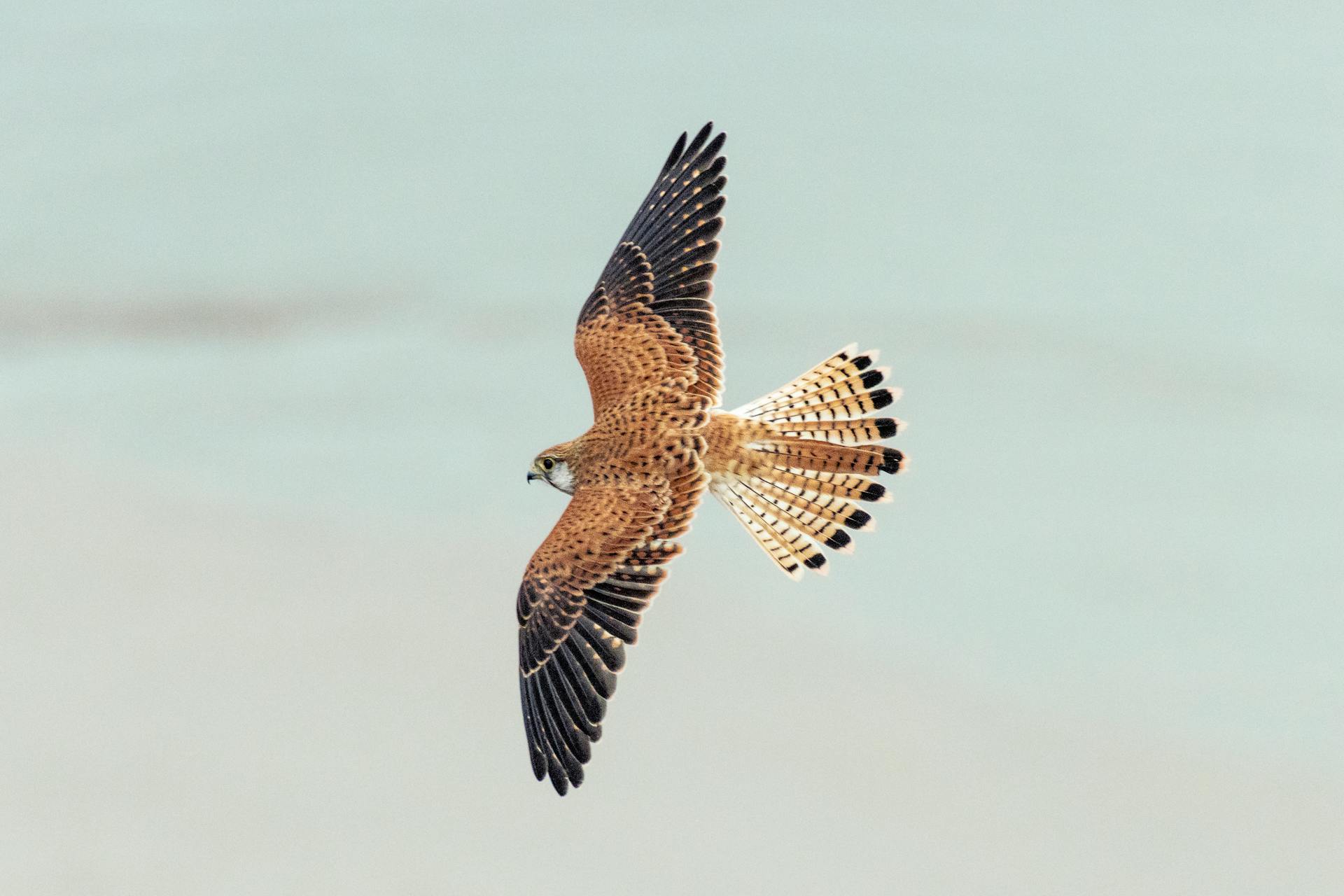
Birds are incredibly diverse, with over 10,000 different species found around the world. Let's take a closer look at the different types of birds found in Australia.
In Australia, birds are grouped into six main types, which helps us understand where they came from and how they live. This classification system is a great way to learn about the unique characteristics of each type of bird.
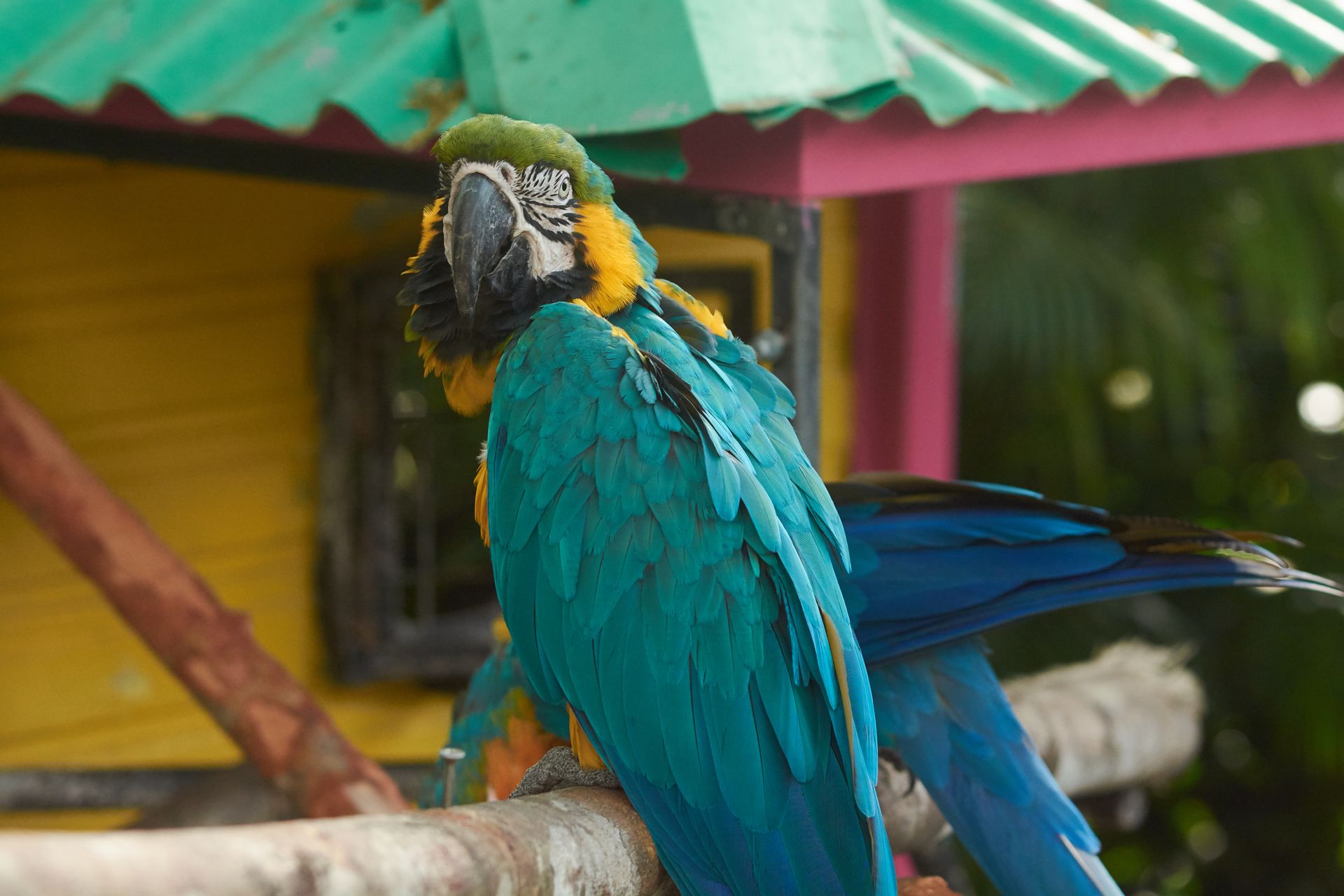
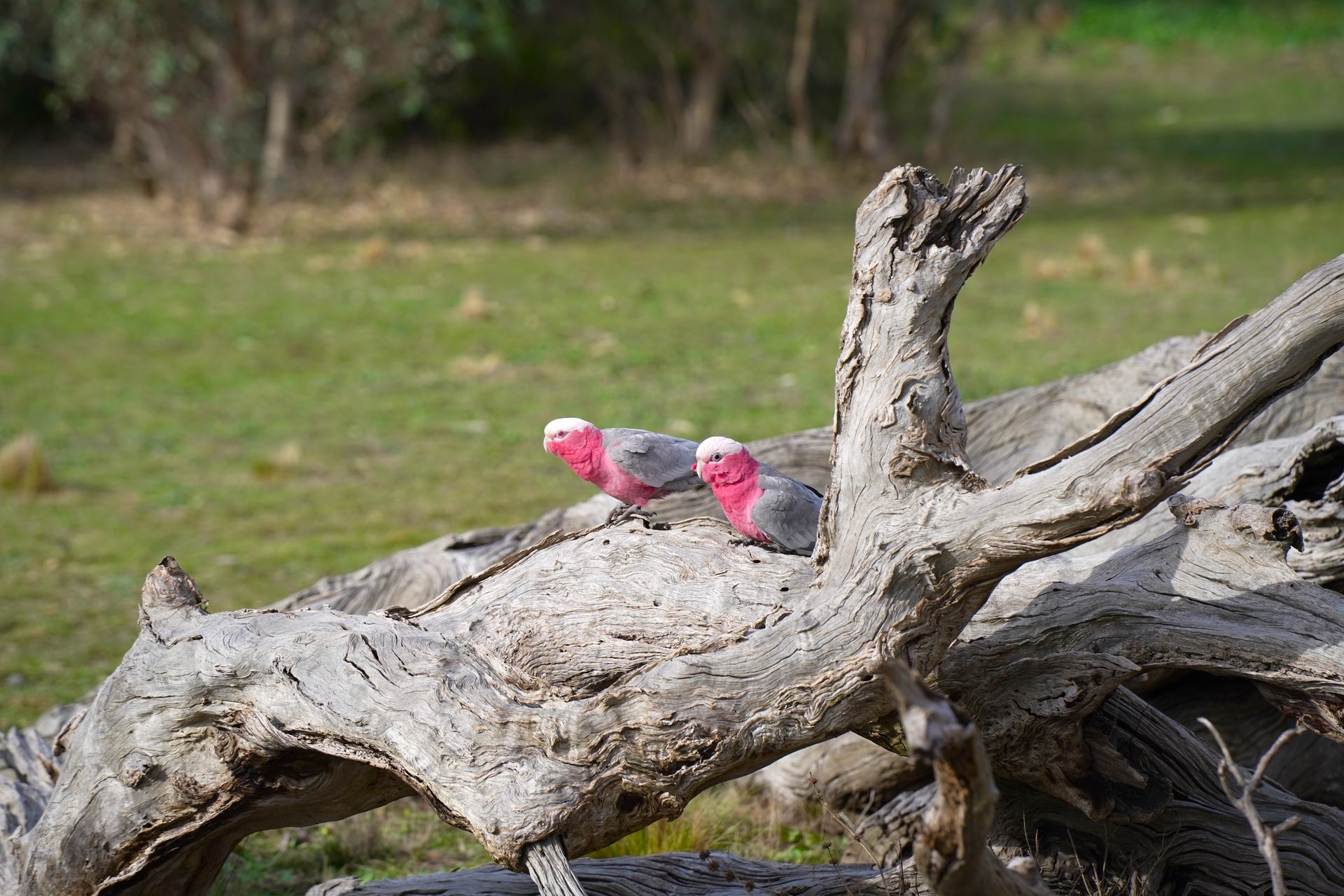
One of the most fascinating types of birds is the Parrot, with 11 different species found in Australia. These colorful birds are known for their bright plumage and ability to mimic human speech.
Did you know that some birds, like the Pied Butcherbird, have a unique feeding behavior where they impale their prey on thorns or spikes to make it easier to consume? This behavior is just one of the many interesting facts about birds.
The Pied Butcherbird is also known for its complex vocalisations, consisting of a wide range of notes and tones, often used to communicate with its mate or defend its territory. These vocalisations are truly a wonder to listen to.
Some of the most iconic birds in Australia include the Wedge-Tailed Eagle, the Tawny Frogmouth, and the Superb Lyrebird. These birds are not only beautiful to look at, but they also play an important role in the ecosystem.
Here are some of the different types of birds found in Australia, grouped by their scientific classification:
These different types of birds are just a few of the many fascinating species found in Australia. Whether you're a seasoned birdwatcher or just starting to learn about birds, there's always something new to discover.
Frequently Asked Questions
Are 28 parrots native to Australia?
Yes, the 28 Parrot is native to Australia, specifically found in the southwest region of Western Australia. Learn more about this unique parrot species and its distinctive call.
Featured Images: pexels.com