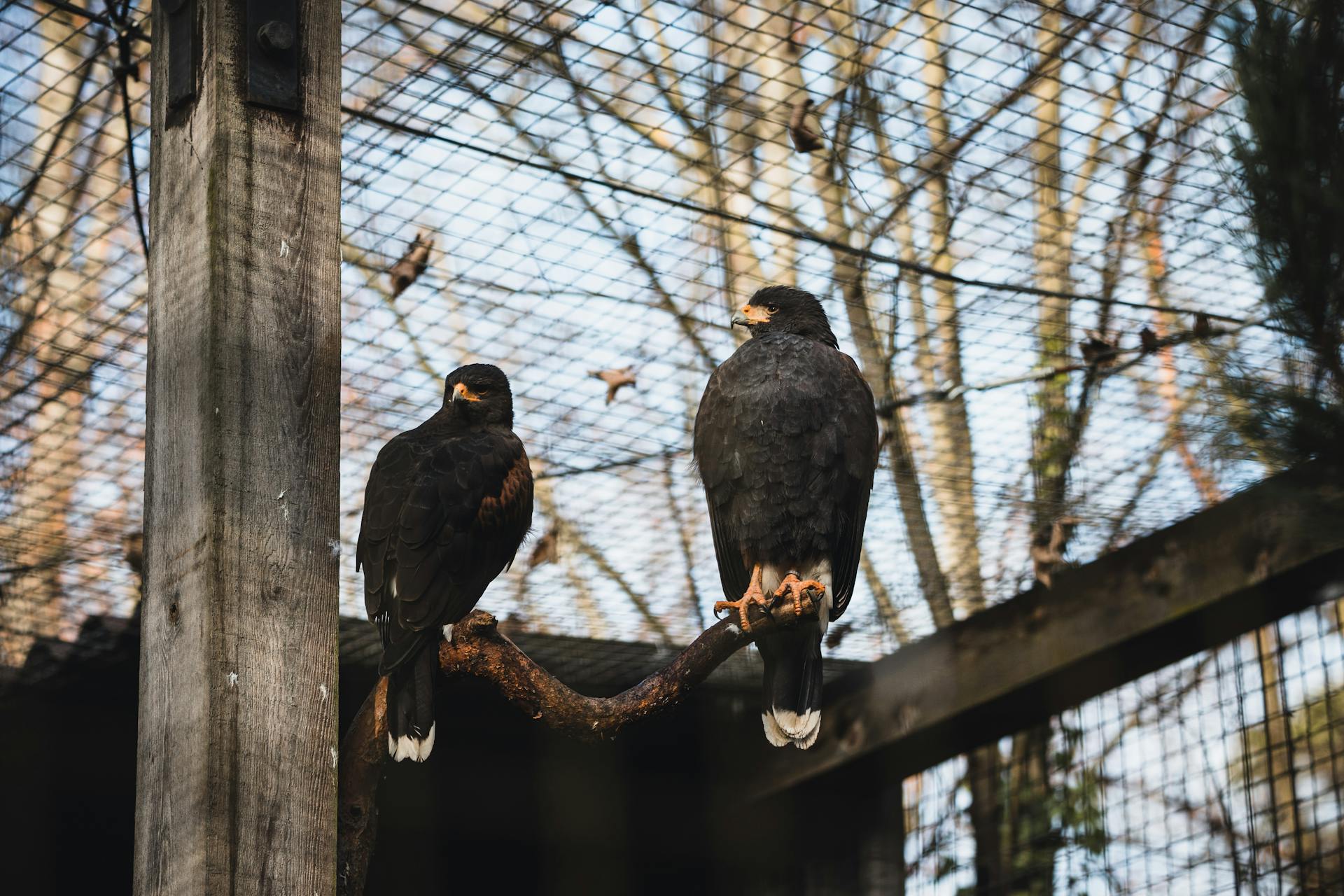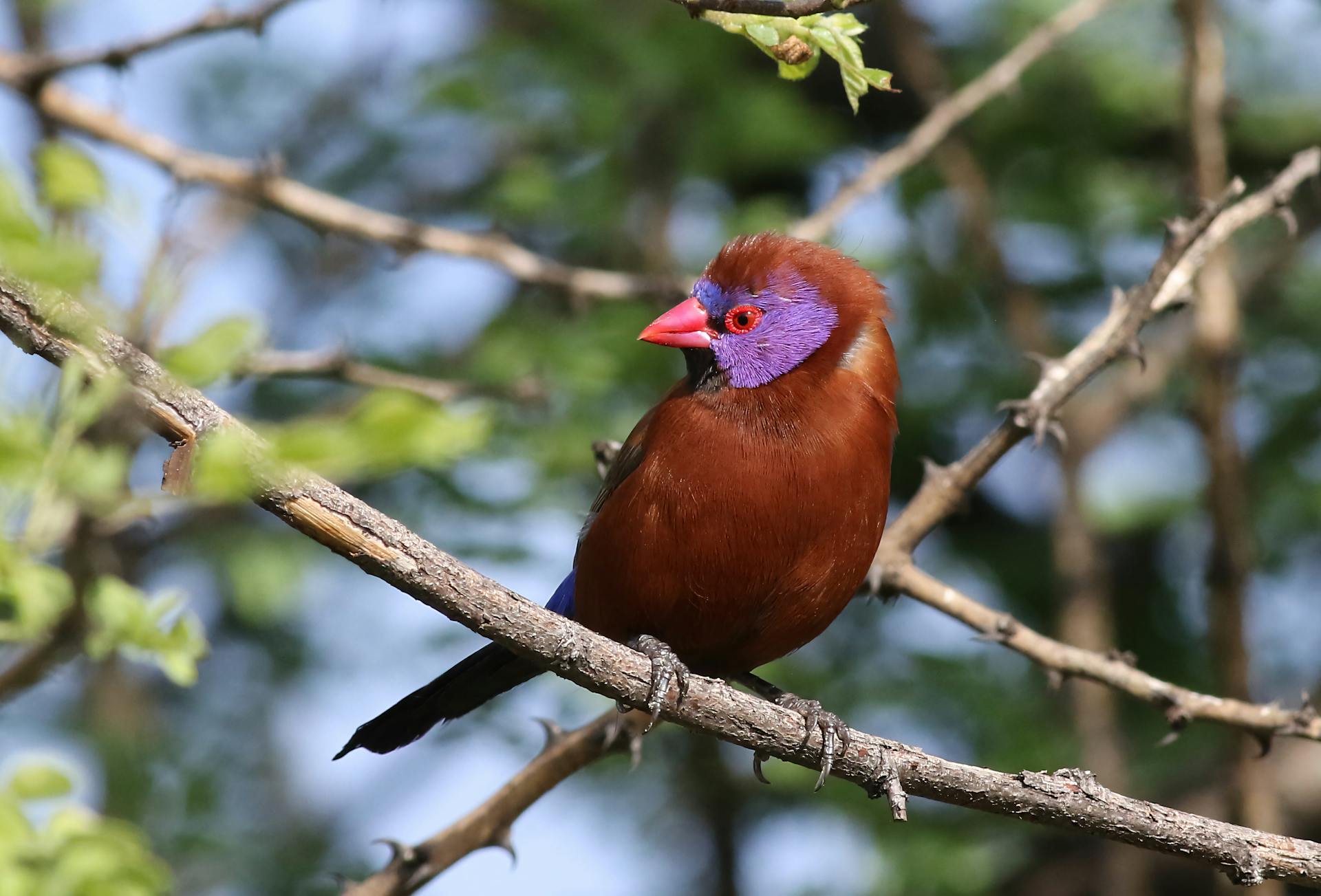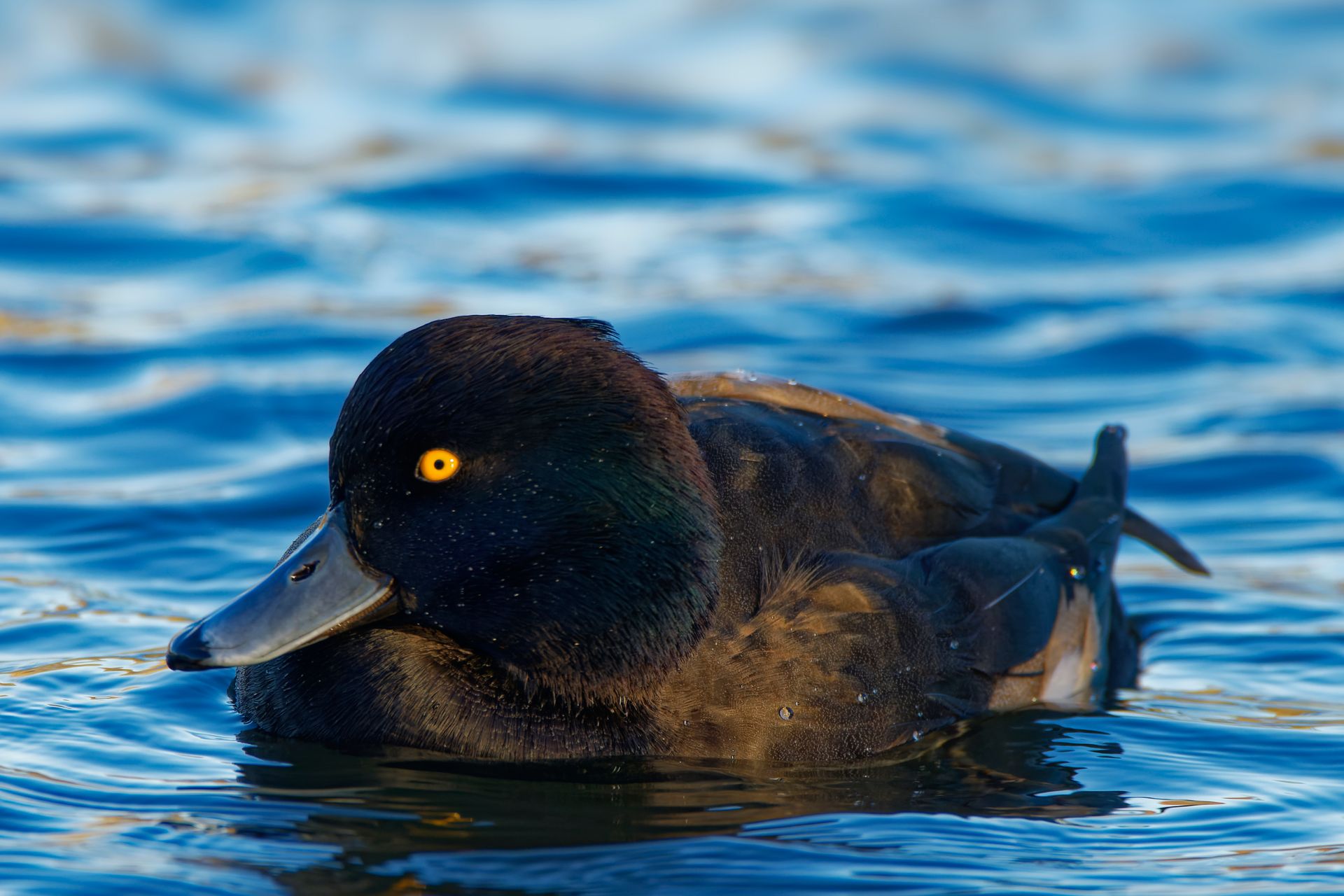
New Jersey is a fantastic place for birdwatching, with its diverse habitats and unique geography attracting a wide range of species. You can spot over 400 species of birds in the state, including many migratory birds that pass through on their way to and from their wintering grounds.
The state's varied landscape, from coastal beaches to inland forests and wetlands, provides a perfect setting for bird identification. In fact, the Jersey Shore is a critical stopover for many waterfowl species, including Canada Geese, Mallards, and American Black Ducks.
Some of the most common waterfowl species in New Jersey include the Mute Swan, which is an invasive species but can be identified by its distinctive orange bill, and the American Coot, which has a distinctive white bill and can often be seen swimming in shallow water.
Curious to learn more? Check out: Bird Species in North Carolina
Waterfowl and Shorebirds
Waterfowl and Shorebirds in New Jersey are a treat to spot. With over 40 species recorded, you'll have plenty of opportunities to observe these fascinating birds.
The family Anatidae includes ducks and most duck-like waterfowl, such as geese and swans. These birds are adapted to an aquatic existence with webbed feet and feathers that shed water easily. You might spot a Black-bellied whistling-duck, Fulvous whistling-duck, or a Snow goose in their natural habitat.
In terms of shorebirds, the Scolopacidae family is a large and diverse group, including sandpipers, curlews, and snipes. These birds are known for their long legs and bills, which allow them to feed in the same habitat without competing for food. Keep an eye out for species like the Upland sandpiper, Whimbrel, or the Spotted sandpiper.
Here are some of the most common waterfowl and shorebirds found in New Jersey:
- Ducks: Black-bellied whistling-duck, Fulvous whistling-duck, Snow goose, Canada goose, Wood duck
- Geese: Snow goose, Ross's goose, Greater white-fronted goose, Canada goose
- Shorebirds: Upland sandpiper, Whimbrel, Spotted sandpiper, Least sandpiper, White-rumped sandpiper
Whether you're a seasoned birder or just starting out, spotting waterfowl and shorebirds in New Jersey is an exciting experience. So grab your binoculars and head out to explore the great outdoors!
Ducks (Mallard)
Ducks are one of the most recognizable and beloved waterfowl species. They can be found in a wide range of aquatic habitats, from ponds and lakes to rivers and wetlands.
Their distinctive webbed feet and flat bills make them perfectly adapted to their aquatic lifestyle. Ducks can also be identified by their feathers, which are specially coated with oils to repel water.
Some species of ducks are migratory, while others are year-round residents. For example, the Mallard, a common duck species, is found in New Jersey and is known for its distinctive green head and yellow bill.
The Mallard is not the only duck species found in New Jersey. In fact, there are 46 species of ducks and duck-like waterfowl that have been recorded in the state.
Here are some of the duck species found in New Jersey:
- Mallard, Anas platyrhynchos
- American black duck, Anas rubripes
- Northern pintail, Anas acuta
- Green-winged teal, Anas crecca
- Canvasback, Aythya valisineria
- Redhead, Aythya americana
- Ring-necked duck, Aythya collaris
- Tufted duck, Aythyafuligula (R)
- Greater scaup, Aythya marila
- Lesser scaup, Aythya affinis
Herons and Egrets
Herons and Egrets are fascinating birds that can be found in a variety of wetland habitats, from shallow lakes to coastal areas.
They are known for their distinctive feeding behavior, using their long beaks to spear fish and frogs in the water.
Heron species are generally larger than egret species, with some herons growing up to 4 feet tall.
Egrets, on the other hand, are smaller and more agile, often seen wading in shallow water with their long legs.
Both herons and egrets are social birds that often live in large colonies, with some species forming massive flocks that can number in the thousands.
In the wild, herons and egrets are primarily carnivores, feeding on small fish, frogs, and other aquatic animals.
Some heron species, such as the Great Blue Heron, are known to be migratory, traveling thousands of miles each year to reach their breeding grounds.
Egrets, like the Snowy Egret, are often seen in urban areas, where they can be found foraging for food in parks and backyards.
Related reading: Bird Species Identification
Stilts and Avocets
Stilts and avocets are members of the Recurvirostridae family, a group of large wading birds.
These birds are known for their distinctive features: avocets have long legs and long up-curved bills, while stilts have extremely long legs and long, thin, straight bills.
Two species of stilts and avocets have been recorded in New Jersey: the Black-necked stilt and the American avocet.
Here are the two species found in New Jersey:
- Black-necked stilt, Himantopus mexicanus
- American avocet, Recurvirostra americana
Plovers and Lapwings
The plovers and lapwings are a group of small to medium-sized birds with compact bodies and long, usually pointed, wings.
They can be found in open country worldwide, mostly in habitats near water.
One species, the Northern lapwing, has a distinctive red wading bird status in some areas (R).
The American golden-plover, Pluvialis dominica, is one of the species found in New Jersey.
The plovers and lapwings have short thick necks, which helps them navigate through dense vegetation.
Some species, like the Killdeer, are known for their loud calls, often used for mating and territorial purposes.
Here is a list of some of the species found in New Jersey:
- Northern lapwing, Vanellus vanellus (R)
- Black-bellied plover, Pluvialis squatarola
- American golden-plover, Pluvialis dominica
- Killdeer, Charadrius vociferus
- Semipalmated plover, Charadrius semipalmatus
- Piping plover, Charadrius melodus
- Lesser sand-plover, Charadrius mongolus (R)
- Wilson's plover, Charadrius wilsonia (R)
- Mountain plover, Charadrius montanus (R)
Sandpipers and Allies
Sandpipers and allies are a diverse group of shorebirds that can be found in a variety of habitats, including beaches, mudflats, and wetlands. They are small to medium-sized birds that feed on small invertebrates, such as insects, crustaceans, and worms.
Most species of sandpipers have distinctive bills and legs that allow them to feed in the same habitats without direct competition for food. For example, the upland sandpiper has a long, straight bill that is well-suited for probing into mud and soil to find food.
Curious to learn more? Check out: Small Bird Nest Identification
There are 42 species of sandpipers that have been recorded in New Jersey. Some of the most common species include the semipalmated sandpiper, the least sandpiper, and the white-rumped sandpiper.
Here are some of the most common species of sandpipers found in New Jersey:
- Upland sandpiper
- Whimbrel
- Long-billed curlew
- Bar-tailed godwit
- Black-tailed godwit
- Hudsonian godwit
- Marbled godwit
- Ruddy turnstone
- Red knot
- Ruff
- Sharp-tailed sandpiper
- Stilt sandpiper
- Curlew sandpiper
- Red-necked stint
- Sanderling
- Dunlin
- Purple sandpiper
- Baird's sandpiper
- Little stint
- Least sandpiper
- White-rumped sandpiper
- Buff-breasted sandpiper
- Pectoral sandpiper
- Semipalmated sandpiper
- Western sandpiper
- Short-billed dowitcher
- Long-billed dowitcher
- Wilson's snipe
- Spotted sandpiper
- Solitary sandpiper
- Lesser yellowlegs
- Willet
- Spotted redshank
- Common greenshank
- Greater yellowlegs
- Wood sandpiper
- Wilson's phalarope
- Red-necked phalarope
- Red phalarope
These are just a few examples of the many species of sandpipers that can be found in New Jersey.
Rails, Gallinules, and Coots (Core Meaning)
Rails, gallinules, and coots are a type of bird that can be found near lakes, swamps, or rivers. They tend to occupy dense vegetation in damp environments.
These birds are generally shy and secretive, making them difficult to observe. In fact, it's often hard to spot them because they're not exactly known for their flying skills.
Most rails, gallinules, and coots have strong legs and long toes, which are perfect for walking on soft, uneven surfaces. This is because they often live in areas with dense vegetation and soft ground.
Here are some examples of rails, gallinules, and coots that can be found in New Jersey:
- Clapper rail, Rallus crepitans
- King rail, Rallus elegans
- Virginia rail, Rallus limicola
- Corn crake, Crex crex
- Sora, Porzana carolina
- Common gallinule, Gallinula galeata
- American coot, Fulica americana
- Purple gallinule, Porphyrio martinicus
- Yellow rail, Coturnicops noveboracensis
- Black rail, Laterallus jamaicensis
Ibises and Spoonbills
Ibises and spoonbills are quite the sight to behold, especially if you're lucky enough to spot them in their natural habitat. They have long, broad wings that allow them to soar effortlessly over the water.
These birds have elongated bodies, with their necks being particularly long and slender. Their legs are also quite long, which helps them wade through the water with ease.
The bill is a distinctive feature of ibises and spoonbills. In the case of ibises, the bill is long and decurved, while spoonbills have a straight and distinctly flattened bill.
If you're in New Jersey, you might be able to spot four different species of ibises and spoonbills. Here are the species you might see:
- White ibis, Eudocimus albus
- Glossy ibis, Plegadis falcinellus
- White-faced ibis, Plegadis chihi
- Roseate spoonbill, Platalea ajaja
Pelicans
Pelicans are very large water birds with a distinctive pouch under their beak. This pouch is unique to the Pelecanidae family.
They have four webbed toes, like other birds in the order Pelecaniformes. Two species of pelicans have been recorded in New Jersey.
The American white pelican and the Brown pelican are the two species found in New Jersey.
Boobies and Gannets
Boobies and gannets are medium-large coastal seabirds that plunge-dive for fish.
These birds can be found in various parts of the world, including New Jersey, where four species have been recorded.
The Masked booby, Brown booby, and Red-footed booby are all recorded in New Jersey, but the Brown booby is the only one of these three that is rare.
The Northern gannet is another species that can be found in New Jersey, and it's the only gannet species recorded in the state.
Here are the four species of boobies and gannets recorded in New Jersey:
- Masked booby, Sula dactylatra (R)
- Brown booby, Sula leucogaster (R)
- Red-footed booby, Sula sula (R)
- Northern gannet, Morus bassanus
Birds of Prey
Birds of prey are a fascinating group of birds that can be found in New Jersey. They are characterized by their large, powerful hooked beaks and strong legs.
Some common birds of prey in New Jersey include hawks, eagles, kites, harriers, and Old World vultures. These birds have keen eyesight and are skilled hunters.
Here are some specific species of birds of prey that have been recorded in New Jersey:
- White-tailed kite, Elanus leucurus (rare)
- Golden eagle, Aquila chrysaetos
- Sharp-shinned hawk, Accipiter striatus
- Red-shouldered hawk, Buteo lineatus
- Red-tailed hawk, Buteo jamaicensis
Falcons and caracaras are also birds of prey, but they differ from hawks and eagles in that they kill with their beaks instead of their talons.
Hawks (Red-Tailed Hawk, Sharp-Shinned Hawk)
The Red-Tailed Hawk is one of the most common hawks in New Jersey, with a powerful hooked beak and strong legs perfect for tearing flesh from its prey. It's also known for its keen eyesight.
The Sharp-Shinned Hawk, on the other hand, is a tiny but acrobatic flier that navigates through thick woods at top speed. One way to tell it apart from the Cooper's Hawk is by looking at their tail feathers: Sharp-Shinned Hawks have straight tail feather tips.
If you're trying to identify a hawk, take a closer look at its tail feathers. If they're straight, it's probably a Sharp-Shinned Hawk. If they're curved, it's likely a Cooper's Hawk.
Here are some of the hawks you might spot in New Jersey:
- Red-Tailed Hawk
- Sharp-Shinned Hawk
- Cooper's Hawk
- American Goshawk
- Broad-Winged Hawk
- Swainson's Hawk
- Zone-Tailed Hawk
Falcons and Caracaras
Falcons and caracaras are a unique group of birds of prey that differ from hawks, eagles, and kites in that they kill with their beaks instead of their talons.
They're found in the Falconidae family, which includes seven species in New Jersey. Here are some of the species you can spot:
- Crested caracara, Caracara plancus (rare)
- Eurasian kestrel, Falco tinnunculus (rare)
- American kestrel, Falco sparverius
- Merlin, Falco columbarius
- Gyrfalcon, Falco rusticolus (rare)
- Peregrine falcon, Falco peregrinus
- Prairie falcon, Falco mexicanus (rare)
These birds are known for their agility and speed, and are a joy to watch in flight.
Owls (Barn Owls, Owls)
Owls are a fascinating group of birds, and one of the most recognizable is the Barn owl. They have large heads and characteristic heart-shaped faces, along with long strong legs and powerful talons.
One species of Barn owl has been recorded in New Jersey, the Barn owl (Tyto alba).
Barn owls are medium to large owls, but they're just one type of owl. Typical owls are small to large solitary nocturnal birds of prey, with large forward-facing eyes and ears, a hawk-like beak, and a distinctive facial disk.
Ten species of owls have been recorded in New Jersey, including the Eastern screech-owl, Great horned owl, and Snowy owl.
Related reading: New Zealand Birds Also Known as Owl Parrots
If you're interested in learning more about the owls found in New Jersey, here's a list of some of the species recorded in the state:
- Eastern screech-owl, Megascops asio
- Great horned owl, Bubo virginianus
- Snowy owl, Bubo scandiacus
- Northern hawk owl, Surnia ulula (R)
- Burrowing owl, Athene cunicularia (R)
- Barred owl, Strix varia
- Long-eared owl, Asio otus
- Short-eared owl, Asio flammeus
- Boreal owl, Aegolius funereus (R)
- Northern saw-whet owl, Aegolius acadicus
Songbirds
Songbirds are known for their beautiful singing voices, and New Jersey is home to many species that will serenade you with their sweet melodies. Finches, in particular, are famous for their singing abilities.
Most songbirds in New Jersey have a distinctive flight pattern, bouncing through the air with alternating bouts of flapping and gliding on closed wings. This unique flight style is a dead giveaway for identifying these birds.
Here are some common songbirds you might spot in New Jersey:
- Common chaffinch, Fringilla coelebs
- Brambling, Fringilla montifringilla
- Evening grosbeak, Coccothraustes vespertinus
- Pine grosbeak, Pinicola enucleator
- House finch, Haemorhous mexicanus
- Purple finch, Haemorhous purpureus
- Common redpoll, Acanthis flammea
- Hoary redpoll, Acanthis hornemanni
- Red crossbill, Loxia curvirostra
- White-winged crossbill, Loxia leucoptera
- Eurasian siskin, Spinus spinus
- Pine siskin, Spinus pinus
- American goldfinch, Spinus tristis
Warblers (Yellow Warbler)
The Yellow Warbler is a small songbird that's a delight to spot in your backyard. It's about 4-5 inches long, with a bright yellow head, breast, and belly.
These birds are known for their distinctive songs, which are a series of short, whistled phrases. They're often heard singing from the tops of shrubs or small trees.
Consider reading: Yellow Bird Identification
Yellow Warblers are migratory birds, traveling from their breeding grounds in North America to their wintering grounds in Central America and the Caribbean. They make this journey alone, but often return to the same breeding grounds year after year.
In terms of habitat, Yellow Warblers prefer areas with dense shrubs and small trees, like gardens, parks, and woodlands. They're also known to visit bird feeders, especially during the winter months.
Yellow Warblers primarily eat insects, spiders, and other small invertebrates. They forage for food in dense vegetation, using their sharp eyesight to spot their next meal.
These birds are social creatures and often live in small groups, especially during the winter months. They're also known to be monogamous, with pairs forming during the breeding season.
Kinglets
Kinglets are small, insectivorous birds that resemble titmice. They're very tiny, so you might need binoculars to spot them.
The kinglets' crowns are a notable feature, with different species having colored crowns. This is how they got their name.
Two species of kinglets have been recorded in New Jersey: the Ruby-crowned kinglet and the Golden-crowned kinglet.
Here are the two species found in New Jersey:
- Ruby-crowned kinglet, Corthylio calendula
- Golden-crowned kinglet, Regulus satrapa
Wrens (House Wren, Carolina Wren)
Wrens (House Wren, Carolina Wren) are small, energetic birds with distinctive songs and habits. They're a delight to spot in backyards and parks.
House Wrens are compact and small, with relatively long, curved beaks and flat heads. They have short wings and usually keep their long tails slightly drooped and cocked above their body.
House Wrens are brown overall, with darker barring on their tails and wings. They have a characteristic pale eyebrow, but it's much fainter compared to other wren species. This is a great example of how different species can have unique features that set them apart.
These birds eat a wide variety of spiders and insects, including caterpillars, beetles, earwigs, and daddy longlegs. They'll even consume snail shells to get the necessary calcium they need.
Carolina Wrens, on the other hand, are chunky yet small birds with a round body and long tail that cocks upward. They have relatively large heads, small necks, and distinctive long, slender, downcurved bills.
Check this out: How Long Should I Quarantine a New Bird?
Both females and males are unpatterned, bright reddish-brown above and warm buffy-orange below. They have long white eyebrow stripes, white throats, white chins, and dark bills.
Carolina Wrens predominantly eat spiders and insects, including moths, caterpillars, stick bugs, beetles, grasshoppers, cockroaches, and crickets. They'll occasionally eat snakes, frogs, and lizards, and even consume small amounts of plant matter like fruit pulp and seeds.
Here are some key differences between House Wrens and Carolina Wrens:
- House Wrens have a fainter pale eyebrow compared to other wren species.
- Carolina Wrens have a longer, slender, downcurved bill.
- Carolina Wrens are a bit smaller than House Wrens.
- Carolina Wrens eat a wider variety of food, including snakes, frogs, and lizards.
Thrushes and Allies
Thrushes and allies are a group of passerine birds that occur mainly in the Old World. They are plump and soft-plumaged, with many species being insectivores or omnivores.
Many thrushes can be found in New Jersey, with a total of eleven species recorded. These birds are often found on the ground, where they feed on insects and other small invertebrates.
Some thrushes are known for their attractive songs, which can be heard in various parts of the world. The Eastern bluebird, for example, is a species that is known for its beautiful song.
Here are some of the thrush species that have been recorded in New Jersey:
- Eastern bluebird, Sialia sialis
- Mountain bluebird, Sialia currucoides (R)
- Townsend's solitaire, Myadestes townsendi (R)
- Veery, Catharus fuscescens
- Gray-cheeked thrush, Catharus minimus
- Bicknell's thrush, Catharus bicknelli
- Swainson's thrush, Catharus ustulatus
- Hermit thrush, Catharus guttatus
- Wood thrush, Hylocichla mustelina
- American robin, Turdus migratorius
- Varied thrush, Ixoreus naevius (R)
Finches and Euphonias
Finches and euphonias are some of the most recognizable songbirds, known for their striking colors and varied songs. They're a joy to have in your backyard, and with the right food and habitat, they'll be frequent visitors.
Finches are seed-eating birds with strong beaks, usually conical in shape, and they have a distinctive way of flying with alternating bouts of flapping and gliding on closed wings. Most finches sing well, too.
One of the most common finches you'll see is the House Finch, which is small-bodied with a relatively flat head and large beak. They're about the same size as a House Sparrow but are more slender.
House Finches are primarily plant-eaters, consuming fruits, buds, and seeds, including knotweed, wild mustard seeds, and thistle. They'll even visit your bird feeder for black oil sunflower seeds over millet and larger sunflower seeds.
Here are some examples of finches and euphonias you might spot:
- Common chaffinch
- Brambling
- Evening grosbeak
- Pine grosbeak
- House finch
- Purple finch
- Common redpoll
- Hoary redpoll
- Red crossbill
- White-winged crossbill
- Eurasian siskin
- Pine siskin
- American goldfinch
New World Sparrows
New World Sparrows are a diverse group of birds that can be found in various habitats across North America. They're not closely related to the Old World sparrows, which belong to a different family.
One of the distinctive features of New World Sparrows is their varied head patterns. Many species have unique markings, such as the black lines through the eyes, which are visible in both summer and winter plumage.
Chipping Sparrows, for example, have a crisp and clean look in the summer, with pale faces and bright rusty crowns. In the winter, they become duller, with dark streaks on their upper parts and a more subdued rusty color on their cap.
Some New World Sparrows are primarily seed-eaters, while others hunt for protein-rich insects during their breeding season. Chipping Sparrows, for instance, consume seeds from a wide variety of herbs and grasses, as well as insects during the summer.
Here's a list of some common New World Sparrows found in New Jersey:
- Cassin's sparrow, Peucaea cassinii
- Bachman's sparrow, Peucaea aestivalis
- Grasshopper sparrow, Ammodramus savannarum
- Black-throated sparrow, Amphispiza bilineata
- Lark sparrow, Chondestes grammacus
- ...
Song Sparrows, on the other hand, are relatively bulky and medium-sized, with stout and short bills. They consume a wide variety of foods, including fruits, seeds, and insects, and have a more varied diet than some other New World Sparrows.
Cuckoos
Cuckoos are a fascinating group of birds that can be found in various parts of the world, including New Jersey. They are part of the family Cuculidae.
These birds are known for their slender bodies, long tails, and strong legs. They come in a range of sizes, from species with short bills to those with longer bills.
In New Jersey, three species of cuckoos have been recorded. Here are the details on each of these species:
- The Groove-billed ani, Crotophaga sulcirostris, has a distinctive groove on its bill.
- The Yellow-billed cuckoo, Coccyzus americanus, has a yellow bill.
- The Black-billed cuckoo, Coccyzus erythropthalmus, has a black bill.
Gray Catbird
The Gray Catbird is a slender, medium-sized songbird with a distinctive appearance.
Their rounded, long, black tail and straight, narrow bill make them easily recognizable in the wild. They have relatively long legs and rounded, wide wings, which set them apart from other songbirds.
A fresh viewpoint: Long Island Bird Identification
Gray Catbirds are a bit smaller than Northern Mockingbirds, but their small size belies their impressive appetite. In the summer months, they primarily eat beetles, ants, grasshoppers, moths, caterpillars, and midges.
They'll also eat fruit when it's available, including cherries, holly berries, elderberries, and blackberries. This love of fruit can make them pests in gardens, where they'll damage and consume strawberries, raspberries, grapes, and cherries.
Their slaty gray coloration is their most striking feature, but take a closer look and you'll see small black caps and a rich rufous-brown patch under their tail.
Red-Winged Blackbird
The Red-Winged Blackbird is a common sight in many areas, particularly in New Jersey. They're known for their broad-shouldered, stocky build and glossy black overall appearance.
Male Red-Winged Blackbirds are easy to spot with their red-and-yellow shoulder badges. They're also fiercely territorial, often sitting atop cattails and telephone wires.
These birds have a distinctive silhouette when perched, with a hump-backed appearance and tails slightly flared. Female Red-Winged Blackbirds, on the other hand, have crisp streaks and are dark brown overall.
In the summer, Red-Winged Blackbirds primarily eat insects, often probing the bases of aquatic plants with their bills to pry open any hiding insects. They also eat seeds in the winter, including those from weeds like cocklebur and ragweed.
You might like: Red Flanked Bluetail New Jersey
American Goldfinch
The American Goldfinch is a small bird with a distinctive appearance, smaller than a Tufted Titmouse. Its short, conical bill is perfect for cracking open seeds.
In the spring and summer, adult male American Goldfinches are a bright yellow, with black foreheads, black wings, and white markings on their wings. Female American Goldfinches are paler yellow below and olive above.
One of the most notable characteristics of the American Goldfinch is its love of seeds - they almost exclusively consume them. They prefer thistle, sunflower seeds, asters, and other types of seeds.
In the winter, both male and female American Goldfinches become drab, with blackish wings and unstreaked brown feathers. They still visit backyard bird feeders, though, where they love to munch on nyjer and sunflower seeds.
Suggestion: North American Bird Identification
Tufted Titmouse
The Tufted Titmouse is a distinctive bird with a stout bill and a noticeably pointed crest that helps identify these birds.
Their large heads, large eyes, full bodies, and thick necks make them a striking sight.
Tufted Titmice have a white underside and soft silvery gray feathers on their backs.
A peach-colored or rusty wash on their flanks adds a touch of warmth to their overall appearance.
A black patch can be seen just above the bill, a small but noticeable detail.
In the summer months, Tufted Titmice mostly eat insects, including beetles, caterpillars, wasps, ants, snails, and spiders.
They also consume berries, nuts, and seeds, such as beech nuts and acorns.
Birds of NJ
Birds of NJ can be identified by looking at the most common birds seen in the state. The Cornell Lab of Ornithology's Project FeederWatch has compiled a list of the most common birds seen near feeders in New Jersey, using data from 215 count sites.
These birds include species like cardinals, blue jays, and American crows, which are often seen in large groups. The project has been collecting data since 1976 and now has over 20,000 participants.
The North America Breeding Birds Survey also ranked the most common birds in New Jersey in 2021, based on actual sightings.
If this caught your attention, see: Immature Common Yellowthroat
Swallows (Tree Swallow, Barn Swallow)
Swallows are a delightful group of birds that can be seen in New Jersey, particularly during the early autumn months. Tree Swallows are one of the most common species, and their iridescent blue feathers make them a stunning sight.
Migration numbers peak in New Jersey come early autumn, and it's not uncommon to see enormous flocks of Tree Swallows gathering around an hour before sunset. These birds are known to swarm around like a massive tornado, creating a breathtaking spectacle.
The Barn Swallow is another species that can be found in New Jersey, and it's characterized by its slightly flattened head, broad shoulders, and pointed long wings. They have rufous underparts and steely blue backs, tails, and wings, making them a beautiful bird to behold.
Barn Swallows are primarily insectivores, feeding on flies, bees, beetles, wasps, butterflies, ants, moths, and other flying insects. They have a unique way of eating, taking single, fairly large insects rather than feeding on large amounts of smaller prey.
Here are some of the swallow species that can be found in New Jersey:
- Tree Swallow (Tachycineta bicolor)
- Barn Swallow (Hirundo rustica)
- Bank Swallow (Riparia riparia)
- Northern Rough-winged Swallow (Stelgidopteryx serripennis)
- Violet-green Swallow (Tachycineta thalassina)
- Cliff Swallow (Petrochelidon pyrrhonota)
- Cave Swallow (Petrochelidon fulva)
- Purple Martin (Progne subis)
- Brown-chested Martin (Progne tapera)
Waxwings
Waxwings are a group of passerine birds known for their soft silky plumage and distinctive red tips on some of their wing feathers.
These birds are found in northern forests and are arboreal, meaning they spend most of their time in trees. They live on insects in the summer and berries in the winter.
Two species of waxwings have been recorded in New Jersey: the Bohemian waxwing and the cedar waxwing.
Here are the two species of waxwings found in New Jersey:
- Bohemian waxwing, Bombycilla garrulus (R)
- Cedar waxwing, Bombycilla cedrorum
Common Birds of NJ
New Jersey is a haven for bird enthusiasts, with a diverse range of species calling the state home. The most commonly seen birds near feeders in New Jersey include the Northern Cardinal, Mourning Dove, and Downy Woodpecker.
These birds can be seen year-round, but some species migrate to warmer climates during the winter months. The birds that stay in New Jersey for the winter include Northern Cardinals, Mourning Doves, Downy Woodpeckers, Blue Jays, Red-bellied Woodpeckers, Tufted Titmice, and European Starlings.
A fresh viewpoint: Northern California Bird Identification
One of the most striking birds in New Jersey is the Common Grackle, with its glossy purple head and bronzy-iridescent body. From a distance, they appear black, but up close, their beautiful plumage is revealed.
In terms of diet, Common Grackles mainly eat seeds, particularly agricultural grains like rice and corn. They also enjoy acorns, sunflower seeds, and tree seeds, and in the summer months, a quarter or more of their diet may include animals like spiders, beetles, and caterpillars.
Some of the most common birds in New Jersey, based on the North America Breeding Birds Survey, include species like the American Robin and the Red-winged Blackbird. These birds can be seen throughout the state, and are a delight for birdwatchers of all ages.
As a bird enthusiast, I can attest to the fact that the Common Grackle is a fascinating bird to observe, with its unique appearance and fascinating behavior.
Kingfishers
Kingfishers are medium-sized birds with large heads, long, pointed bills, short legs, and stubby tails.
One species of kingfisher has been recorded in New Jersey, giving bird enthusiasts in the area something to look out for.
Crows, Jays, and Magpies
Crows, jays, and magpies are fascinating birds that can be found in New Jersey. They belong to the family Corvidae, which includes a diverse group of species.
Some of the larger species, such as crows and ravens, are known for their high levels of intelligence. In fact, four confirmed and two "PU" species have been recorded in New Jersey.
The Blue jay, with its vibrant blue and white feathers, is a common sight in the state. The Black-billed magpie, on the other hand, is a less common species that can be found in New Jersey.
American crows, in particular, are known for their distinctive appearance. They have a thick, straight bill and a short tail that is either squared off or rounded at the end.
Here are some of the Corvid species that can be found in New Jersey:
- Blue jay, Cyanocitta cristata
- Black-billed magpie, Pica hudsonia (PU)
- American crow, Corvus brachyrhynchos
- Fish crow, Corvus ossifragus
- Hooded crow, Corvus cornix (PU)
- Common raven, Corvus corax
American crows are opportunistic eaters, consuming a wide variety of foods including seeds, grains, nuts, berries, and small animals like mice and earthworms.
Tyrant Flycatchers
Tyrant flycatchers are a group of Passerine birds that can be found throughout North and South America. They are more robust and have stronger bills compared to Old World flycatchers.
Most tyrant flycatchers are rather plain, but they all share one thing in common: they are insectivorous. In fact, the name "flycatcher" is a dead giveaway - they love to catch and eat flies!
In New Jersey, you can spot 20 species and a species pair of tyrant flycatchers. Some of the most common species include the Ash-throated flycatcher, Great crested flycatcher, and Eastern kingbird.
Here are some of the different types of tyrant flycatchers you might see in New Jersey:
- Ash-throated flycatcher (Myiarchus cinerascens)
- Great crested flycatcher (Myiarchus crinitus)
- Cassin's kingbird (Tyrannus vociferans)
- Eastern kingbird (Tyrannus tyrannus)
- Olive-sided flycatcher (Contopus cooperi)
- Yellow-bellied flycatcher (Empidonax flaviventris)
- Acadian flycatcher (Empidonax virescens)
- Eastern phoebe (Sayornis phoebe)
Laughing Gull
The Laughing Gull is a medium-sized gull with long legs and relatively long wings. They are a little bit smaller than a Ring-billed Gull.
Laughing Gulls are white below and medium gray above. In the summer, adults have a clean black hood, reddish bills, and white arcs around the eyes.
Suggestion: Song of the White Throated Sparrow
Their legs are reddish black to black, no matter the season. Immature birds are browner and have more subtle patterns.
Laughing Gulls eat a wide range of foods, including invertebrates like insects, earthworms, snails, crab eggs, and crabs. They also eat fish, berries, and squid.
They occasionally eat other birds' eggs.
Song Sparrow
The Song Sparrow is a relatively bulky, medium-sized sparrow.
Their heads are fairly round, and their bills are stout and short. Their wings are wide, and their tails are rounded and long.
They are a little bit bigger than a Chipping Sparrow.
Song Sparrows are brown and have thick streaks on their white flanks and chests.
You can see their heads have an attractive mix of salty gray and warm red-brown when taking a closer look.
Fruits and seeds are a year-round food source for Song Sparrows, and they also consume insects and other invertebrates in the summer months.
Take a look at this: White Throated Sparrow Bird Call
Some of the prey they'll consume include leaf beetles, ground beetles, caterpillars, grasshoppers, spiders, earthworms, and snails.
Plant foods they consume include ragweed, clover, wheat, sunflower, rice, blueberries, blackberries, strawberries, raspberries, and wild cherries.
They are a common sight in New Jersey, and their distinctive song can be heard in many backyards and parks.
American Robin
The American Robin is a large songbird with a rounded body and long legs.
They're the largest thrush in North America, and their gray-brown feathers with dark heads and warm orange underparts make them a striking sight.
Females have paler heads that contrast less with their gray back than males do.
Robins are voracious eaters, consuming large amounts of both fruit and invertebrates.
In the spring and summer, they feast on insects, snails, and earthworms.
They've even been known to eat aquatic insects, small snakes, and shrews, although this is relatively rare.
In New Jersey, you can spot them snacking on hawthorn, chokecherries, sumac fruits, dogwood, and juniper berries.
Northern Mockingbird
The Northern Mockingbird is a medium-sized songbird that's slimmer than a thrush and has a longer tail. Its wings are rounded, short, and wide, making the tail look exceptionally long in flight.
These birds have smaller heads, long legs, and long, thin bills that have a hint of a downward curve. They're a bit bigger than Gray Catbirds.
Northern Mockingbirds are grayish-brown overall, with two white wingbars on each wing. They're paler on the belly and breast.
White patches can be seen on their wings, which are easily visible on perched birds and birds in flight. The outer tail feathers are white as well.
In the summer, Northern Mockingbirds primarily eat insects. In the fall and winter, they switch to mostly consuming fruit. They eat a wide variety of berries from ornamental bushes.
Some of their animal prey includes small lizards, beetles, moths, earthworms, ants, butterflies, wasps, and grasshoppers.
Consider reading: White Bird Identification
Red-Bellied Woodpecker
The Red-Bellied Woodpecker is a bird you'll spot in New Jersey, and it's quite striking with its round head and lack of blocky outlines, similar in size to the Hairy Woodpecker.
They appear pale overall, but don't be fooled - they have a bold red nape, cap, and black-and-white striped backs that make them a treat to see.
Keep an eye out for white patches near their wingtips as they fly by, a distinctive feature of this bird.
Red-Bellied Woodpeckers eat a wide variety of foods, including spiders, insects, and plant materials like nuts, acorns, and seeds from perennial and annual plants.
You might catch them snacking on fruits like hackberries, grapes, and oranges, or even minnows, nestling birds, and lizards on occasion.
Oven
The Ovenbird is a larger-than-average, chunky warbler with distinctive round heads and thick bills.
They have bold black-and-orange crown stripes that really stand out against their olive-green backs.
Ovenbirds are easily identified by their white eyerings and pink legs.
These birds are primarily insectivores, feeding on forest insects and other invertebrates like beetles, caterpillars, and ants.
They often forage for insects in leaf litter, where they can be found in abundance.
Parents Ovenbirds take turns feeding their young ground beetles and larvae.
In the winter, Ovenbirds are more adaptable in their diet, adding seeds and locally abundant prey to their menu.
Other Birds
The most common birds in New Jersey are quite impressive, but what about the others that didn't make the top list? According to the North America Breeding Birds Survey, there are many other birds you can spot in the state.
Some of these birds, like the American Crow, are known to be quite intelligent and problem-solvers, often seen in urban areas foraging for food.
Wagtails and Pipits
Wagtails and pipits are small passerine birds with medium to long tails.
They are slender ground-feeding insectivores of open country, which means they spend most of their time foraging for insects on the ground.
One species of wagtail has been recorded in New Jersey, giving us a glimpse into the diversity of these birds.
They belong to the Motacillidae family, which also includes longclaws and pipits.
Longspurs and Snow Buntings
Longspurs and snow buntings are a group of passerine birds that are often found in open grassy areas. They are traditionally grouped with the New World sparrows, but differ in a number of respects.
The Calcariidae family, which includes longspurs and snow buntings, has four species recorded in New Jersey. One of these species is the Lapland longspur, which is a member of the Calcarius genus.
Lapland longspurs, along with the Chestnut-collared longspur and Smith's longspur, are all part of the Calcarius genus. The Chestnut-collared longspur is listed as rare (R) in New Jersey.
Smith's longspur is also listed as rare (R) in New Jersey, and is another member of the Calcarius genus. Snow buntings, on the other hand, are part of the Plectrophenax genus.
Here are the four species of longspurs and snow buntings recorded in New Jersey:
- Lapland longspur, Calcarius lapponicus
- Chestnut-collared longspur, Calcarius ornatus (R)
- Smith's longspur, Calcarius pictus (R)
- Snow bunting, Plectrophenax nivalis
Troupials and Allies
The Troupials and Allies are a group of small to medium-sized, often colorful passerine birds found in the New World. They're a diverse bunch, with most species having black as a predominant plumage color.
Some of the most common species include the Yellow-headed blackbird, the Red-winged blackbird, and the Common grackle. These birds are known for their vibrant colors, often enlivened by yellow, orange, or red.
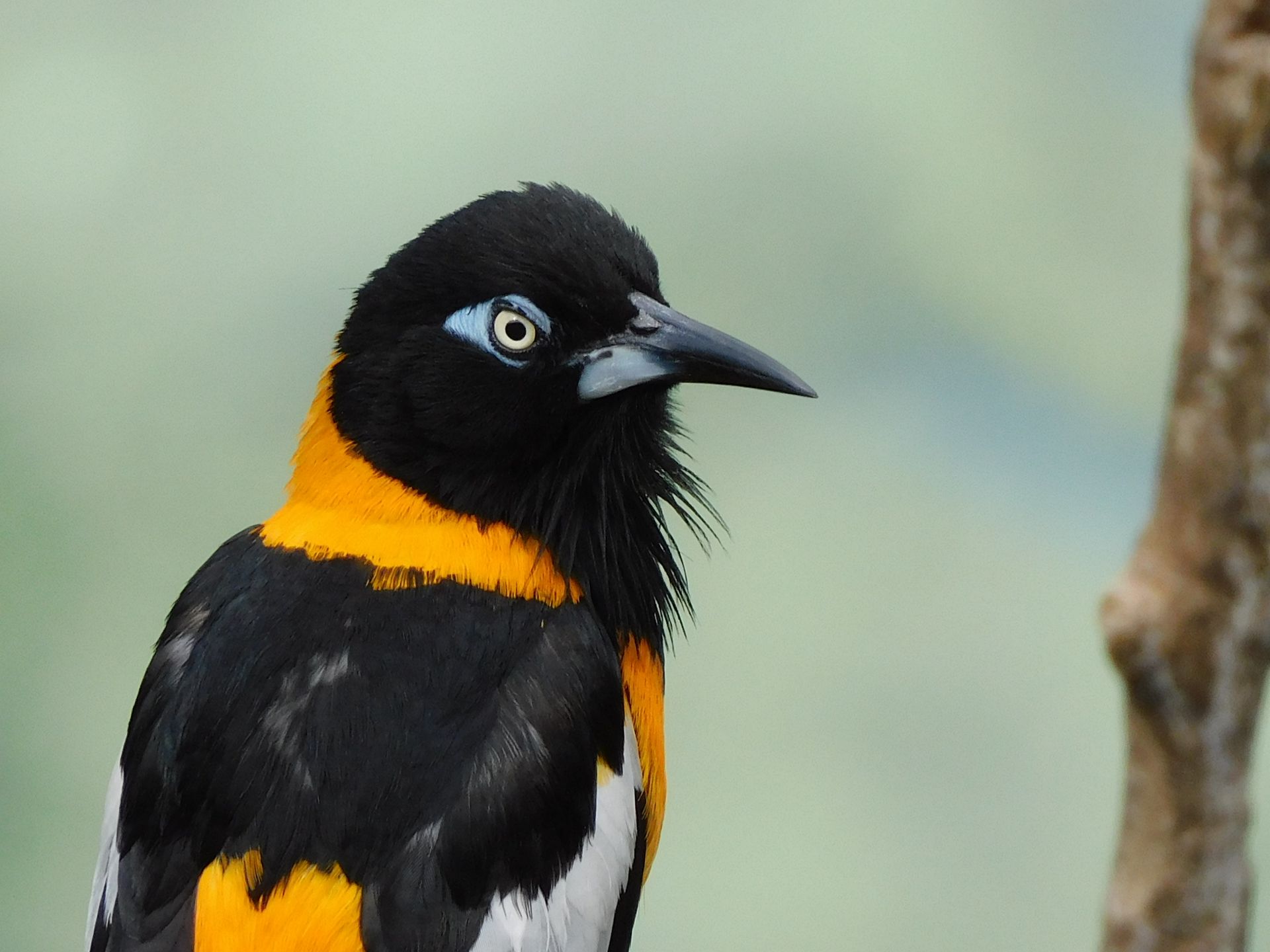
Thirteen species of Troupials and Allies have been recorded in New Jersey alone. This is a testament to the diversity of bird species found in the region.
Here are some of the species found in New Jersey:
- Yellow-headed blackbird, Xanthocephalus xanthocephalus
- Red-winged blackbird, Agelaius phoeniceus
- Common grackle, Quiscalus quiscula
- Boat-tailed grackle, Quiscalus major
These birds can be found in a variety of habitats, from wetlands to backyards. They're an important part of the ecosystem, serving as both predators and prey for other birds and animals.
Invasive Birds
The birds that are invasive in New Jersey are a concern for locals and bird enthusiasts alike. They can outcompete native birds for resources and alter ecosystems.
The Rock Pigeon, Columba livia, is one such invasive species. It's a stout-bodied bird with a short neck and short slender bill.
Invasive birds like the Rock Pigeon can be found in urban areas, where they thrive in human-altered environments. They're often seen in cities and towns, scavenging for food.
The Brown-headed Cowbird, House Sparrow, House Finch, and Monk Parakeet are also invasive birds in New Jersey. They're known to displace native bird species and cause ecological harm.
Here are some of the invasive birds found in New Jersey:
These birds can be identified by their distinctive characteristics and behaviors. If you're interested in learning more about invasive birds in New Jersey, there are many resources available.
Pheasants and Grouse
Pheasants and Grouse are a group of terrestrial birds that are quite fascinating. They belong to the order Galliformes and family Phasianidae.
These birds are variable in size, but generally plump with broad, relatively short wings. Many species are gamebirds or have been domesticated as a food source for humans.
In New Jersey, four species of Pheasants and Grouse have been recorded. Let's take a look at some of them:
- Wild turkey, Meleagris gallopavo
- Ruffed grouse, Bonasa umbellus
- Greater prairie-chicken, Tympanuchus cupido (Ex)
- Ring-necked pheasant, Phasianus colchicus (I)
The Wild turkey is one of the species found in New Jersey.
New World Quail
The New World quails are small, plump terrestrial birds only distantly related to the quails of the Old World, but named for their similar appearance and habits. They're quite unique.
One species, the Northern bobwhite, has been recorded in New Jersey. You might spot one in the wild if you're birdwatching in the area.
These birds are indeed small and plump, which makes them quite adorable.
Frequently Asked Questions
Is there a free app to identify birds by photo?
Yes, Merlin Bird ID is a free app that helps identify birds using photos, sounds, and other features. Download it to start exploring the world of birds with a global bird guide at your fingertips.
Who can help me identify a bird?
The Cornell Lab's Merlin app can help you identify a bird with instant assistance, and the Cornell Lab's All About Birds online guide provides a comprehensive bird guide for further learning.
Featured Images: pexels.com