Betta fish are a popular choice for aquarium enthusiasts, and it's easy to see why. They're relatively low maintenance and can thrive in small spaces.
Betta fish are native to Thailand and can be found in the wild in slow-moving bodies of water such as ponds, lakes, and rice paddies.
Their natural habitat is warm and tropical, with temperatures ranging from 76 to 82 degrees Fahrenheit.
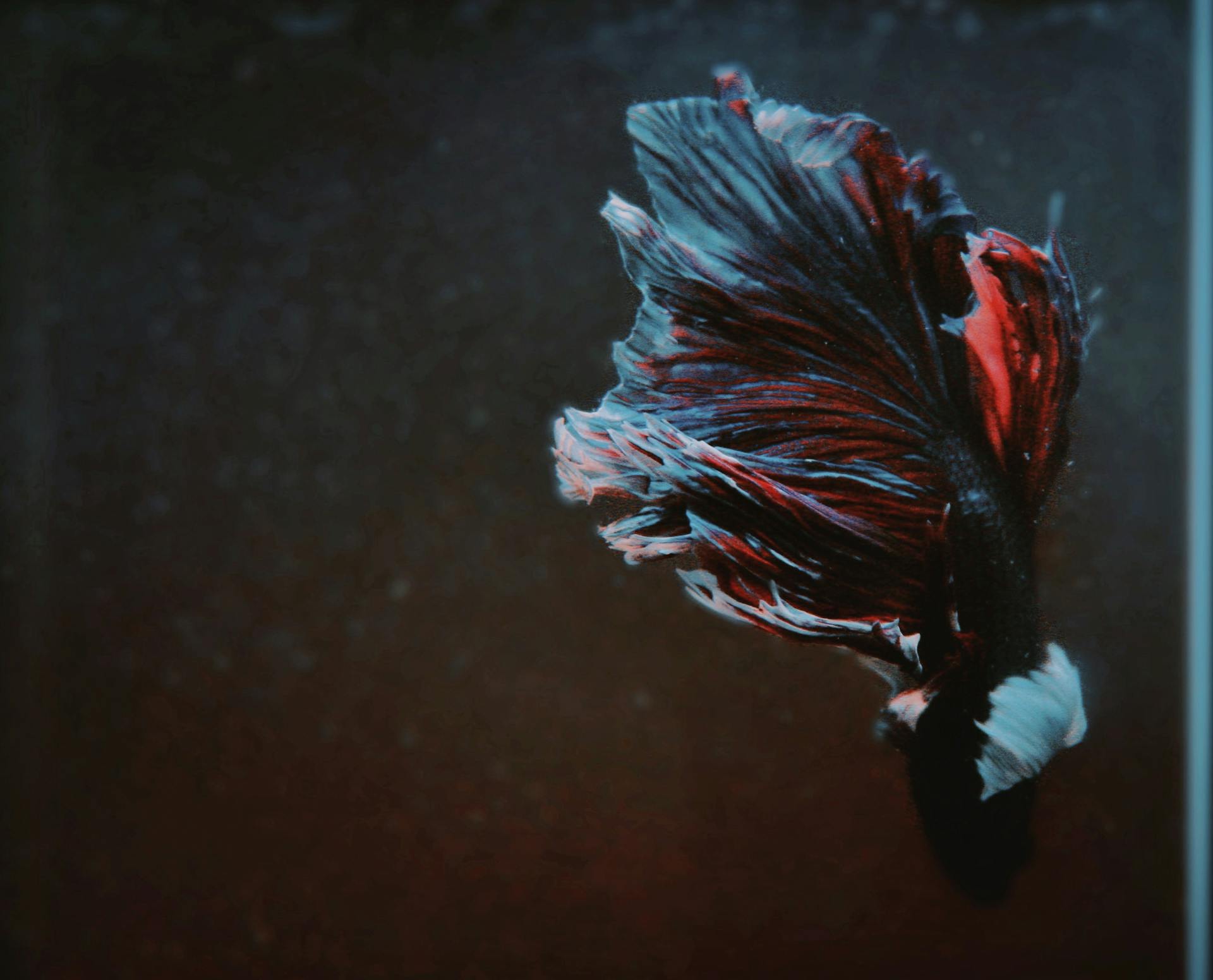
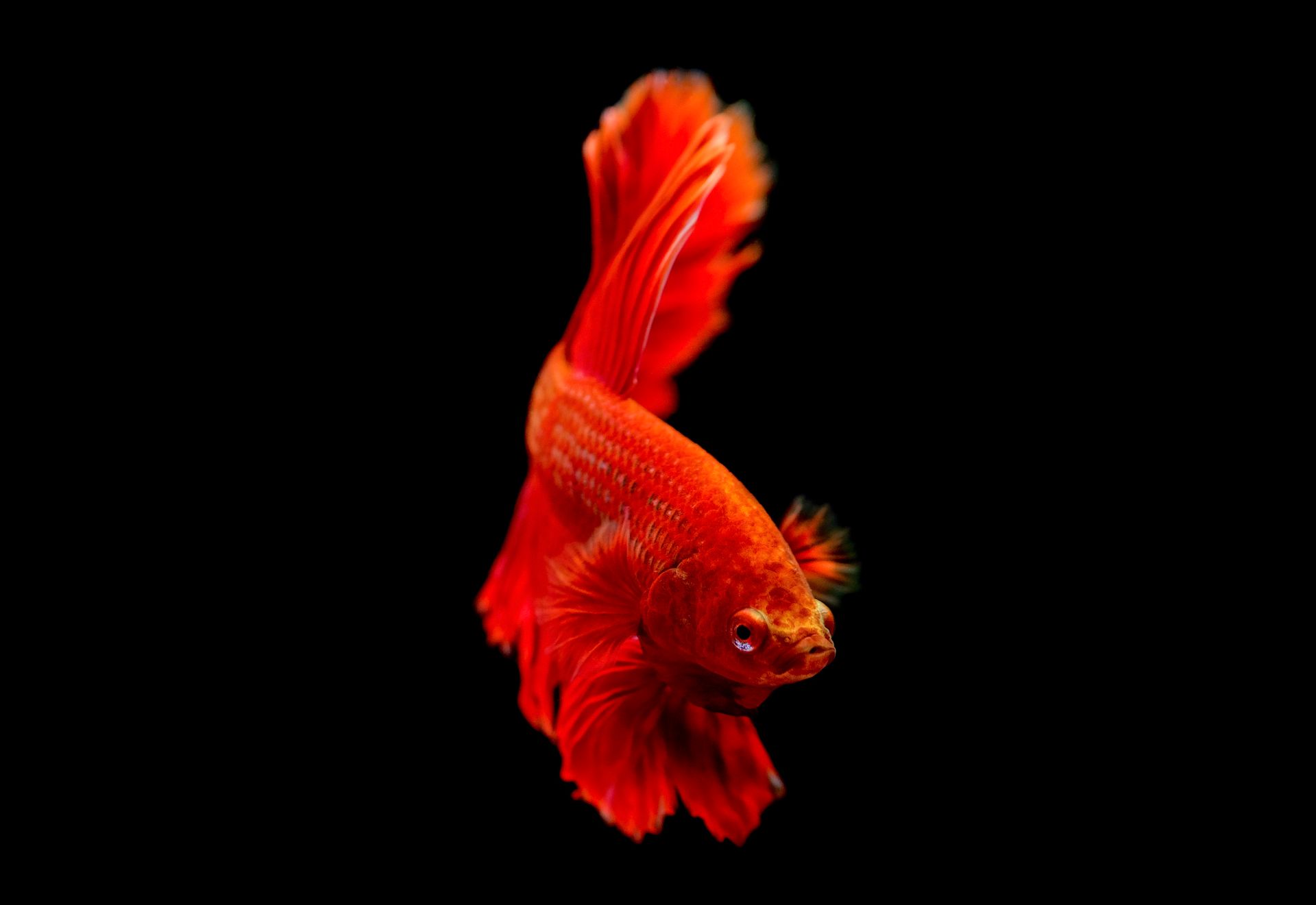
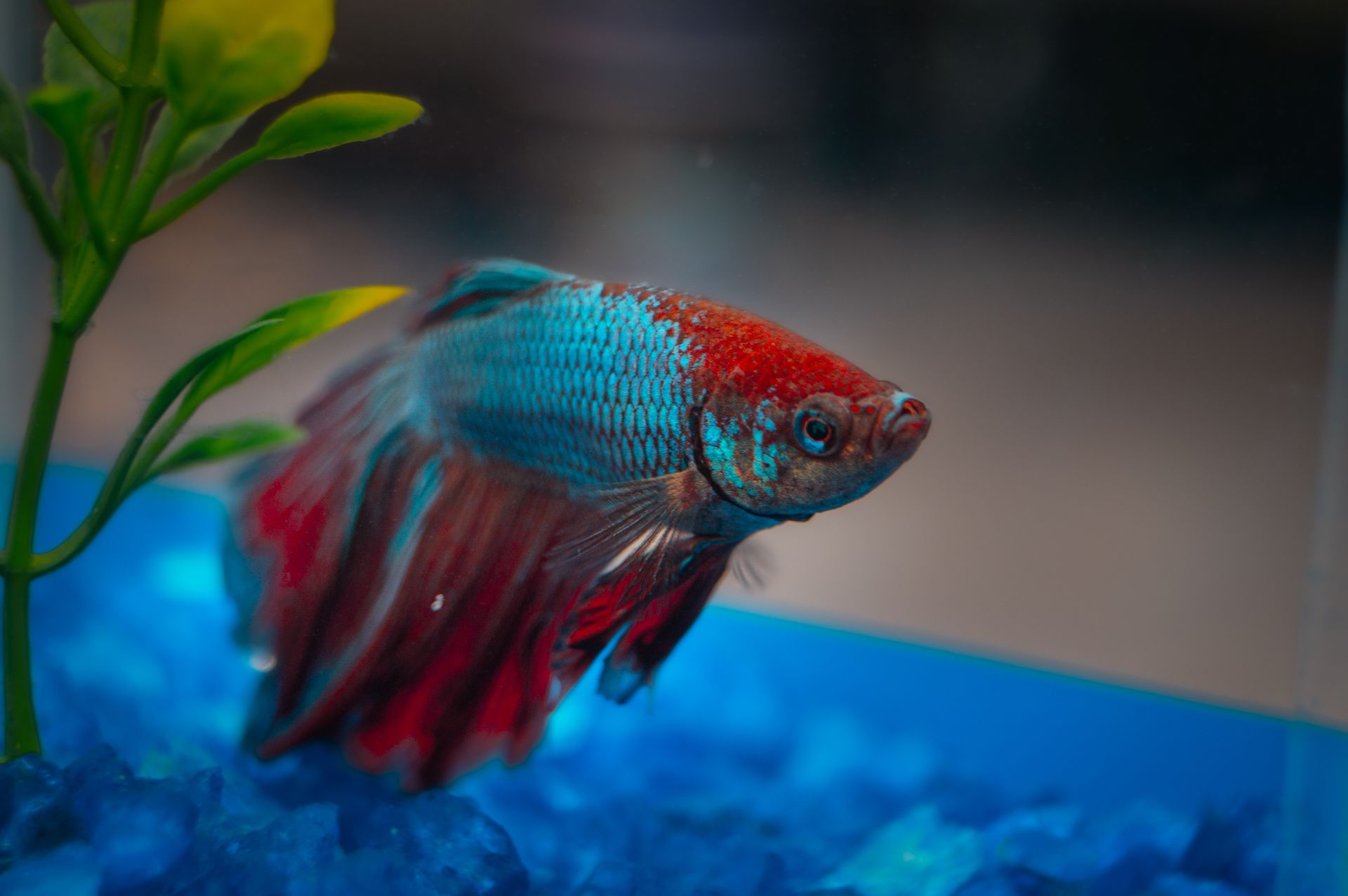
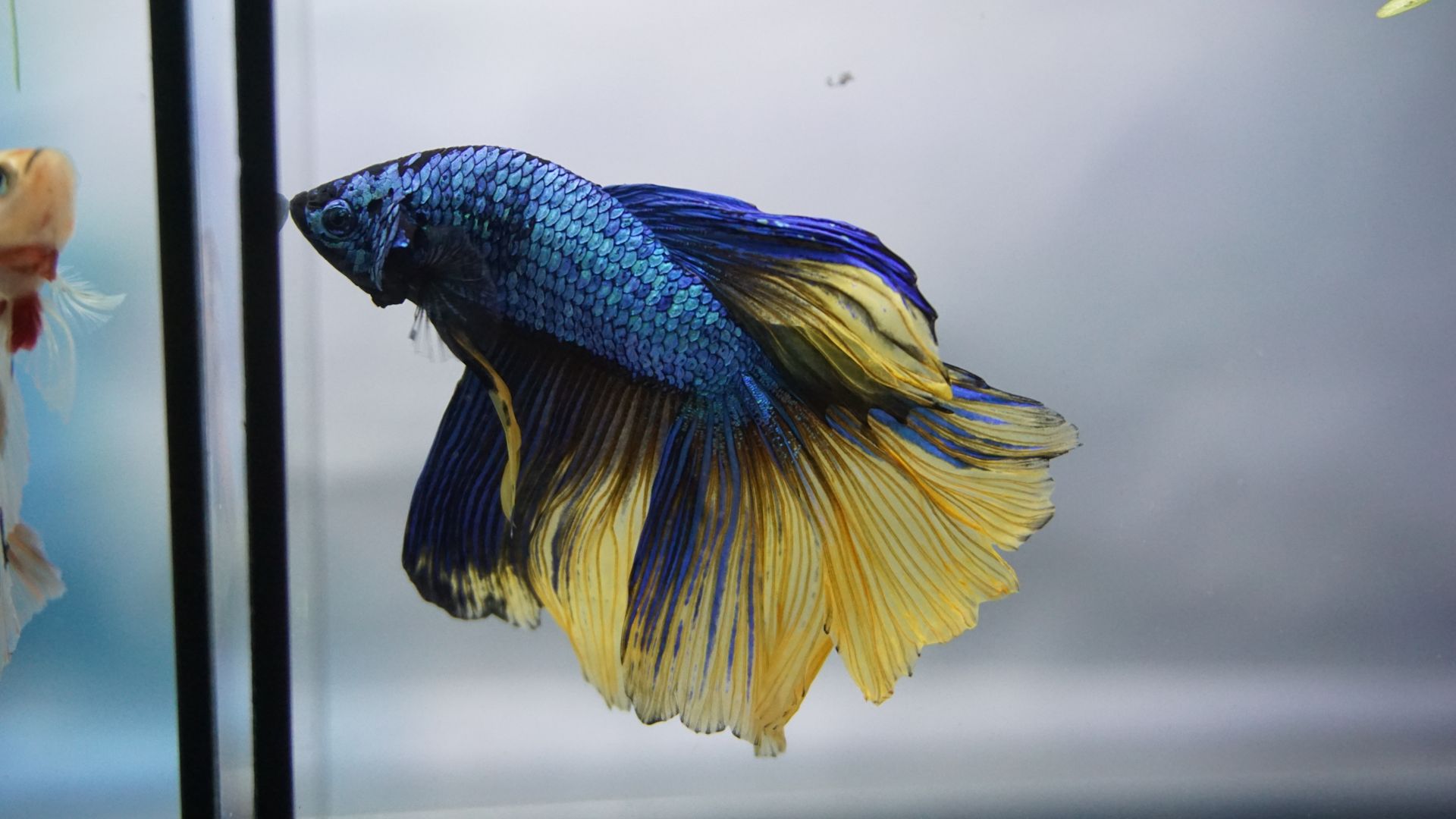
Betta fish are known for their vibrant colors and elaborate fins, which can be a real showstopper in a well-designed aquarium.
Betta Care and Environment
To keep your betta happy and healthy, it's essential to maintain a stable water temperature between 76°F and 81°F. This tropical temperature range is crucial for their well-being.
The water temperature in your betta's tank should be checked regularly with a thermometer. If your home is kept at a lower temperature, an in-tank water heater will be needed to maintain the ideal temperature range.
A low-flow filtration system is preferred to keep the environment clean of toxins. This gentle filtration system will prevent injury to your betta's delicate fins.
Toxic chemicals like chlorine and chloramine can be found in tap water, which can cause immunosuppression or make your betta very sick. Use a dechlorinating product or bottled water to avoid these issues.
Betta fish are carnivores that eat insects and insect larvae, so they need a balanced pelleted or flaked food daily. Overfeeding can lead to obesity and other health issues, so only feed your betta the amount it can eat within 3 to 5 minutes.
Adding plants to your betta's tank can provide enrichment and hiding places, but they are not a food source. They can, however, help to improve water quality by absorbing excess nutrients.
Betta Breeding and Reproduction
Betta fish breeding and reproduction is a fascinating process.
A breeding pair's success is influenced by several factors, including their diet. Undernourished and underfed fish rarely mate successfully.
To promote healthy breeding, feeding your colony live, newly hatched brine shrimp at least once a day is essential. This has been observed to increase mating success rates.
In our experience, a 5-L acrylic tank (30 cm × 12 cm × 22 cm high) with brown paper covering 3 sides can be an effective setup for mating.
Breeding and Reproduction
Setting up a breeding tank for betta fish is crucial for successful mating. We use 5-L acrylic tanks with brown paper covering 3 sides to prevent the breeding pairs from seeing into adjacent tanks or being disturbed.
To keep the water at the right temperature, we place flat heat mats below the tanks. This helps maintain a water temperature of 28°C, ideal for betta fish breeding.
A floating substrate is essential for the male to build his nest. We use dried Indian almond leaves, which not only provide a surface for the nest but also release tannins that slightly reduce the pH and may decrease the risk of disease.
To provide places for the fish to hide from aggressive partners, we add items like plastic cylinders, terracotta pots, and either silk or live plants to the tank. This helps reduce stress and promotes successful mating.
Maintaining high humidity in the mating tank is also crucial. We cover the tanks with acrylic covers to maintain 90% humidity, which helps keep the bubble nest intact.
A number of variables contribute to the successful mating of a breeding pair. Females that appear gravid and males that build bubble nests in their home tanks make ideal breeders.
Feeding the adult colony live, newly hatched brine shrimp at least once per day is essential for successful mating. We've found that undernourished and underfed fish rarely mate successfully.
The mating success rate can be as low as 30% if the fish are not fed properly. We've tried feeding our adult colony only dried food, but the mating success rate fell significantly.
In our experience, keeping the breeding pair in the mating tank for longer than 3 days can reduce the chances of successful mating.
Explore further: Can African Dwarf Frogs Live with Bettas
Juvenile Stage (31-62 Dpf)
At 30 days post-fertilization (dpf), or when fish reach approximately 1 cm in length, we move them to 35-L grow-out tanks. These tanks are designed to promote healthy growth and minimize ammonia levels.
We keep fish at a density of 0.5 to 1 fish per L in these tanks, which is similar to the practices we observed in betta farms in Thailand. This density is key to preventing overcrowding and promoting optimal growth.
Juveniles in our grow-out tanks are fed newly hatched brine shrimp 2 to 4 times daily. The amount of shrimp fed is carefully measured to ensure it can be consumed within 5 to 15 minutes.
The grow-out tanks contain rocks, terracotta pots, and silk and/or live plants. These features provide places for the fish to hide and help reduce ammonia and nitrite levels in the tanks.
We use a recirculating system to replace 100% of the water daily, eliminating the need for time-consuming daily manual water changes. This system is a game-changer for maintaining healthy water conditions.
To remove debris from the bottom of the grow-out tank, we siphon the bottom of each tank at least once per week. For tanks containing fish under 2 cm long, we add a piece of mesh to the end of our siphon to avoid accidentally siphoning up any tank inhabitants.
Betta Housing and Health
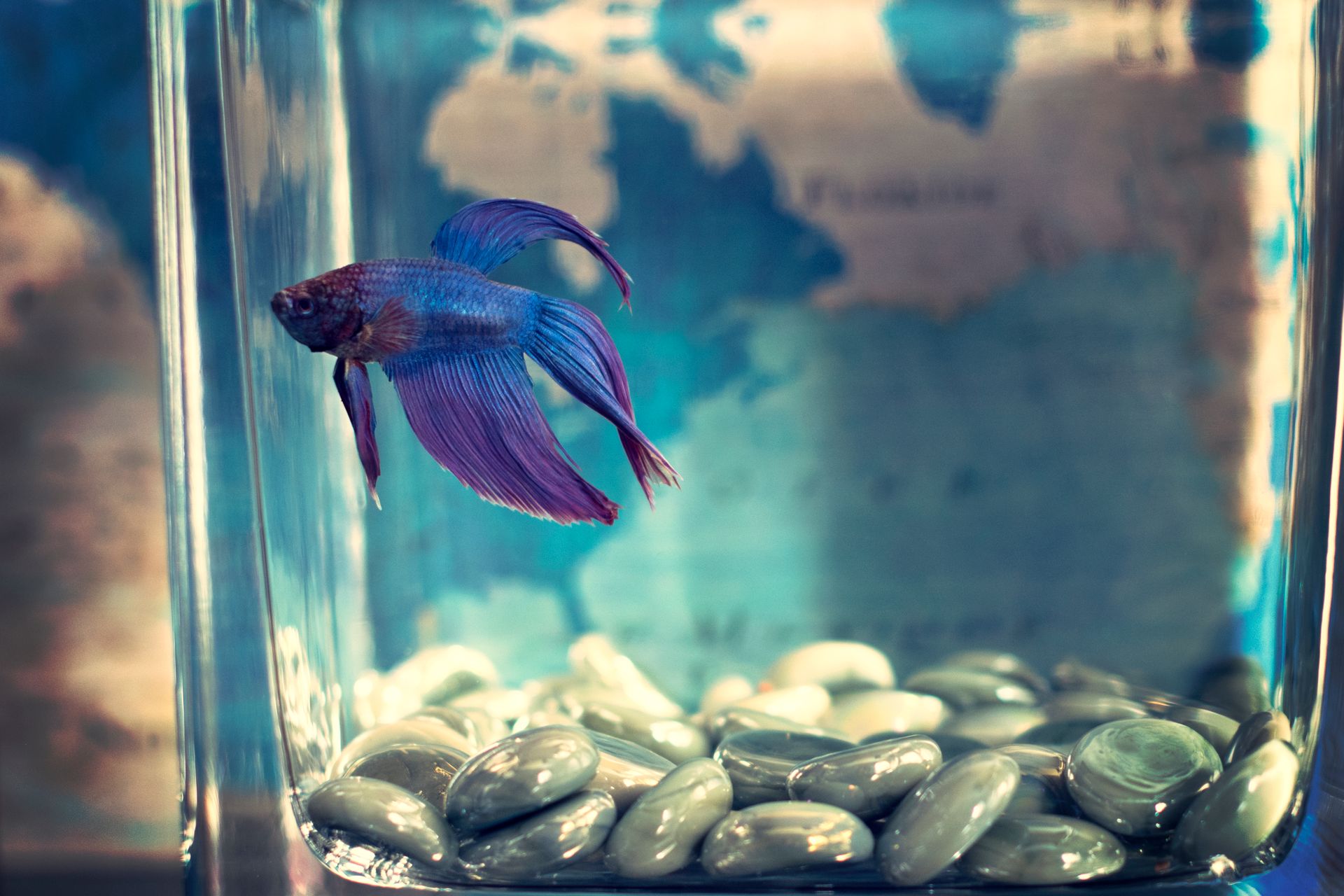
Betta fish need a spacious environment to thrive. A 5-gallon glass or plastic tank is ideal for housing a betta fish, as it allows for normal swimming and hiding behavior.
Betta fish can be sensitive to their surroundings, so it's essential to choose decorations wisely. Avoid decorations with sharp edges that can tear the delicate fins of your betta fish.
A well-placed decoration can add visual interest to the tank, but it's crucial to remember that the fish should have enough space to swim around and explore its entire tank. Don't overcrowd the tank with too many decorations.
Betta fish are often seen living in small bowls, but this is not a healthy environment for them. A larger tank will help reduce the buildup of toxins in the water, keeping your betta fish healthy and happy.
Betta Origin and Evolution
Betta fish originate from the Mekong and Chao Phraya river basins in Thailand, specifically from shallow, nearly stagnant waters like marshes and rice paddies.
These fish are part of the family Osphronemidae, and a total of 73 kinds of betta live in freshwater environments of Southeast Asia.
In the wild, betta fish are usually small, ranging from 2.4 to 3.1 inches long, and live for about two years on average.
Genetic Model for Evolution of Development and Behavior
Betta fish have a unique evolutionary history that makes them an ideal species for studying the evolution of behavior and morphology.
The betta genome is one of the most compact vertebrate genomes, at 440-450 Mb, which makes sequencing-based studies more cost-effective.
Betta splendens, the most common domesticated betta species, has a rich genetic and genomic history, with annotated reference genomes available for both wild and domesticated individuals.
Previous studies have examined the Mendelian inheritance patterns underlying certain morphologic traits, such as Cambodian patterning and blue coloration.
Recent work using genome-wide association studies and quantitative trait analyses has uncovered candidate genes involved in sex determination, coloration, and fin shape.
These studies have laid the groundwork for future research using modern genetic tools, such as CRISPR/Cas9-induced mutations.
The betta genus has over 70 recognized species, with new ones being described, making them a great model for studying population genetics and domestication.
Genomic analyses have revealed that betta were likely domesticated over 400 years ago, and genetic evidence suggests that modern domesticated betta have hybridized with other species in the B. splendens species complex.
Origin of Fish
Betta fish originate from the Mekong and Chao Phraya river basins in Thailand. They live in shallow, nearly stagnant waters such as marshes, flood plains, and rice paddies.
There are 73 kinds of betta that live in freshwater environments of Southeast Asia, and all of these varieties belong to the family Osphronemidae.
Wild bettas are usually small, about 2.4 to 3.1 inches long, and live for about two years on average.
Male bettas in the wild have dull green coloration and short fins, which they use to attract mates and ward off predators.
In the wild, bettas eat unlucky insects that fall into the water, as well as small crustaceans, mosquito larvae, and other aquatic arthropods.
Figure 3
Betta mating setups can be quite fascinating. A typical setup consists of a 5-L static mating tank with plants and stones for the fish to hide.
The male betta will often build a bubble nest under an Indian almond leaf. This is a crucial part of the mating process.
A nongravid female betta looks quite different from a gravid one. The gravid female has a rounded belly, a clear sign that she's ready to mate.
In our experience, separating the male and female betta before mating is not necessary. In fact, it can even increase the work required without improving mating success rates.
Interesting Facts and Figures
Betta fish are quite fascinating creatures, and here are some interesting facts about them.
Bettas prefer slightly acidic water, with a pH level between 6.5 and 7. This is crucial for their health, as cold water can suppress their immune system and cause illness.
Their tails come in different shapes, including the "veil tail", which is the most common. I've seen some beautiful betta fish with these unique tails in pet stores.
Bettas can live for 2-3 years on average, but some have been known to live well into their teens. With proper care, you can enjoy your betta fish's company for a long time.
The betta fish is also known as "plakad" in its native Thailand, where it's often referred to as "The Jewel of the Orient." This nickname is well-deserved, given their stunning appearance.
Here are some common tail shapes of betta fish:
- Veil tail
- Half-moon tail
- Double tail
- Short-finned fighting-style tail
- Crown tail
Betta Behavior and Psychology
Betta are naturally aggressive creatures, especially when it comes to other males. They will flare their fins, erect their gill covers, and perform lateral tail beating movements to assert dominance.
This aggression can be triggered by visual cues alone, making betta a unique model for studying visually evoked aggression. Unlike other model organisms like mice and fruit flies, betta aggression doesn't rely on olfactory cues.
Male betta are also devoted parents, creating bubble nests for their developing offspring by blowing mucus-coated bubbles at the surface of water. They will retrieve up to 90% of the fallen eggs in their mouth and place them into the bubble nest, with limited help from the female.
Model for Social Behaviors and Neurobiology
Betta are a unique model for studying complex social behaviors, making them a fascinating subject for research.
Aggression in betta is highly robust and stereotyped, with male betta displaying distinct behaviors such as flared fins, erected gill covers, and lateral tail beating movements when presented with an opponent male.
Male betta can even engage in this behavior if they are in separate tanks, and it can be elicited by allowing the fish to see their reflection in a mirror.
Visual cues alone are sufficient to evoke an aggressive response in betta, making them particularly suitable for the study of visually evoked aggression.
Betta are also useful as a model for studying paternal behavior, with male betta creating a bubble nest for developing offspring by blowing mucus-coated bubbles at the surface of water.
In fact, male betta can retrieve up to 90% of the fallen eggs in their mouth and place them into the bubble nest, with limited help from the female.
The male usually stays in the immediate area, picking up fallen eggs or larvae in his mouth and returning them to the bubble nest, where they remain for up to 3 days.
This unique behavior has been characterized in laboratory studies, revealing the composition of bubble nests and how nest characteristics are altered by environmental conditions and competition for resources.
Figure 7
Figure 7 showcases the grow-out tanks used for housing juvenile and adult betta raised in-house. These tanks are 35 L in size and stocked at 0.5–1 fish/L.
The recirculating system is connected to the grow-out tanks, which helps maintain a healthy environment for the betta. This system is a crucial aspect of the facility's setup.
The grow-out tanks contain numerous hiding places, which is essential for the betta's well-being. This provides them with a sense of security and helps reduce stress.
In the 3 years after installing the recirculating system, the facility has seen no cases of velvet in their colony.
Featured Images: pexels.com