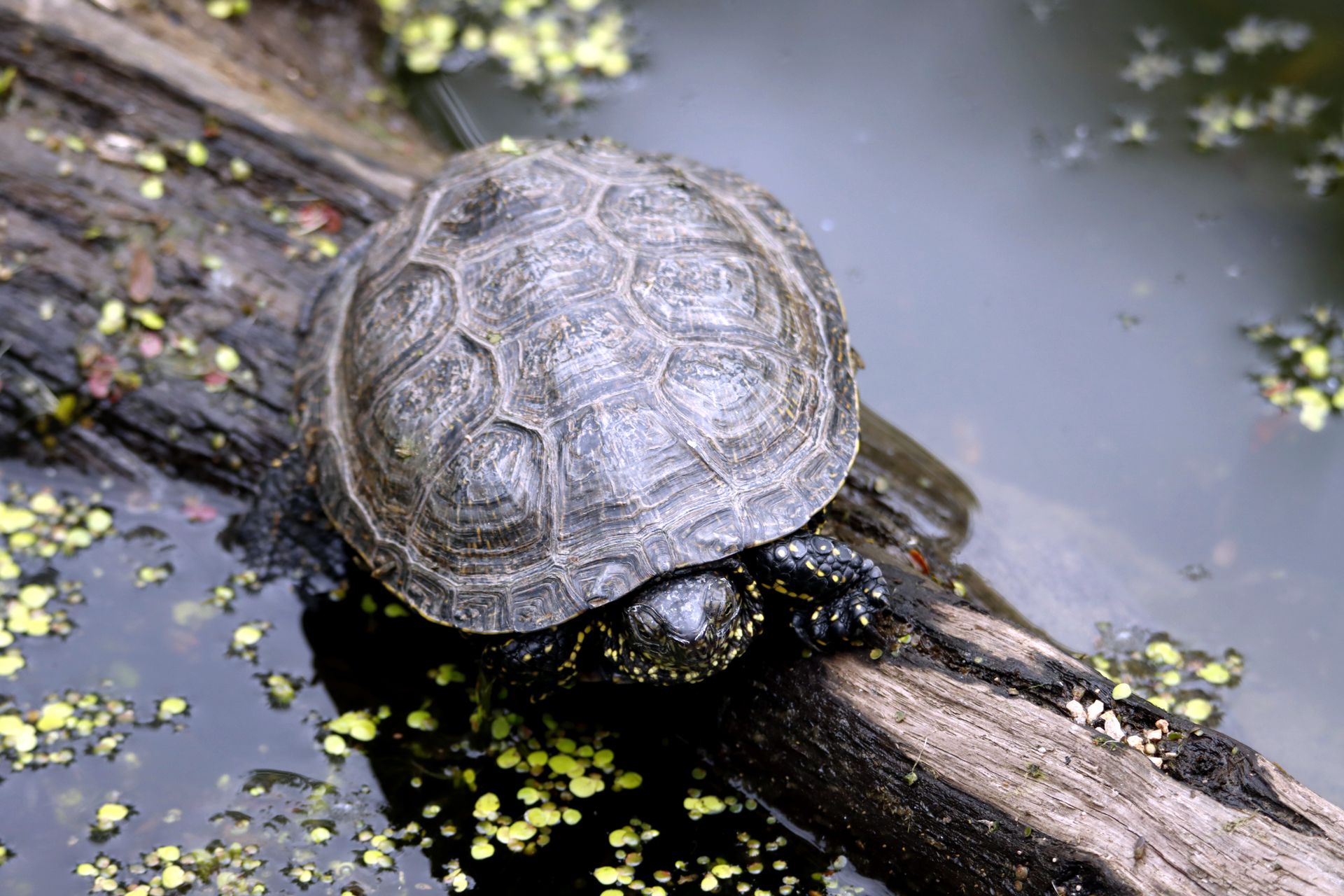
Batagur conservation is a pressing issue that requires immediate attention. The Batagur species is facing a severe threat to its survival, with many populations dwindling to alarmingly low levels.
The main culprit behind this decline is habitat loss and degradation, which has led to a significant reduction in the availability of suitable breeding and nesting sites for the Batagur. This has resulted in a substantial decrease in the species' population.
In addition to habitat loss, the Batagur is also threatened by the introduction of non-native species, which can compete with it for food and habitat. This has further exacerbated the decline of the Batagur population.
Conservation efforts are underway to protect the Batagur, but it's a race against time. With many populations on the brink of extinction, every moment counts.
Related reading: Psammobates
Conservation Status
The Batagur baska is listed as Critically Endangered, which means it's at high risk of extinction in the wild. This classification is a result of habitat loss and degradation, as well as over-exploitation for the pet trade.
Conservation efforts are underway to protect this species. In 1988, the West Bengal Forest Department initiated a captive breeding program, which relocated 645 eggs to be artificially incubated and the hatchlings reared in captivity. Unfortunately, less than 50% of these eggs hatched.
A more recent conservation program was initiated in 2012 in the Sundarban Tiger Reserve, with an initial population of 12 individuals. Since then, the population has increased to 397 individuals, housed across seven camps in the reserve. However, there is no official number for the Batagur baska population in the wild.
The conservation program struggles with a funding shortage, with the total sanction for the program for 2023-24 being around Rs. 2.5 crores, but only Rs. 40 lakhs being released. This has resulted in a fund crunch for meeting the project objectives.
Here are some key facts about the conservation status of the Batagur baska:
Population Demography
The demographic pattern of Batagur dhongoka is a fascinating topic. A multimodal distribution shaped graph, as seen in the mismatch distribution analysis, suggests that the population size has been relatively stable over a long period.

This stability is further supported by the results of Tajima's D and Fu's Fs tests, which indicate a non-significant value, suggesting a stable population size. The effective population sizes and demographic trends were also estimated by the Bayesian skyline plot (BSP) analysis.
The Bayesian Skyline Plot analysis revealed a historical stability in the effective population size, followed by growth, and a recent reduction since 2 thousand years. This reduction is a cause for concern and highlights the need for conservation efforts.
Cites Status
The conservation status of the river terrapin (Batagur baska) is a pressing concern.
The river terrapin is listed as endangered, which means it is at high risk of extinction in the wild. This classification is a result of habitat loss, hunting for its meat and eggs, and the introduction of non-native species that compete with it for food and habitat.
According to the IUCN Red List, the river terrapin is listed as Vulnerable in some parts of its range, but Endangered overall. This classification is based on its declining population trend and the ongoing threats it faces.

The river terrapin's conservation status varies by region, with some areas having more severe threats than others. In the Sundarbans of India, for example, the species is listed as Endangered due to habitat loss and hunting.
The conservation status of the river terrapin is a complex issue, with multiple factors contributing to its decline. Addressing these threats will require a collaborative effort from governments, conservation organizations, and local communities.
Here is a summary of the CITES status of the river terrapin:
It's essential to note that the conservation status of the river terrapin can change over time, and it's crucial to stay up-to-date with the latest information.
Race Against Extinction
The Batagur baska, a critically endangered species, is racing against extinction. The West Bengal Forest Department initiated a captive breeding program in 1988, but it was abandoned in the late 1990s due to administrative reasons.
The program was restarted in 2008 under a collaboration between Turtle Survival Alliance (TSA) India and the forest department. The in-situ conservation program for Batagur baska was initiated in Sajnekhali, Sundarban Tiger Reserve (STR) in 2012 with an initial population of 12 individuals.
The total population has increased to 397 individuals till now, and these captive individuals are housed across seven camps in STR. However, there is no official number for the Batagur baska population in the wild.
Satellite transmitters could only track the movement of the turtle for less than two years due to technical challenges. This highlights the need for more effective tracking methods to monitor the species in the wild.
The conservation program struggles with a funding shortage, with a total sanction of around Rs. 2.5 crores under the Integrated Development of Wildlife Habitats (IDWH) for 2023-24, but only Rs. 40 lakhs were released.
Here's a breakdown of the conservation efforts for Batagur baska:
Conservation Efforts
Conservation efforts for Batagur species require a multi-faceted approach. Protecting core habitats and breeding grounds is crucial, especially for the Critically Endangered B. dhongoka.
Illegal poaching and hunting must be tackled to ensure the species' survival. Habitat monitoring and maintenance without disturbance are also essential.
Conservation efforts should be executed in collaboration with neighboring countries, as the Batagur baska is a transboundary species. This is particularly important for the species' reintroduction and repopulation in the wild.
Transboundary Conservation
Transboundary Conservation is crucial for the survival of species like Batagur baska and B. dhongoka. Conservation efforts should be executed in collaboration with neighboring countries to ensure the success of conservation programs.
The conservation of Batagur baska, a transboundary species, requires collaboration with Bangladesh, as the turtles thrive in the habitats of Bangladesh. Concerted efforts are essential to reintroduce and repopulate them in the wild.
India is working vigorously to conserve the species, but transboundary conservation efforts, including collaboration with Bangladesh, are necessary to conserve Batagur baska. This is a critical step towards maintaining a relatively large and healthy effective population size.
Protecting core habitats and breeding grounds, tackling illegal poaching and hunting, and monitoring and maintaining habitats without disturbance are essential conservation measures for species like B. dhongoka.
Propagation of Turtles at the Bronx Zoo
The Bronx Zoo is a leader in turtle conservation, and one of its most notable efforts is the propagation of turtles in its breeding program. The zoo's breeding program focuses on endangered species, such as the African spurred tortoise and the red-eared slider.
The African spurred tortoise is a critically endangered species, with only a few hundred individuals remaining in the wild. The Bronx Zoo's breeding program has successfully hatched over 100 African spurred tortoise hatchlings since its inception.
The red-eared slider, on the other hand, is a common species in the zoo's breeding program, with over 500 hatchlings produced annually. The zoo's conservation efforts focus on releasing the hatchlings into the wild to help replenish declining populations.
The Bronx Zoo's turtle breeding program is a collaborative effort with other zoos and conservation organizations, ensuring the long-term survival of these species.
Take a look at this: Giant Tortoise in the Galapagos Islands
Threats and Implications
The Batagur species, specifically the B. dhongoka, faces significant threats to its survival. Conservation efforts are crucial to protect its genetic diversity.
Illegal poaching and hunting are major concerns for the B. dhongoka, making conservation management a top priority. Its habitat should be continuously monitored and maintained without disturbance.
Protecting the core habitats and breeding grounds of the B. dhongoka is essential for its survival. Reconnecting its habitat across its range can help maintain a relatively large and healthy population size.
Conservation efforts should focus on supporting and developing management strategies for the B. dhongoka. This will not only benefit the species but also many threatened sympatric turtle species in the Ganga river basin.
Frequently Asked Questions
How big are Batagur turtles?
Batagur turtles can grow up to 56 cm in shell length and weigh 25 kilograms, with females being significantly larger than males.
What is the common name for Batagur baska?
The common name for Batagur baska is the northern river terrapin. It is a species of riverine turtle native to Southeast Asia.
Featured Images: pexels.com


