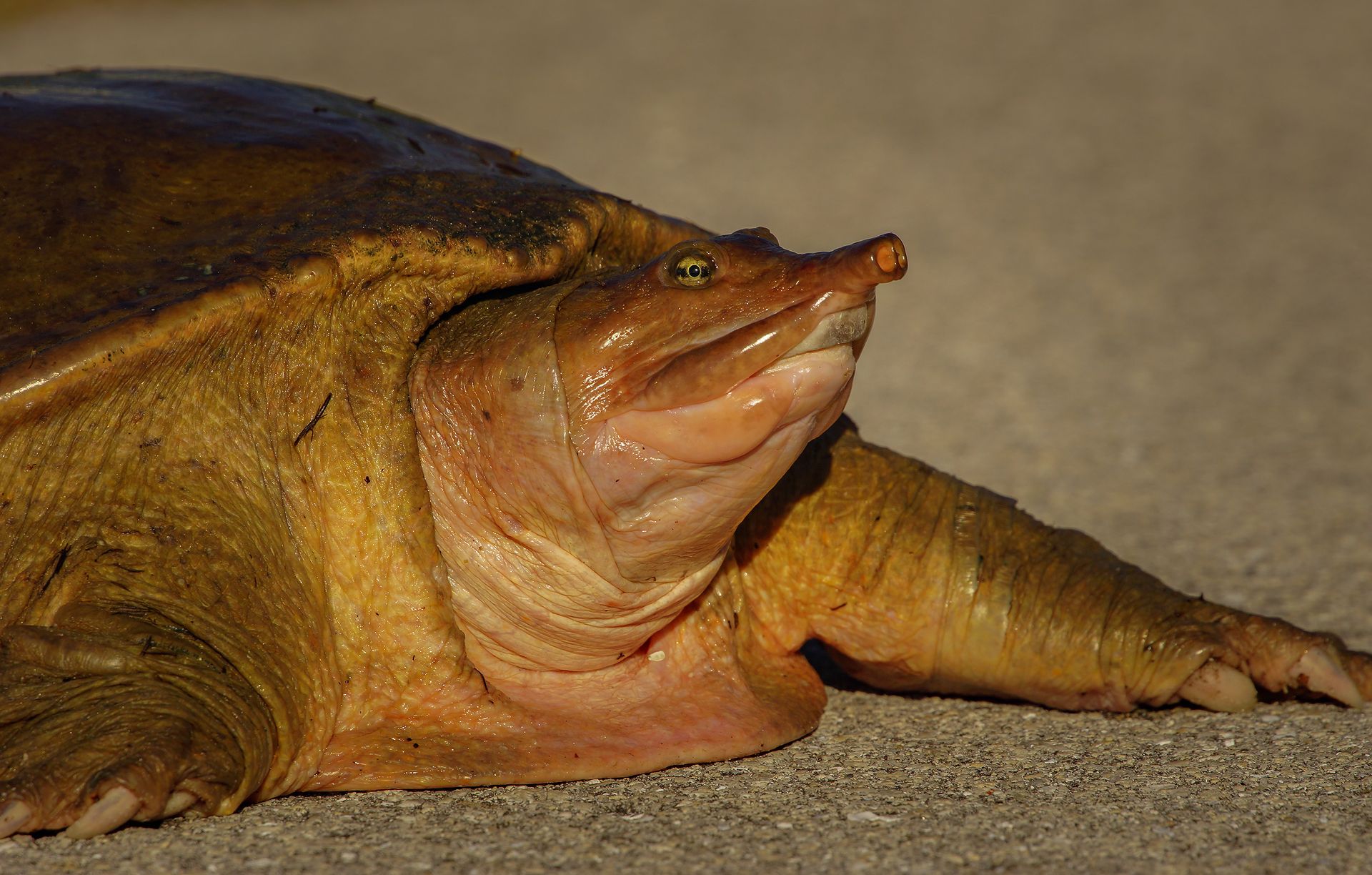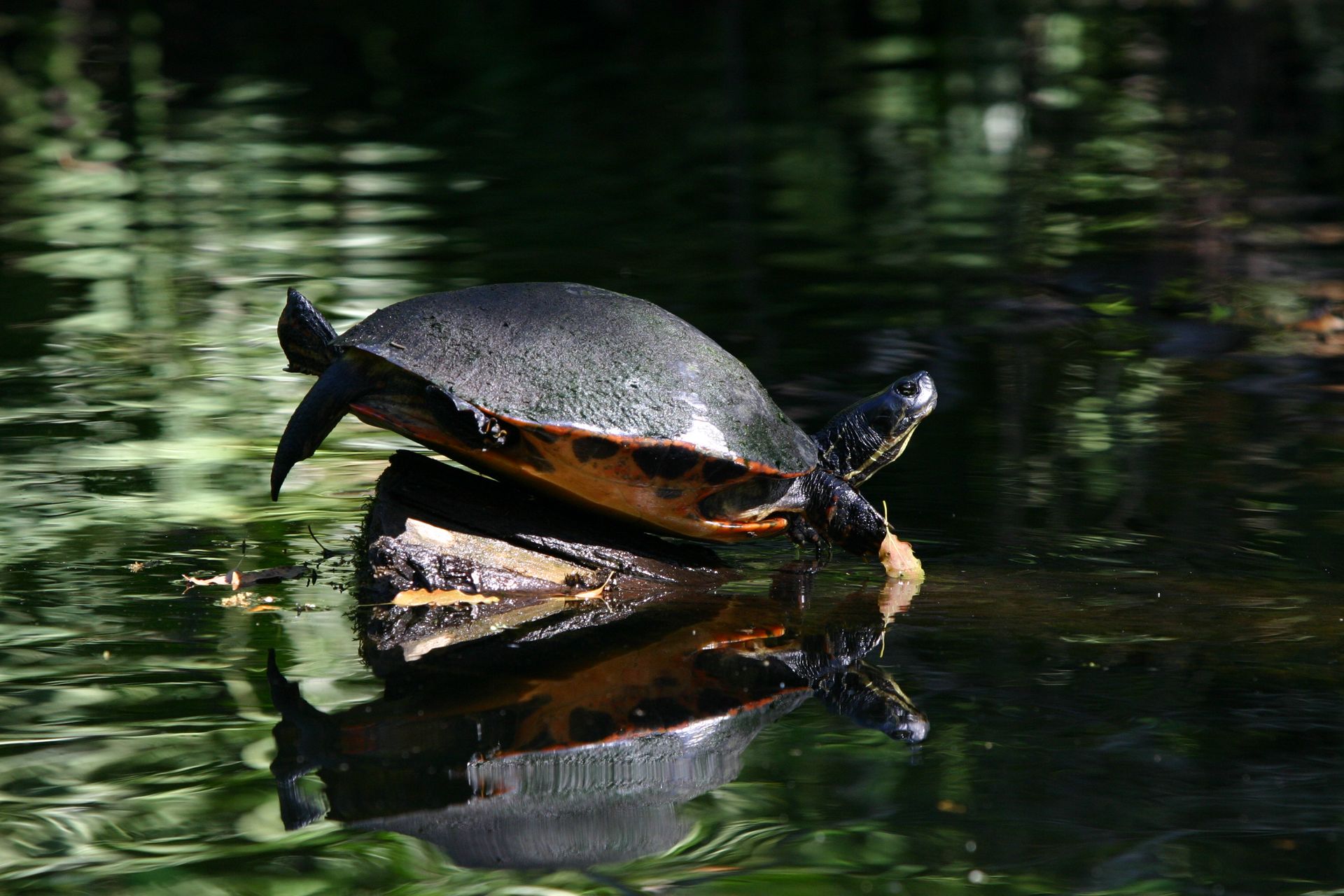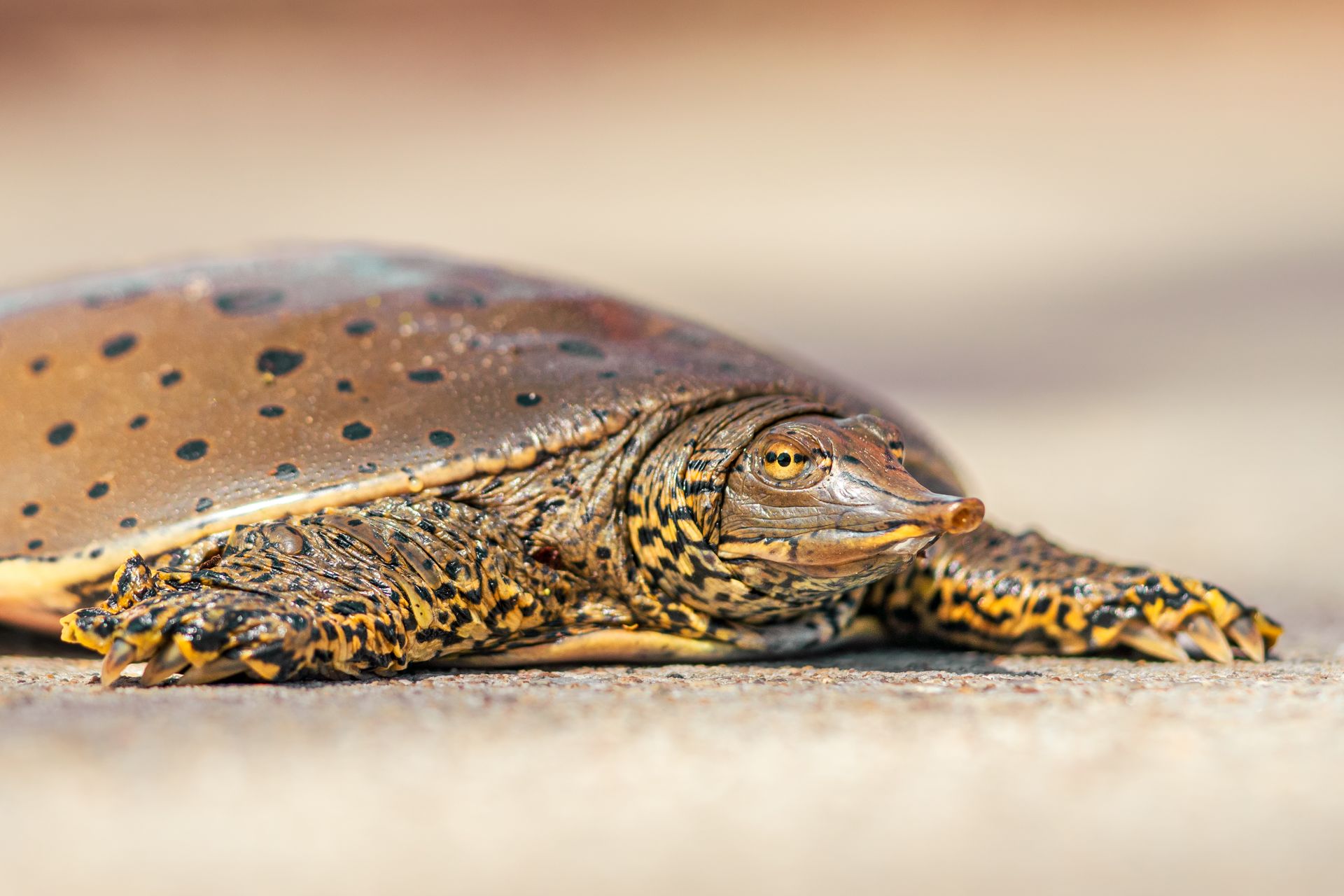
The Asiatic Softshell Turtle is a unique and fascinating species. They belong to the family Trionychidae and are found in the freshwater habitats of Asia.
Their shell is soft and pliable, which is a distinctive characteristic of this species. This adaptation allows them to withdraw their heads and limbs into their shell for protection.
Asiatic Softshell Turtles are carnivores and feed on a variety of aquatic animals, including fish, crustaceans, and insects. They are skilled hunters and can be found in a range of aquatic environments, from slow-moving rivers to brackish lakes.
Broaden your view: List of Aquatic Reptiles
Classification and Taxonomy
The Asiatic softshell turtle has undergone significant reclassification in recent years. A 2014 study found deep genetic divergence within the species, leading to the splitting of Amyda cartilaginea into three distinct species.
Amyda cartilaginea sensu stricto, A. ornata (the Southeast Asian softshell turtle), and an undescribed species from Borneo are now recognized as separate species. Both Amyda cartilaginea and Amyda ornata branch into further subspecies.
Amyda cartilaginea cartilaginea is found in E. Sunde, E. Borneo, Java, and Sulawesi, while Amyda cartilaginea maculosa is found in Sumatra and West Borneo.
A unique perspective: Common Snapping Turtle Species
Physical Characteristics
The Asiatic softshell turtle is an amazing creature, and one of its most distinctive features is its shell. It grows from 70 to 80 cm (27.6 to 31.5 inches) in length, with a rough appearance in juveniles that smooths out as they age.
The shell is oval in shape, and its color changes with age. Juveniles have a dark brown or black carapace that fades to a soft olive or green-brown color in adults.
One of the most interesting things about the Asiatic softshell turtle's shell is its texture. In adults, it's soft and leathery, which is a big difference from the rough texture of juveniles.
The turtle's head is also quite distinctive, with a black or brown color and yellow dots that sometimes fuse together to form elongated streaks. As the turtle ages, its nape region becomes white or gray.
The Asiatic softshell turtle has a few key adaptations that set it apart from other species. One of the most notable is its elongated snout, which helps it breathe when it's buried in the mud. This is especially important because the turtle can remain submerged in water for extended periods of time.
Here's an interesting read: Common Snapping Turtle Shell
The turtle's neck also has several permanent tubercles that can appear yellow or black. Its limbs have yellow spots, although these are less common and harder to spot.
Here are some key facts about the Asiatic softshell turtle's physical characteristics:
- Shell length: 70-80 cm (27.6-31.5 inches)
- Shell color: Soft olive or green-brown in adults, dark brown or black in juveniles
- Shell texture: Soft and leathery in adults, rough in juveniles
- Head color: Black or brown with yellow dots
- Neck tubercles: Yellow or black, permanent
- Limb spots: Yellow, less common and harder to spot
- Sexual dimorphism: Males have longer and thicker tails than females
Habitat and Distribution
The Asiatic soft-shelled turtle is primarily found in freshwater habitats, including lakes, ponds, canals, and lowland streams. Tropical regions are their preferred habitat.
They can be found in many locations throughout Asia, specifically in countries such as Brunei, Bangladesh, Borneo, Cambodia, India, Indonesia, Laos, Malaysia, Myanmar, Sabah, Sarawak, Singapore, Thailand, and Vietnam. Amyda cartilaginea tends to favor wetlands.
The Asiatic soft-shelled turtle is found in depths ranging from 1 meter near the shore to 12 meters, approaching waterfalls in some areas. They are also found in marshes, swamps, and sizeable muddy rivers at lower elevations.
Here is a list of some of the countries where the Asiatic soft-shelled turtle can be found:
- Brunei
- Bangladesh
- Borneo
- Cambodia
- India
- Indonesia
- Laos
- Malaysia
- Myanmar
- Sabah
- Sarawak
- Singapore
- Thailand
- Vietnam
Habitat
The Asiatic soft-shelled turtle is a freshwater species found in tropical regions. It inhabits areas with depths ranging from 1 meter near the shore to 12 meters, often near waterfalls.
These turtles can be found in various freshwater habitats, including lakes, slow-moving rivers, and fast-flowing rivers that end in waterfalls. They also thrive in marshes, swamps, and sizeable muddy rivers at lower elevations.
The Asiatic soft-shelled turtle has a wide distribution, spanning across several countries in Southeast Asia. Specifically, it can be found in Brunei, Bangladesh, Borneo, Cambodia, India, Indonesia, Laos, Malaysia, Myanmar, Sabah, Sarawak, Singapore, Thailand, and Vietnam.
Here's a breakdown of the turtle's preferred habitats:
- Tropical regions
- Freshwater habitats
- Rainforest terrestrial biomes
- Aquatic biomes of lakes, ponds, canals, and lowland streams
- Wetlands, including marshes, swamps, and sizeable muddy rivers at lower elevations
Note that the turtle's range depth is typically between 1 to 12 meters, with some areas reaching up to 39.37 feet.
Ecosystem Roles
Asiatic soft-shelled turtles play a crucial role in their ecosystem as predators, prey, and sometimes scavengers. Their carnivorous diet helps regulate the populations of fish, amphibians, insects, and crustaceans.
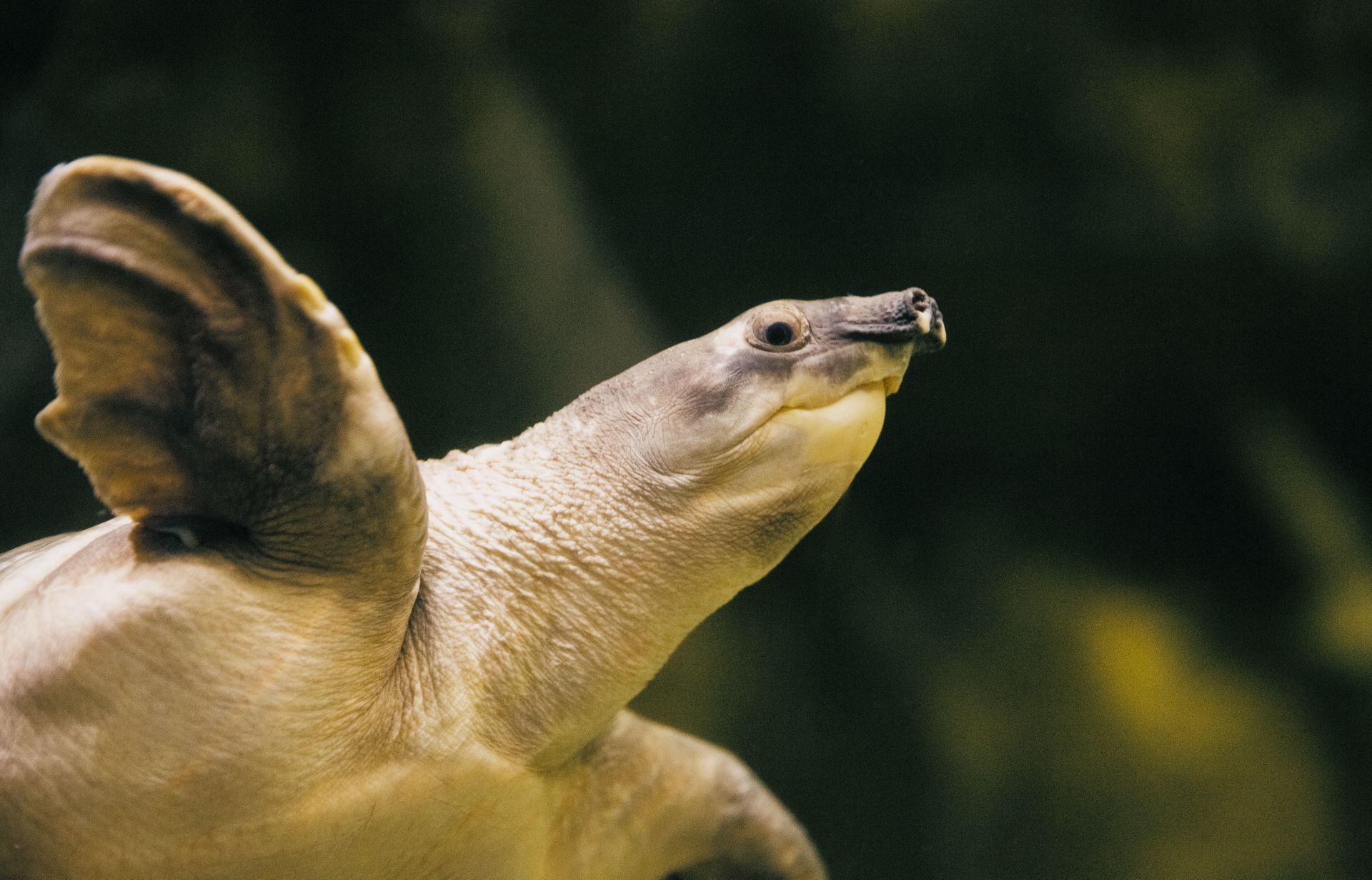
The turtles' feeding habits also have a ripple effect on their environment. For example, their fecal matter contains algae and berries, which can lead to the dispersal of seeds.
The turtles and their eggs serve as a food source for other predators, highlighting their importance in the food chain.
Here are some key ecosystem roles played by Asiatic soft-shelled turtles:
- Limit the growth of prey populations
- Provide food for other predators
- Disperse seeds through their fecal matter
Behavior and Diet
The Asiatic soft-shell turtle is an expert at sneaking up on its prey due to its unique gill-like structure that allows it to stay underwater for long periods of time.
As an omnivore, it will feed on a wide variety of foods, including crabs, fish, insects, worms, eggs, amphibians, crustaceans, and even bird carcasses.
The Asiatic soft-shell turtle's diet is not limited to meat, as it will also munch on berries, nuts, and plant seeds when it can't find meat.
It has a particular fondness for the seeds of marsh plants and will also occasionally snack on rubber tree seeds.
The Asiatic soft-shell turtle does most of its hunting and foraging at night, making it a nocturnal creature.
Broaden your view: Western Pond Turtle Shell
Diet
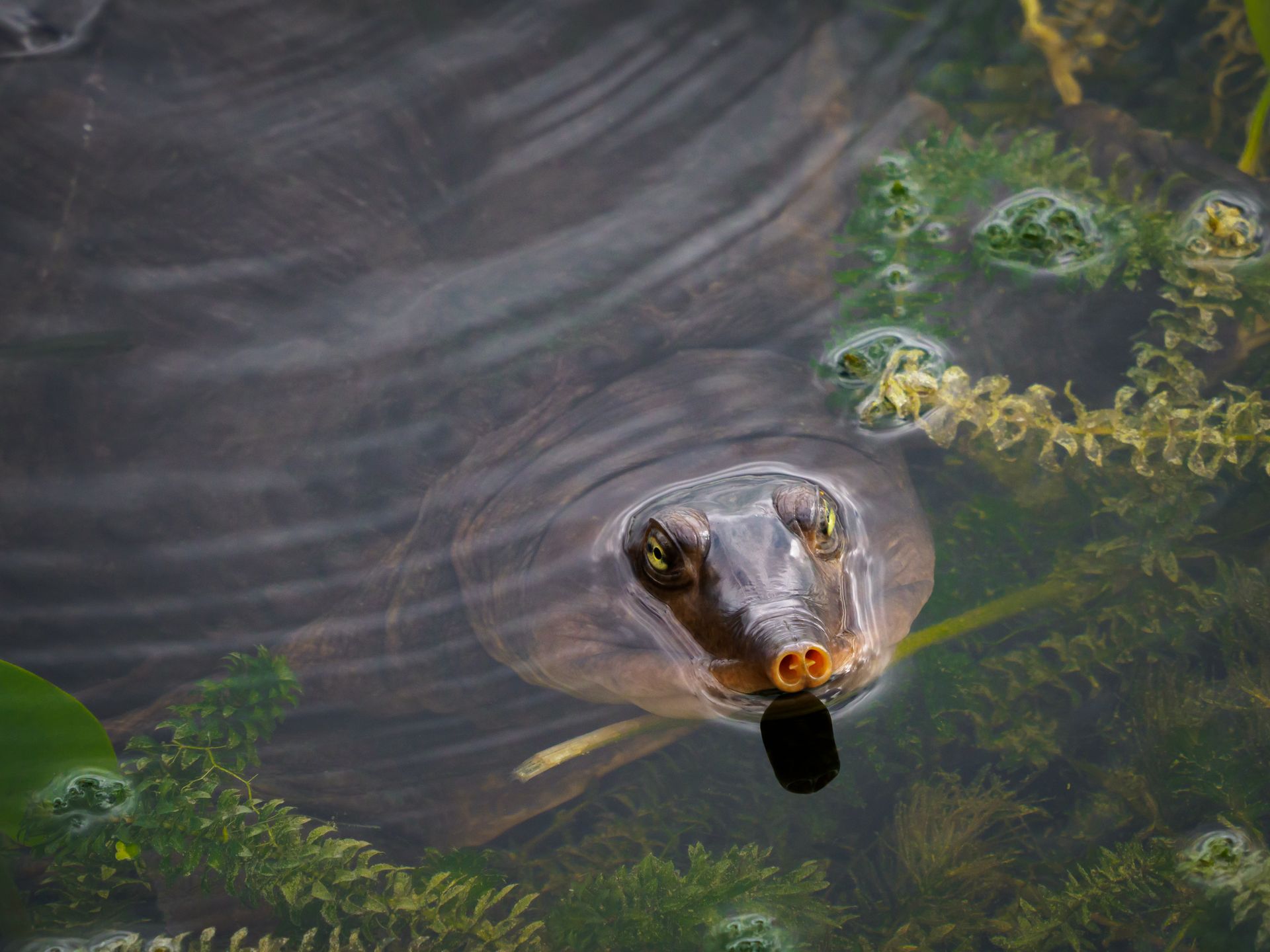
The Asiatic soft-shell turtle is an omnivore, meaning it will feed off of plants and animals when given the chance.
It has the ability to stay under water for long periods of time because of the gill like structure it possesses, which gives Amyda cartilaginea the ability to sneak up on prey.
The Asiatic soft-shell likes to eat a variety of foods, including crabs, fish, insects, worms, eggs, amphibians, crustaceans and even at times bird carcasses.
It will choose to eat berries, nuts, and plant seeds when it can't find meat.
Amyda cartilaginea specifically prefers the seeds of marsh plants, and it also sometimes chooses to munch on rubber tree seeds.
As with most animals, the Asiatic soft-shell turtle's diet changes slightly depending on its specific habitat.
The Asiatic soft-shell turtle does most of its hunting and foraging during the night hours.
Explore further: What Do Leatherback Sea Turtles Eat
Behavior
The Asiatic soft-shelled turtle is a fascinating creature, and understanding its behavior is crucial to appreciating its unique characteristics.
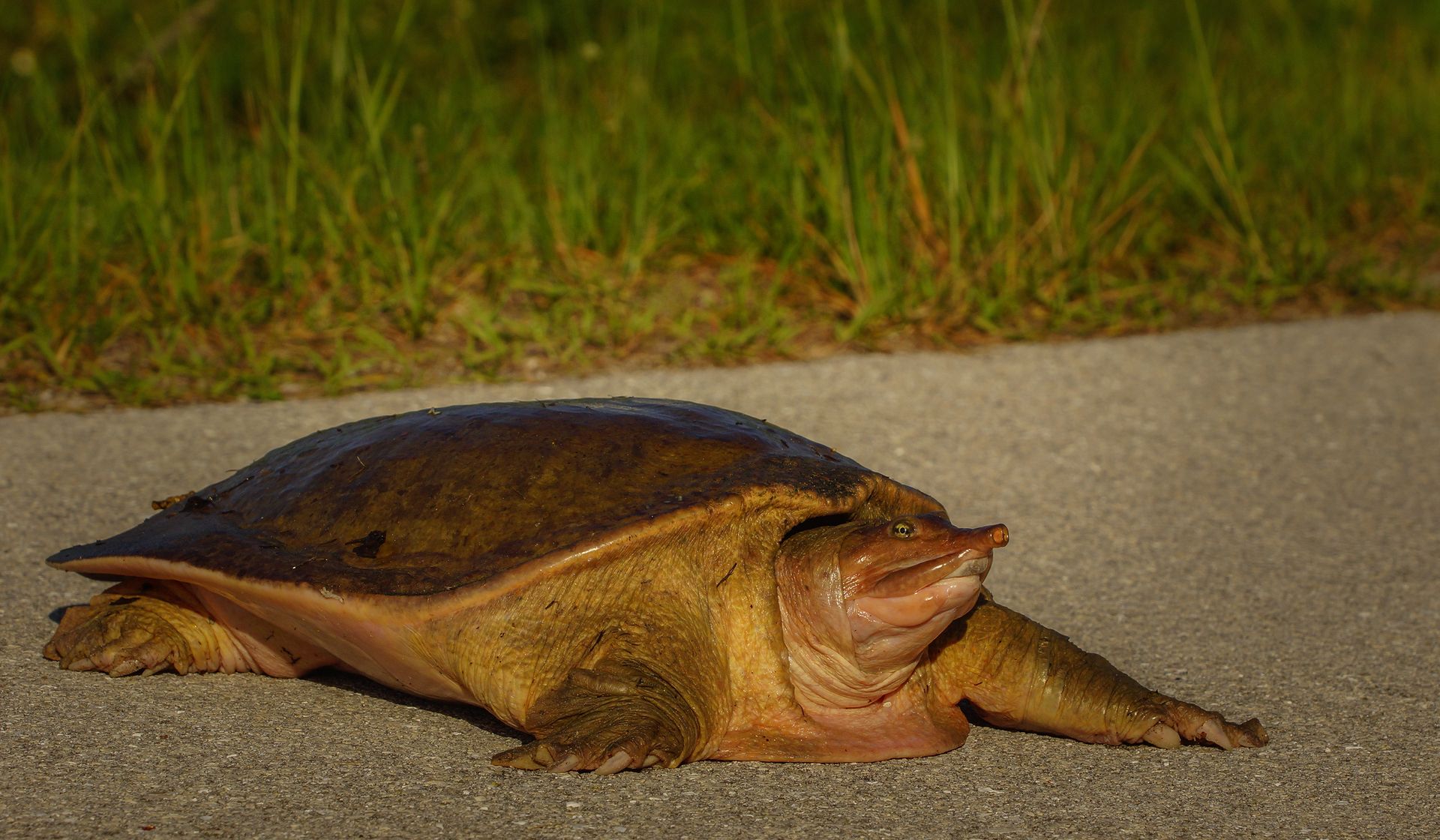
These turtles are largely solitary, only coming together during breeding season. They have different ways of communicating, including tactile and chemical communication, which helps them navigate their surroundings.
Their snout is a vital tool for hunting, smelling predators, and breathing. They can also give off a painful bite when threatened, although it usually doesn't cause significant damage.
Asiatic soft-shelled turtles are expert buriers, using their powerful limbs to kick up sediment and cover themselves almost completely. They even have adaptations that make it easy for them to bury themselves in silty sediment.
Their vision is quite limited, with fuzzy vision due to their habitat in canals, streams, and ponds. They're also nocturnal, emerging onto land at night to hunt and forage.
Here are some key behaviors associated with Asiatic soft-shelled turtles:
- Facultatively aquatic
- Natatorial
- Diurnal
- Nocturnal
- Motile
- Sedentary
- Aestivation
- Solitary
Life Cycle and Reproduction
The Asiatic softshell turtle's life cycle is a remarkable process that spans several years. They begin their life by hatching from a clutch of eggs laid in sand along a body of water.

The incubation period for Asiatic softshell turtles ranges between 130 and 140 days, depending on the climate. Temperature also plays a crucial role in determining the sex of the turtle, with females typically born at around 30 degrees Celsius and males at 25 degrees Celsius.
Young turtles must race to the water to prevent being eaten by predators like monitor lizards, crows, and serpent eagles. Once they reach the water, they continue to grow and develop into sexually reproducing adults.
For females, this takes around 20 months, while males reach sexual maturity between 4-5 years old. Once sexually mature, Asiatic softshell turtles can produce up to four clutches of eggs a year, depending on the temperate conditions.
Here are the key reproductive features of Asiatic softshell turtles:
- iteroparous: they can reproduce multiple times in their lifetime
- seasonal breeding: they breed during the hot-dry season, which lasts from April to September
- gonochoric/gonochoristic/dioecious: males and females are separate
- sexual: they reproduce sexually
- oviparous: they lay eggs
Females typically mate late April to early October, and the breeding season can last up to six months. The size of each clutch ranges from one to 30 eggs, depending on the geographical location and the size of the turtles.
Predators and Parasites
The Asiatic softshell turtle has a unique set of predators and parasites that it must contend with in its natural habitat.
One of its natural predators is the smooth-coated otter, which is known to prey on adult Asiatic softshells.
The tiger is also a natural predator of the Asiatic softshell turtle.
Monitor lizards, crows, snakes, eagles, and wild pigs are all predators of the turtle's eggs.
Humans are non-natural predators of both adult Asiatic softshells and their eggs, posing a significant threat to the species.
In addition to predators, the Asiatic softshell turtle is also susceptible to a variety of parasites, including bacteria such as Edwardsiella tarda and Aeromonas veronii.
Fungus, specifically Saprolegnia, is also a known parasite of the Asiatic softshell turtle.
Ectoparasitic worms, such as Pseudocalceostoma, can also infect the turtle.
Larger parasites, including leeches and nematodes like Monhysterides jambiensis and Spiroxys sumatraensis, can also pose a threat to the turtle.
Recommended read: Common Snapping Turtle Predators
Conservation Status
The Asiatic softshell turtle is listed as "Vulnerable" under the IUCN Red List. This means it's not yet extinct, but it's at risk of becoming so.
The main reason for the declining population is commercial harvest for sale as food. People in Borneo and the greater Asian market seek out these turtles for their size and taste.
The Wildlife Protection Ordinance of 1998 protects most Malaysian turtles against exploitation. However, this hasn't prevented harvesting, as turtles are still being sought after for food.
The Asiatic soft-shelled turtle is listed under Appendix II of CITES, which requires international exporters to have a permit from their national government.
Here's a summary of the species' conservation status:
- IUCN Red List: Vulnerable
- US Federal List: No special status
- CITES: Appendix II
- State of Michigan List: No special status
Social and Economic Aspects
The Asiatic soft-shelled turtle has a positive impact on humans, particularly in terms of its economic importance. It's consumed as food and used as pets on a smaller scale.
People around the world use turtle oils from the carapace for treating minor ailments and preventing skin aging. This market stimulation may be small compared to the food market, but it's still a valuable aspect.
The turtle's body parts are a source of valuable material, which is used for various purposes.
Frequently Asked Questions
Is Chinese softshell turtle invasive?
Yes, the Chinese softshell turtle is considered an invasive species in non-native areas, posing a threat to local ecosystems and native species.
Featured Images: pexels.com