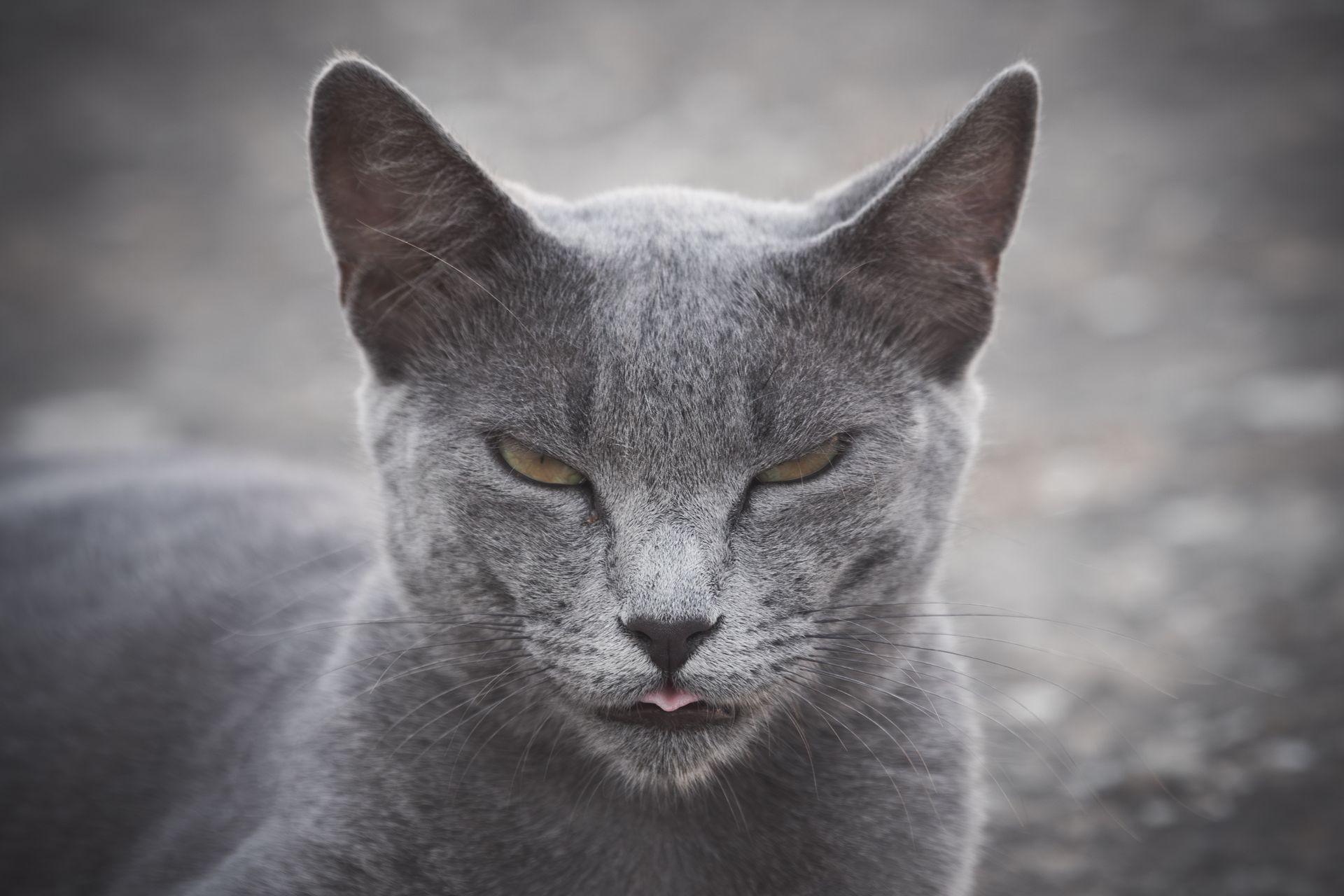
The Russian Blue cat breed has a reputation for being hypoallergenic, but what does that really mean? In fact, studies have shown that Russian Blues produce fewer Fel d 1 proteins in their saliva and skin, which are the primary allergens responsible for triggering allergic reactions in people.
This reduced protein production is likely due to the breed's unique genetic makeup, which is thought to be influenced by its origins in the Arctic region. Russian Blues have a thick, plush coat that is low-maintenance and easy to groom, but it's not just their coat that makes them a good choice for allergy sufferers.
While no cat is 100% hypoallergenic, Russian Blues are a good option for those who want to bring a cat into their home but are concerned about allergies.
Explore further: Hypoallergenic Dogs Good with Cats
Are Russian Blue Cats Hypoallergenic?
Russian Blue cats are considered hypoallergenic due to their low production of Fel d 1 protein, a primary allergen in cats.
These cats produce less Fel d 1 glycoprotein, which is found in their saliva, fur, and urine. This makes them a suitable companion for people with allergies.
Russian Blues have a unique double coat that sheds less than other breeds. Their dense, lush, and silky coat has a 45-degree angle, making them look bigger.
Their low shedding frequency is another factor that determines their hypoallergenic status. However, it's essential to note that no cat is 100% hypoallergenic.
According to the Cornell Feline Health Center, cats spend a significant amount of time grooming themselves, which can trigger allergies. Russian Blues are no exception, but their low shedding and less frequent grooming make them a better choice for allergy sufferers.
Here are some common causes of cat dander that can trigger allergies:
- It may be diet-related and due to poor quality food resulting in poor coat condition.
- It may be due to environmental factors such as lack of moisture which leads to skin flaking.
- It may be due to parasites like fleas that damage the skin and increase dander.
- It may be due to fungal parasites like ringworm that invades the skin resulting in dryness and flaking.
- It may be due to your cat's health issues like diabetes mellitus or overactive thyroid glands which may result in a low immune system and bacterial infections that cause flakiness and dander.
Russian Blues are not completely hypoallergenic, but they are one of the few breeds that can be classified as almost hypoallergenic.
Understanding Cat Allergies
Cat allergies can be a real challenge for many people. All cats produce Fel d 1, a glycoprotein that triggers allergic reactions in humans, found in their saliva, fur, urine, and other bodily secretions.
Fel d 1 is the second most common indoor allergen after dust mites, and it's not something you can completely avoid. However, some cat breeds, like Russian Blues, produce less of this allergen due to their genetic makeup.
Russian Blues have a low shedding fur, which can reduce the amount of allergen released into the air. They also produce less dander, which is a common cause of cat allergies. Dander can be caused by a variety of factors, including poor diet, environmental factors, parasites, and health issues.
Here are some common causes of cat dander:
- Diet-related issues due to poor quality food resulting in poor coat condition.
- Lack of moisture leading to skin flaking.
- Parasites like fleas that damage the skin and increase dander.
- Fungal parasites like ringworm that invades the skin resulting in dryness and flaking.
- Dental problems or arthritis leading to reduced grooming and dry fur.
- Health issues like diabetes mellitus or overactive thyroid glands resulting in a low immune system and bacterial infections.
Cats and Allergies
Russian Blue cats are considered almost hypoallergenic due to their genetic makeup, producing less Fel d 1 protein, the main culprit behind cat allergies.
These cats are not completely hypoallergenic, but their lower allergen levels make them a great option for people with allergies.
Some breeds, like the Burmese, Siamese, and Bengal, may also be suitable companions for allergic people.
To coexist with a Russian Blue cat, you'll need to manage three crucial aspects: personal precautions, environmental safety measures, and feline grooming and nutrition.
Russian Blue cats rarely shed, making them a great choice for owners with pet allergies.
However, all cats produce dander, saliva, and urine, which contain Fel d 1 protein.
Low-shedding cat breeds, like the Cornish Rex and Sphynx, may be a better choice for those with allergies.
Here are some hypoallergenic cat breeds that produce lower levels of Fel d 1 protein:
- Balinese
- Javanese
- Siberian
- Russian Blue
Cats spend a significant amount of time grooming themselves, which can trigger allergies.
The less a cat sheds and grooms, the less likely you'll experience allergies.
Here are some low-shedding cat breeds:
- Bengal
- Birman
- Cornish Rex
- Donskoy
- Devon Rex
- Sphynx
Reducing Cat Allergies
Russian Blues are considered hypoallergenic cats due to their low production of Fel d 1 protein, the main culprit behind cat allergies.
Their dense double coats rarely shed, making them a great option for owners with pet allergies. Russian Blues have a 45-degree angle to their fur, giving them a bigger appearance, but they actually shed less than other breeds.
If you're allergic to cats, it's essential to take personal precautions to minimize your exposure to Fel d 1 protein. Train your Russian Blue not to lick you, and avoid touching your face, eyes, and nose after interacting with your kitty.
To reduce allergen exposure, ask a non-allergic family member or housemate to empty the litter box, and use a mask and gloves while gardening if your Russian Blue does its business outside.
Some low-shedding cat breeds include Bengal, Birman, Cornish Rex, Donskoy, Devon Rex, and Sphynx. These breeds may be a better choice for those with allergies.
Here are some tips to reduce allergies if you have a cat:
- Train your cat not to lick you
- Avoid contact with your face, eyes, and nose after touching your kitty
- Ask a non-allergic family member or housemate to empty the litter box
- Use a mask and gloves while gardening if your cat does its business outside
By following these tips and choosing a low-shedding breed like the Russian Blue, you can reduce your exposure to Fel d 1 protein and minimize your allergic reactions.
Grooming and Shedding
Russian Blue cats have a low-maintenance grooming routine, but a medium-tooth comb can keep their plush double coat smooth and luxurious.
They are very light shedders, despite their dense coats, making them a great choice for those who want a low-shedding breed.
Their lack of shedding is one reason why Russian Blue cats are considered hypoallergenic, as they don't produce as much of the protein Fel d 1 that triggers allergies.
While no cat is entirely allergy-friendly, Russian Blue cats may be a good alternative for those who struggle with cat allergies.
Their low-shedding coat requires less grooming than many other breeds, making them a great choice for busy owners or those who don't enjoy grooming their pets.
Intriguing read: Russian Blue Cat vs British Shorthair
Hypoallergenic Cat Breeds
Russian Blue cats are considered one of the most hypoallergenic breeds, producing less Fel d 1 protein, the primary allergen in cats.
Their dense double coats are designed to shed less, making them a great option for owners with pet allergies. Russian Blues have a unique coat structure with a 45-degree angle, which makes them look bigger and more majestic.
Explore further: Black Russian Terrier Hypoallergenic
While no cat is 100% hypoallergenic, Russian Blues produce significantly less dander, which decreases the chance or severity of allergies. Dander is a common cause of cat allergies, and it can be triggered by various factors such as diet, environment, parasites, and health issues.
Russian Blues are also known for their low shedding fur, which makes them a great choice for those who want a low-maintenance cat. However, it's essential to note that all cats produce some amount of dander, so it's not a guarantee that Russian Blues will completely eliminate allergies.
Here are some other breeds that are considered hypoallergenic, producing lower levels of Fel d 1 protein:
- Balinese
- Javanese
- Siberian
- Russian Blue
These breeds are not completely hypoallergenic, but they are less likely to trigger allergies. If you're allergic to cats and considering bringing a Russian Blue into your home, remember to take personal precautions, implement environmental safety measures, and maintain good feline grooming and nutrition habits.
Reducing Allergies with a Cat at Home
Russian Blues are a great choice for people with allergies because they produce less Fel d 1 protein, the main culprit behind cat allergies.
To minimize exposure to allergens, train your Russian Blue not to lick you, as this can transfer Fel d 1 to your skin. Avoid touching your face, eyes, and nose after petting your cat, and keep allergen wipes handy.
You can also reduce your exposure by asking a non-allergic family member or housemate to empty the litter box, and using a mask and gloves while gardening if your cat does its business outside.
No cat is completely allergen-free, but with some precautions, you can minimize your chances of an allergic reaction.
Here are some additional tips to reduce allergies with a cat at home:
- Keep your cat's coat clean and healthy through regular grooming and a balanced diet.
- Regularly vacuum and dust your home, especially areas where your cat spends most of its time.
- Consider using HEPA air purifiers to reduce allergen particles in the air.
- Wash your hands frequently after handling your cat or its litter box.
By following these tips, you can enjoy the companionship of a Russian Blue cat while minimizing the risk of allergic reactions.
Frequently Asked Questions
What are the downsides of Russian Blue cats?
Russian Blue cats are generally healthy, but they can be prone to obesity, diabetes, and renal disease. Understanding these potential health issues can help you provide the best possible care for your new furry friend.
Featured Images: pexels.com