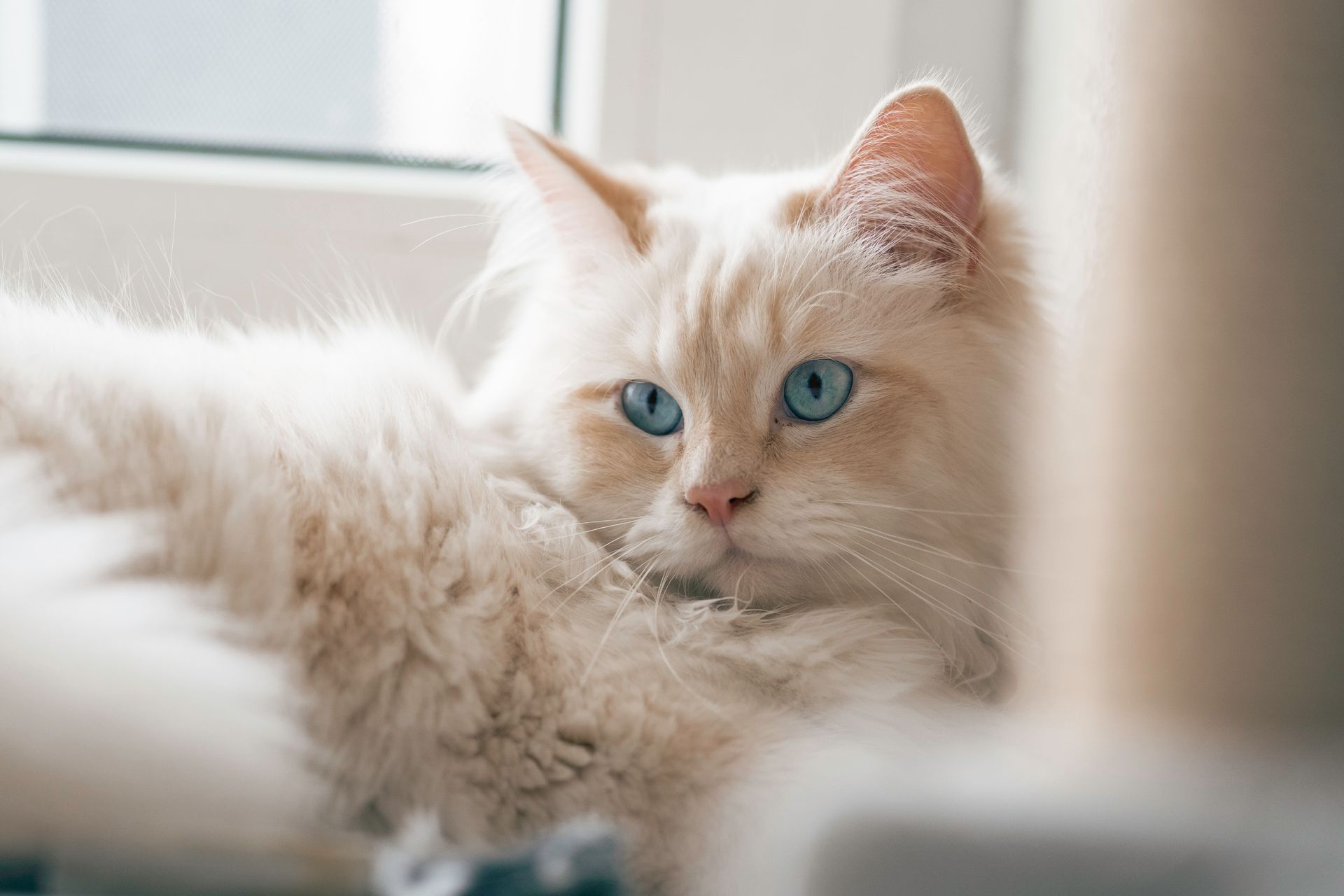
Ragdoll cats are a popular breed, but many potential owners wonder if they're a good fit for those with allergies. The truth is, Ragdolls are not considered a hypoallergenic breed.
Their thick, fluffy coats are a major culprit when it comes to triggering allergies in some people. Ragdolls have a unique coat type that requires regular grooming to prevent matting.
While Ragdolls are not hypoallergenic, their grooming needs can help reduce the amount of loose hair and dander in the environment. This can make them a slightly more manageable choice for those with allergies.
Causes and Effects of Cat Allergies
Cat allergies are a common issue, and it's not just the fur that's the culprit. Surprisingly, it's a specific protein called Fel d 1 that triggers allergies, found in a cat's saliva, skin, and sometimes even their urine.
This protein is incredibly sticky and microscopic, allowing it to bond easily to clothes and skin. It's so small and light that it can stay in the air for long periods of time, making it a major allergen.
You might think that Fluffy's shedding problem is what's giving you the sniffles, but it's actually the combination of dander and saliva that's aggravating your allergies. The dander, or dead skin cells, naturally fall off and combine with the saliva to create a potent allergen.
According to experts, Fel d 1 is responsible for causing allergic reactions in 95% of cat-allergic adults. It's not just found in the fur, either – it's also present in a cat's saliva, skin, and urine.
Here are some key facts about Fel d 1:
- It's a specific protein found in a cat's saliva, skin, and urine.
- It's incredibly sticky and microscopic, allowing it to bond easily to clothes and skin.
- It can stay in the air for long periods of time, making it a major allergen.
- It's responsible for causing allergic reactions in 95% of cat-allergic adults.
By understanding the causes of cat allergies, you can take steps to manage your exposure to Fel d 1 and live comfortably with your feline friend.
Ragdoll Cats and Allergies
Ragdoll cats are not hypoallergenic, but they can be a better option for individuals dealing with cat allergies.
The main culprit behind cat allergies is a protein called Fel d 1, found in a cat's saliva, skin, and sometimes urine. This protein is transferred to their fur when they groom themselves, and as their fur sheds, it becomes airborne and irritates the eyes, nose, and lungs of individuals sensitive to it.
Ragdolls produce a slightly reduced level of Fel d 1 compared to other cat breeds. Many Ragdoll owners report fewer allergy symptoms when living with Ragdolls compared to other long-haired cats.
Ragdolls are moderately long-haired, but they lack an undercoat, which means they shed less than other cat breeds. This reduces the amount of dander and Fel d 1 protein in the environment.
Ragdolls are generally calm and gentle cats, which means they're less likely to be constantly moving and stirring up allergens.
To minimize allergic reactions, keep your home clean by vacuuming frequently and wiping down surfaces. Regular grooming of your Ragdoll can also help minimize the Fel d 1 protein in their fur.
Here are some practical tips to manage your exposure to cat allergens in your home environment:
- Keep Your Home Clean
- Bathe and Groom Regularly
- Use Allergen-Reducing Sprays
- Look into Special Diets
- Invest in Air Purifiers
- Purchase Washable Bedding and Furniture Covers
- Cat-Free Areas
- Wash Hands After Petting
- Talk to an Allergist
It's worth noting that all cats produce the Fel d1, Fel d4, and Fel d 7 proteins, which means cats are literally covered in allergens. Unfortunately, there's no such thing as a hypoallergenic cat.
Living with Cats and Allergies
You don't have to give up on your feline dreams just because you have allergies. Ragdoll cats, in particular, can be a good option for allergy sufferers due to their lower Fel d 1 production and reduced shedding.
While Ragdolls are not hypoallergenic, they can be less problematic than other cat breeds. This is because they produce a slightly reduced level of Fel d 1, which is the main culprit behind cat allergies. Regular grooming and bathing can also help minimize the Fel d 1 protein in their fur.
To live with a Ragdoll and allergies, keep your home clean by vacuuming frequently and wiping down surfaces. Bathing and grooming your Ragdoll regularly can also help control the allergen. Consider using allergen-reducing sprays or special diets that can help neutralize the Fel d 1 protein.
Here are some practical steps to manage your exposure to cat allergens:
- Keep Your Home Clean: Regular cleaning is key to controlling cat allergens. Vacuum frequently and wipe down surfaces to capture any lingering dander.
- Bathe and Groom Regularly: Grooming Your Ragdoll can help minimize the Fel d 1 protein in their fur as well. Wiping down your cat with a damp cloth and bathing them regular can help control this allergen.
- Use Allergen-Reducing Sprays: Specialized allergen sprays, such as Pacagen, can be applied to your cat’s fur to help neutralize or bind to the proteins in the dander, reducing the amount that gets released into the air.
- Look into Special Diets: There are some allergy-reducing cat foods, specifically one called Purina Pro Plan Live Clear, that is formulated with a key ingredient that binds to the Fel d 1 allergen and neutralizes it.
Tips for Living with Cats
Living with Cats and Allergies can be challenging, but there are steps you can take to minimize your exposure to allergens. Regular cleaning is key to controlling cat allergens, so vacuum frequently and wipe down surfaces to capture any lingering dander.
To further reduce allergens, consider using allergen-reducing sprays on your cat's fur, such as Pacagen, which can help neutralize or bind to the proteins in the dander. You can also look into special diets, like Purina Pro Plan Live Clear, which is formulated with a key ingredient that binds to the Fel d 1 allergen and neutralizes it.
Establishing cat-free zones, like your bedroom, can provide you with safe spaces away from allergens. Keeping these areas off-limits for your cat will reduce your overall exposure to dander.
Some practical steps to manage your exposure to cat allergens include:
- Keeping your home clean by vacuuming frequently and wiping down surfaces
- Bathing and grooming your cat regularly to minimize the Fel d 1 protein in their fur
- Using allergen-reducing sprays on your cat's fur
- Investing in HEPA air purifiers to trap pet dander and reduce airborne allergens
- Washing your hands after petting or handling your cat to reduce the transfer of allergens to your face and eyes
Remember, if you're struggling with allergy symptoms despite taking steps to manage allergens at home, consult with an allergist for further guidance.
Cuddles Over Congestion
Ragdoll cats are not hypoallergenic, but their unique traits can make them a more manageable option for allergy sufferers.
Regular grooming can help mitigate symptoms, even though Ragdoll cats have very long and fluffy fur, they have relatively low grooming requirements.
Brushing your Ragdoll at least twice per week can help reduce any minimal shedding that may occur.
Bathing your Ragdoll cat can help rinse away potential allergens while conditioning the skin and the fur.
Fel d 1, a protein found in cat saliva, skin, and urine, is responsible for causing allergic reactions in 95% of cat-allergic adults.
Cat allergens are not just found in the fur, but also in the dander, which is made up of dead skin cells that naturally fall off.
The good news is that Ragdolls have a reduced Fel d 1 production, lower shedding, and a calm temperament, making them a more manageable option for allergy sufferers.
Here are some tips to help reduce Ragdoll cat allergens:
- Vacuum your house regularly with a vacuum cleaner designed to combat cat fur.
- Restrict your Ragdoll's access to all but a few rooms.
- Limit direct contact with your cat and wash your hands with soap if you do.
- Run HEPA cleaners in the rooms where you spend most of your time at home.
Keep in mind that every person's allergic response is different, and it's essential to weigh the potential challenges of owning a cat and consult with a medical professional before making any decisions.
Hypoallergenic Cats and Allergies
No cat breed is truly hypoallergenic, including Ragdolls. Ragdolls don't have an undercoat, which means they shed less than other breeds, but they still produce the Fel d 1 protein found in their saliva, skin, and urine.
Cat allergens are not just found in fur, but also in cat saliva, skin, and urine. This protein, Fel d 1, is responsible for causing allergic reactions in 95% of cat-allergic adults. Ragdolls may produce fewer allergenic proteins, making them a better choice for some allergy sufferers.
Some cat breeds are considered hypoallergenic due to their lower levels of Fel d 1 protein. These breeds include the Siberian, Sphynx, Devon Rex, Javanese, and Balinese. These cats may be a good option for those with cat allergies.
Broaden your view: Allergic to Hypoallergenic Cats
Ragdolls
Ragdolls are a popular choice for people with cat allergies, but they're not fully hypoallergenic. They still produce the Fel d 1 protein that causes allergic reactions in some people.
Ragdolls may be a better option for individuals dealing with cat allergies because they have lower Fel d 1 production compared to other cat breeds. This means that some Ragdoll owners report fewer allergy symptoms when living with them.
One reason Ragdolls are less problematic for allergy sufferers is that they shed less than other breeds. They lack an undercoat, which reduces the amount of dander and Fel d 1 protein in the environment.
Ragdolls are also known for their calm and gentle nature, which means they're less likely to be constantly moving and stirring up allergens. This contributes to lower levels of dander circulating in the air.
Here are some key facts about Ragdolls and allergies:
- Lower Fel d 1 Production: Ragdolls may produce a slightly reduced level of Fel d 1 compared to other cat breeds.
- Decreased Shedding: Ragdolls shed less than other breeds due to having no undercoat.
- Mild Temperament: Ragdolls are generally calm and gentle cats, which means they're less likely to stir up allergens.
Hypoallergenic Cats Considered
Ragdoll cats are often considered a good option for those with allergies, but they're not entirely hypoallergenic. In fact, no cat breed is.
Some Ragdoll owners report fewer allergy symptoms when living with these cats compared to other long-haired breeds. This may be due to lower Fel d 1 production, which is the protein responsible for triggering allergies.
Ragdolls have a single layer of fur, which means they shed less than other breeds. This can lead to lower levels of dander and Fel d 1 protein in the environment.
However, Ragdolls still produce Fel d 1 protein in their saliva, skin, and urine, which can cause allergic reactions.
If you're considering a Ragdoll cat, it's essential to understand that they're not a cure-all for allergies. But with proper care and management, you may be able to reduce your exposure to allergens.
Here are some tips to help you minimize your allergy symptoms when living with a Ragdoll cat:
- Keep your home clean by vacuuming frequently and wiping down surfaces.
- Bathe and groom your Ragdoll regularly to reduce Fel d 1 protein in their fur.
- Use allergen-reducing sprays or consider a special diet that binds to Fel d 1 protein.
- Invest in air purifiers, like HEPA filters, to trap pet dander and reduce airborne allergens.
- Establish cat-free zones, like your bedroom, to give you a break from allergens.
- Wash your hands after petting or handling your cat to prevent the transfer of allergens.
Remember, every cat is different, and even with these tips, you may still experience some allergy symptoms. If your symptoms persist or worsen, consult with an allergist for personalized advice.
Managing Cat Allergies
Living with a Ragdoll cat can be a great experience, even for those with allergies. However, it's essential to understand that Ragdolls are not hypoallergenic, but they may be a better option for some allergy sufferers.
Some Ragdolls may produce a slightly reduced level of Fel d 1, the primary allergen responsible for cat allergies. This can lead to fewer allergy symptoms for individuals living with Ragdolls.
Regular cleaning is crucial in managing cat allergens. Vacuum frequently, and wipe down surfaces to capture any lingering dander.
Bathing and grooming your Ragdoll regularly can also help minimize the Fel d 1 protein in their fur. Wipe down your cat with a damp cloth and bathe them regularly to control this allergen.
Specialized allergen sprays, such as Pacagen, can be applied to your cat's fur to help neutralize or bind to the proteins in the dander, reducing the amount that gets released into the air.
Investing in air purifiers with HEPA filters can trap pet dander and reduce airborne allergens. Consider placing HEPA air filters in rooms where your cat spends a lot of time.
Here are some practical tips for managing cat allergies:
- Keep your home clean, vacuum frequently, and wipe down surfaces.
- Bathe and groom your Ragdoll regularly.
- Use allergen-reducing sprays on your cat's fur.
- Invest in HEPA air filters and place them in rooms where your cat spends time.
- Wash your hands after petting or handling your cat.
- Establish cat-free zones in your home, like your bedroom.
- Consult with an allergist if your symptoms persist despite taking steps to manage allergens.
By following these tips and understanding the unique characteristics of Ragdolls, you can enjoy the companionship of these lovable felines even with allergies.
Featured Images: pexels.com