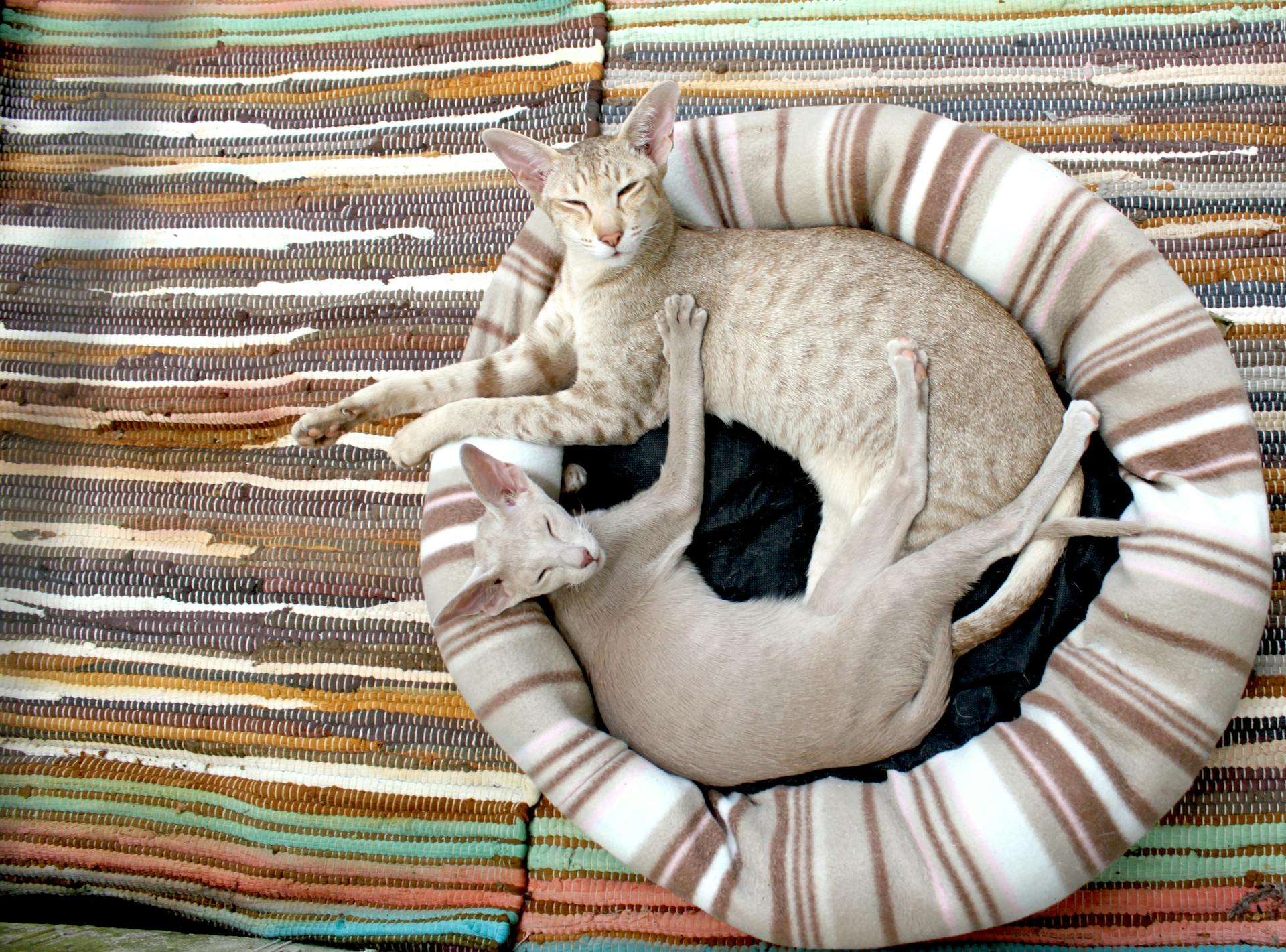
You can still be allergic to hypoallergenic cats, but it's less likely. Hypoallergenic cats produce fewer allergens, but they don't eliminate the risk of an allergic reaction entirely.
Some people may be more sensitive to the proteins in cat dander, which can still trigger allergies even in hypoallergenic breeds. These proteins are found in the saliva, skin, and urine of cats.
You might still experience symptoms like sneezing, congestion, and itchy eyes around hypoallergenic cats, even if you're not as severely affected as you would be with a regular cat.
Readers also liked: Can Dogs Be Allergic to Cat Food
Do Hypoallergenic Cats Really Exist?
Hypoallergenic cats are not completely free from allergens, but they do spread fewer allergens than regular cats. This is because they produce less of the Fel D1 protein, which is the main culprit behind cat allergies.
While there are no fully hypoallergenic cats, some breeds are more allergy-friendly than others. These breeds shed less dander and produce fewer allergens, making them a good option for people with mild allergies.
Consider reading: Cat Breeds That Act like Dogs
You should understand that even hypoallergenic cats can still trigger allergic reactions in some people, especially those with severe allergies. This is because they still produce some allergens in their saliva and urine.
Some hypoallergenic cat breeds that are known to produce fewer allergens include the Oriental Shorthair, Balinese, and Devon Rex. These breeds are recommended by Petfinder as being allergy-friendly.
Here are some factors that can influence how allergenic a cat is:
It's worth noting that even hypoallergenic cats can still cause allergic reactions in some people, so it's essential to take steps to manage your allergies if you're considering bringing a cat into your home.
Causes and Symptoms of Cat Allergies
About 10% of the U.S. population has pet allergies, and cats are among the most common culprits. Cat allergies are twice as common as dog allergies.
People with cat allergies are really allergic to proteins in the cat's saliva, urine, and dander. You're also more likely to have a pet allergy if someone else in your family also has one.
The symptoms of cat allergies are caused by an oversensitive immune system that mistakes harmless things for dangerous invaders.
Causes of Cat Allergies
Cat allergies are a common issue, affecting about 10% of the U.S. population. It's not the fur or hair that's the real problem, but proteins in the cat's saliva, urine, and dander.
People with cat allergies have oversensitive immune systems that mistake harmless things like cat dander for dangerous invaders and attack them as they would bacteria or viruses. This leads to the symptoms of the allergy.
Cat dander is the main cause of pet allergies, not fur. It's the dead skin flakes that fall from an animal, and it can stick to surfaces in your home, including carpeting, curtains, and upholstered furniture.
Even if you don't have actual cat allergy symptoms, your cat can still indirectly cause your allergies to flare up by bringing in pollen, mold, and other allergens on their fur.
Here are some key facts about cat allergies:
- About 10% of the U.S. population has pet allergies, and cats are among the most common culprits.
- People with cat allergies are allergic to proteins in the cat's saliva, urine, and dander.
- Cat dander is the main cause of pet allergies, not fur.
- Even if you don't have actual cat allergy symptoms, your cat can still indirectly cause your allergies to flare up.
Note that owning a hypoallergenic cat, which produces fewer allergens than regular cats, can reduce your chances of being affected by them daily.
What Are the Symptoms?
Cat allergies can cause a range of symptoms that affect your breathing and skin, and they might develop in just a few minutes or take hours to appear.
Coughing and wheezing are common symptoms of cat allergies, and they can be quite severe in some cases.
Hives or a rash on the chest and face, red, itchy eyes, and redness of the skin where a cat has scratched, bitten, or licked you are also possible symptoms.
A runny, itchy, stuffy nose and sneezing are other common symptoms of cat allergies.
Symptoms of cat allergies can be similar in adults and kids, including itchy eyes, sneezing, a runny nose, and throat irritation.
Some people with cat allergies may experience severe symptoms, such as wheezing, trouble breathing through their nose, and shortness of breath.
Here are some common symptoms of cat allergies:
- Coughing and wheezing
- Hives or a rash on the chest and face
- Red, itchy eyes
- Redness of the skin where a cat has scratched, bitten, or licked
- Runny, itchy, stuffy nose
- Sneezing
Living with a Cat Allergy
If you're allergic to cats, it doesn't mean you can't ever go near one again. It does mean that if you introduce a cat into your home, it should be a hypoallergenic one.
Some cat breeds are more allergy-friendly than others, producing fewer allergens like the protein Fel D1. Light-coloured female hypoallergenic kittens, for example, produce the least amount of this protein.
Owning a hypoallergenic cat can reduce your chances of being affected by them daily, but it doesn't mean you'll never react. Factors like sex, neuter status, and coloring can also influence how allergenic a cat is.
Here are some hypoallergenic cat breeds that might be suitable for you:
- Oriental Shorthair
- Balinese
- Devon Rex
- Javanese
- Siberian
- Sphynx
- Cornish Rex
Cats or Dogs Without Fur Still Trigger Allergies
Cats or dogs without fur can still trigger allergies. It's a common myth that dogs that don't shed are hypoallergenic, but the truth is that it's not the hair or fur that's responsible for allergies, it's dead skin flakes (dander), saliva, or urine.
The protein Canis familiaris allergen 1 (Can f 1) is found primarily in dander, not fur or hair, and is responsible for causing symptoms in people with pet allergies. One-third of homes without dogs will also have this allergen.
Consider reading: Cats Back Legs Not Working
If you interact with a dog or if someone who has a dog comes to your home, this can introduce the allergen. The same goes for cats - the main allergen responsible for cat allergies, Felis domesticus 1 (Fel d 1), is found in the saliva and dander of every cat, regardless of whether they have fur or not.
In fact, there's no such thing as a truly hypoallergenic pet. Some breeds may cause fewer or less severe allergy symptoms than others, but a completely allergy-free pet is not possible.
You might like: Dog Reverse Sneezing When Excited
Owning a Pet with Allergies Possible
Owning a pet with allergies is possible, and it's not just a myth. You can take steps to help manage your symptoms and prevent the spread of dander and other pet allergens around your home.
If you're severely allergic to pets and their dander, consider getting a non-allergenic animal like fish, amphibians, or reptiles. These animals may molt, but they don't shed skin flakes that trigger allergies.
Using an air filter in your home can also help eliminate pet dander floating in the air. A high-efficiency particulate air (HEPA) filter can be especially effective, and using it for at least four hours per day can keep the air clean and fresh.
You can also choose from a list of allergy-friendly dog and cat breeds that are less likely to cause severe allergy symptoms. These breeds are not completely hypoallergenic, but they do produce fewer allergens than regular cats.
Here are some allergy-friendly cat breeds to consider:
- Light-coloured female hypoallergenic kittens produce the least allergens
- Other hypoallergenic cat breeds include (note: the list of specific breeds is not provided in the article section facts)
Frequently cleaning areas where pets are can also help prevent the buildup of dander. Vacuuming and wiping down surfaces regularly can make a big difference in keeping your home allergen-free.
If you do experience allergy symptoms, taking BENADRYL can help treat them at the source. BENADRYL Allergy ULTRATABS or BENADRYL Allergy Dye-Free LIQUI-GELS can fight runny nose, itchy eyes, and itchy throat, while BENADRYL Allergy Plus Congestion can help with congestion as well.
You might like: Free Cat Food
Allergic Reaction to Cats
If you're allergic to cats, you're not alone. Symptoms can include coughing and wheezing, hives or a rash on the chest and face, red, itchy eyes, and a runny, itchy, stuffy nose.
Cat allergy symptoms can appear in as little as a few minutes or take hours to show up, making it tricky to pinpoint the culprit. If you have a cat allergy, you may experience hives, eczema, or itchy skin.
Kids who are allergic to cats have similar symptoms as adults, including itchy eyes, sneezing, a runny nose, throat irritation, and asthma symptoms.
Severe cat allergy symptoms can be a serious concern, affecting up to 30% of people with allergic asthma. If you experience wheezing, can't breathe through your nose, have trouble sleeping, or have shortness of breath, seek medical attention.
There's no such thing as a completely hypoallergenic cat, but some breeds may cause fewer or less severe allergy symptoms than others. These include low-allergen or "hypoallergenic" cats that produce fewer allergens, such as the protein Fel D1.
Suggestion: Cat Asthma Life Expectancy
Light-coloured female hypoallergenic kittens are known to produce the least amount of Fel D1, making them a good option for those with allergies. However, it's essential to note that even hypoallergenic cats can still trigger an allergic reaction in some people.
Here are some hypoallergenic cat breeds that may be suitable for those with allergies:
- Light-coloured female hypoallergenic kittens
- Other hypoallergenic cat breeds (list not specified in the article)
If you're allergic to cats but still want to own one, consider taking steps to manage your allergies and prevent the spread of dander and other pet allergens. This can include using an air filter, frequently cleaning areas where pets are, and choosing a non-allergenic animal like a fish or amphibian.
Breeds to Consider or Avoid
If you're allergic to cats, it's essential to consider breeds that are more allergy-friendly. These breeds shed less dander than others, making them a great option for people with pet allergies.
Some hypoallergenic dog breeds recommended by the American Kennel Club include the Afghan Hound, Bichon Frise, Schnauzer, Maltese, Poodle, and Spanish Water Dog. These breeds don't have active shedding seasons, which reduces the amount of allergens they produce.
Hypoallergenic cat breeds, on the other hand, produce less Fel D1 protein than other breeds, making them more allergy-friendly. However, even hypoallergenic cats can still generate some allergens, especially when they lick their fur and the saliva dries and becomes airborne.
Petfinder recommends the following allergy-friendly cat breeds: Oriental Shorthair, Balinese, Devon Rex, Javanese, Siberian, Sphynx, and Cornish Rex. These breeds tend to produce fewer allergens than others, making them a great option for people with allergies.
If you're considering getting a cat, it's worth noting that some factors can influence how allergenic a cat is. For example, male cats secrete more allergens than females, and unneutered male cats produce more allergens than neutered cats.
Here are some breeds to avoid if you have allergies:
- Persian
- Maine Coon
- Norwegian Forest Cat
- Himalayan
- Manx
- Cymric
These breeds tend to be worse for people with allergies because the allergens get trapped in their coats and spread wherever they lose their fur.
Featured Images: pexels.com