The Galapagos Fur Seal, also known as Arctocephalus galapagoensis, is a unique and fascinating creature that calls the Galapagos Islands home. They are one of the smallest fur seal species in the world.
These seals are incredibly agile and can often be seen playing in the ocean waves. They have a thick layer of fur, which helps to keep them warm in the cold water.
One of the most interesting things about the Galapagos Fur Seal is their ability to dive to great depths in search of food. They have been known to dive as deep as 150 feet in a single plunge.
Physical Characteristics
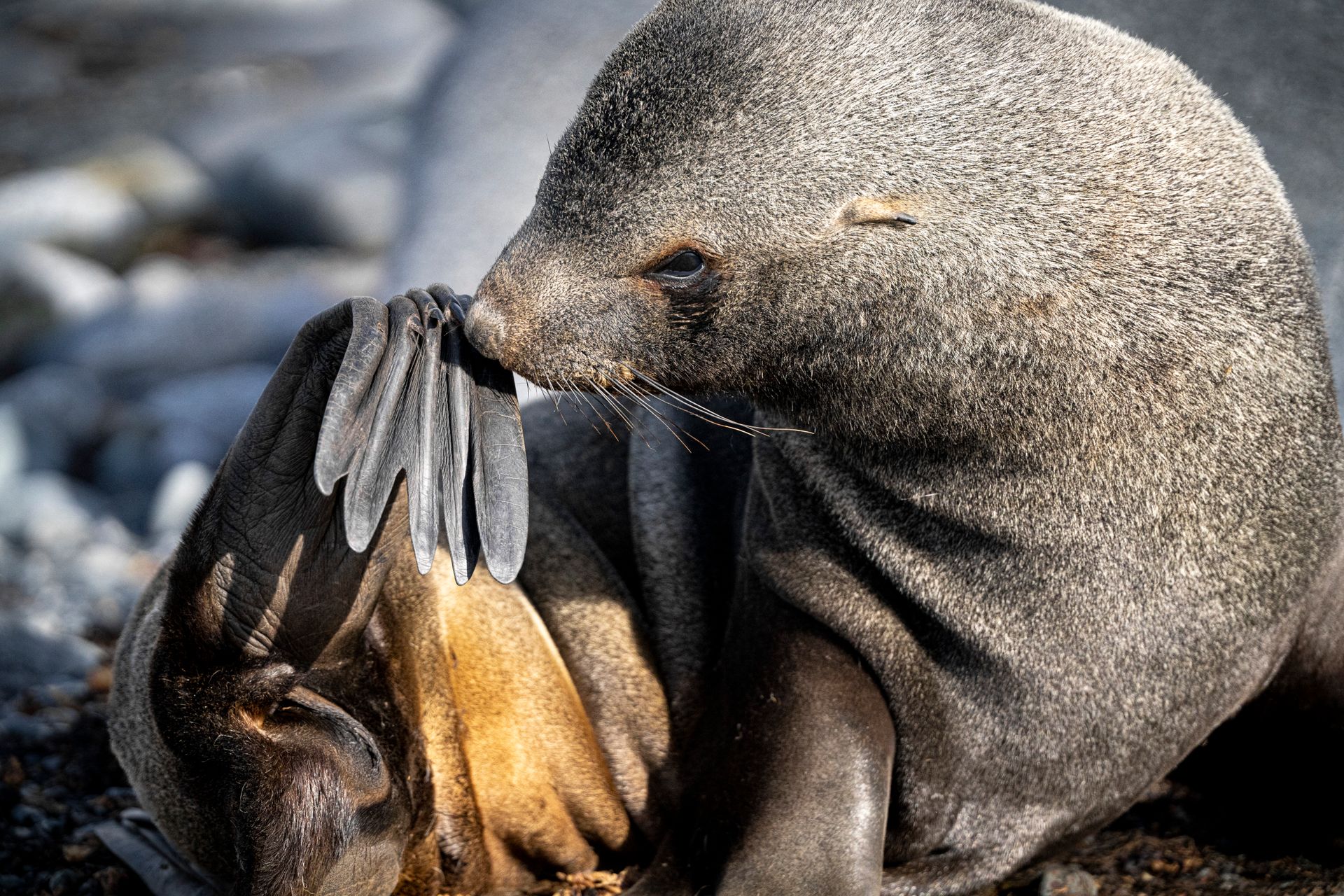
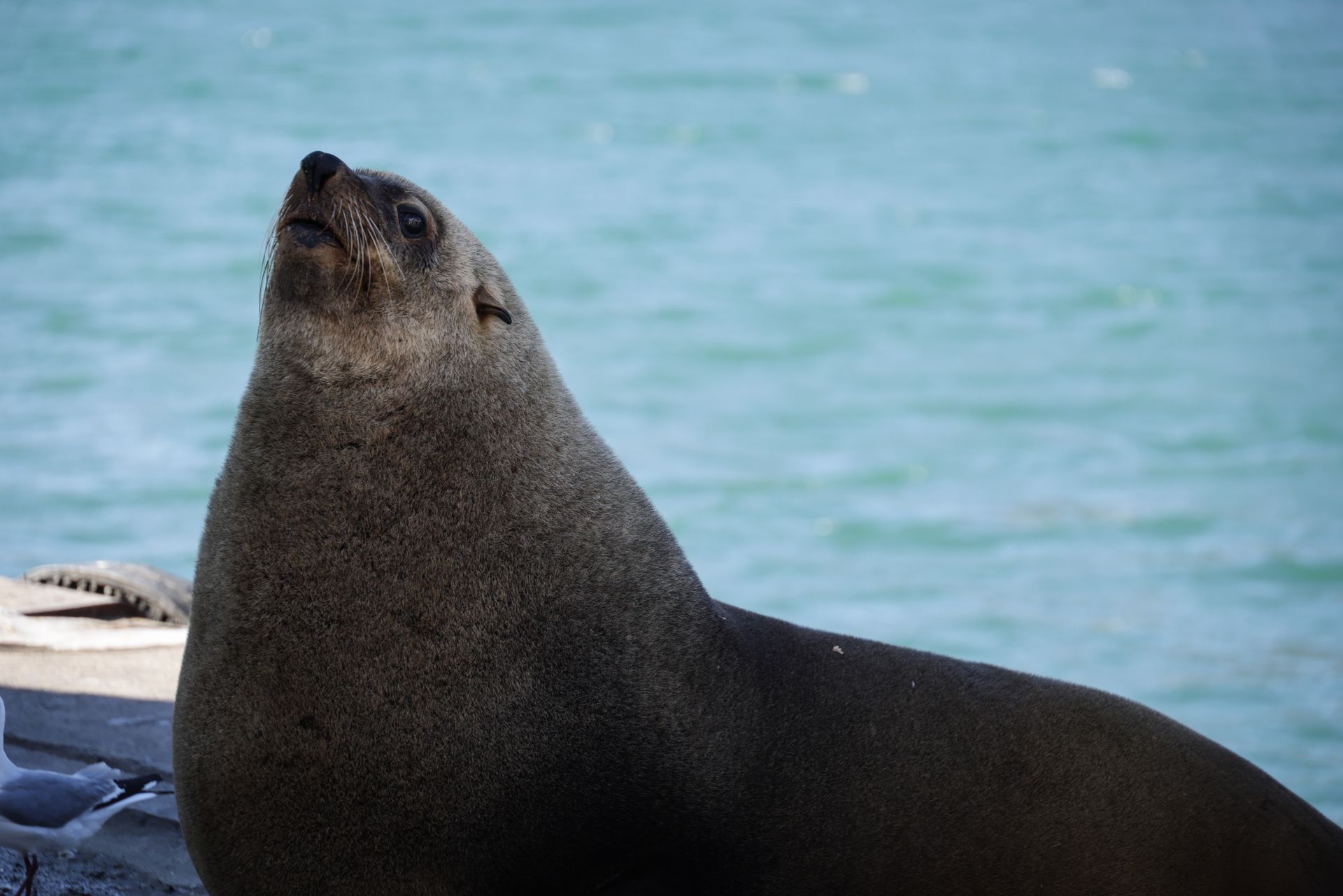
Galapagos fur seals are the smallest otariids, with males averaging 154 cm in length and weighing 64 kg. They have a unique physical appearance, with a light tan fur on their stomach and around their mouth and ears, while the rest of their fur is colored gray-brown.
One of the most noticeable features of Galapagos fur seals is their thick fur coat, which turns black when wet but appears more goldish when dry. Females are significantly smaller than males, with an average length of 120 cm and weighing 27 kg.
Galapagos fur seals display bilateral symmetry, meaning they have mirror-image body parts on either side of their body. They are also endothermic and homoiothermic, meaning they can regulate their own body temperature.
Here are some key physical characteristics of Galapagos fur seals:
Galapagos fur seals also have large eyes, which allow them to hunt at night. Interestingly, young Galapagos fur seals are not weaned until at least the age of 2, but they begin to make trips into the ocean at 6 months and start foraging for themselves at 12 months.
Range and Habitat
The Galapagos fur seal is a unique creature that's found in a very specific part of the world. They're endemic to the Galapagos Islands in Ecuador, South America.
These islands are located about 1000 km off the coast, and they're formed by volcanic eruptions. As a result, the climate is warm, with two distinct seasons: cool from August to November and warm from December to July.
To escape the heat, Galapagos fur seals often take shelter in the shade of boulders, caves, and lava ledges. They're also excellent swimmers, venturing out into the deep waters of the Pacific Ocean to dive in the Humboldt Current.
Here are some key facts about the habitat of Galapagos fur seals:
- Habitat Regions: tropical, saltwater or marine
- Aquatic Biomes: coastal
On average, they stay within a territory of about 200 square meters, and they're non-migratory, meaning they don't travel long distances.
Behavior and Life Cycle
Galapagos fur seals are polygynous, which means males can mate with multiple females. They have a unique pupping period that lasts from mid-August to mid-November.
Females give birth 2-3 days after coming ashore and begin alternating between foraging for food in the water and nursing their pups. They can spend up to 75 hours on shore feeding their pup and 127 hours feeding at sea.
The nursing period of Galapagos fur seals is the longest among all seals, with pups being weaned between 1-2 years but sometimes even being nursed at the age of 3 years. This long period may be a mechanism to improve survival rates during events like El Niños.
Life History
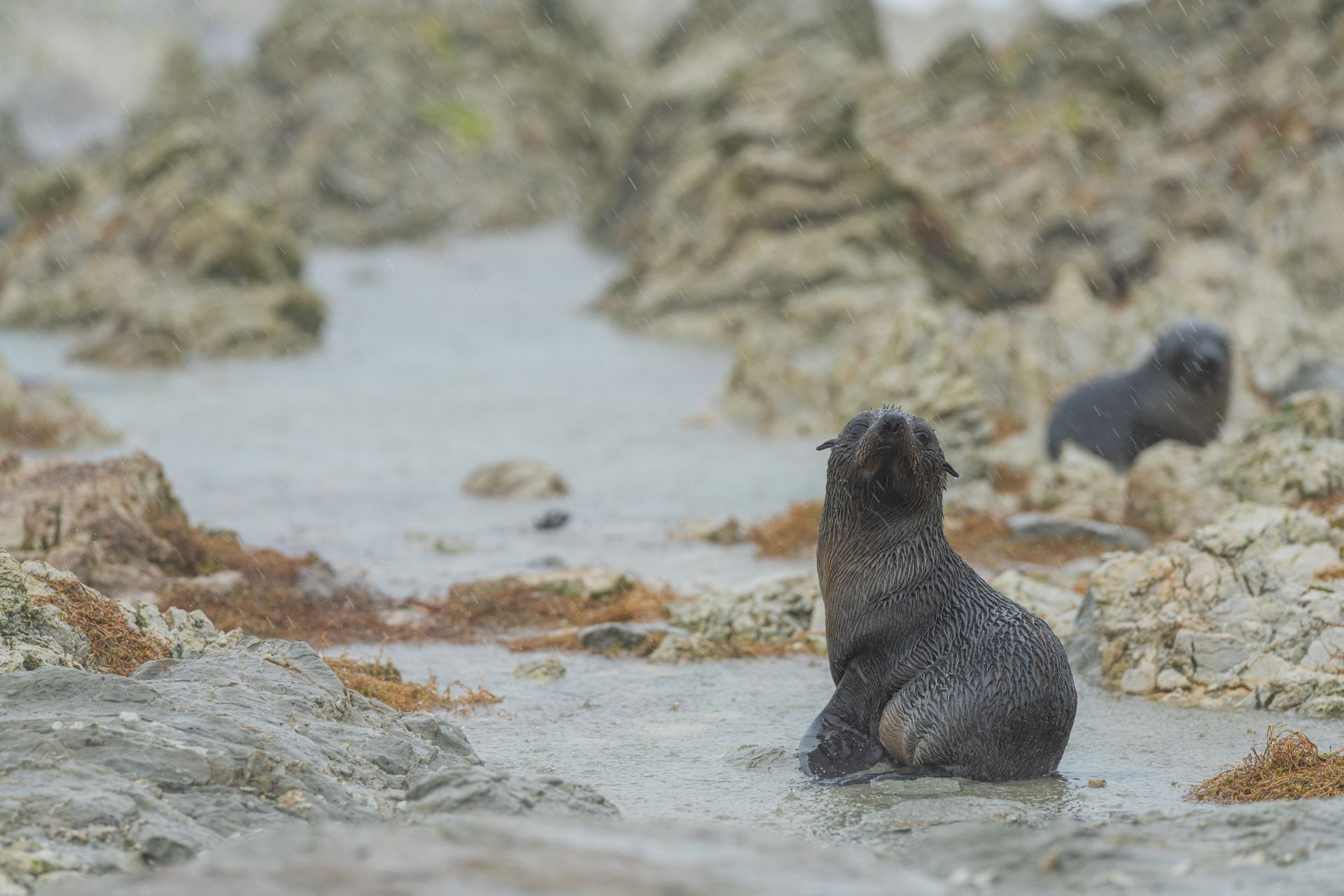
Galapagos fur seals have a unique life cycle that's shaped by their environment and social behavior.
They're a polygynous species, with males taking around 7-10 years to reach sexual maturity.
Females, on the other hand, reach maturity at 3-4 years old.
Their breeding habitat is typically rocky shores with sea caves on the western coasts of the islands.
Female Galapagos fur seals give birth 2-3 days after coming ashore and nurse their pups for an incredibly long period of time - up to 2 years.
The nursing period is so long that it's almost unique among seals, with only the walrus coming close.
Pups begin to swim and engage in independent feeding at around 9-12 months old.
They molt into their adult fur at around 4 months, but don't migrate like some other seal species.
The current population size is estimated to be around 10,000-15,000, a significant drop from the 40,000 estimated in 1978.
This decline is largely attributed to the devastating effects of the 1982-83 El Niño event.
Feeding and Predation
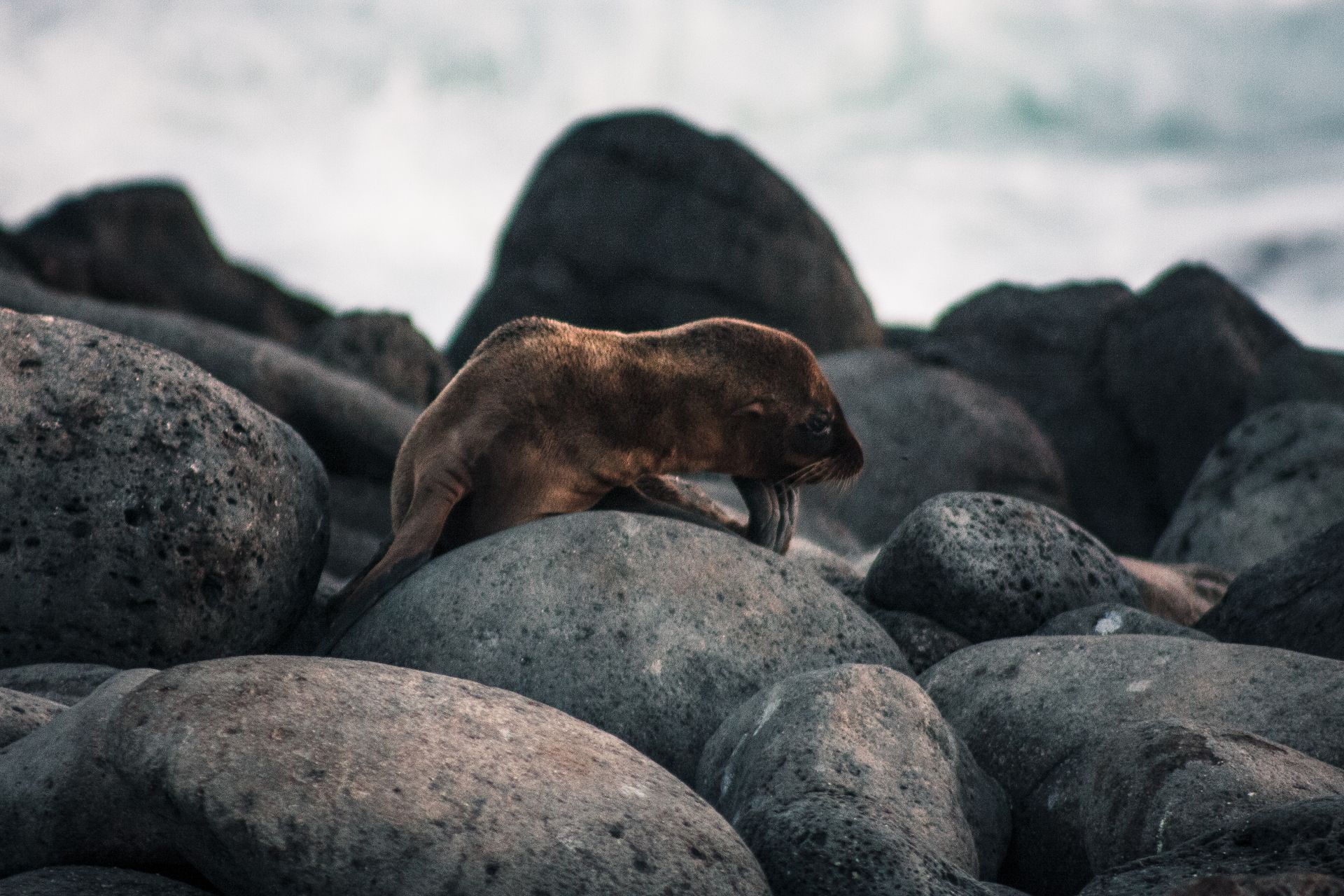
Galapagos fur seals primarily feed on fish, squid, and shellfish, getting them relatively close to shore and near the surface, but have been seen at depths of 169 m (554 ft). They mainly feed at night, as their prey is easier to catch then.
Galapagos fur seals have virtually no constant predators, but occasionally, sharks and orcas have been seen feeding on them, which is very rare. Sharks and orcas are the main predators of most other seal species, but their migration paths do not usually pass the Galapagos.
During normal years, food is relatively plentiful for Galapagos fur seals. However, during an El Niño year, there can be fierce competition for food, and many young pups die during these years.
Adult Galapagos fur seals feed themselves before their young and during particularly rough El Niño years, most of the young seal populations will die.
Communication and Perception
Galapagos fur seals are highly vocal creatures, making two distinct sounds while foraging at night in the ocean: a lengthened growl and a snap or knocking sound. These vocalizations are believed to aid in foraging.
Fur seals primarily communicate through vocalizations and visual displays. They use a range of vocalizations to convey information, and their visual displays can be quite impressive.
Galapagos fur seals also have a range of perception channels, including visual, tactile, acoustic, and chemical senses. This multi-sensory approach helps them navigate their environment and interact with their surroundings.
Here are the different perception channels used by Galapagos fur seals:
- Visual
- Tactile
- Acoustic
- Chemical
Threats and Conservation
The Galapagos fur seal, a species of pinniped, faces numerous threats to its survival. Historically, it was hunted almost to extinction by sealers, but thanks to Ecuadorian law, it's now protected.
Tourism, although regulated, is still a concern for the Galapagos fur seal. The species is vulnerable to collisions with boats, which can be fatal. Additionally, oil spills can be devastating, as the fur seal's thick pelage is crucial for thermoregulation.
Environmental changes, such as ocean warming and ESNO weather events, pose significant threats to the Galapagos fur seal. Climate change is a major concern, and the species is also affected by marine pollution, pathogen spillovers, and bycatch.
The Galapagos fur seal's habitat is naturally restricted, making it more susceptible to environmental threats. In the past, the species was also threatened by feral dogs on Isabela Island, but this problem has been controlled by the Galapagos National Park Service.
The Galapagos fur seal is listed as Endangered on the IUCN Red List, with a fluctuating population size and a marked decline in the last 30 years. The species is also listed as an Appendix II species under CITES.
Here are some of the key threats to the Galapagos fur seal:
The Galapagos fur seal has faced several major calamities, including the 1982-1983 El Niño event, which caused widespread starvation and mortality. Despite conservation efforts, the species remains vulnerable to these and other threats.
Galapagos Fur Seals
Galapagos Fur Seals are a unique and fascinating species. They are one of the six species of fur seals found in the Galapagos Islands.
Galapagos Fur Seals are known for their distinctive black and white coloring, which helps them blend in with their surroundings. Their coats are also surprisingly thick, which helps them stay warm in the cool waters of the Galapagos.
These seals are relatively small, with adults typically weighing between 50-70 pounds and measuring 5-6 feet in length. They are also incredibly agile, able to swim quickly and easily through the water.
Galapagos Fur Seals are carnivores, feeding on a variety of fish, squid, and crustaceans. They have been observed diving to depths of up to 150 feet in search of food.
In the wild, Galapagos Fur Seals can live for up to 20 years, although their average lifespan is around 15-18 years.
Status and Overview
Galapagos fur seals have been declining in population since the 19th century due to overhunting for their fur.
Thousands of these seals were killed by poachers during the 1800s, and it wasn't until 1959 that Ecuador established strict laws to protect them.
Galapagos fur seals are found on the rocky shores of the western islands of the Galapagos Archipelago and are the smallest in the family of otariids.
Their greyish-brown fur coat is thicker than that of the Galapagos sea lion, and they have bulging eyes and ears that protrude more than sea lions'.
Fur seals are generally smaller with broader and shorter heads, and larger front flippers that aid in climbing rockier ground.
Here are some key differences to tell fur seals apart from sea lions:
Galapagos fur seals are very similar in appearance to the Galapagos sea lion, but they have some distinct differences.
They have large eyes that help them hunt at night and keep a lookout for predators like sharks, and they tend to dive to between 10 metres and 50 metres.
Fur seals feed primarily on fish and cephalopods, relatively close to shore and primarily at night when their prey is easier to catch.
Research has shown that they tend to hunt less when the moon is full, probably because they become more visible to sharks and their prey tends to move into deeper waters.
Galapagos fur seals live in large colonies, which are divided into territories by the female seals during breeding season (mid-August to mid-November).
Every mother seal claims a territory for herself and breeds her pup there, and the female seals exclusively nurse their own pups, often violently rejecting strange pups that approach.
The Galapagos fur seal has the lowest reproductive rate reported in any seal, with females only bearing one pup at a time.
Frequently Asked Questions
Do Galapagos fur seals have sharp eyesight?
Yes, Galapagos fur seals have sharp eyesight, which helps them navigate their aquatic environment. Their keen vision is one of their key adaptations for hunting and survival at sea.
Featured Images: pexels.com