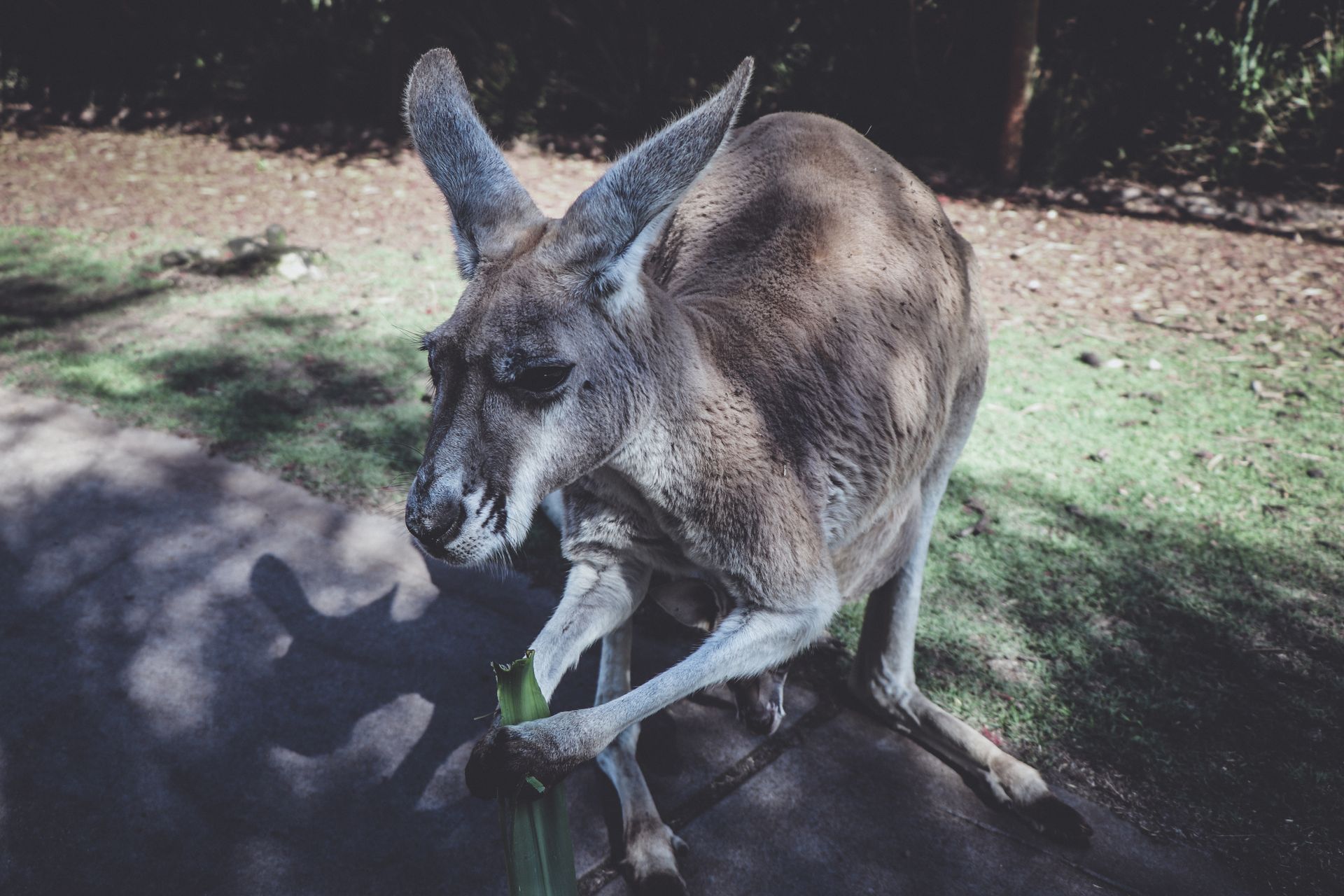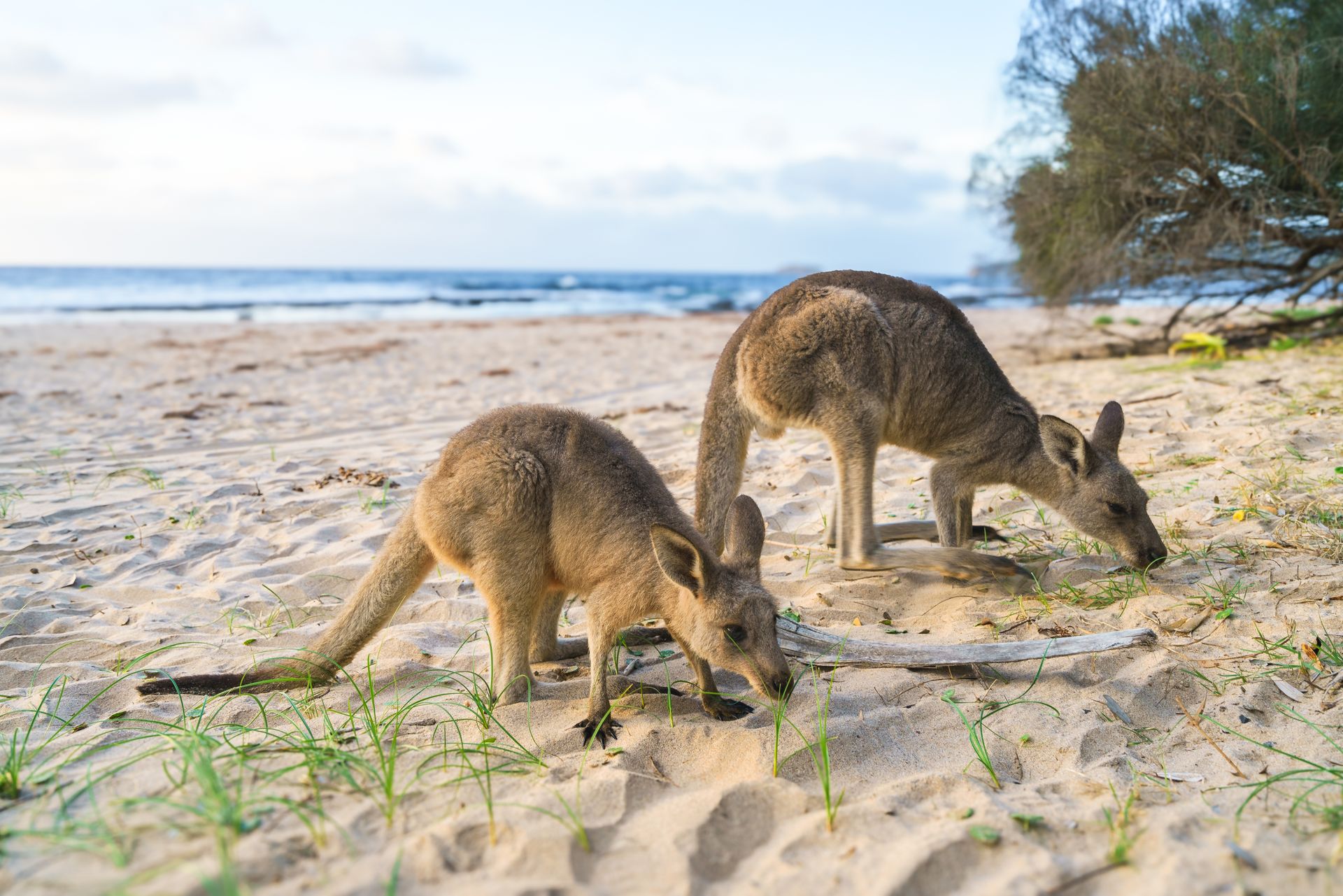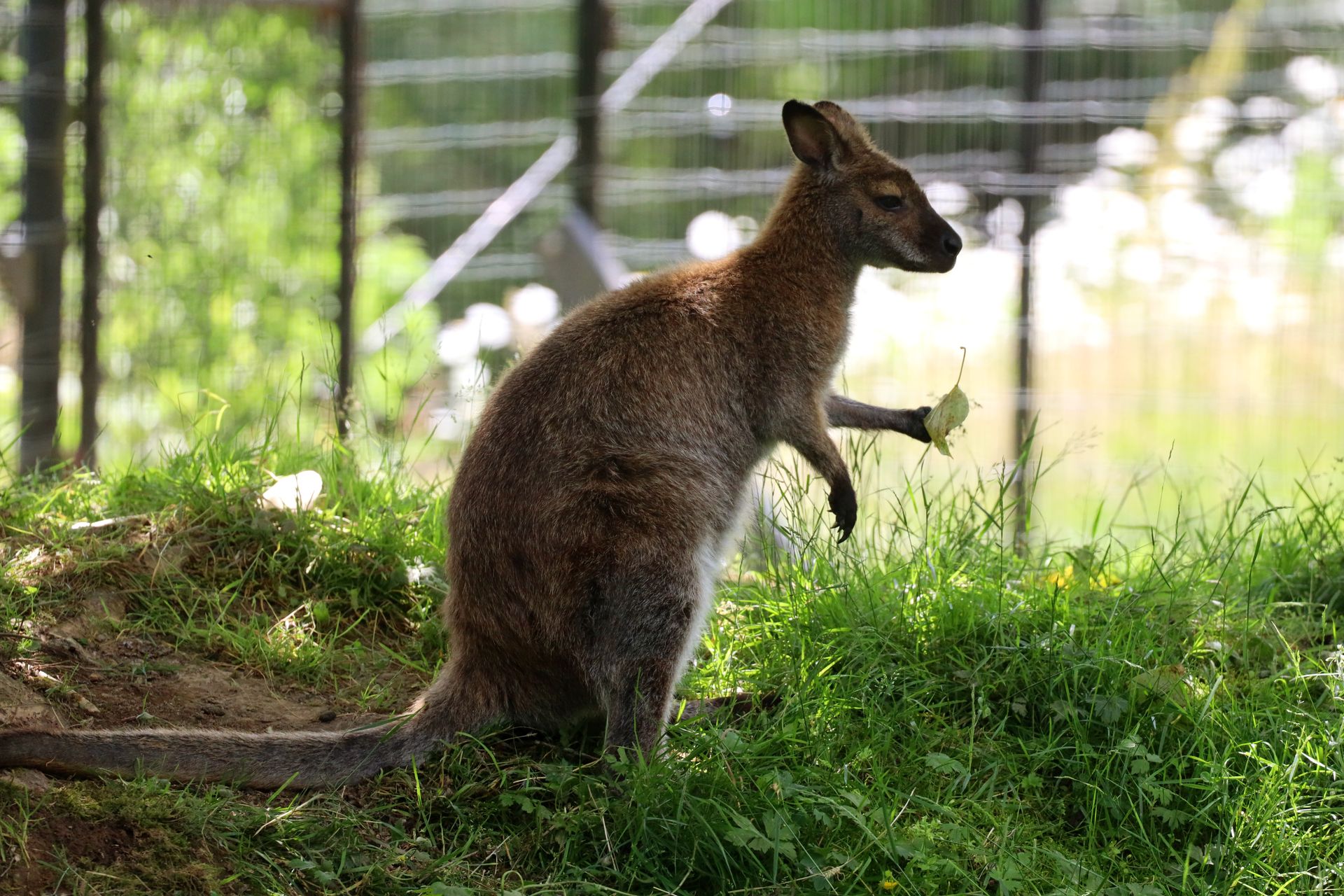
The antilopine kangaroo is a unique and fascinating creature. They are one of the four main species of tree-kangaroo, native to the tropical regions of Northern Australia.
Their distinctive appearance sets them apart from other kangaroo species, with a reddish-brown coat and a distinctive white stripe running along their sides. This striking coloration helps them blend in with their surroundings, making them expertly camouflaged.
Antilopine kangaroos are herbivores, feeding on a diet of leaves, grasses, and other vegetation.
Taxonomy
The antilopine kangaroo's taxonomy has a fascinating history.
John Gould described the species in 1842, one of four new species of 'kangaroos' presented before the Zoological Society of London that year.
The type location was given as Port Essington.
Gould initially assigned the species to the genus Osphranter, a taxon later submerged as a subgenus of Macropus.
A taxonomic restructuring in 2019, based on genetic analysis, promoted Osphranter back to genus level.
The common names of the species include antilopine wallaroo, antilopine kangaroo and antilopine wallaby.
The specific epithet antilopinus was proposed by Gould due to the resemblance of the fur to the African mammals known as antelopes.
It's worth noting that the species is sometimes referred to locally as the red kangaroo, but it is a different species from the large and reddish Osphranter rufus.
Physical Characteristics and Appearance
The antilopine kangaroo has a distinctive triangular-shaped body with powerful hind legs and feet. Its limbs are more slender and proportionally longer than other types of kangaroos.
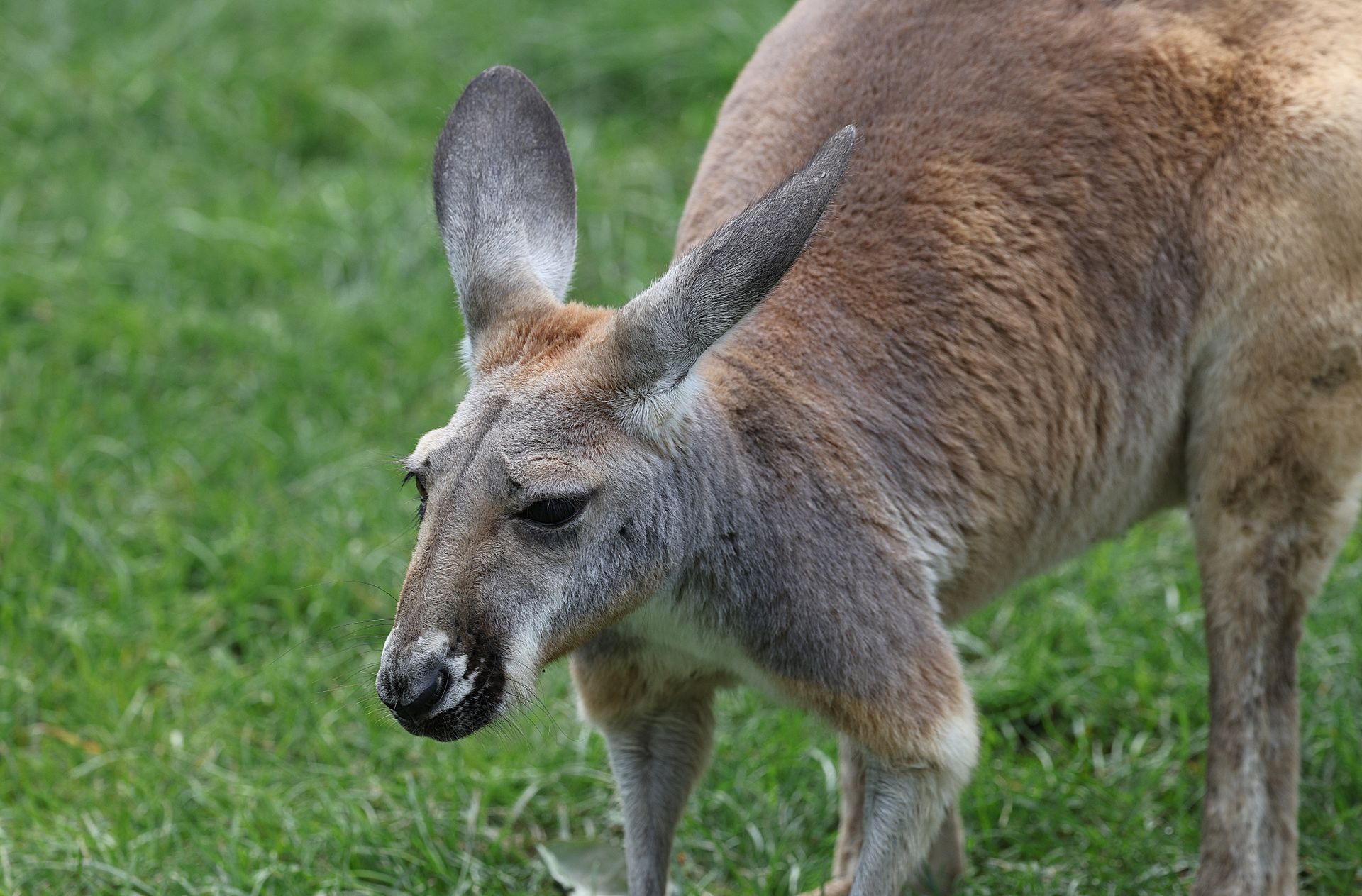
The male antilopine kangaroo is a striking reddish-tan colour with a lighter coloured underside, reaching a height of about 1.2 meters.
A well-defined bulge above the nostrils is a notable feature of the male antilopine kangaroo, although its function is not fully understood.
The female antilopine kangaroo is typically grey in colour with a lighter coloured underside, and is significantly smaller than the male, reaching a height of about 0.8 meters.
Antilopine kangaroos have a solid tail that complements their overall physique.
Habitat and Distribution
The antilopine kangaroo is a remarkable species that inhabits the tropical regions of Northern Australia. Its distribution range extends from the Kimberley region in Western Australia to the Top End of the Northern Territory and Cape York Peninsula in Queensland.
The species is found in tropical habitats with perennial grasses at elevations below 500 meters, particularly in areas with monsoonal eucalypt woodlands and open plains. These grasslands are a vital source of food for the antilopine kangaroo.
In fact, the species is locally common in parts of its wide range, but these groups occur in a patchy distribution within this area. This means that you may find large populations in some areas, but much smaller ones in others.
Here are the specific regions where you can find the antilopine kangaroo:
- The Kimberley region in Western Australia
- The Top End of the Northern Territory
- Cape York Peninsula in Queensland
The antilopine kangaroo's habitat preferences are quite specific, and it's essential to note that it's not territorial, moving from place to place as food becomes available.
Conservation and Threats
The antilopine kangaroo is listed as Least Concern by the IUCN, but its population is declining in some areas. This decline is a cause for concern, and scientists recommend ongoing monitoring to ensure the species' long-term survival.
The main threats to the antilopine kangaroo's survival are the increase in pastoral land use, changes in fire ecology, and hunting pressure in some areas. These factors can have a significant impact on the species' habitat and population.
Bushfires, grazing by livestock and feral herbivores, are major causes of antilopine kangaroo fatalities. These events can decrease the supply of grasses available for the kangaroos, making it harder for them to survive.
Climate change is also a concern for the antilopine kangaroo's future. It might even lead to them becoming extinct in the future. Protecting their habitat is very important to prevent this from happening.
Here are some key statistics on the antilopine kangaroo's conservation status:
- Species: Macropus antilopinus
- Conservation status: Least Concern (IUCN)
- Threats: Population decline, increased pastoral land use, changes in fire ecology, hunting pressure
- Recommended action: Ongoing monitoring, habitat protection
Behavior and Adaptations
Antilopine kangaroos are incredibly adaptable creatures, and their behavior is a testament to this. They're active both day and night, taking full advantage of the abundant food resources available during the wet season.
Their social groups can number up to 30 individuals, and they often gather in open grasslands rich with perennial grasses. These large groups are a sight to behold, and it's fascinating to see how they interact with each other.
As the dry season approaches, their behavior shifts dramatically. They restrict most of their activities to later parts of the day to avoid heat stress, and they seek shelter in shaded areas during the hottest parts of the day.
In fact, they're so sensitive to heat that they only emerge when temperatures become more tolerable. Their movements become increasingly centered around reliable water sources, and the large social groups of the wet season often fragment into smaller, more dispersed units as resources become scarcer.
Antilopine kangaroos are also known for their complex social structure. Males establish and maintain hierarchical relationships through ritualized behaviors, while social groups typically consist of multiple females with their young and one or more males.
Here are some key facts about the social structure of antilopine kangaroos:
- Males establish and maintain hierarchical relationships
- Social groups typically consist of multiple females with their young and one or more males
- Frequently share their habitat with other macropod species
Their communication system is equally sophisticated, employing a variety of vocalizations that serve different purposes. They use distinct hissing sounds as alarm calls to alert others of danger, while guttural coughing noises typically accompany confrontations.
Mothers and offspring exchange soft clucking sounds, and males produce specific vocalizations when courting females. They also use foot-thumping as a warning signal to alert others of potential threats, and employ subtle body posturing and facial expressions in their social interactions.
Reproduction and Life Cycle
The reproductive cycle of antilopine kangaroos is truly unique.
Females can nurture young in three different stages of development at the same time, a remarkable ability that sets them apart from other mammals.
Antilopine kangaroos can breed all year long, with the peak period occurring during the wet season.
A female antilopine kangaroo typically gives birth to one young at a time.
A neonate emerges from its mother's womb after just 35 days of gestation.
After entering its mother's pouch, the joey will develop for another 140 days before venturing out into the world.
The young kangaroo will still rely on its mother's milk for another 6 months, or about 15 months old.
What to Eat?
If you're looking to eat like an antilopine kangaroo, their diet consists mainly of short green grasses, such as low tussock grass, or the green shoots of long grasses burnt by bushfires.
Antilopine kangaroos are herbivorous, which means they only eat plants, and they spend a significant amount of time grazing and chewing their food, about 43.5% of each day.
To break down their tough grass diet, antilopine kangaroos use their large outward projecting front incisor teeth on the lower jaw to slice through grass and leaves, and their large molars at the back of their mouth chop and grind their food.
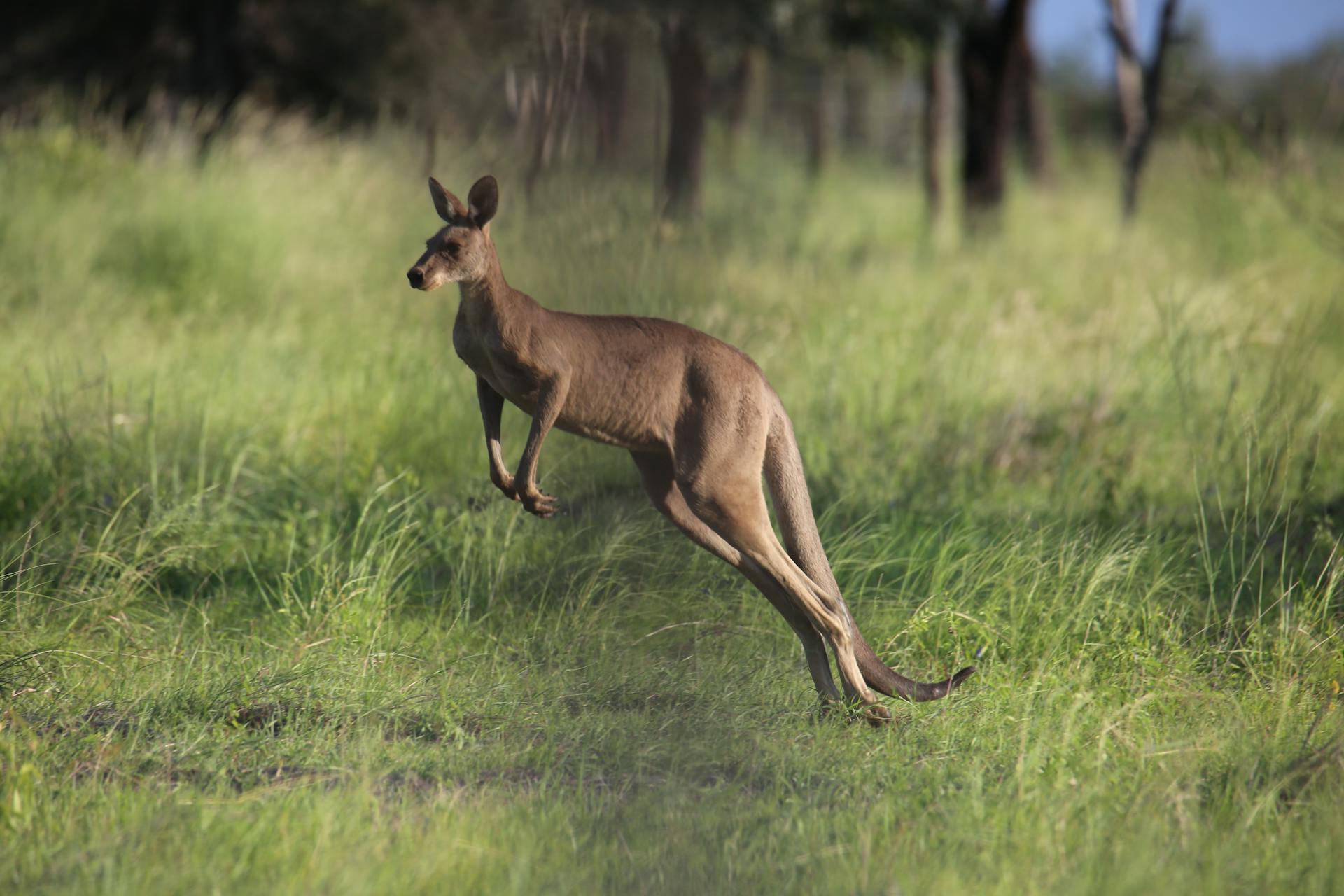
Their unique digestive system is designed to extract as many nutrients as possible from their high cellulose diet, which is made up of bacteria, fungi, and protozoa that ferment their food in their two-chambered stomach.
This means they can go without drinking water for long periods, as they extract most of the water they need from the moisture in their food.
A different take: Man Saves Dog from Kangaroo in Water
General Information
Antilopine kangaroos are found in tropical habitats, where they need to drink water daily, even during dry seasons. This is unusual for kangaroos, which typically conserve water.
Their unique thermoregulatory behavior involves licking their forearms extensively during hot weather. This helps cool their blood through evaporation, as major blood vessels run close to the skin surface in their forearms.
Antilopine kangaroos have a remarkable social structure, with groups that are fluid and constantly changing. This "fission-fusion" social behavior is relatively rare among macropods. They have been observed to form relatively stable mixed-sex groups year-round, rather than segregating into male and female groups.
Their diet consists mainly of native perennial grasses, with over 95% of their food coming from this source. This makes them almost exclusively grass eaters, unlike many other kangaroos that eat a variety of plants.
Check this out: Australian Water Rat
Facts
Antilopine kangaroos are quite fascinating creatures. They need to drink water more frequently than other large kangaroos due to their tropical habitat.
One of the unique behaviors of antilopine kangaroos is that they lick their forearms extensively during hot weather to cool their blood through evaporation.
Their social behavior is also quite interesting. They form groups, but membership changes frequently, often within the same day.
Antilopine kangaroos have exceptionally large eyes compared to other kangaroos of similar size, which helps them see better in low light conditions.
They are almost exclusively grass eaters, with over 95% of their diet consisting of native perennial grasses.
Antilopine kangaroos have specially adapted feet with extra cushioning to help them move on rocky terrain.
Here are some of the different vocalizations used by antilopine kangaroos in different social contexts:
- At least seven distinct vocalizations have been documented
- These vocalizations are used in different social contexts
Antilopine kangaroos maintain relatively stable mixed-sex groups year-round, unlike most kangaroos that segregate into male and female groups.
About the
About the topic of General Information, it's worth noting that there is no one-size-fits-all definition. General Information can encompass a wide range of topics, from history to science to everyday life.
The key to understanding General Information is to approach it with a curious and open-minded attitude. By being willing to learn and explore new ideas, you can gain a deeper understanding of the world around you.
General Information can be found in various sources, including books, articles, and online resources. In fact, many people rely on the internet as their primary source of information.
The importance of General Information cannot be overstated. It has the power to shape our perspectives, inform our decisions, and even change our lives.
Featured Images: pexels.com