Anemic cat life expectancy is a serious concern for cat owners. Cats with anemia can live for several months to a year or more with proper treatment.
The lifespan of an anemic cat depends on the underlying cause of the anemia. Some cats may live longer than others due to factors such as the severity of the anemia, overall health, and response to treatment.
Cats with mild anemia may live for several months to a year or more with proper treatment, but those with severe anemia may only live for a few weeks or months.
Causes and Diagnosis
Anaemia in cats can be caused by either an increased breakdown of red blood cells (RBCs) or blood loss, which is known as regenerative anaemia. On the other hand, non-regenerative anaemia is usually caused by a problem in the bone marrow that prevents or interferes with the normal production of RBCs.
To diagnose anaemia in cats, a blood test is performed by your vet. This will help determine the severity of the anaemia, the degree of bone marrow response, and the condition of other types of blood cells.
Intriguing read: Cat Blood Types
A complete medical history is an important part of diagnosing anaemia, as it can help identify potential underlying causes. Your vet may ask questions about your cat's history of exposure to toxins, drug treatments, and vaccinations.
A complete blood count (CBC) is a blood test that provides information on the severity of the anaemia, the degree of bone marrow response, and the condition of other types of blood cells. It also helps to evaluate red blood cell size and shape and to check for red blood cell parasites.
In some cases, anaemia in cats can be caused by an infectious blood parasite, such as Mycoplasma haemofelis, or from the feline leukemia virus (FeLV). Other potential causes include cancers, bacterial infections, hereditary abnormalities, toxin exposure, and reactions to drugs or vaccines.
To diagnose Immune-Mediated Haemolytic Anaemia (IMHA) in cats, your vet may recommend several diagnostic tests, including a CBC, Coomb's test, packed cell volume/total protein, coagulation profile, blood chemistry, flow cytometry, blood parasite testing, urinalysis, radiographs, and ultrasonography.
Here are some common diagnostic tests used to diagnose IMHA in cats:
- CBC: Measures red and white blood cells and platelets
- Coomb's test: Identifies antibodies coating the surface of RBCs
- Packed cell volume/total protein: Measures RBCs and proteins in the blood plasma
- Coagulation profile: Measures blood clotting ability and bleeding risk
- Blood chemistry: Measures organ function, including kidney and liver enzymes and bilirubin levels
- Flow cytometry: Looks for immunoglobulins on the surface of RBCs
- Blood parasite testing: Tests for parasites, including heartworm disease and Mycoplasma
- Urinalysis: Checks for blood, protein, infection, and pH levels in the urine
- Radiographs and ultrasonography: Visualize internal organs and check for abnormalities or masses
Signs & Symptoms
Cats with anemia can exhibit a range of signs and symptoms, which can vary depending on the severity and duration of the condition.
Paleness, or pallor, is a common sign of anemia in cats, often visible as pale mucous membranes, such as gums and membranes lining the mouth and around the eyes.
Weakness and lethargy are also common, with cats becoming increasingly tired and lacking energy.
Anaemia can cause an increased heart rate, known as tachycardia, and fast breathing, or tachypnoea.
Some cats may develop pica, eating non-edible materials such as litter or licking non-food materials.
Jaundice, or yellow discolouration of the mucous membranes, can also occur in anemic cats.
Cats with anemia may also show signs of an underlying disease, such as chronic kidney disease, which may be causing the anemia.
Here are some common signs and symptoms of anemia in cats:
It's worth noting that cats with long-term anemia may adapt and show fewer signs, until the anemia is severe.
Treatment and Management
Anaemia in cats requires aggressive treatment to manage the condition and prevent complications. Treatment depends on the underlying cause, but common approaches include antibiotics for infectious conditions, immunosuppressive drugs for immune-mediated haemolytic anaemia, and iron supplements for iron deficiency anaemia.
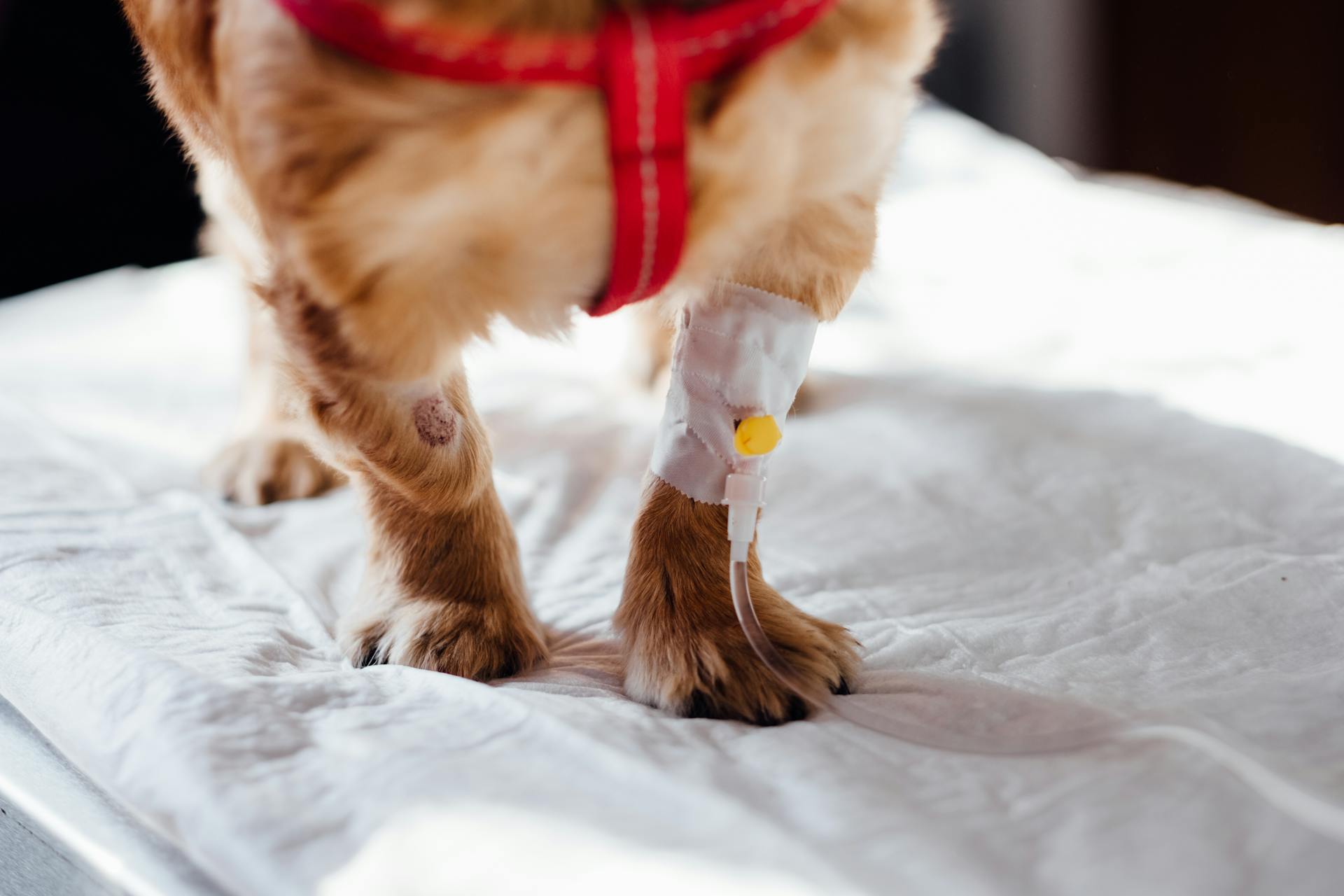
In severe cases of anaemia, a blood transfusion may be required, and your cat may need to be hospitalised for close monitoring and care. Blood transfusions typically take 3 to 4 hours to complete and involve a transfusion of packed RBCs administered through an IV catheter.
Immunosuppressive medications are used to help stop the destruction of RBCs, and may include prednisone, prednisolone, cyclosporine, chlorambucil, or mycophenolate. These medications can be used in combination with supportive care, such as IV fluids and nutritional supplementation.
Treatment for IMHA may need to be continued for several months, and there is a chance of relapse. Successful transfusions of RBCs can last within a cat's body for approximately 3 to 4 weeks, and therefore your cat may need additional transfusions. Steroid therapies may be required for 4 months.
On a similar theme: Dog Blood Work Cost near Me
Iron supplementation is crucial for cats being treated with ESAs or for iron deficiency anaemia. Parenteral iron supplementation is recommended, with iron dextran being the most common choice in veterinary medicine. The recommended dosage is 10 mg/kg administered every 3-4 weeks.
Oral iron supplementation is also an option, with ferrous sulfate being the most common oral supplement. The recommended dosage is 50-100 mg/cat/day PO for a total of 8.8-25 mg of elemental iron. Side effects are typically mild but include gastrointestinal upset.
The recovery and management of immune-mediated hemolytic anemia in cats can be challenging, with approximately 1 in 5 cats experiencing a relapse of IMHA. Cats that recover will need to be on immunosuppressive medications for a minimum of several months, in addition to receiving multiple blood transfusions.
Here is a summary of the treatment options for non-regenerative anemia:
Pathogenesis and Complications
Anemic cat life expectancy can be significantly impacted by the underlying pathogenesis of the condition. Non-regenerative anemia in cats can occur at the level of the bone marrow, secondary to decreased and/or ineffective erythropoiesis.
This type of anemia can be caused by a variety of factors, including nutritional deficiencies, chronic diseases, and certain medications. Ineffective erythropoiesis can lead to a reduction in the production of healthy red blood cells.
The lifespan of mature red blood cells can also be affected, leading to a condition known as anemia of chronic disease. This can be a sequela to decreased RBC lifespan once the mature RBCs are in circulation.
For your interest: Blood Parasites in Cats
Pathogenesis
Non-regenerative anemia in cats can occur at the level of the bone marrow or as a result of decreased RBC lifespan once mature RBCs are in circulation.
Ineffective erythropoiesis can be caused by absolute deficiencies in essential nutrients like iron, or by vitamin B12 deficiencies that inhibit DNA synthesis within erythroblasts.
Cats with chronic kidney disease often experience a decrease in erythropoietin production, leading to non-regenerative anemia.
Primary bone marrow disorders, including PRCA, NRIMHA, and AA, can cause both decreased and ineffective erythropoiesis in cats.
A unique perspective: What Causes Bone Loss in Your Mouth
Feline RBCs have a shorter lifespan than those of dogs, lasting around 73 days in circulation.
Heinz body formation is a common mechanism leading to RBC senescence in cats, due to their higher susceptibility to oxidative injury.
Here are some diseases that can cause non-regenerative anemia in cats:
These diseases typically cause regenerative anemia, but can also result in non-regenerative anemia in a proportion of cases.
Is in Fatal?
IMHA can be a serious condition in cats. IMHA may be fatal in 20% to 80% of cats. This high mortality rate highlights the importance of prompt veterinary care and treatment. In severe cases, IMHA can lead to organ failure.
Immune Mediated Hemolytic
Immune mediated hemolytic anemia, or IMHA, is a serious condition in cats where the body attacks its own red blood cells, leading to severe anemia.
Approximately 20% to 75% of cats diagnosed with IMHA will lose their life to the disease.
The immune system mistakenly identifies the red blood cells as foreign and creates antibodies to destroy them, causing a series of life-threatening problems.
Due to the decreased number of red blood cells, tissues and organs are not able to receive enough oxygen to properly function and remove waste gasses from the body.
The RBCs, now covered in antibodies, become sticky and adhere to one another, causing clots or embolisms within the blood vessels.
The liver becomes overwhelmed by an influx of bilirubin, the waste product of broken-down RBCs.
A cure for IMHA is possible, but there's an 11% to 15% chance of relapse.
Aggressive treatment is needed for IMHA patients, and approximately 1 in 5 cats will experience a relapse of the condition.
Those that do recover will need to be on immunosuppressive medications for a minimum of several months, in addition to receiving multiple blood transfusions.
Intriguing read: Will a Hearing Aid Battery Kill a Dog
Prevention and Prognosis
Preventing IMHA in cats is crucial to their overall health. Most of the time, IMHA cases don't have any apparent underlying causes, but secondary triggers like blood parasites or reactions to drugs or vaccines can play a role.
Discussing ways to avoid these triggers with your veterinarian is essential. This can include getting your cat up to date on their vaccinations and parasite prevention.
Exposure to toxins like oak, red maple, and onions can also be a risk factor. Keeping your cat away from these substances is vital to preventing IMHA.
While prevention is key, it's also essential to understand the prognosis of IMHA in cats. Unfortunately, the condition can be life-threatening, and treatment may not always be successful.
However, with prompt treatment and proper care, some cats can recover from IMHA.
Frequently Asked Questions
Can a cat come back from anemia?
Yes, cats can recover from anemia, but it's crucial to address the underlying cause and seek veterinary attention promptly to ensure the best possible outcome.
Do anemic cats sleep a lot?
Yes, anemic cats often sleep more than usual due to a lack of energy. This excessive sleeping can be a key indicator of anemia in cats.
Featured Images: pexels.com