Brittany dogs are known for their friendly and outgoing personalities. They are highly social and love to be around people, making them great family pets.
One of the key characteristics of a Brittany dog is their high energy level. They require regular exercise to stay happy and healthy.
Brittany dogs are relatively small in size, typically weighing between 25-40 pounds and standing between 17-20 inches tall.
Physical Characteristics
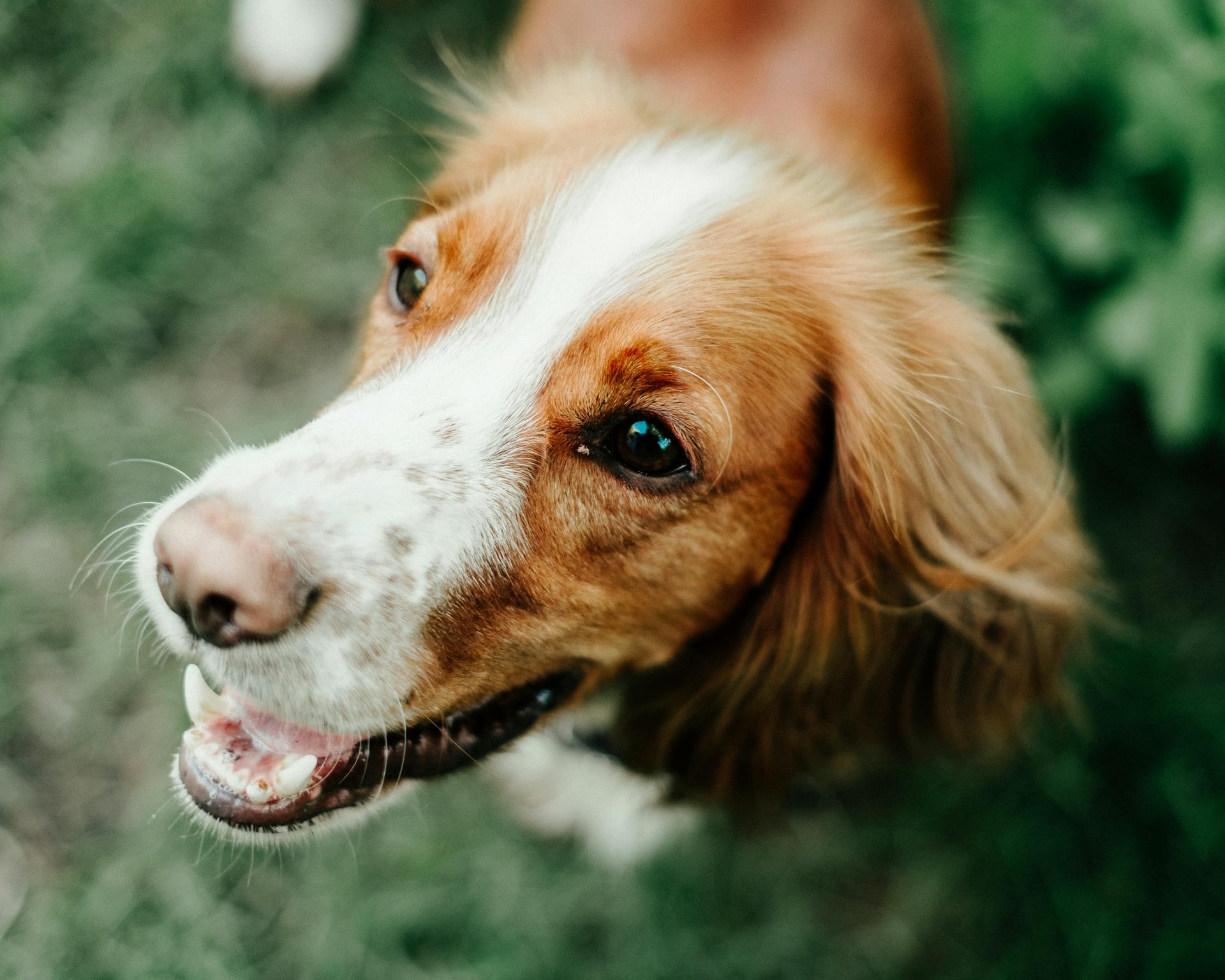
The Brittany's physical characteristics are truly one-of-a-kind. They come in two main coat colors: orange and white, or liver and white. These colors can be in a clear or roan pattern, with the roan pattern being an even mixture of white and pigmented hairs.
Their size is relatively small, ranging from 30 to 40 pounds. This makes them a great choice for people who want a hard-working field dog in a smaller package. They're considerably smaller than setters and pointers, but leggier than other spaniels.
Their unique proportions and height are quite striking, with their height at shoulder-level equal to the length of their body. This leggy build makes them stand out from other breeds.
A unique perspective: Exploring Dachshund Varieties: Sizes, Coats, and Colors
Grooming and Care
Grooming is a breeze with a Brittany, thanks to their short coat that requires minimal grooming.
To keep their coat looking its best, brush your Brittany at least once a week with a soft brush or a brushing mitt. This will remove dirt and loose hairs from their coat. A weekly brushing will also help prevent matting and distribute natural oils to keep their coat healthy.
Brittanys don't need frequent baths, but a bath every month or two should keep them smelling fresh. If you need to freshen them up in between baths, a quick swipe with a grooming wipe will do the trick.
Trimming their nails is a simple process that can be done after a bath, when their nails are soft and easier to trim. You'll know it's time to trim their nails when you hear the tell-tale "click-clack" on the kitchen floor.
To keep their ears clean and healthy, check their ears for debris and redness or swelling. If you notice anything unusual, consult with your vet. And don't forget to brush their longer feathers, normally on the ears, legs, and tummy.
Here's a quick summary of Brittany grooming needs:
- Brush their coat at least once a week
- Bath every month or two
- Trim their nails after a bath
- Check and clean their ears regularly
The Sweet Personality
The Brittany dog's sweet personality is one of their most endearing qualities. They're not just a pretty face, though - they're absolutely packed with personality.
A sensitive dog by nature, harsh looks or raised voices will have a strong, negative impact on them. They want to be with their family, so leaving a Brittany alone for extended periods of time won't end well.
Doing so may lead to separation anxiety or destructive behaviour - or both. They're tough in the field, but gentle and doting in the home.
Notoriously patient with other pets and children, the Brittany has a lot of love to give. Their sensitive temperament also speaks to the need for early socialization with other pets and people.
This will help the Brittany overcome any shyness. Puppy kindergarten and early training classes are a must, but they'll be a joy because this dog is smart - very smart.
With their soft temperament, the Brittany will thrive only with positive-oriented training. Firm and consistent guidelines are critical - but harshness is an absolute no-no.
Suggestion: Could Shiba Inu Hit 1 Cent
Training and Behavior
Brittanys are highly intelligent dogs that require early training to adapt to your way of thinking. This is especially true for puppies, as they have a strong prey drive and independent thinking.
Training should start with the fundamentals, such as sit, stay, come, and walking nicely on a leash. These skills are crucial for keeping them safe and well-mannered as they grow up.
Reward-based training, also known as positive reinforcement, works wonders with Brittanies. They respond well to treats, praise, and play breaks with fun toys.
Brittanies are social butterflies that need to be socialized early on. This means taking them on walks and letting them meet new people and dogs outside their family.
Their strong hunting instinct means they'll chase anything they think needs chasing, so always keep them on a leash in open areas. No amount of training or yelling will stop them until they've finished the chase.
A fresh viewpoint: Dog Names for Strong Dogs
Brittanys are natural sporting dogs and make excellent hunting partners, with a strong instinct to follow scents and chase birds.
Their intelligence, eagerness to please, and strong work ethic make them generally easy to train. However, their energetic and playful nature can sometimes make them easily distracted.
Short, fun, and varied training sessions can help keep their focus and prevent boredom. Consistency, patience, and an active approach are key to training a Brittany.
Early socialisation is crucial to help them develop good manners and adapt well to different environments, people, and animals.
Health and Wellness
Brittanys are generally a healthy breed, but they may be prone to certain health conditions.
They can be prone to canine hip dysplasia, hypothyroidism, and epilepsy. Regular ear checks and cleaning with a vet-approved solution can go a long way in keeping your Brittany healthy and comfortable.
To minimize serious health concerns, purchase from a reputable breeder who engages in responsible breeding practices, and through screening for common diseases and conditions.
Some common health concerns in Brittanys include:
- Canine hip dysplasia
- Hypothyroidism
- Epilepsy
- Elbow dysplasia
Common Health Issues

Brittanys are generally a healthy breed, but like all breeds, they can be prone to certain health issues. One of the most common health concerns in Brittanys is hip dysplasia, a condition that affects the hip joint.
Canine hip dysplasia can lead to arthritis and mobility issues if left untreated. It's essential to work with a reputable breeder who engages in responsible breeding practices to minimize the risk of this condition.
Brittanys are also prone to hypothyroidism, a condition where the thyroid gland doesn't produce enough hormones. This can lead to weight gain, skin problems, and other issues.
Another health concern in Brittanys is epilepsy, a condition that affects the brain and can cause seizures. If you're considering bringing a Brittany into your family, it's crucial to discuss this condition with your breeder and veterinarian.
Here are some common health issues that may affect Brittanys:
- Canine hip dysplasia
- Hypothyroidism
- Epilepsy
Regular ear checks and cleaning can also help prevent infections, especially after outdoor adventures or swimming.
Dog Diet
Brittanys need high-quality dog food that's right for their age, size, and activity level.
Puppies require a specific puppy food that supports their growth and development, and they should be fed three to four times a day until they're six months old.
At six months, Brittanys can be switched to adult dog food and fed twice a day.
Portion control is key to preventing obesity, as Brittanys have a tendency to overeat if given the chance.
Treats should be given in moderation and counted towards their daily calorie intake to maintain a healthy weight.
Appearance and Colors
Brittanies are medium dogs with an athletic form and energetic gait - their relatively long legs were made for running fast. Their bright smiles and intelligent eyes belie their readiness for a game of fetch.
Their floppy ears are set high on their head with a flirty feathering on the edges. Brittany eyes are usually darker in color, although they can also be amber. Their gently tapering muzzle is tipped by a solid-colored nose in fawn, tan, brown or deep pink.
The AKC breed standard allows for the tail to be docked or undocked, but docking has been banned in many places due to medical and behavioral reasons. If you're considering docking, schedule a consultation with your veterinarian.
Brittany's soft, dense coat is either flat or wavy and may have light feathering on the ears, chest and legs. Their coat colors are either a striking orange and white, or liver (reddish brown) and white. They can have markings that include spots, roan (an even mix of white and another color that doesn't fade as they age) and ticking (which is flecks of color on a white-coated dog).
Breed standard colors in the Brittany breed include:
- Black & White
- Black & White Roan
- Black Tricolour
- Liver & White
- Liver Tricolour
- Orange & White
- Orange & White Roan
- Tricolour
Standard Colours
The Brittany's appearance is truly one of a kind, and their colors are just as striking. Their coat colors are either a striking orange and white, or liver (reddish brown) and white.
Brittany's coats can have markings that include spots, roan, and ticking. These markings can add a unique touch to their overall appearance.
If this caught your attention, see: Shiba Inu Red
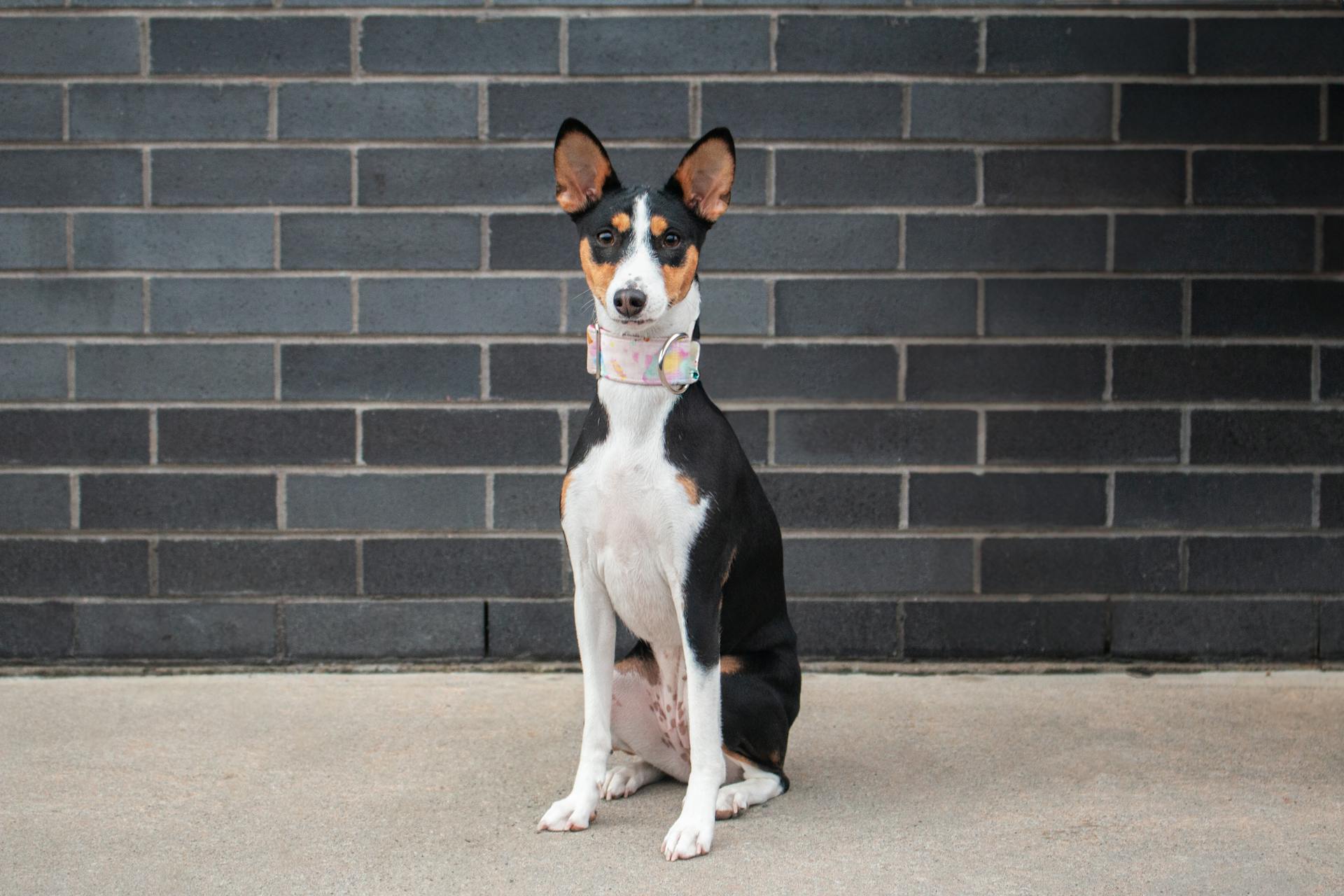
The AKC breed standard allows for a variety of colors, including black and white, black and white roan, and liver and white. These colors are traditional and well-known within the breed.
Here are the breed standard colors accepted within the Brittany breed:
- Black & White
- Black & White Roan
- Black Tricolour
- Liver & White
- Liver Tricolour
- Orange & White
- Orange & White Roan
- Tricolour
Non Standard Colors
Non-standard colors can be a bit tricky to navigate, especially if you're new to dog ownership. Non-breed-standard colors are exactly that - colors that aren't accepted within the breed standard.
Some dogs within a breed may have non-breed-standard colors, but it's generally advised to prioritize breed standards for all points.
About the Breed
The Brittany is a compact dog with well-muscled frames and long legs, making them ideal for hunting and outdoor activities.
They can weigh between 30 and 40 pounds and measure between 17.5 and 20.5 inches at the shoulder. Their short, dense coat requires only weekly brushing to stay looking great.
Brittanys are alert, intelligent, and loving dogs that thrive on physical and mental exertion. They need daily activity to stay happy and healthy.
Standard & History
Brittanys are compact dogs with well-muscled frames and long legs, making them ideal for hunting in challenging terrain and changing weather conditions.
Their ruggedness and agility are key characteristics that have made them a popular choice for hunters. They're also known for their intelligence and soft eyes, which are prized in bird dogs.
Brittanys can have tails of varying lengths, ranging from being tailless to having tails up to four inches long. This versatility is just one of the many traits that make them a beloved breed.
The Brittany breed originated in the French province of Brittany, where local hunters crossbred spaniels to create a hearty and versatile breed. They wanted a dog that could withstand the cold climate and dense underbrush of the region.
In addition to their hunting skills, Brittanys were bred to be trainable and versatile, making them a great choice for families. Their smaller stature than their ancestors was also a desired trait.
Brittanys have evolved into one of the smallest and most versatile gun dogs, with a rich history that dates back several centuries.
On a similar theme: Pit Bulls Tails Cropped
About This
The breed in question is a relatively small one, weighing in at an average of 40 pounds.
They're known for their short coats, which require minimal grooming.
Their lifespan is around 12-15 years, which is relatively average for a dog of their size.
They're an adaptable breed, thriving in a variety of living situations, from apartments to homes with yards.
Their energy level is moderate, making them a great fit for active owners who want a companion that can keep up.
They're highly intelligent, which means they can learn quickly with positive reinforcement training.
Profile
The Brittany is a medium-sized dog, weighing between 30 and 40 pounds and measuring between 17.5 and 20.5 inches at the highest point of the shoulders.
This breed is known for its high energy level, requiring daily mental and physical exertion to thrive. They are task-oriented dogs that need to stay active.
Their short, dense coat is relatively low maintenance, requiring only weekly brushing to keep it looking great.
The Brittany's heritage as a hunting dog has given it a strong instinct to work and please its owner, making it a great breed for those who want a dog that can keep up with their active lifestyle.
How to Care
Brittany dogs have moderate care needs. Their grooming routine is minimal, which makes their care easier.
Bathing is a breeze for Brittany dogs, thanks to their short coat. You'll need to bathe them regularly to keep them clean.
These pups are highly trainable, so you can expect to see improvement in their behavior with consistent training. They'll learn quickly and become well-behaved companions.
Brittany dogs need plenty of exercise to stay happy and healthy. Make sure you have time to give them the physical activity they need.
If this caught your attention, see: Cockapoo Care
Training and Activities
Training a Brittany dog requires patience and consistency, especially when they're young. Start training your Brittany puppy as soon as possible to help them adapt to your way of thinking.
Brittanies are intelligent and independent thinkers, so they need to learn the fundamentals of obedience, such as sitting, staying, and coming when called. They also need to learn how to walk nicely on a leash.
Reward-based training is the best approach for Brittanies, so be sure to use positive reinforcement techniques like treats, praise, and playtime. This will help them learn quickly and enjoy the process.
Socialization is crucial for Brittanies, as they are social butterflies who need to learn what behaviors are acceptable in different situations. Take your puppy on walks and introduce them to new people and dogs to help them become confident and well-adjusted.
Brittanies have a strong prey drive, so it's essential to keep them on a leash when you're not in a secure area, like a fenced yard. They will chase anything they think is prey, and no amount of training or yelling will stop them.
As a high-energy breed, Brittanies need at least 1.5 to 2 hours of exercise per day to stay physically fit and mentally stimulated. This can include brisk walks, jogging, playing fetch, or engaging in activities like agility or scent-based games.
Puppies need to start with short exercise sessions, around 5 minutes per month of age, up to twice a day, but this will vary depending on the individual dog and your vet's advice.
Related reading: Shiba Inu Exercise Needs
Frequently Asked Questions
How much does a Brittany puppy cost in the US?
In the US, a well-bred Brittany puppy typically costs between $1500-2000. Learn more about the factors that influence Brittany puppy prices and what to expect from a reputable breeder.
Featured Images: pexels.com