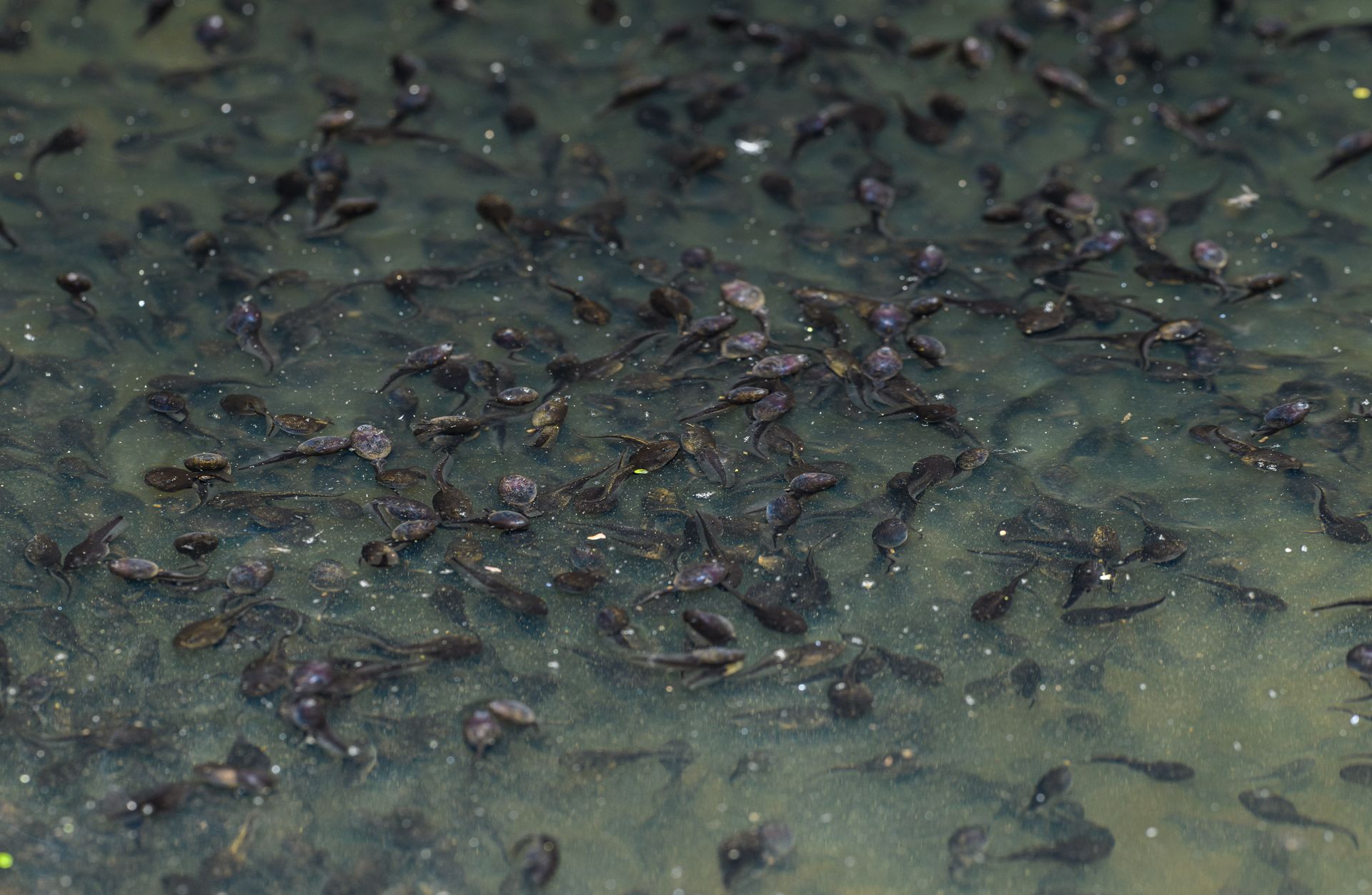
Xenopus, a genus of aquatic frogs, has been a vital tool for scientists studying genetics for decades. They have 18 recognized species and are widely distributed across sub-Saharan Africa.
One of the reasons Xenopus is so popular in research labs is due to their large eggs, which can be easily manipulated and studied. This has led to significant breakthroughs in our understanding of embryonic development and cell biology.
Xenopus laevis, one of the most commonly used species, has a relatively simple nervous system, making it an ideal model for studying neurological disorders.
What Is?
Xenopus laevis is a species of frogs that can be found in lakes, rivers, and swamps in sub-Saharan Africa.
They're excellent swimmers and generally live underwater, but they must come up to breathe from time to time.
Adult Xenopus frogs are about 10 cm long and are green/grey in colour.
In the wild, they have a life expectancy of 15 years, while in captivity they can live up to 30 years.
Male and female frogs can be distinguished by distinctive characteristic traits.
Male frogs are slimmer and smaller than female frogs and have black patches on their hands and arms.
Females have protrusions on their back legs, looking like hips.
Xenopus laevis is a nocturnal frog, which means its feeding and reproductive activity occurs mostly during twilight.
They lack a functional tongue or teeth and rely on their hands to push food down their throats and a hypobranchial pump to suck food into their mouth.
Xenopus frogs are predators and scavengers and feed on living or dead prey, including fish, tadpoles, and crustaceans, and any organic waste.
They don't have any vocal sacs and therefore cannot croak.
Instead, male and female frogs make mating calls by contracting their laryngeal muscles and producing small clicking sounds under the water.
Physical Characteristics and Behavior
Xenopus species are easily identifiable by their flattened bodies, smooth skin, and clawed hind feet.
They lack a tongue, which is a notable difference from most frogs, and instead use their hands to push food into their mouths.
Their distinctive physical characteristics make them stand out, and the most common species, Xenopus laevis, can grow up to 12 cm in length.
Physical Characteristics
Xenopus species have some pretty unique physical characteristics that set them apart from other frogs. Their bodies are flattened, which is quite different from the more rounded bodies of most other frogs.
Their skin is smooth, which is a nice touch, and they have clawed hind feet that are perfect for grabbing onto things.
One of the most distinctive features of Xenopus laevis, the most common species, is its grayish-green coloration with distinctive mottling.
They can grow up to 12 cm in length, which is a decent size for a frog.
One thing that's worth noting is that Xenopus species lack a tongue, which means they have to use their hands to push food into their mouths.
Habitat and Behavior
Xenopus frogs are native to sub-Saharan Africa and can be found in slow-moving rivers, lakes, and ponds.
They are fully aquatic, which means they spend their entire lives in water, and are capable of thriving in diverse water conditions.
Their ability to aestivate during dry seasons allows them to survive in temporary water bodies, and they can even tolerate varying water qualities.
This adaptability is a testament to their resilience and ability to thrive in a wide range of environments.
You might enjoy: Titicaca Water Frog
Genetic Insights and Research
Xenopus tropicalis was the first amphibian to have its genome sequenced, providing a powerful model for genetic studies. Its diploid genome complements Xenopus laevis, which has a tetraploid genome.
The large, transparent eggs of Xenopus embryos are ideal for studying cellular processes, such as fertilization and genetic manipulation. This allows researchers to observe and manipulate development in real-time.
Xenopus has been instrumental in understanding vertebrate development, including neural, muscular, and organ formation. This is due to its unique developmental traits, such as external development and large, transparent eggs.
Here are some key areas where Xenopus has made significant contributions:
- Developmental Biology: Understanding vertebrate development, including neural, muscular, and organ formation.
- Regenerative Medicine: Studying tissue regeneration and potential human applications.
- Toxicology: Testing chemical effects on biological systems due to their sensitivity to environmental pollutants.
Genetic Insights
Xenopus tropicalis was the first amphibian to have its genome sequenced.
Its diploid genome makes it a powerful model for genetic studies, complementing Xenopus laevis, which has a tetraploid genome.
Studying genetic insights in Xenopus laevis has provided valuable information on the development of the central nervous system, spinal cord formation, and cell differentiation.

Xenopus frogs have a large egg size, egg shell transparency, fast development rate, and simple spinal cord organisation, making them ideal for visualizing the process of spinal cord development.
Studying spinal cord development in mammals is complicated due to its early formation and poor accessibility, but Xenopus frogs offer an excellent alternative.
Amphibians, like teleost fish, can fully regenerate following injury to the CNS, and Xenopus laevis can regenerate its spinal cord and brain up until metamorphosis.
Unique Developmental Traits
The Xenopus embryo develops externally, allowing researchers to observe and manipulate its development in real-time. This unique trait makes it an ideal model for studying cellular processes like fertilization and genetic manipulation.
The large, transparent eggs of the Xenopus are particularly useful for this purpose, providing a clear view of the embryo's development.
One of the key advantages of using Xenopus in research is its fast development rate, which allows scientists to study the process in a relatively short amount of time.
This is especially useful in the study of spinal cord development, where the large egg size and egg shell transparency of Xenopus make it easier to visualize the process than in mammals.
Xenopus can even regenerate its spinal cord and brain until metamorphosis, providing valuable insights into the mechanisms of spinal cord, brain, and optic nerve regeneration.
Model Organism
Xenopus is an excellent model organism due to its numerous advantages. It has a large brood size, producing 500-3000 eggs per hatching, making it an ideal choice for high-throughput multi-well screening.
One of the key benefits of using Xenopus is its low cost per embryo, which makes it a cost-effective option for researchers.
Xenopus embryos are also easily accessible, as they grow externally, allowing for easy manipulation and observation.
The genome of Xenopus is well known, making it a valuable tool for studying genetic mechanisms.
Xenopus is also a good model for vertebrate development, with embryos that can be easily manipulated to study cellular differentiation and organogenesis.
Here's a comparison of Xenopus with other model organisms:
Xenopus has a long history of use in research, dating back to the 1930s when it was used to develop the first pregnancy tests.
Today, Xenopus continues to be a valuable tool for studying a wide range of biological processes, from developmental biology to toxicology.
Care and Conservation
To care for Xenopus, it's essential to create an optimal environment. Advanced filtration and water quality monitoring are crucial for maintaining clean, oxygenated water with stable pH levels.
For temperature control, Xenopus laevis thrive in temperatures between 16°C and 20°C, while Xenopus tropicalis prefer temperatures between 24°C and 28°C. Automated temperature control systems can help maintain these precise temperatures.
A well-planned feeding system is also vital. These frogs are omnivorous, feeding on aquatic invertebrates, algae, and prepared diets. Automated feeding systems can ensure consistent and adequate nutrition.
To ensure the well-being of Xenopus, it's crucial to reduce stress. Minimizing handling, providing hiding spaces, and maintaining stable environments are all essential for reducing stress in captive Xenopus.
Here are some key parameters to track when monitoring water conditions:
- Ammonia levels
- Nitrate levels
- Dissolved oxygen levels
By following these guidelines, you can create a healthy and stress-free environment for your Xenopus.
Innovations in Care

Xenopus frogs thrive in clean, oxygenated water with stable pH levels, making advanced filtration and water quality monitoring essential for maintaining water quality, preventing stress, and minimizing disease.
Optimal temperatures for Xenopus laevis species range from 16°C to 20°C and Xenopus tropicalis species range from 24°C to 28°C, which can be achieved using automated temperature control systems.
These frogs are omnivorous, feeding on aquatic invertebrates, algae, and prepared diets. Automated feeding systems can ensure consistent and adequate nutrition.
Innovative monitoring tools track water conditions, ensuring that parameters such as ammonia, nitrate, and dissolved oxygen levels remain within safe ranges. Early detection of fluctuations helps in mitigating risks promptly.
To ensure the best possible care for your Xenopus, consider the following key parameters:
Breeding Techniques
Breeding Xenopus frogs requires careful planning and execution. Hormonal induction is a crucial step, and injections of human chorionic gonadotropin (hCG) can trigger ovulation and sperm production.
To stimulate natural mating behavior, a shallow breeding tank is essential. This setup encourages the frogs to mate in a safe and controlled environment.
Egg collection is a delicate process, and it's essential to collect eggs promptly to prevent predation and contamination. This is crucial for the survival and health of the eggs.
Here are the steps to follow for successful breeding:
- Hormonal induction with hCG injections
- Spawning setup in a shallow breeding tank
- Egg collection promptly after spawning
Conservation and Ethics
Conservation and ethics are crucial when it comes to caring for Xenopus. Organizations like the National Institutes of Health (NIH) and the Animal Research Advisory Committee (ARAC) provide guidelines for humane handling and care of Xenopus.
These guidelines are essential for ensuring the well-being of these animals. Humane handling is a must, and it's amazing how much of a difference it can make in an animal's life.
Sustainable sourcing is also a top priority. Wild populations of Xenopus are under pressure from habitat loss and overcollection. By breeding them in captivity, we can reduce the impact on natural populations while meeting research demands.
Reducing stress in captive Xenopus is also crucial. Minimizing handling, providing hiding spaces, and maintaining stable environments are all key to keeping them calm and happy.
Research and Science
Xenopus is an incredibly versatile research model, offering insights into various fields such as developmental biology, regenerative medicine, and toxicology.
Their remarkable ability to regenerate tissues provides valuable information for potential human applications in regenerative medicine.
In developmental biology, Xenopus is instrumental in understanding vertebrate development, including neural, muscular, and organ formation.
Researchers can easily manipulate their eggs to understand cellular differentiation and organogenesis, making them ideal for studying embryogenesis.
Their genetic similarities with humans make them an excellent model for studying various conditions, including cancer, kidney diseases, and metabolic disorders.
Xenopus frogs have allowed researchers to gain a better understanding of the development of the central nervous system, spinal cord formation, and cell differentiation.
Their large egg size, egg shell transparency, fast development rate, and simple spinal cord organisation make them an ideal model for studying spinal cord development.
Xenopus can regenerate its spinal cord and brain up until metamorphosis, providing valuable insights into the mechanisms of spinal cord, brain, and optic nerve regeneration.
The Xenbase database gathers Xenopus research data and links genomic, epigenetic, mRNA, and protein sequence information to gene expression and function.
This database enables effective translation between human and Xenopus data, facilitating human disease modelling in Xenopus.
Xenopus has been used as a model for studying various diseases, including nervous system, genetic, sensory system, cardiovascular, musculoskeletal diseases, and cancer.
Their sensitivity to waterborne pollutants and hormonal disruptors makes them a valuable tool for monitoring environmental health.
Xenopus species are used as bioindicators to monitor ecological changes and potential risks to human health.
By studying Xenopus, researchers can gain a better understanding of human biology and disease, and develop novel therapeutic approaches to treat CNS injuries in mammals.
The integration of CRISPR gene-editing technology and high-throughput screening methods is expanding our understanding of human biology and disease.
Here are some key applications of Xenopus in scientific studies:
- Study of Early Development: Xenopus embryos develop rapidly and are large enough to be easily manipulated, making them ideal for studying embryogenesis.
- Human Disease Models: Xenopus frogs are used to study various conditions, including cancer, kidney diseases, and metabolic disorders, due to their genetic similarities with humans.
- Neuroscience and Regeneration: Xenopus can regenerate its spinal cord and brain up until metamorphosis, providing valuable insights into the mechanisms of spinal cord, brain, and optic nerve regeneration.
- Regenerative Medicine: Xenopus has an impressive ability to regenerate tissues, providing insights into potential human applications.
- Toxicology: Xenopus is sensitive to waterborne pollutants and hormonal disruptors, making them a valuable tool for monitoring environmental health.
Frequently Asked Questions
What is the common name for Xenopus?
The common name for Xenopus is the African clawed frog or simply xenopus. It's also known as the African clawed toad or platanna.
Featured Images: pexels.com