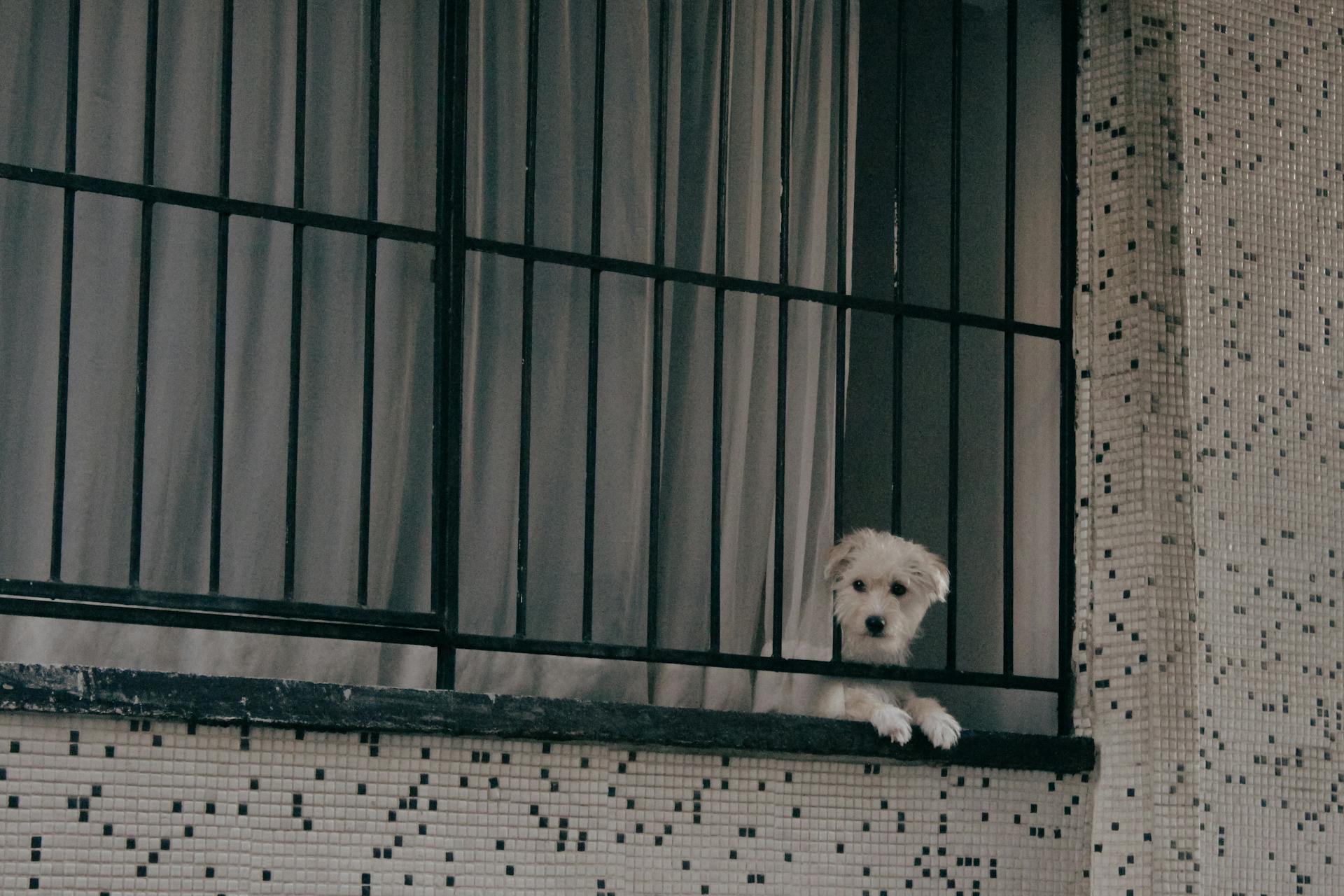
Window guards for cats are a must-have for any pet owner who wants to ensure their feline friend's safety while still enjoying the view from the window.
Cats are naturally curious creatures and love to explore their surroundings, often jumping onto windowsills or even attempting to climb out of open windows.
According to the American Society for the Prevention of Cruelty to Animals (ASPCA), window falls are a leading cause of injury and death in cats.
Installing window guards can help prevent these accidents and provide peace of mind for pet owners.
Window guards are also a great way to block access to windows during extreme weather conditions, such as strong winds or storms.
Consider reading: Pet Loss Poems for Cats
Window Guard Options
You can protect your windows from curious cats with various types of window guards.
Putting double stick tape on the windowsill is a simple and effective way to deter cats from jumping up. This can be a good temporary solution until you find a more permanent fix.
There are also more substantial options available. Steel Pet Grille is a popular choice, providing a sturdy metal grid or grill guard that can be attached to the window. This can be especially helpful for windows that are frequently used.
Some other options include metal latches that fit inside the window frame and prevent the window from being opened too far, unless you purposefully press the latches in. Magnetic window screens are another option, and can be made at home or purchased from companies like MagicSeal in New Zealand.
Here are some common window guard options:
- Double stick tape on the windowsill
- Steel Pet Grille
- Metal latches
- Magnetic window screens
You can also reinforce screens from the outside with duct tape, screws, or nails to make them more secure.
Why Are Vinyl-Coated Polyester Screens Best?
Vinyl-coated polyester screens are a great option for pet owners who want to keep their furry friends safe and secure. They're tear and puncture-resistant, making them perfect for withstanding constant clawing and jumping.
This type of screen material is also flexible but strong, which means it won't bend or dent like rigid metal screens can. It's easier to install and less likely to be damaged.
One of the biggest advantages of vinyl-coated polyester screens is their resistance to UV and mildew. This makes them ideal for porches and patios in areas with hot and humid climates.
This screen material is designed to last for years, reducing the need for constant replacements.
Take a look at this: Window Screen Guard for Dogs
Choosing the Right Window Screen Material
Fiberglass window screens are a popular choice, but they may not be the best option for cats as they can easily scratch and tear through them.
Aluminum screens are more durable than fiberglass and can withstand scratching, but they may not be the most aesthetically pleasing option.
Stainless steel screens are the most durable option available, resistant to corrosion and capable of withstanding even the most energetic cats' claws.
Expand your knowledge: Pets Not Dogs or Cats
If you have a particularly active cat that tends to scratch surfaces, stainless steel screens may be the best choice to prevent damage.
Fiberglass and aluminum screens may be sufficient for relatively calm cats that don't engage in excessive scratching.
Stainless steel screens are also aesthetically pleasing and provide excellent visibility, but they are more expensive than other options.
Installation and Use
To install window guards for your cat, start by putting double stick tape on the windowsill to deter them from jumping up. This simple trick can be an effective first line of defense.
For a more permanent solution, consider using steel pet grilles or metal grids that fit over the window. These can be secured from the outside with duct tape, screws, or nails to prevent your cat from pushing them out of place.
If you're looking for a more flexible option, you can use clips or window locks that attach to the window frame. These can be used in conjunction with a metal latch that fits inside the window frame, making it difficult for your cat to open the window.
Where Can Phifer PetScreen Be Used?
If you're looking to install Phifer PetScreen, you've got options. It's ideal for households with indoor cats who like to perch in windows or dogs who jump up at passersby or the mailman.
You can use it on window screens, which is perfect for keeping your pets safe and contained while still allowing them to enjoy the view.
Screen doors are another great option, especially if your pets like to scratch or lean against them. This will help reinforce the door and keep your pets from causing damage.
Phifer PetScreen is also great for screened-in porches and patios, where it can keep bugs out while protecting against clawing and high-energy pets.
If you have a multi-level home, balcony and stair enclosures are a must-have. They'll help prevent your pets from pushing through and add safety for small dogs or cats.
Sunrooms and outdoor living areas are also great places to install Phifer PetScreen, where it can maintain airflow and comfort while keeping screens secure from playful paws and noses.
Here are some specific areas where you can use Phifer PetScreen:
- Window Screens
- Screen Doors
- Screened-In Porches and Patios
- Balcony and Stair Enclosures
- Sunrooms and Outdoor Living Areas
Cat-Proofing Windows
If you're a cat owner, you know how much they love to scratch and climb. One way to prevent them from escaping or getting injured is to cat-proof your windows.
You can start by reinforcing your screens from the outside with duct tape, screws, or nails. This will make it harder for your cat to scratch or tear through the screen.
Double stick tape on the windowsill can also deter cats from jumping up. It's a simple and non-invasive solution that can be effective.
Stainless steel screens are a good option if your cat is particularly active and tends to scratch surfaces. They're durable and resistant to corrosion.
Here are some other options to consider:
These are just a few ideas to get you started. Remember to assess your cat's behavior and choose the solution that works best for them.
Training and Safety
Training your cat to respect window screens is crucial for their safety. You can use deterrents like double-sided tape or a pet-friendly deterrent spray on the window screens to discourage them from scratching or pushing through.
Cats dislike sticky surfaces and strong smells, so these deterrents are effective in redirecting their behavior. Providing alternative scratching surfaces like scratching posts or pads can also redirect their instinctual scratching behavior away from the window screens.
Positive reinforcement is key to encouraging good behavior. Reward your cat with treats, praise, or playtime when they refrain from scratching or pushing through the window screens. This will strengthen the association between the screens and positive experiences.
Here are some effective ways to redirect your cat's attention away from window screens:
- Engage them in interactive play
- Provide them with toys or puzzles
By following these simple steps, you can ensure your cat's safety and well-being while also protecting your window screens.
Training Your Cat
Training your cat requires patience and consistency, but with the right techniques, you can teach them to respect window screens. Use deterrents such as double-sided tape or a pet-friendly spray on the screens to discourage scratching or pushing through.
Cats dislike sticky surfaces and strong smells, so these deterrents can be effective in redirecting their behavior. I've seen cats avoid surfaces with sticky tape, so it's definitely worth a try.
See what others are reading: Why Am I so Attached to My Cat?
To provide alternative scratching surfaces, ensure your cat has plenty of scratching posts or pads available. This will redirect their instinctual scratching behavior away from the window screens.
Positive reinforcement is key to training your cat. Reward them with treats, praise, or playtime when they refrain from scratching or pushing through the window screens.
Here are some steps to follow:
- Use deterrents to discourage scratching or pushing through the screens.
- Provide alternative scratching surfaces to redirect their behavior.
- Use positive reinforcement to encourage good behavior.
- Redirect their attention if you notice them showing interest in the screens.
By following these steps and being consistent, you can train your cat to respect window screens and keep them safe.
Note of Caution
Scratching damage to screens can be a problem, but it's not the same as keeping your cat safe from escaping. Sometimes screens marketed as pet safe only protect against scratching damage, not actual escape.
Designating an outdoor area for your cat can be a good idea, but it's not a foolproof solution. Letting your cat out occasionally might reduce their desire to escape, but it comes with its own set of challenges, like fleas.
Product Reviews and Tips
Reader's Tips can be super helpful when it comes to cat-proofing window screens. Davidia's solution of placing a round metal washer above the triangular clasp has worked for her so far.
The washer prevents cats from flipping the triangular clip up over the screw head, which is a common issue with this type of window setup. This setup is particularly common in older California homes, like Davidia's Spanish colonial revival house built in the early 1930s.
If you have a similar window setup, you can attach the triangular clip to the bottom of the screen, place the washer on top of the clip, and then screw it into the window sill.
Amazon Best
We independently pick all the products we recommend because we love them and think you will too.
If you buy a product from a link on our site, we may earn a commission.
We're transparent about our process so you can trust our recommendations.
We only recommend products that we genuinely believe in and think will be helpful to you.
Our goal is to provide you with the best possible information to make informed purchasing decisions.
Related reading: Will Cockroach Poison Kill My Dog
Reader's Tips
A round metal washer can be placed above the triangular clasp to prevent cats from flipping it off the stem that goes into the windowsill, as seen in a photo shared by Davidia.
This method has worked for Davidia's household, where they've attached the triangular clip to the bottom of the screen, placed the washer on top, and then the screw through the washer and clip into the window sill.
Cats can flip the triangular clip up over the screw head if there's no washer, allowing them to push the screen out from the bottom.
The top of the screen fits into a groove in the windowsill, making it difficult for cats to push that out.
Many older California homes have this type of window setup, and some screen companies may be accommodating when ordering new screens.
Frequently Asked Questions
How to cat proof an open window?
To cat proof an open window, install a flat piece of board, such as plywood or MDF, in front of the opening and attach a cat door to it. This barrier can be secured with command strips, brackets, or screws, depending on your rental status.
How do you protect windows from cats?
To protect windows from cats, use window guards or grills, keep windows closed, and apply window treatments to prevent scratching and jumping. Additionally, consider trimming your cat's claws and supervising their behavior to minimize damage.
Featured Images: pexels.com