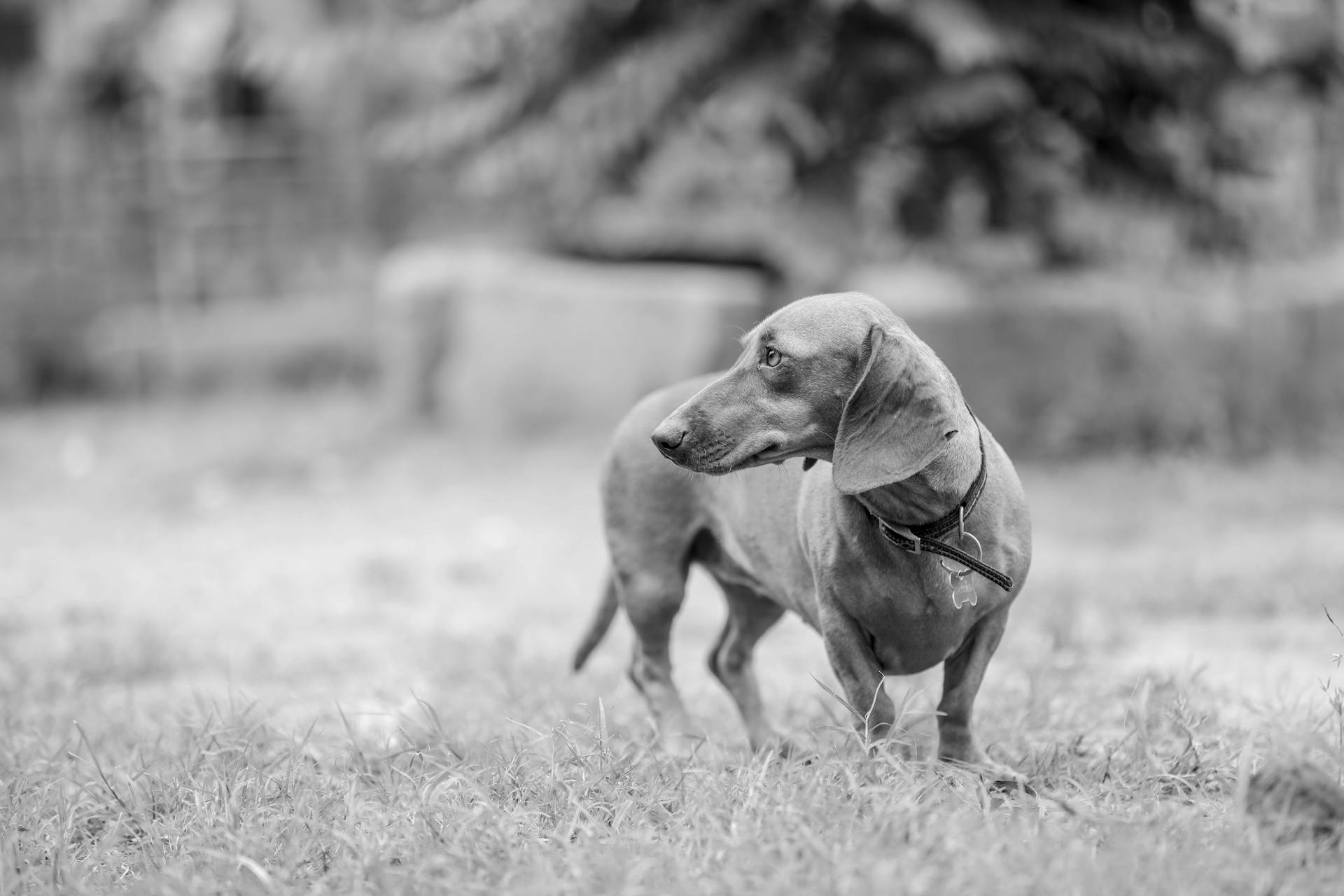
Dachshunds are indeed a unique breed with a distinctive body shape. Their long, narrow bodies are a result of centuries of selective breeding for a specific purpose.
In the 16th century, German hunters needed a dog that could follow badgers into their underground tunnels. The Dachshund's long body allowed them to do just that.
Their long backs are also a result of the breed's original purpose: to hunt badgers and other burrowing animals. This required them to be able to fit into tight spaces.
The Dachshund's unique body shape is a result of the breed's genetic makeup, which has been shaped by centuries of selective breeding.
Dachshund Breeds and Physique
Dachshunds come in three main breeds: standard, miniature, and kaninchen (also known as rabbit). Each breed has its own unique characteristics, including different body proportions and sizes.
The standard dachshund is the largest of the three breeds and can weigh up to 32 pounds. Their chest circumference is at least 35 cm, and their height is at least 20 cm.
Expand your knowledge: Schnauzer Sizes and Weights
Miniature dachshunds, on the other hand, weigh no more than 11 pounds and have a chest circumference of less than 30 cm and a height of less than 15 cm. The kaninchen dachshund is the smallest of the three and weighs no more than 8 pounds with a chest circumference of less than 30 cm and a height of less than 13 cm.
All dachshunds share a similar body shape: a long body, short legs, and elongated head. This iconic shape is what makes them easily recognizable. But what sets dachshunds apart from other dog breeds is the length of their spine.
Here's a comparison of the three breeds:
Their unique body shape allows them to crawl into burrows to chase their prey, which was a crucial feature for their original purpose as hunting dogs.
Why Dachshunds Have Long Bodies
Dachshunds were bred to have long bodies for a very specific reason: to help them hunt badgers and other burrowing animals. This unique body shape allowed them to crawl into burrows quickly and efficiently.
Their short legs are actually a result of a genetic mutation called chondrodysplasia, which affects only their leg cartilage. This mutation stunts the development of their legs, but not the rest of their body.
As a result, Dachshunds appear to have a long body that's disproportionate to the size of their short legs. In reality, they just have short legs and a back that looks long in comparison.
German breeders intentionally bred Dachshunds to have this unique body shape, which gave them an advantage when hunting. Their long bodies allowed them to be strong enough and heavy enough to chase their prey at a fast pace, while also being able to fight their prey with power.
Here are some key facts about Dachshunds and their long bodies:
Breeders used this genetic mutation to create Dachshunds with a unique combination of strength, speed, and agility. As a result, Dachshunds are well-suited for hunting and other activities that require quick movement and agility.
Understanding Dachshund Genetics
Dachshunds owe their unique body shape to a genetic mutation that affects the growth of their vertebrae, resulting in their distinctive elongated appearance.
This mutation is dominant, meaning it only needs to be present in one parent for it to be expressed in their offspring. As a result, dachshunds can come in a range of sizes and colors, but still maintain their elongated body shape.
The genetics behind the dachshund body shape can also contribute to health issues, such as intervertebral disc disease (IVDD), which is a common problem in dachshunds due to their elongated spines.
Dachshunds were bred to have this unique body shape for a specific purpose: to crawl into burrows and hunt badgers.
Their short legs were intentionally stunted by breeders using a gene mutation called chondrodysplasia, which affects only their leg cartilage, allowing the rest of their body to develop normally.
This mutation was chosen because it gave dachshunds an advantage in hunting, allowing them to be strong enough and heavy enough to chase their prey at a fast pace, while also being able to fit into tight burrows.
Here's a breakdown of the genetic reason for a dachshund's long body:
This genetic combination has been passed down through generations of dachshunds, making them the unique and lovable dogs we know today.
Their long bodies have many advantages, including allowing them to fit into tight burrows and chase their prey with ease.
However, it's essential to remember that this unique body shape can also lead to health issues, such as IVDD, which is a common problem in dachshunds.
Regular check-ups with a veterinarian and proper exercise and diet can help prevent these health issues and ensure your dachshund lives a happy and healthy life.
Health Considerations
Dachshunds' long body shape can lead to spinal issues and related conditions due to their physical traits and elongation.
Regular vet check-ups, including X-rays, can help detect early signs of spinal problems and ensure prompt treatment.
Their unique body shape requires gentle handling to support their spine, so be careful when lifting them.
Avoid activities that involve excessive jumping or pressure on their back to prevent putting unnecessary stress on their spine.
Proper care and attention can help dachshunds live long and healthy lives, even with their potential health risks.
Evolution's Impact
Dachshunds' long bodies are a result of natural selection and selective breeding over centuries. Their original purpose was hunting, and their elongated form was crucial for this task.
Dachshunds have unique genetic mutations that affect their body shape, specifically in the genes responsible for regulating their spine and limb development. These mutations allow for their characteristic elongation.
Through selective breeding, humans have played a significant role in shaping dachshunds' physique. Breeders sought to enhance their hunting abilities by selectively breeding for specific physical traits, including their elongation.
A gene mutation stunted the development of a Dachshund's legs, making them much closer to the ground than other dog breeds. This was done to allow them to crawl into burrows to hunt badgers.
Their long bodies have huge advantages, including the ability to crawl into burrows to chase their prey. Dachshunds were specifically bred for this purpose by German breeders who developed the long back through gene mutation.
Their long bodies allowed them to be strong enough and heavy enough to chase their prey at a fast pace, while also being able to fight their prey with power.
Additional reading: Dachshunds Badger Hunting
A Lesson in Conformation
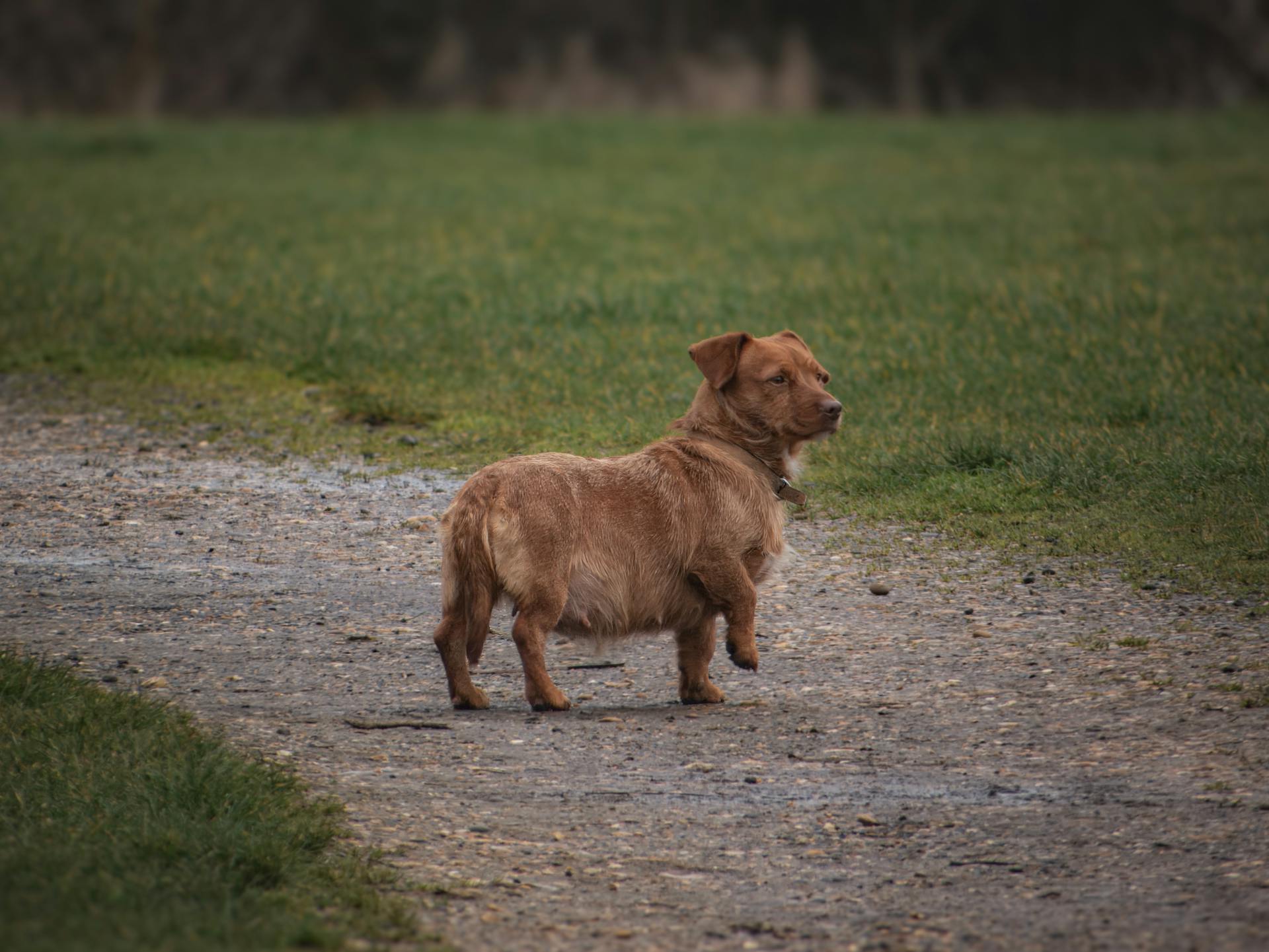
The dachshund's unique conformation is a result of its chondrodysplastic nature, which means it has an abnormal growth of cartilage on its long bones, leading to shorter extremities than average.
This feature is actually a requirement for certain breeds, including the dachshund, and it's what makes them so beloved by their fans.
The dachshund's short legs are the reason it's long and low to the ground, and the American Kennel Club breed standard indeed calls for a dog that is "low to ground, long in body and short of leg."
Chondrodysplasia is not exclusive to the dachshund, and other breeds like the corgi, basset hound, and Pekingese also exhibit this trait.
However, in some breeds, chondrodysplasia can be a problem, indicating arrested cartilage development that can cause serious issues.
Broaden your view: Dogs with Underbites Breeds
Proportions and Proportionality
Dachshunds have an elongated body, but their legs are relatively short, creating a proportionality that gives them their distinct look.
Their chest is deep and well-developed, allowing for ample lung capacity and endurance.
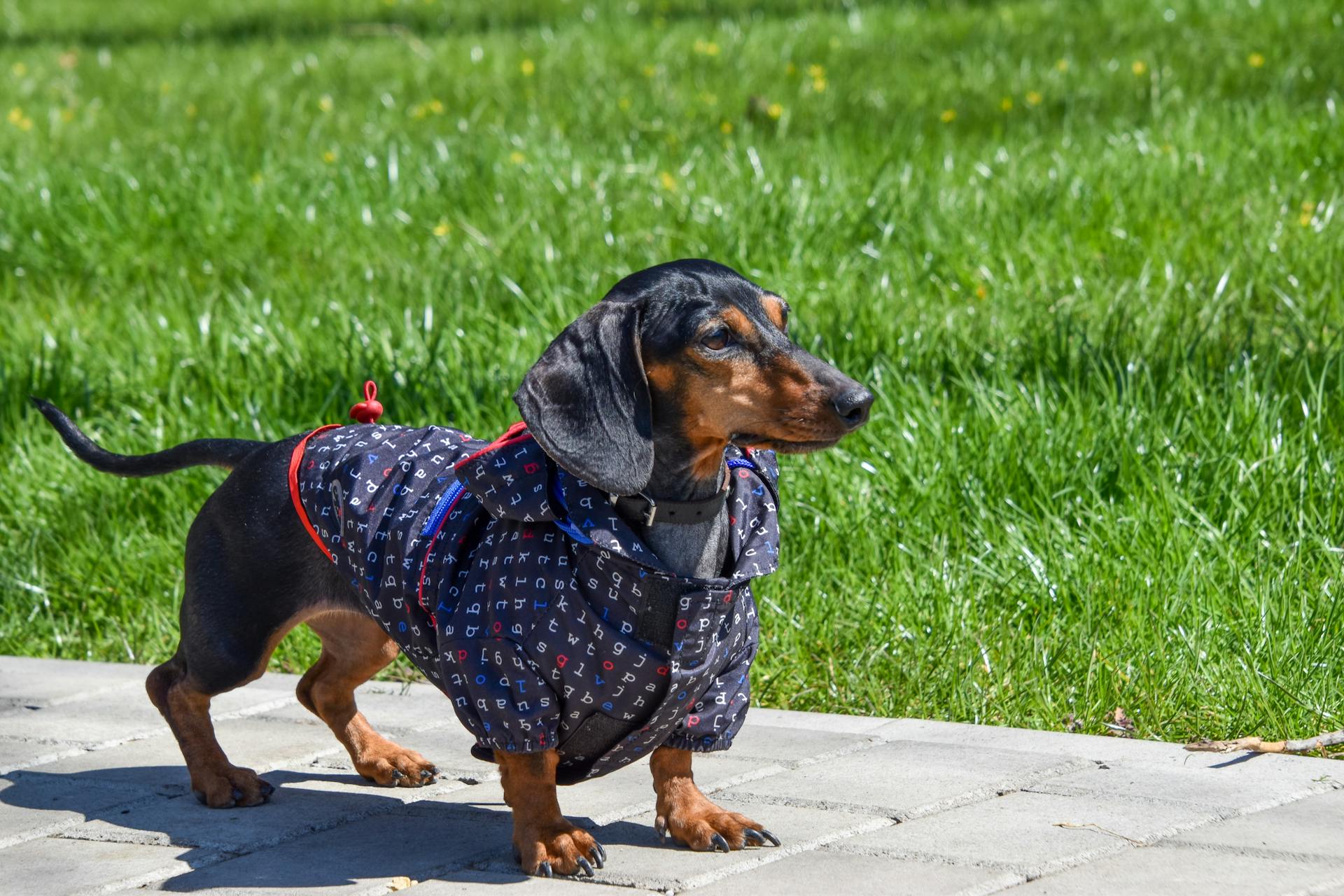
The ideal dachshund body should have a back length that is proportional to their overall body length.
This proportionality is achieved through specific measurements, such as the length of their ribcage and spine.
Their elongated body shape is a result of carefully considered proportions and proportionality, making them exceptional hunting dogs.
However, their elongated body shape can also pose health risks, so proper exercise, diet, and healthcare considerations are crucial for maintaining their well-being.
A different take: Mini Dachshund Length
Now That You Know
Dachshunds have long bodies, but that's not just for show. They have 30 vertebrae, just like other dogs, debunking the myth that they have extra vertebrae.
Their long back helped them get deep down in burrows to hunt badgers. This unique feature is a result of their original purpose as hunting dogs.
Dachshunds are prone to back problems due to their long bodies. This is a common issue that can arise from their original design.
Frequently Asked Questions
Are all Dachshunds long?
While Dachshunds are known for their long bodies, not all Dachshunds are long, as the "little rabbit" variety is a shorter, smaller version of the breed. However, the standard and miniature Dachshunds do have long bodies.
Featured Images: pexels.com