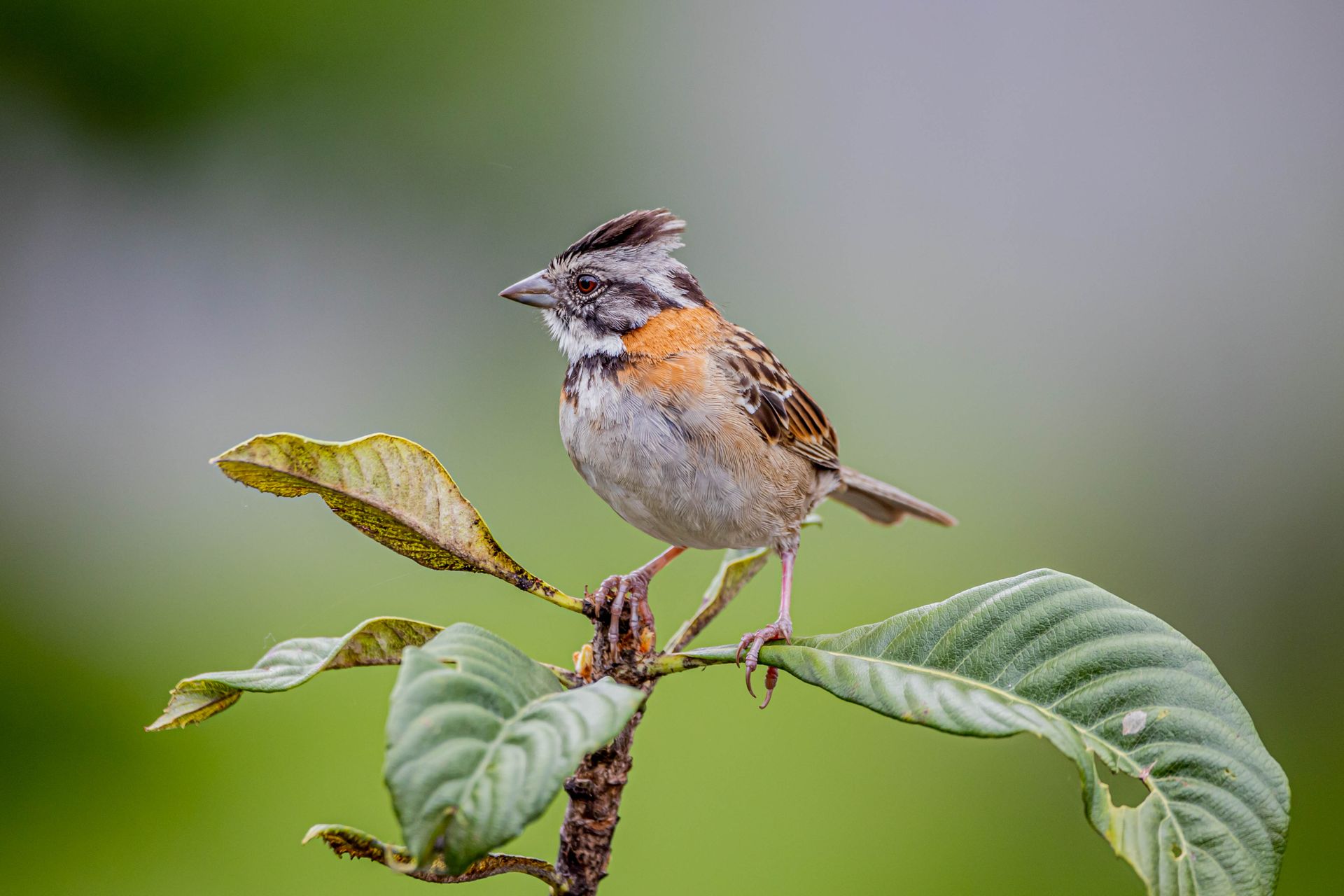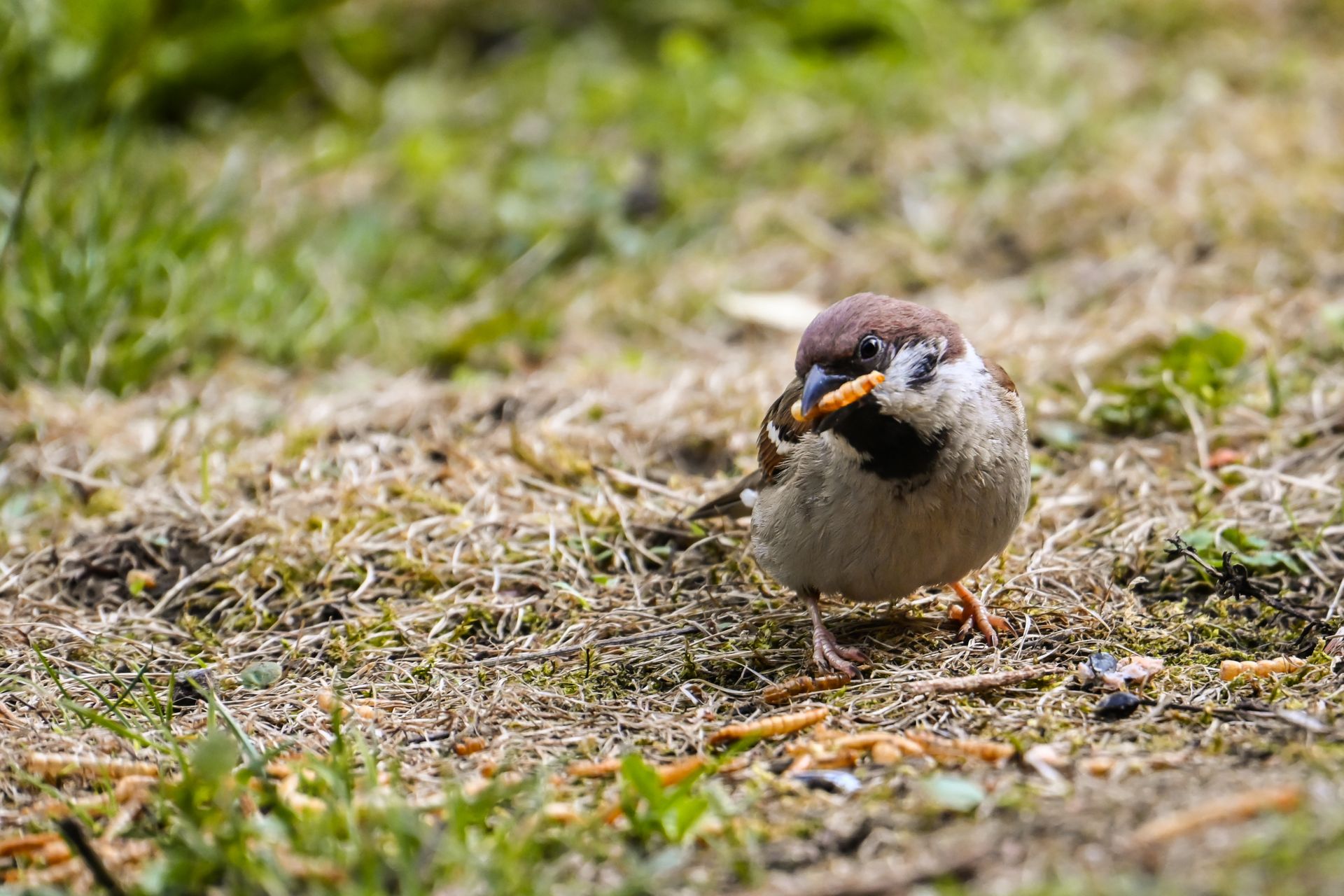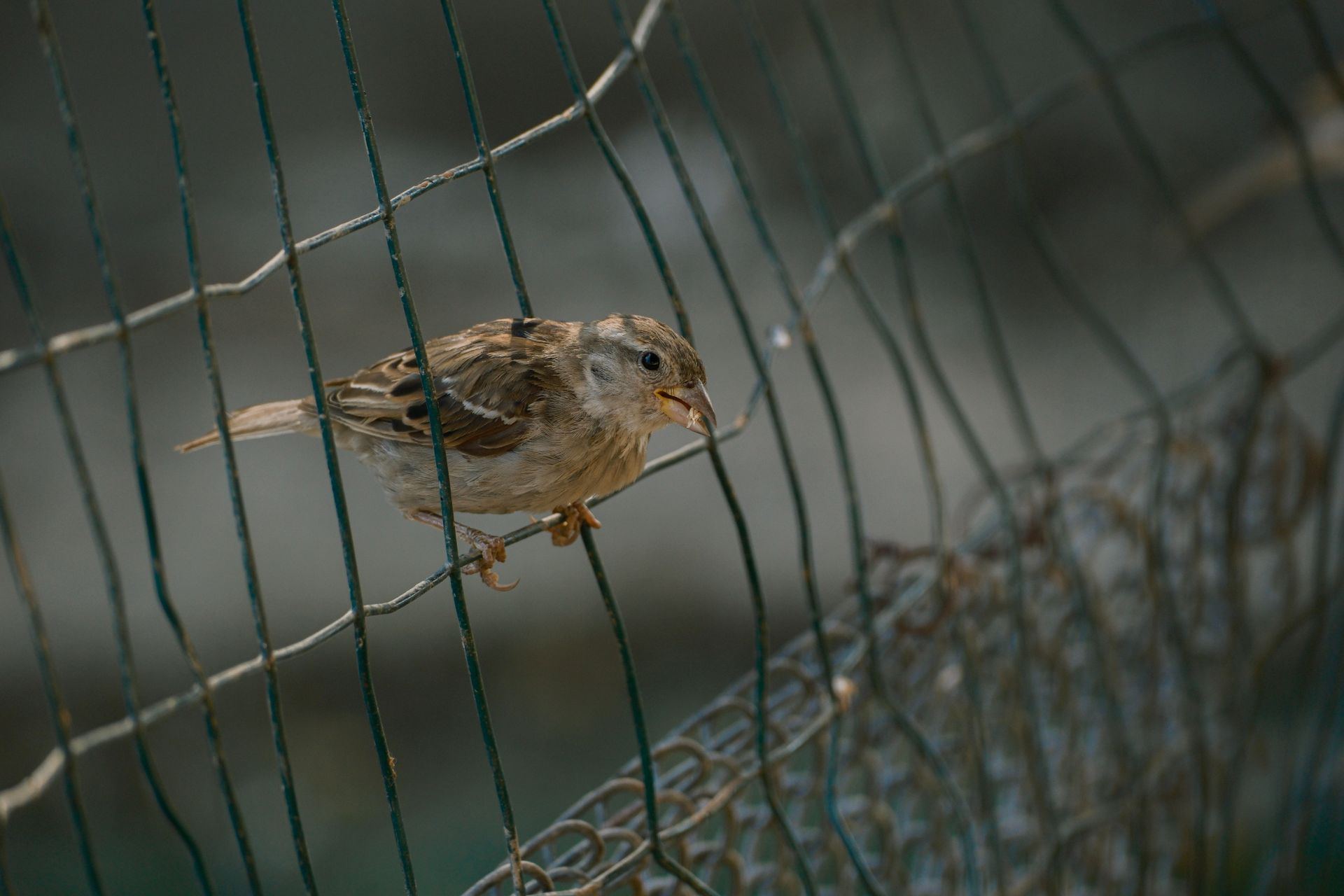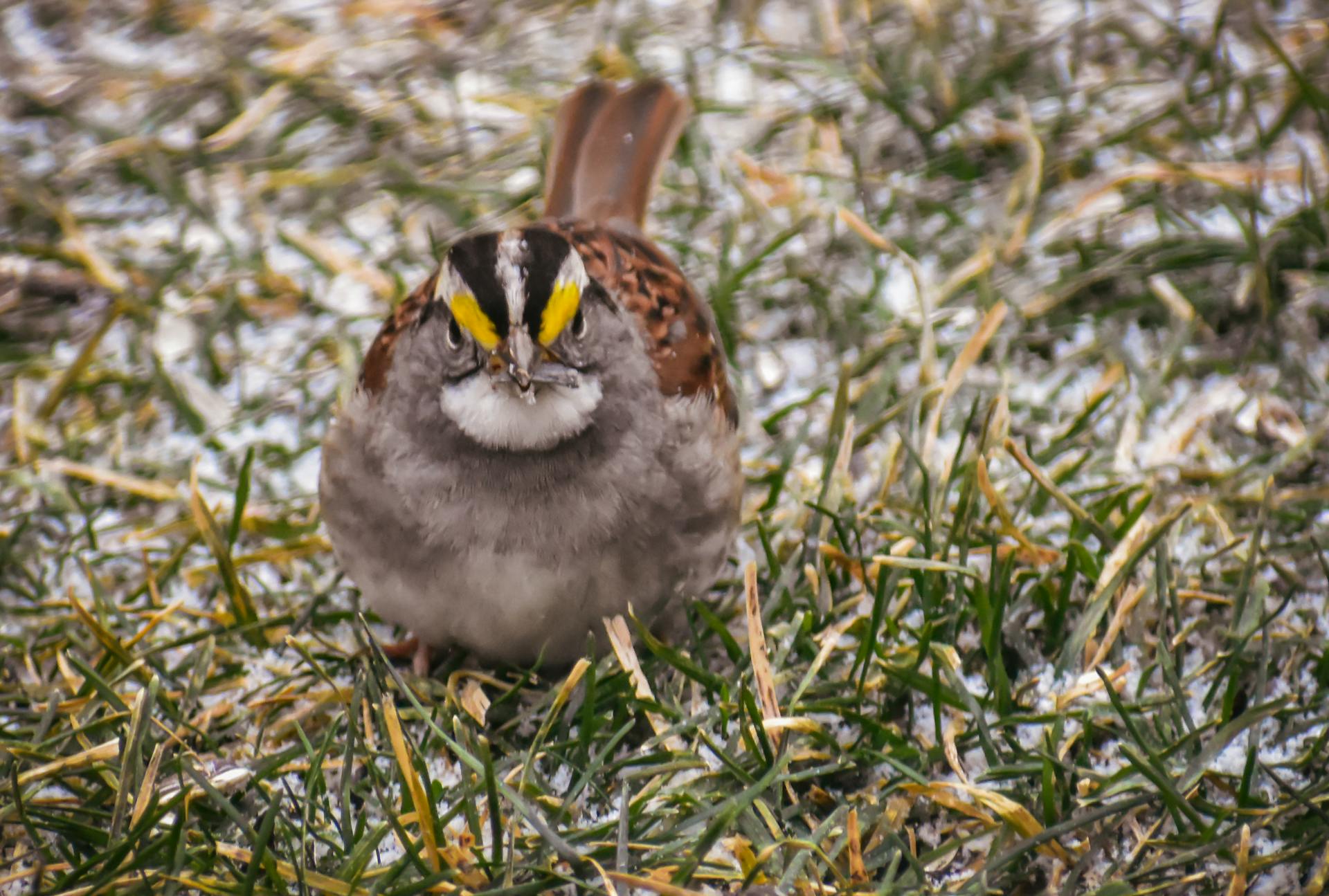
The White-throated Sparrow is a bird species that's native to North America. It's a medium-sized sparrow with a distinctive white throat patch.
These birds are known for their varied migration patterns, with some populations migrating to the southern United States and others remaining in Canada year-round. They're also known to be partial migrants, with some individuals migrating and others staying in their year-round range.
The White-throated Sparrow's diet consists mainly of seeds, nuts, and insects, which they forage for on or near the ground.
Physical Characteristics
The white-throated sparrow is a beautiful bird with some distinctive markings. They have yellow lores, which are the areas between their eyes and beak.
These birds come in two distinct forms: the tan-striped and the black and white stripes. The tan-striped form has a dark brown crown with a tan central stripe.
The white-throated sparrow measures between 6 to 7.5 inches long, which is a fairly average size for a sparrow. They have a wingspan of around 23 cm.
One of the most notable features of the white-throated sparrow is their white throat patch, which is sharply defined and distinctive. They also have dark bills and a gray or tan breast with streaks.
In terms of size, the white-throated sparrow is similar to other sparrows, measuring between 15 to 19 cm in length. The sex of the bird is not easily distinguishable from its size or shape.
Both males and females of the white-throated sparrow have the same physical characteristics, with the only difference being that females and young birds are slightly duller in color.
Taxonomy and Habitat
The white-throated sparrow has a fascinating history. George Edwards included an illustration and description of the species in his Gleanings of Natural History in 1760.
The species was initially placed with finches in the genus Fringilla by Johann Friedrich Gmelin in 1789. He coined the binomial name Fringilla albicollis, which combines Latin words for "white" and "necked".
The white-throated sparrow has undergone some name changes over time. It's now one of five American sparrows placed in the genus Zonotrichia, which was introduced by William Swainson in 1832.
Here are some key facts about the white-throated sparrow's habitat:
- During the summer breeding season, they live in forests, either evergreen or deciduous.
- In winter, they prefer the edges of woodlots, thickets, fields, suburbs, backyards, and parks.
- They spend their summers from New England into Canada.
- Most overwinter in the eastern United States.
Taxonomy
The white-throated sparrow's taxonomy is a fascinating story. The species was first described by George Edwards in 1760.
Edwards based his description on a drawing provided by William Bartram, an American naturalist from Philadelphia. The illustration was hand-coloured and included in Edwards' book "Gleanings of Natural History".
The name "white-throated sparrow" has been used since Edwards' time, and it's a fitting description given the species' distinctive throat markings. In fact, the specific epithet "albicollis" combines Latin words for "white" and "necked".
The genus name "Zonotrichia" comes from Ancient Greek, with "zōnē" meaning "band" and "thrix" or "trikhos" meaning "hair". This refers to the species' distinctive striped or banded plumage.
Native Habitat
White-throated sparrows live in various habitats, including forests, woodlot edges, and backyards. They're adaptable birds that can thrive in different environments.
During the summer, they inhabit evergreen or deciduous forests, from New England into Canada. This is their breeding ground, where they raise their young.
In the winter, they prefer the edges of woodlots, thickets, fields, suburbs, backyards, and parks. This is where they overwinter, often in large numbers.
The eastern United States is a key wintering ground for white-throated sparrows. They can be found in many of these areas, especially in the southern parts of the region.
Habitat
White-throated Sparrows commonly use low, dense cover next to open foraging areas.
This type of habitat occurs mostly around beaver ponds and rock outcrops, in disturbed areas, and at tree line on the breeding grounds.
In winter, they prefer the edges of woodlots, thickets, fields, suburbs, backyards, and parks.
During migration and winter, this sparrow is found in thick cover such as woodlot edges, hedgerows, and weedy fields.
Urban habitats are also a common place to spot White-throated Sparrows during this time.
In fact, they often make themselves at home in woodlot edges and hedgerows, where they can find the dense cover they need to thrive.
Behavior and Diet
White-throated Sparrows are not uncommon visitors to Massachusetts in the winter-time, and they are most often encountered either singly or as part of a mixed flock, often with dark-eyed juncos.
They will take seeds from feeders, but they will seldom come out to feed unless there is a thicket or hedge nearby for them to shelter in.
In the summer, their diet consists mostly of terrestrial arthropods, including insects, spiders, millipedes, and centipedes.
In the rest of the year, they eat small fruits and seeds, with about 20 percent of their diet being animal-based and 80 percent vegetable-based.
Principal food plants include ragweed, smartweed, sumac, grape, highbush cranberry, and mountain ash.
In early spring, they eat a variety of tree buds and flowers, such as oak, apple, maple, and beech.
They usually forage on the ground near cover, venturing farther from cover as food is depleted.
Breeding males may forage in treetops between singing bouts.
Breeding and Migration
The White-throated Sparrow breeds in central Canada and New England, where it nests on the ground under shrubs or low in trees in deciduous or mixed forest areas.
It lays three to five brown-marked blue or green-white eggs, with tan and white morphs using different reproductive strategies.
Tan males invest in parental care, while white males focus on securing additional mates through song advertisement and intruding into neighboring territory.
Eighty-five percent of the global population breeds in the boreal forest ecosystem, spanning from the southeastern Yukon Territory east across Canada to the Maritimes and south to the northern Great Lakes and mid-Atlantic regions.
The breeding biology of this species is unique, with two color morphs (white-striped and tan-striped) occurring and pairs being nearly always mixed.
White-striped males are more aggressive and territorial, while tan-striped females provide more parental care, making tan-striped males obligated to increase their parental care to offset the lack of attention from their mates.
For another approach, see: Breeds of White Fluffy Dogs
Breeding
The White-throated Sparrow breeds in central Canada and New England, nesting either on the ground under shrubs or low in trees in deciduous or mixed forest areas.
They lay three to five brown-marked blue or green-white eggs, which is a relatively small clutch size compared to some other bird species.
Eighty-five percent of the global population of the White-throated Sparrow breeds in the boreal forest ecosystem, a vast and remote region that spans across Canada.
The breeding biology of this species is apparently unique among birds, with two color morphs (white-striped and tan-striped) that occur and pairs are nearly always mixed.
Mixed pairs produce (at the population level) equal numbers of each sex and morph, which is a fascinating phenomenon that has been observed in this species.
White-striped males are more aggressive and territorial and less faithful than tan-striped males, which can lead to some interesting dynamics in their relationships.
Tan-striped females provide more parental care than white-striped females, which makes sense given the different personalities of the males.
White-throated Sparrow nests are generally well-concealed open cups on or near the ground, which helps to protect the eggs and chicks from predators.
Clutch size is usually four, which is a relatively small number compared to some other bird species.
Incubation is about 12 days, and the young usually leave the nest at eight to nine days, which is a relatively quick development period.
Parasitism by Brown-headed Cowbirds is rare in this species, probably because cowbirds are rare within its breeding range, but this may change with changes in land use.
Wintering and Migration
In the winter, white-throated sparrows migrate to the southern and eastern United States.
They're differential migrants, meaning females migrate farther than males, which increases the proportion of females at lower latitudes in the Atlantic flyway.
Females tend to be smaller, so they wouldn't perform as well at colder, higher latitudes, and they avoid competition with dominant males by migrating farther.
This allows males to return and establish territory a few weeks before the females arrive.
White-throated sparrows stay year-round in the Atlantic provinces of Canada, but they're a rare vagrant to western Europe.
Despite their abundance during winter in eastern North America, they're often dominated by other seed-eating winter residents, which can lead to high levels of predation while foraging.
Conservation and Threats
White-throated Sparrows are extremely vulnerable to building collisions, earning them the nickname "super colliders". In fact, a 2019 study found that they were one of the most susceptible birds to this type of collision.
Between 1978 and 2016, as many as 10,000 white-throated sparrows were found to be fatalities due to building collisions. This is a staggering number that highlights the severity of the issue.
Their attraction to artificial light and use of nocturnal flight calls contribute to a positive feedback loop, constantly drawing them to their demise. This is a key factor in their high collision rate.
Unfortunately, the loss of young forest and shrubland habitat on which White-throated Sparrows depend has caused a significant decline in their breeding numbers in Massachusetts.
Identification and Song
The white-throated sparrow's song is very distinctive, a slow, clear whistling following the cadence Poor Sam Peabody, Peabody, Peabody!
Their song is made possible by the syrinx, a vocal organ located at the base of the trachea, which involves both their central and peripheral nervous systems for control.
The syrinx produces sound laterally through the left side, and damage to the motor control of the left side can result in a distorted song pattern.
The white-throated sparrow has at least two distinct songs, with the second song commonly described by the cadence of "Po-or Sam Peabody, Peabody, Peabody" (or "O-oh sweet Canada, Canada, Canada").
The rhythm of the song is very regular, and the timbre could be described as pinched, with the repeated note often changing in pitch very slightly.
A new song for the white-throated sparrow was discovered by ornithologists in 2020, which begins in the same way as the typical song but with a subtle difference: the repeating triplets become doublets, ending with a final single tone.
Identifying Sparrows
Identifying Sparrows can be a fun and rewarding experience, especially if you know what to look for.
White-throated Sparrows are fairly large, just shy of 7” long, on average. They show a significant reddish cast to their brown wing and back feathers.
Some individuals have tan stripes on the crown, while others show white stripes. But one thing's for sure: all adults share the snow-white throat patch that gives the species its name.
Their grayish breasts show faint streaks, or none at all.
Song and Calls
The song is produced laterally through the left side of their syrinx, and the control of their syrinx involves both their central and peripheral nervous systems.
After damage to the motor control of the left side of the syrinx, individuals were still able to produce sound, but their song pattern was distorted.
The white-throated sparrow has at least two distinct songs, and the second song consists of an initial note, a second a whole step lower, and a third note, repeated two or three times, about a minor third below that.
This second song is commonly described by use of mnemonics with the cadence of "Po-or Sam Peabody, Peabody, Peabody" or "O-oh sweet Canada, Canada, Canada".
The rhythm is very regular, and the timbre could be described as pinched.
These musical intervals are only approximate; to a human ear the song often sounds out of tune.
The repeated note will often change in pitch very slightly, contributing to this effect.
A new song for the white-throated sparrow has been discovered, with a subtle difference: the repeating triplets become doublets, ending with a final single tone.
Article Features
The white-throated sparrow is a bird species that's full of fascinating features.
These birds are known for their distinctive white throat patches, which are a key identifying characteristic.
They're also skilled singers, with males producing complex songs to attract females during breeding season.
White-throated sparrows are adaptable birds that can be found in a variety of habitats, from forests to backyards.
In the winter, they often migrate to the southern United States and Mexico, where they can be found in open woods and shrublands.
Their diet consists mainly of seeds, nuts, and insects, which they forage for on the ground or in trees.
Frequently Asked Questions
How rare is a white-throated sparrow?
The white-throated sparrow is a relatively common native bird in eastern North America, often found in abundance during winter. Its widespread presence makes it a popular sighting among birdwatchers.
Do White-throated Sparrows come to bird feeders?
Yes, White-throated Sparrows visit bird feeders, particularly those offering millet and sunflower seeds. They also appreciate brush piles for shelter between feeding trips.
Do male and female White-throated Sparrows look different?
No, male and female White-throated Sparrows do not look different, as the distinct plumage variations are not related to gender. Instead, they differ in head color, with white-striped and tan-striped birds being two distinct forms.
Featured Images: pexels.com