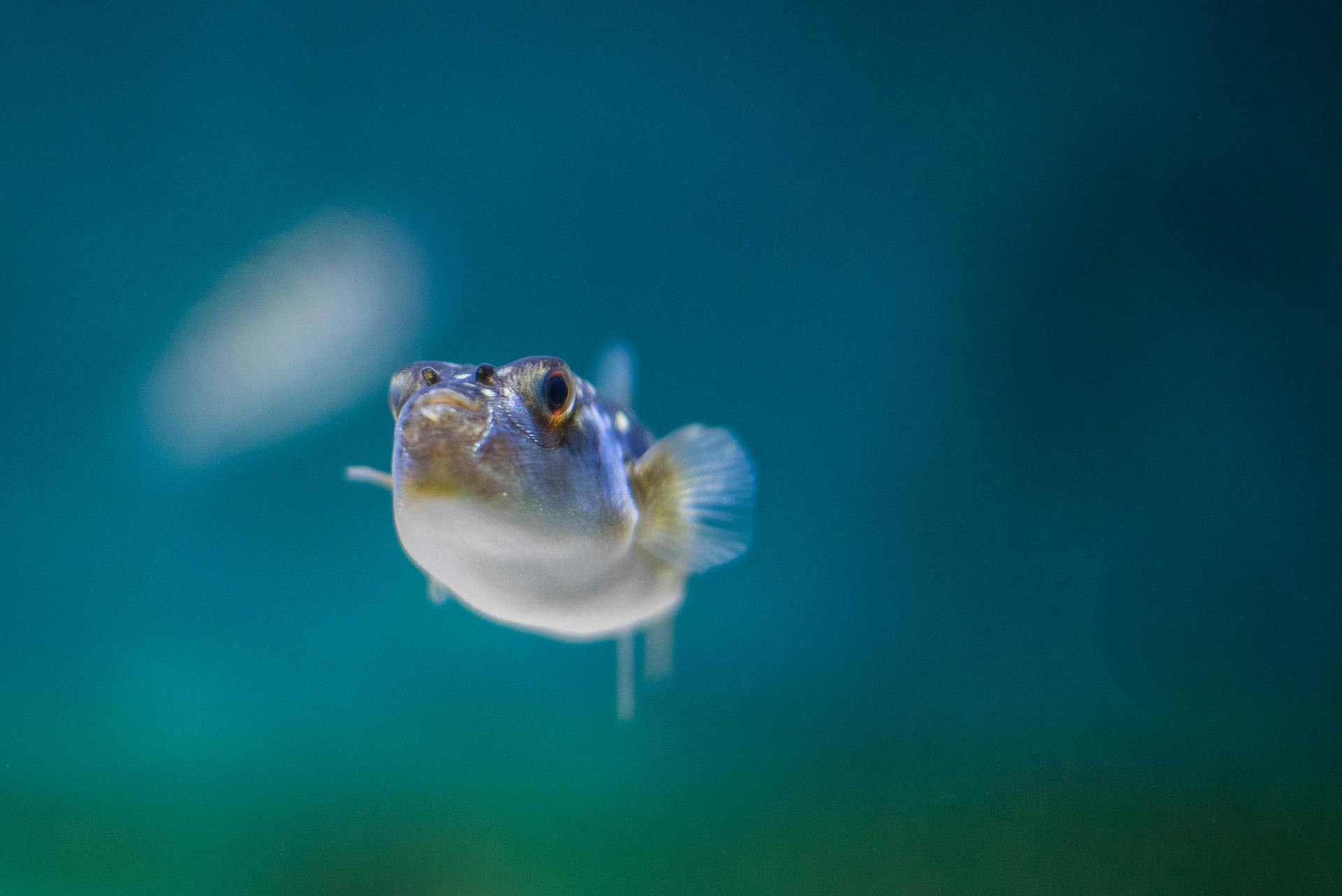
The white spotted puffer fish is a fascinating creature. They are found in tropical waters of the Indo-Pacific region.
Their natural habitat is in shallow, coastal waters, typically at depths of 1-40 meters. This is where they can be found hiding in crevices and under rocks.
Physical Description
The White Spotted Puffer is a moderate-sized species, reaching an average length of about 18 in (45 cm). They can grow up to 48 cm in length.
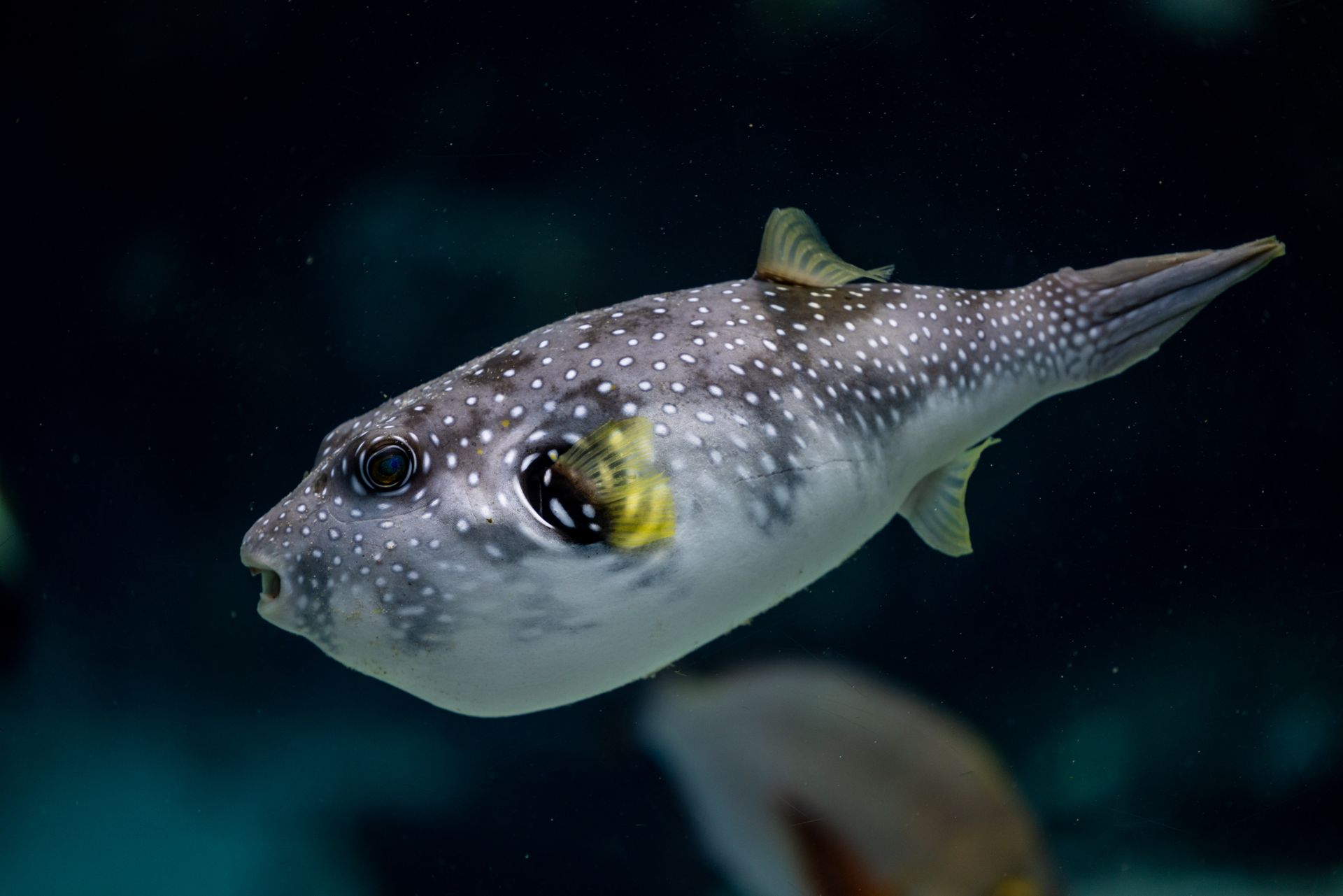
Their typical coloring is a light gray brown color, with some specimens displaying darker brown blotches. The body has white dots across it, and a broken white ring around the eye.
They have no scales or lateral line, and a set of protruding nostrils on the snout. The lower body and underside is paler, sometimes going to white.
The pectoral fin is ringed with a black circle, which is usually edged with a single yellow or white line. They have translucent fins, with the white dots extending onto the beginning of the caudal fin.
Here are the taxonomic classifications for the White Spotted Puffer:
- Kingdom: Animalia
- Phylum: Chordata
- Class: Actinopterygii
- Order: Tetraodontiformes
- Family: Tetraodontidae
- Genus: Arothron
- Species: A. hispidus
Distribution, Habitat, Ecology
The White Spotted Puffer is found in the Indo-Pacific region, excluding the Red Sea, and lives close to the reef and in lagoons to a depth of 25 meters.
They can be seen in greater numbers around areas containing rubble, and juveniles are usually found in mixed rubble grassy areas.
White Spotted Puffers are regularly seen swimming just above the reef and are very rarely seen swimming in open water, although this does happen occasionally.
They take no chances and are usually near cover, often ducking into a hole if a diver nears them.
White Spotted Puffers are territorial and are usually solitary, giving powerful bites with their beak, so great care should be taken when handling them.
They can be found in the shallow regions of the ocean, rarely appearing at depths greater than 164 ft (50 m).
Adults prefer coral reefs and lagoons, while juveniles group in heavily weeded sections of estuaries for protection.
The White Spotted Puffer feeds on a wide variety of prey, including tunicates, corals, crabs, starfish, urchins, and krill.
It also ranks as extremely territorial and highly solitary, making its nests on the ocean floor when breeding, which remain well protected.
Additional reading: Dogo Argentino Spotted
[Facts]
The White Spotted Puffer is a species of pufferfish that's endemic to a specific region, typically inhabiting shallower ocean regions.
It's known for inflating its body when threatened by predators, a behavior typical of most pufferfish.
This remarkable creature has been listed as a Threatened Species with the IUCN, primarily due to the effects of climate change and habitat loss caused by human activity.
The White Spotted Puffer is highly territorial and will defend its space with its powerful beak.
Here are some key facts about the White Spotted Puffer at a glance:
- Kingdom: Animalia
- Phylum: Chordata
- Class: Actinopterygii
- Order: Tetraodontiformes
- Family: Tetraodontidae
- Genus: Arothron
- Species: A. hispidus
Tank Setup and Care
To set up a tank for your White-Spotted Puffer Fish, you'll need a minimum of 125 gallons of space. This will provide your fish with the room it needs to thrive.
The tank should be designed for marine (saltwater) conditions, with a temperature range of 74-80°F (23-27°C) and a pH range of 8.1 – 8.4. I've found that maintaining stable water conditions is crucial for the health and well-being of my fish.
A White-Spotted Puffer Fish is a semi-aggressive species, so it's best kept alone or with large, peaceful tank mates. This will help prevent any conflicts or stress on your fish.
For more insights, see: Irish Setter Spotted
Tank Setup Requirements
When setting up a tank for your White-Spotted Puffer Fish, the minimum tank size should be 125 gallons for a single puffer. This is crucial for providing enough space for your puffer to swim and thrive.
The substrate and décor are also important, so use live rock, soft sand, and open swimming space to create a natural environment. This will help your puffer feel secure and happy.
A strong protein skimmer and high-quality filtration system are necessary to maintain good water quality. This will help keep your puffer healthy and prevent water quality issues.
To maintain stable salinity, the water should be saltwater with a salinity between 1.020 – 1.025. This is essential for the health and well-being of your puffer.
Regular water changes are also crucial, so perform 20-30% water changes every two weeks to maintain water quality. This will help keep your puffer healthy and prevent water quality issues.
Here's a summary of the tank setup requirements:
Water Parameters:
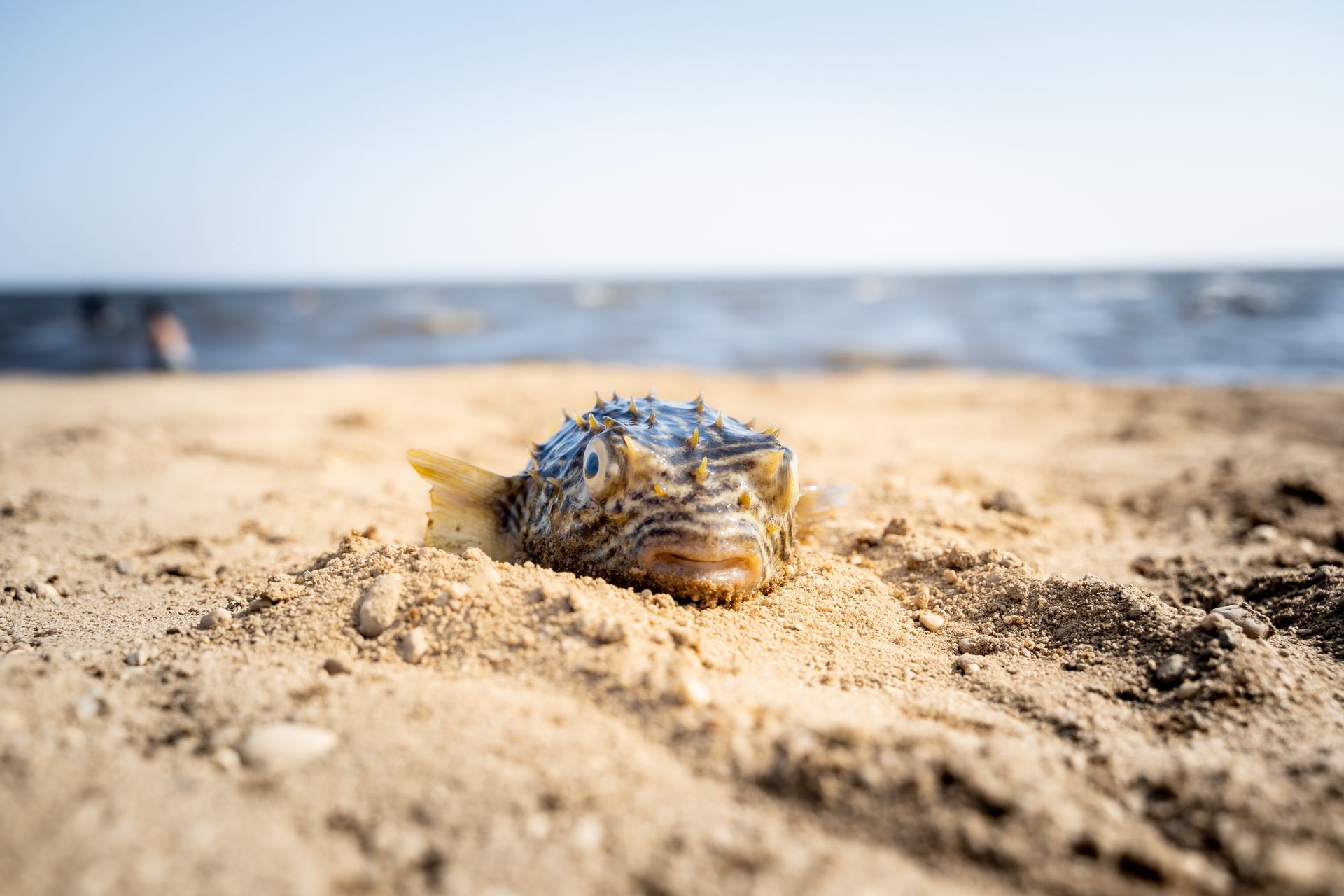
To keep your puffer happy and healthy, you'll want to make sure their water parameters are just right. Temperature should be maintained between 74-80°F (23-27°C).
A slightly alkaline pH level is also important, ranging from 8.1 to 8.4. This is crucial for your puffer's overall well-being.
Salinity levels should be kept between 1.020 and 1.025. This will help your puffer feel right at home.
It's also essential to keep nitrate and ammonia levels low, as puffers are sensitive to poor water conditions.
Do Fish Need Saltwater?
Some fish, like the White Spotted Puffer, require a fully marine (saltwater) setup with stable salinity levels of 1.020 – 1.025.
This means that a saltwater tank is a must for these fish, and it's not something you can skimp on.
If you're considering getting a saltwater fish, make sure you're prepared to provide the right environment for it to thrive.
Feeding and Behavior
Feeding your White-Spotted Puffer Fish is crucial for its health and preventing overgrown teeth. The White-Spotted Puffer Fish is a carnivorous species that requires a protein-rich diet.
Intriguing read: Spotted French Bulldogs
To ensure your puffer fish gets the nutrients it needs, you should feed it crustaceans, mollusks, and meaty marine foods. This diet will help maintain good health and prevent overgrown teeth.
A puffer fish's tank size requirement is a minimum of 125 gallons, and it's best kept alone or with large, peaceful tank mates. This is because White-Spotted Puffer Fish are semi-aggressive and can be territorial.
Fish Feeding Guide
The White-Spotted Puffer Fish is a carnivorous species that requires a protein-rich diet to maintain good health and prevent overgrown teeth. This means they need a diet rich in meaty marine foods, such as crustaceans and mollusks.
To ensure your White-Spotted Puffer Fish gets the nutrients it needs, you'll want to provide a variety of protein-rich foods. A good rule of thumb is to feed them 2-3 times a day, only as much as they can consume within a few minutes.
Here are some specific dietary requirements for your White-Spotted Puffer Fish:
Remember, a balanced diet is key to keeping your White-Spotted Puffer Fish healthy and happy. By following these guidelines, you'll be well on your way to becoming a puffer fish expert!
Do Puff Up?
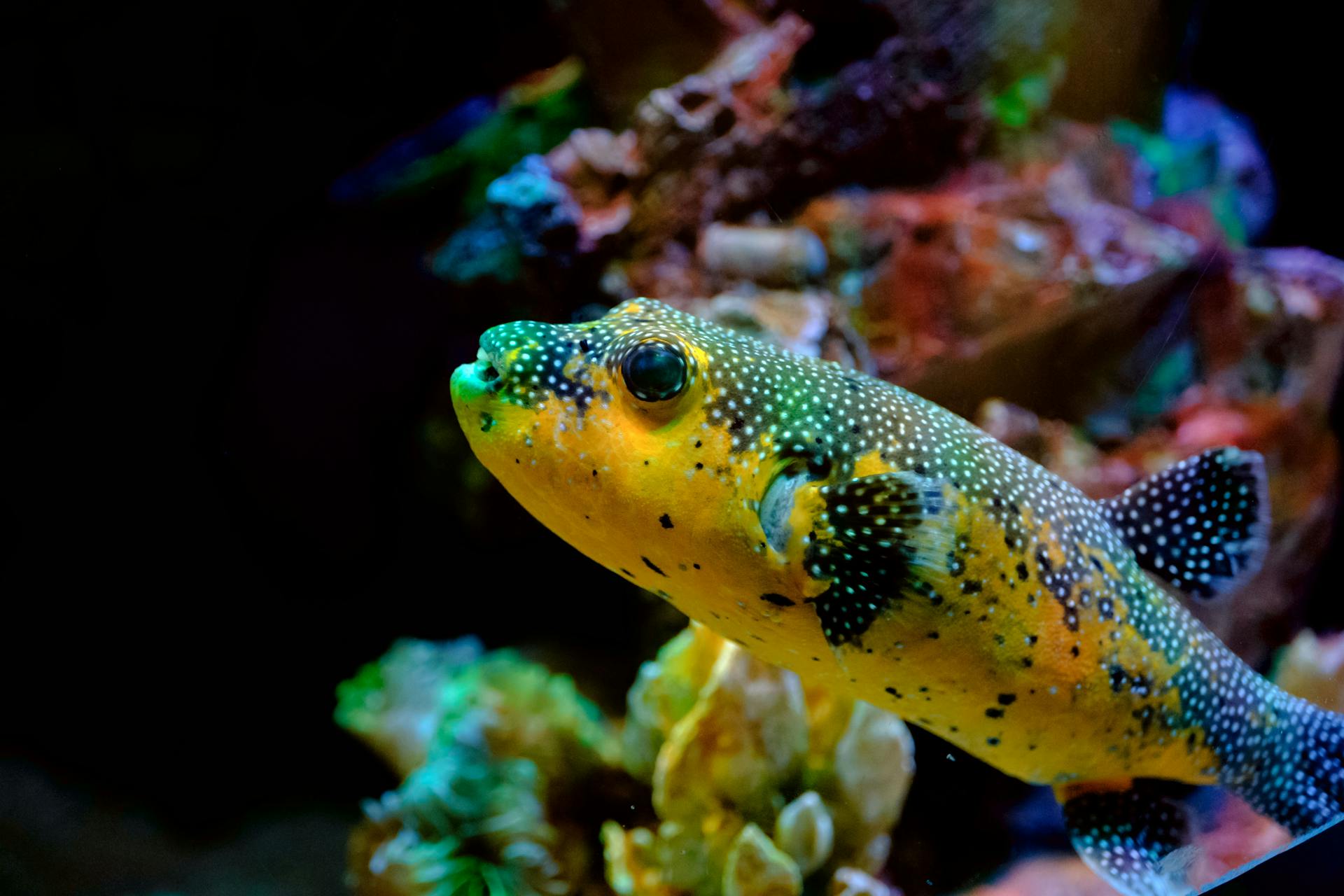
As you consider the feeding and behavior of your pufferfish, you might wonder if they puff up. Yes, they can inflate as a defense mechanism.
Some species of pufferfish, like the White Spotted Puffer, are known to puff up frequently. Frequent puffing is a sign of stress.
It's worth noting that pufferfish can puff up to protect themselves from predators. They can also puff up to make themselves appear larger.
Frequently Asked Questions
Are white spotted pufferfish poisonous?
Yes, white spotted pufferfish are poisonous due to a toxin in their skin and organs that can paralyze muscles and stop breathing. Handling or consuming them requires extreme caution.
How big are white spotted puffer fish?
White spotted puffer fish typically reach a length of 45 cm. They are a medium-sized species found on coral reefs.
Featured Images: pexels.com