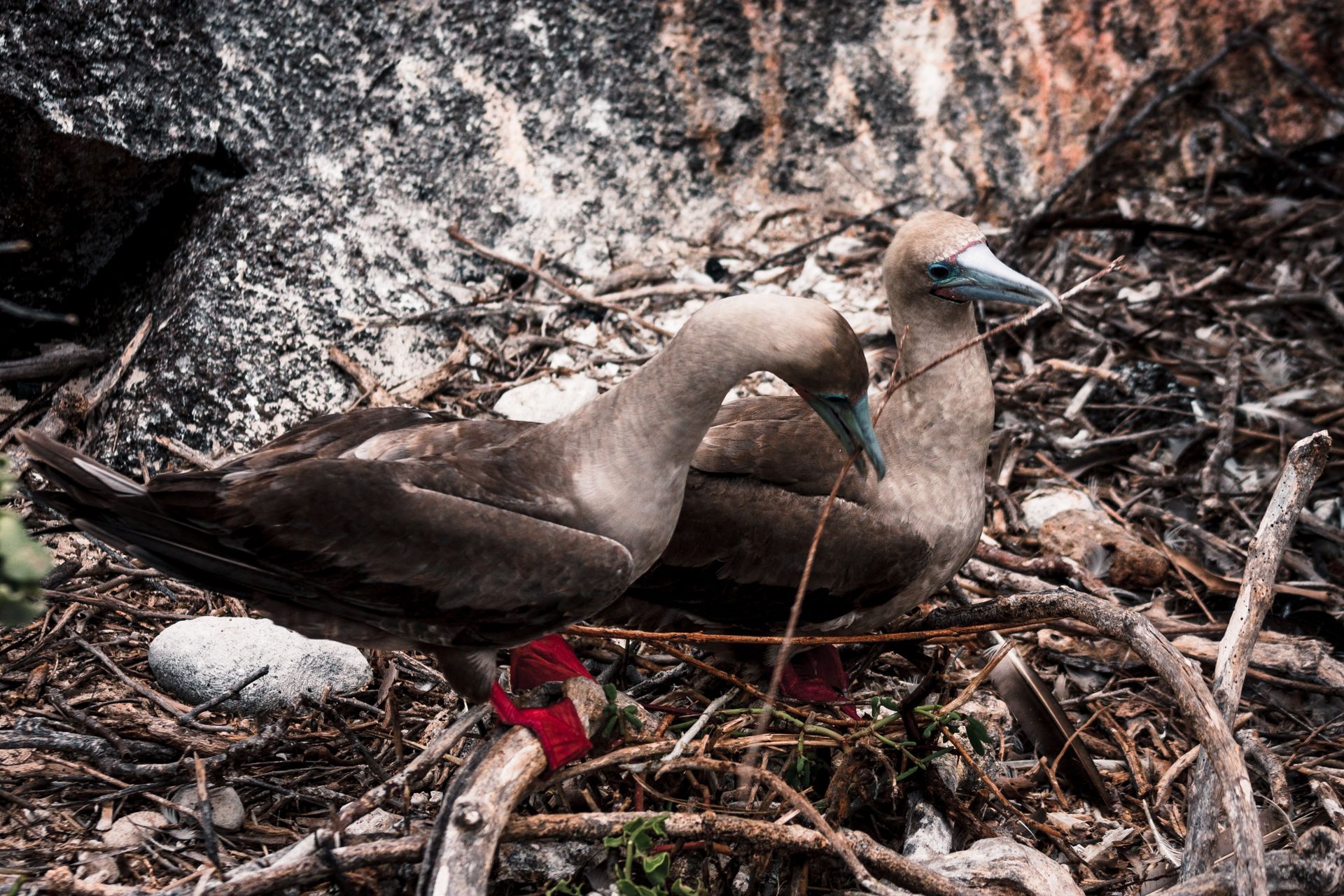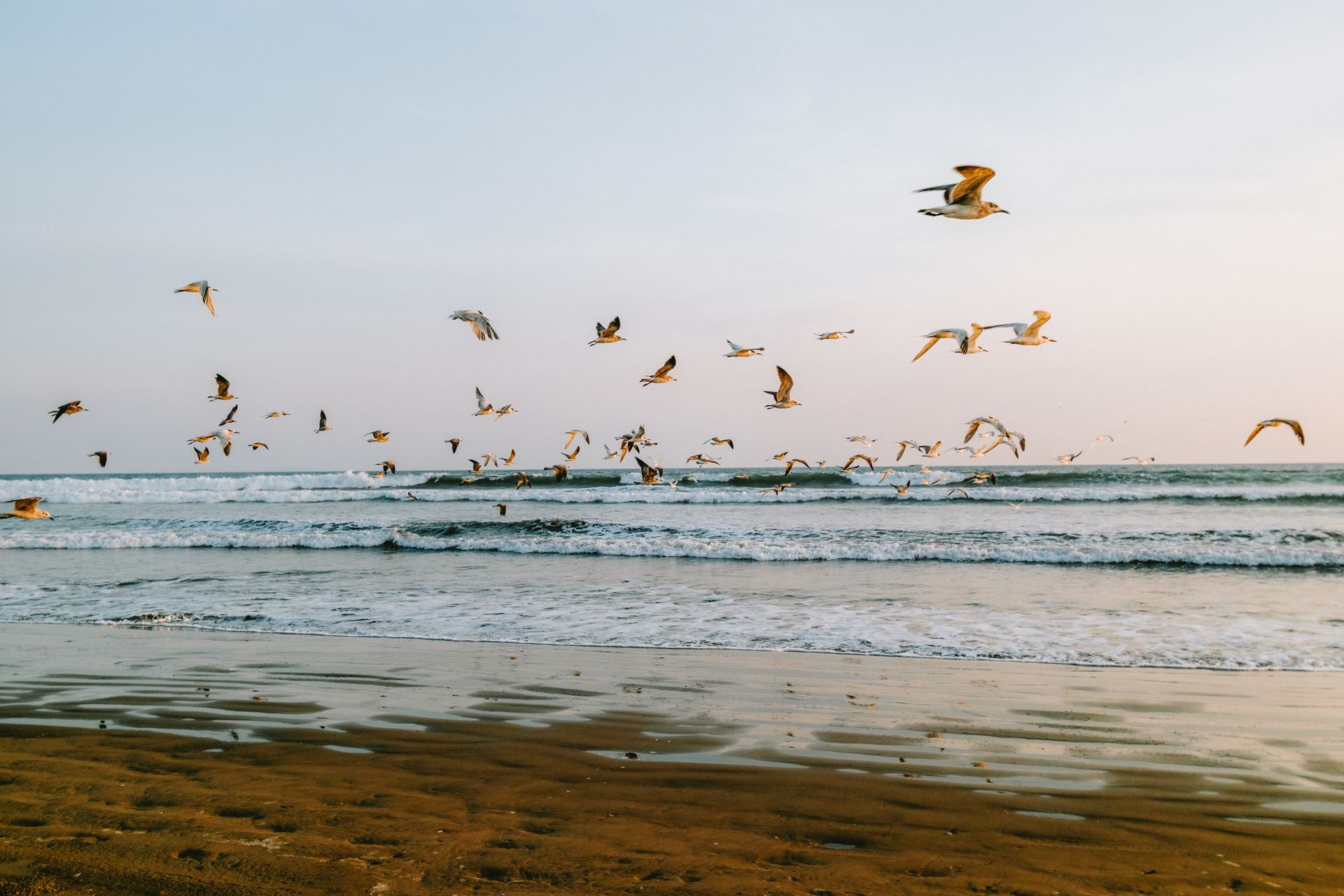
The Wandering Albatross is an iconic bird known for its impressive wingspan and majestic gliding abilities. Its wings can reach up to 12 feet in length, making it one of the largest flying birds in the world.
These incredible birds have been tracked migrating over 50,000 miles in a single year, crossing entire oceans and continents in search of food and breeding grounds. Their ability to cover such vast distances is a testament to their remarkable endurance and navigation skills.
With a lifespan of up to 50 years, the Wandering Albatross is a long-lived species that has been observed to form strong pair bonds, with some pairs staying together for many years. This level of commitment is a rare sight in the animal kingdom.
Wandering Albatross Facts
The Wandering Albatross is an incredible bird, and here are some fascinating facts about it.
The Wandering Albatross is the largest member of its genus, Diomedea, and one of the largest birds in the world.
These birds have the largest wingspan of any bird in the world today, stretching up to 3.5 metres across.
Wandering Albatrosses are great gliders – they can soar through the sky without flapping their wings for several hours at a time.
They're so efficient at flying that they can actually use up less energy in the air than they would while sitting in a nest.
Here's a breakdown of the IUCN Red List Status and current population of some albatross species:
Wandering Albatrosses get whiter the older they get.
During breeding, they take on incubation shifts, and it's during these periods when the wanderer goes out on their epic voyages to return with food for their family.
The average lifespan of a Wandering Albatross in the wild is 30 years.
Conservation Status
The wandering albatross is a vulnerable species with a population estimated at around 26,000 individual birds.
Conservation efforts are underway to reduce bycatch of albatrosses and some breeding islands are now classified as nature reserves.
Unfortunately, the species is slow to recover from losses due to its unusual two-year breeding cycle.
Albatrosses are dying at sea, fatally ensnared by fishing lines and nets, but many are also dying as eggs and chicks at their breeding grounds due to invasive predators like cats and rats.
Ocean plastic also poses a growing threat to albatrosses, with chicks sometimes fed a dangerous mix of plastic debris by their unwitting parents.
The ICUN has classified the wandering albatross as vulnerable, and the last study of their population size in 2007 indicated there were an estimated 25,000 birds.
Some notable statistics on the conservation status of albatrosses include:
- The world population of wandering albatrosses is estimated at around 25,200 adult birds.
- Of the 22 albatross species recognized by the IUCN, 15 are threatened with extinction.
- Nine species of albatross are listed as either endangered or critically endangered.
Physical Characteristics
The wandering albatross is an incredible bird, and its physical characteristics are truly remarkable.
Its wingspan measures up to 12 feet across, making it the largest extant bird on Earth in terms of wingspan.
The albatross's wings are meticulously adapted for soaring, allowing it to cover vast distances with ease.
You might like: Wandering Albatross Largest Wingspan
These wings function best against slight headwinds, and act like the sails of a boat, enabling the bird to cover more ground by "tacking", like a sailboat.
The albatross's wingspan can reach up to 3.63m (11 ft 11) in some cases, as recorded by the Guinness Book of Records in 1965.
The birds have mastered dynamic soaring, which involves flying along a continually curving path in a way that extracts energy from the gradient of wind velocity, or wind shear.
This impressive flying ability allows the albatross to soar 500 miles in a day and maintain speeds of nearly 80 miles per hour for eight hours straight without flapping its wings.
The albatross's elbow joints are locked, enabling the bird to keep its wings extended for long periods at no energy cost from its muscles.
Habitat and Behavior
Wandering albatrosses are incredibly active creatures, and their behavior is quite fascinating. They spend the entire day in the air, covering significant distances.
At night, they don't slow down much, and are almost constantly moving, only stopping for no more than 1.6 hours in the dark.
Traveling on moonlit nights seems to be a favorite for these birds, as they appear to cover more distance during this time than on darker nights.
How Do They Feed?
Wandering Albatrosses make shallow dives when hunting. They are opportunistic eaters and will follow ships in the hopes of feeding on its garbage.
They can gorge themselves so much that they become unable to fly and just have to float on the water.
Mating Rituals
Wandering Albatrosses mature sexually around 11 years of age.
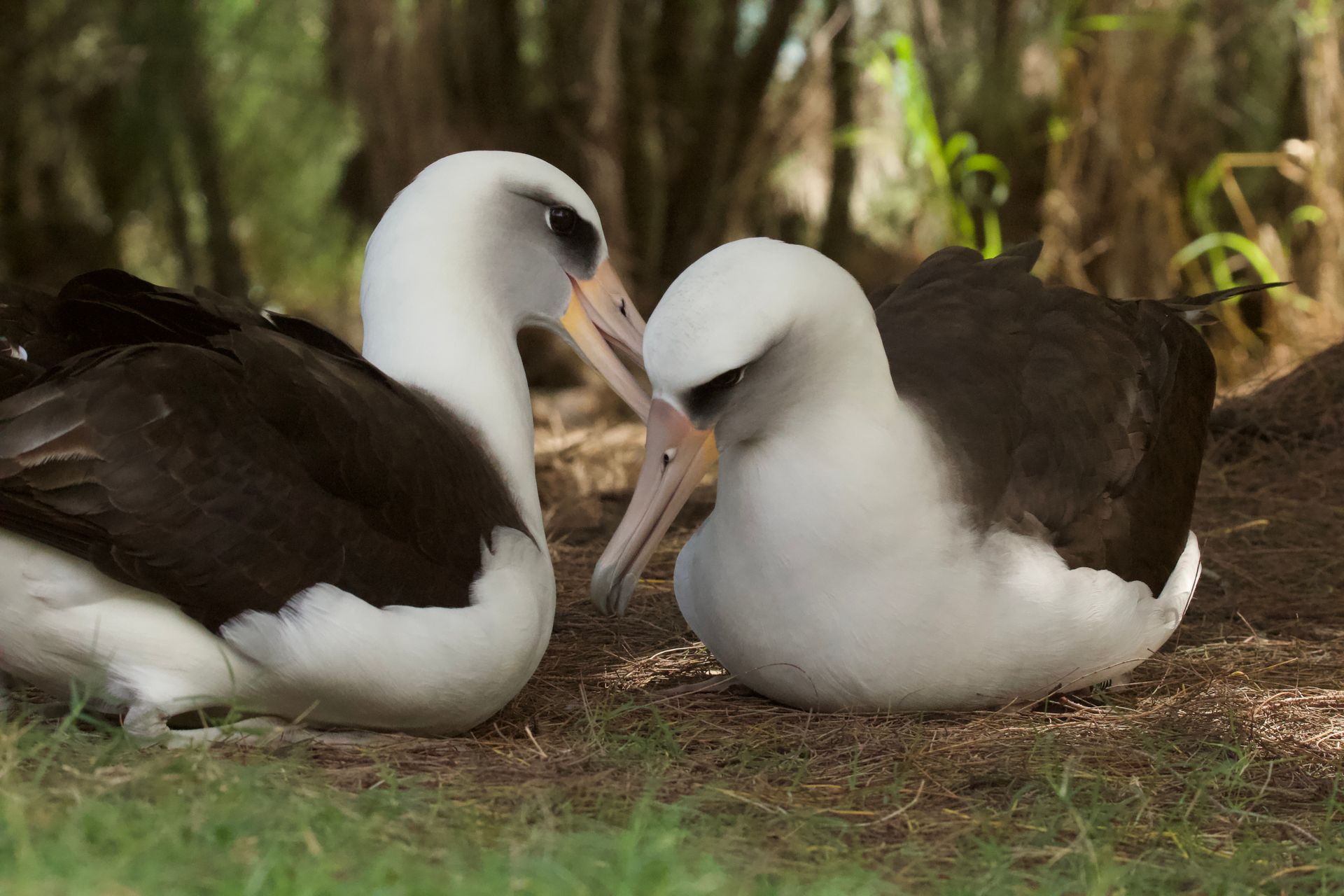
The male Wandering Albatross is quite the romantic, spreading his wings, waving his head around, and rapping his bills against the female's while making a braying noise during courtship.
Mating season starts in early November, with the Albatrosses creating nests of mud and grass on one of the Sub-Antarctic islands.
Albatrosses mate for life, forming a long-term bond with one partner and having a very low "divorce rate" among birds.
Incubation of the single egg takes around 11 weeks, with the parents taking turns.
The female Wandering Albatross lays 1 egg about 10 cm long, sometime between the middle of December and early January.
Once the chick is born, the adults switch off between hunting and staying to care for the chick.
The hunting parent returns to regurgitate stomach oil for the chick to feed on.
Eventually, both parents will start to hunt at the same time, visiting with the chick at widening intervals.
After about 165 days, the chick fledges, and the pair separates for the rest of the year, reuniting only when it's time to breed again.
Expand your knowledge: Painted Hunting Dog Facts
Active in Moonlight
Wandering albatross are active in moonlight, and they can be quite restless. They were recorded almost constantly moving, never stopping for more than 1.6 hours in the dark.
During moonlit nights, they appear to travel more than on darker ones.
Years Without Land
Albatrosses can spend a year or more at sea without setting foot on land, which is quite a remarkable feat. They spend most of this time flying.
Touching down in the water puts them at risk of shark attacks, so they only touch down briefly to feed.
It's widely believed that albatrosses must be able to sleep while flying, but evidence of that behavior is still lacking.
Flight and Distance
Wandering albatrosses are incredible flyers, capable of reaching speeds of up to 80 kmph. They can cover long distances, with some tracked over 15,000 km in a single foraging trip.
These birds can fly at a steady pace of 40 km per hour, making them efficient travelers. Their endurance allows them to cover over 900 km per day.
In a year, a wandering albatross can travel an impressive 120,000 km, which is equivalent to flying around the world several times.
Predators and Threats
Wandering Albatrosses have almost no natural predators because they're so big and spend almost all of their lives in flight.
Their massive size and aerial lifestyle make it difficult for predators to catch them.
Worth a look: Wandering Albatross Predators
Do Birds Have Predators?
Birds have a range of natural predators depending on their size and habitat.
Some birds, like the Wandering Albatross, have almost no natural predators due to their large size and flight capabilities.
Take a look at this: Wandering Albatross Size
Seabirds, such as albatrosses and petrels, are vulnerable to predators like skuas and giant petrels that scavenge their carrion.
Birds that live on the ground, like penguins and ostriches, are preyed upon by predators like leopards, lions, and hyenas.
Large birds of prey, such as eagles and hawks, have few natural predators but can be threatened by human activities like habitat destruction and hunting.
Threats to Birds
Birds face numerous threats, including habitat loss and fragmentation, which can leave them without a safe place to live and breed. In the article, we see how human activities like deforestation and urbanization are leading to the destruction of natural habitats.
Climate change is another significant threat to birds, as it disrupts their food supply and migration patterns. Rising temperatures can also alter the distribution of insects and other invertebrates that birds rely on for food.
Predation by invasive species is a major threat to native bird populations, as seen in the example of the introduction of the American mink to the UK. The mink has no natural predators and can outcompete native birds for food and resources.
Human activities like hunting and poaching can also have devastating effects on bird populations, especially for species that are already endangered. The article highlights the importance of conservation efforts to protect birds from these threats.
Interesting Facts
The Wandering Albatross is an incredible bird species, and here are some fascinating facts about them:
They're the largest member of their genus, Diomedea, and one of the largest birds in the world.
Wandering Albatrosses have a unique name, derived from Greek mythology, with "Diomedea" referring to the hero Diomedes and "exulans" meaning "exile" or "wanderer".
These birds have the largest wingspan of any bird in the world, stretching up to 3.5 meters across.
They're also great gliders, able to soar through the sky without flapping their wings for several hours at a time.
Wandering Albatrosses have a special gland above their nasal passage that excretes a high saline solution, helping to keep their salt levels in balance.
As they age, Wandering Albatrosses get whiter, a pretty cool characteristic.
Here's a comparison of their impressive wingspan with other birds:
Their ability to conserve energy while flying is quite remarkable, using up less energy in the air than they would while sitting in a nest.
General Information
The wandering albatross is a remarkable bird that can be found in the open ocean, nesting in subantarctic islands. They have a wide range, spanning from the Southern Ocean to subtropical waters.
These birds are incredibly long-lived, with a lifespan of more than 50 years. They're also quite large, with a wingspan of 3.2 meters and weighing up to 12 kg (26 lb).
Here are some key facts about the wandering albatross:
They're also known to be slow to reproduce, which makes them vulnerable to population declines.
They Mate for Life
Wandering Albatrosses are known to form long-term pair bonds, with some pairs staying together for their entire lives.
They mature sexually around 11 years of age, which is quite late compared to other birds.
Mated pairs will spend limited time together, meeting up briefly at their breeding grounds until their egg is laid.
The pair will then take turns incubating the egg and foraging for food, a crucial task to keep their growing chick fed.
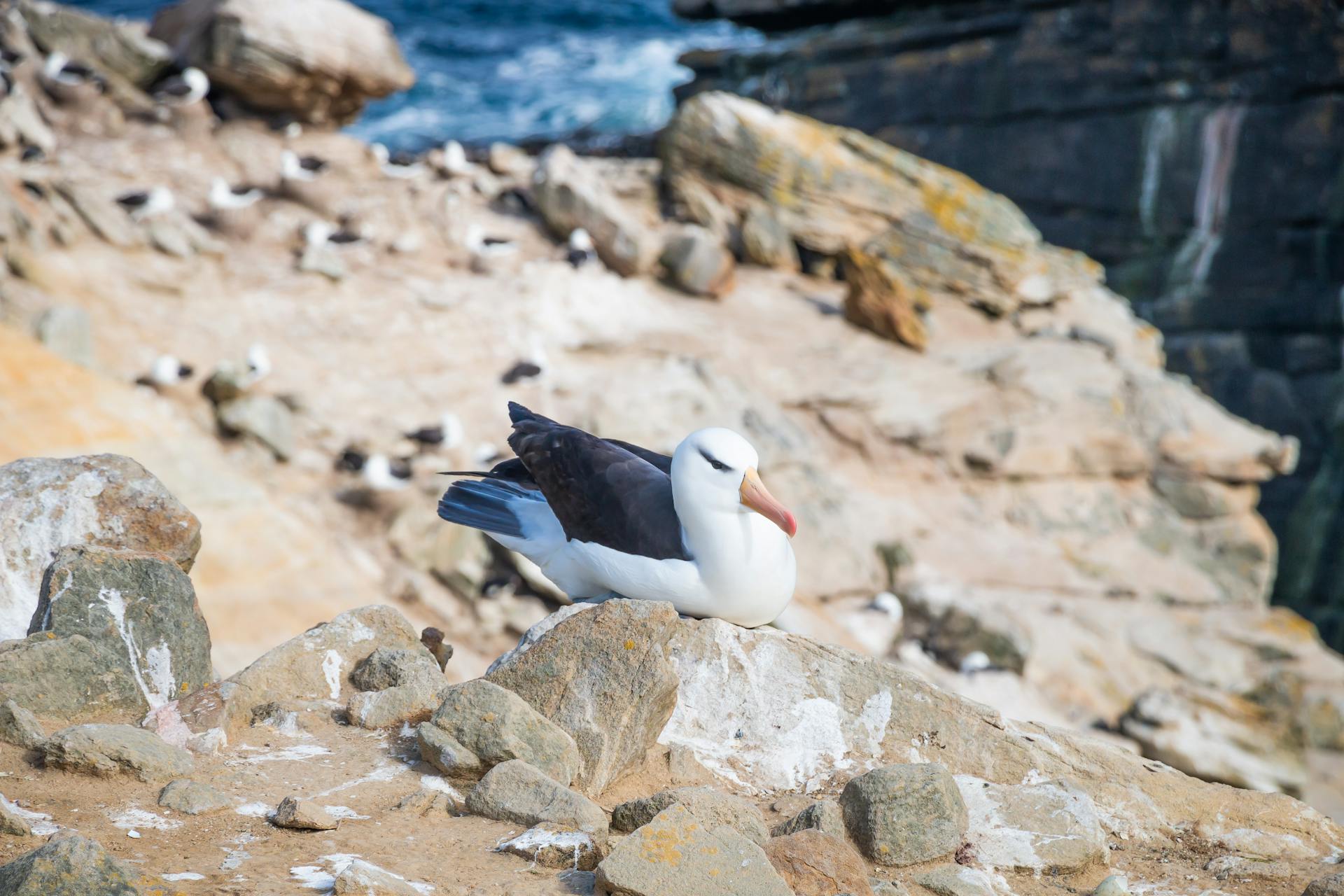
Once their chick fledges after about 165 days, the pair separates for the rest of the year, reuniting only when it's time to breed again.
This social monogamy means they bond with a single partner, but sometimes breed outside that relationship.
Wandering Albatrosses mate for life, breeding every 2 years, with the female laying 1 egg about 10 cm long between December and early January.
The pair will form a strong bond, virtually never splitting up until one dies, making them have the lowest "divorce rate" of any bird.
Overview
The wandering albatross is an incredible bird species that can be found in the open ocean, nesting in subantarctic islands. They have a wide range of habitats, from the Southern Ocean to subtropical waters.
These birds are truly massive, with a wingspan of up to 3.2 meters and weighing up to 12 kg (26 lb). They are also incredibly long-lived, with a lifespan of more than 50 years.
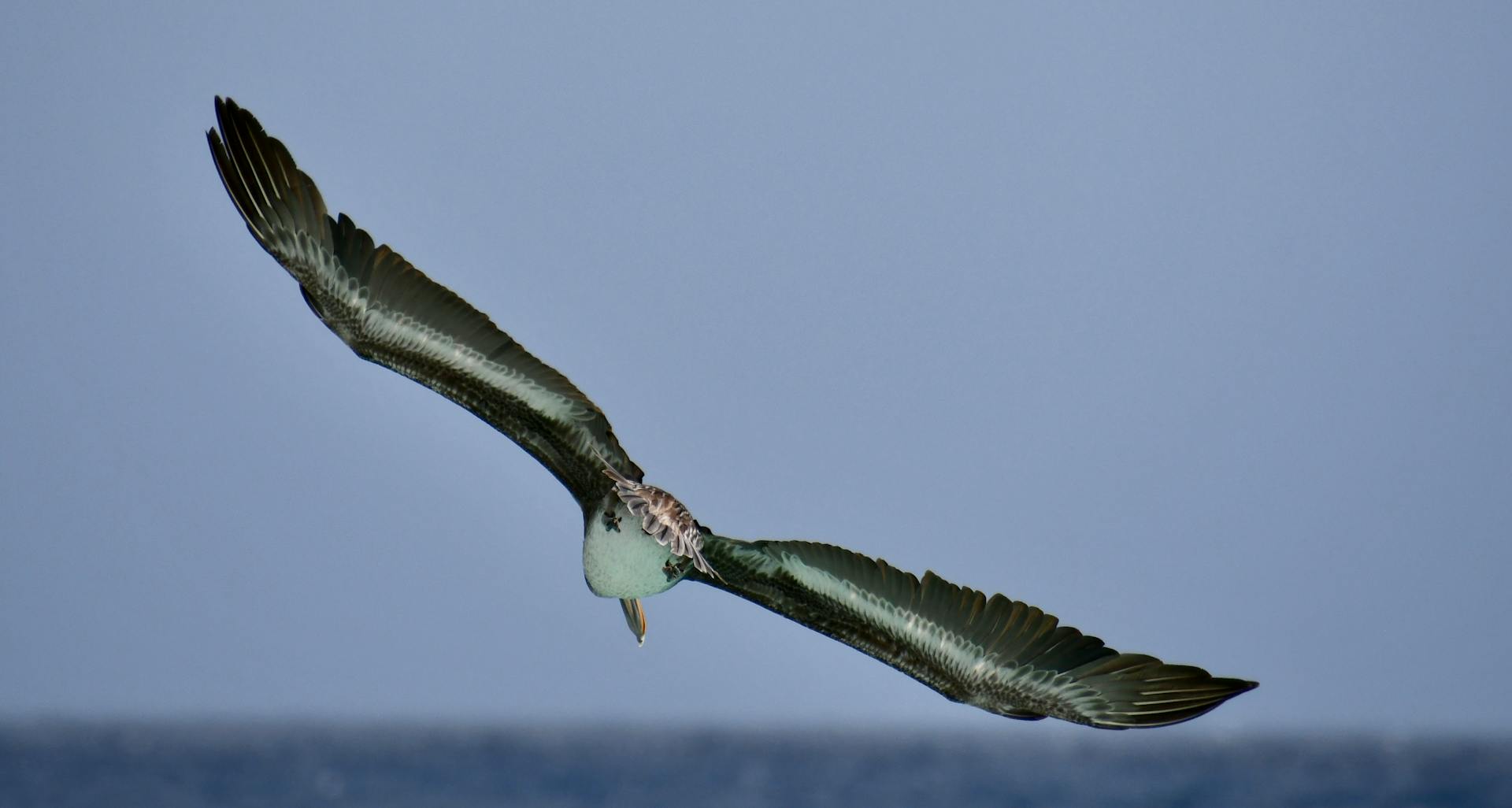
Their distinctive coloration is a striking feature, with juveniles starting off brown and growing into black and white adults. They have a specialized diet of fish and squid, and are one of the top predators in their ecosystem.
However, they do have a few predators, including sheathbills and skuas, which prey on their young and eggs. They are also vulnerable to human activities, such as longline fishing vessels, which can cause significant population declines.
Here's a summary of their key characteristics:
Frequently Asked Questions
How fast is a wandering albatross?
Wandering albatrosses can reach speeds of up to 45 mph (20 m/s) in the air, but research suggests they may be capable of flying much faster.
Featured Images: pexels.com