If you're a horse owner, you know that choosing the right feed for your horse can be overwhelming. There are so many options available, but not all horse feeds are created equal.
Different horse breeds have different nutritional needs, and a horse's age, size, and activity level also play a role in determining the best feed for them. For example, mature horses have different nutritional requirements than foals and young horses.
Grain-based horse feeds are a popular choice for many horse owners, but they can be high in calories and low in fiber. On the other hand, hay-based horse feeds are often lower in calories and higher in fiber, making them a good option for horses that need to lose weight or have digestive issues.
For more insights, see: Feed Horses Silage
Types of Horse Feed
Horses can eat up to 25 pounds of food per day, which is about 2-2.5% of their body weight.
Forages, such as hay and grass, should make up at least 50% of a horse's diet by weight. This is recommended by equine nutritionists.
Concentrates, including grains and pellets, are added to a horse's diet to compensate for nutrient insufficiencies in forages. They're typically needed by working, growing, and pregnant/lactating horses.
Grains, such as oats, corn, and barley, are commonly fed to horses. However, they're low in fiber and high in energy, so it's essential to process them to increase digestibility.
Commercial grain and pellet mixes eliminate the guesswork of providing the right amounts of minerals and vitamins in balanced quantities.
Types of Horse Feed
Horses can consume approximately 2-2.5% of their body weight in dry feed each day.
Forages, such as hay and grass, make up the bulk of a horse's diet and should account for at least 50% of their daily feed.
Concentrates, including grains and pellets, provide energy, protein, and other nutrients that horses may not get from forages alone.
Horses can be fed concentrates in the form of grains, pellets, or mixed feeds, but it's essential to follow the recommended feeding instructions on the label.
A different take: What Not to Feed Chihuahuas
Grains, such as oats, corn, and barley, are commonly fed to horses and can be processed to increase digestibility.
Oats are a popular grain for horses due to their lower digestible energy value and higher fiber content.
Corn provides twice as much digestible energy as an equal volume of oats and is low in fiber, but it's essential to avoid overfeeding as it can lead to obesity.
Barley needs to be processed to crack the seed hull and allow easier digestibility, and it's often fed in combination with oats and corn.
Pelleted feeds contain the same ingredients as sweet feeds, but they're processed to create a uniform texture that prevents horses from sorting ingredients in their feed.
Extruded feeds are similar to pelleted feeds but have an additional step where the feed is "cooked" under high temperature and pressure before it goes through a die, making it softer and less dusty.
Silage
Silage is made by sealing cut grass in an anaerobic environment for about 21 days, making it more digestible for horses.
It's packed in plastic bags, typically with a high moisture content of 40% or more, but should still have a pleasant smell.
Silage costs more than hay and has a significant drawback - if not properly fermented, there's a risk of botulism poisoning.
Botulism is a bacterial toxin that can cause paralysis, trouble standing, eating, and breathing, and is often fatal.
To avoid botulism, ensure hay is baled in the 30-50% moisture range, and don't buy silage from a field treated with poultry manure.
Silage is commonly fed to cattle in the US, but is a common horse feed in Europe and some barns.
It's typically made of high-protein legume hay, so it should be fed sparingly to horses who don't need the extra energy.
If you choose to feed silage, feed it carefully and start small before increasing the ration.
Silage is not recommended to replace hay altogether, as it's too high-protein for many horses.
Hay and Forages
Hay is a great alternative to grass for feeding horses, especially during the winter when pastures are dry or covered in snow. Hay allows you to monitor exactly how much your horse eats, which is ideal for managing their weight.
Hay is rich in calcium, phosphorus, protein, copper, and zinc, but the nutrition profile varies depending on the type of hay. Legume hay, such as alfalfa, is high in protein and calcium, making it a great energy boost for active horses.
Grass hay is generally lower in protein, which is beneficial for horses with health problems like obesity. It's a safe, low-risk food for all equines, and should be light green, fresh-smelling, and soft enough not to hurt your horse's mouth.
Hay cubes are a convenient and long-lasting option, made from chopped-up pieces of hay compressed into a cube shape. They're bagged, so they're easier to store and have a longer shelf life than bales, making them a great choice for horses with respiratory problems.
Most horses require a mix of hay and other forages in their diet, with a minimum of 50% forage. Hay with alfalfa or other legumes has more concentrated nutrition, so it's fed in smaller amounts than grass hay.
Beet pulp is often soaked in water to make it more palatable and to minimize the risk of choke and other problems. It's usually fed in addition to hay, but can be a replacement for hay in some cases, such as for very old horses who can no longer chew properly.
Other Horse Feed Options
Horses can enjoy a variety of treats, including cut corn, straw, and beet pulp, as well as fruits and vegetables like carrots, strawberries, bananas, and cucumbers, but these should be given in small portions and as an occasional treat.
Roughage is essential for a horse's digestive system, and it includes fibrous plant matter like grass and hay, as well as products like hay cubes or silage.
Concentrates, on the other hand, have a higher nutritional value and include foods like pellets, grains, ration balancer, and sweet feed.
Other Horse Feed Options
Roughage is fibrous plant matter, and grass and hay are the best examples.
Hay cubes and silage are also types of roughage.
To keep your horse's digestive system functioning, you need to include roughage in his diet.
Concentrates include foods like pellets, grains, ration balancer, and sweet feed.
Commercial grain and pellet mixes contain a mix of concentrates that provide energy, protein, vitamins, and minerals.
Adding additional grains to commercial mixes will interfere with the nutritional balance of the feed.
Besides hay and grass, horses can eat cut corn, straw, and beet pulp.
Fruit and vegetables can also be fed to horses, but they should be seen more as a treat rather than a regular part of their diet.
Some examples of fruit and vegetables that horses can enjoy include carrots, strawberries, bananas, and cucumbers.
Horses can eat a range of fruits and vegetables on occasion, but they should be given in small portions.
Ration Balancers
Ration balancers are a type of feed that's designed to be fed along with forages to horses that need additional protein, vitamins, and minerals, but not extra calories.
They're usually pelleted and have low crude fiber and fat, with the first ingredient often being soybean meal, making them high in protein.
Ration balancers are heavily fortified and are meant to provide the essential nutrients that are insufficient in a forage-based diet.
They often have a high percentage of protein, but this is because small amounts are fed, typically 1-2 pounds per day.
If your horse needs additional vitamins and minerals but not protein, then a vitamin/mineral supplement would be a more suitable option.
Providing a properly balanced diet for your horse is crucial, and understanding how to properly feed them is a key part of horse ownership.
Ration balancers are meant to be fed only when you know your horse isn't getting everything they need from their regular diet, which can be determined through a nutritional evaluation of your hay or grass, or by checking the nutrition information on hay cubes or grain packages.
You can also watch your horse's condition and behavior, as low energy, dull coat, weight loss, diarrhea, or bad hooves can all indicate a nutrition deficiency.
Mixes and Pellets
Commercial grain and pellet mixes are another option for horse feed, containing a mix of concentrates that provide energy, protein, vitamins, and minerals specific to a horse's nutrient needs.
These mixes eliminate the guesswork of providing the right amounts of minerals and vitamins in balanced quantities. Adding additional grains to commercial mixes will disrupt the nutritional balance of the feed.
Many feed manufacturers combine various grains and add vitamin and mineral supplements to create a complete premixed feed that's easy to feed and has predictable nutritional quality.
Some of these prepared feeds are manufactured in pelleted form, while others retain the grains in their original form. Molasses is often used as a binder to keep down dust and increase palatability.
Grain mixes with added molasses are usually called "sweet feed" in the US and "coarse mix" in the UK. Pelleted or extruded feeds may be easier to chew and result in less wasted feed.
You might enjoy: Buy Molasses
Horses generally eat pellets as easily as grain, but pellets are also more expensive. Even "complete" rations don't eliminate the necessity for forage.
Pelleted feeds often contain the same ingredients as sweet feeds and have a longer shelf life, making them less likely to mold.
Haypellets are different from pelleted feeds and are considered a form of forage, not concentrate.
Consider reading: Alfalfa Pellets
Nutrition and Digestion
Horses are designed to eat small amounts of the same food all day, every day, and their digestive system is adapted to work best with a steady flow of food that doesn't change much from day to day.
The esophagus carries food to the stomach, and its unique angle creates a one-way valve that prevents horses from vomiting.
Grass and hay are the best examples of roughage, a type of fibrous plant matter that's essential for keeping a horse's digestive system functioning properly.
Horses need to eat a mix of roughage and concentrates to meet their nutritional requirements and keep their gut healthy.
Concentrates include foods like pellets, grains, and sweet feed, which are highly concentrated sources of nutrition.
A horse's digestive system is designed to maximize mineral absorption and reduce the likelihood of colic when it's fed a steady diet of roughage and concentrates.
Storage and Practices
Proper storage of horse feed is crucial to prevent contamination and ensure your horse's health. Hay and concentrated feeds must be kept dry and free of mold, rodent feces, and other types of contamination.
Feed should be stored under a cover, such as a tarp or an open shed, to protect it from moisture. This is especially important for hay, which can develop mold quickly.
A secure door or latched gate between the animals and any feed storage area is essential to prevent horses from accidentally getting into stored feed and eating too much at one time. This can lead to colic or laminitis.
It's not safe to give a horse feed that was contaminated by the remains of a dead animal, as this can be a potential source of botulism.
For your interest: Prevent Enteroliths
Storage
Feed storage is crucial to prevent illness in horses. Keep hay and concentrated feeds dry and free of mold, rodent feces, and other contamination.
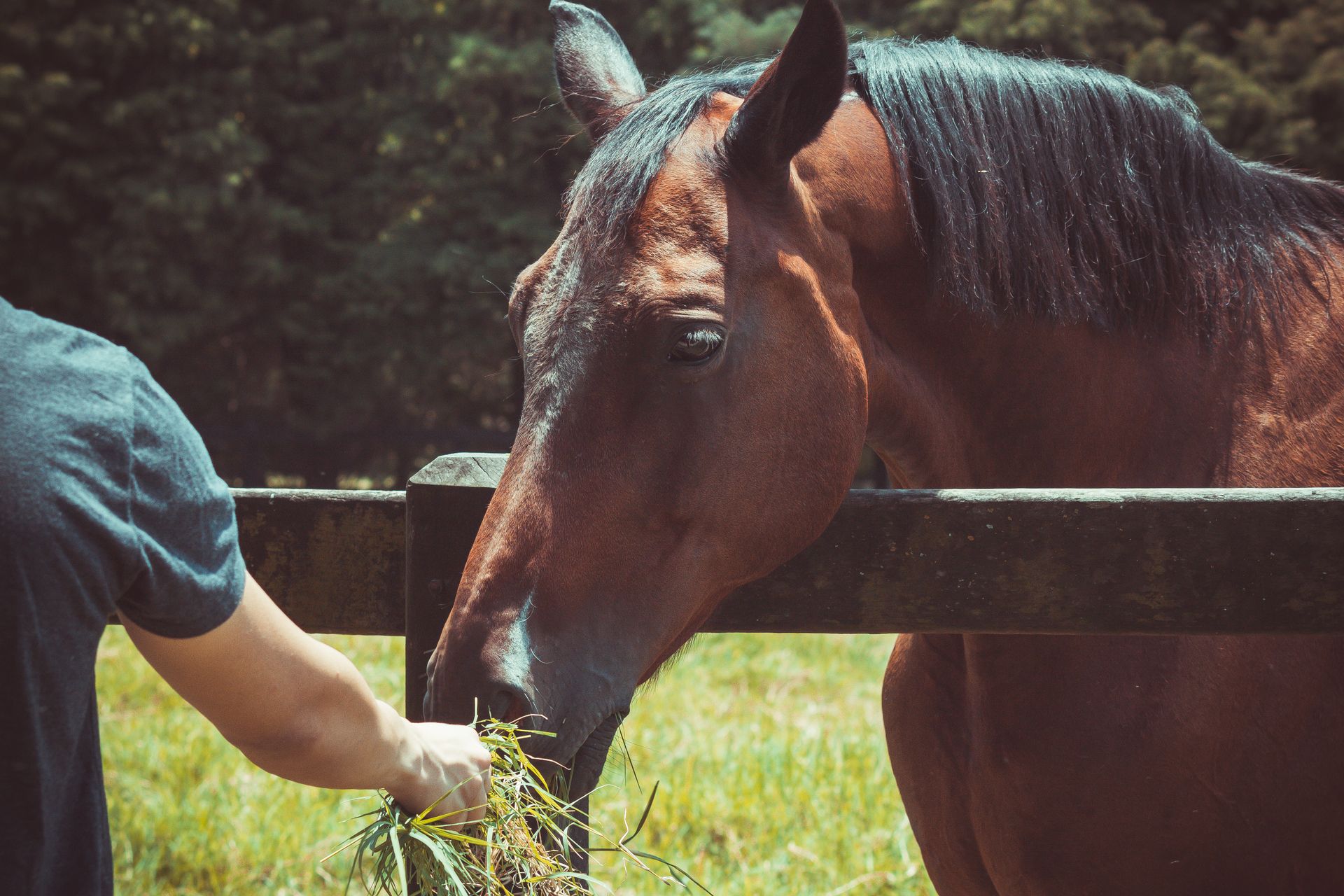
Hay should be stored under an open shed or under a tarp to prevent moisture accumulation. This is because feed kept outside can develop mold quite quickly.
Concentrates take up less storage space and are less of a fire hazard, so they're usually kept in a barn or enclosed shed.
A secure door or latched gate between the animals and any feed storage area is vital to prevent horses from getting into stored feed and eating too much at once.
It's not safe to give a horse feed that was contaminated by the remains of a dead animal, as this can lead to botulism.
Practices
Feeding your horse is a crucial part of their care, and it's essential to get it right.
Most horses only need quality forage, water, and a salt or mineral block, but grain or other concentrates should be carefully monitored.
To do so, horse feed is measured by weight, not volume, so 1 lb of oats has a different volume than 1 lb of corn.
Consider reading: Why Was the Horse so Happy?
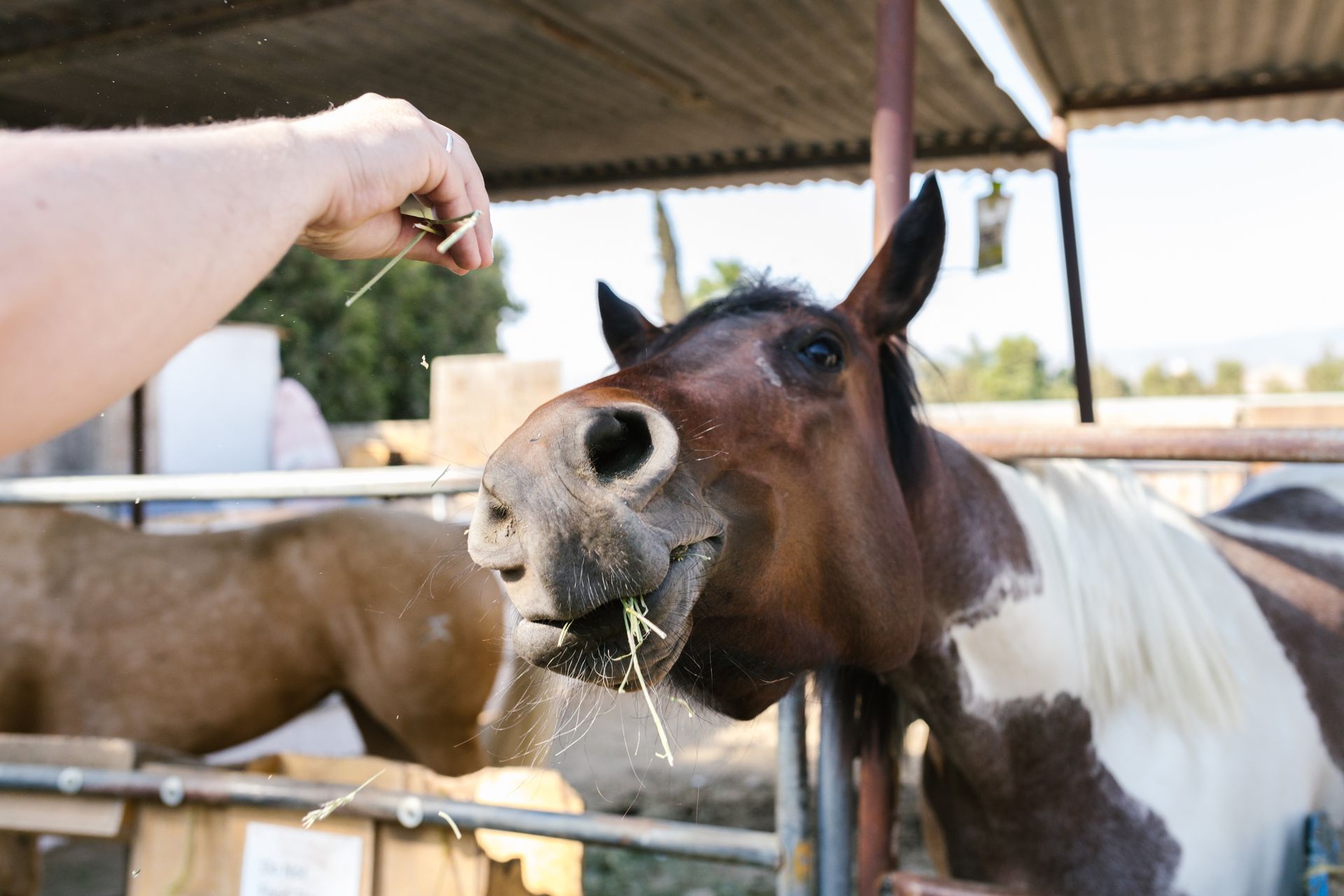
Providing three small feedings per day instead of one or two large ones is more consistent with natural feeding behavior, but even two daily feedings is preferable to only one.
To gauge the amount to feed, a weight tape can be used to provide a reasonably accurate estimate of a horse's weight.
Actual amounts fed vary by the size of the horse, the age of the horse, the climate, and the work to which the animal is put.
Veterinarians are usually a good source for recommendations on appropriate types and amounts of feed for a specific horse.
Frequently Asked Questions
Is sweet feed or pellets better for horses?
For optimal horse health, consider pellets over sweet feed, but ensure the pellet is a nutrient-rich, balanced option. A well-formulated pellet can be a better choice than sweet feed, but always check the ingredients.
What is the best grain to feed a horse?
For optimal nutrition, consider feeding your horse oats, a high-fiber grain that's easily digestible when processed. However, consult with a veterinarian or equine nutritionist to determine the best grain for your horse's specific needs.
Featured Images: pexels.com