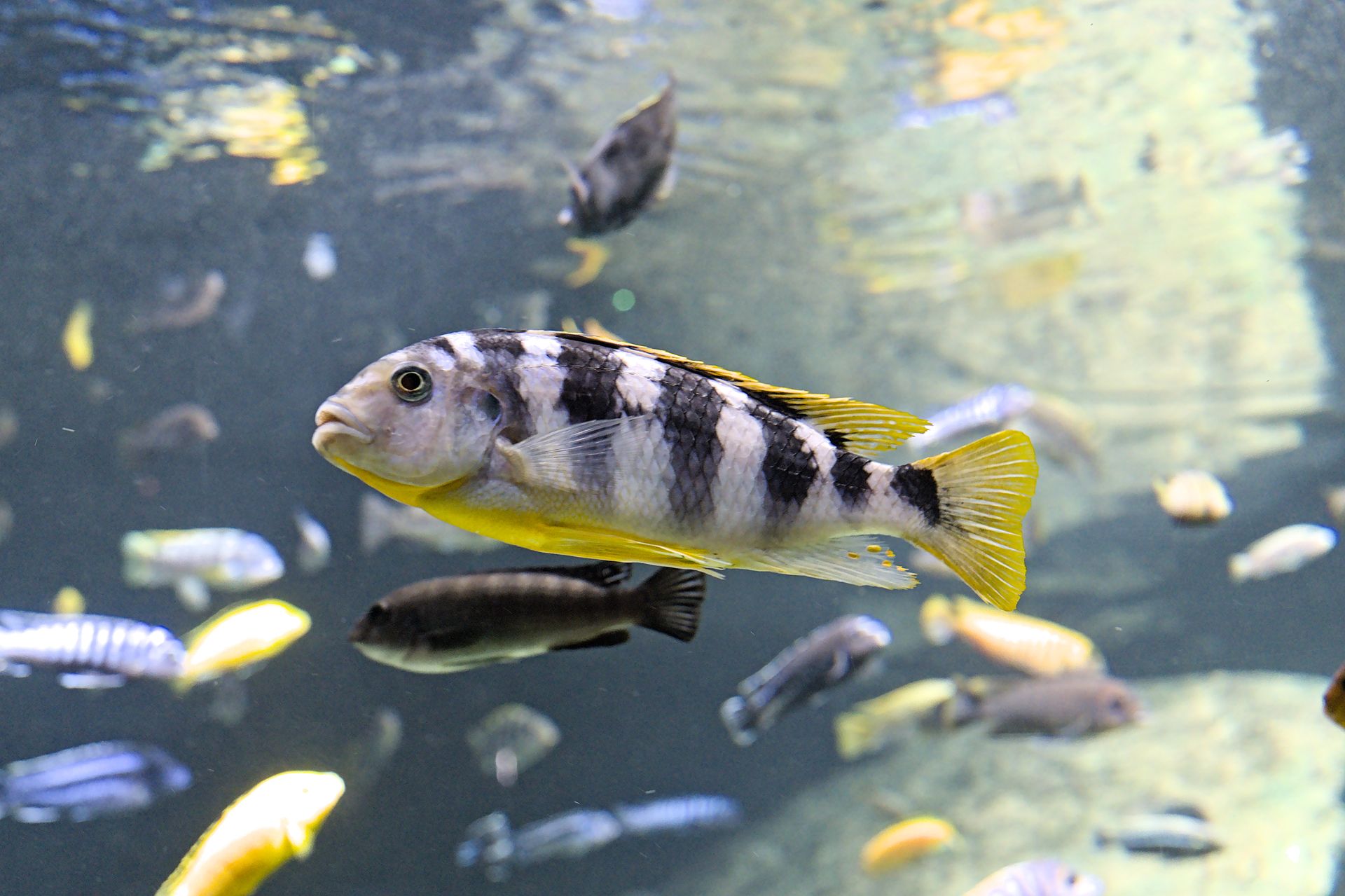
Tropheus cichlids are a popular choice among aquarium enthusiasts, but they require specific care to thrive.
These fish are native to Lake Tanganyika, where the water is cold and alkaline, with a pH range of 8.0-9.0.
A well-planted aquarium with plenty of hiding places is essential for Tropheus cichlids, as they feel secure in the presence of vegetation.
Tropheus cichlids are primarily herbivores, feeding on algae and plant matter, and should be provided with a varied diet rich in fiber.
Water Requirements
Tropheus cichlids are incredibly sensitive to water conditions, so maintaining stable parameters is crucial for their health and well-being.
The ideal pH range for Tropheus cichlids is between 7.8 and 9.0, which is more alkaline than most tap water.
Regular water changes and efficient filtration are key to keeping ammonia and nitrite levels at 0 and nitrates under 20 ppm.
You should aim for a stable temperature between 24°C and 27°C (76°F and 81°F) to keep your Tropheus cichlids happy and healthy.
To achieve the desired pH level, you can use pH buffers and regularly check the pH using a test kit.
Tropheus cichlids thrive in hard water with a GH (general hardness) level of 10 to 20 dGH and a KH (carbonate hardness) level of 10 to 15 dKH.
Here's a summary of the recommended water parameters for Tropheus cichlids:
By following these water requirements and making regular water changes, you can create a healthy and comfortable environment for your Tropheus cichlids to thrive.
Tank Setup
A tank setup for Tropheus cichlids requires careful consideration to mimic their natural habitat. A minimum tank size of 120 gallons is recommended for large groups, as these fish are active swimmers that need both horizontal and vertical space.
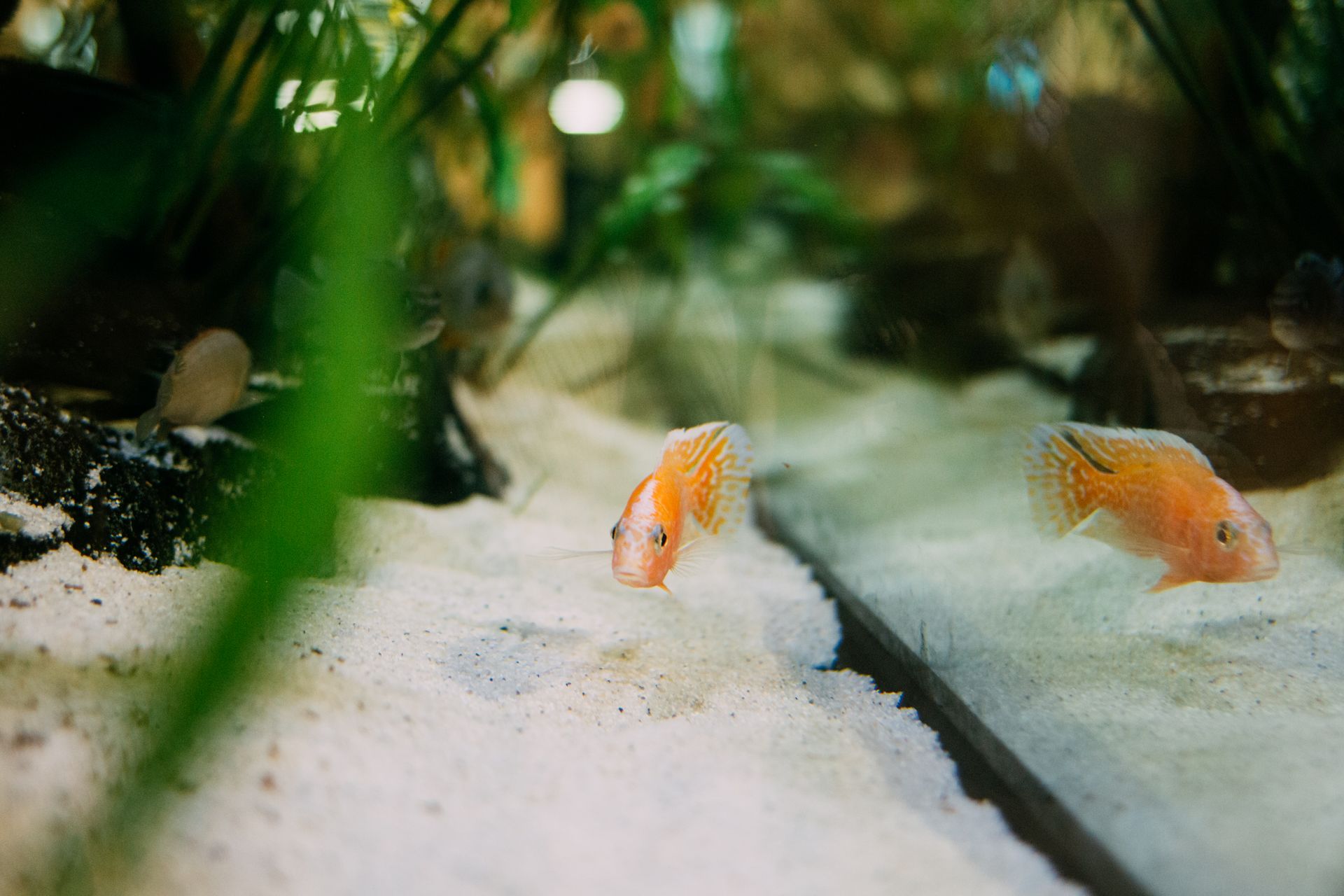
Fine sand is the preferred substrate, as it allows the fish to sift through it for food and mimics their natural habitat. Avoid coarser substrates that may not be interacted with as much.
Large rock formations should be constructed along the back of the tank to provide shelter, territories, and grazing surfaces. Suitable rocks include lava rock, slate, limestone, and lace rock.
A powerful filtration system is essential to maintain pristine water conditions, as Tropheus are sensitive to poor water quality. Regular water changes are also crucial.
Aeration is vital, with air pumps or airstones needed to ensure well-oxygenated water. Here's a summary of the key tank setup requirements:
Tropheus cichlids are active swimmers that require a lot of space to thrive, so a tall, wide tank is ideal. A 4-foot-long tank is suggested for an established adult group of 12 or more.
Care and Feeding
Tropheus cichlids are primarily herbivores, so their diet should consist of a variety of plant-based food. To replicate their natural diet, provide algae-based foods such as spirulina-based flake or pellet food, supplemented with blanched vegetables like zucchini and spinach.
In the wild, Tropheus graze on biofilm and algae growing on rocks, consuming plant matter and microorganisms. You can create algae growth on rocks in your tank by placing them under direct lighting. This will provide your Tropheus cichlids with a natural food source and a grazing activity.
To ensure your Tropheus cichlids get the right nutrition, follow these feeding guidelines:
- Frequent, small meals: Feed your Tropheus cichlids multiple small meals throughout the day, instead of one or two larger meals.
- Proper food choice: Offer them a high-quality, plant-based fish food, such as spirulina-based pellets or flakes.
- Supplement with fresh vegetables: Provide fresh vegetables like blanched spinach, lettuce, and zucchini.
- Provide rocks with algae growth: Add rocks with natural algae growth to your tank.
Regularly monitoring water quality, equipment, and the fish's health can help prevent diseases, fostering a stress-free life for both you and your aquatic pets.
Water Requirements
To keep your Tropheus cichlids happy and healthy, it's essential to maintain the right water conditions. Their natural habitat in Lake Tanganyika is alkaline, with a pH range of 7.8 to 9.0.
Temperature is also crucial, and you should aim for a stable temperature between 24°C and 28°C (75°F and 82°F). This can be achieved with an aquarium heater and thermometer.
Regular water changes are vital to maintain water quality. You should replace 25% to 30% of the tank water every two weeks. To do this, remove the old water using a siphon or hose, being careful not to stress the fish.
The ideal water hardness for Tropheus cichlids is between 10 and 20 dGH. You can achieve this by using a water conditioner and monitoring the water parameters regularly.
Here are the key water parameters to focus on:
- pH: 7.8 - 9.0
- Temperature: 24°C - 28°C (75°F - 82°F)
- Hardness: 10 - 20 dGH
Remember, Tropheus cichlids are highly sensitive to poor water quality, so it's essential to monitor ammonia, nitrites, and nitrates. Keep ammonia and nitrite levels at 0, and nitrates under 20 ppm.
Feeding
Tropheus cichlids are primarily herbivores, so their diet should consist of a variety of plant-based foods.
In the wild, these fish feed mostly on algae, making them excellent algae consumers in the aquarium. To replicate their natural diet, you can provide a high-quality, spirulina-based fish food, such as spirulina-based pellets or flakes.
Avoid feeding protein-rich foods like bloodworms, as they can lead to digestive problems and bloating. This is especially important in captivity, where Tropheus cichlids may not have the same digestive benefits as they do in the wild.
Frequent, small meals are ideal for Tropheus cichlids, mimicking their natural grazing habits and helping to maintain their digestive health. Three to four small meals throughout the day is a good target.
You can supplement their commercial food with fresh vegetables like blanched spinach, lettuce, and zucchini. These vegetables provide essential nutrients and help maintain water quality by reducing waste.
To create a natural grazing environment, add rocks with algae growth to your tank. This will allow your Tropheus cichlids to graze naturally and ensures a healthy diet.
Care Schedule
Creating a care schedule for your Tropheus Cichlids is crucial for their health and well-being.
Daily tasks are a must, including checking the water temperature, pH and ammonia levels, and ensuring all equipment is functioning properly.
Feed your fish high-quality, vegetable-based cichlid pellets or flakes in the morning and at night.
Weekly tasks involve performing a 10-15% water change, vacuuming the substrate to remove leftover food and waste, and cleaning the sides of the tank to clear off algae buildup.
Assessing the health of your fish weekly is also important, monitoring their behavior, appetite, and appearance for any signs of illness.
Here's a breakdown of the daily, weekly, monthly, and quarterly tasks to keep your tank in top shape:
By following this care schedule, you'll be able to maintain a clean, healthy tank environment for your Tropheus Cichlids.
Consistency is key in providing a safe and healthy habitat for these beautiful fish.
Breeding / Reproduction
Breeding Tropheus is a fascinating process, and with the right setup and care, you can successfully raise these amazing fish. To start, you'll need a group of 12 to 20 juveniles in a 90-gallon tank. This will allow a harem to form, which is essential for breeding.
The dominant male will take charge and court a female, and they'll shimmy and circle each other as they prepare to spawn. Females can be hard to bring into breeding condition, so be patient and make sure they have plenty of space to thrive.
A ratio of one male to at least three females is ideal, as this keeps the aggression of the males divided and reduces the likelihood of losing females. Females can hold their fry for up to four weeks before releasing them, and during this time, they won't eat.
To ensure the fry's safety, provide plenty of hiding places, such as small rock crevices, where they can hide from the adults. Alternatively, you can strip the female of her fry and raise them in a separate tank or breeding net.
Here are some key things to keep in mind when breeding Tropheus:
- Ease of Breeding: Moderate
- Frequency of Breeding: About once a month
- Time to Release Fry: 28-30 days
By following these guidelines and providing the right environment, you can successfully breed and raise Tropheus in your home aquarium.
Health Problems
As a Tropheus Cichlid owner, it's essential to be aware of the common health problems that can affect your fish. Bloat is a common ailment among Tropheus Cichlids, caused by a bacterial infection or internal parasites, and symptoms include inflammation in the abdomen area, loss of appetite, and difficulty in swimming. You can treat bloat by using Epsom salt in the tank and medicating the fish with antibiotics specifically made for fish.
Ich, also known as white spot disease, is another common health problem in Tropheus Cichlids. It's caused by a microscopic parasite and symptoms include small white spots on the fish's body, lethargy, and rapid breathing. To treat Ich, you can raise the water temperature to 86°F for several days and use commercially available Ich treatments.
Fin Rot is a condition caused by a bacterial infection and might result from poor water quality or injury. Symptoms include fraying or discolored fins. Improving water quality is crucial in treating Fin Rot, and antibacterial medications can help eliminate the infection.
Skin Flukes are parasites that can cause irritation on the skin of your Tropheus Cichlid, leading to symptoms like reddened areas around the gills, scratching, and rapid breathing. You can treat Skin Flukes by using a parasite treatment specifically for flukes.
By providing a clean and well-maintained tank, you can prevent most of these health problems. However, it's essential to monitor your Tropheus Cichlid for any signs of distress or illness and act quickly to improve their health and well-being.
Worth a look: Electric Yellow Cichlid
Habitat and Distribution
The Tropheus species call Lake Tanganyika, Africa their home, and they're found all throughout the lake. They inhabit shallow waters along the rocky coastal areas.
These fish are specialized algal grazers, feeding on algae and microinvertebrates that they scrape off the rocks using their unique underslung mouths.
Here are some key facts about their social grouping:
- They're generally found in groups.
- They form nuclear families, but not prolonged pairs like some other open water breeders.
Habitat and Range
The Tropheus species can be found in Lake Tanganyika, Africa. They are widely distributed throughout the lake.
These fish mostly inhabit shallow waters along the rocky coastal areas. They thrive in this environment, feeding on algae and microinvertebrates they rasp from the rocks with specially adapted underslung mouths.
Tropheus species are generally found in groups, forming nuclear families. They don't typically form prolonged pairs like some other open water breeders.
Here's a quick rundown of some key facts about the habitat and range of Tropheus species:
- Scientific Name: Tropheus sp.
- Social Grouping: Groups
Mesh Terms
MeSH terms are a crucial part of understanding the habitat and distribution of certain species, like the cichlids.
Cichlids are found in fresh water environments, which is a key aspect of their habitat.
They can be found in various freshwater settings, including rivers and lakes.
Fresh water is a vital component of their environment, supporting their physiology and genetics.
Some cichlids are known to exhibit genetic polymorphism, which can affect their selection and behavior.
This genetic variation can also impact their sexual behavior and communication with other cichlids.
Here's a breakdown of the MeSH terms related to cichlids and their habitat:
- Fresh Water
- Cichlids / anatomy & histology
- Cichlids / genetics
- Cichlids / physiology
- Sexual Behavior, Animal
- Animal Communication
- Polymorphism, Genetic
- Selection, Genetic
Species Overview
The Tropheus genus is a fascinating group of cichlids found in Lake Tanganyika. They are generally divided into eight recognized species, although some aquarists categorize them into only four groups.
Tropheus moorii is one of the most well-known species, known for its bold colors featuring shades of red, orange, or yellow. It's found predominantly in the southern part of Lake Tanganyika.
Tropheus duboisi, on the other hand, has a striking appearance with juveniles having a jet-black body and white spots. As adults, they develop a band of white or yellow across the middle and a blue face.
Tropheus brichardi is less colorful as adults but displays bright orange and black stripes as fry. Males and females show different stripe patterns as they mature.
Here are the six recognized species in the Tropheus genus:
- Tropheus annectens
- Tropheus brichardi
- Tropheus duboisi
- Tropheus kasabae
- Tropheus moorii
- Tropheus polli
Each species has its unique characteristics, and understanding these differences is crucial for proper identification and care.
Tank Mates
Tropheus cichlids are best kept in species-specific tanks due to their aggression, but if you plan to house them with other fish, choose peaceful, non-aggressive species like Synodontis catfish that can tolerate similar water conditions.
To minimize aggression, it's essential to provide a large tank with plenty of hiding places, such as rocks and caves, where fish can establish territories and retreat when needed.
Tropheus cichlids can be kept in a larger aquarium with other herbivorous rock-dwelling African cichlids, some Sardine Cichlids (Cyprichromis leptosoma), and Upside-Down Catfish (Synodontis species), which can help calm their aggression.
Here are some compatible tank mates for Tropheus cichlids:
- Julidochromis: These rock-dwelling cichlids share a similar environment and can handle the aggression of Tropheus cichlids.
- Cyprichromis: Their open-water swimming habits help them avoid conflicts with Tropheus cichlids, making them suitable tank mates.
- Paracyprichromis: Similar to Cyprichromis, their open-water dwelling helps them stay out of Tropheus territory and avoid aggression.
To maintain a peaceful tank, increase the number of Tropheus cichlids to disperse aggression amongst themselves, making it less stressful for other tank mates.
Filtration and Equipment
To set up a thriving Tropheus cichlid tank, you'll want to invest in a powerful and efficient filter, as they produce a lot of waste. A good external canister or hang-on-back filter will help maintain water quality.
An air pump is also essential for proper oxygenation in the tank. This will help ensure your Tropheus cichlids have the oxygen they need to stay healthy.
Tropheus cichlids require a tank environment that's similar to their natural habitat. This means creating plenty of hiding spots for them to feel secure.
Featured Images: pexels.com