The Southern African Wildcat is a fascinating creature, and understanding its habitat, behavior, and genetics is crucial to appreciating its unique characteristics.
Found in southern Africa, the Southern African Wildcat inhabits a range of habitats, from savannas to grasslands and woodlands, typically in areas with rocky outcrops and scrubby vegetation.
These adaptable cats are solitary animals, with adults occupying large territories that often overlap with those of other wildcats.
They are skilled hunters, preying on small mammals, birds, and reptiles, and are also known to scavenge for carrion.
Physical Characteristics
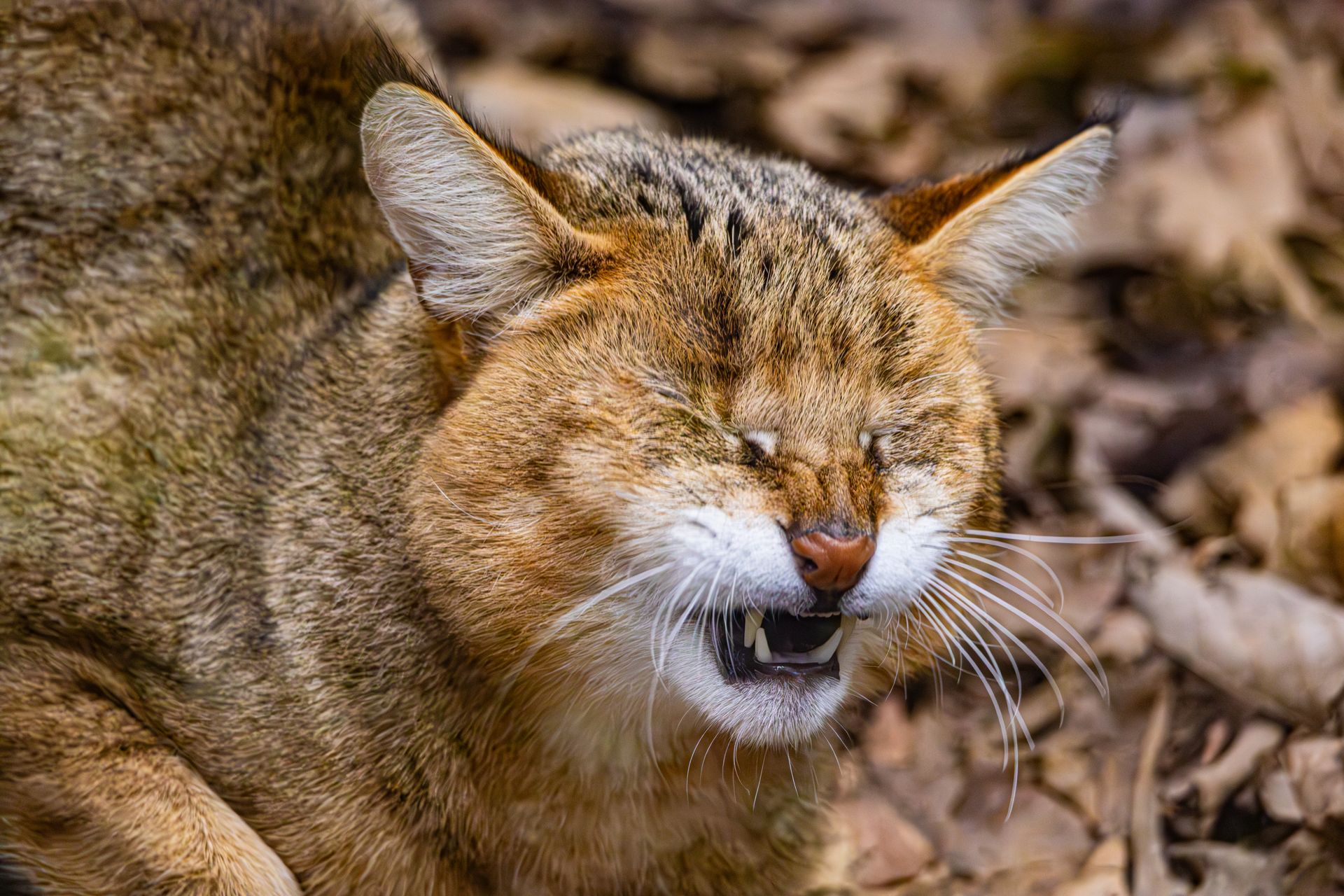
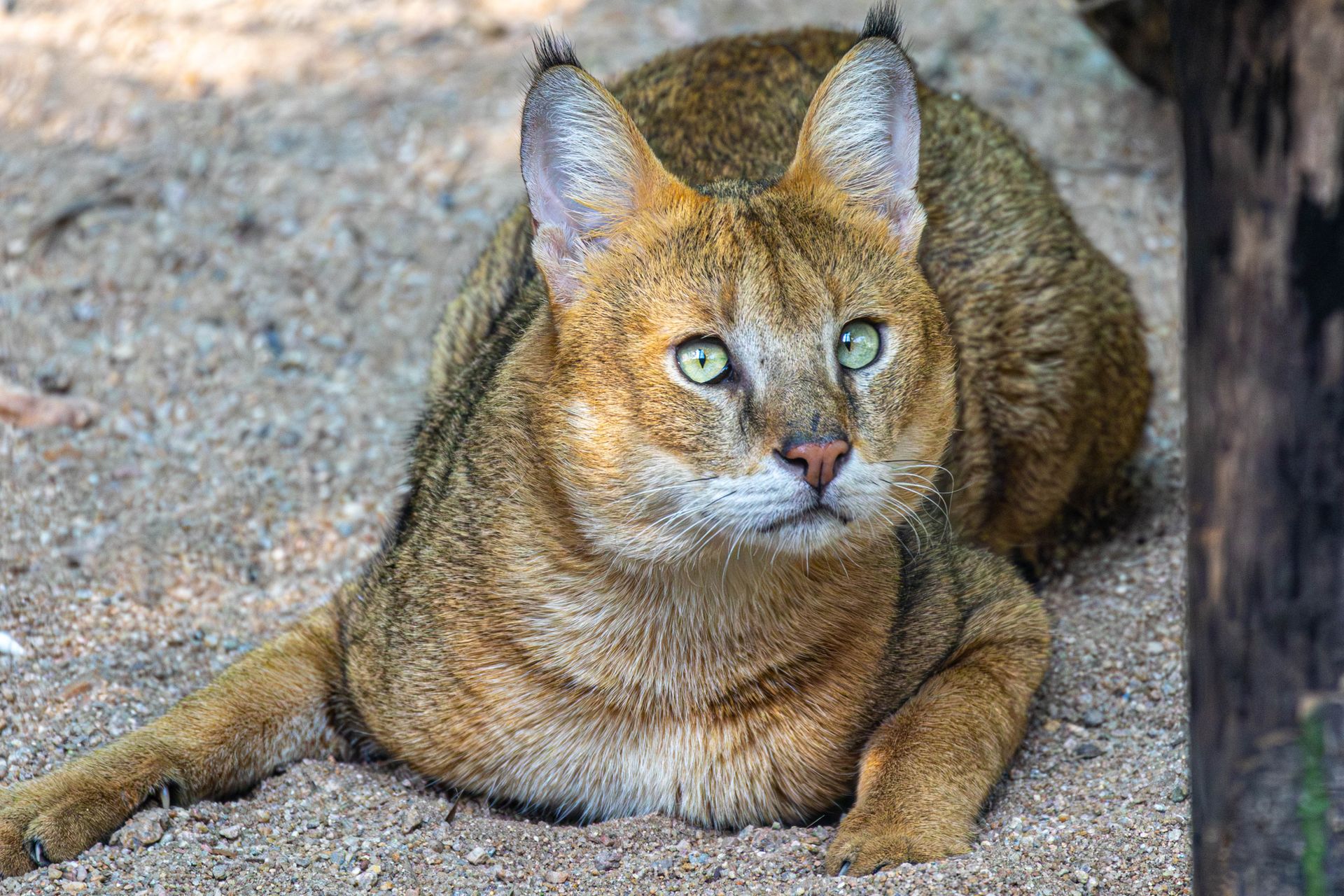
The Southern African wildcat is a striking animal, and its physical characteristics are definitely worth noting.
The body of the Southern African wildcat is marked with vertical stripes that can vary from faint to quite distinct.
Its tail is ringed with black and has a black tip, adding a distinctive touch to its overall appearance.
The chin and throat are white, and the chest is usually paler than the rest of the body, giving it a subtle yet striking contrast.
The feet are jet black underneath, a detail that's often overlooked but adds to the wildcat's overall charm.
There are two colour phases; iron-gray, with black and whitish speckling, and tawny-grey, with less black and more buffy speckling, showing the wildcat's adaptability to its environment.
In appearance, it is very similar to a domestic cat, although the legs are proportionately longer, giving it a slightly more athletic build.
The most distinguishable characteristic is the rich reddish-brown colour on the backs of the ears, over the belly and on the back legs, a unique feature that sets it apart from other wildcats.
Its body length is 46–66.5 cm (18.1–26.2 in), with a 25–36 cm (9.8–14.2 in) long tail, and it weighs between 2.4–5.5 kg (5.3–12.1 lb), making it a compact yet robust animal.
Habitat and Distribution
The Southern African wild cat is widely distributed throughout Africa south of the equator. They can be found in many different countries, but one notable exception is the Namibian coast.
It tolerates a wide range of habitats that provide some sort of cover. This flexibility allows them to thrive in various environments.
Ecology and Behavior
Southern African wildcats are largely nocturnal, finding cover in which to rest during the day. Their habits are solitary, except for mating and raising their young, and they are highly territorial.
They are adaptable predators, preferring to hunt small rodents, but able to change their diet according to seasonal and longer-term prey abundances and availability. This means they can take other small mammals, birds, reptiles, amphibians, insects, and other invertebrates.
The largest recorded prey include hares, springhares, and birds up to the size of guineafowl. This shows their ability to adapt to different environments and prey populations.
African wildcats have been studied in the southern region of the Kgalagadi Transfrontier Park, where researchers radio-collared eight wildcats to track their home ranges. The study found that home ranges varied in size, but fell within the ranges of previous wildcat studies.
Home range sizes were calculated using minimum convex polygons (MCP) and overlap in home range was determined from 100% MCP estimates. This method is considered robust, but sensitive to outliers.
Researchers spent 1538 hours observing the wildcats, with an average of 6.0 hours for males and 4.7 hours for females. This extensive observation period provided valuable insights into the wildcats' behavior and ecology.
If this caught your attention, see: African Sideneck Turtle Tank Size
Genetics and DNA
Genetics and DNA play a crucial role in understanding the southern African wildcat. DNA from tissue material was extracted using the Cell Lysis stock solution and phenol-chloroform-isoamylalcohol. DNA from hair samples was extracted with 200 mmol/L NaOH and 200 mmol/L HCl, 100 mmol/L Tris-HCl, pH 8.5.
The DNA samples were quantified using a micro-volume UV-Vis spectrophotometer, and good quality genomic DNA was diluted to a final concentration of 20 ng/μL and stored at −80°C. A total of 165 tissue and hair samples were obtained, including 116 putative African wildcats or their suspected hybrids, and 49 domestic cats.
STRUCTURE v2.3.4 was used to estimate the overall population genetic structure, and a principal component analysis (PCA) was conducted to visualize the genetic structure among groups. The results showed that the proportion of pure and admixed individuals within a given sample will be strongly influenced by the validity of the assumed priors and the efficiency of analyzed loci used in the Bayesian analysis.
Genetic Structure
Genetic structure is a complex topic, but it's essentially about how closely related different individuals or groups are to each other.
To study the genetic structure of African wildcats in South Africa, researchers used a method called Bayesian assignment tests implemented in STRUCTURE v2.3.4.
STRUCTURE uses Bayesian Monte-Carlo Markov chain sampling to identify the optimal number of genetic clusters for a given dataset.
The researchers tested for K = 2-8 genetic clusters and ran five independent models for each value of K.
They also applied the admixture model with correlated allele frequencies because they suspected hybrid individuals might be present in the dataset.
The optimal K value was determined using the method described by Evanno et al. (2005) and STRUCTURE Harvester (Earl and von Holdt 2012).
A principal component analysis (PCA) was conducted to visualize the genetic structure among groups using the adegenet package in the R statistical environment.
STRUCTURE calculates assignment values as the proportion (qik) of each individual's multilocus genotype derived from each of the predefined K number of clusters.
These assignment values can be useful in identifying hybrid individuals, but the proportion of pure and admixed individuals within a sample will be influenced by the validity of the assumed priors and the efficiency of analyzed loci.
To validate the identification of pure parental and admixed individuals, the researchers created and analyzed a simulated genotype dataset.
Animal DNA Extraction
Animal DNA Extraction is a crucial step in understanding genetics and DNA.
Tissue and hair samples were obtained from various sources, including museums, private conservation agencies, and landowners.
DNA extraction from tissue material used a Cell Lysis stock solution and phenol-chloroform-isoamylalcohol.
DNA from hair samples was extracted with a solution of 200 mmol/L NaOH and 200 mmol/L HCl, 100 mmol/L Tris-HCl, pH 8.5.
Desiccated museum samples required a specific protocol using the Qiagen DNA Tissue kit.
All DNA samples were quantified using a micro-volume UV-Vis spectrophotometer and diluted to a final concentration of 20 ng/μL.
Good quality genomic DNA was defined as having an A260/280 ratio of 1.8 and an A260/230 ratio of 2.0.
DNA samples were stored at -80°C to maintain their quality.
Wildcat Habitat and Range
The Southern African wildcat is widely distributed throughout Africa south of the equator, but does not occur along the Namibian coast.
It tolerates a wide range of habitats that provide some sort of cover.
The African wildcat's home range varies in size, but annual estimates for adult males are around 7.7 km, while females have a significantly smaller range of about 3.5 km.
Home range sizes can be affected by factors like prey distribution and environmental conditions.
African wildcats do not have a fixed den site, but rest in different places each day, which can be considered biologically independent locations.
The study in the Kgalagadi Transfrontier Park found that male wildcats have a larger home range than females, with some males overlapping with up to four females' home ranges.
Female wildcats, on the other hand, display extensive overlap of their home ranges, averaging around 33.4%.
The researchers used a rotation system to collect data, following radio collared wildcats for varying periods of time, and spent a total of 1538 hours observing the cats.
Intriguing read: Southern Flying Squirrel Range
Human Impact
The southern African wildcat is a majestic creature, but its existence is threatened by human activities.
Human infrastructure and settlement density play a significant role in the wildcat's habitat. Proximity to human settlements can be measured using the Global Human Footprint (GHF) Dataset.
The GHF values and population density in South Africa can be calculated using zonal statistics within a 15 km radius of the wildcat's potential home range.
This method helps assess the relationship between genetic purity and human influence. Significant relationships were observed between the wildcat's genetic purity and the maximum GHF value, standard deviation within zones, and distance to the nearest town.
In fact, as the wildcat's genetic purity increases, there is a corresponding decrease in the GHF human influence index and an increase in the distance to the nearest town.
Human footprint on wildcat genetic purity can be summarized as follows:
- Maximum GHF value: P = 0.0003
- Standard deviation within zones: P = 0.0097
- Distance to the nearest town: P = 0.026
It's worth noting that the main threat to the wildcat's survival is its tendency to interbreed with domestic cats near human habitations, resulting in hybridisation that threatens the species' genetic purity.
Description and Figures
The African wildcat is a terrestrial-bound species that thrives in the vast majority of Southern Africa, including South Africa, Botswana, Namibia, Zimbabwe, Zambia, and Mozambique.
They are roughly the same size as domestic house cats, but with a more limited range of fur colors. Typically, their fur is brown and grey on most of their back and side, with black stripes covering their front and hind legs.
African wildcats can be found in grasslands of East Africa and the jungles of Western Africa, but are absent in parts near Cape Town and the Namib Desert.
Here's an interesting read: Kennel Union of Southern Africa
Description
The African wildcat is a terrestrial-bound species of African mammal. They are closely related to the domestic house cat and are roughly the same size.
Their fur color is typically brown and grey on most of their back and side, with black stripes covering their front and hind legs. This distinctive appearance sets them apart from their domestic counterparts.
African wildcats can be found in the vast majority of Southern Africa, including South Africa, Botswana, Namibia, Zimbabwe, Zambia, and Mozambique. They thrive in a variety of habitats, from grasslands to jungles.
They are absent in parts of Southern Africa, such as near Cape Town and the Namib Desert.
Additional reading: Domestic Dog
Figure 5
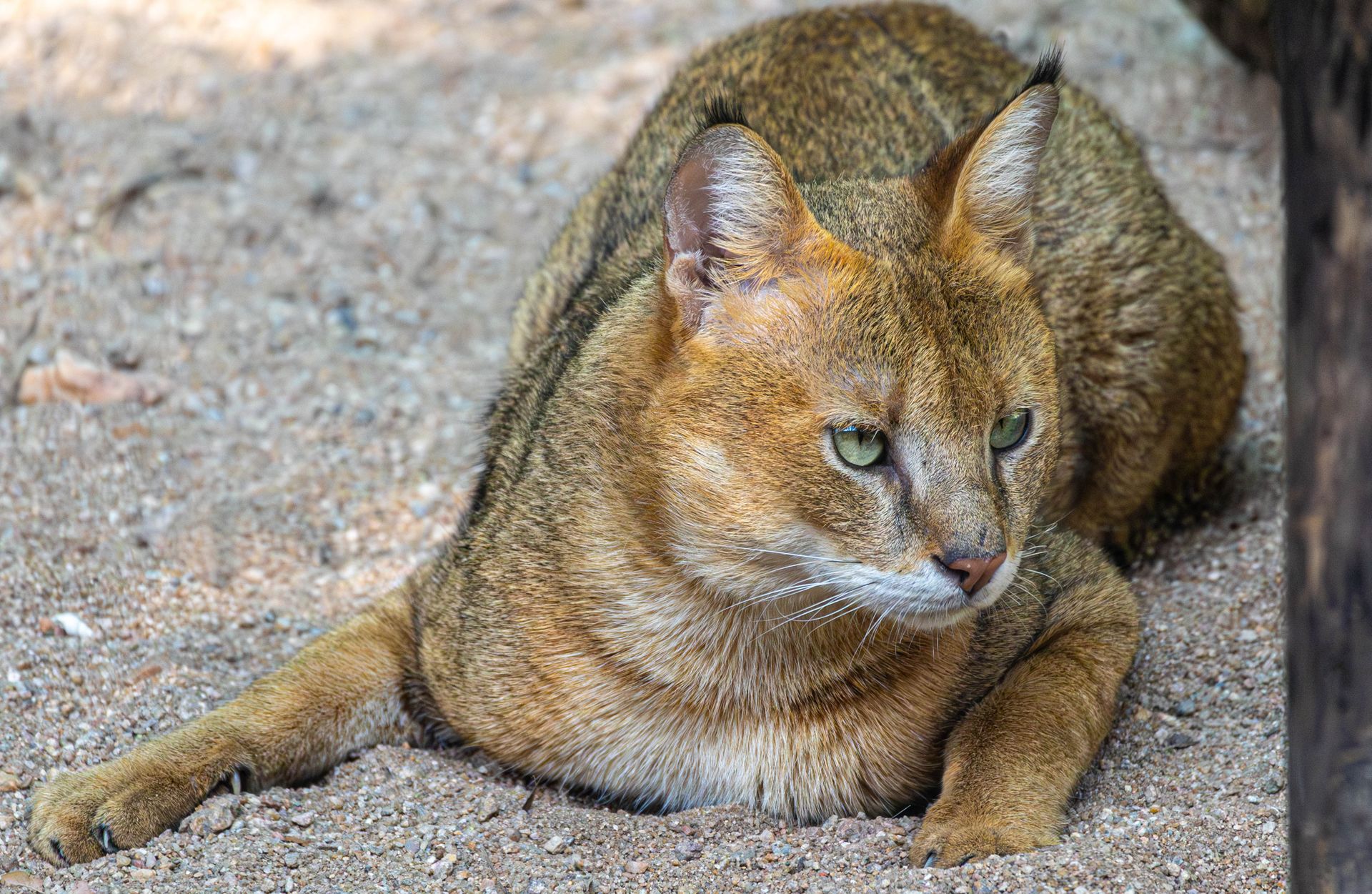
Figure 5 illustrates the levels of genetic dispersion inside and outside protected areas for African wildcats.
A box-and-whisker plot is used to visualize this data, with samples collected between 0 and 5 km of a protected area classified as "inside" and those collected more than 5 km away classified as "outside".
47 samples were collected inside protected areas, while 53 samples were collected outside.
Bayesian assignment values to the AWC genetic cluster were significantly less dispersed for African wildcats inside protected areas compared to those from outside protected areas.
This was determined using the Kruskal–Wallis test, which yielded a χ value of 5.2705 and a P value of 0.02169, with a degree of freedom of 99.
Featured Images: pexels.com