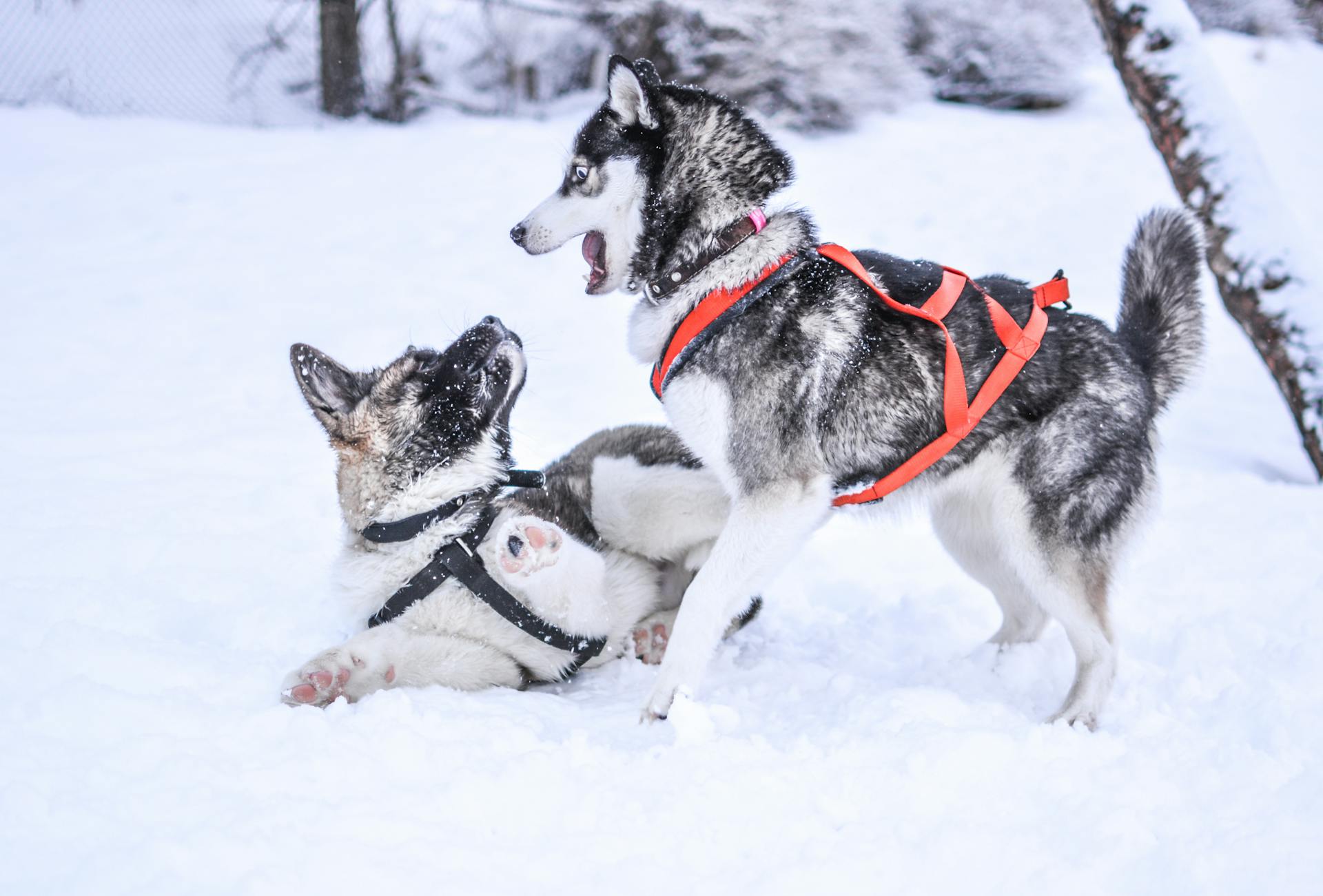
Sledge dogs are incredibly resilient and can thrive in some of the world's most remote regions. In Greenland, they're used to pull sleds through harsh Arctic conditions.
Their thick coats and compact bodies make them well-suited for the cold climate. In fact, they have a unique adaptation that allows them to conserve heat by reducing blood flow to their extremities.
In Canada's Yukon, sledge dogs are used to transport goods and supplies to remote communities. They're an essential part of the local economy and way of life.
Recommended read: How Do Service Dogs Help
History
Sled dogs have a rich history that spans across several countries and regions, including Canada, Greenland, Siberia, Russia, Norway, Sweden, and Alaska.
The use of sled dogs dates back to the native and Inuit people in the northern regions of Canada, where the practice of mushing originated.
Archeologists have theorized that the original sleds were much different than they are today, but their purpose remains the same - to transport people and goods across snowy terrain.
Sled dogs have been an integral part of the culture and way of life in these regions for centuries, and their importance cannot be overstated.
Geographical Regions
Sledge dogs can be found in various geographical regions, including Alaska, Canada, and Greenland. These regions provide the harsh, cold climates that sledge dogs are well adapted to.
The Arctic tundra of Alaska is home to many sledge dog breeds, including the Alaskan Malamute and the Siberian Husky. These breeds have been bred for centuries to withstand the extreme temperatures and conditions of the region.
Sledge dogs are also found in Canada, where they are used for transportation and recreation in the northern territories. The Inuit people of Canada have a long history of using sledge dogs for hunting and transportation.
Curious to learn more? Check out: Dog Sledding in Anchorage Alaska
Russia
Russia is a vast and rugged country with a rich history of dog sledding. The domestic dog was present in what is now northeastern Siberia 9,000 years ago.
Dogs were selectively bred for specific tasks, such as sled pulling and hunting. The optimal size for a sled dog is 20-25 kg (44-55 lb) for thermo-regulation.
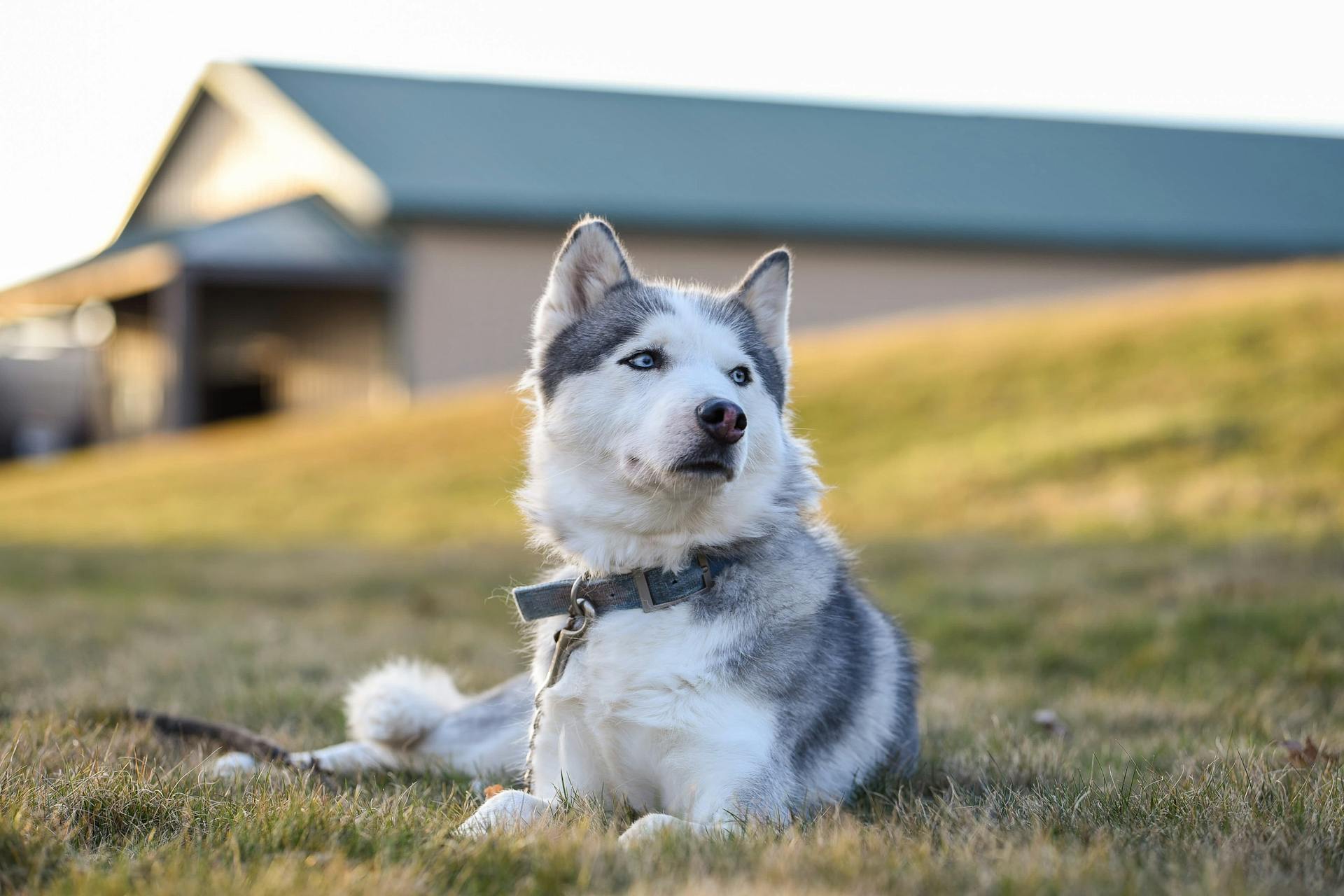
The Siberian Husky breed standard has its roots in ancient sled dogs from this region. These dogs were between 16 and 25 kg (35 and 55 lb) in weight.
The Kungur Chronicle and Remezov Chronicle mention people living along Siberian rivers, whose primary means of transport was riding on reindeer or dogs. Rivers with fish were called "dog rivers" because they were rich in fish for the dogs to eat.
Dogs were essential for transportation and hunting in Siberia. The breed population reached an all-time low of 3,000 in 1998 before revival efforts took off.
Here's a breakdown of the decline of Russian dog sled numbers:
- Introduction of mechanization in the Arctic
- Reduced capacity to keep dogs, especially with reduced fish catches and collectivization of farming and reindeer herding.
- Decline of fur hunting.
Sakhalin
Sakhalin is an island located off the coast of Russia, known for its harsh climate and rugged terrain.
The Sakhalin Husky, a breed of sled dog, was developed on this island and is prized for its hardiness and great temperament.
Sakhalin huskies were used by the Soviet army for hauling gear in harsh conditions prior to World War II.
Unfortunately, with the advent of mechanized travel, the Soviet officials determined that maintaining Sakhalin huskies was wasteful and exterminated them, leaving only a handful in Japan and approximately 20 on Sakhalin Island.
Iditarod and Alaska
The Iditarod Trail was established on the path between Nenana and Nome, Alaska, a distance of over 970 km (600 mi) that was inaccessible except by dog sled.
The trail was used to relay serum to Nome in 1925 to combat a massive diphtheria outbreak. The serum was delivered in six days by a dog sled relay of 20 teams.
The modern Iditarod is a 1,800 km (1,100 mi) endurance sled dog race that usually lasts for ten to eleven days, weather permitting. It's billed as the "World Series of mushing events" and "The Last Great Race on Earth".
The race begins with a ceremonial start in Anchorage, Alaska, and ends in Nome, where the winner receives a prize of US$50,000.
North America
North America is home to the Iditarod Trail, a 1,000-mile route that spans from Anchorage to Nome, Alaska.
The Iditarod Trail was originally used by the indigenous peoples of Alaska, including the Inupiat and Yupik, for centuries.
The trail was also used by Russian fur traders and American prospectors in the 19th century.
The Iditarod Trail is now a National Historic Trail and a popular destination for hiking and dog sledding.
The Iditarod sled dog race, which takes place every March, follows this historic trail and is a testament to the region's rich history and culture.
The race typically starts in Anchorage and ends in Nome, with teams facing extreme temperatures, icy terrain, and other challenges along the way.
Antarctica
Antarctica is a frozen desert continent located almost entirely within the Antarctic Circle. It's about 98% covered in ice, with an average elevation of about 7,500 feet.
The harsh climate of Antarctica is similar to that of Alaska, with temperatures often dropping below -40°C in winter. The coldest temperature ever recorded was -128.6°F in Antarctica's Plateau Station.
The unique wildlife of Antarctica is adapted to its extreme environment, with species like penguins and seals thriving in the cold waters surrounding the continent. These animals can be found in the same waters as the marine life of Alaska, such as whales and sea lions.
The Antarctic Treaty, signed in 1959, established Antarctica as a natural reserve, devoted to peace and science. This treaty was signed by 12 nations, including the United States, which also signed the Iditarod's founding treaty in 1973.
Iditarod in Alaska
The Iditarod in Alaska is a world-renowned sled dog racing event that takes place every year. The trail was established in 1925 after a massive diphtheria outbreak in Nome, Alaska, where a dog sled relay was set up to deliver serum to the town.
The Iditarod Trail is approximately 1,800 km (1,100 mi) long and spans from Anchorage to Nome. The trail was originally known as the Iditarod Trail because Iditarod was the largest town on the trail at the time.
The modern Iditarod is a 10- to 11-day endurance sled dog race that begins with a ceremonial start in Anchorage. Mushers run 32 km (20 mi) to Eagle River along the Alaskan Highway before the teams are loaded onto trucks and driven to Wasilla for the official race start.
The winner of the Iditarod receives a prize of US$50,000. The race has been billed as the "World Series of mushing events" and "The Last Great Race on Earth."
If you're interested in experiencing the thrill of dog sledding, there are several tour options available in Alaska. The Alaska Mushing School offers private tours where you can ride behind a team of energetic sled dogs on trails connected to the famous Iditarod route.
Here are some fun facts about the Iditarod and sled dogs:
- Balto, the lead dog of the sled dog team that carried the diphtheria serum to Nome in 1925, has a bronze statue in Central Park near the Tisch Children's Zoo.
- Anna, a small sled dog, ran on Pam Flower's team during her expedition to become the first woman to cross the Arctic alone.
- Blind sled dogs can continue to run, either on their own or with assistance from other dogs on the team.
These tours offer a unique opportunity to experience the excitement of racing champion sled dogs and learn about the mushing lifestyle from veterans of the Iditarod and Yukon Quest races.
Breeds and Types
Sled dog breeds can be divided into sub-types, including sprint dogs bred to pull sleds quickly, freight dogs bred to pull massive weights, and long distance dogs bred to travel hundreds or even thousands of miles.
Sprint dogs typically have short coats that let heat out, while freight dogs have dense, warm coats to hold heat in. Most sled dogs have a double coat, with the outer coat keeping snow away from the body, and a waterproof inner coat for insulation.
A dog's appetite and temperament are also important considerations when choosing a sled dog. Picky dogs may be pickier on the trail, and sled dogs need to be fed high-fat diets to keep them energized. They also need a lot of exercise and should not be overly aggressive with other dogs.
Here are some common sled dog breeds:
- Siberian Husky: Smaller than the Alaskan Malamute, Siberian Huskies pull more, pound for pound, than a Malamute.
- Alaskan Husky: A mix of different inuit and polar dogs, hunting dogs, and possibly others, Alaskan Huskies are well-suited for hard work and can handle great variations in weather and temperature.
- Eurohound: A type of dog bred for sprint-style sled dog racing, Eurohounds are typically crossbred from the Alaskan husky group and any of a number of pointing breeds.
Scandinavia
In Scandinavia, skijor and pulka style dog sled racing gained rapid popularity after World War II. This style of racing required small, fast teams of 1-4 dogs who competed over short, hilly distances of 15–30 km (9.3–18.6 mi).
The Norwegian Sled Dog Racing Association initially required purebred dogs, leading to the German Shorthair Pointer emerging as the breed of choice. This led to the development of the "sled pointer", a pointing dog bred exclusively for sledding.
The 1970s saw the introduction of "Nome-style" sled racing, which mimicked long-distance sled dog teams seen in North American-style races. This style of racing attracted interest in Scandinavia and was first hosted in 1974 as the Skjelbreia Sweepstakes.
Norwegian mushers imported Alaskan huskies for this style of racing, popularized by mushers like Stein Havard Fjelstad and Roger Leegaard who traveled to Alaska to race in the Iditarod. However, the Alaskan husky couldn't be legally raced in Norway until 1985 due to breed requirements.
The removal of breed requirements in 1985 paved the way for Nordic-style mushers to breed their best performing dogs regardless of breed. This led to the development of crossbreeds like the Eurohound and the Greyster.
Related reading: Are Malamutes Good Guard Dogs
Malamute
The Alaskan Malamute is a large, strong freight dog, weighing between 36 and 54 kg (80 and 120 lb). They have round faces with soft features and broad chests, thick coats, and tough feet.
These dogs are bred for pulling strength, not speed, making them perfect for expedition and long adventure trips, and hauling heavy loads. They were even the dog of choice for hauling and messenger work in World War II.
Alaskan Malamutes are thought to be one of the first domesticated breeds of dogs, originating in the Kotzebue Sound region of Alaska. They are known for their ability to handle tough conditions, which is why they're often used in dog sledding.
Here's a comparison of the Malamute's characteristics:
Their unique characteristics make them a valuable asset for sled teams, and they're still used today for dog sledding and other forms of sled pulling.
Siberian
The Siberian Husky is a smaller breed than the Alaskan Malamute, but it pulls more, pound for pound.
Siberian Huskies stand 510-600 mm tall, weigh between 16 and 27 kg, and have been selectively bred for both appearance and pulling ability.
They are descended from sled dogs bred by the native Chukchi people of Siberia and were used as working dogs and racing sled dogs in Nome, Alaska.
Siberian Huskies were used regularly in the 1910s as sled dogs in Nome, Alaska, often dominating the All-Alaska Sweepstakes.
The Samoyed was also developed by the Samoyede people of Siberia, who used their dogs to herd reindeer and hunt, in addition to hauling sleds.
Siberian Huskies weigh between 16 and 23 kg for females and 20-27 kg for males.
Readers also liked: Dogs Used in Warfare
Training
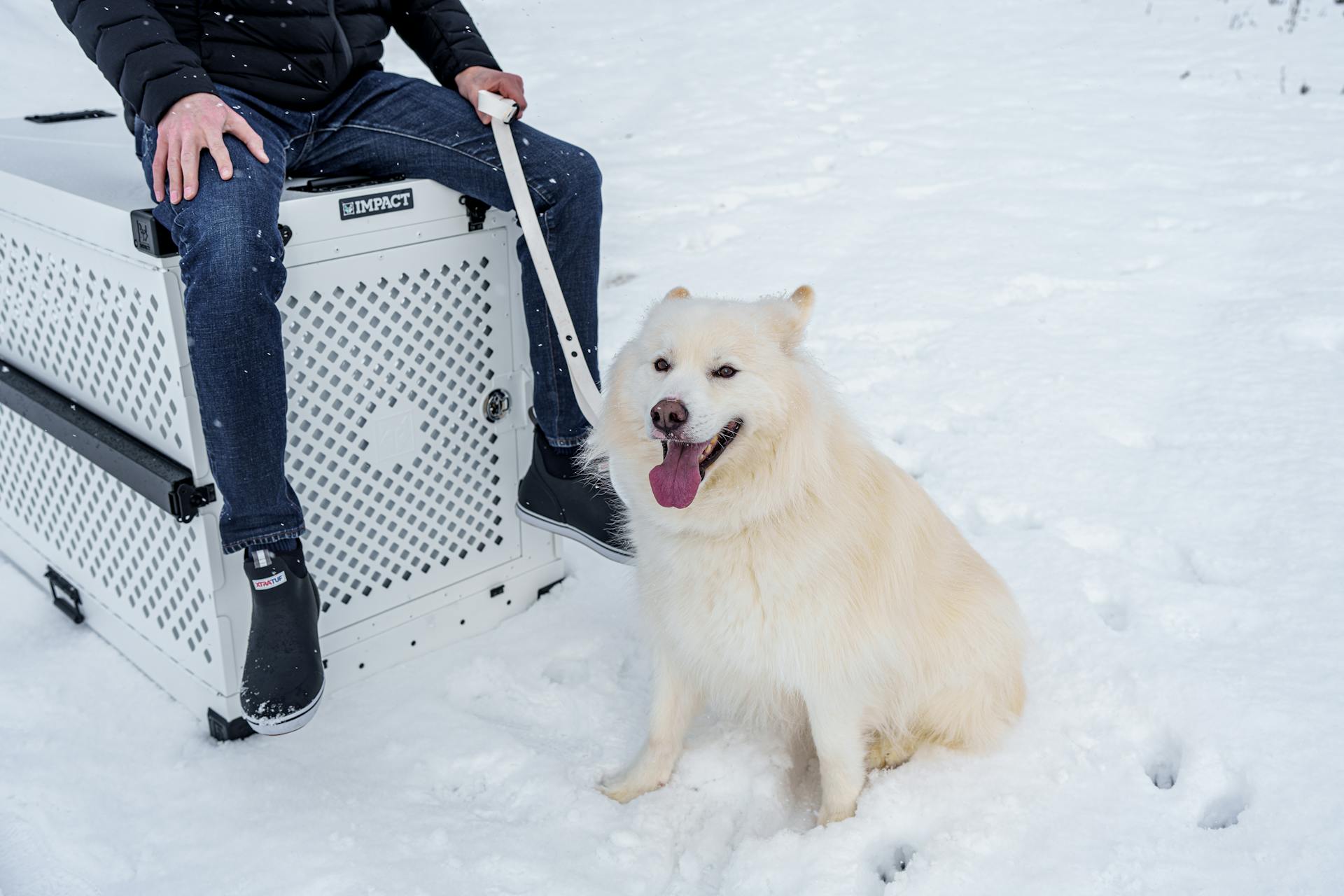
Training your dog for sledding is a serious commitment that requires professional guidance. Enlist the help of a professional trainer for the best results.
Dogs can begin their training at 9 months old.
Their training can continue until they are 10 years old.
As your dog ages, sledding can be tough on their joints, so it's recommended to retire them at 10 years old.
Tours and Expeditions
If you're looking for a unique way to experience dog sledding, consider taking a tour or expedition with one of Alaska's many experienced guides. From fly-in luxury lodges to dog sledding with Iditarod champions, there's an adventure for every interest and skill level.
You can choose from a variety of tour options, such as visiting the iconic Alaskan sport of dog mushing at Happy Trails Kennel, where you can even experience a dog sled ride yourself. Some tours, like those offered by Seavey's IdidaRide Sled Dog Tours, will take you on a thrilling two-mile dog sled ride through rainforest and mountainous terrain.
Whether you're interested in learning about the sport, meeting the dogs, or simply experiencing the thrill of dog sledding, there's a tour or expedition that's right for you.
Iniakuk Lake Wilderness Lodge & Expeditions
Located 200 miles north of Fairbanks and 60 miles above the Arctic Circle, Iniakuk Lake Wilderness Lodge is a family-owned, fly-in luxury wilderness lodge that offers exclusive stays.
The lodge is only accessible by air, adding to its remote and secluded charm. It's a unique opportunity to experience the wilderness in style.
Stays at the lodge are all-inclusive, meaning you'll have everything you need right at your fingertips. The lodge's huge picture windows make it easy to keep a lookout for the northern lights from a warm and comfortable interior.
Imagine sipping hot cocoa while watching the aurora borealis dance across the night sky – it's a truly magical experience.
Northstar Helicopters Adventure
If you're looking for an adrenaline-packed adventure, Northstar Helicopters has got you covered. Their Glacier Dog Sled Adventure combines a scenic flightseeing helicopter tour with the exhilaration of dog mushing on a glacier with a team of Alaskan Sled dogs.
You'll get great views from above, and then experience the thrill of dog mushing on a glacier.
Temsco Mendenhall Trekking
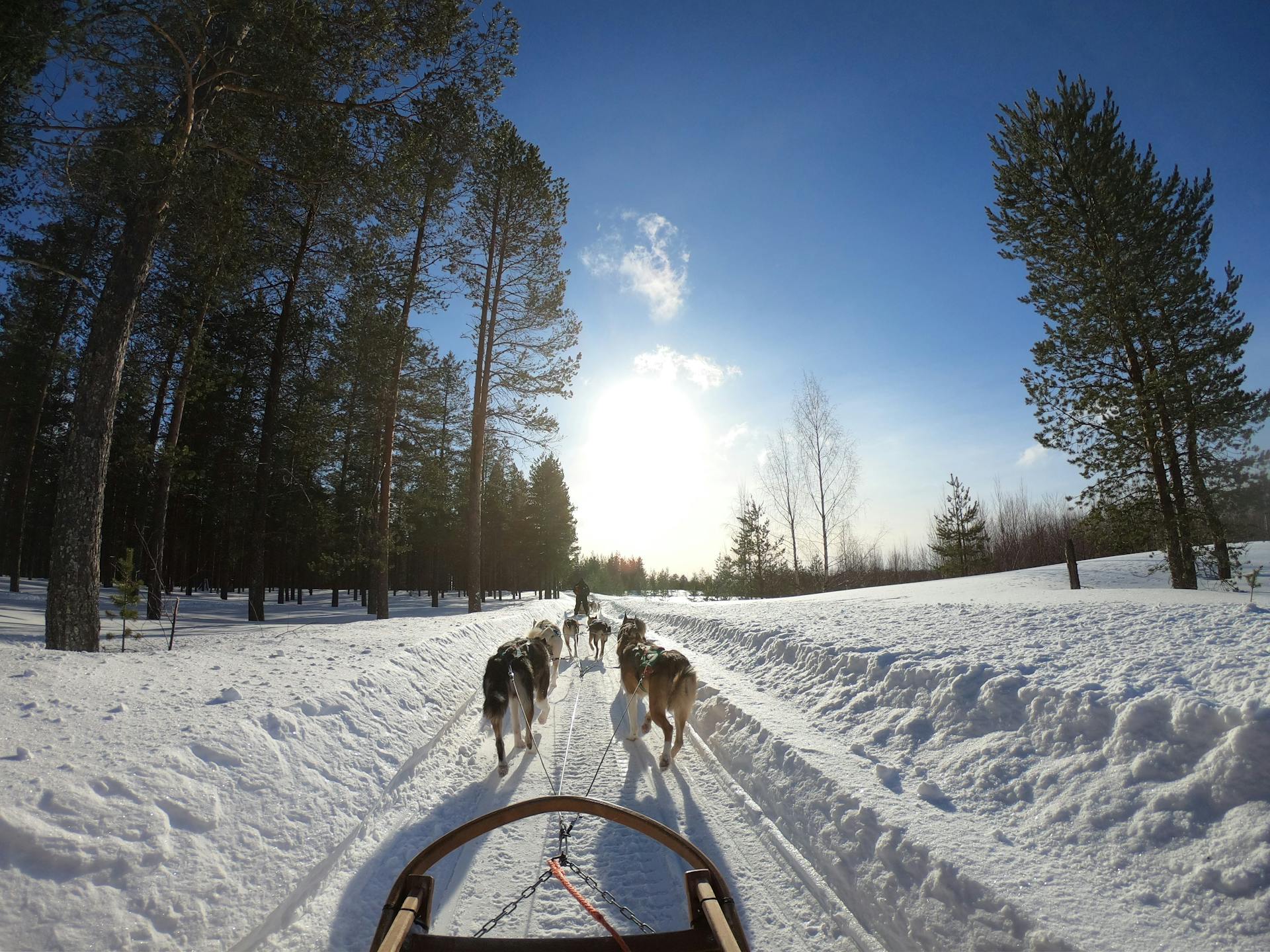
If you're looking for a truly unique adventure, consider the TEMSCO Mendenhall Dog Sledding experience. You'll ride a TEMSCO helicopter over the stunning landscape surrounding Juneau.
The helicopter will take you over the gorgeous scenery, offering breathtaking views of the surrounding mountains and glaciers. Then, you'll land near the Mendenhall glacier, where a team of energetic huskies will be waiting to take you on a thrilling dog sledding tour.
This ancient, snow-packed glacier is a sight to behold, and the huskies will expertly navigate the terrain, giving you a thrilling ride.
Adventures
If you're looking for a unique adventure, consider dog sledding in Alaska.
You can experience the thrill of running Iditarod sled dogs and even get to drive one with Snowhook Adventure Guides of Alaska. They offer dog sled tours year-round, so you can choose a summer or winter adventure.
For a chance to meet the dogs and hear about their experiences, visit Salmon Berry Tours Dog Sledding. They take you to the kennel of Iditarod Champion Dallas Seavey, where you can see a gear demonstration and ride on the sled behind the dogs.
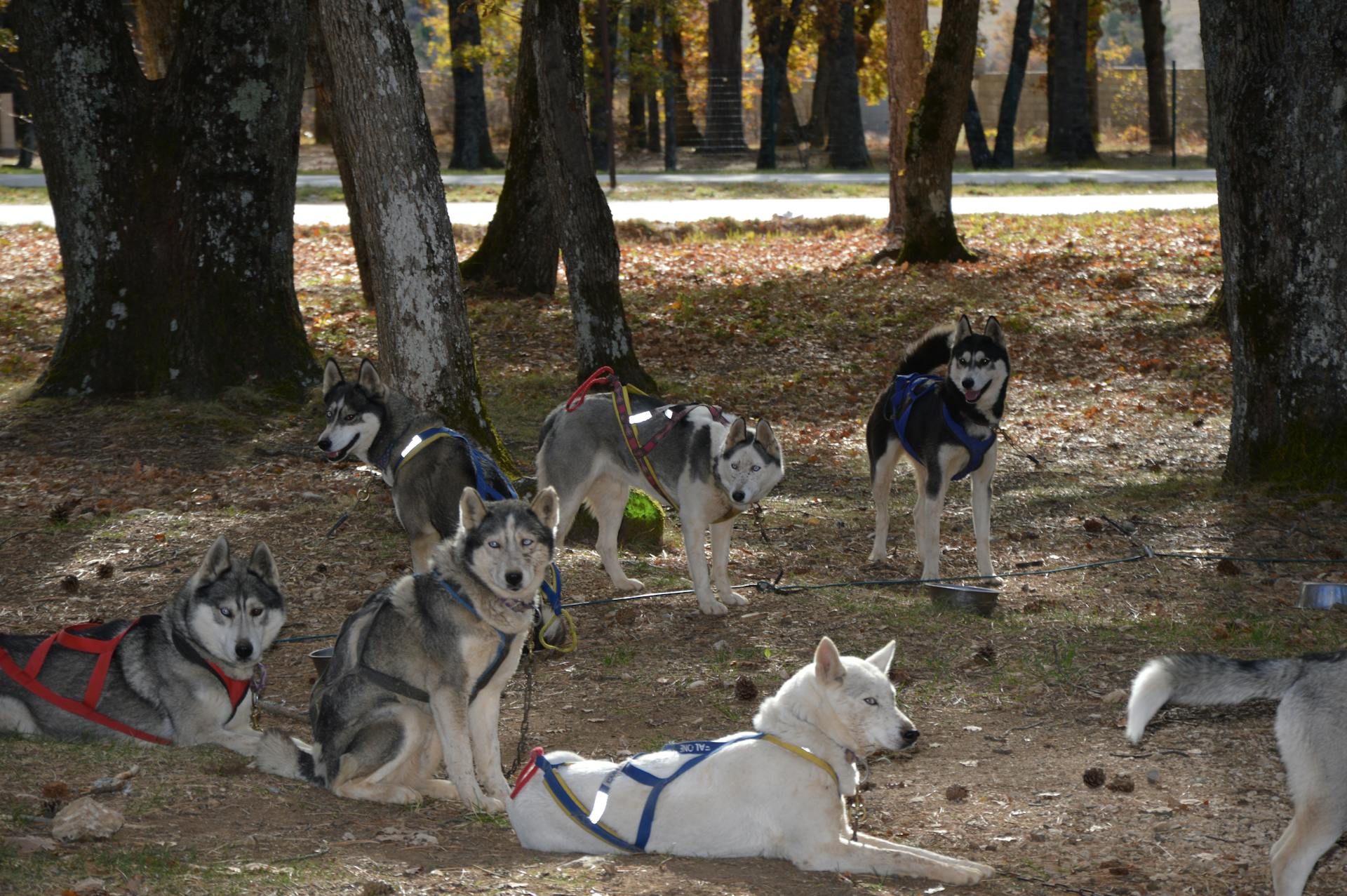
Seavey's IdidaRide Sled Dog Tours is another great option, offering a two-mile dog sled ride through rainforest to a river-cut canyon surrounded by mountains. You'll also get to tour the racing kennel and meet the dogs.
If you're interested in learning about the sport, consider Paws for Adventure, which offers dog sled tours, mushing school, and multi-day adventures to the historic Tolovana Roadhouse.
In Fairbanks, you can visit the world's oldest Siberian Husky kennel with Arctic Dog Adventure Co. They offer tours ranging from a few hours in the summer to multi-day winter adventures.
For a truly authentic experience, visit Susitna Sled Dog Adventures in Talkeetna, where you can meet the dogs and learn about racing them. In the winter, you can even hop on a sled to feel what dog mushing is like.
Alaskan Husky Adventures in Big Lake offers a family-run champion kennel experience, where you can meet friendly dogs and an experienced musher for a ride along private trails with views of Denali.
If you're looking for a scenic flightseeing helicopter tour combined with dog mushing, consider NorthStar Helicopters Glacier Dog Sled Adventure. You'll get great views and some hands-on fun on a glacier with a team of Alaskan sled dogs.
Recommended read: Alaskan Husky Sled Dog
For a more in-depth experience, visit Alaska Mushing School, where you can ride behind a team of energetic sled dogs on trails connected to the famous Iditarod route. You can even learn to drive the team yourself!
Another great option is Alpine Air Alaska - Girdwood Glacier Dogsledding, where you can try your hand at dogsledding with a helicopter tour to a dog camp run by the oldest established dog-sled tour business in Alaska.
The Snowhook is an essential tool for dog sledding, acting as an anchor to keep the sled in place when you make stops along your journey. It's like a parking brake for your dog sled!
Choosing and Caring
Choosing a sled dog requires careful consideration of their size, strength, and stamina. Most sled dogs weigh between 16 and 32 kg, but the ideal weight can vary depending on the dog's breed and intended use.
Sled dogs come in a variety of breeds, but Alaskan Malamutes, Siberian Huskies, and Canadian Inuit Huskies are the most commonly used for dog sledding. These breeds have unique characteristics that make them well-suited for the sport.
- Sled dogs need to be able to take in high-fat diets to cover their caloric needs.
- They should also be able to regulate their body temperature, as they can easily overheat in warm weather.
- Sled dogs need to be able to work well with other dogs, so aggression towards other dogs is a major concern.
In terms of caring for sled dogs, it's essential to provide them with proper training, regular vet checkups, and a healthy diet. Sled dogs love to run and exercise, so make sure they get plenty of physical activity.
Choosing the Ideal
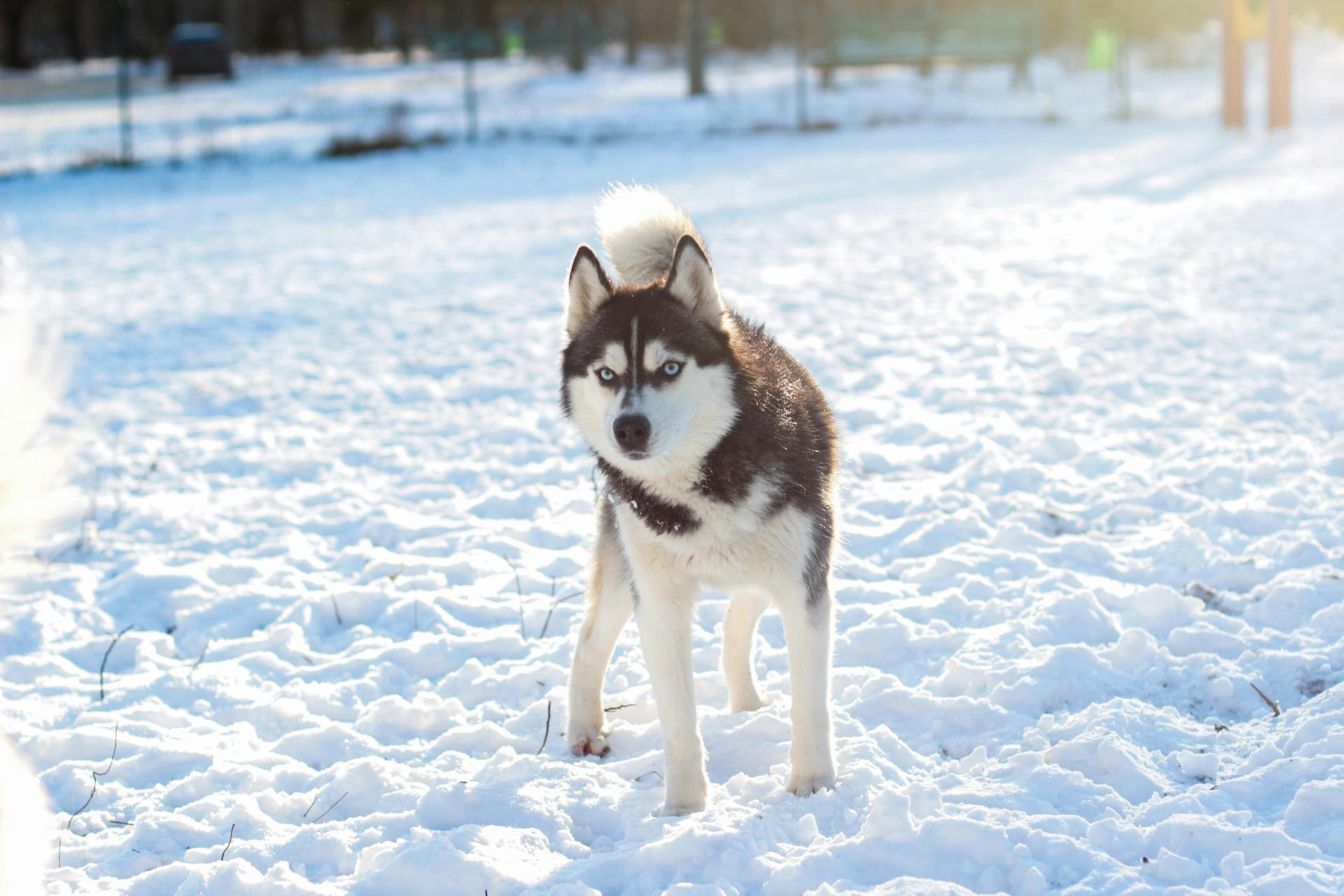
Sled dogs were originally chosen based on size, strength, and stamina, but nowadays, competitive sled dogs are bred mainly for speed and endurance.
Most sled dogs weigh around 25 kg, but they can weigh as little as 16 kg and as much as 32 kg.
A well-balanced team of dogs with similar size and gait is essential for improved efficiency.
Sled dogs are able to run up to 45 kph, partly thanks to their tough, webbed feet acting as snowshoes on the trail.
To keep their extremities warm, dogs have a couple of very useful features: their tails serve to protect their nose and feet from freezing, and they have a unique arrangement of blood vessels in their legs to help protect against frostbite.
Sled dogs need to be able to take in high-fat diets to cover their caloric need, and they cannot be overly aggressive towards other dogs.
The following breeds are the most commonly used for dog sledding: Alaskan Malamutes, Siberian Huskies, and Canadian Inuit Huskies.
Here's a brief summary of the characteristics to look for in a sled dog:
Equipment
Invest in a good harness for your dog, such as an X-back racing harness or a sled pro harness, to optimize their pulling capabilities.
You should ensure the harness is properly fitted to avoid any discomfort or choking. The sled pro harness, in particular, requires accurate measurements of the neck, back, and chest to prevent any issues.
Dog booties are a must-have for dog mushing in freezing temperatures. They protect the pads of your dog's feet from sharp ice and objects on the terrain.
Neewa's Cordura booties are a great option, designed to protect sled dog feet in professional racing and activities on compact snow. They're easy to put on and off, with a secure stretch Velcro fastening design.
Denali National Park and Preserve
Denali National Park and Preserve is a must-visit destination for dog sledding enthusiasts. You can assemble your team or borrow the dog teams provided by the sled dog kennel at Denali.
A unique perspective: Dog Sledding in Denali
The park offers several sledding trails, making it easy to plan your adventure. Campsites are available along the way, allowing you to rest your dogs and take a break.
If you want to bring your own dog sled team, Denali provides several ideal routes for dog sledding. The park's sled dog kennel is a great place to visit and say hello to the resident sled dogs.
Denali National Park and Preserve is a unique opportunity to experience the magic of dog sledding in a breathtaking natural setting. You can truly experience the essence of the park by dog sledding through its trails.
Check this out: Is It Safe to Take Dogs to the Dog Park
General Information
Sledge dogs are an ancient breed, with a history dating back over 4,000 years to the time of the Inuit people.
They were originally bred to pull heavy loads, such as sleds and carts, through the harsh Arctic terrain.
Sled dogs are incredibly strong, with some breeds capable of pulling loads of up to 1,000 pounds.
Their thick coats and layers of fat help them conserve heat in freezing temperatures, allowing them to thrive in environments where other dogs would struggle to survive.
Sled dogs can run at speeds of up to 25 miles per hour, making them well-suited for long-distance travel.
Frequently Asked Questions
What is the meaning of sledge dog?
A sledge dog is a trained dog that pulls a sled, often in a team. It's commonly associated with breeds like the Alaskan Malamute.
What is happening to sled dogs in Greenland?
Sled dogs in Greenland are struggling due to climate change, which is reducing the availability of sea ice for hunting and fishing, forcing their owners to switch to boats. This shift is impacting the traditional way of life for sled dog owners in Greenland.
How old is the Greenland sled dog?
The Greenland sled dog has its roots in dogs that arrived in the Americas around 12,000 years ago and in Greenland specifically around 4,000 years ago. This ancient lineage has been shaped by thousands of years of adaptation to the Arctic environment.
Featured Images: pexels.com