Keeping exotic animals in captivity can be detrimental to their well-being and even pose a risk to human safety.
Many exotic animals, such as big cats and bears, are naturally inclined to roam free and have complex social needs that cannot be met in captivity.
The risk of escape is a significant concern, as seen in the example of a tiger that escaped from a private zoo in California, highlighting the potential dangers to humans and the animal itself.
In addition to the risks, keeping exotic animals in captivity can also perpetuate the exotic animal trade, which is often linked to animal cruelty and exploitation.
Dangers of Keeping Pets
Keeping exotic animals as pets is a recipe for disaster. The American Veterinary Medical Association, the United States Department of Agriculture, and the Centers for Disease Control and Prevention have all expressed opposition to the possession of certain exotic animals by individuals.
Exotic animals are wild and don't adjust well to a captive environment. An estimated 5,000 tigers alone are held by private individuals, which is a staggering number.
These animals require special care, housing, diet, and maintenance that the average person cannot provide. They suffer due to poor care and pose safety and health risks to their owners and anyone coming into contact with them.
Individuals often attempt to change the nature of the animal rather than the nature of the care provided. This can involve confinement in small, barren enclosures, chaining, beating, or even painful mutilations like declawing and tooth removal.
In the end, many exotic animals are euthanized, abandoned, or doomed to live in deplorable conditions. This is because zoos and accredited institutions can't accommodate the number of unwanted exotic animals.
The Pet Trade
The pet trade is a complex issue that involves the capture, transportation, and sale of exotic animals for the purpose of keeping them as pets. Millions of animals are provided to the exotic pet trade every year.
More than 1,000 Internet sites offer to sell, give care advice, and provide chat rooms where buyers and sellers can haggle over a price, making it absurdly easy to obtain an exotic pet.
The Animal Finders' Guide carries ads from dealers, private parties, breeders, ranchers, and zoos offering large cats, monkeys, and other exotic animals for sale, without mentioning the dangers, difficulties, and physical and physiological needs of the animals.
Many animals start their lives in the wild before being abruptly and cruelly ripped from their home and family to become a pet. An estimated 90% of traded reptile species, and 50% of individually traded reptiles, are caught from the wild.
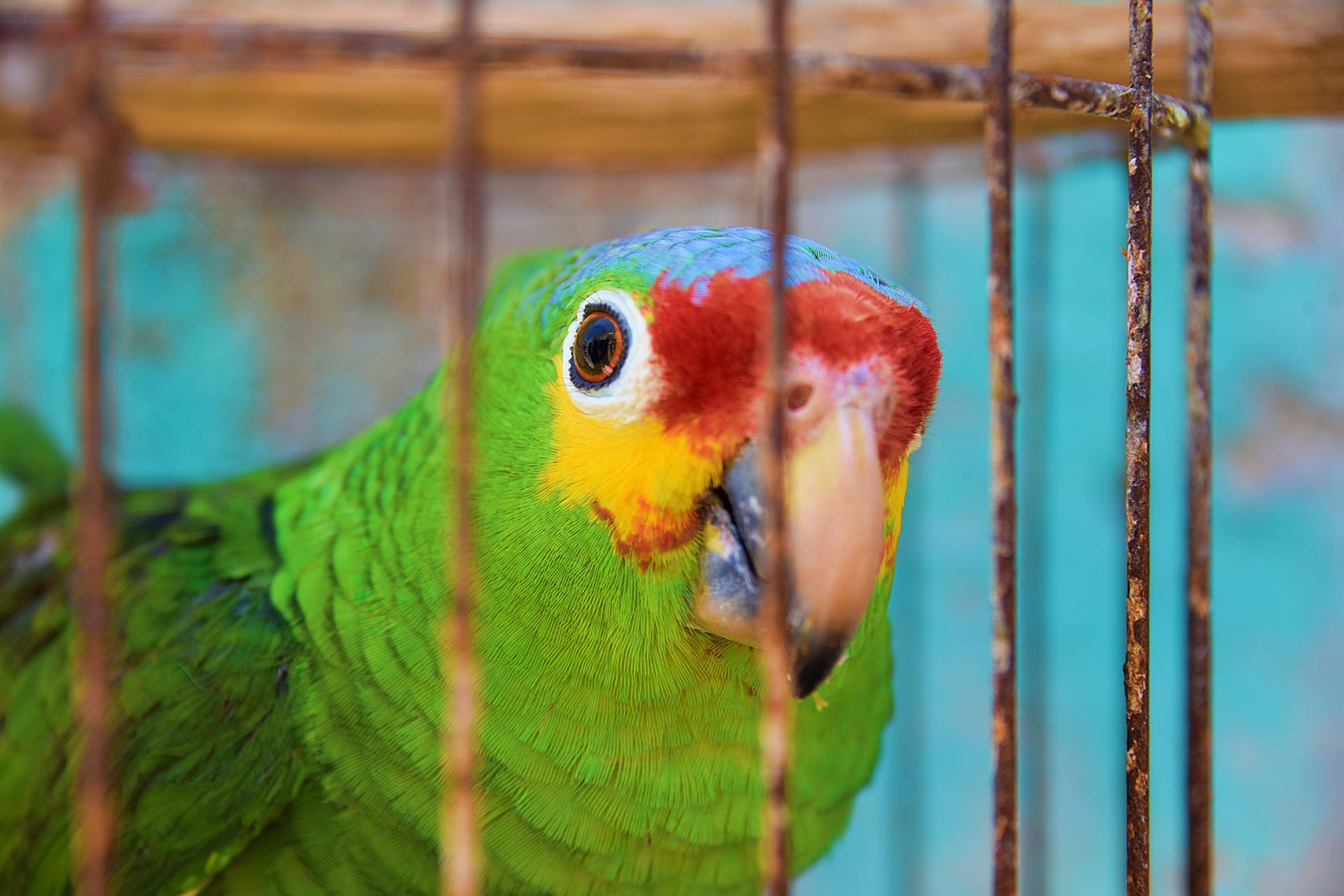
The tactics used to capture these wild animals are utterly inhumane, including the use of live bait to attract and trap wild macaws. The method involves tying a live bird to the ground or a tree, where they would serve as bait, attracting other concerned macaws who were themselves trapped and stolen from their homes.
Between 30-60% and as high as 70% - 90% of African grey parrots die during transportation, and those that survive must spend days or weeks among their deceased relatives.
Expand your knowledge: How Long Do American Bald Eagles Live
Public Safety and Health Risks
Exotic animals pose a significant risk to public safety and health. These animals can attack humans and other animals, and even escape from their enclosures to roam freely in the community.
Children and adults have been mauled by tigers, bitten by monkeys, and asphyxiated by snakes. In fact, 52 people reported being bitten by macaque monkeys between 1990 to 1997, according to the CDC.
Monkeys, in particular, become aggressive and unpredictable around the age of two, making them a serious safety concern. Males tend to become aggressive, and both males and females bite to defend themselves and establish dominance.
Reptiles, including snakes and lizards, also pose a safety risk to humans. Snakes have the potential to inflict serious injury through a bite or constriction, with over 7,000 venomous snake bites reported annually in the United States.
Exotic animals can also carry zoonotic diseases, which can be transmitted from animals to humans. In fact, more than 50 diseases have been linked to the keeping of exotic pets, including salmonellosis from hedgehogs and iguanas, and ringworm infections from chinchillas.
Suggestion: Why Are Humans Cruel to Animals
Human Health Risk
Wild animals can pose a significant risk to human health, with zoonotic diseases causing approximately a billion cases of human illness and millions of deaths every year.
The World Health Organization and most infectious disease experts agree that the origins of future human pandemics are likely to be zoonotic, with wildlife emerging as the primary source.
75% of new or emerging infectious diseases over the past decades originated from animals and principally from wildlife.
Diseases such as SARS, MERS, Ebola, and COVID-19 all have an origin in wildlife.
Having a wild animal in your home can be a risk to your health, with over 50 diseases linked to the keeping of exotic pets.
Exotic pets can be a source of a wide range of zoonotic diseases, from salmonellosis from hedgehogs and iguanas to more severe diseases such as rabies from marmosets.
Worth a look: Prairie Dog Diseases
Public Safety Risk
Exotic animals pose a significant public safety risk due to their inherent danger to humans and other animals. Many incidents have been reported across the country where exotic animals attacked humans and other animals, and escaped from their enclosures.
Consider reading: Do African Wild Dogs Attack Humans
Children and adults have been mauled by tigers, bitten by monkeys, and asphyxiated by snakes. These animals are time bombs waiting to explode.
Monkeys, the most common non-human primates held by private individuals, begin to exhibit unpredictable behavior at the age of two. Males tend to become aggressive and both males and females bite to defend themselves and establish dominance.
According to the CDC, 52 people reported being bitten by macaque monkeys between 1990 to 1997. Owners of pet macaques are often reluctant to report bite injuries from their pets, even to their medical care providers.
Reptiles, including all types of snakes and lizards, pose safety risks to humans as well. Snakes are the most common "pet" reptiles, with about 3% of U.S. households possessing 7.3 million pet reptiles.
More than 7,000 venomous snake bites are reported annually in the United States, 15 of which result in death. Snakes have the potential to inflict serious injury through a bite or constriction.
You might enjoy: Common Snapping Turtle Bite
Private Possession Laws
There are laws regulating private possession of exotic animals, but sellers often fail to mention them.
The Animal Finders' Guide, a resource for exotic pet buyers, doesn't mention state or local laws, either.
More than 1,000 Internet sites offer to sell exotic animals, often without providing information about laws or animal care.
Sellers of exotic animals usually don't mention the difficulties and physical needs of the animals they're selling.
The suffering of animals in the hands of unqualified buyers appears to be of no concern in the lucrative exotic pet trade.
Government Agencies and Officials
Government agencies and public officials have spoken out about the risks of keeping exotic animals as pets. The American Veterinary Medical Association strongly opposes keeping wild carnivore species as pets.
The United States Department of Agriculture warns that pet reptiles can pose a risk to households with young children or immunocompromised individuals. Families expecting a new child should remove the pet reptile from the home before the infant arrives.
For your interest: Exotic Pets Cats
Buying or giving exotic pets can be dangerous to both humans and animals, according to the Centers for Disease Control and Prevention. This includes animals like monkeys, hedgehogs, prairie dogs, and reptiles.
People often underestimate the needs of exotic animals, notes Veterinarian Jane Mahlow. They may buy a kitten thinking it will be a small pet, but it will grow up to be 500 pounds and require a massive amount of food.
On a similar theme: Will Black Vultures Attack Small Dogs
Zoos and Aquariums
The BC SPCA is opposed to keeping wild and exotic animals in captivity, unless the Five Freedoms can be met. This is impossible for intelligent and social animals like primates, elephants, and cetaceans.
Meeting the Five Freedoms is a challenge, especially for animals with large home ranges like bears, lions, tigers, and other big wild cats.
Phasing out collections of these animals is a step in the right direction.
Zoos
The BC SPCA is opposed to keeping wild and exotic animals in captivity unless the Five Freedoms can be met. This is impossible for intelligent and social animals like primates, elephants, and cetaceans.
Creating species-specific enclosures that meet the physiological, emotional, and behavioural needs of the animals is a must. This means providing animals with the right environment to thrive, both on and off exhibit.
The VHS is fighting to improve the conditions of animals living in zoos, working with organizations like Zoocheck Canada to expose poor conditions and hold zoos accountable.
Broaden your view: Are Zoos Cruel to Animals
Aquariums
Aquariums are still holding on to cetaceans like whales and dolphins, even after Canada banned their captivity in 2019.
The VHS has been pushing for better regulations on keeping exotic and wild animals in aquariums.
Many aquariums around the world continue to hold marine mammals in captivity.
The VHS has been calling for in-depth provincial regulations to improve the treatment of these animals.
Circuses and Entertainment
The BC SPCA is opposed to using wild and exotic animals in circuses or in travelling exhibitions. Some circuses still exist in Canada, which is concerning.
Zoocheck Canada is a national charity dedicated to protecting wildlife in captivity and in the wild. It has information on circuses and the welfare of circus animals in Canada.
Using wild and exotic animals as mascots is unnecessary and inhumane.
On a similar theme: Wild Cats in Canada
Freedom and Welfare
Keeping exotic animals in captivity can be detrimental to their welfare.
Wild animals are not suited for life in captivity, as they are deprived of the ability to freely engage in instinctual behaviours in their natural environment.
Even when bred in captivity, exotic animals retain the behavioural and biological needs that they would have in the wild.
They cannot be considered domesticated and they can suffer if they are confined in unnatural environments.
This is because their natural habitats and social structures are impossible to replicate in captivity.
Regulations and Rules
In some places, like British Columbia, local governments can be called upon to support stronger rules for exotic pet and mobile animal programs.
Residents of B.C. can make a difference by contacting their local government to endorse a resolution seeking better protections.
To address concerns about exotic animals in captivity, regulations and rules can play a crucial role.
B.C. residents can take action by calling on their local government to endorse a resolution seeking stronger protections.
The specifics of these regulations and rules can vary, but they often involve seeking stronger protections for exotic animals.
Alternatives and Solutions
If you're still unsure about keeping exotic animals in captivity, consider alternatives like sanctuaries and rehabilitation centers. These organizations provide a safe haven for animals that have been rescued from the wild or have been kept in inhumane conditions.
Some sanctuaries, like the ones mentioned in the article, have a strict no-breeding policy to prevent further exploitation of these animals. This approach helps to reduce the demand for exotic pets and promotes the conservation of species in their natural habitats.
Alternatively, you could support conservation efforts in the wild by donating to reputable organizations or volunteering your time. This approach not only helps to protect animals in their natural habitats but also raises awareness about the importance of conservation.
Take a look at this: Animal Conservation Organizations
Time for Change
It's time for change. Over 2,300 tigers are living in captivity in Canada, often as "pets". This needs to stop.
The Jane Goodall Act, reintroduced in March 2022, aims to protect vulnerable exotic and wild animals in captivity. If passed, it would ban new captivity for over 800 species, including elephants, great apes, and big cats.
The bill also targets the trade in elephant and ivory horns, as well as hunting trophies. This is a crucial step towards ending the exploitation of these animals.
The bill represents a unique coalition of government, animal welfare groups, and accredited zoos. Senator Marty Klyne notes that supporting this bill is an act of reconciliation, recognizing Indigenous traditional values and relationships with animals.
The BC SPCA opposes the capture and confinement of marine mammals for entertainment or educational display. They believe it's not possible to fully meet the Five Freedoms.
A federal bill, Bill S-203, was passed in June 2019 to end the capture and captivity of cetaceans for entertainment in Canada.
Quick Actions
Taking quick actions can make a big difference in protecting animals in captivity. These actions can be completed in under 2 minutes and still have a significant impact.
Signing a petition is a simple and effective way to advocate for change, and it can be done in just a minute.
Breed and Trade
Wild animals bred in captivity suffer immense suffering, just like those caught in the wild. This is not a humane alternative, but rather a different form of exploitation.
The methods used to breed animals for selective traits can have a negative impact on their physical and mental health. In the case of snakes and other reptiles, the demand for unique genetically altered versions, or "morphs", is increasing.
These selectively bred reptiles often show signs of neurological disorders that impact their welfare.
Broaden your view: Venomous Reptiles
Featured Images: pexels.com