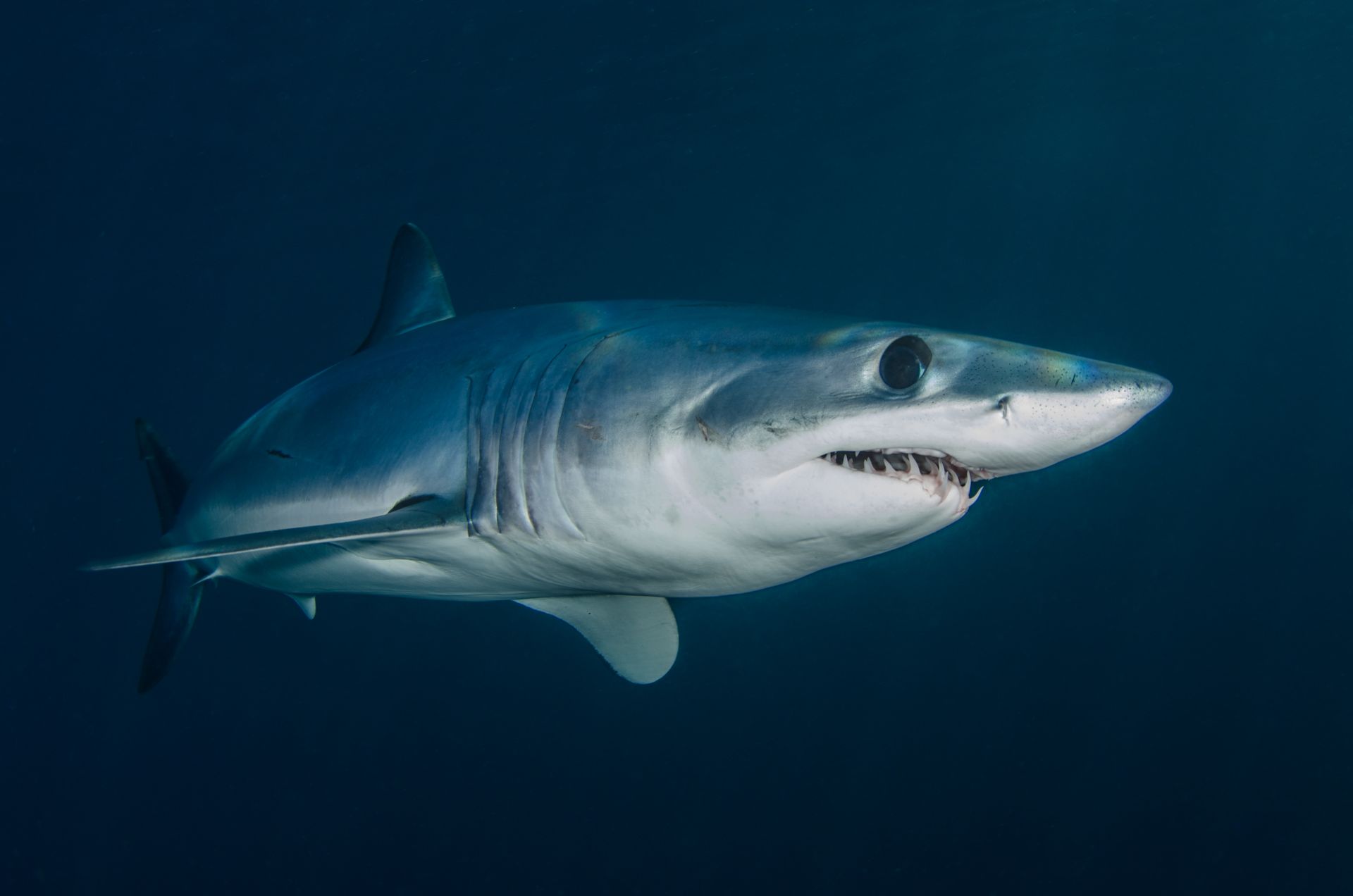
The shortfin mako shark is an incredible creature, and understanding its facts and conservation status is crucial for its survival. They are capable of reaching speeds of up to 46 mph.
Shortfin makos are apex predators, which means they have no natural predators in the wild, and they play a vital role in maintaining the balance of their ecosystems.
Their slender build and powerful caudal fin allow them to breach the water's surface, making them one of the fastest-swimming fish in the ocean.
Physical Characteristics
The shortfin mako shark is a fairly large species, with average adults measuring 2.5 to 3.2 meters in length and weighing 60-140 kilograms.
Its body shape is cylindrical, with a vertically elongated tail.
This species exhibits countershading, with brilliant metallic blue coloration dorsally and white ventrally.
The line of demarcation between blue and white on the body is distinct.
Larger specimens tend to possess darker coloration that extends onto parts of the body that would be white in smaller individuals.
Related reading: Facts about the Little Blue Penguin
The underside of the snout and the area around the mouth are white.
Young mako sharks have a clear blackish stain on the tip of the snout.
The longfin mako shark very much resembles the shortfin mako shark, but has larger pectoral fins, dark rather than pale coloration around the mouth and larger eyes.
The shortfin mako shark is also distinguished by the presence of only one lateral keel on the tail and the lack of lateral cusps on the teeth.
Habitat and Distribution
The shortfin mako shark is a pelagic species that can be found from the surface to depths of 150 m (490 ft).
They're normally far from land, though occasionally closer to shore, around islands or inlets.
Shortfin mako sharks travel long distances to seek prey or mates, with one female shark covering over 2,776 km (1,725 mi) in a single journey.
They're seldom found in waters colder than 16 °C (61 °F), which is a pretty narrow temperature range.
Shortfin mako sharks can be found in both tropical and temperate waters, and are known to circumglobally inhabit these areas.
A fresh viewpoint: Extinct Sharks Found Alive
Behavior and Diet
The shortfin mako shark is a highly sought-after game fish worldwide due to its incredible speed and acrobatic leaps out of the water.
It can reach speeds of up to 32 kilometers per hour and travel up to 55 kilometers in a single day, making it a migratory species.
Mako sharks are solitary individuals, but they may be grouped according to sex. They don't represent a grave danger to humans since they live far from the coast.
Their diet consists mainly of bony fishes and cephalopods, with larger individuals taking larger prey like billfishes and small cetaceans.
Behavior
The shortfin mako is a fast species that can leap into the air when hooked, making it a highly sought-after game fish worldwide. Some cases of shortfin mako jumping into a boat after having been hooked have been reported.
Mako sharks are known for their incredible speed, reaching up to 32 kilometers per hour with gusts of 72 km/h and capable of traveling up to 55 kilometers in a single day.
They can also jump high out of the water, reaching up to 9 meters height. This impressive ability makes them a thrilling catch for sport fishing enthusiasts.
Shortfin mako sharks are solitary individuals but may be grouped according to sex.
Lifestyle and Diet
The shortfin mako shark is an efficient predator that feeds on a variety of prey.
Its diet consists mainly of bony fishes and cephalopods, with larger individuals taking larger prey like billfishes and small cetaceans.
The Atlantic population's favorite food is the bluefish, which makes up almost 92 percent of its total diet.
This shark consumes 3 percent of its weight every day and needs 1.5 to 2 days to digest its food.
To catch its prey, the mako shark uses a stealthy approach, staying under the prey after identifying it and then swimming vertically towards it.
It immobilizes its victim by biting its caudal peduncle and begins tearing pieces of flesh.
Behavior
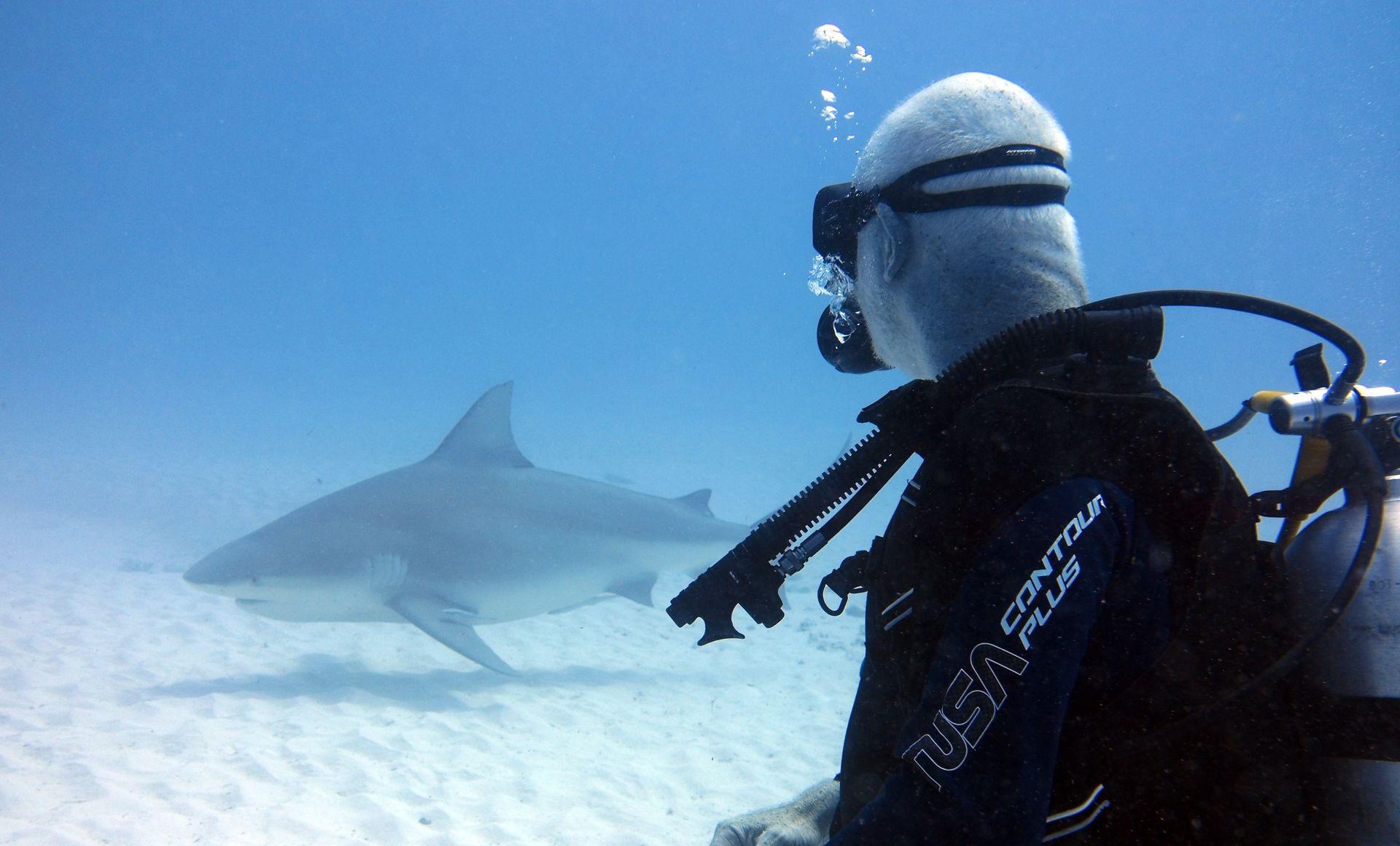
Shortfin Mako sharks are powerful and fast, capable of hurting or killing people. They're not typically aggressive towards humans unless provoked.
Most modern attacks by shortfin Mako sharks happen when the shark is provoked, such as being bothered or caught on a fishing line. This can happen when spear fishermen carry a fish they just caught, attracting the shark's attention.
Before an attack, a Mako shark may swim in a figure-eight pattern, and in some cases, approach with its mouth open. Divers who have encountered Mako sharks have reported this behavior, providing a warning sign that an attack might be imminent.
Explore further: Dogs Attack Shark
Life Cycle and Reproduction
Shortfin mako sharks are ovoviviparous, which means they give birth to live young.
The gestation period for shortfin mako sharks lasts between 15 and 18 months, after which they give birth to a litter of 4 to 25 live offspring.
Female shortfin mako sharks often take a break for 18 months after giving birth before mating again, resulting in a reproductive cycle that occurs every 2 or 3 years.
The young sharks are born alive, measuring about 70 centimeters (2.3 feet) in length, and this usually happens in late winter or early spring.
Lifespan
Shortfin mako sharks have a remarkable lifespan, with a maximum age of 29 years in males and 32 years in females. The age of these sharks was severely underestimated until 2006.
Prior to this discovery, it was believed that shortfin mako sharks deposited two growth bands per year in their vertebrae, leading to inaccurate age estimates. This misconception was based on a poorly supported belief.
In reality, shortfin mako sharks only deposit one growth band per year, which was confirmed by a landmark study in 2006. This study aged 258 shortfin mako specimens and provided valuable insights into their age and longevity.
The study found that males reach 50% sexual maturity at 8 years, while females reach 50% sexual maturity at 18 years. This is a significant difference, highlighting the importance of accurate age estimates in understanding shark behavior and ecology.
Here are the key findings from the study:
- Maximum age of 29 years in males (260 cm or 8.5 ft fork length (FL))
- Maximum age of 32 years in females (335 cm or 10.99 ft FL)
- 50% sexual maturity at 8 years in males (185 cm or 6.07 ft FL)
- 50% sexual maturity at 18 years in females (275 cm or 9.02 ft FL)
Reproduction and Life Cycle
The shortfin mako shark gives birth to live young, a process called ovoviviparity. This means the baby sharks develop and grow inside the mother's body.
The gestation period for shortfin mako sharks lasts between 15 and 18 months, after which the female gives birth to a litter of 4 to 25 live offspring. This is a remarkable reproductive strategy, allowing the mother to nourish her young before birth.
Female shortfin mako sharks can mate with multiple males, a behavior known as polyandry. This means that one group of baby sharks can have different fathers, which is a common reproductive strategy in many animals.
The female shortfin mako shark typically waits about 18 months to get pregnant again, so it reproduces every 2 or 3 years. This allows the mother to recover from the previous pregnancy and prepare for the next one.
Here's a summary of the reproductive cycle of shortfin mako sharks:
Shortfin mako sharks are ovoviviparous, meaning the baby sharks eat unfertilized eggs inside the mother's body during the 15 to 18 months of development. This unique reproductive strategy allows the mother to nourish her young before birth.
Conservation and Threats
The shortfin mako shark is an Endangered species, having been uplisted from Vulnerable in 2019 and Near-Threatened in 2007.
The International Union for Conservation of Nature (IUCN) classifies the shortfin mako shark as Endangered, and it's included on Appendix II of CITES, which regulates international trade.
See what others are reading: Are Shortfin Mako Sharks Endangered
The species is targeted by both sport and commercial fisheries, and there's a substantial proportion of bycatch in driftnet fisheries for other species.
The New Zealand Department of Conservation initially classified the shortfin mako shark as "Not Threatened" in 2018, but the IUCN reclassified it from Vulnerable to Endangered in 2019.
The shortfin mako shark is a victim of bycatch, and its species is considered “Vulnerable” in the Red List of the International Union for the Conservation of Nature.
Some organizations have taken action to protect the mako shark species, including the United Nations Fish Stock Agreement (UNFSA), which demands countries to create conservation strategies.
Here's a list of some of the threats and conservation efforts for the shortfin mako shark:
- Fisheries bycatch
- Commercial and sport fishing
- International trade regulations through CITES
- Conservation strategies through the United Nations Fish Stock Agreement (UNFSA)
Captivity and Human Interaction
Captivity and human interaction can be a challenge for shortfin mako sharks. They are notoriously difficult to keep in aquariums.
In fact, out of all recorded attempts, the shortfin mako shark has fared the poorest, even worse than the blue shark and the great white shark. At SeaWorld San Diego, a 90 cm (3.0 ft) shortfin mako shark ability test failed in the early 1970s.
The longest a shortfin mako has lived in an aquarium is only five days, which happened at the New Jersey Aquarium in 2001. It seemed strong when it arrived, but it had trouble with the tank walls, wouldn't eat, got weak, and then died.
Aquariums
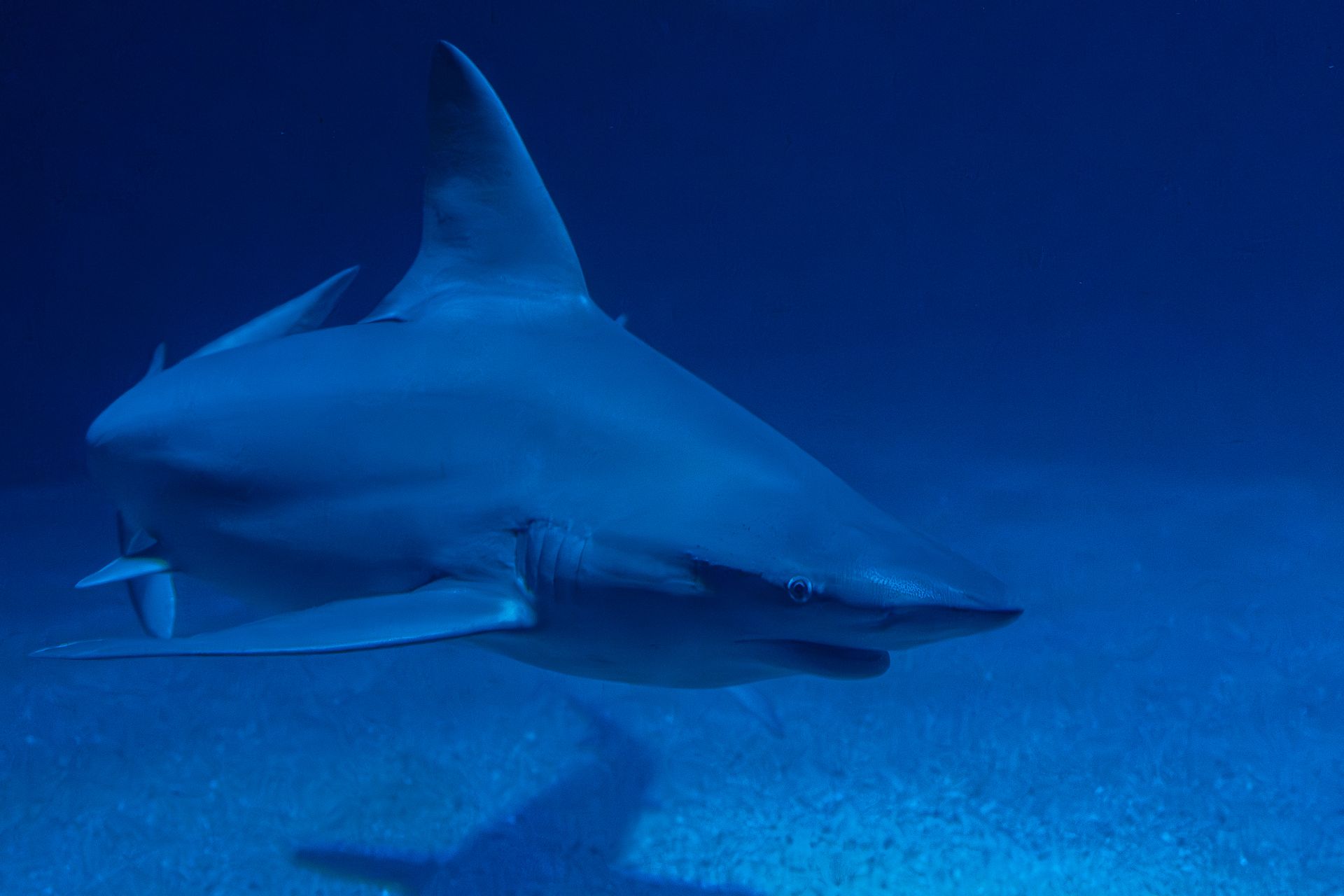
Shortfin mako sharks are notoriously difficult to keep in aquariums. They simply don't thrive in captivity, which is a major challenge for aquariums and researchers.
At SeaWorld San Diego, a 90 cm shortfin mako shark failed an ability test in the early 1970s. The shark couldn't even navigate the tank walls.
In the summer of 1978, two mako sharks caught off the coast of San Diego died within three days of being in the aquarium. They were unable to evade the tank walls.
The longest recorded time a shortfin mako shark has lived in an aquarium is five days, achieved at the New Jersey Aquarium in 2001. During this time, the shark seemed strong but struggled to feed and eventually weakened and died.
It's worth noting that even larger open-ocean sharks like the great white shark have done better in captivity than the shortfin mako.
Curious to learn more? Check out: Barkley Dog Treats Shark Tank
Sport Fishing
Fishing for mako sharks is a thrilling experience, especially when they put on an amazing show with their fast runs and jumps.
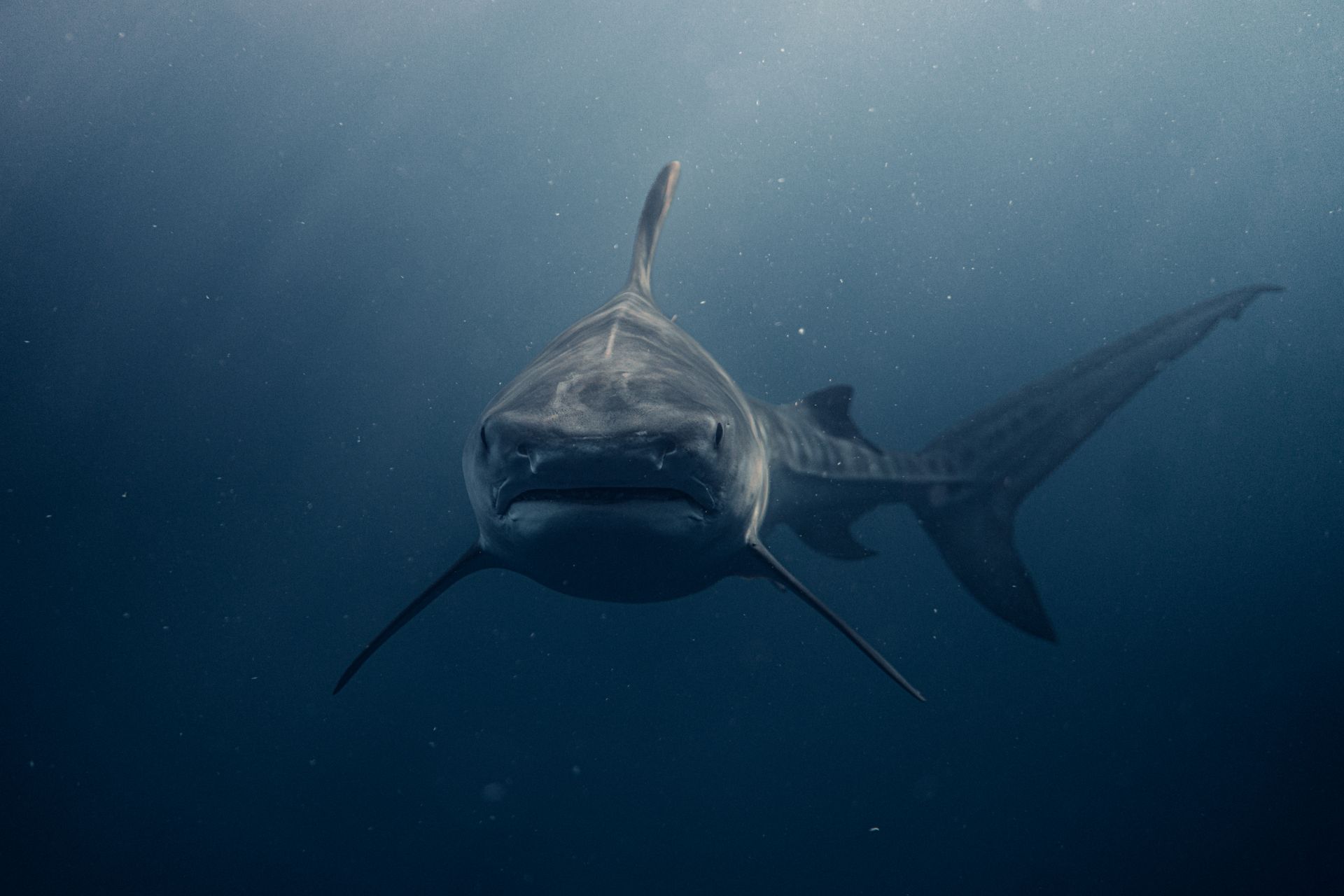
People often use bait and special fishing reels to catch mako sharks, but some are now trying fly fishing, which is gaining popularity in San Diego, California.
Mako sharks are so fast that they can make fast runs, making them exciting for anglers.
Large fishing boats used to catch makos for restaurants, but many local fishing companies and groups are now working to reduce this practice to protect the sharks.
Catching mako sharks can be a challenging but rewarding experience, especially for those who enjoy the thrill of the hunt.
Scientific Classification and Adaptation
The shortfin mako shark is a member of the order Lamniformes, the Lamnidae family, and the genus Isurus. This classification tells us that it's a specific type of shark, but what makes it unique?
It's also known as the blue pointer and bonito shark, which might give you a hint about its speed and agility. The shortfin mako shark can make spectacular leaps out of the water when hooked, showcasing its incredible power and speed.
This heat exchange circulatory system allows the shark's body to be warmer than the surrounding water, enabling it to maintain a high level of activity. This means it can swim fast and efficiently, even in cold water.
Featured Images: pexels.com