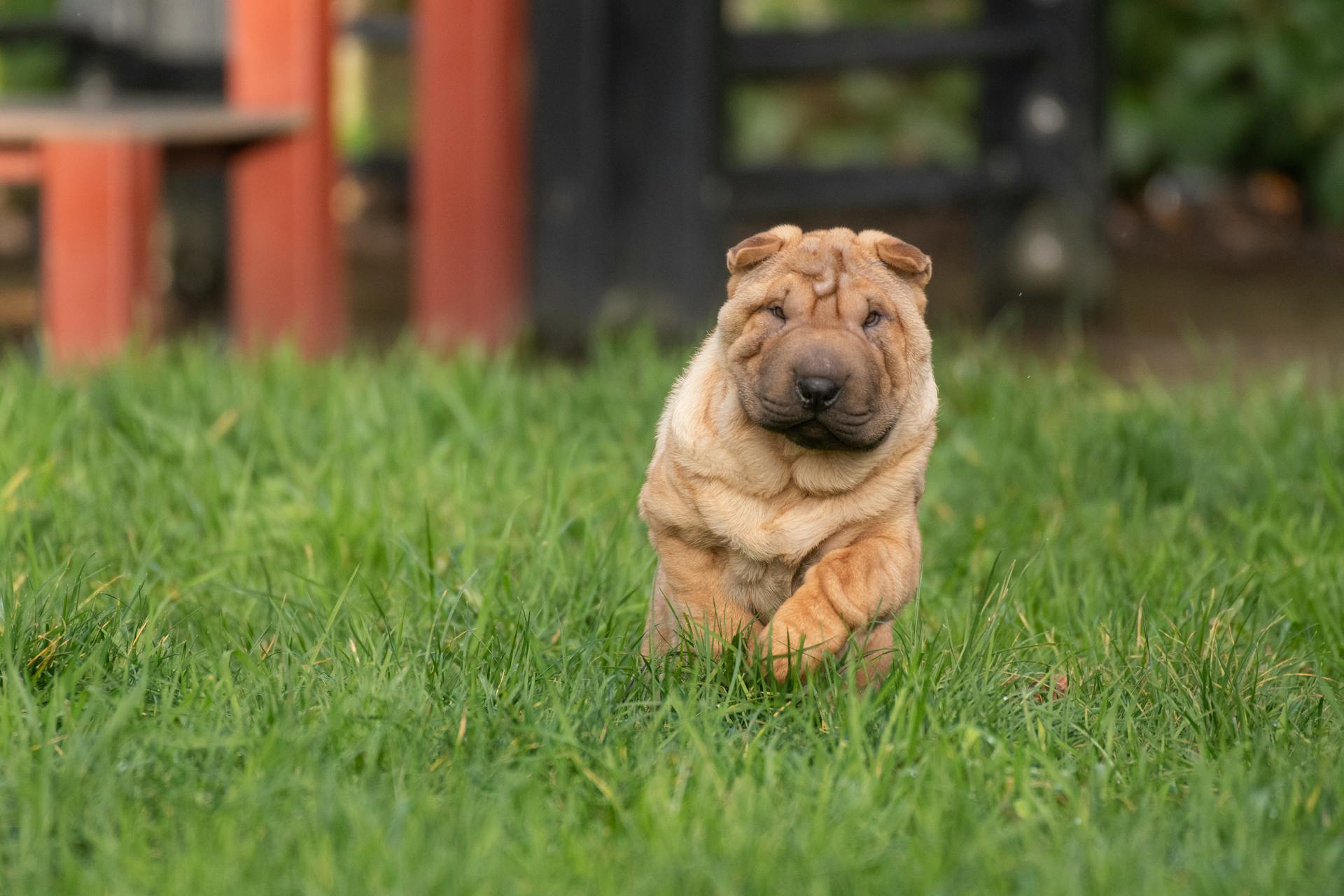
The Shar Pei dog puppy is a unique and lovable breed that requires special care and attention. They are known for their distinctive wrinkled skin and blue-black tongue.
Shar Pei puppies are born with their eyes closed, which can be a concern for new owners. However, their eyes usually open within the first 10-14 days of life.
Their short, easy-to-maintain coats require minimal grooming, but their skin folds need regular cleaning to prevent infections. This is especially true for the first few months of life when their skin is still developing.
With proper care and attention, Shar Pei puppies can grow into happy and healthy adult dogs.
You might enjoy: Life Expectancy of a Boston Terrier Dog
Grooming Needs
Shar-Pei puppies require minimal grooming due to their short, smooth coats. They only need a bath and brushing every month or so, depending on when their coat is dirty.
Their nails should be trimmed every four to eight weeks to prevent overgrowth. You can use a grinder to trim their nails, but be sure to introduce it slowly and with rewards to avoid startling them.
You might enjoy: Every Hypoallergenic Dog Breed
Brushing their teeth daily is essential to prevent dental problems. Your veterinarian can help teach you how to brush your Shar-Pei's teeth, but it's best to start when they're a young puppy.
Shar-Peis shed twice a year as the seasons change, so be prepared for extra brushing during these times. Their bear coat may need a little extra attention to remove dirt and mats.
Bathing your Shar-Pei is a low-maintenance task, but it's essential to dry their skin folds completely to prevent infections. You can bathe them about once a month, or as needed.
Shar-Peis can be sensitive to heat due to their short noses, so it's crucial to keep them cool, especially during hot weather.
Here's an interesting read: Dogs Breeds That Start with B
Overview
The Shar Pei dog puppy is a unique and fascinating breed. He's known for his distinctive, bristle-like coat and loose wrinkles that make him look like he's wearing a bulky suit.
His tiny ears sit atop a large, powerful head with a short muzzle and purple tongue. The finishing touch is a thick, round tail that curls over his back.
The Shar Pei is a calm dog that can live in an apartment, but he's also an independent-thinking dog who can be aloof at times. He's a guardian and fighting dog at heart, making him an excellent watchdog and guard dog.
Early training is essential for the Shar Pei, as he needs an owner who can establish leadership firmly and kindly. He's a quick study, but he can be stubborn if not trained properly.
Here are some key facts about the Shar Pei breed:
The Shar Pei has a coarse and short coat that comes in over 20 different standard and non-standard colors. He's not a hypoallergenic breed, so if you have allergies, this might not be the best choice for you.
He's a moderately active dog who needs regular exercise to stay happy and healthy. With proper training and care, the Shar Pei can make a loyal and loving companion.
Shar Pei Puppy Care
The Shar Pei is a relatively low-maintenance breed when it comes to exercise, but they do need daily exercise to stay happy and healthy.
They can thrive in a small home or apartment as long as they get regular walks and playtime. In fact, they're generally happy just hanging out with their owner, wherever they may be.
Begin training and socializing your Shar Pei puppy the day you bring them home, and commit to continuing the process all their life. They'll need constant reinforcement since they're not naturally friendly to other dogs.
Take your Shar Pei puppy with you everywhere - to puppy classes, outdoor events, busy parks, friends' homes - and as often as possible. This will help prevent them from becoming overly shy or overprotective.
Shar Pei puppies can be prone to anxiety if they're not socialized and trained properly, so it's essential to get them into training classes early on.
Routine vet checkups, vaccinations, and preventative care are crucial for keeping your Shar Pei puppy healthy and happy.
Recommended read: German Shorthaired Pointer Free to Good Home
Shar Pei History
The Chinese Shar-Pei breed has a rich history dating back more than 2,000 years to the Han Dynasty. Statues from this era resemble the Shar-Pei, but it's unclear if they are definitively the same breed.
Originally bred in southern China, the Shar-Pei was valued as a hunter, herder, guardian, and fighter. This versatility made them a common sight among Chinese farmers.
The Shar-Pei's history is mysterious, but some say they were the dogs of peasants and bred to hunt or herd livestock. Others claim they guarded Chinese royal families.
Following the creation of the People's Republic of China in 1949, the communist regime disapproved of dog ownership and slaughtered many breeds, almost leading to the Shar-Pei's extinction. This near-extinction led to the breed being listed as the rarest dog breed in the world.
A Shar-Pei breeder in Hong Kong, Matgo Law, was instrumental in saving the breed from extinction. His efforts, along with an article published in "Life Magazine", helped increase the dog's popularity in the United States.
The Shar-Pei was first introduced to the United States in 1973, and the Chinese Shar-Pei Club of America was formed in 1974. The breed was accepted in the American Kennel Club Miscellaneous Class in 1988 and recognized as a member of the Non-Sporting Group in 1991.
Suggestion: American Kennel Club
Size and Appearance
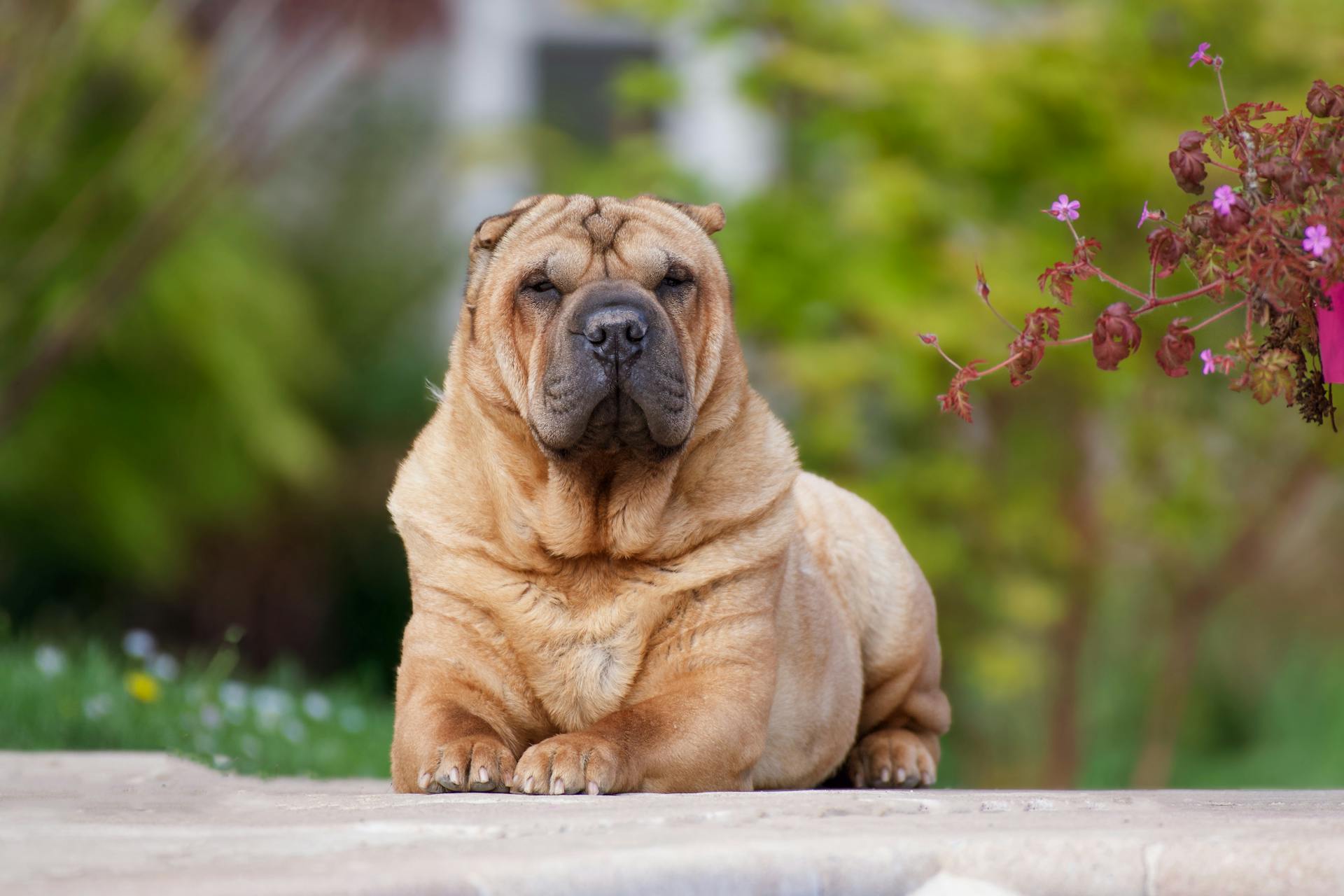
The Chinese Shar-Pei is a unique breed with a distinctive appearance. They have expressive, sunken eyes and adorably wrinkly skin. Their compact body is carried with confidence and bravery.
Their ears are unusually small and shaped like rounded triangles, always on alert for unusual sounds. Their nose is often referred to as being hippopotamus-shaped, large and typically dark-colored. However, some may have a nose the same color as their fur.
The Shar-Pei's wrinkled coat feels harsh to the touch and is not typically longer than one inch. Their coat comes in 18 colors, along with seven types of markings, including solid colors like black, cream, brown, fawn, red, and blue (which looks gray).
Size
The Chinese Shar-Pei is a medium-sized dog breed. They typically have a height ranging from 18 to 20 inches.
Males and females of this breed can weigh anywhere from 40 to 55 pounds.
Appearance
The Chinese Shar-Pei is a medium-sized dog with a distinctive, wrinkled coat. Their skin is rough to the touch and comes in a variety of solid colors. Shar-Peis have a blue-black tongue, just like the Chow Chow.
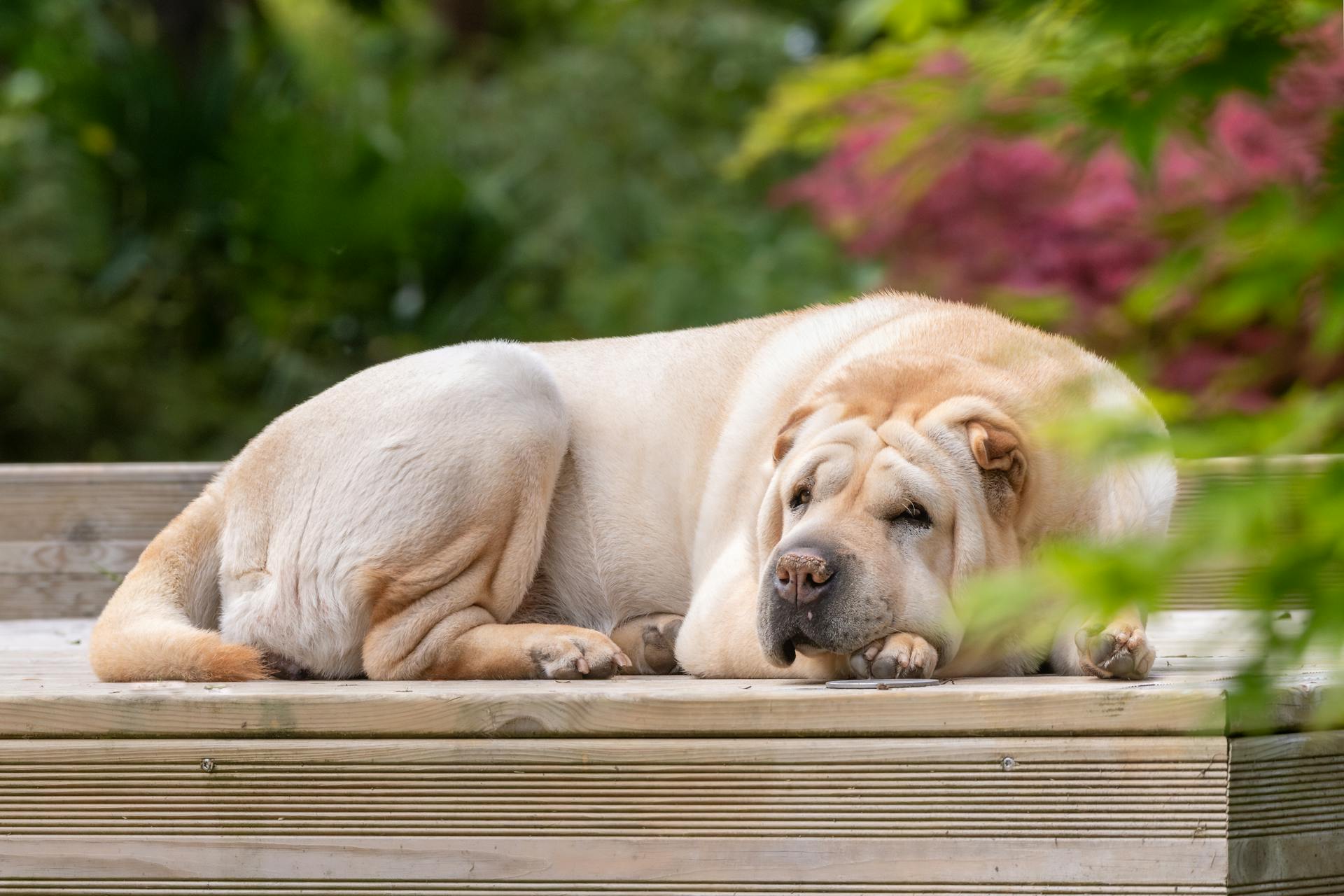
Their ears are unusually small and shaped like rounded triangles. They lie flat against the head but are always on alert for unusual sounds. This is just one of the many unique features of the Shar-Pei breed.
Their eyes are dark and sink deeply into their wrinkled dog faces. Depending on their coat color, some dogs may have lighter-colored eyes. I've seen Shar-Peis with the darkest brown eyes, and they're just stunning.
Their nose is often referred to as being hippopotamus-shaped. It's large and typically dark-colored, but some may have a nose the same color as their fur. A dark cream Shar-Pei's nose might be a lighter shade.
Shar-Pei coats come in 18 colors, along with seven types of markings. They can be a solid color in blue (which looks gray), black, brown, cream, fawn, or red. They often have darker shading on areas like their backs or ears.
Here are the 18 recognized coat colors of the Shar-Pei breed:
- Blue (gray)
- Black
- Brown
- Cream
- Fawn
- Red
- Lilac
- Sable
- Apricot
- White
- Other colors (not standard)
Their tail is small, proud, and thicker at the base, tapering at the end. It's set high, and they carry it proudly, curling over either side of their back.
Personality and Temperament
The Chinese Shar-Pei is an alert and independent dog that's extremely devoted to its family, but aloof with people it doesn't know.
Early socialization is crucial to ensure your Shar-Pei puppy grows up to be a well-rounded dog. Enrolling him in a puppy kindergarten class is a great start, and inviting visitors over regularly will also help him polish his social skills.
Shar-Pei can have a kind temperament toward those they know, but they're sometimes standoffish to strangers. Socialization needs to be a priority when a Shar-Pei is 8-12 weeks old to get them used to children, other pets, and new people.
They don't require much exercise, but they do enjoy going on daily short walks or having 30 minutes set aside per day for other forms of exercise. This breed is intelligent and independent, making them a unique companion and guard dog.
Shar-Pei dogs have a moderate to high prey drive, so it's essential to introduce them to cats and other small animals when they're young. If not, they may chase after small animals or try to herd them.
With early socialization and training, Shar-Pei can be well-mannered, loving, and generally quite calm. However, without proper training, they can develop severe anxiety and can be difficult to care for.
A different take: Things to Know about Rottweilers
Health Issues
Shar-Pei puppies are prone to several health issues that you should be aware of before bringing one home. Entropion is a common condition where the eyelids roll inward, causing the eyelashes to rub against the cornea.
Entropion is usually diagnosed in puppies under 1 year old and can be corrected with surgery. This is a very painful condition that can lead to corneal ulcers if left untreated. Regular veterinary check-ups can help catch this condition early.
Skin Fold Dermatitis is another issue that Shar-Pei owners need to watch out for. Skin folds trap moisture and lead to skin infections if not properly cared for. Inspect your Shar-Pei's skin folds once to twice weekly to catch any signs of infection.
You might enjoy: Lead Dog Citra Solo
Skin Fold Dermatitis
Skin Fold Dermatitis is a common issue in Shar-Pei dogs due to their skin folds trapping moisture and leading to skin infections.
The skin folds on a Shar-Pei's face and body are breeding grounds for bacteria and yeast, making regular inspections crucial to prevent infections.
Suggestion: Shar Pei Dog Skin Problems
Inspecting your Shar-Pei's skin folds once to twice weekly can help you catch any potential issues early on. If you notice any signs of infection, such as moist, red, crusty, black skin, or a strong odor, seek veterinary attention right away.
Your veterinarian may prescribe medicated wipes and/or medicated shampoo to keep the skin between these folds clean and free of infection.
Fever
Fever can be a real concern for Shar-Pei owners.
Shar-Pei fever, also known as swollen hock syndrome, is a hereditary condition that causes sudden onset of high fevers, ranging from 103 F to 107 F.
These fevers can last one to two days at a time, but they can also lead to more serious health issues down the line.
Fevers caused by Shar-Pei fever can resolve on their own within 2 days without treatment, but the underlying condition can still cause harm.
Over time, fevers can lead to renal amyloidosis, a condition where amyloid, a type of protein, deposits in the kidneys and can progress to kidney failure.
If your Shar-Pei has a fever, it's essential to monitor their symptoms and seek veterinary care if necessary.
Shar-Pei dogs can be tested to see if they carry the gene for Shar-Pei fever, and if they do, it's recommended that they not be bred.
Intriguing read: Are Portuguese Water Dogs Good for First Time Owners
Dog Feeding Guide
As a Shar-Pei owner, you want to make sure your furry friend is getting the right amount of food to thrive. Feed your adult Shar-Pei 1.5 to 2.5 cups of high-quality dry food a day, divided into two meals.
Keep in mind that every dog is different, and their food needs will vary depending on size, age, build, metabolism, and activity level. A highly active Shar-Pei will need more food than a couch potato.
To ensure your Shar-Pei is getting the right amount of food, follow the feeding guidelines on the dog food packaging and consult with your veterinarian to determine the proper portion size based on their ideal body weight and life stage.
For puppies, feed a medium-breed, high-quality puppy formula that's high in calories to allow for proper growth. You'll want to transition your puppy to an adult medium-breed dog formula when they turn 1, over a period of five to seven days.
A different take: When Will Shiba Inu Reach 1 Cent
Shar-Pei dogs should be fed two meals a day, one in the morning and one in the evening. If your Shar-Pei eats too quickly, consider investing in a slow feeder bowl to slow them down at mealtime.
To support your Shar-Pei's skin health, consider adding an omega-3 fatty acid supplement to their diet. This will help support the skin barrier, prevent dandruff, and minimize secondary skin infections.
Remember to measure out the food for each meal to ensure you're feeding your pup the proper amount. Aim to feed your Shar-Pei mostly dog food (90%), with only 10% being treats. Baby carrots make great healthy treats, but try to avoid other types of people food.
Discover more: Shar Pei Dog Food
Training and Behavior
Shar-Pei puppies are incredibly smart, but they can be stubborn, so start training them early and give them positive rewards through praise and treats to teach them how to behave politely.
Basic cues like "sit", "stay", and "come" are essential to teach your Shar-Pei puppy. Ideally, a Shar-Pei should take both socialization and obedience training classes with a professional pet trainer.
Shar-Pei dogs are bred to be protective, so early socialization and puppy training are highly recommended to make sure your pet is comfortable in various situations. Without proper socialization, they may become unfriendly to strangers and struggle with new environments or people.
Shar-Pei puppies need to be introduced to new environments, such as the veterinary hospital, at an early age to avoid fear aggression. Give your Shar-Pei positive reinforcements, including praise and treats, at each vet visit to make them enjoyable.
Shar-Pei dogs are adaptable to a large or small home and have moderate exercise needs, enjoying short daily walks at a brisk speed and lots of time relaxing with you. Mental stimulation like obedience training, tracking, puzzles, and games can help keep this breed happy and entertained.
Grooming and Hygiene
A Shar-Pei's coat needs minimal grooming, with only a bath and brushing every month or so required.
Their nails should be trimmed every four to eight weeks to keep them in shape. Brushing them once a week with a rubber curry brush is typically enough, especially for those with a short rough coat or a brush coat that can compete in dog shows. However, Shar-Peis with a bear coat may need a little extra brushing every now and then to remove dirt and mats if they've been outside.
The Shar-Pei's bathing needs are also low maintenance, with a bath about once a month usually sufficient. They can sometimes go as long as 12 weeks between baths, but make sure their skin folds are completely dry to prevent infections. To keep their nails in shape, use a grinder for just a few minutes every week, and be sure to introduce them to it slowly to avoid startling them.
Shar-Peis also need regular ear care, with their ears cleaned once weekly and after they've been in water. Brushing their teeth daily is also crucial, and your veterinarian can help teach you how to do it effectively.
Grooming
The Shar-Pei's short coat requires minimal grooming, but regular brushing is still necessary to minimize shedding. They shed twice a year, typically in the spring and fall.
Brushing your Shar-Pei once a week with a rubber curry brush is usually enough. Their nails should be trimmed every four to eight weeks to keep them in shape.
A grinder is a great tool for trimming your Shar-Pei's nails, but be sure to introduce it slowly to avoid startling them. Reward your pup with treats for successful encounters.
Bathing your Shar-Pei is low maintenance, as they only need a bath about once a month. However, make sure their skin folds are completely dry after bathing to prevent infections.
Cleaning their ears is an essential part of Shar-Pei care, as they need to be cleaned weekly and after water exposure. This will help prevent infections and keep their ears healthy.
Additional reading: Dog Breeds That Don't Need Grooming
Eye Care
Shar-Pei dogs require regular eye care due to their predisposition to entropion. This condition can cause red eyes, which is a clear indication that something is amiss.
Pet parents should monitor their dog's eyes for signs of entropion, such as watery eye discharge. This can be a sign of a more serious issue if left unchecked.
Squinting and holding the eye shut are also common symptoms of entropion in Shar-Pei dogs. If you notice any of these symptoms, it's essential to consult with a veterinarian.
Here are some common signs of entropion in Shar-Pei dogs:
- Red eyes
- Watery eye discharge
- Squinting
- Holding the eye shut
Cost and Considerations
The cost of bringing home a Shar-Pei puppy can be a significant expense. Shar-Pei puppies from a reputable breeder can cost anywhere from $750 to $1,500.
You'll also need to factor in the costs of routine necessities like a bed, collar, food, and bowls, which can add up to around $1,500 or more in the first year.
Annual expenses for a Shar-Pei can range from $600 to $700 per year, covering routine and sick vet checkups, ear cleaner, medicated skin wipes, heartworm prevention, flea and tick medications, food, and toys.
Here's an interesting read: Best Dog Food for Rhodesian Ridgeback
Cost and Considerations
Purchasing a Shar-Pei puppy from a reputable breeder can cost anywhere from $750 to $1,500.
The initial costs of caring for a Shar-Pei can add up quickly, with routine necessities like a bed, collar, food, and bowls costing around $1,500 or more in the first year.
Spaying or neutering your dog, training classes, deworming, and routine puppy vaccinations are also essential expenses to consider.
You'll likely spend around $600 to $700 per year on your dog's ongoing needs, including routine and sick vet checkups, heartworm prevention, flea and tick medications, and food.
Check this out: Can My 12 Week-old Puppy Be around Other Dogs
Pet Insurance
Pet insurance is a must for Chinese Shar-Pei owners, as they are prone to expensive hereditary conditions.
The cost of pet insurance for Chinese Shar-Pei is higher than for mixed breed dogs, so it's essential to factor this into your budget.
Getting pet insurance for your Chinese Shar-Pei as a healthy puppy is the best time, as you can't predict what will happen in the future and insurance is often unavailable when you need it most.
Embrace dog insurance plans offer full coverage for all breed-specific conditions, excluding pre-existing ones, to which Chinese Shar-Pei are susceptible.
Purchasing pet insurance prior to any health issues is recommended, as it will cover the cost of treatment if your dog develops recurring ear and skin issues.
Curious to learn more? Check out: Will Shiba Inu Hit $1
Breeds Similar To
If you're considering a Shar-Pei dog puppy, you might also want to look into other breeds that share similar characteristics.
The Shar-Pei and chow chow are both thought to be related to the ancient Han Dog, a Chinese guard dog from about 2,000 years ago.
Chow chows need experienced pet owners and training classes, since the breed can sometimes be aggressive if not trained at an early age.
English bulldogs are tough and muscular with a friendly, sweet, and playful nature.
They can also have recurring skin and ear infections like the Shar-Pei.
Pekingese dogs are loyal, confident, and independent, and even resemble miniature lions with their long flowing manes of fur.
If you're considering one of these breeds, be sure to research their specific needs and requirements.
Here are a few breeds to consider:
- Chow chow
- English bulldog
- Pekingese
Frequently Asked Questions
Are Shar-Pei puppies good family dogs?
Shar-Pei puppies can make great family pets for families with older children, but may not be the best fit for households with young kids due to their independent nature. With proper socialization, they can be loving and loyal companions for the right family.
Are Chinese Shar-Pei rare?
No, the Chinese Shar-Pei is no longer considered a rare breed, thanks to its growing popularity since the late 20th century. Its numbers have increased significantly over the years.
What is the lifespan of a Chinese Shar-Pei?
The average lifespan of a Chinese Shar-Pei is 11-12 years. This relatively short lifespan makes regular veterinary care and a healthy lifestyle essential for Shar-Pei owners.
Featured Images: pexels.com