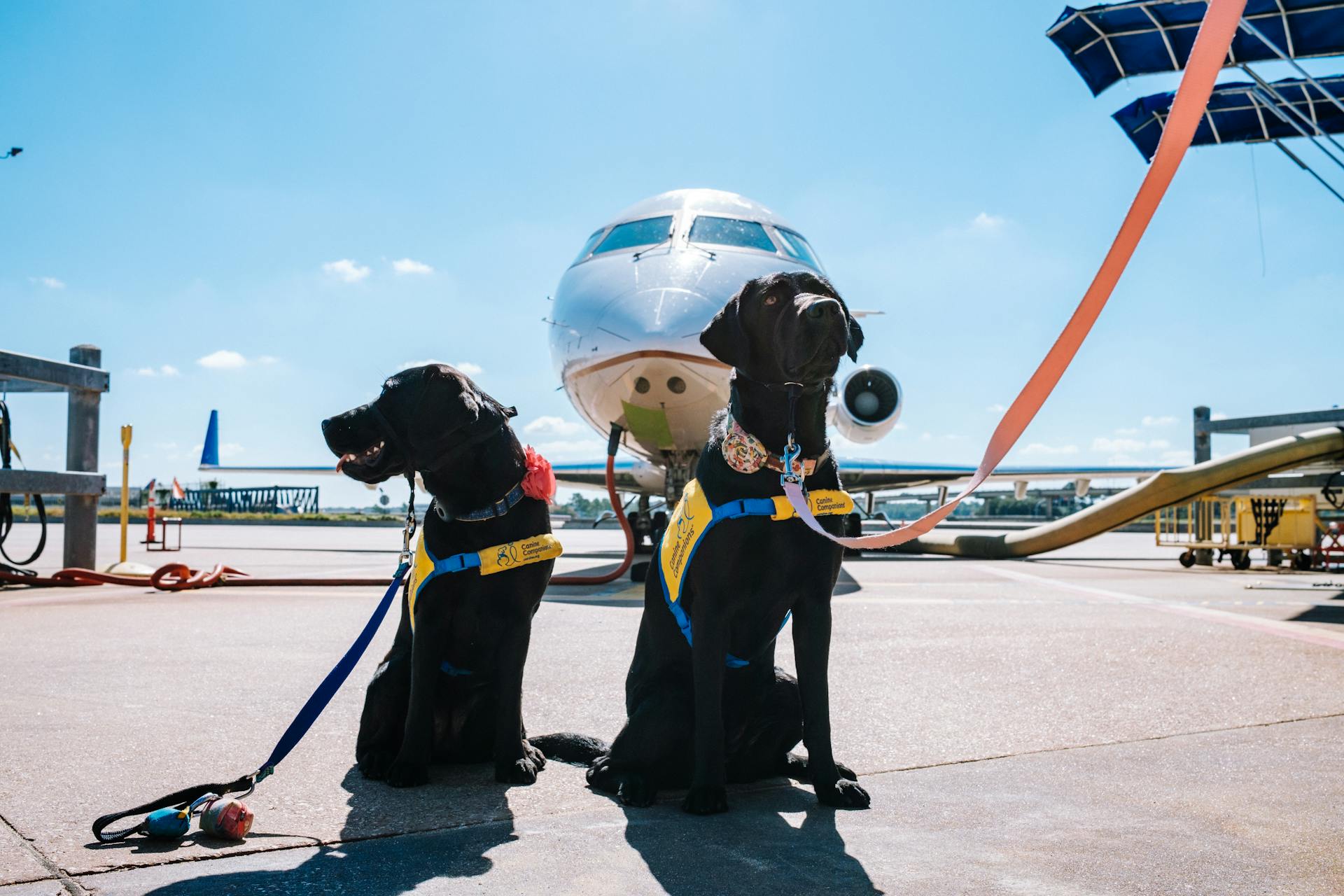
Service dogs are trained to assist individuals with various disabilities, including post-traumatic stress disorder (PTSD). PTSD service animals are specially trained to help their owners cope with the emotional and psychological effects of PTSD.
PTSD is a condition that can develop after a person experiences a traumatic event, such as combat, a natural disaster, or a violent attack. A study by the National Center for PTSD found that 8% of the US population will experience PTSD at some point in their lives.
PTSD service animals are trained to detect and respond to their owner's anxiety, panic attacks, or other symptoms of PTSD. These animals can be trained to perform a variety of tasks, such as interrupting flashbacks, providing physical comfort, and helping their owners navigate crowded spaces.
In Missouri, service animals, including PTSD service animals, are protected under the Americans with Disabilities Act (ADA). This means that business owners and public places must allow service animals to accompany their owners, even if they are not visibly disabled.
Related reading: Rules on Service Dogs
Service Dogs in Missouri
In Missouri, service dogs are protected under state law, which defines them as dogs individually trained to do work or perform tasks for someone with a physical, sensory, psychiatric, intellectual, or mental disability.
Service dogs in Missouri can be trained to perform a variety of tasks, such as guiding someone who is visually impaired, alerting a deaf person to specific sounds, or pulling a wheelchair.
Examples of service tasks include guiding, alerting, pulling, search and rescue, alerting to medical events, and retrieving items.
Missouri's disability rights law explicitly covers mental disabilities, and psychiatric service dogs are included in the state's definition of service dogs, as long as they're specially trained to perform tasks that mitigate or assist with difficulties directly related to the owner's disability.
Here are some examples of service animals that must be admitted to public accommodations under the ADA in Missouri:
- hearing dogs, which alert their handlers to important sounds, such as alarms, doorbells, and telephones
- guide dogs, which help those who are blind or have low vision to navigate safely
- psychiatric service animals, which help their handlers manage mental and emotional disabilities
- seizure alert animals, which let their handlers know of impending seizures
- allergen alert animals, which let their handlers know of foods or other substances that could be dangerous
Laws and Regulations
Missouri Revised Statutes regarding Service and Assistance Animals are outlined in the state law.
The Americans with Disabilities Act (ADA) Requirements: Service Animals are also applicable in Missouri.
Missouri law specifically protects the rights of certain individuals with disabilities to have service animals in housing, including blind or partially blind people with guide dogs, deaf or partially deaf people with hearing dogs, and people with physical disabilities with service dogs.
However, Missouri housing law does not protect the rights of people with mental disabilities who have service animals or emotional support animals.
Here are the types of places where service animals are allowed in Missouri, according to state law:
DTE: Top PTSD Dog Trainers
At Dog Training Elite, our specialized PTSD service dog training program is designed to help individuals with anxiety, stress, or trauma-related symptoms.
Dogs are taught to assist in reducing depression, decreasing the frequency and severity of flashbacks, anchoring their handler to the present, and helping minimize suicidal thoughts.
Our trainers work closely with each dog and handler to establish a routine and tie to the future, which helps increase activity and integration into society.
Public settings and crowds can be overwhelming for individuals with PTSD, but our service dogs are trained to create a physical barrier between their handler and crowds of people, providing a sense of safety.
Here are some key benefits of our PTSD service dog training:
- Increase activity and integration into society
- Create a sense of safety
- Ground in reality, redirect hyper-vigilance
- Reduce nightmares and flashbacks
By training our service dogs to recognize warning signs for anxiety, hyper-vigilance, and panic attacks, we can help redirect that energy into positive coping skills and grounding techniques.
Understanding Service Dogs
In Missouri, service dogs are defined as dogs individually trained to do work or perform tasks for someone with a physical, sensory, psychiatric, intellectual, or mental disability.
Under Missouri law, people with disabilities have the right to bring their service dogs into public places. Missouri's disability rights law explicitly covers mental disabilities, and psychiatric service dogs are included in the state's definition of service dogs, as long as they're specially trained to perform tasks that mitigate or assist with difficulties directly related to the owner's disability.
A unique perspective: Mental Health Service Dogs California
Service dogs can be trained to perform a variety of tasks, such as guiding someone who is visually impaired, alerting a deaf person to specific sounds, pulling a wheelchair, or performing search and rescue to prevent a person with a mental disability from becoming lost.
Some examples of tasks your service dog could do include:
- guiding someone who is visually impaired
- alerting a deaf person to specific sounds, like a doorbell or alarm
- pulling a wheelchair
- performing search and rescue to prevent a person with a mental disability from becoming lost
- alerting its handler that a medical event (like a seizure) is about to occur or responding to a medical event that has occurred, or
- retrieving and carrying items.
Under the ADA, a service animal is a dog individually trained to perform disability-related tasks or work for a person with a disability. In some cases, a miniature horse can also qualify as a service animal.
Training and Benefits
At Dog Training Elite, they specialize in PTSD service dog training, teaching dogs to assist their handlers in reducing depression, decreasing the frequency and severity of flashbacks, and helping minimize suicidal thoughts.
A psychiatric or PTSD service dog in St. Louis, MO provides invaluable support to individuals experiencing high anxiety, stress, or trauma-related symptoms.
Through specialized training, dogs are taught to create a sense of safety by serving as a physical barrier between their handler and crowds of people.
Dogs are active and need to be exercised regularly, which forces their handler to get out and exercise, establishing a routine and ties to the future.
Service dogs are trained to recognize their handler’s warning signs for anxiety, hyper-vigilance, and panic attacks and redirect that energy into positive coping skills and grounding techniques such as petting the dog.
One of the most emotionally challenging situations for individuals with PTSD to deal with are flashbacks and nightmares, but a PTSD service animal is trained to bring their handler back to reality quickly and calmly, ground the individual, and help them to feel safe in their environment again.
Here are some key benefits of PTSD service dog training:
- Increase activity and integration into society
- Create a sense of safety
- Ground in reality, redirect hyper-vigilance
- Reduce nightmares and flashbacks
How to Act Around
When interacting with service dogs in St. Louis, MO, it's essential to recognize their working status. Service dogs are not just pets, but trained partners that assist their handlers with various tasks.
Avoid petting or distracting service dogs, as this can hinder their ability to perform their essential tasks. In fact, it's recommended to not pet them or offer food or treats.
Speaking to the handler is a crucial step in interacting with service dogs. This shows respect for their working partnership and allows them to communicate their needs.
Give service dogs and their handlers ample space to move around and work. This means not standing too close or blocking their path.
Don't assume that a service dog and its handler need help, as they are trained to handle situations on their own. It's always best to let them take the lead.
Avoid staring or pointing at service dogs, as this can be distracting and disrupt their work. By being mindful of these guidelines, you can help create a positive and safe environment for service dogs and their handlers in St. Louis, MO.
Here are the guidelines in a concise list:
- No petting or distractions
- Avoid offering food or treats
- Speak to the handler
- Give ample space
- Do not assume help is needed
- Avoid staring or pointing
Service Dogs in Public
Service dogs in public settings can be a lifesaver for individuals with PTSD, providing a sense of safety and grounding in overwhelming environments.
Under Missouri law, people with disabilities have the right to bring their service dogs into public places, including hotels, public transportation, restaurants, and educational institutions.
Service dogs can be trained to recognize signs of an impending panic attack, wake individuals from night terrors, and regulate emotional responses by applying pressure, helping their handler regain a sense of calm and control.
A service animal is defined as a dog individually trained to do work or perform tasks for someone with a physical, sensory, psychiatric, intellectual, or mental disability. Examples of tasks include guiding someone who is visually impaired, alerting a deaf person to specific sounds, pulling a wheelchair, and retrieving items.
You have the right to bring your service dog with you in most public places in Missouri, including hotels, public buildings, public transportation, and public places of amusement or recreation.
For another approach, see: Are Service Dogs Allowed in Hotels
Public Accommodations and Animals
Service animals are allowed in most public places, including hotels, public transportation, restaurants, and educational institutions. These places are considered public accommodations under the ADA and Missouri law.
Related reading: Public Access Test for Service Dogs
Under the ADA, public accommodations are defined as most places open to the public, such as hotels, restaurants, and public transportation. This includes terminals and stations, but excludes private clubs and religious organizations.
You can bring your service dog with you in most public places, including hotels, public buildings, and public transportation. Missouri law also covers all public places of amusement or recreation, and any other place to which the public is invited.
Here are some examples of public accommodations that must allow service animals:
- Hotels and other lodging places
- Public buildings and facilities
- Public transportation and common carriers (like buses and taxis)
- All public places of amusement or recreation
- Any other place to which the public is invited
Note that private clubs and religious organizations are exempt from allowing service animals, unless they offer secular services to non-members.
PTSD Dogs in Public Settings
PTSD dogs can be a game-changer in public settings, providing emotional support and grounding their handlers in reality. They can help prevent people from crowding their handler, offering a sense of protection and calm.
In Missouri, service dogs, including PTSD dogs, are protected under the law, allowing them to accompany their handlers in most public places. This includes hotels, public transportation, restaurants, and educational institutions.
PTSD dogs can be trained to recognize signs of an impending panic attack, wake individuals from night terrors, and regulate emotional responses by applying pressure. This can help their handlers regain a sense of calm and control in overwhelming situations.
Here are some examples of tasks that a PTSD dog can be trained to perform:
- Preventing people from crowding their handler
- Offering emotional support during moments of heightened anxiety
- Recognizing signs of an impending panic attack
- Waking individuals from night terrors
- Regulating emotional responses by applying pressure
Public settings can be overwhelming for individuals with PTSD, but with a PTSD dog by their side, they can feel safer and more grounded. These dogs provide a sense of protection and calm, helping their handlers navigate through challenging situations.
For your interest: What Do Service Dogs Do for Ptsd
Featured Images: pexels.com