
Saint Bernard dogs are known for their distinctive appearance, with a thick coat of fur that's usually white with red or black markings. They're massive, with males weighing up to 180 pounds.
These gentle giants originated in the Swiss Alps, where they were bred to help rescue travelers stranded in the mountains. Their keen sense of smell and strength made them perfect for this task.
Saint Bernards are highly intelligent and trainable, but they can be stubborn at times. With patience and consistency, they can learn a wide range of commands and behaviors.
History
The earliest written records of Saint Bernard dogs date back to 1707, when monks at the Great St Bernard Hospice in Switzerland kept them as working dogs.
These dogs were originally used as guard dogs and rescue dogs, tracking and finding travelers stranded in the mountains between Italy and Switzerland.
The first evidence of Saint Bernard dogs in use at the monastery is found in two paintings dating back to 1690 by Italian artist Salvator Rosa.
One of the most famous Saint Bernards is Barry, who saved between 40 and 100 lives during his time at the hospice.
There is a monument to Barry in the Cimetière des Chiens, and his body was preserved in the Natural History Museum in Bern.
The Saint Bernard breed was significantly changed due to crossbreeding with Newfoundlands and other breeds in the 1850s.
This crossbreeding led to a change in their appearance and abilities, as their long fur would freeze in the snowy climate of the Alps, weighing them down and reducing their effectiveness as rescue dogs.
The Saint Bernard breed was first entered into the Swiss Stud Book in 1884, and the breed standard was finally approved in 1888.
During World War I, Saint Bernard dogs assisted the Red Cross and carried supplies to troops in the Italian mountains.
The Saint Bernards at the Great St Bernard Hospice were originally smaller in size, about the same as a German Shepherd Dog, but grew larger as kennel clubs and dog shows emphasized appearance over working ability.
Expand your knowledge: Airedale Dog Breed
Here's a brief timeline of the Saint Bernard breed's history:
- 1707: First written records of Saint Bernard dogs at the Great St Bernard Hospice
- 1690: Paintings by Salvator Rosa depicting Saint Bernard dogs
- 1850s: Crossbreeding with Newfoundlands and other breeds
- 1884: Saint Bernard breed entered into the Swiss Stud Book
- 1888: Breed standard approved
- World War I: Saint Bernard dogs assist the Red Cross
Description and Characteristics
The St. Bernard is a giant dog breed with a smooth, close, and flat coat. Its primary color is white, often accompanied by smaller or larger red patches. The most desirable colors are a clear to dark red mantle and reddish-brown mantle. The tail is long and heavy, hanging high.
Their eyes are a range of light to dark brown and should have naturally tight lids, with haws only slightly visible. The head has a blocky shape due to its wide skull. The forehead skin is fairly wrinkled, and the muzzle is short, located about an inch below their brown eyes.
St. Bernards typically stand between 26 to 30 inches at the shoulder, with males weighing 140 to 180 pounds and females weighing 120 to 140 pounds.
Consider reading: Field Red Golden Retriever
Description
The St. Bernard is a giant dog with a smooth coat that's close and flat. This breed is internationally recognized as one of the molosser breeds.
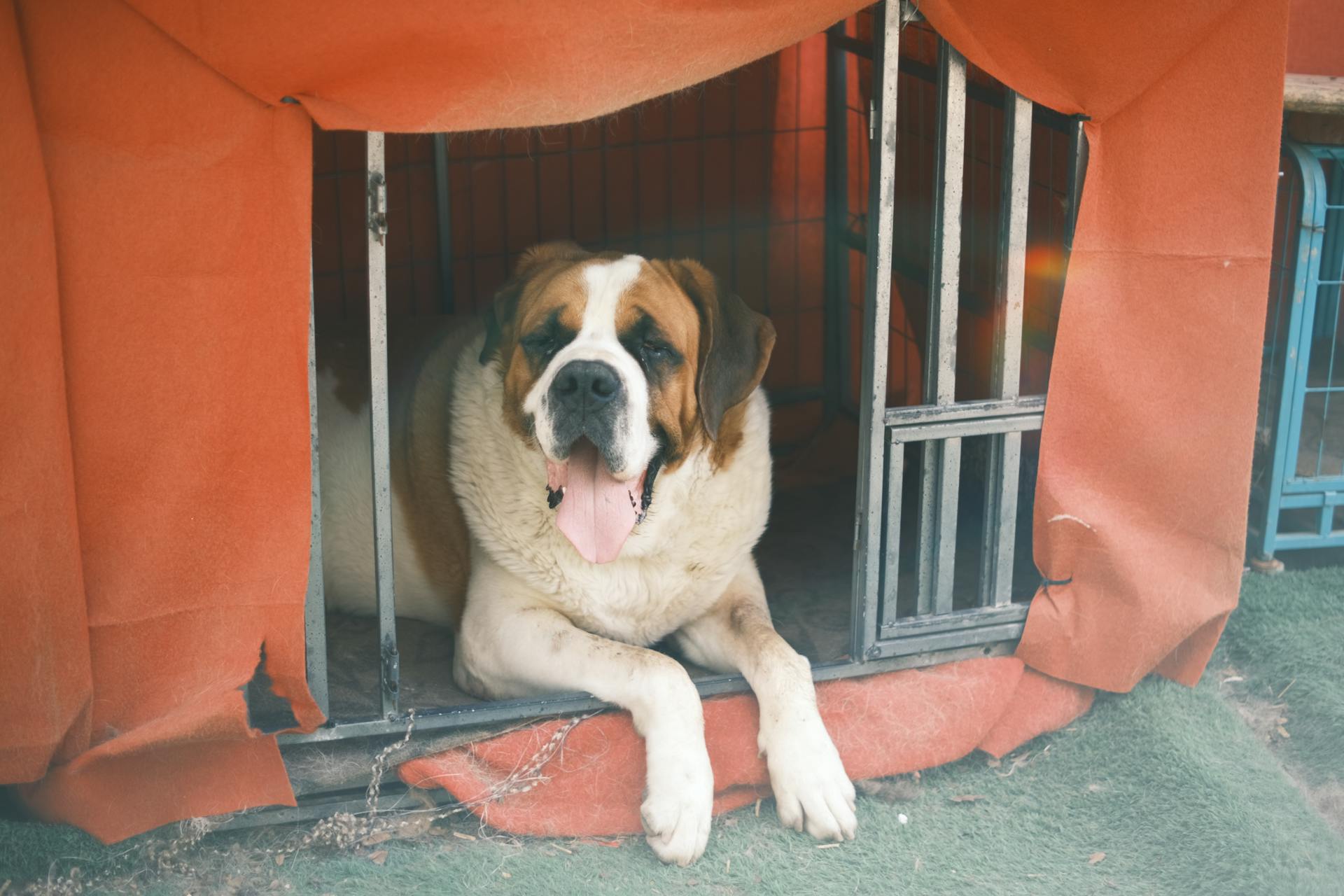
Its coat is primarily white with smaller or larger red patches, and a clear to dark red mantle is considered the most valuable. A brindle reddish color and brownish-yellow color are also allowed, but less desirable.
The tail of a St. Bernard is long and heavy, hanging high. The eye color ranges from light brown to dark brown and should have naturally tight lids, with haws only slightly visible.
St. Bernards have very distinctive features, including wide skulls that give their heads a blocky shape. Their skin on their forehead is fairly wrinkled.
Their nose appears wide and open, and they have a pair of long, floppy ears that lie flat against their heads.
You might like: Russian Toy Terrier Long Hair
Size
When it comes to size, Saint Bernards are quite the gentle giants. Male Saint Bernards stand 28 to 30 inches at the shoulder.
Their size can vary, but they typically weigh between 140 to 180 pounds. Females are slightly smaller, weighing between 120 to 140 pounds.
Temperament and Behavior
Saint Bernards are known for their gentle nature, making them a great breed for families with children. They are calm, patient, and sweet with adults and kids alike.
Their loyalty and affection towards their family are unmatched, and with proper socialization, they can be very friendly. However, they may bark at strangers due to their protective instincts.
As working companions, Saint Bernards live to please their masters and are hard workers. They have retained their natural ability for scent work and can participate in tracking events or search and rescue work.
Saint Bernards are intelligent and willing to please, but they can be stubborn at times. Early training and socialization are crucial to ensure they grow into well-rounded dogs.
Their size makes them natural deterrents against potential intruders, and they are generally not aggressive unless defending a family member.
A fresh viewpoint: Is an Akita a Good Family Dog
Care and Grooming
Saint Bernards need moderate exercise to prevent obesity, which can lead to arthritis or orthopedic problems. Limit exercise for puppies until they reach mature size to avoid hip problems.
Carry your Saint Bernard in the shade and provide fresh water to prevent heat exhaustion. Watch for signs of fatigue, heavy panting, dark-red gums, and weakness or collapse.
Saint Bernards are naturally friendly, but early training is essential to prevent damage to your home and unwanted interactions with strangers. Invest in puppy socialization classes, puppy kindergarten, and obedience classes to help your Saint Bernard learn proper behavior.
Grooming and Care
Saint Bernards have a dense coat that needs to be brushed multiple times a week, regardless of whether they have a short or long coat.
Their nails should be trimmed whenever you can hear them clicking on the floor, which is a sign that they need some attention.
Regular ear checks are crucial to prevent infections, and you can do this by looking for bad odors or redness in the ears.
Cleaning their ears regularly can help prevent infections, and it's also a good idea to brush their teeth multiple times a week to keep them healthy.
Related reading: Beauceron Uncropped Ears
Your veterinarian can recommend great dog-safe grooming products and show you how to properly clean your dog's teeth and ears without causing them any pain.
Saint Bernards don't need a huge house, but they do require a nice-sized yard or outdoor space where they can run around and play.
Before taking your Saint Bernard out for a walk or playtime in the yard, always check the temperature to make sure it's not too hot, as they can quickly become overheated.
On the other hand, they love spending time outside when it's cold and snowy, so be prepared for them to want to spend as much time as possible outside in these conditions.
Spay or Neuter
Spaying or neutering your St. Bernard is one of the best decisions you can make for their health and well-being.
This surgery not only eliminates the possibility of your pet becoming pregnant or fathering unwanted puppies, but it also decreases the likelihood of certain types of cancers.
Spaying or neutering gives us a chance to identify and address some of the diseases your dog is likely to develop, such as hip problems, while they're under anesthesia.
Routine blood testing prior to surgery helps us identify and take precautions for common problems that increase anesthetic or surgical risk.
We'll discuss the specific problems we'll be looking for when the time arrives, so you'll know exactly what to expect.
Naming
The name "St. Bernard" has a rich history, originating from the Great St Bernard Hospice in the Western Alps, between Switzerland and Italy.
The hospice and the dogs are named for Bernard of Menthon, an Italian monk who established the station in the 11th century.
Before the middle of the 19th century, the dogs weren't commonly referred to as "St. Bernard", instead being called "Saint Dogs", "Noble Steeds", or "Barry Dogs".
Your
When you're giving your pet a bath, it's essential to use lukewarm water, as hot water can strip their coat of its natural oils.
Your pet's coat is made up of two layers: a soft undercoat and a coarser outer layer.
See what others are reading: Hungarian Vizsla Coat
Health and Wellness
Saint Bernards are generally a healthy breed, but like all breeds, they can be prone to certain health issues. Some common health concerns include hip dysplasia, elbow dysplasia, and gastric dilatation and volvulus syndrome (GDV), also known as bloat.
Saint Bernards can also be susceptible to osteochondritis dissecans (OCD), a condition that affects the joints, and epiphora, which is excessive tearing. Additionally, they can be prone to metabolic bone disease, a condition that affects the bones.
It's essential to keep an eye out for signs of heat stress, especially in warm temperatures, and to provide adequate exercise and a balanced diet to prevent these health issues. A high-quality diet and regular exercise can go a long way in keeping your Saint Bernard healthy and happy.
Health and Wellness
As a Saint Bernard owner, it's essential to be aware of the potential health issues that can affect your furry friend. Hip dysplasia is a common problem in Saint Bernards, which can lead to arthritis and mobility issues if left untreated.
Additional reading: St Bernard Dog Health Issues
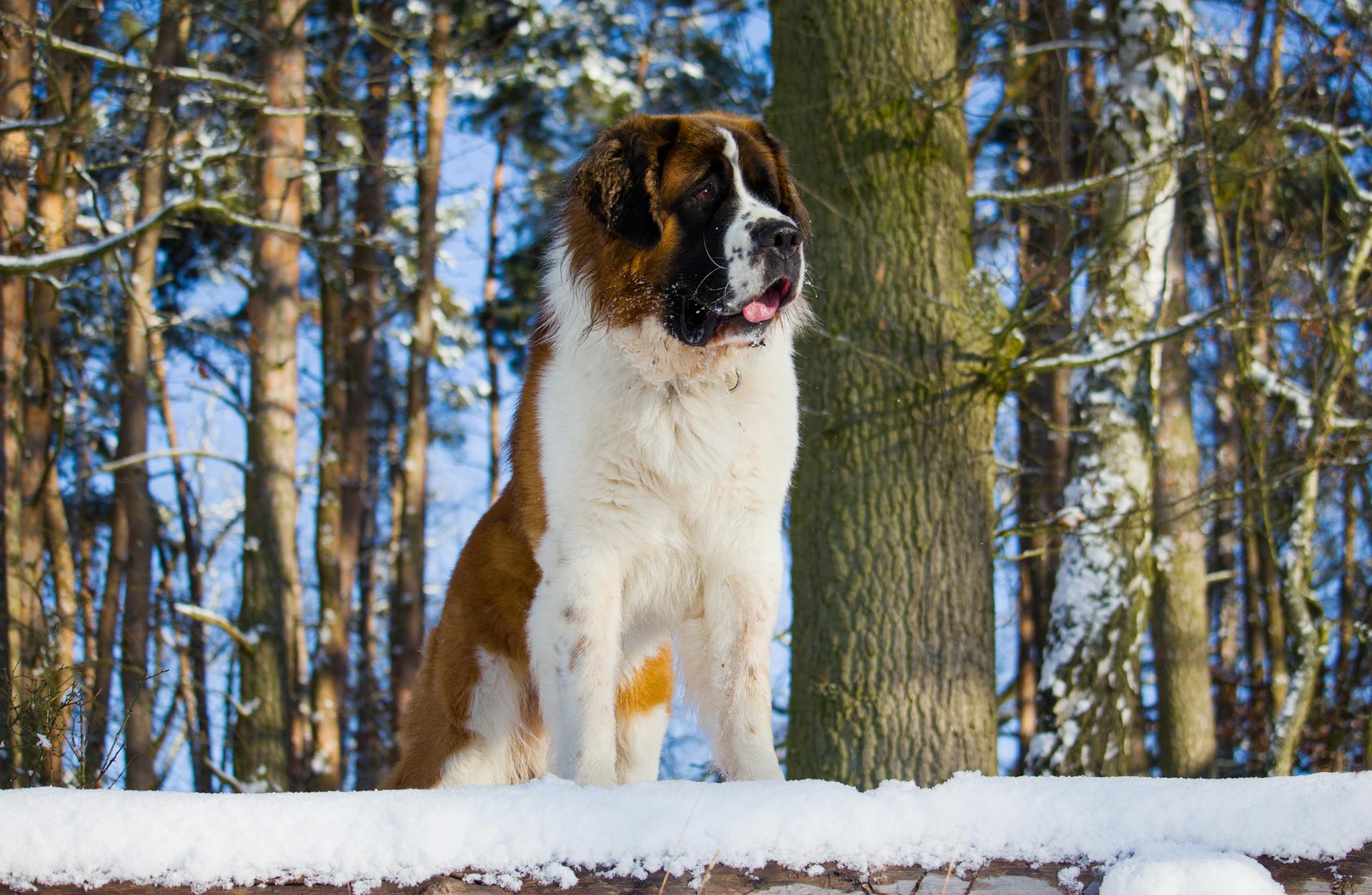
Regular exercise and a healthy diet can help prevent hip dysplasia. However, if your Saint Bernard is already showing signs of hip dysplasia, consult with your veterinarian to determine the best course of action.
Elbow dysplasia is another condition that can affect Saint Bernards, causing pain and arthritis in the elbow joint. Keeping your dog at a healthy weight can help reduce the risk of elbow dysplasia.
Gastric dilatation and volvulus syndrome, also known as bloat, is a life-threatening condition that requires immediate veterinary attention. Be aware of the signs of bloat, such as a swollen abdomen and difficulty breathing.
Saint Bernards are prone to certain eye problems, including epiphora, which is the excessive tearing of the eyes. Regular ear cleaning can help prevent epiphora.
Here are some common health issues that can affect Saint Bernards:
- Hip dysplasia
- Elbow dysplasia
- Gastric dilatation and volvulus syndrome (GDV)
- Osteochondritis dissecans (OCD)
- Epiphora
- Metabolic bone disease
- Congenital deafness
- Fold pyoderma
- Idiopathic epilepsy
- Pyoderma
- Fibrocartilagenous emboli
- Osteosarcoma (appendicular)
- Lymphoma
Liver Disease in Dogs: Causes and Symptoms
Liver disease in dogs can be a serious issue, but it's often treatable if caught early on.
Liver disease in dogs doesn't always mean the worst, especially if it is caught early on.
The causes of liver disease in dogs can be varied, including infections, toxins, and genetic disorders.
Some common symptoms of liver disease in dogs include vomiting, diarrhea, and loss of appetite.
Jaundice, or yellowing of the skin and eyes, is a common sign of liver disease in dogs.
Dogs with liver disease may also exhibit lethargy, weight loss, and a decrease in their usual activity level.
Early detection and treatment can make a big difference in the outcome for dogs with liver disease.
Readers also liked: Liver and White English Springer Spaniel
Training and Activities
Training your Saint Bernard is a must, and it should start the day you bring them home. Training sessions should be daily and kept short to avoid overwhelming your dog.
Saint Bernards grow at an incredible rate, so establishing good behaviors and habits early on is crucial. They can easily outweigh you in a short time.
House training and crate training are essential, and it's a good idea to invest in an extra-large crate size to save time and money. Crates can help protect your dog when you're away and prevent chewed up or peed on items.
Socialization is also vital, and it involves introducing your dog to new people, dogs, and environments. This can be done by taking them on walks in different neighborhoods, hiking new trails, and visiting various parks.
Expand your knowledge: New Pug Dog
Training
Training is an essential part of being a Bernard parent, and it should begin the very day you bring your puppy or dog home.
Saint Bernards grow at incredible rates, and your little puppy will most likely outweigh you in the blink of an eye. You'll want to establish good behaviors and habits while your dog is still small.
The commands sit, down, stay, heel, and drop it are some recommended items to teach your dog. House training may be the first puppy lesson, but don't forget about crate training.

Crates are an excellent resource that can help protect your dog when you're away from home, and they can become a safe space for your canine. An extra-large crate size is a good investment, as it will last longer than a small one.
Socialization is just as important as training, and it can involve introducing your dog to other dogs, people, and children. This will help your dog grow into a kinder, well-rounded personality.
Saint Bernards are smart people-pleasers, but they can have a little stubborn streak. Keeping training sessions short, remaining patient, using happy tones, and rewarding your dog with praise and treats will help keep your dog attentive.
One or two short walks a day is typically enough exercise for Saint Bernards, but every dog is different.
Modern Activities – Great and Little Pass
St. Bernards are no longer used for Alpine rescues, the last recorded instance of which was in 1955. The breed has largely been retired from rescue work.

The Great St Bernard Hospice still retains a connection to the breed, holding onto 18 St. Bernards as late as 2004 for reasons of tradition and sentiment. This nostalgic nod to the breed's past is a testament to its enduring appeal.
An annual celebration of the breed takes place on the Little Saint Bernard Pass and at the town of Rosières-Montvalzan on the French side.
Recognition and Organizations
The St. Bernard is a beloved breed recognized internationally by the Fédération Cynologique Internationale as a Molosser in Group 2, Section 2.
The breed is recognized by multiple kennel clubs, including The Kennel Club (UK), the Canadian Kennel Club, and the American Kennel Club, which all place the St. Bernard in the Working Dog group.
The United Kennel Club in the United States, on the other hand, places the breed in the Guardian Dog Group, while the New Zealand Kennel Club and the Australian National Kennel Council place it in the Utility Group.
If you're looking for a reputable breeder, the Saint Bernard Club of America can be a great resource, as they work to connect buyers with responsible breeders who prioritize the health and well-being of their puppies.
Discover more: Dog Names for 2 Dogs
Breed Organizations
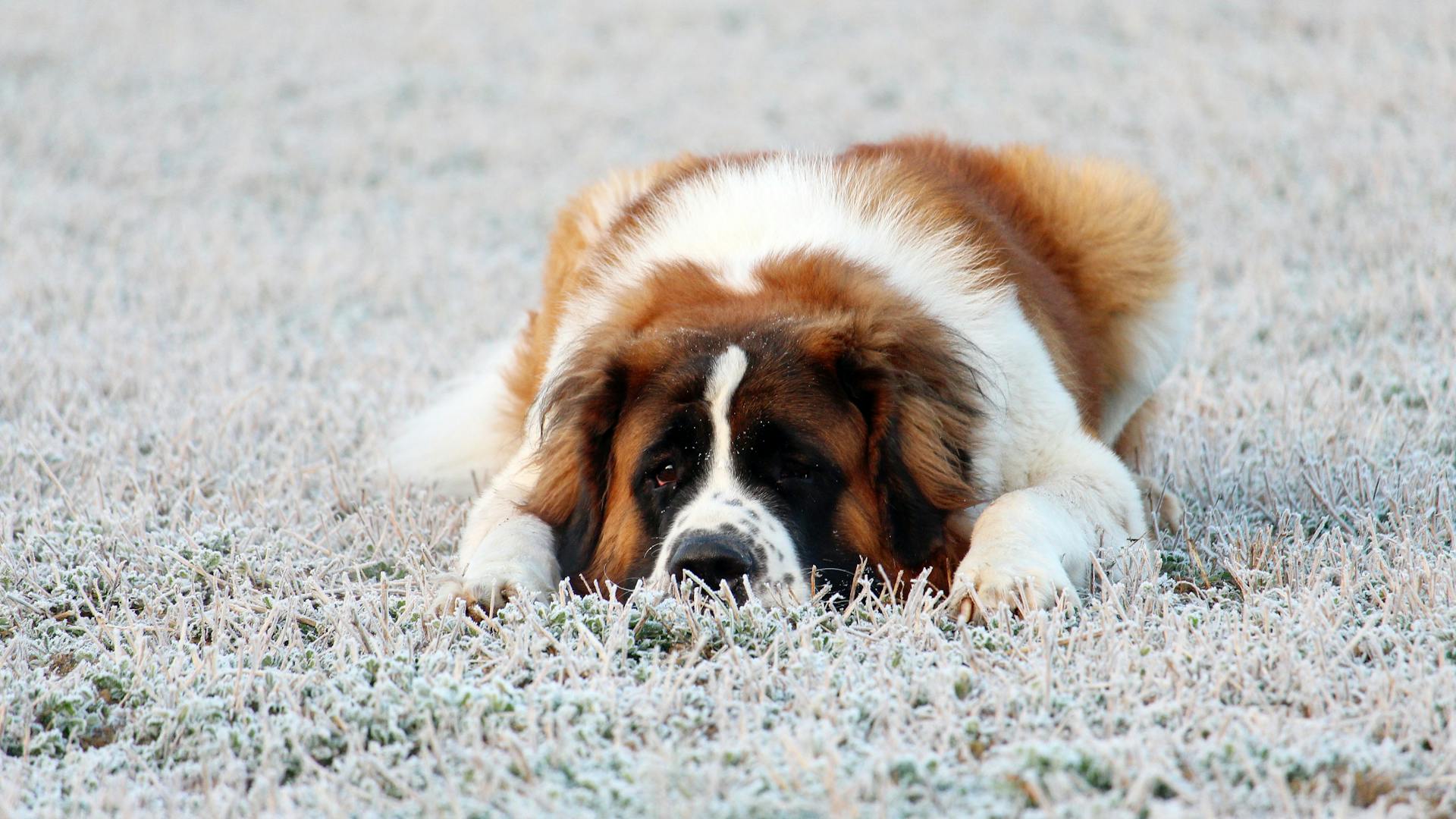
The St. Bernard is recognized internationally by the Fédération Cynologique Internationale as a Molosser in Group 2, Section 2.
The breed is recognized by several kennel clubs, including The Kennel Club (UK), the Canadian Kennel Club, and the American Kennel Club, all of which place the breed in the Working Dog group.
Reputable breeders are committed to breeding healthy, well-socialized puppies that will make great companions, and they will screen their breeding stock for health problems and socialize their puppies from a young age.
The Saint Bernard Club of America can point you toward a reputable breeder, which is a great resource if you're looking to bring a new St. Bernard into your life.
The United Kennel Club in the United States places the breed in the Guardian Dog Group, and the New Zealand Kennel Club and the Australian National Kennel Council place the breed in the Utility Group.
Backyard breeders, on the other hand, are more interested in making a profit than in producing healthy, well-adjusted dogs, which can lead to puppies with health and behavioral issues.
If this caught your attention, see: Great Dane Dog Colors
Rescue Groups
If you're considering bringing a Saint Bernard into your life, it's essential to understand the importance of rescue groups. Many Saint Bernard Rescue Groups exist to help find forever homes for these loving dogs.
If you're in Colorado, you can contact the Colorado St Bernard Rescue for assistance. They're dedicated to rehoming Saint Bernards in need.
Saint Bernard Rescue Foundation, Inc. is another reputable organization that can help you find a Saint Bernard to adopt or foster. Don't hesitate to reach out to them if you're interested in giving a loving home to one of these gentle giants.
If you don't see a rescue listed for your area, don't worry – there are still options available. You can contact the national breed club or a local breed club for guidance, and they can point you in the right direction.
Here are some Saint Bernard Rescue Groups you can consider:
- Colorado St Bernard Rescue
- Saint Bernard Rescue Foundation, Inc.
Unique Aspects
Saint Bernards are naturally friendly and welcoming, with a kind spirit. They thrive on affection from their family and are not overly demanding of attention.
One of the most distinctive features of Saint Bernards is their massive size, which takes up a lot of room. This can be a challenge for families with smaller living spaces.
Saint Bernards are known to be very patient and tolerant of children, making them an excellent choice for families with kids. However, they can be rambunctious and rowdy, especially as younger dogs.
Here are some key traits of Saint Bernards that you should be aware of:
- Affectionate, easygoing, and lovable
- Good with children and other pets
- Eager to please and responsive to training
- Brave and ready for adventure
- Devoted, loyal, and protective
- Intelligent, friendly, and easily won over
Saint Bernards need daily exercise to stay happy and healthy, but they don't do well in the heat. They're also prone to boredom and separation anxiety when left alone, so they require plenty of attention and stimulation.
Common Issues and Considerations
Saint Bernard dogs are prone to certain health issues, so it's essential to be aware of them. Regular veterinary visits and a nutritious diet can help prevent or manage these problems.
Feeding your Saint Bernard two small meals a day can help prevent bloat, a condition that occurs when the stomach expands and twists, cutting off circulation. This can be fatal if left untreated.
Saint Bernards are also prone to hip dysplasia, a hereditary condition that occurs when the hip joint doesn't develop properly. Symptoms include limping, unusual gait, pain, decreased thigh mass, and decreased movement.
To help avoid bone and joint issues, provide your Saint Bernard with an age-appropriate and nutritious diet. Minimize intense or extended exercise until their bones are further developed.
Some common health issues in Saint Bernards include ear infections, arthritis, allergies, lameness, and seizures. These issues can be managed with proper care and attention.
Here are some key signs to watch for in your Saint Bernard:
- Restlessness
- A swollen abdomen
- Pain in the abdomen
- Panting
- Repeated attempts to vomit with no success
If you notice any of these signs, seek veterinary attention immediately.
Common Issues and Considerations
Saint Bernards are prone to certain health issues that you should be aware of. Hip dysplasia is a common problem in this breed, which can be caused by a dog's hip joint not developing properly.
Feeding your Saint Bernard two small meals a day instead of one large meal can help prevent bloat, which can lead to a life-threatening condition called gastric dilatation volvulus (GDV). Regular veterinary visits are essential to screen for abnormalities and prevent fatal diseases.

Saint Bernards can also suffer from heart problems, particularly dilated cardiomyopathy (DCM), which can be treated with various types of therapy and may not be a death sentence.
To minimize the risk of bone and joint issues, it's crucial to provide your Saint Bernard with an age-appropriate and nutritious diet. You should also avoid intense or extended exercise until your Bernard's bones are fully developed.
Some other common health issues in Saint Bernards include ear infections, arthritis, allergies, lameness, and seizures. These conditions can be managed with proper care and attention.
Here are some signs to watch out for if your Saint Bernard is experiencing health issues:
- Restlessness
- Swollen abdomen
- Pain in the abdomen
- Panting
- Repeated attempts to vomit with no success
If you notice any of these symptoms, it's essential to seek veterinary attention immediately.
Hidden Costs of Pet Parenting
Adopting a new pet is a big decision, and the costs go far beyond the adoption fee and that first vet visit.
Many people don't realize that pet insurance can cost around $500 to $1,000 per year, depending on the pet and the policy.
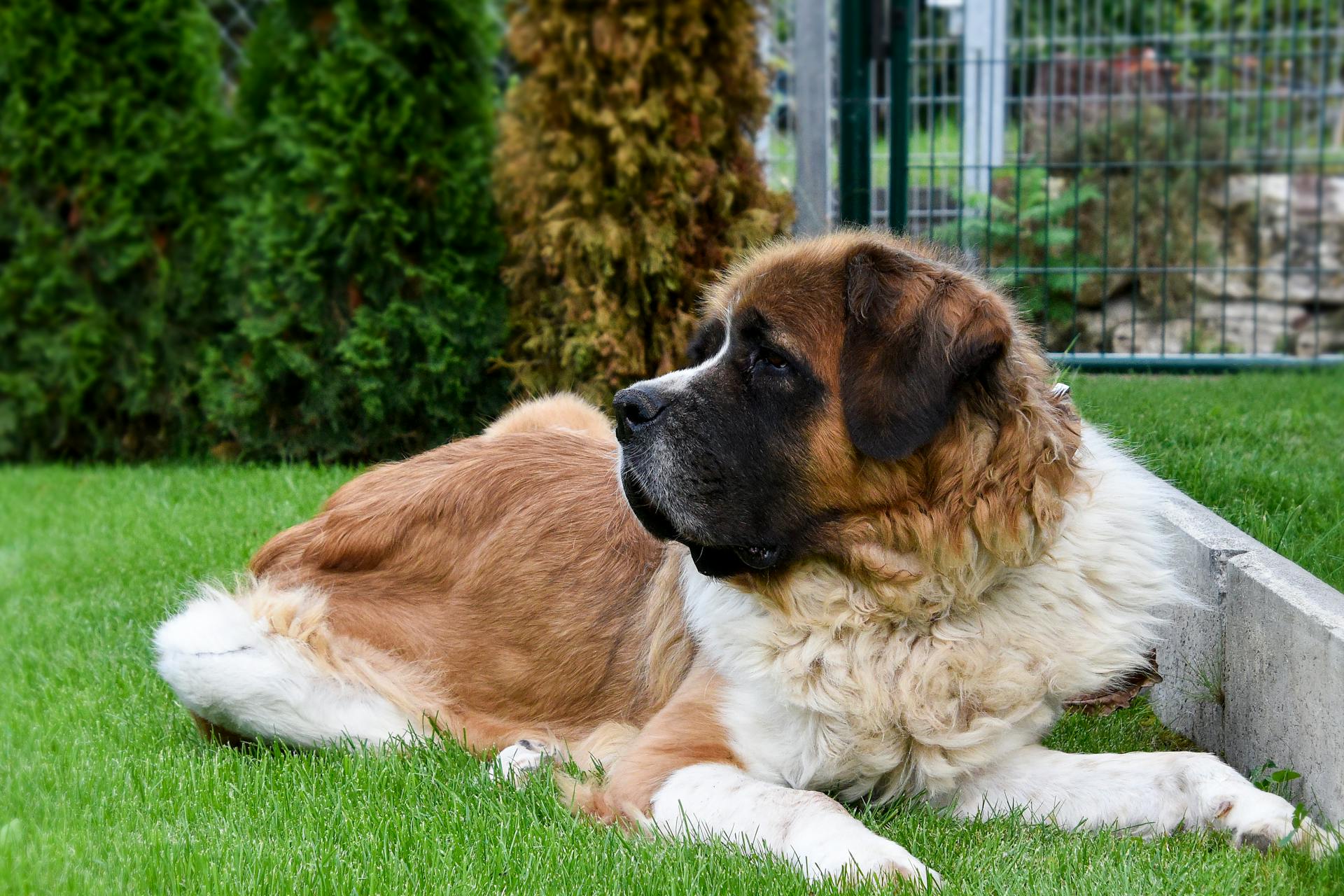
Food and treats can add up quickly, with some pet owners spending upwards of $50 to $75 per month on their furry friends.
Some pets require specialized food or medication, which can increase costs even more.
Regular grooming can cost anywhere from $30 to $90 per session, depending on the pet and the services needed.
Pet owners should also consider the cost of toys, bedding, and other supplies, which can range from $20 to $100 per month.
It's essential to factor these costs into your budget before bringing a new pet into your home.
You might like: English Mastiff at 6 Months
Frequently Asked Questions
Are Saint Bernard dogs expensive?
St. Bernard puppies can cost between $500 to $1,500 on average, with prices varying depending on factors like pedigree. If you're looking for a family dog, you can find a Saint Bernard within a reasonable budget of around $1,000.
Are St. Bernard dogs high maintenance?
Yes, St. Bernard dogs require regular care and attention from their owners. They need a balanced diet and proper nutrition to stay healthy and thrive.
Featured Images: pexels.com