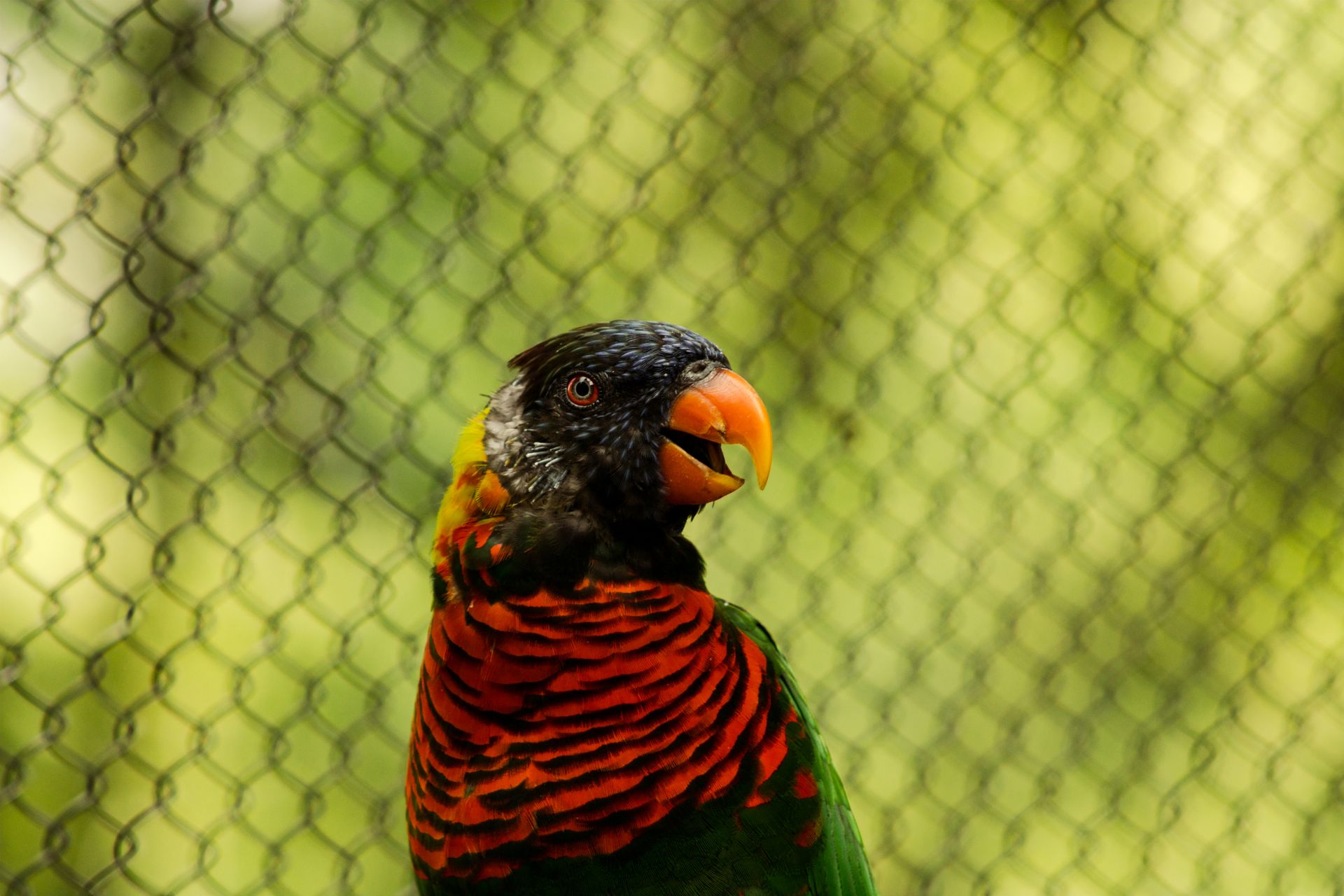
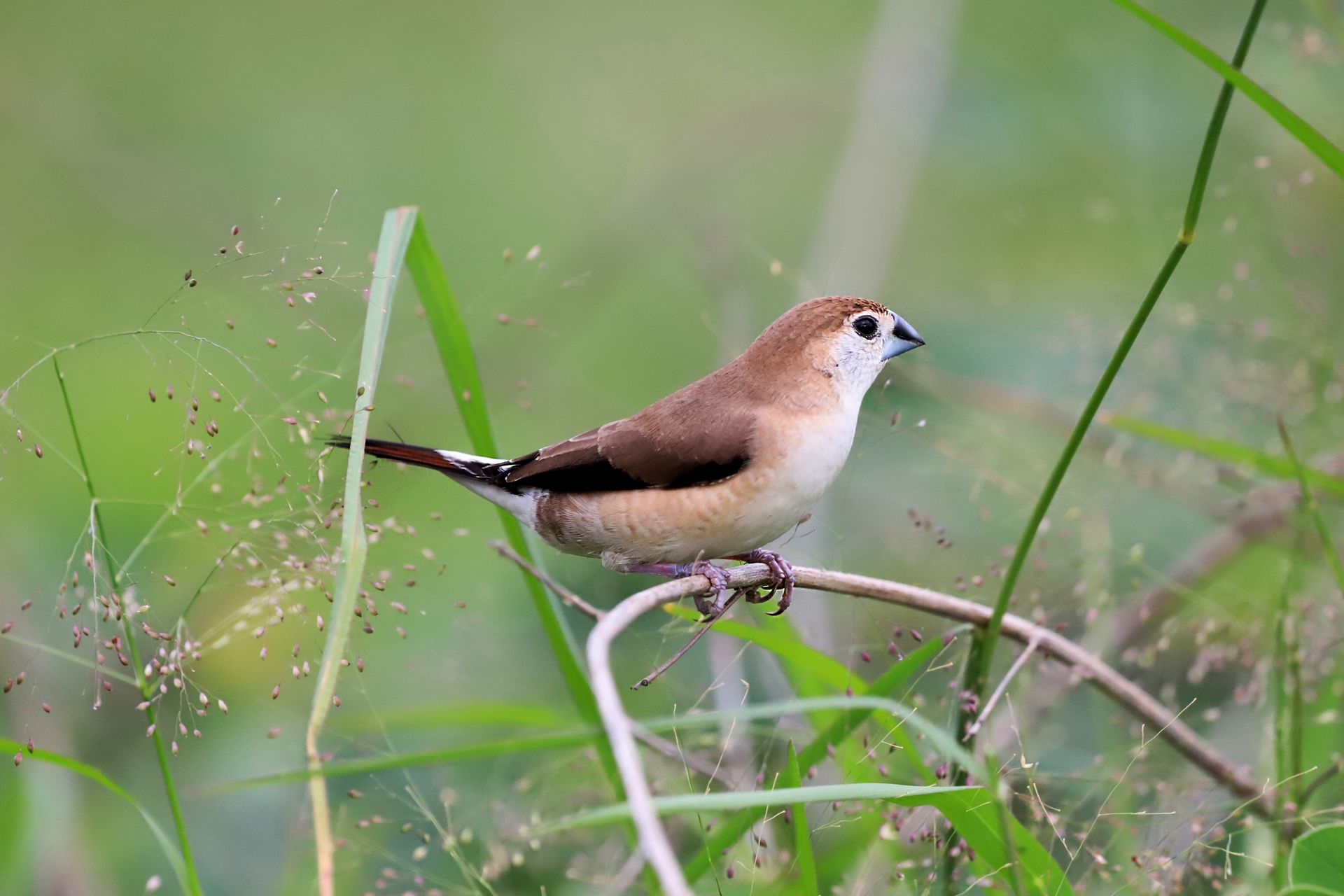
The Rose-Breasted Grosbeak is a stunning bird species that's a joy to behold. They have a distinctive red breast patch, which gives them their name.
Their diet consists mainly of insects, seeds, and fruits. They forage for food on or near the ground, often using their strong beaks to crack open seeds.
In terms of size, Rose-Breasted Grosbeaks are relatively large birds, measuring around 7-8 inches in length.
Habitat and Behavior
The rose-breasted grosbeak is a bird that's primarily found in North America, specifically in the boreal forests of Canada and the northeastern United States. They often travel in small flocks, but can also be seen alone or in pairs.
In their natural habitat, rose-breasted grosbeaks can be found in dense forests with a mix of deciduous and coniferous trees. They tend to prefer areas with an abundance of berries, seeds, and insects.
These birds are known to be migratory, traveling from their breeding grounds in the north to their wintering grounds in Central America and the Caribbean.
What do eat

Rose-breasted grosbeaks mostly stick to foraging for insects, seeds, and fruit in the foliage of trees. They'll come to backyard feeders if they're full during migration months.
Draw in these timid, stocky birds by setting up several feeders filled with birdseed or peanuts, and provide generous perching room. A great way to attract them is to offer black oil sunflower seeds in a platform, hopper, or large tube feeder.
Even though adult rose-breasted grosbeaks love seeds and berries, their young are fed mostly insects, which provides the extra protein they need for growth.
Attract With Plants
Attracting birds to your backyard can be as simple as planting the right trees and shrubs.
If you want to attract Rose-Breasted Grosbeaks, consider planting berry-producing trees and shrubs.
American elderberry, Arrowwood viburnum, and Blueberries are great options to start with.
These plants will provide the necessary food source for the birds, and they're relatively easy to grow.
Here are some specific plants that can help attract Rose-Breasted Grosbeaks:
- American elderberry
- Arrowwood viburnum
- Blueberries
- Flowering dogwood
- Mountain ash
- Red mulberry
- Serviceberry
- Virginia creeper
Song
The Rose-Breasted Grosbeak's song is similar to an American robin's whistle, but faster and more musical.
Males sing more than 650 times per day to attract mates, claim territory, and warn off competitors.
Their courtship dance involves the head tipped back and tail spread out and held upright while flashing their rose-colored underwings.
This impressive display is a key part of their mating ritual, and it's a sight to behold if you're lucky enough to spot one in person.
Identification and Appearance
Rose-breasted grosbeaks are a treat to spot, especially for birders who consider them a sign of spring. They show up east of the Rockies in the spring season.
Males are quite the fashionistas, dressed in black and white with a bold red ascot-like marking on their chests. Their feathers are a great indicator of their identity.
These birds measure about 8 inches long, which is a good size to keep in mind when trying to spot them. They also have a 12 1/2 inch wingspan, making them quite the sight to see.
Females, on the other hand, are a bit harder to identify due to their more subdued coloring. They're brown and white with a striped breast and a dark cheek patch.
Grosbeak
The Rose-breasted Grosbeak is a fairly common denizen of the deciduous woodlands of northern North America.
These birds are known to retreat to the tropics in winter, where they can be found in flocks feeding on fruiting trees such as the Gumbo-Limbo.
Their wintering grounds are likely a far cry from their summer habitats, but it's a necessary migration to survive the harsher climates of the north.
In their natural habitats, the Rose-breasted Grosbeak's distinctive plumage is a sight to behold, but we can only imagine what it's like to see them in their wintering grounds, surrounded by lush greenery and vibrant fruit trees.
Identification
Rose-breasted grosbeaks are a delight to spot, and for good reason - they're a clear sign of spring.
Males are easily recognizable with their bold black and white feathers and distinctive red ascot-like marking on their chests.
These birds measure about 8 inches long with a 12 1/2 inch wingspan, making them a bit of a showstopper.

Females, on the other hand, are a bit harder to identify due to their drab coloring.
They sport a brown and white striped breast and a dark cheek patch, with long white stripes above their eyes on a heavily streaked brown body with yellowish underwings.
One feature that's easily recognizable in both males and females is their thick conical bills.
Conservation and Support
The Rose-breasted Grosbeak population is in decline, according to the conservation consortium Partners in Flight. They face threats like being trapped for sale as cage birds and widespread deforestation, especially in their winter range.
Helping to support their conservation mission can make a big difference. Organizations like ABC and Fundación ProAves in Colombia have established reserves, such as the Cerulean Warbler Conservation Corridor, which provide winter habitat for the Rose-breasted Grosbeak and other bird species.
These reserves are crucial for the birds' survival, as they provide a safe and secure habitat during nesting and migration seasons. Landowners can also play a vital role in supporting the Rose-breasted Grosbeak by creating bird-friendly habitats on their properties.
Here are some ways landowners can help:
- Increase the complexity of your woods with layers from the ground to the canopy above
- Create small openings in the forest: Girdle single trees, or selectively harvest a tree or two for firewood
- Diversify tree and shrub species: Provide bird-friendly native shrubs that produce fall fruit in both your yards and forests like viburnams, spicebush, and hawthorns.
- Keep out invasive plant species that reduce the food available during the nesting season like Oriental Bittersweet and Autumn Olive.
- Report sightings to eBird to help biologists understand and steward the places Rose-breasted Grosbeak prefer in North Carolina for both nest site selection and migratory corridors
Audubon North Carolina is also working to support the Rose-breasted Grosbeak through their Working Lands program, which collaborates with local landowners to restore forest habitats for priority bird species, including the Rose-breasted Grosbeak.
Range and Distribution
The Rose-breasted Grosbeak is a bird that loves to travel, with a breeding range that stretches across much of North America's temperate deciduous forest.
They can be found in the Midwest and Northeast of the U.S., as well as in the Appalachians, where their breeding range flares southward to Georgia's northern border.
During migration, they're found throughout the U.S. east of the Rockies, and some even venture into the Caribbean, where they can be seen in small groups, often associated with mixed-species feeding flocks.
In their wintering range, they occur in many habitats, including disturbed areas with fruiting trees, shade-coffee plantations, and along the edges of dry, semi-humid, and humid tropical forests.
They're primarily spotted in the eastern half of the country, and are summer residents in northern states, where they cross paths and sometimes mate with black-headed grosbeaks in the Great Plains, resulting in hybrid offspring.
You might enjoy: White Breasted Nuthatch Range
Region and Range

The Rose-breasted Grosbeak's breeding range stretches across much of the North American area dominated by temperate deciduous forest, from southern Newfoundland west to southern Northwest Territories in Canada.
This bird is an international traveler, and its migration routes take it throughout the U.S. east of the Rockies, as well as through the Caribbean during migration.
In its breeding range, the Rose-breasted Grosbeak is found in deciduous and mixed woods, also well-wooded residential areas and parks.
They are primarily spotted in the eastern half of the country, and are summer residents in northern states, crossing paths and sometimes mating with black-headed grosbeaks in the Great Plains.
Some Rose-breasted Grosbeaks stray from their normal migration routes, showing up at scattered sites throughout the western states, particularly in the spring.
Their wintering range spans from central Mexico south to Ecuador, and some even reach Peru, with a good number passing through the Caribbean during migration.
A different take: Rose Breasted Grosbeak Migration
North Carolina Locations

If you're looking to spot a Red-breasted Grosbeak in North Carolina, head to the Amphibolite Mountains IBA, Nantahala National Forest, Plott Balsam and Great Balsam Mountains, Highlands Plateau, and Slick Rock Wilderness.
These areas offer the perfect habitat for these birds, with wooded areas and small patches of young forest scattered throughout. In fact, they're most often found above 3500 feet in elevation, where these forests occur.
During migration, you might catch a glimpse of these birds at the occasional sunflower feeder. Just keep in mind that they're more likely to be spotted in the mountains, or by those willing to travel to view them.
Frequently Asked Questions
Is it rare to see a Rose-breasted Grosbeak?
The Rose-breasted Grosbeak is a fairly common bird in northern North America's deciduous woodlands, but its migratory habits make it less frequent to spot in certain seasons. Its tropical wintering grounds are a good place to spot it in flocks.
What does it mean when you see a grosbeak?
Seeing a rose-breasted grosbeak may indicate spiritual support, protection, or guidance from ancestors or divine spirits. This bird is believed to carry a significant message in various cultures, worth exploring further.
How do I attract grosbeaks to my yard?
To attract rose-breasted grosbeaks to your yard, try offering sunflower seeds, safflower, and other favorite foods such as hulled peanuts and grape jelly. Providing these treats can entice these beautiful birds to visit your yard.
Featured Images: pexels.com