Rhacodactylus ciliatus is found in the wild on the island of New Caledonia, specifically in the humid forests and rocky areas of the island's south and east coasts.
These geckos are nocturnal, meaning they're most active at night, and they spend their days hiding in dark, sheltered spots like under rocks or in tree cavities.
They're arboreal, so they spend most of their time in trees, where they can be found climbing and jumping with ease.
Distribution
Crested geckos, specifically Rhacodactylus ciliatus, are found in a specific region of the world. They are endemic to the islands of Grand Terre and the Isle of Pines in New Caledonia.
Their geographic range is limited to these islands, although there are unconfirmed reports of them being present on Kôtomo Island as well.
Interestingly, the term "island endemic" is used to describe their distribution, meaning they are found only on these islands.
Here's a breakdown of their geographic range:
- Grand Terre (Provence Sud), New Caledonia
- Isle of Pines, New Caledonia
- Kôtomo Island, New Caledonia (unconfirmed)
Their biogeographic region is classified as Australian, which is a broad category that includes not only Australia but also nearby islands and regions.
Physical Description
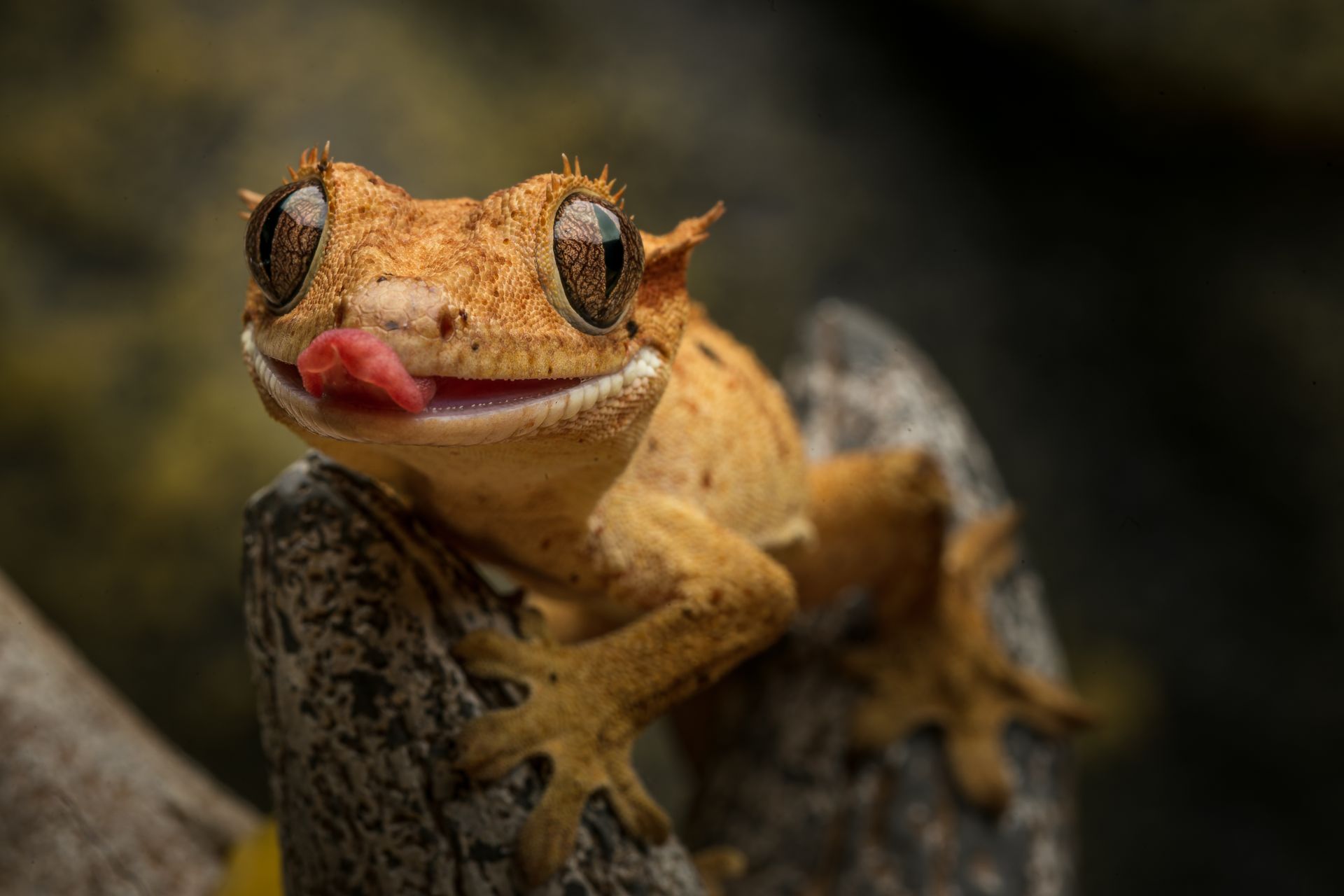
Crested geckos have a relatively large, triangular head with two large eyes and two relatively large ear openings on either side of the head.
Their long bodies are covered in very fine, light tan, peach, or reddish brown-colored granular scales, and they have moderately thick, prehensile tails.
These tails also have setae at the tip, which helps with balance when hanging from tree branches.
Adult crested geckos typically average 20.3 centimeters in total length and 10.2-11.9 centimeters snout-to-vent length (SVL).
They lack eyelids, but have a clear protective covering over each eye, which they must lick with their tongues periodically to keep clean and moist.
Appearance
Crested geckos have a relatively large, triangular head with two large eyes and two relatively large ear openings on either side of the head.
Their bodies are covered in very fine light tan, peach, or reddish brown-colored granular scales that are long in length.
These geckos have moderately thick, prehensile tails that are useful for hanging from tree branches or trying to regain balance.
A thin, continuous, calcareous crest projects along either side of the back and also above the eyes and portions of the limbs.
Their crests seem to serve primarily to keep dust and other particles out, but the purpose of the dorsal and limb crests is unknown.
There are three color morphs that appear in wild crested geckos: patternless, tiger, and white-fringed.
Crested geckos have four limbs, each ending in four fingers, which are equipped with a network of hairs (setae) that allow them to walk on very smooth vertical surfaces.
These pads are especially important in tree climbing, giving them a unique ability to navigate their environment.
Adult crested geckos typically average 20.3 centimeters in total length and 10.2-11.9 centimeters snout-to-vent length (SVL).
Size
The size of the subject is quite impressive, measuring a whopping 10 feet in length.
It can be found in various parts of the world, including dense forests and remote islands.
Its weight is estimated to be around 500 pounds, which is quite substantial.
Despite its size, it's surprisingly agile and can move quickly when needed.
Development
Development is a crucial stage in the life cycle of Rhacodactylus ciliatus, and it's fascinating to learn about the factors that influence their growth.
Temperature plays a significant role in determining the rate of development, offspring size, and even sex. Warmer incubation temperatures tend to lead to higher proportions of males, while colder temperatures result in more females.
After hatching, young crested geckos rely on stored yolk remains for sustenance, and they won't eat for 3-5 days until they shed their skins for the first time.
Growth
As we explore the concept of development, it's essential to understand the role of growth in this process. Growth is a fundamental aspect of development, and it's what allows individuals, organizations, and communities to evolve and improve over time.
Growth can be measured in various ways, including an increase in size, capacity, or complexity. For example, a company's growth can be seen in its expansion into new markets or the development of new products.
Growth is often driven by innovation, which can take many forms, such as new technologies, processes, or business models. A great example of this is the development of e-commerce, which revolutionized the way people shop and interact with businesses.
As growth occurs, it can lead to increased productivity and efficiency, allowing individuals and organizations to achieve more with less. This was evident in the article's discussion of productivity and efficiency, where it was noted that some individuals can achieve the same results with 20% less effort.
Growth can also lead to increased opportunities for learning and development, as individuals are exposed to new experiences and challenges. This can be seen in the article's discussion of personal development, where it was noted that individuals can learn new skills and gain new perspectives through experiences such as travel and volunteering.
Life Cycle
The life cycle of a crested gecko is a fascinating process that's heavily influenced by temperature.
Temperature is a determining factor in the rate of development, offspring size, and even sex in crested geckos.
Warmer incubation temperatures tend to lead to higher proportions of males, while colder temperatures result in more females.
Young crested geckos won't eat for 3-5 days after hatching, instead relying on stored yolk remains for sustenance.
After this initial period, hatchlings will start searching for food like nectar, fruits, and small insects.
Crested gecko eggs incubated at higher temperatures develop faster than those kept at lower temperatures.
Behavior and Communication
Crested geckos use a high-pitched chirping sound to call for a mate and as a defense mechanism to frighten a predator. This sound is a key part of their behavior and communication.
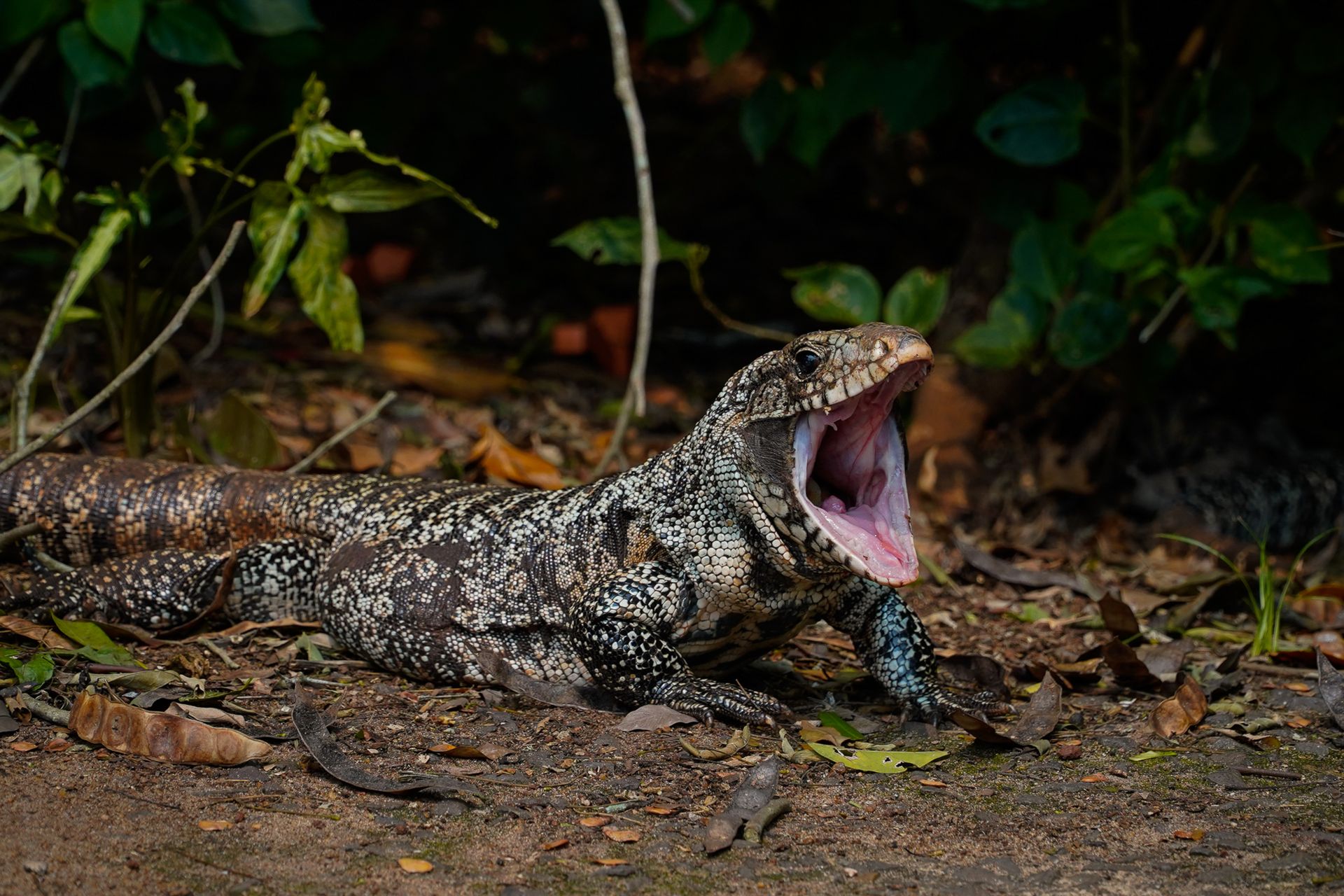
They also use visual cues to express themselves, such as rising up on their hind legs and opening their mouths wide in a threatening posture when startled. This is a clear example of how they use body language to communicate.
Crested geckos have specialized eyes that allow them to see in the dark, which is essential for their nocturnal lifestyle. Their eyes contain cones, which provide color vision, and their pupils are vertically slit-shaped with slightly lobed edges.
Here's a breakdown of the perception channels used by crested geckos:
- Visual
- Tactile
- Acoustic
- Vibrations
- Chemical
Communication
Crested geckos are quite vocal, using a high-pitched chirping sound to call for a mate and as a defense mechanism to scare off predators.
This chirping sound is a key part of their communication strategy, and it's not the only way they interact with their environment. Crested geckos also use visual cues to convey information.
If startled, crested geckos will rise up on their hind legs and open their mouths wide in a threatening posture. This display is a clear warning to potential threats that they're not to be messed with.
Mating involves jerky body motions from the male, which is a unique and fascinating aspect of crested gecko behavior.
Here are the different perception channels used by crested geckos:
- Visual: used for seeing in the dark and detecting movement
- Tactile: used for sensing vibrations and touch
- Acoustic: used for hearing sounds, including their high-pitched chirping
- Vibrations: used for detecting movement and vibrations
- Chemical: used for detecting scents and pheromones
Wild Behavior
In the wild, Crested Geckos are expert climbers and jumpers, thanks to their lamellae and tiny claws on each toe. They can even drop their tails as a lure for predators when startled or threatened.
Most adult Crested Geckos in the wild have no tail, and it doesn't regenerate like some other geckos. The tail is lost due to various reasons, including predator attacks, stress, and even interactions with other gecko species.
Their main predators in the wild include larger geckos, feral cats, and rats, but a tiny fire ant from South America is now a significant threat to their population. This fire ant is locally called "fourmis électrique" or electric ant.
Crested Geckos are crepuscular animals, sleeping during the day and emerging at night to hunt for food. They cling to leaves and branches with their spread toes and flattened bodies, and can be found in the undergrowth of the forest up to four meters above the ground.
They mainly feed on insects, berries, and plant nectar, and can be found on thinner branches, small lianas, and shrubs. The smaller Crested Geckos are often forced to live in the lower regions of the forest due to competition from larger species.
Females deposit their eggs in tree hollows or crevices, or sometimes hide them on the forest floor. The temperature in their habitat fluctuates between 22°C and 29°C during the day and 16°C and 22°C at night, depending on the season.
Crested Gecko
Crested geckos are an arboreal species of gecko that are known for being a great beginner species of pet gecko.
They live at ambient room temperatures, with lows of 64 and highs of 90, and eat a diet of fruit and insects.
A pair can be housed comfortably in a 20 gallon tall tank with no more than a few branches for climbing and leaves for hiding.
Broaden your view: Rhacodactylus Leachianus Gecko
They should be sprayed with fresh water 1-2 times per day and fed 3-4 times per week depending on temperature and hunger.
They will eat a wide variety of fruits, from organic baby food with added calcium and D3 vitamins to Meal Replacement Powdered offered on the internet or at reptile shows.
Crested geckos are personable, easy to handle, and can even walk on glass.
Adults are about 7" in full length and come in many colors, which can change throughout the day and their lives.
Characteristics and Traits
Crested geckos have a unique triangular and flattened head design, which is likely due to their habit of moving through foliage.
Their triangular head is a result of their environment, helping them navigate through dense leaf litter and foliage.
The pointed snout of the crested gecko may also aid in digging or hiding in leaf litter.
A distinctive feature of crested geckos is the row of crests made of elongated scales lining their eyes, sides of the head, and upper body.
These crests serve as sensory structures and eye protection, giving the geckos an edge in their natural habitat.
Crested geckos do not regenerate their tails when dropped, unlike most geckos, but instead produce a tiny pointy knob.
This unique characteristic is a result of their adaptation to their environment, where tailless individuals are the norm.
Adult crested geckos typically range from 4 to 4.5 inches in snout-to-vent length, with a total length of 7.5-9 inches.
They weigh between 35-60 grams, making them a relatively small species of gecko.
Males and females can be distinguished by their physical characteristics, with males becoming sexually mature between 10 to 15 months and females at 12 months of age.
The external hemipenal bulge at the base of the tail becomes visible in males after 3-4 months of age, while females have a flat base of their tails with much smaller bulges.
Wild Habitat
Crested geckos in the wild are mainly arboreal, and are excellent climbers and jumpers.
They are equipped with lamellae and tiny claws on each toe which help them cling on smooth surfaces and grasp twigs and branches.
The tips of their long prehensile tails also have a flattened end covered in lamellae, and they use this tail to help balance and secure themselves as they move through the trees.
Crested geckos can drop their tails as a lure for an enemy when startled or threatened, and virtually all adult specimens observed in the wild had no tail.
Their major enemies in the wild are larger geckos, feral cats, and particularly rats, but they're also threatened by a tiny fire ant originating from South America.
Crested geckos sleep mostly in between the thick foliage of plants, especially in the epiphytic Bird's-nest ferns, where they cling to overlapping leaves with their spread toes and flattened bodies.
They emerge at night, climbing and jumping through the smaller trees, lower shrubs, and lianas in search of insects, berries, and plant nectar to eat.
The smaller Correlophus ciliatus is forced to the lower regions in the forest by the larger and more dominant species, who claim the more robust branches and tree trunks.
Temperatures in the habitat of Correlophus ciliatus fluctuate between 22°C and 29°C in the daytime and 16°C and 22°C at night, depending on the season.
February is the warmest month of the year, while August is the coldest month of the year, and the driest months are from August through December.
Crested geckos are found in the southeastern rainforests of Grand Terre, where they spend daytime hours resting in thick vegetation near the forest floor.
They typically rest at elevations from 150-1000 meters above sea level, where it is cooler and less sunny.
At night, they spend much of their time foraging in shrubs and lower portions of the canopy, rarely traveling much higher than 3 m from the forest floor.
Crested geckos deposit their two eggs in tree hollows or crevices, but are sometimes hidden on the forest floor between leaf litter or decomposing tree branches.
Frequently Asked Questions
Why did people think crested geckos were extinct?
Crested geckos were presumed extinct because they were not seen again after their initial description in 1866, following the colonization of New Caledonia by the French. This lack of sightings led to a long-held assumption that they had become extinct.
Featured Images: pexels.com