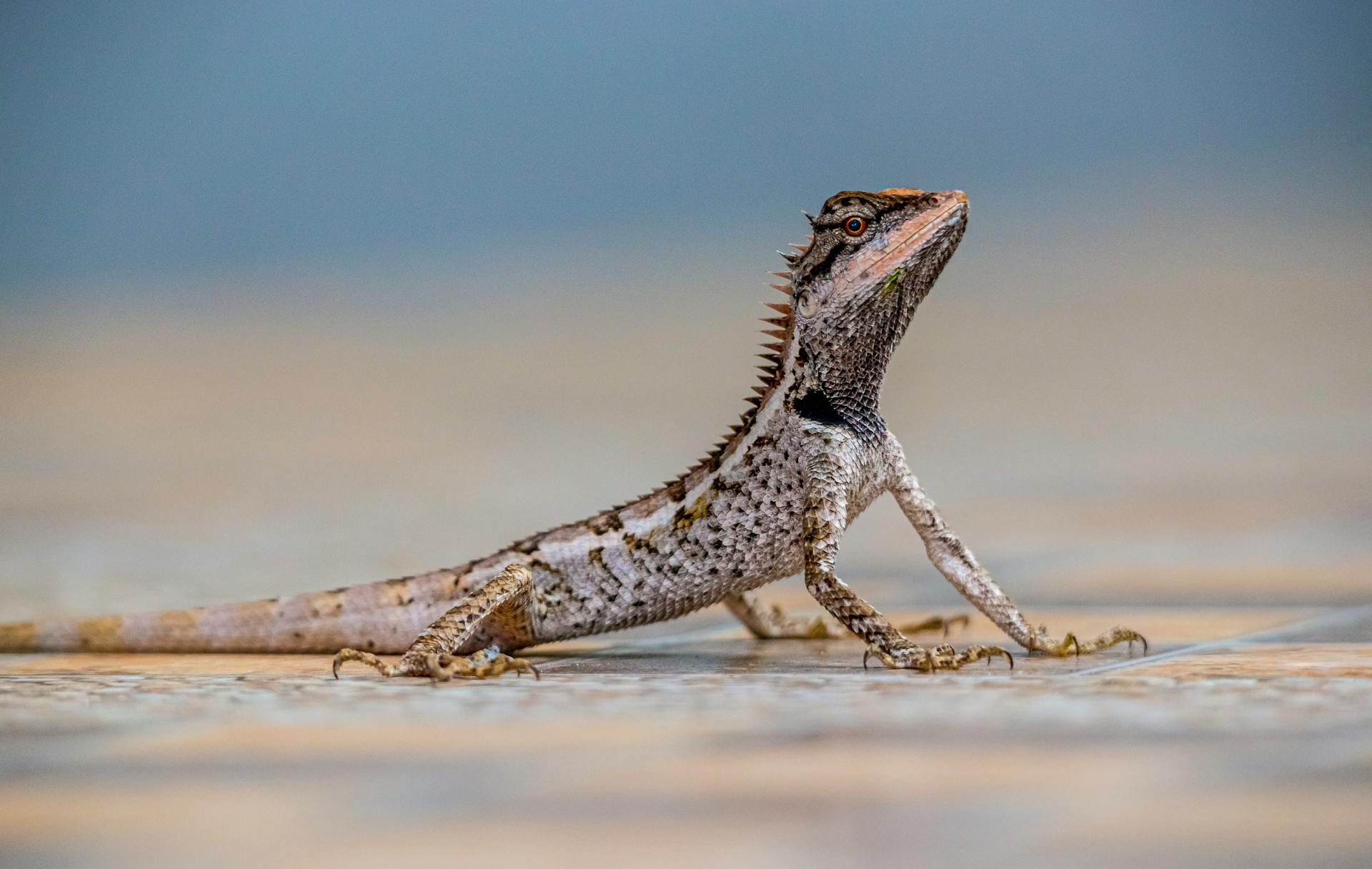
Reptiles are often misunderstood as being slow-witted and lacking in cognitive abilities. However, research suggests that many reptiles possess impressive problem-solving skills.
Some species, like the green iguana, have been observed using tools to obtain food. This intelligent behavior is a testament to their adaptability and resourcefulness.
In the wild, reptiles have been known to navigate complex environments and remember key locations, such as food sources and shelter. This spatial memory is a remarkable cognitive ability.
Studies have shown that certain reptiles, like the Komodo dragon, can recognize and respond to individual members of their species, demonstrating a level of social awareness.
Reptile Intelligence
For a long time, there was little in the way of serious research into reptile cognition, but our understanding of reptile intelligence is starting to change.
Dr. Jennifer Coates, DVM, notes that the intelligence of reptiles has not been well-studied, likely because it was assumed they were not very smart.
On a similar theme: Which of the following Is Not a Reptile?
Several studies provide fascinating insight into the intelligence of reptiles, and it's likely that similar forms of intelligence are present in other reptile species.
Reptiles can demonstrate intelligence and learn complex behaviors, which is great news for reptile parents who want to strengthen their bond with their pets.
You might be surprised to discover what your lizard, snake, tortoise, or turtle can do when you spend time learning about how they exist in the wild and come up with ways to keep their brains active.
The more we learn about reptiles and their cognitive abilities, the more fascinating they become, and it's always a good idea to provide enrichment for your pet reptile.
Lizard Intelligence
Lizard Intelligence is a fascinating topic, and it's clear that these creatures are more than just simple animals. They have been observed to problem-solve and gain access to food even when presented with a challenge that's significantly different from one they've previously experienced.
Dr. Coates cites a study where anoles demonstrated a surprising ability to problem-solve and gain access to food. This shows that lizards are capable of adapting to new situations and thinking outside the box.
Side-blotched lizards can learn and remember how to efficiently find their way to shelter within a maze. This indicates that they have a strong sense of spatial awareness and can learn from their environment.
Bearded dragons have been shown to learn to imitate other animals in order to open a door and retrieve a food reward. This level of cognitive function is impressive and shows that these lizards are capable of complex behavior.
Lizards also experience emotions, and with gentle handling, iguanas in a study displayed changes in their heart rate, which indicate an emotional response. This suggests that lizards are not just intelligent, but also have emotional depth.
If this caught your attention, see: Do Dogs Have Emotional Intelligence
Snake Intelligence
Snakes are capable of impressive cognitive feats. They can learn and adapt to their environment.
In a study from the University of Rochester, corn snakes were able to find their way through mazes and even improve their time with repeated attempts. This demonstrates their ability to learn and problem-solve.
Training wild Burmese pythons to press a button for a food reward showed that they can learn complex behaviors. The pythons only pressed the button when it was illuminated, indicating they understood cause-and-effect relationships.
By understanding how snakes learn and adapt, we can provide them with more engaging and stimulating environments. This can be as simple as creating a maze for them to navigate or providing a problem to solve.
Pet Intelligence
Reptiles can demonstrate impressive intelligence, and many can learn complex behaviors. Dr. Coates believes that similar forms of intelligence are present in other reptile species.
Some reptiles can even recognize their owners, although the degree to which they do so may vary based on the species. Veterinarian Dr. Sara Ochoa notes that pet reptiles learn where the food is coming from and not to bite the person that feeds them.
Pet reptiles can learn to associate certain people with food, and some will even move from one side of the cage to another to get to their favorite person. This behavior has also been demonstrated in zoos, where reptiles clearly recognize people who handle and feed them regularly.
Reptiles can be trained to perform a variety of behaviors, including walking on a leash or recognizing visual or physical signals for food. Skilled animal trainer Linda Brodzik has taught her tortoises to follow a target, "high five", detect scents, and go to their kennel.
With patience and practice, you can teach your pet reptile to come to you when called. Dr. Ochoa reports that her tortoise will come to her when called, although it may take a few minutes.
Training and Enrichment
Training and enrichment are key to unlocking reptile intelligence. By teaching your reptile to perform husbandry behaviors, you can make caring for them easier and reduce the risk of being bitten.
Reptiles in zoos and other facilities are commonly trained using positive reinforcement techniques, which are also used to train mammals and birds. These techniques involve pairing behaviors with something the reptile wants, usually food.
Clicker and target training are effective methods for teaching reptiles to learn many husbandry behaviors. This can include things like coming when called, allowing handling, and even performing medical procedures.
Providing mental and physical enrichment in a reptile's habitat can also demonstrate their intelligence. Consider adding activities that challenge them, such as floating turtle feeders or encasing insects in jars they need to open.
Understanding Pet Intelligence
Reptile intelligence is a fascinating topic, and understanding how intelligent your pet reptile is can help strengthen your bond with them. Dr. Coates believes that similar forms of intelligence are present in many reptile species.
Some pet reptiles can even learn to recognize their owners and respond to their names. The answers to these common questions can help you build a stronger relationship with your pet.
Reptiles can be trained to perform a variety of behaviors, from walking on a leash to recognizing specific visual or physical signals. Skilled animal trainer Linda Brodzik taught her tortoises Dewberry and Darwin to follow a target, "high five", detect scents, and go to their kennel.
Reptiles can benefit greatly from enrichment, and learning about how they exist in the wild can help you come up with ways to keep their brains active.
Featured Images: pexels.com