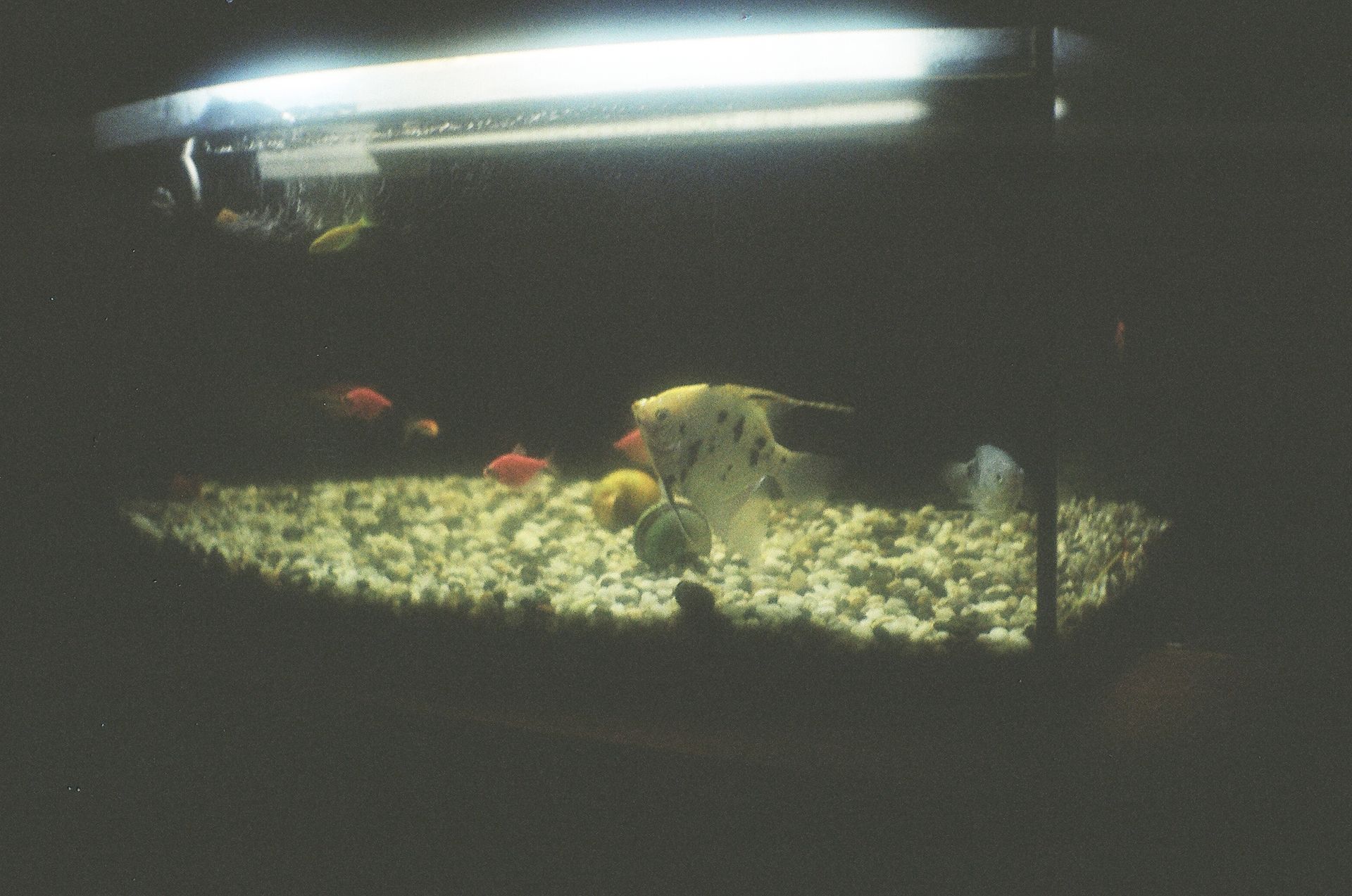
Rasboras fish are a popular choice for beginners due to their hardiness and ease of care. They thrive in well-planted tanks with plenty of hiding places and open swimming areas.
Rasboras are native to the slow-moving rivers and streams of Southeast Asia and are adapted to living in small schools. They are active swimmers and prefer water temperatures between 72°F and 82°F.
To keep rasboras happy and healthy, you'll want to provide them with a tank that's at least 20 gallons in size. This will give them plenty of space to swim and explore.
In the wild, rasboras feed on small insects and plankton, so you'll want to provide them with a varied diet that includes high-quality flake food and live or frozen foods such as brine shrimp or daphnia.
On a similar theme: Cancel Plenty
Rasbora Species
Rasboras are a diverse group of fish, with over 60 species classified within the genus. Some popular species include the Harlequin Rasbora, which has a distinctive black triangle extending from its midsection to its tail, and the Brilliant Rasbora, which comes in two varieties with different color patterns.
The Harlequin Rasbora is a classic beginner fish that is easy to care for and can thrive in a variety of water conditions. It prefers temperatures between 72-82°F (22-28°C) and pH levels between 6-8.
Here is a list of some of the most common rasbora species:
- Harlequin Rasbora (Trigonostigma heteromorpha)
- Brilliant Rasbora (Rasbora borapetensis and R. einthovenii)
- Lambchop Rasbora (Trigonostigma espei)
- Glowlight Rasbora (Trigonostigma hengeli)
- Three-lined Rasbora (Rasbora trilineata)
These species are generally peaceful and can be kept in a community aquarium with other small, peaceful fish.
Chili Rasbora
The chili rasbora is a real showstopper, with its deep, cool-toned red color and black markings. They're a part of a group of closely related micro rasboras that are all reddish-colored with different black patterns.
These tiny fish are only 0.75 inch (2 cm) in length, which means they have a very small bioload and can thrive in tanks as small as 3–5 gallons.
They're also super adaptable, handling pH levels of 6–8 and temperatures of 72–82°F (22–28°C). They can even handle soft to hard water.
To really bring out their vibrant color, feed them tiny foods like crushed krill flakes, Easy Fry and Small Fish Food, and baby brine shrimp.
To make a bigger visual impact, keep a school of at least 8–12 chili rasboras in your tank, and consider upsizing your aquarium to accommodate them.
Rasbora Species
The harlequin rasbora is a classic beginner fish that has a hardy constitution and easygoing disposition.
They come in various forms, including the lambchop rasbora and glowlight rasbora, which feature a slimmer profile and skinner black patch.
These peaceful, orange-colored species look fantastic against a lush jungle of green plants and get along with almost any community fish that isn’t big enough to eat them.
They can live in a broad range of parameters from 72–82°F (22–28°C), pH of 6–8 pH, and soft to moderately hard water.
For breeding purposes, lean toward a warmer environment with lower GH.
The green neon or kubotai rasbora has a stunning radioactive yellow-green natural color.
A school of at least 8–12 neon green fish would look stunning in a 5-gallon or larger tank with dark substrate and a black background.
They only reach 0.75 inch (2 cm) in size, so keep them with other small tank mates like dwarf corydoras, clown killifish, and rosy loaches.
The blue neon or blue Axelrodi rasbora has a gleaming, blue-green back and reddish belly and anal fin.
Depending on which locale the specimens originated from, they may display more red, blue, or green coloration.
They are accustomed to dim lighting, acidic pH, very soft GH, and 73–79°F (23–26°C).
Scissortail Rasbora
The Scissortail Rasbora is a fast-swimming community fish that thrives in medium to large aquariums.
It's a bigger fish, growing up to 4-5 inches in length, making it a great choice for tanks with plenty of open swimming space.
To keep a Scissortail Rasbora happy, you'll want to provide a tank that's at least 4 feet in length with a heater and tight-fitting lid.
They're quite tolerant of water parameters, ranging from pH 6-8, 73-77°F, and soft to moderate GH.
In terms of tankmates, Scissortail Rasboras pair well with other medium-sized, fast swimmers like barbs, rainbowfish, Siamese algae eaters, and loaches.
They'll happily consume all kinds of prepared foods, frozen bloodworms, freeze-dried brine shrimp, and live foods.
Scissortail Rasboras are a great choice for community tanks, as they're peaceful and easy to care for.
Just be sure to provide them with plenty of space to swim and a varied diet to keep them healthy and thriving.
Galaxy Rasbora
The Galaxy Rasbora is a popular fish that's often sold under the name "Danio margaritatus." They're known for their striking golden dots on a dark body, with vibrant red-orange fins that have black stripes.
This small fish is only about 1 inch long, or 2.5 cm. To help them feel more at ease, it's recommended to buy 10-15 Galaxy Rasboras at a time.
To keep them happy, you'll want to add some dither fish to the tank, and make sure to remove any tank bullies that might be stressing them out. This will help their personalities shine through, and you might even catch them chasing each other or displaying breeding behavior.
Galaxy Rasboras can thrive in a 10- or 20-gallon tank, with a pH range of 6.6-8.0 and soft to moderate water hardness. They prefer cooler temperatures, around 72-76°F, or 22-24°C.
Characteristics
Rasbora species are known for their vibrant colors and unique characteristics. Some species, like the Rummy-nose Rasbora, have distinctive red-orange noses and two red-orange dots on their forked tails.
Males of the Rummy-nose Rasbora have bright, red-orange noses, while females have a silvery-tan body with a black spot near the anus. This species thrives in alkaline water with a pH range of 7-8 and harder water.
The Clown Rasbora grows up to 4 inches in length, but typically stays around 2-3 inches in home aquariums. They display a shiny, cherry red hue with two black spots on the side when happy and fully grown.
Additional reading: Water Dogs Fish
This species prefers a tank with plenty of space to swim, a pH range of 5.0-7.5, and warmer temperatures between 75-82°F. They are not picky eaters and enjoy a variety of foods.
Some Rasbora species, like the Galaxy Rasbora, have a reputation for being shy and prefer to be in a school of 10-15 individuals. They thrive in a tank with a fairly wide range of pH, soft to moderate hardness, and cooler temperatures around 72-76°F.
Here's a list of some Rasbora species and their recommended tank sizes:
Habitat and Environment
Harlequin rasboras are naturally found in freshwater wetland areas such as forest pools, rivers, and streams in countries like Indonesia, Malaysia, Singapore, and Thailand. They thrive in acidic environments with tannins from decomposing plants.
In the wild, harlequin rasboras live in groups or schools, often numbering six or more, and they're happiest in an abundance of plants with an open area for swimming. They prefer to swim near the middle of their habitat.
Their wild population is stable, but they're considered locally endangered in some areas, such as Singapore, due to habitat loss and pollution.
Habitat
Rasboras are found in south and southeast Asia, including southeast China, and prefer shallow water with abundant aquatic plant growth.
Their natural habitats are often stained brown from tannins released by leaves and other organic matter, with a pH as low as 4.0 in some areas.
Harlequin rasboras live in groups or schools, which tend to be larger during the day, and are happiest in groups of six or more among an abundance of plants.
They prefer to swim near the middle of their habitat, and need an open area for swimming above and beneath vegetation.
In the wild, harlequin rasboras can be found in countries such as Indonesia, Malaysia, Singapore, and Thailand, where they inhabit freshwater wetland areas like forest pools, rivers, and streams.
Their preferred acidic environment is created by decomposing plants that add biomolecules called tannins into the water.
Rasboras are happiest in a well-planted aquarium, and do best in groups of 7 or more, with a gentle current to simulate the slow-moving streams they live in in nature.
A secure lid on the aquarium is necessary to prevent them from jumping out.
Water Requirements
For rasboras, maintaining the right water conditions is crucial for their health and happiness. The ideal pH range for most aquarium species is between 6.8 and 7.8.
Rasboras prefer a temperature between 75° and 80° F, so make sure your aquarium is in a room that can maintain this temperature. If it's too cold, consider using an Aqueon Aquarium Heater to keep things cozy.
Wild-caught rasboras, on the other hand, prefer a pH of 5.0 to 7.0 and a slightly softer water with a KH between 1° and 3° (20 ppm to 50 ppm).
Behavior and Diet
Rasboras are micro-predators, feeding on small insects, zooplankton, worms, and tiny crustaceans in nature.
They thrive on a diet that includes Aqueon Tropical Flakes, Color Flakes, Tropical Granules, and Shrimp Pellets. For extremely small species, crush dried foods to match their mouth size.
Rasboras can also be fed frozen and live foods as treats or to help induce spawning.
Behavior/Compatibility
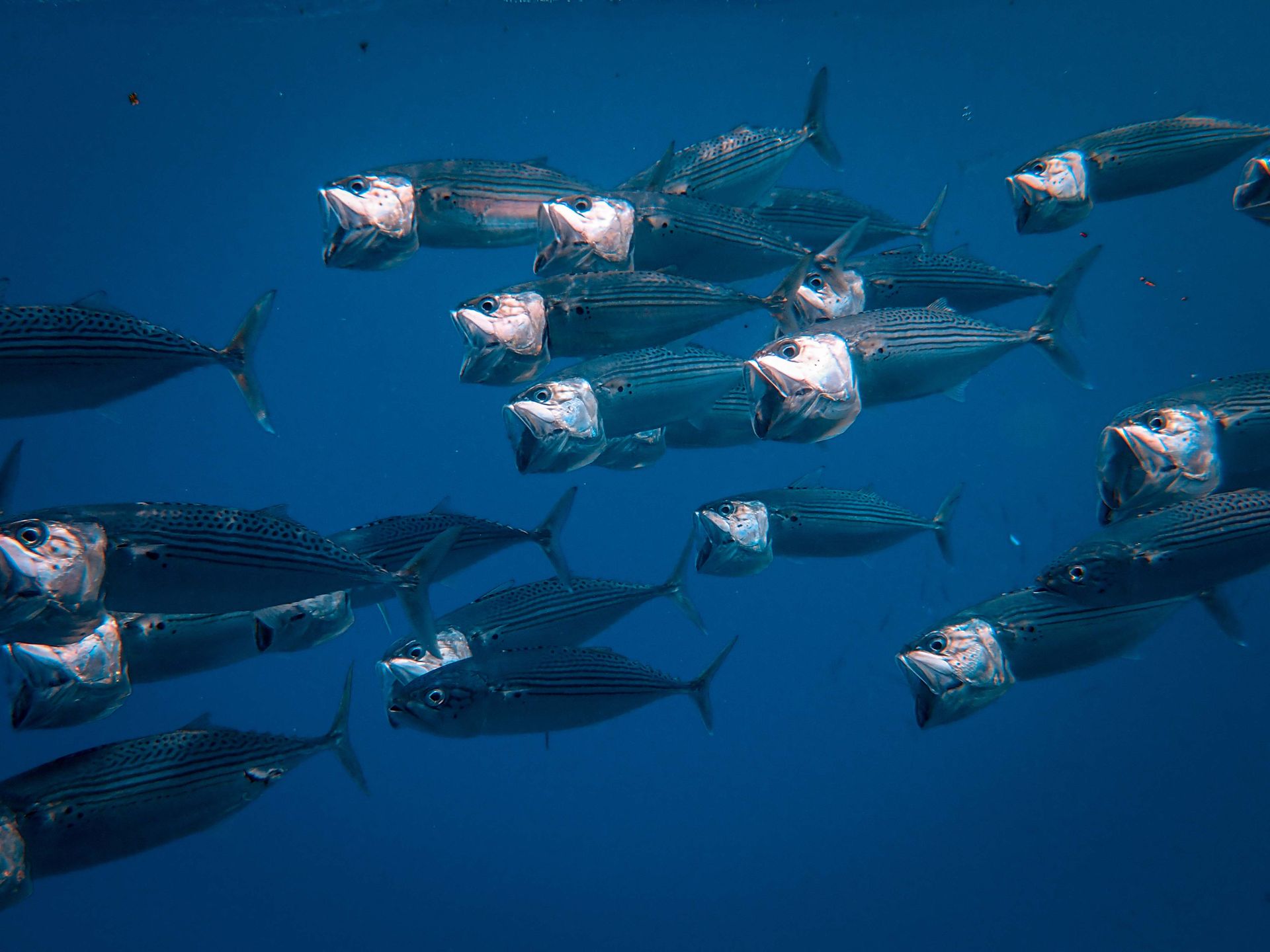
Rasboras are generally peaceful and can get along well with other community fish, especially those of similar size.
They can be housed with other rasboras, small tetras, and certain species of gouramis, such as the sparkling gourami.
You can also keep them with celestial danios, pentazona barbs, and guppies, but it's essential to introduce them slowly and under close observation.
Corydoras catfish and small peaceful loaches like otocinclus and kuhli loaches make great bottom dwellers for a rasbora tank.
However, dwarf rasboras in the genus Boraras are best kept in a species tank due to their small size.
Some aquarium experts recommend housing dwarf rasboras with dwarf freshwater shrimp, but this is not a common practice and requires careful consideration.
It's always a good idea to consult an aquarium expert before introducing new fish to your tank to ensure compatibility and a harmonious community.
For your interest: Size Wire
What Do They Eat?
Rasboras are micro-predators that feed on small insects, zooplankton, worms, and tiny crustaceans in nature.
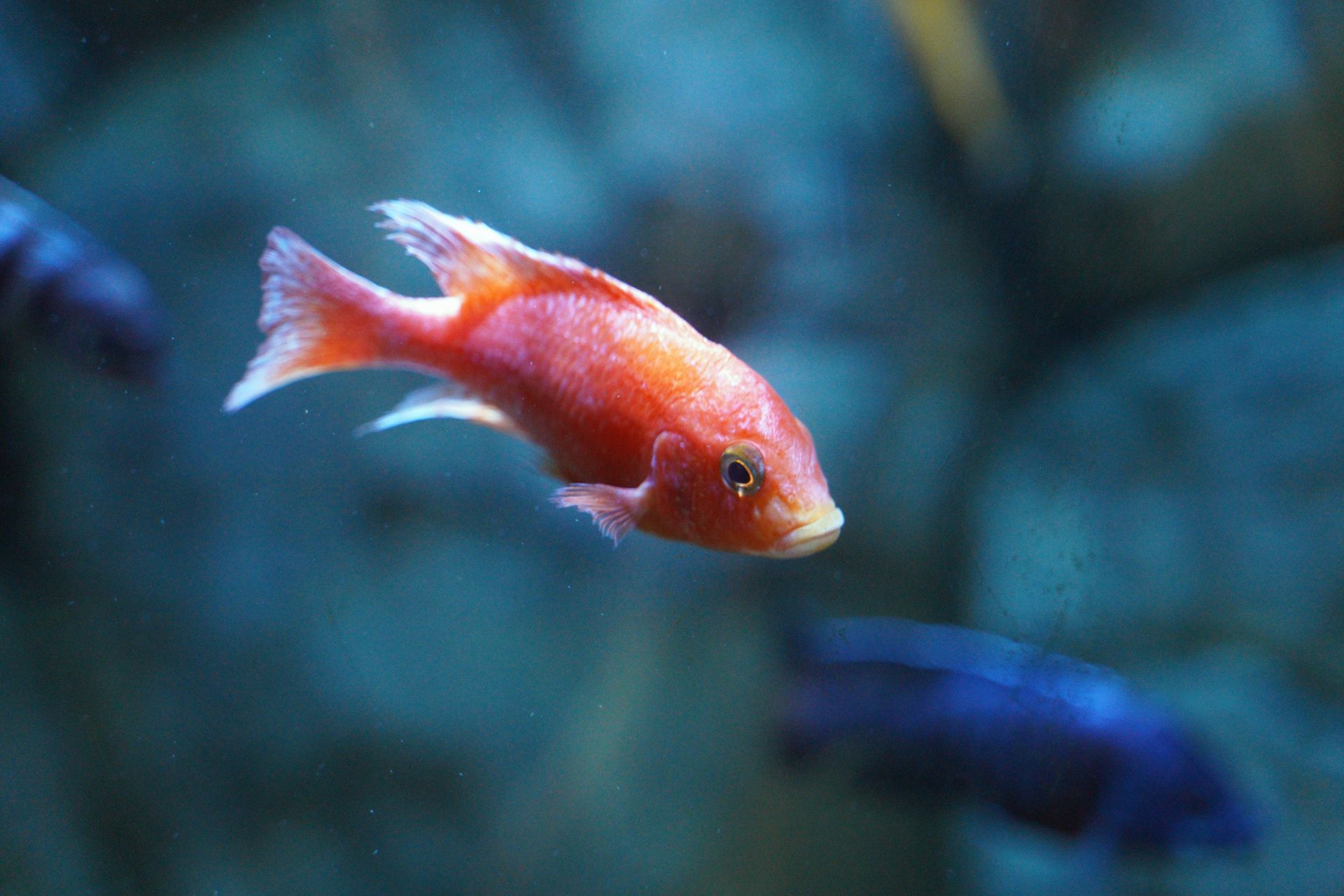
They'll thrive on Aqueon Tropical Flakes, Color Flakes, Tropical Granules, and Shrimp Pellets. For extremely small species, crush dried foods to match their mouth size.
Frozen and live foods can also be fed as treats or to help induce spawning. It's best to rotate their diet daily to keep things interesting.
Feed your rasboras only what they can consume in 2 to 3 minutes, once or twice a day, to prevent overfeeding.
What Are Fish?
Harlequin rasboras are a species of small, colorful fish that are popular in aquariums.
They were first scientifically discovered in 1904 and were initially given a different scientific name, Rasbora heteromorpha.
Harlequin rasboras are part of the Trigonostigma genus, which was created in 1999 to group them with other similar fish.
There are only a few fish in the Trigonostigma genus, making it easy to identify harlequin rasboras.
A newly discovered species, Trigonostigma truncata, can be mistaken for harlequin rasboras at first glance.
Harlequin rasboras are small freshwater fish in the same family as carps and minnows.
Breeding and Care
Rasboras are relatively low-maintenance fish, but breeding them can be a challenge. Most rasbora species are egg scatterers that distribute their eggs among plants and provide no parental care.
Healthy adult fish kept in mature, well-planted aquariums will sometimes produce young with no assistance from the aquarium owner. This can be a rewarding experience for experienced aquarists who are willing to provide the right environment.
Some species, like harlequin and lambchop rasboras, attach their eggs to the underside of plant leaves, making them a bit easier to breed.
Here's an interesting read: What Do Call a Fish with No Eyes?
Breeding Difficulty
Rasboras are generally considered difficult to breed, with most species being egg scatterers that provide no parental care.
Some species, like the harlequin rasbora, are an exception, but even they have their own unique challenges.
The harlequin rasbora, in particular, is known to attach its eggs to the underside of plant leaves, making it a bit more manageable to breed.
However, the parents often eat the eggs they just spawned and fertilized, so it's essential to separate them from the fertilized eggs to avoid this.
A different take: Fish Eggs
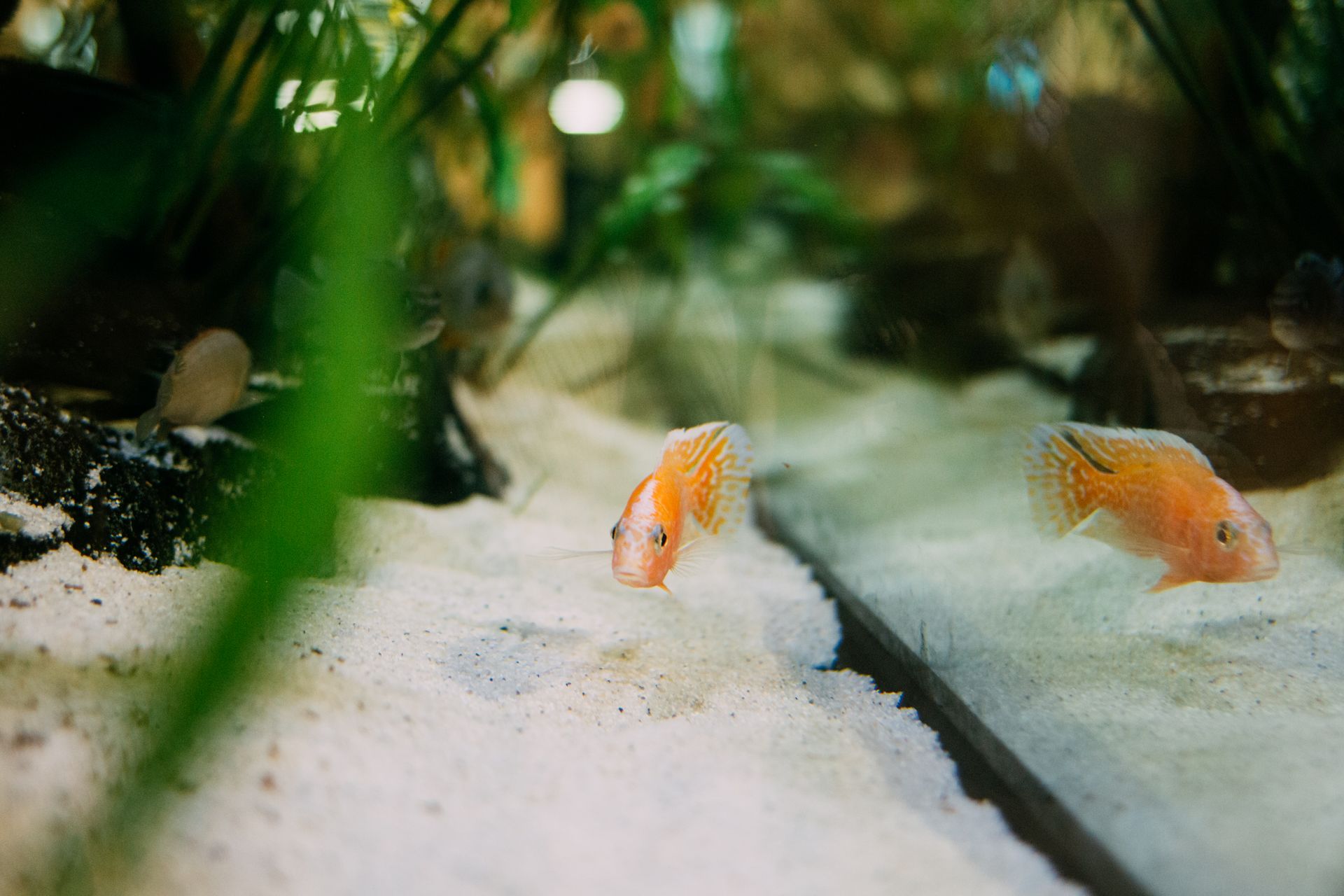
The female harlequin rasbora typically lays 6 to 12 eggs at a time, which can add up to a total of 100 eggs.
The eggs have a short incubation period and usually hatch in about 18 hours.
In general, harlequin rasboras prefer acidic, soft water, and they will often not breed at all if the water is too alkaline or too hard.
Care
Breeding and care of harlequin rasboras requires attention to their specific needs. Harlequin rasboras need to live in schools in captivity, with a minimum of six individuals and ideally 10 or more. They're compatible with similar-sized schooling fish like other rasbora species and small tetras.
A larger tank is preferable, with a minimum volume of 10 gallons and a length of at least 60 centimeters. Harlequin rasboras prefer a gentle current and slightly dimmed lighting.
Harlequin rasboras need acidic water with a pH between 6 and 7.8, and a hardness of less than 12 on the general hardness scale. Water hardness must be less than 12 for breeding, and they can withstand water hardness of 2 to 15 degrees of general hardness.
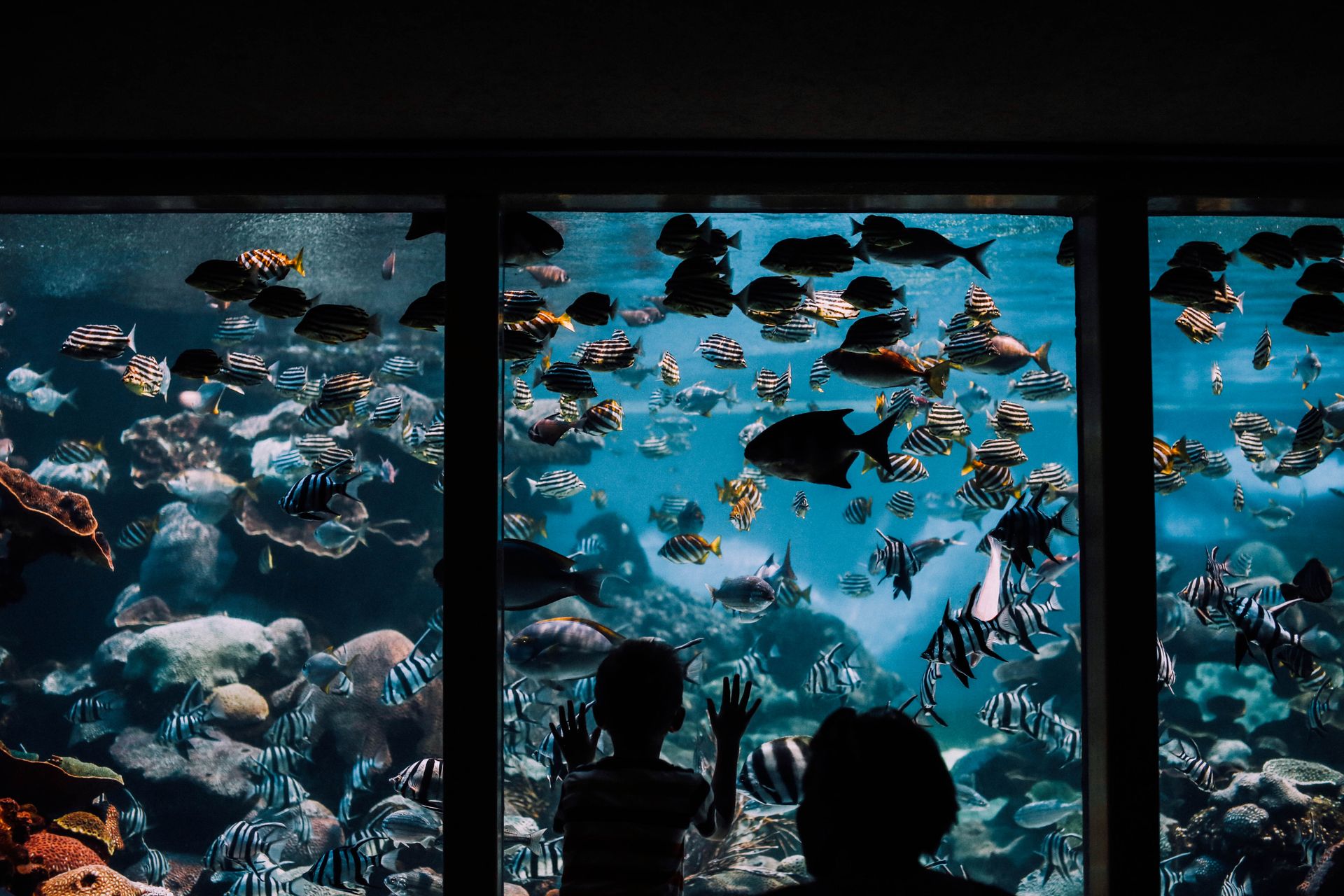
Harlequin rasboras thrive in tropical temperatures between 22 to 25 degrees Celsius, but for breeding, the temperature should be warmer, ideally around 28 degrees Celsius.
In the wild, harlequin rasboras primarily eat small invertebrates like crustaceans, insects, and worms. In captivity, they prefer live foods, but will also eat frozen and flake foods.
A mix of live, frozen, and flake foods is the best way to ensure your harlequin rasboras' digestive health.
Discover more: Leah Fish Live
Setting Up an Aquarium
Rasboras are happiest in a well-planted aquarium. They thrive in groups of 7 or more, so plan to get a few friends to keep them company.
To recreate their natural habitat, use plenty of low light plants that create shady areas and good hiding spots. Java fern, anubias, cryptocoryne plants, dwarf aquarium lily, and floating water sprite are all great options.
Chili rasboras, in particular, can handle a wider range of water parameters than you might think. They're comfortable in pH levels of 6.0-8.0 and temperatures between 72-82°F (22-28°C).
A biotope tank that imitates their natural setting can be achieved by adding dried catappa leaves to tint the water, gently lower the pH, and create biofilm for the fish to nibble on.
Frequently Asked Questions
What is the easiest rasbora to keep?
For beginners, Dwarf Rasboras are a great choice due to their hardiness and ease of care, making them a perfect option for those new to aquarium keeping. They are also relatively small and peaceful, requiring minimal space and maintenance.
Can rasboras live in a 5 gallon tank?
Yes, rasboras can thrive in a 5-gallon tank, but they require proper care and a well-planned environment to reach their full potential. Learn more about their specific needs and tank requirements to ensure a happy and healthy rasbora community.
Featured Images: pexels.com