Raptors come in a variety of shapes and sizes, but most have a few key features in common. They have sharp talons, hooked beaks, and powerful wings that allow them to soar for long periods of time.
To identify a raptor, start by looking for its size and shape. Most raptors are medium to large birds, with wingspans ranging from a few feet to over 7 feet.
Core Characteristics
Raptors are carnivorous birds, hunting for their food rather than eating seeds, fruit, or nectar.
They have strong bills and talons to rip and shred their prey, whether they hunt large insects, fish, reptiles, or mammals.
Raptors are agile and powerful in flight, and have superb eyesight and hearing.
These traits allow raptors to thrive in a wide range of habitats around the world, from icy tundra to harsh deserts to forests, jungles, prairies, coastlines, and even urban areas.
Nesting and Breeding
Raptors engage in elaborate courtship displays with their mates, which often involve impressive aerial acrobatics.
These displays can include high-speed soaring, diving, cartwheeling, in-flight twists, and free-falling. The goal of these displays is to attract a mate and establish a strong bond.
Raptors typically build large nests, but the type of nest varies among species. Bald Eagles, for example, build nests that are 4 to 5 feet in diameter and 2 to 3 feet deep.
Vultures, on the other hand, nest in shallow scrapes, which are depressions in the ground or rock. This type of nest is just deep enough to keep the eggs from rolling away.
Some raptors, like owls, are cavity nesters and often occupy the abandoned nests of other birds. Burrowing Owls, however, prefer to use burrows in the ground created by small mammals.
Clutch sizes vary among species, but larger species generally have smaller clutch sizes and longer incubation periods.
See what others are reading: Bird Identification Photos
Types of Raptors
Raptors are fascinating birds of prey that come in a variety of shapes and sizes. They can be broadly categorized into several types, each with distinct characteristics.
Falcons are one of the smallest types of raptors, with some species reaching speeds of up to 242 miles per hour. They are known for their agility and hunting prowess.
Eagles, on the other hand, are larger and more powerful, with some species having a wingspan of up to 8 feet. They are often found in open areas and are known for their impressive talons.
Hawks are medium-sized raptors that are known for their sharp eyesight and agility. They are often found in forests and woodlands, where they can be seen soaring through the trees.
Falcons
Falcons are known for their impressive migration patterns, often following coastlines as they travel to their destinations. The American Kestrel, the smallest U.S. falcon, is a bit of a free spirit, flapping its wings more than its cousins and looking like it's having the time of its life.
Merlins, on the other hand, are a different story altogether - they fly with a purpose and don't wander around like the kestrels do. You'll hardly even see them before they're gone!
Curious to learn more? Check out: How to Put a Bird Out of Its Misery?
Peregrine Falcons are the largest of the three, with a broad chest and extra-long wings and tail. They're like jets in the sky, effortlessly crossing the sky and often outpacing other raptors.
If you're lucky enough to spot a Peregrine Falcon in the wild, you might catch a glimpse of it in coastal cliffs and some towns in North and South West England, Wales, and Scotland. Keep an eye out for its distinctive slate-grey and white feathers, complete with black bars underneath and a black moustache and mask.
A different take: Black Birds
Sharp-Shinned or Cooper's?
Sharp-shinned or Cooper's Hawks are two of the most common raptor species in North America. They can be tricky to tell apart, but with some key characteristics, you'll be a pro in no time.
Sharp-shinned Hawks are relatively small, typically measuring between 9 and 12 inches in length. Their wings are also relatively short, which can make them appear even smaller in flight.
One of the most distinctive features of Sharp-shinned Hawks is their flight style, which is often described as swift and direct. They tend to fly in a straight line, with minimal flapping.
Cooper's Hawks, on the other hand, are slightly larger than Sharp-shinned Hawks, measuring between 14 and 18 inches in length. They also have longer wings, which can make them appear more majestic in flight.
In terms of habitat, Sharp-shinned Hawks tend to prefer dense forests and woodland edges, while Cooper's Hawks are more adaptable and can be found in a variety of habitats, from forests to urban areas.
To identify either species, remember to observe their plumage, flight style, and behavior, as these can be key indicators of which raptor you're looking at.
Buzzard
The buzzard is a medium-sized raptor that can be found in various habitats across the UK.
It has distinctive brown plumage.
You're likely to spot a buzzard in grassland, farmland, or woodland areas.
Its broad wings and short tail make it a recognizable sight.
Identification and Guides
To identify raptor birds, start with field guides like Jerry Liguori's books and our own In-hand Guide to Diurnal North American Raptors. These resources will help you learn the nitty gritty of molt and other essential details.
Field guides can be especially helpful when trying to identify birds as they migrate overhead. They provide a wealth of information on raptor species and their characteristics.
Our Raptor ID Fact Sheets offer a more in-depth look at individual species, covering their shape, flight, plumage, migration, and distribution.
Hooked Beak
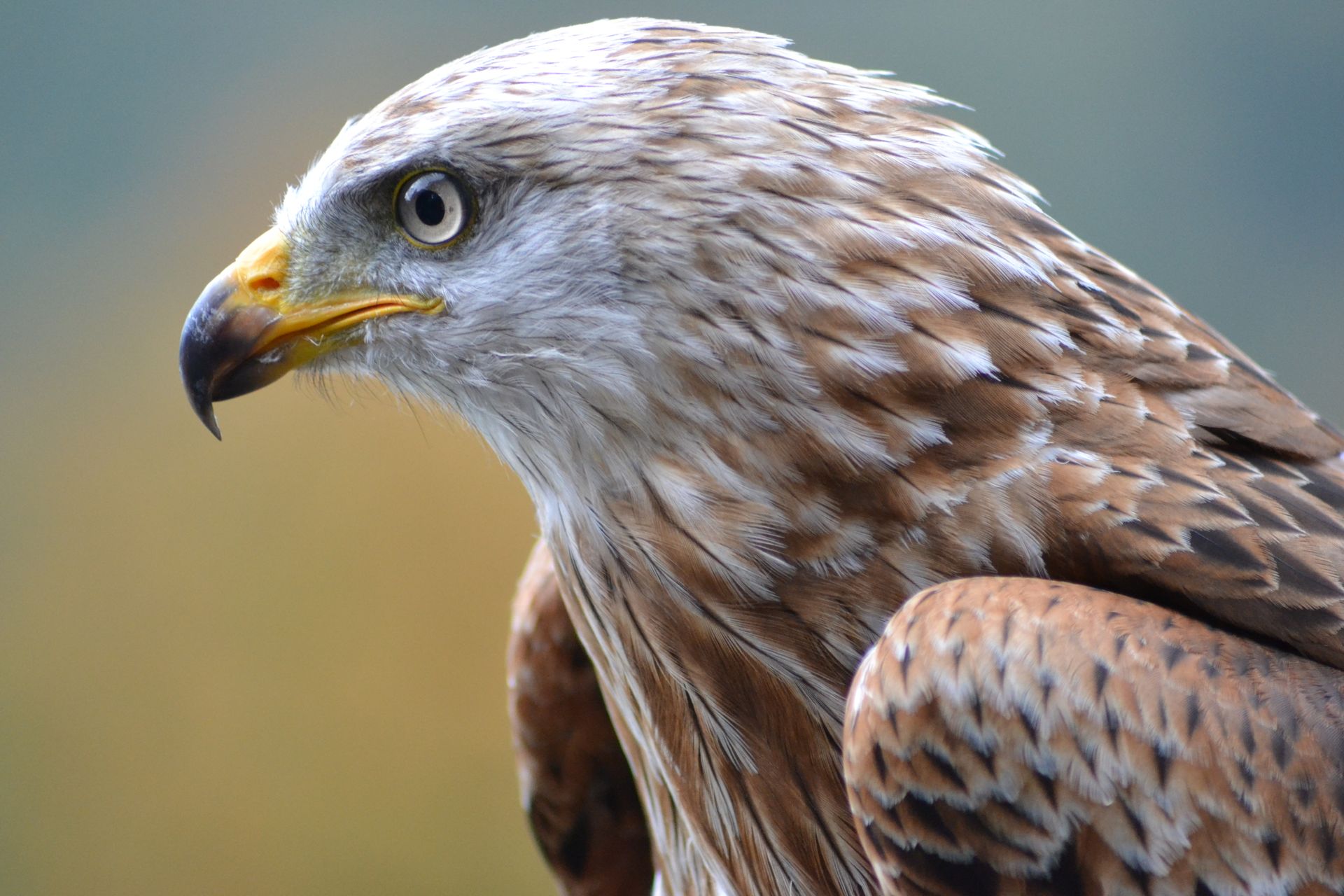
The hooked beak of a raptor is a distinctive feature that sets it apart from other birds. All raptors have the same beak design, curved at the tip with sharp cutting edges to rip and tear apart their prey.
This unique beak design allows raptors to efficiently hunt and kill their prey, making them formidable hunters in the wild.
Their beaks are also incredibly sharp, with cutting edges that are perfectly suited for tearing flesh.
Field Guides
If you're new to bird identification, field guides can be a great place to start. Jerry Liguori's books are a must-have for any serious bird enthusiast.
There are many types of field guides out there, but some stand out from the rest. Our own In-hand Guide to Diurnal North American Raptors is a great resource for learning about the nitty gritty of molt and identifying birds as they migrate overhead.
If you're looking for a field guide that's specifically tailored to birds of prey, Jerry Liguori's books are an excellent choice. His guides are packed with detailed information and beautiful photographs.
Here are some key features to look for in a field guide:
- Accurate and up-to-date information on bird species
- High-quality photographs and illustrations
- Clear and concise descriptions of bird behavior and habitat
- Easy-to-use layout and organization
By choosing a field guide that meets these criteria, you'll be well on your way to becoming a skilled bird identifier.
Free ID App
If you're serious about identifying raptors in flight, you'll want to check out the FREE Raptor ID App. This cutting-edge app is designed to help you identify raptors in flight, making it a must-have for any bird enthusiast.
The app features nearly 1000 annotated photos, giving you a wealth of visual information to work with.
Specific Raptors
All raptors are carnivorous birds that hunt for their food, and they have strong bills and talons to rip and shred their prey.
They are found in every habitat around the world, from icy tundra to harsh deserts to forests, jungles, prairies, coastlines, and even urban areas.
Raptors are agile and powerful in flight, and have superb eyesight and hearing.
Eagles are the archetype for birds of prey, and they are easily identifiable by their size, white head and tail, and soaring flight pattern.
Their name actually stems from an Old English word “piebald,” which means “white patch” and refers to their bright white heads.
Eagles
Eagles are the archetype for birds of prey, easily identifiable by their size, white head and tail, and soaring flight pattern.
Their name actually stems from an Old English word “piebald,” which means “white patch” and refers to their bright white heads.
Eagles are large and powerful raptors, with white feathers covering their entire face with no bald spots anywhere.
In fact, the Golden eagle is a very large bird, mainly dark brown, with a golden head and neck, found in upland areas and glens in Scotland.
A different take: Bird Head
Owls
Owls are easily distinguishable from other raptors due to their unique features, such as rounded heads, stocky bodies, facial discs, large eyes, and small bills.
Most owls are nocturnal, meaning they hunt at night, but some species like the Great Horned Owl can be active during the day, and others may hunt diurnally depending on the season.
Some owls are crepuscular, meaning they're active at dawn and dusk, which is a great time to spot them if you're out early in the morning or late in the evening.
Barn owls can be found in grasslands and farmland across the UK, and are known for their distinctive white face and black eyes.
Short-eared owls, on the other hand, prefer moorlands, saltmarshes, and rough grassland, and have a unique mottled yellowy-brown and pale coloration.
The specialized flight feathers of owls allow them to fly silently, making them expert hunters in the dark.
Hawks
Hawks are a type of bird of prey that belongs to the family Accipitridae.
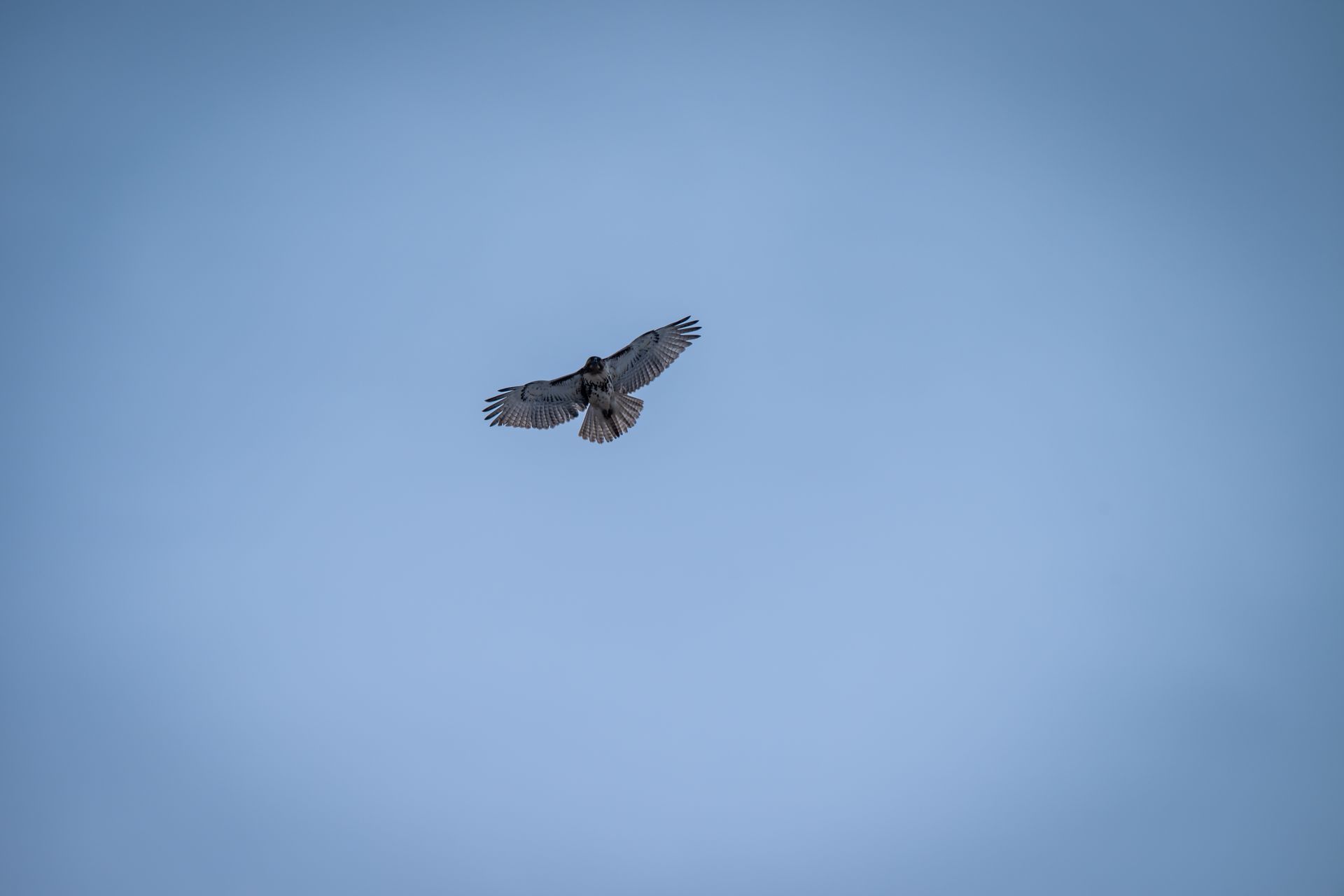
They have a distinctive shape with a broad, rounded tail and a short, squared-off wing tip.
Hawks are known for their incredible speed, reaching up to 240 miles per hour during dives.
Some hawks are migratory birds, traveling thousands of miles each year to find food and suitable habitats.
Hawks are skilled hunters, using their sharp talons and hooked beaks to catch small mammals, birds, and reptiles.
Their excellent eyesight allows them to spot prey from great distances, often scanning the ground from high altitudes.
Osprey
The osprey is a large bird with a distinctive appearance. It has dark feathers on its back and white feathers on its belly, with angled wings that show dark patches.
Ospreys can be found in wetlands in various parts of the UK, including Scotland, Northumberland, Cumbria, Wales, and the East Midlands in the summer.
To spot an osprey, look for wetlands in these regions during the summer months.
Red-Tailed Hawk
The Red-Tailed Hawk is a great bird to start with, especially for beginners. It's considered the baseline buteo, so it's essential to learn its characteristics inside and out.
This bird is among the biggest raptors, with size varying significantly between males and females. A large female can weigh twice as much as a small male.
Their rounded wings are quite muscular, resembling biceps. It's not a skinny or slim wing, but rather thick and bulging.
Red-Tailed Hawks are experts at soaring and can glide effortlessly for minutes at a time when riding a strong updraft. They take wide, slow turns and only powerfully flap their wings when it's absolutely necessary.
For your interest: What Does It Mean When You Hit a Bird?
Peregrine Falcon
The peregrine falcon is a medium-sized bird of prey that can be found in coastal cliffs and some towns in North and South West England, Wales, and Scotland.
One of the distinctive features of the peregrine falcon is its slate-grey upper body and white underside, which is complemented by black bars underneath, a white throat, and cheeks, and a black moustache and mask.
To spot a peregrine falcon, you should head to the coastal cliffs and some towns in North and South West England, Wales, and Scotland, where they are commonly seen.
Here's an interesting read: South Carolina Bird Sounds Identification
Hen Harrier
The Hen Harrier is a fascinating bird of prey. It breeds on upland moors, although it's relatively rare in England.
One of the best places to spot a Hen Harrier is on the coast, where it winters on heathland and farmland across the UK.
Females have a distinctive appearance, with a brown back and streaked belly, along with a white rump and banded tail.
Marsh Harrier
The Marsh Harrier is a large bird of prey that can be found in reedbeds in East Anglia, Somerset, and the South East.
To spot one, look for its distinctive plumage - males are brown above and ginger underneath, with grey, black-tipped wings.
Females, on the other hand, have a more muted appearance, being chocolate-brown with a golden-yellow crown and throat.
Red Kite
The Red Kite is a large bird of prey that can be found in woodland and farmland mainly in Wales and South East England.
Its distinctive plumage is reddish-brown, with black-tipped wings featuring white patches underneath.
A forked tail is a notable feature of the Red Kite, setting it apart from other birds of prey.
The Red Kite's striking appearance is captured in photographs, such as the one taken by Jon Hawkins, Surrey Hills Photography.
Featured Images: pexels.com