Raising a happy Puggle requires attention to their unique needs and characteristics. Puggles are a cross between a Pug and a Beagle, and they often inherit the best traits from both parents.
Puggles are known for their affectionate nature and love to be around their family. They thrive on attention and interaction, so be prepared to spend quality time with your Puggle.
Puggles are relatively small in size, weighing between 15-30 pounds and standing 10-13 inches tall. This makes them a great companion for families with smaller living spaces.
With proper care and attention, Puggles can live up to 12-15 years, making them a long-term companion.
For your interest: Puggle for Adoption
Physical Characteristics
Puggle dogs are relatively small in height, typically standing between 8 to 15 inches tall at the shoulder.
Their compact and muscular build makes them a sturdy breed, often with a slightly elongated body compared to a purebred Pug.
In terms of weight, Puggles usually range from 15 to 30 pounds, making them a manageable size for many owners.
Their lifespan is also noteworthy, with most Puggles living between 10 to 15 years with proper care.
Here's a breakdown of the typical physical characteristics of Puggle dogs:
Their head and face are also worth noting, with a nose that can be black or brown and a slightly pushed-in appearance.
Personality and Behavior
Puggles are known for their charming and affectionate personalities, which blend the best traits of both Pugs and Beagles. They're typically friendly and outgoing, making them excellent companions for families, singles, and seniors alike.
Puggles tend to be energetic and enjoy moderate exercise, but they're also content to curl up for cuddles on the couch. Their intelligence, inherited from both parent breeds, makes them relatively easy to train, although they may sometimes display a stubborn streak.
They're generally good with children and other pets, thanks to their patient and gentle demeanor. However, they may inherit the Beagle's tendency to bark or howl, especially when excited or left alone for long periods.
Here are some key personality traits of Puggles:
- Friendly and sociable: Puggles are known for their outgoing nature and enjoy meeting new people and other animals.
- Affectionate with family members: Puggles form strong bonds with their families and often seek physical closeness.
- Playful and energetic: Puggles have a good balance of energy and are usually up for play sessions and short walks.
- Prone to separation anxiety: Puggles can become anxious when left alone for long periods, which may lead to destructive behaviors or excessive barking.
- Food-motivated: This trait can be very useful for training, but it also means Puggles may be prone to overeating if their diet isn't carefully managed.
- Alert and can make good watchdogs: Puggles are often attentive to their surroundings and will alert their owners to potential intruders or unusual noises.
Overall, Puggles are happy-go-lucky dogs that make great companions for many different types of households.
Care and Grooming
Puggles are relatively low-maintenance when it comes to grooming, but they still require regular care to keep them looking and feeling their best.
Their short, dense coats need to be brushed 1-2 times a week to remove loose fur and reduce shedding. Use a soft-bristle brush or a rubber grooming mitt for this task.
Puggles don't need frequent baths, but they do require occasional bathing, ideally every 1-2 months, using a dog-friendly shampoo to avoid skin irritation. Regular nail clipping and ear checks are also essential to prevent health issues.
Here's a quick rundown of Puggle grooming needs:
- Brush their coat 1-2 times a week to remove loose fur and reduce shedding.
- Bath them every 1-2 months using a dog-friendly shampoo.
- Clip their nails regularly to prevent overgrowth.
- Check their ears regularly for signs of wax buildup or infection.
Grooming
Puggles are relatively low-maintenance when it comes to grooming, but they still need regular care to stay looking and feeling their best. Regular brushing is essential to remove loose fur and reduce shedding.
You should brush your Puggle's coat 1-2 times a week, using a soft-bristle brush or a rubber grooming mitt. This will help prevent shedding and keep their coat looking healthy.
Bathing is not a frequent need for Puggles, unless they get dirty or smelly. Bathing every 1-2 months should be sufficient, and always use a dog-friendly shampoo to avoid skin irritation.
It's also essential to check your Puggle's ears regularly for signs of wax buildup or infection. You should clip their nails when you hear them clicking on the floor.
Here are some key grooming tips for Puggles:
- Brush their coat 1-2 times a week
- Bathe every 1-2 months
- Clip nails when necessary
- Check ears regularly for signs of wax buildup or infection
Regular brushing also helps prevent dental disease, so make sure to brush your Puggle's teeth with dog-safe toothpaste.
Puppy Clipper
Puggle puppies love their baths and will often look forward to them.
They are great with kids and make excellent family pets.
Puggle puppies are often family raised with their parents, a Pug dad and a Puggle mama.
Here's an interesting read: Are Boxer Dogs Good Family Dogs
They are typically microchipped and up to date on their vaccines, deworming, and vet checks.
You can meet your new Puggle puppy in a country setting, where they are used to children and pets.
They are vet checked and up to date on their shots, making them a healthy addition to any family.
Puggle puppies are socialized and waiting to meet you, making them a wonderful companion.
Their adorable faces and playful personalities make them hard to resist.
Puggle puppies are a combination of Pug, Beagle, and Cavalier King Charles Spaniel, making them a unique and lovable breed.
A different take: Vet Dogs Dog Treats
Health and Nutrition
Puggle dogs can live up to 15 years with proper care, so it's essential to prioritize their health and nutrition from an early age.
To maintain their energy levels, Puggles need a balanced diet with controlled portion sizes. Adult Puggles typically require ¾ to 1.5 cups of high-quality dry dog food per day, divided into two meals.
Puppies, on the other hand, need more frequent meals (3-4 times a day) as they grow, and should be fed puppy-specific food designed for small to medium breeds.
Some common health issues in Puggles include brachycephalic syndrome, skin infections, patellar luxation, eye problems, Musladin-Lueke Syndrome (MLS), hip dysplasia, and obesity.
To prevent or manage these conditions, choose a reputable breeder who tests their Puggles for common genetic diseases, and consider pet insurance to help manage lifelong veterinary costs. Regular cleaning of skin folds can also help prevent skin infections.
Common Health Problems
Puggles can live up to 15 years with proper care, so it's essential to choose a reputable breeder who tests their puggles for common genetic diseases.
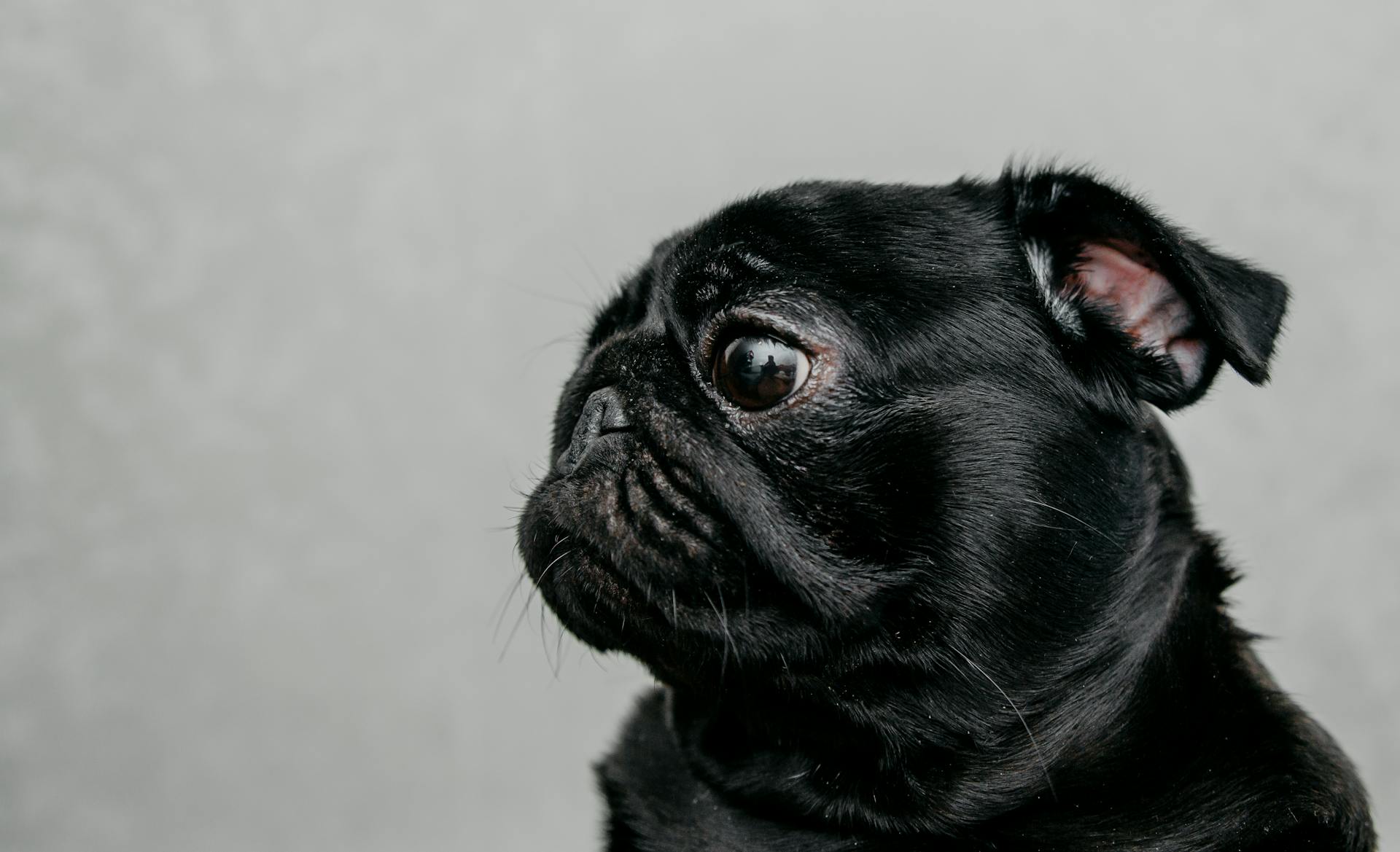
Brachycephalic syndrome is a breathing problem that can cause overheating due to their flat faces. This can be a serious issue, so it's crucial to keep an eye on your puggle's breathing.
Skin infections can be prevented by regularly cleaning your puggle's skin folds. I've seen puggles with dirty skin folds, and it's not a pretty sight.
Patellar luxation, or the dislocation of the kneecap, can be a painful condition for puggles. It's essential to keep an eye on your puggle's kneecap and consult a vet if you notice any issues.
Eye problems, such as dry eye, can be a common issue in puggles. Regular eye exams can help catch any issues early on.
Here are some common health issues that puggles may be prone to:
- Brachycephalic syndrome
- Skin infections
- Patellar luxation
- Eye problems (such as dry eye)
- Musladin-Lueke Syndrome (MLS)
- Hip dysplasia
- Obesity
By being aware of these potential health issues, you can take steps to prevent or manage them, ensuring your puggle lives a happy and healthy life.
Feeding and Nutrition
Feeding your Puggle the right amount of food is crucial to maintaining their energy levels and preventing weight gain. Adult Puggles typically need about ¾ to 1.5 cups of high-quality dry dog food per day, divided into two meals.
It's essential to monitor their age, weight, activity level, and metabolism to determine the exact amount. Puppies, on the other hand, may need more frequent meals (3-4 times a day) as they grow.
Intriguing read: How Much Should a Puggle Weigh
A high-quality dog food with real meat as the first ingredient is a must. Avoid brands that contain harmful chemical preservatives like BHA and BHT, or food colorings that might lead to allergic reactions or health problems.
Some healthy options to look for in your Puggle's food include real fruits and vegetables, omega-3 fatty acids, and prebiotics.
Training and Socialization
Training and socialization are crucial for puggle dogs, and they respond well to positive reinforcement. They can pick up commands quickly due to their intelligence, but their potential stubbornness requires early socialization and training.
Praise, treats, and affection are effective rewards for desired behavior. Puggles are highly sensitive, so firm corrections should be avoided.
Positive reinforcement is the best training method, and it's essential to keep training sessions short, positive, and free from distractions. High-value treats, attention, and praise work well as rewards.
Here's a quick rundown of what to keep in mind when training your puggle:
- Use positive reinforcement techniques, such as praise, treats, and affection.
- Keep training sessions short and free from distractions.
- Avoid firm corrections, as puggles are highly sensitive.
- Use high-value treats, attention, and praise as rewards.
Remember, puggles can inherit a stubborn streak, so patience and consistency are key. With early socialization and positive reinforcement training, you'll be well on your way to raising a well-behaved and loving companion.
Family and Compatibility
Puggles are affectionate, social dogs that form strong bonds with their families, making them great companions for households looking for a loving pet.
Their playful and energetic nature inherited from their Pug and Beagle parents makes them ideal for families with children, as they enjoy engaging in play and interaction.
Early socialization and training are important to ensure they interact well with both children and other animals.
Puggles are generally good with other pets, including dogs, and they thrive on companionship.
However, they can experience separation anxiety if left alone for long periods.
Most Puggles get along well with other pets and will frequently engage in play and other activities with little encouragement.
They are usually tolerant of small children, making them a great choice for large and small families.
Early socialization with many other animals, when they are still puppies, can help make it even more likely that they will get along with them as adults.
A unique perspective: Dog Biscuits for Small Dogs
Ownership and Adoption
If you're thinking of bringing a puggle into your family, you'll want to do your research to ensure you find a healthy and well-socialized puppy.
Reputable breeders are a good place to start, as they prioritize testing for inherited diseases.
You might also consider visiting a local shelter to see if they have a puggle available for adoption.
A puggle-specific rescue near you could also be a great option.
Remember to welcome visits to meet the parents and puppies before making a decision.
General Information
Puggles can make great companions who are playful and love their people. They are prone to barking and can be stubborn.
A Puggle's height ranges from 13 to 15 inches, making them a medium-sized breed. Their adaptability to different living environments is due to their size.
They have a playful and curious nature, which can sometimes lead to anxiety. Their friendly and loving personality makes them comical and attention-seeking.
You can find Puggles in various colors, including black, tan, white, and fawn. Their expressive faces are a result of their Beagle and Pug parent breeds.
Puggles require proper socialization and training when they are young to avoid stubbornness. This will help them become well-behaved companions.
Here are some common health issues that can affect Puggles:
- Hip dysplasia
- Common skin problems
- Epilepsy
- Brachycephalic airway syndrome
- Obesity
Pros and Cons
Puggle dogs are known for their wonderful personalities, but like any breed, they have their pros and cons. One of the biggest advantages of owning a Puggle is that they are extremely good with children and other pets.
Their adaptable nature makes them a great fit for families with varying lifestyles. They can thrive in apartments or houses with yards, as long as they get regular exercise and attention.
Puggles are also very friendly and playful, which makes them a joy to be around. Their outgoing personalities make them great companions for people who want a dog that will keep them entertained.
However, Puggles can also experience separation anxiety, which means they may not do well if left alone for long periods of time. This can lead to destructive behavior, such as chewing and barking.
Their independent streak can also make them stubborn at times, which can make training a bit more challenging. But with patience and consistency, Puggles can learn to obey commands and behave well.
Here are some key pros and cons of owning a Puggle:
- Good with children and other pets
- Adaptable
- Friendly and playful
- May experience separation anxiety
- Can be stubborn
- Tendency to bark and chew
Featured Images: pexels.com