Phoenicopterus ruber can be found in coastal areas of the Americas, specifically in the southwestern United States, Mexico, and the Caribbean.
Their habitat ranges from shallow lagoons to salt pans and mudflats, where they feed on brine shrimp and algae.
In these coastal areas, Phoenicopterus ruber play a crucial role in maintaining the ecosystem balance by controlling the population of brine shrimp, which can be a nuisance to other aquatic species.
By feeding on algae, they also contribute to maintaining the water quality and preventing the growth of excessive vegetation.
Suggestion: Phoenicopterus Ruber Characteristics
Physical Description
The Greater Flamingo is a majestic bird, standing tall at 1.2 meters high and weighing between 2.1 to 4.1 kilograms. Its wingspan can reach an impressive 1.5 meters wide.
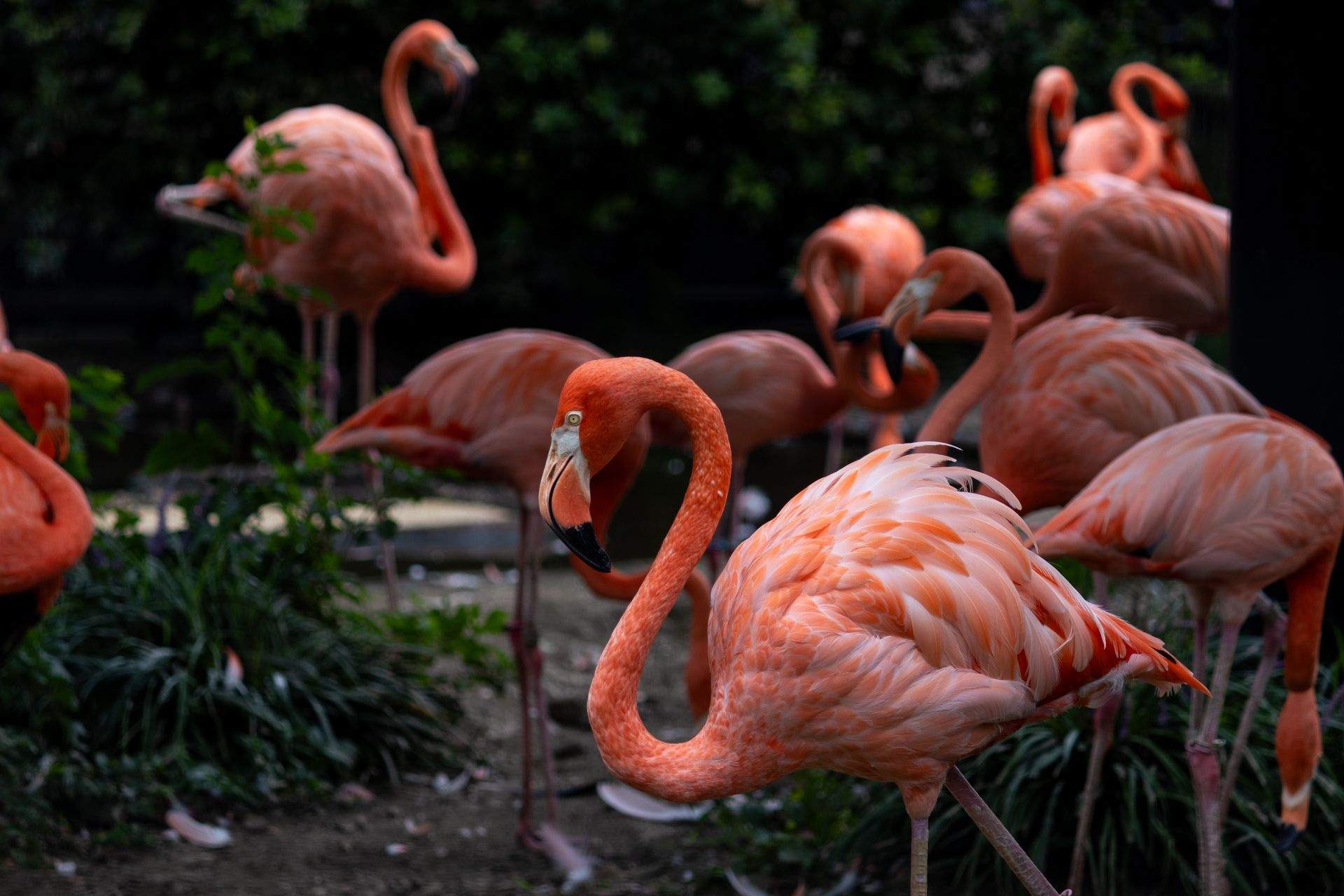
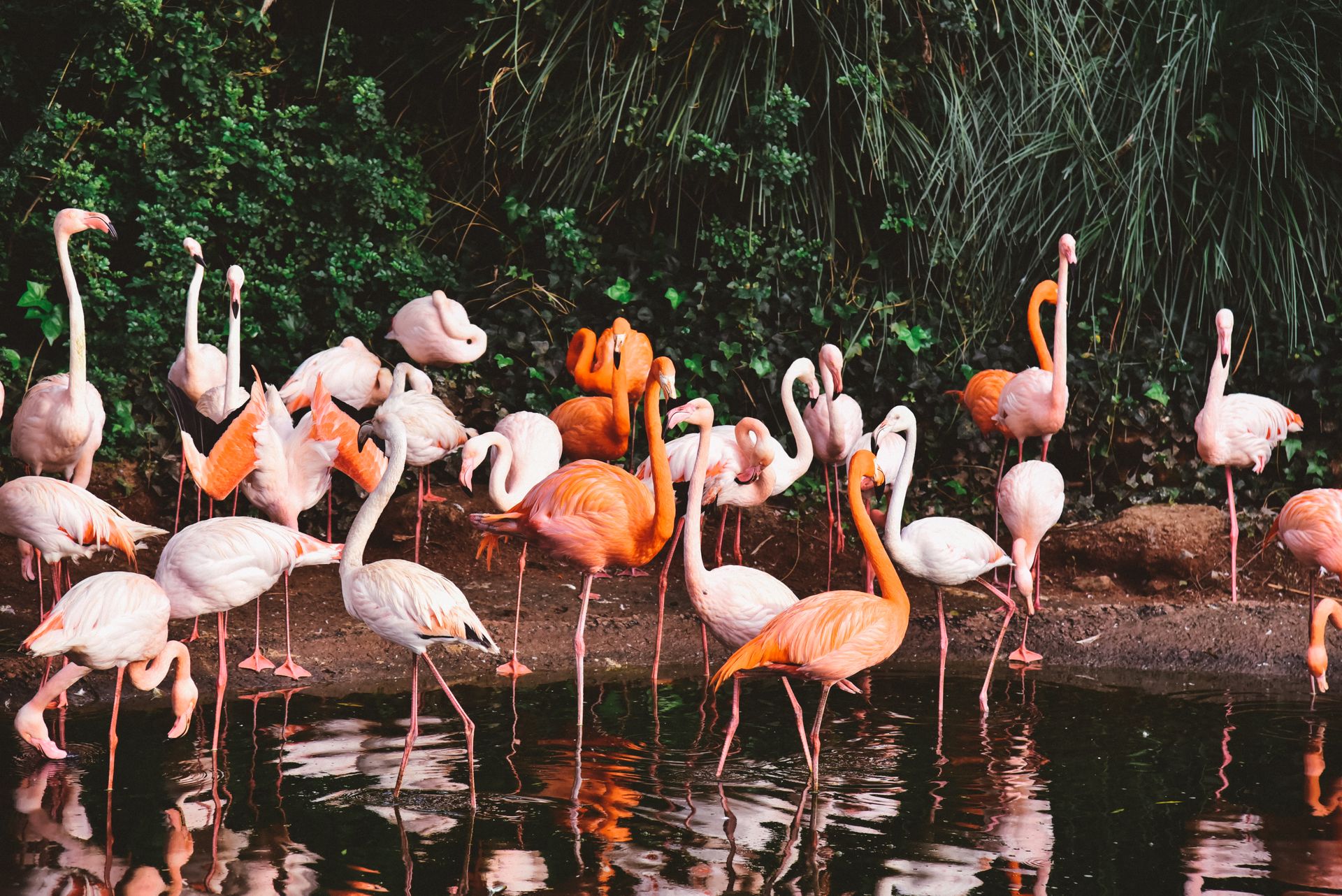
One of the most striking features of the Greater Flamingo is its bright pink coloration, which is a result of carotenoids from its diet being metabolized into pigments and deposited throughout its body. The pink coloration is not just limited to its feathers, but also its legs and beak.
The flamingo's bill is uniquely adapted for filter-feeding, with a shape that is not shared among any other family of birds. Its large bill consists of layers of horny plates used to filter out prey from the water.
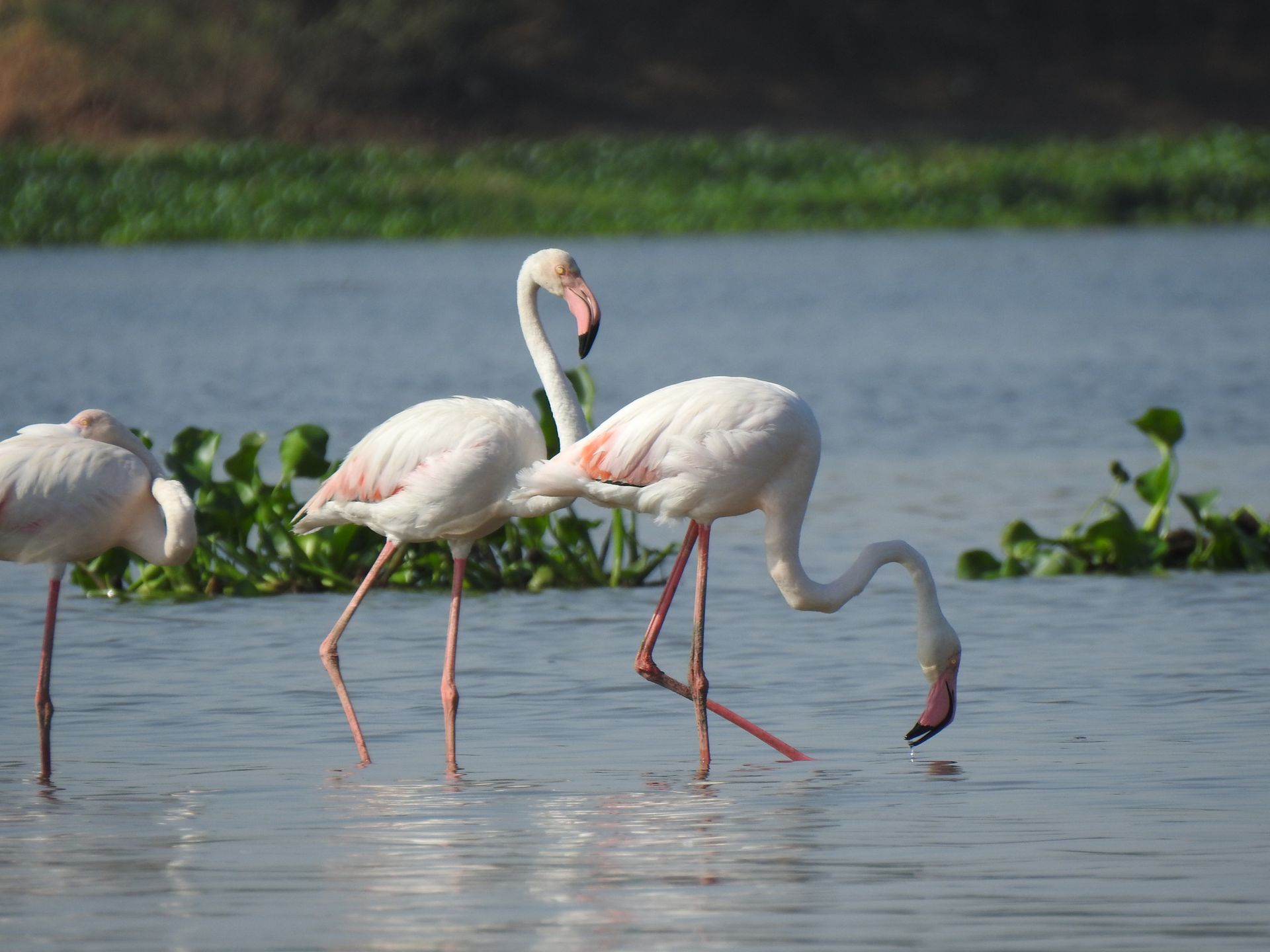
In contrast to other birds, the flamingo's bill is essentially reversed, with the lower mandible being larger than the upper. This is because the flamingo eats by submerging its head upside-down, requiring the upper mandible to move instead of the lower.
The flamingo's neck and legs are longer in proportion to its body size than any other bird, making it a distinctive and recognizable species. This unique feature allows the flamingo to rest its head on its body to avoid fatigue in its neck muscles.
Here are some key physical characteristics of the Greater Flamingo:
- Height: 120-145 cm (47-57 in.)
- Body Weight: 2.1-4.1 kg (4.63-9.03 lb)
- Wingspan: 140-165 cm (55.12-64.96 in)
Species Information
The American flamingo, or Phoenicopterus ruber, is a large species of flamingo native to the Neotropics. It's closely related to the greater flamingo and Chilean flamingo.
The American flamingo was formerly considered conspecific with the greater flamingo, but that treatment is now widely viewed as incorrect due to a lack of evidence. This means that it's now recognized as a distinct species.
The American flamingo is also known as the Caribbean flamingo, although it's also present in the Galápagos Islands. It's the only flamingo that naturally inhabits North America.
Here's a breakdown of the geographic range of Phoenicopterus ruber:
- Phoenicopterus ruber: locally from Caribbean to northeastern Brazil; Galapagos
- Phoenicopterus ruber ruber: locally from Caribbean to northeastern Brazil
- Phoenicopterus ruber glyphorhynchus: Galapagos
The species status of Phoenicopterus ruber is a bit complex. It's considered a full species by some, but also a subspecies of Phoenicopterus [ruber or roseus] (sensu lato) by others.
Here's an interesting read: Phoenicopterus Roseus
Habitat and Distribution
Flamingos live in large colonies that can number into the thousands of individuals, often occupying large mud flats near a food supply. These colonies are usually found in hyper-saline estuaries, which provide a harsh environment with reduced competition and predation, while also offering abundant food sources.
Flamingos tend to favor coastal habitats, but they have been known to move inland to lagoons or volcanic lakes. They show little to no site-tenacity, meaning they don't often return to previous flocking sites or their birth locations.
Here are some key habitat features of flamingos:
- Habitat Regions: tropical, saltwater or marine, freshwater
- Aquatic Biomes: lakes and ponds, rivers and streams, temporary pools, coastal
- Other Habitat Features: riparian, estuarine
Geographic Range
Flamingos can be found on every continent except Antarctica and Australia.
Their range spans across the entire shoreline of Africa, the Mediterranean Sea, parts of Asia and India, and southern United States, the Caribbean, and Yucatan Peninsula, where there are warm coastal habitats.
The Caribbean flamingo, a subspecies of Phoenicopterus ruber, is found in the northern shore of South America, most shoreline around the Caribbean Sea, as well as nearby islands in the Caribbean and Eastern Pacific.
Flamingos have been spotted in the southern United States, although they are not as common as in the more southern latitudes.
Here are the biogeographic regions where flamingos can be found:
- palearctic
- ethiopian
- neotropical
Habitat
Flamingos live in large colonies, often numbering into the thousands of individuals. These colonies are typically found in large mud flats where the loose mud can be easily formed into the mounds that they use as nests.
Flamingos prefer hyper-saline estuaries as their habitat. These harsh environments offer reduced competition and predation for filter feeders like flamingos, while also providing abundant food sources.
In these habitats, flamingos can be found near larger bodies of water such as coastal areas, sea inlets, rivers, and open lakes. Coastal habitats are nearly always preferred, but they have been known to move inland to lagoons or volcanic lakes.
Occasional food shortages arise in colonies of such high density, and flocks will perform short migrations in search of greater food resources. Flamingos show little to no site-tenacity and don't often return to previous flocking sites, or to their birth locations.
Here are some key features of flamingo habitats:
- Habitat Regions: tropical, saltwater or marine, and freshwater
- Aquatic Biomes: lakes and ponds, rivers and streams, temporary pools, and coastal
- Other Habitat Features: riparian, estuarine
Behavior and Ecology
Greater flamingos play a significant role in their ecosystems by consuming large amounts of aquatic invertebrates, crustaceans, and algae.
Their feeding habits in shallow bodies of water help to stir organisms from the bottom up into the water column, contributing to sufficient oxygenation and mixing of organic material.
This activity also aids in avoiding anoxic conditions, which can be detrimental to the health of these ecosystems.
Ecosystem Roles
Greater flamingos play a crucial role in their ecosystems by consuming large amounts of aquatic invertebrates, crustaceans, and algae. This feeding behavior likely has a significant impact on the populations of these organisms.
Flamingos use their large feet to stir organisms from the bottom up into the water column, contributing to sufficient oxygenation and mixing of organic material within these bodies of water. This helps avoid anoxic conditions.
Their feeding activities also aid in the distribution of nutrients within the ecosystem.
Reproduction
Reproduction is a crucial aspect of an animal's life cycle. In many species, reproduction is a complex process that involves a series of behaviors.
Some species, like the red fox, are monogamous and form long-term pair bonds, while others, like the lion, are polygynous and have multiple mates.
Reproduction can be influenced by various factors, including environmental conditions and social status. For example, in some species, only the dominant individual gets to breed.
In some species, like the sea turtle, females can store sperm from multiple males and choose which male's sperm to use when they lay eggs. This is called "sperm storage".
Conservation Status
Greater flamingos are currently considered to be non-threatened, thanks to their large range and ability to migrate in response to habitat changes.
Their population is quite large and appears to be increasing, which is a positive sign for the species.
However, individual colonies can be affected by local contaminants in their food supply, as seen in a flock in Spain that was afflicted by toxic cyanobacteria.
This highlights the importance of monitoring food sources and habitats to prevent such incidents.
Fortunately, the isolated nature of their preferred roosts mitigates contact with humans, and at present, human activity does not appear to be affecting flamingos to any great extent.
Greater flamingos are also easily maintained in captivity, which means there are large captive populations across the globe to help ensure their survival.
Here's a rundown of their conservation status:
- IUCN Red List: Least Concern
- US Migratory Bird Act: No special status
- US Federal List: No special status
- CITES: Appendix I
Lifespan/Longevity
Flamingos, like the Phoenicopterus ruber, have a remarkable lifespan. In the wild, they can live up to 44 years, which is quite impressive considering their vulnerable early stages.
One of the most striking facts about flamingos is their high mortality rate as chicks. Unfortunately, many young flamingos do not survive their first few years.
If a flamingo is able to make it to adulthood, they can expect to live for around 25 years in the wild. This is a testament to their adaptability and resilience.
In captivity, flamingos have been known to live for up to 75 years, with an average lifespan of 30 years. This is significantly longer than their wild counterparts.
Here's a summary of the lifespan of flamingos in the wild and captivity:
- Range lifespan in the wild: 44 years
- Average lifespan in the wild: 25 years
- Range lifespan in captivity: 75 years
- Average lifespan in captivity: 30 years
American Flamingo
The American Flamingo is a stunning sight to behold, with its bright pink feathers and distinctive beak. They are found in the southern parts of the United States, particularly in Florida.
Their habitat is typically in shallow lakes, lagoons, and saltwater wetlands, where they can feed on small crustaceans and algae.
Featured Images: pexels.com