To keep your Paracheirodon axelrodi happy and thriving, you'll want to provide a suitable environment. The ideal water temperature for these fish is between 72°F and 82°F.
A well-planted aquarium with plenty of hiding places is essential for the well-being of Paracheirodon axelrodi. They can be quite skittish, so a lot of plants and decorations will help them feel secure.
These fish are active swimmers and need plenty of space to move around. A minimum tank size of 20 gallons is recommended to accommodate their needs.
Regular water changes and a balanced diet will also help keep your Paracheirodon axelrodi healthy and happy.
On a similar theme: Paracheirodon Axelrodi Breeding
Species Details
The Paracheirodon axelrodi is a small, peaceful fish species. It's native to the wild rivers of South America.
This fish can grow up to 2.5 centimeters in length.
In its natural habitat, the Paracheirodon axelrodi feeds on small invertebrates and plankton.
Classification
The Neon, a stunning freshwater fish, has a very specific classification. It belongs to the Kingdom Animalia, which is a vast group that includes all animals.
The Neon's classification is further narrowed down to the Phylum Chordata, which includes animals with a notochord, a dorsal nerve cord, and a post-anal tail. This phylum is home to a wide range of creatures, from fish to humans.
Within the Chordata phylum, the Neon falls under the Subphylum Vertebrata, which includes animals with backbones. This subphylum is divided into several classes, and the Neon belongs to the Class Actinopterygii, which includes ray-finned fishes.
Here is a breakdown of the Neon's classification:
- Kingdom: Animalia
- Phylum: Chordata
- Subphylum: Vertebrata
- Class: Actinopterygii
- Order: Characiformes
- Family: Characidae
- Genus: Paracheirodon
- Species: Paracheirodon axelrodi
Gold
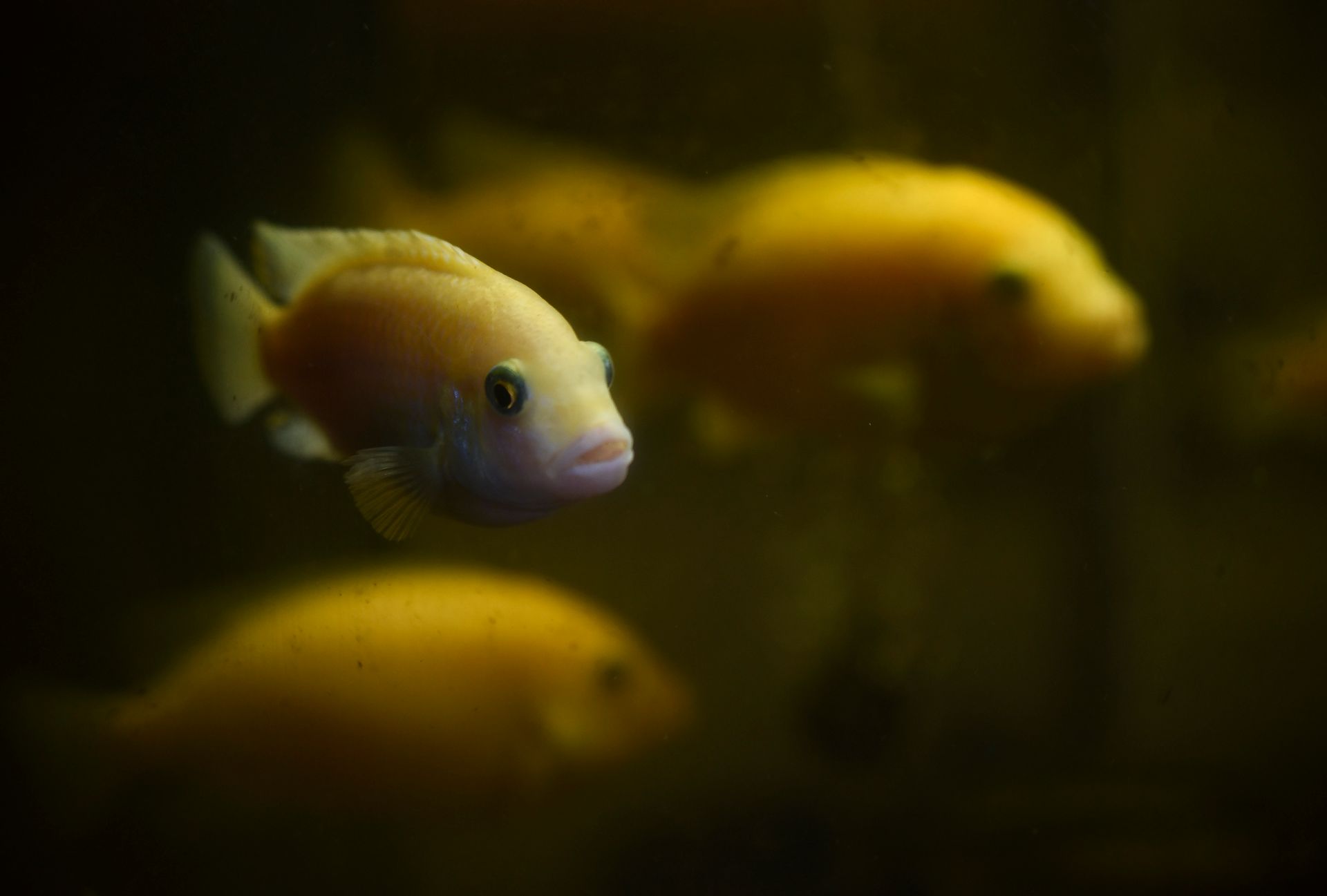
The Golden Red Neon is a striking variation of the Paracheirodon axelrodi, with a red eye and transparent belly skin.
It's a partial albino, lacking the guanine that gives most fish a silvery shine.
This unique appearance makes the Golden Red Neon very beautiful, but also less adaptable than normally colored conspecifics.
Due to low genetic diversity, Golden Red Neons are often bred from a single specimen crossed with a normally colored one, which can lead to hereditary strains.
Up to 90% of these fish survive in human care, compared to only 0.01% in the wild, due to the absence of natural predators and harsh conditions.
As a result, mutations like the Golden Red Neon are more likely to occur and be passed on to offspring.
Environmental Requirements
Paracheirodon axelrodi, the cardinal tetra, is a species that thrives in specific environmental conditions. They inhabit slow-moving waters in forest streams and minor tributaries.
In terms of water chemistry, cardinal tetras prefer acidic water with a pH of 5.5-6.5. They can tolerate slightly acidic conditions, but the water should not be too alkaline.
The ideal temperature for cardinal tetras is around 24°C. This is a critical factor to consider when keeping them in captivity.
Cardinal tetras are found in tropical freshwater habitats, specifically in rivers and streams. They prefer areas with lush riparian vegetation, fallen branches, tree roots, and leaf litter.
In the wild, they can be found in the upper Orinoco and Rio Negro River Basins in South America, specifically in countries like Colombia, Venezuela, and Brazil.
Here are some specific habitat characteristics that cardinal tetras prefer:
- Slow-moving water
- Acidic pH (5.5-6.5)
- Temperature of 24°C
- Dimly lit environment
- Lush riparian vegetation
- Fallen branches, tree roots, and leaf litter
Physical and Behavioral Characteristics
Paracheirodon axelrodi, also known as the Cardinal Tetra, is a small fish that grows to about 2.5 cm in length in the wild, but can reach up to 5 cm in an aquarium. This species is characterized by a horizontal neon blue stripe and deep red markings.
The neon stripe of Paracheirodon axelrodi is quite unique, as it becomes iridescent due to external lighting. This means that the color of the stripe changes depending on the angle of light that hits it, turning from green to blue or vice versa. At night, when no light hits the stripe, the Cardinal Tetra is a transparent, brownish color.
Cardinal Tetras have a small adipose fin on their dorsal side at the tail end of their bodies, and a single row of dentary teeth. They also have a small bony pelvic fin hook in mature males.
In terms of physical features, Paracheirodon axelrodi are ectothermic, meaning their body temperature is regulated by the environment, and have bilateral symmetry. They also exhibit some degree of heterothermy, where different parts of their body have different temperatures.
Females are slightly larger and wider than males, and have larger stomachs. This is a key indicator of sex in Paracheirodon axelrodi.
Here are some key physical characteristics of Paracheirodon axelrodi:
- Length: 2.5 cm in the wild, up to 5 cm in an aquarium
- Mass: 0.13 g
- Physical features: ectothermic, heterothermic, bilateral symmetry
- Sexual dimorphism: females larger and wider than males, with larger stomachs
In the wild, Paracheirodon axelrodi are active during the day and live in schools of thousands. They are known to make small-scale seasonal migrations upstream or downstream depending on the height of water during a particular season.
Cardinal Tetras are social animals and thrive in the company of other Paracheirodon axelrodi. In fact, they require a minimum of 10 individuals to feel safe in an aquarium. If fewer than 10 individuals are kept together, they may develop sickness due to stress.
Here are some key behaviors of Paracheirodon axelrodi:
- Active during the day
- Live in schools of thousands in the wild
- Make small-scale seasonal migrations
- Social and thrive in the company of other Paracheirodon axelrodi
Ecosystem and Conservation
Cardinal tetras play a vital role in their ecosystem as both predators and prey. They feed on small invertebrates and zooplankton, serving as an important food source for larger predators.
In their natural habitat, cardinal tetras are found to be relatively common, with no special conservation status. They are not considered threatened, according to the IUCN Red List, US Federal List, and CITES.
Cardinal tetras are primarily freshwater fish, living in water that is not salty. This is in contrast to many other fish species that inhabit saltwater environments.
Intriguing read: Cardinal Tetra Paracheirodon Axelrodi
Geographic Range
Cardinal tetras are found in the wild in Brazil, Colombia, and Venezuela.
Their natural habitats are in the upper Orinoco and Negro River drainages.
These tetras inhabit the neotropical biogeographic region.
Ecosystem Roles
Cardinal tetras play a crucial role in their ecosystem as important predators of small invertebrates and zooplankton. They consume a wide range of prey, serving as a vital food source for larger predators.
In the wild, cardinal tetras are found to be an essential food source for larger predators, including all life stages. This highlights their importance in supporting the food chain.
Cardinal tetras serve as a vital link in the food web, providing sustenance for larger predators.
Conservation Status
The Cardinal tetra is a common fish in its native range, and it's good to know that it's not considered threatened.
According to the IUCN Red List, the US Federal List, and CITES, the Cardinal tetra has no special status. This means that it's not currently considered a species of concern.
It's worth noting that the Cardinal tetra is an animal that mainly eats meat, which can be an important consideration in conservation efforts.
Here's a quick rundown of the relevant lists:
- IUCN Red List: No special status
- US Federal List: No special status
- CITES: No special status
In the wild, the Cardinal tetra uses sight to communicate, which is an interesting aspect of its behavior.
Aquarium Management
Managing an aquarium for Paracheirodon axelrodi requires attention to water temperature, which should be maintained between 72°F and 82°F.
This temperature range allows for optimal swimming and activity from the fish.
Paracheirodon axelrodi are sensitive to water quality, so regular water changes are essential to maintain optimal water conditions.
A 10% water change every week is a good starting point for maintaining water quality.
The aquarium should be well-planted to provide hiding places and territories for the fish.
Paracheirodon axelrodi are schooling fish and should be kept in a group of at least six to promote natural behavior.
A tank size of 20 gallons or more is recommended for a small school of Paracheirodon axelrodi.
Aquarium lighting should be dimmed or filtered to reduce glare and promote natural behavior in the fish.
In addition to regular water changes, the aquarium should be cleaned regularly to remove debris and waste.
Frequently Asked Questions
Which is better, neon tetra or cardinal tetra?
While both Neon Tetras and Cardinal Tetras can make great additions to a community tank, Cardinal Tetras are often considered slightly hardier, but proper care and quarantine are key to their success.
Featured Images: pexels.com